

U0100 on 2007-2017 Lexus LS 460: Lost Communication With ECM/PCM Causes and Fixes
On a 2007-2017 Lexus LS 460, code U0100 means the Engine Control Module (ECM) has lost communication, often causing a no-start or stalling. Before suspecting a bad ECM, check the battery, its terminals, and all related fuses, specifically the EFI MAIN and EFI MAIN2 relays. These simple electrical issues are the most common culprits.
- U0100 on an LS 460 is a critical fault that will likely leave you stranded.
- Do not immediately assume the ECM is bad. The most common cause is a weak battery or poor battery connection.
- Diagnosis is complex and best left to a professional with experience in CAN bus systems and access to tools like Techstream.
- Always start diagnosis with the simplest and most likely causes: battery, fuses, and a visual check of the wiring.
- If you must replace the ECM, consider a reputable remanufacturing service, but ensure it comes with a warranty and is programmed for your vehicle's VIN.
What's Unique About the 2007-2017 Lexus LS 460
The Lexus LS 460 (XF40 generation) is a highly complex vehicle with numerous electronic modules that all rely on the CAN bus network for communication. While the U0100 code is a generic network fault, on the LS 460 it often presents as a dramatic failure, such as a complete no-start condition where even the gear selector indicator on the dash goes blank. Unlike some vehicles where a module failure is common, on the LS 460, this code is more frequently traced back to foundational electrical issues like a weak battery or a wiring problem, rather than a defective ECM itself, which is considered very reliable. The passenger-side junction block, which is also the Body ECU, is a critical communication hub and another potential point of failure.
Symptoms You May Notice
- Engine will not crank or start.
- Engine starts briefly and then immediately stalls.
- Check Engine Light is illuminated.
- "Check VSC System" message appears on the dash.
- Gear position indicator (P, R, N, D) is blank on the instrument cluster.
- Standard OBD-II code reader cannot connect to the vehicle, while professional tools like Techstream may still connect to other modules.
- Multiple other warning lights may appear.
- Vehicle may shut off while driving.
- Replacing the Engine Control Module (ECM) without first diagnosing the battery, fuses, and wiring harness. The ECM is expensive and often not the actual problem.
Most Likely Causes
- Weak or Faulty 12V Battery 🔴 High Probability The LS 460 has a high number of electronic modules that are sensitive to low voltage. A weak battery can cause communication errors before it's completely dead, and is the most common trigger for U-codes.
How to confirm: Test the battery voltage with a multimeter. A healthy, fully charged battery should read at least 12.6 volts with the engine off. Have the battery load-tested at an auto parts store, as good voltage doesn't always mean good health under load.
Typical fix: Recharge or replace the 12V battery. Clean any corrosion from the battery terminals and ensure connections are tight.
Est. part cost: $150-$300 - CAN Bus Wiring or Connector Fault 🟡 Medium Probability Complex wiring harnesses can be susceptible to damage from rodents, chafing against chassis components, or corrosion at connectors. The ECM is located in the driver's side of the engine bay, and its harness is a key area to inspect.
How to confirm: Visually inspect the wiring harnesses leading to and from the ECM for any signs of damage, such as chewed wires, burns, or abrasion. Check major ground connections for tightness and corrosion. This often requires a wiring diagram and a multimeter to check for continuity and resistance on the CAN High and CAN Low lines.
Typical fix: Repair the damaged section of wiring or clean/replace the faulty connector. This can be a time-consuming process.
Est. part cost: $10-$500 - Blown Fuse(s) or Faulty Relay 🟡 Medium Probability
How to confirm: Check all fuses related to the engine control system. On the LS 460, pay special attention to the 'EFI MAIN' and 'EFI MAIN2' relays and fuses in the engine compartment fuse box. Also check fuses labeled 'ECM', 'IGN', or the OBD-II port fuse in the driver's side interior panel.
Typical fix: Replace the blown fuse or faulty relay with a new one of the correct amperage. If a fuse blows again immediately, it indicates a short circuit that must be traced.
Est. part cost: $5-$50
Rare But Worth Checking
- Failed Engine Control Module (ECM): While this is the component that has lost communication, it is rarely the root cause of the failure on the LS 460. All other possibilities, especially power, ground, and wiring issues, should be exhaustively ruled out before condemning the ECM. A failed ECM can also be caused by external factors like voltage spikes or water intrusion.
- Failed Body Control Module (BCM / Passenger Junction Block): The passenger-side junction block is a complex computer that acts as a gateway for many communication networks. A failure in this module can disrupt the CAN bus and prevent the ECM from communicating with other systems. Symptoms often include widespread, seemingly unrelated electrical issues. A TSB (L-SB-0061-13) was issued for a battery drain issue related to this module's software on 2013 models, highlighting its complexity.
Diagnosis Steps
- Check the Battery: Start with the simplest cause. Ensure the battery has a full charge (12.6V+) and the terminals are clean and tight. A weak battery is a very common trigger for this code on the LS 460.
- Attempt to Scan: Try to connect to the vehicle with an OBD-II scanner. If it fails to connect, this is a strong symptom of the U0100 fault. If you have access to a professional tool like Toyota Techstream, use it to see which modules are reporting on the network. A failure to communicate with the ECM is the key data point.
- Inspect Fuses and Relays: Carefully check all fuses related to the engine controls. In the engine compartment fuse box, specifically inspect the EFI MAIN and EFI MAIN2 relays and their associated fuses. Check the 'ECU-B', 'OBD', and 'AM2' fuses in the interior fuse panels as well.
- Visual Wiring Inspection: The ECM is located in the driver's side of the engine compartment. Thoroughly inspect the main wiring harnesses connected to it. Look for any signs of rodent damage, chafing, or melting from contact with hot exhaust components. Pay close attention to the ground straps in the engine bay.
- Check CAN Bus Resistance: This is an advanced step. With the battery disconnected, measure the resistance between the CAN High and CAN Low pins at the OBD-II port (Pins 6 and 14). A healthy network should read approximately 60 ohms. A reading of 120 ohms may indicate a problem with a terminating resistor or a break in the wiring. A reading near 0 ohms indicates a short circuit.
- Check Power and Ground at the ECM: Using a vehicle-specific wiring diagram, verify that the ECM is receiving proper power on all its power input pins and has a solid ground connection on all ground pins. This step is critical and requires technical knowledge. A loss of even one power or ground feed can cause a U0100 code.
- Inspect Passenger Junction Block (Body ECU): Located on the passenger side under the dashboard, this module is a central communication hub. Check its connectors for corrosion or damage. A failure here can bring down the whole network.
- Suspect the ECM: If all wiring, power, and ground checks come back normal, the ECM itself may have failed. This is the last resort after all other possibilities have been eliminated.
Parts You'll Likely Need
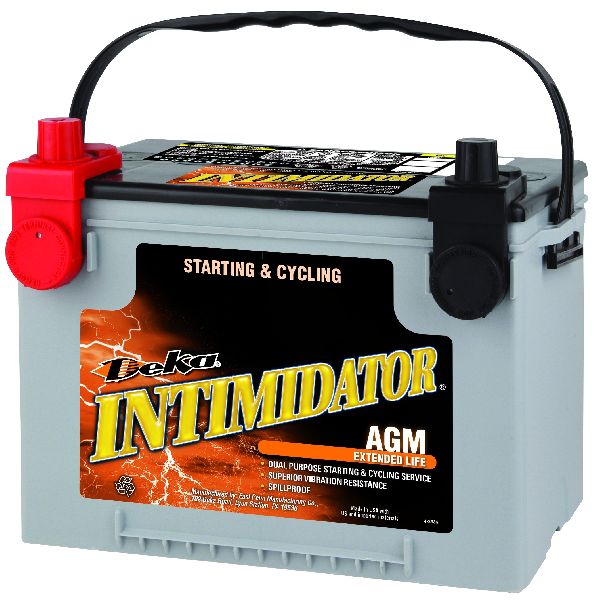
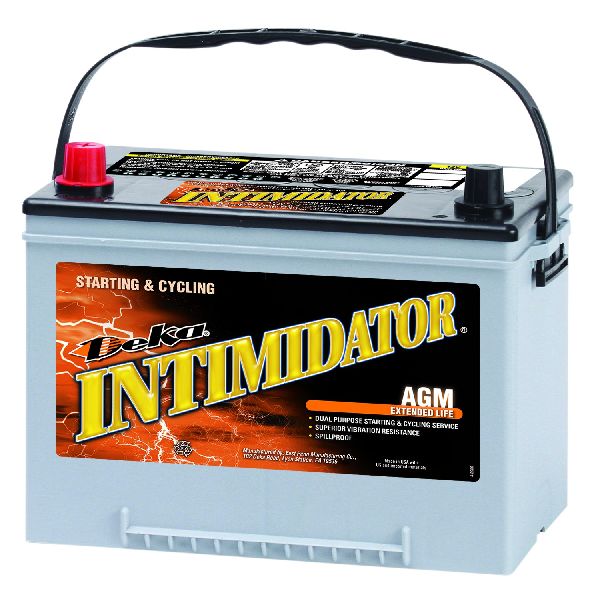
- 12V AGM Battery — A weak or failing battery is the most frequent cause of network communication errors on the LS 460.
Trusted brands: Interstate, DieHard, Bosch
OEM price range: $250-$400
Aftermarket price range: $150-$300 - Engine Control Module (ECM)
(OEM #89661-50A10, 89661-50A11, 89661-50A12 (2007); 89661-50C01, 89661-50C02 (2007-2008). Part numbers are year/model specific, always verify with VIN.)— This is the part that is offline, but it should only be replaced after all other diagnostic steps have been completed and have confirmed the ECM is faulty.
Trusted brands: Denso (OEM)
OEM price range: $1200-$1800
Aftermarket price range: $250-$800 (Used or Remanufactured)
Related Codes That Often Appear With This One
- U0101 — Lost Communication with TCM. The Transmission Control Module (TCM) is on the same CAN network. If the entire network is down, communication will be lost with multiple modules simultaneously.
- U0073 — Control Module Communication Bus 'A' Off. This is a more general code indicating the entire CAN bus is malfunctioning, which is a common underlying reason for the U0100 code.
- B2325 — Lost Communication with Sliding Roof ECU. This indicates a problem on the separate LIN bus network, but can sometimes appear alongside CAN bus faults if there is a widespread electrical issue or a failing gateway module like the BCM.
Technical Service Bulletins (TSBs) & Recalls
- L-SB-0061-13: Addresses a battery drain condition on 2013 models caused by software in the passenger-side junction block (Body ECU), which can lead to low voltage and communication codes.
Platform-Specific Known Issues
- Real-World Diagnosis Story: A user on ClubLexus with a 2008 LS 460 reported a no-start condition with code U0100. Symptoms included the 'Check VSC System' message and the inability for a standard OBD-II scanner to connect, though Techstream could. After replacing the battery with no success, the owner noted that if the battery was disconnected for a few days, the car would start and run for just one second before dying. This pointed away from a simple battery issue and towards a more complex intermittent failure in the ECM's power supply or the module itself. The issue remained unresolved in the public thread.
Mechanic-Grade Diagnostic Values
- CAN Bus Resistance — expected: Approximately 60 Ω. Failure: A reading of 120 Ω indicates an open circuit or a missing terminating resistor. A reading near 0 Ω indicates a short between CAN High and CAN Low wires.
- ECM Power Supply Voltage — expected: 11-14 Volts. Failure: Voltage below 11V or no voltage indicates a problem with the power supply circuit, fuses, or relays feeding the ECM.
- Push Start Switch Reference Voltage — expected: Approximately 11.3 Volts. Failure: No voltage on the reference pins (e.g., pins 2 and 7 on some models) points to a fault in the Main Body ECU which supplies this voltage.
Scan Tool Commands That Help
- Toyota Techstream: Health Check — This function polls all control modules on the network and displays which ones are communicating and which are not. For a U0100, running a Health Check will quickly confirm that the Engine ECU is offline while others may still be responding.
- Toyota Techstream: Data List (for specific ECU) — After establishing communication with any available module (e.g., the Body ECU), the Data List can be used to see what information it is receiving from other modules. An absence of engine-related data (RPM, coolant temp, etc.) in other modules' data lists further confirms the ECM is not broadcasting on the CAN bus.
Wiring & Ground Locations
- ECM (Engine Control Module) — Located in the driver's side front of the engine compartment.. This is the module that has lost communication. All power, ground, and network wiring at its connectors are primary points of inspection.
- Main Body ECU (Driver Side J/B) — Located at the left end of the dash (driver's side).. This module acts as a gateway and controls power to other systems. A fault here can cut power or communication pathways to the ECM.
- Passenger Side J/B (Gateway ECU) — Located at the right end of the dash (passenger's side).. This is a central gateway for the CAN bus. A failure or connection issue here can bring down the entire network, isolating the ECM.
- Ground Points E3, E11 — Various points in the engine compartment, typically on the engine block or chassis rails near the front.. These are critical ground points for the engine control system. A loose or corroded ground is a common, high-resistance failure point that can cause the ECM to lose power and communication.
- Junction Connectors (J/C) A60 & E51 — Located in the left front of the engine compartment, near the ECM.. These connectors are splices where the CAN bus wiring branches out. Corrosion or a loose pin in these connectors can cause a network failure.
Real Owner Repair Stories
- ClubLexus user 'hksnlper' (2007 Lexus LS460, 175k miles) — No start, no 'P' (Park) indicator on the dash, OBD-II port not reading. Techstream connected and showed U0100 from every module.
❌ Tried (didn't work) Checked all fuses and relays.
✅ What actually fixed it The user discovered that by disconnecting the Crank Position Sensor wire at the ECM, the 'P' light on the dash would reappear and the engine would crank and try to start. This suggests the sensor or its wiring may have had a short that was bringing down the ECM's 5-volt reference circuit, causing the entire module to go offline. The final repair was not posted, but this diagnostic step isolated the problem area. - YouTube channel 'Peter L' (2008 Lexus LS 460) — Intermittent no-start, no-crank condition. All lights on the dash worked, but pushing the start button did nothing.
❌ Tried (didn't work) Replacing the battery, checking fuses, cleaning battery terminals.
✅ What actually fixed it The starter motor had failed. Even though the starter relay was clicking, the starter itself was dead. The user confirmed this by attempting to jump the starter solenoid directly, which produced no action. Replacing the starter motor resolved the no-start issue.
OEM Part Supersession History
89661-50A10, 89661-50A11→89661-50A12— Revision and update for 2007-2009 models.
Heads up: When replacing, the part number must be an exact match or a verified superseded number. A used ECM will require VIN programming to communicate with the vehicle's immobilizer and other modules.89661-50C03, 89661-50C04→89661-50C05— Revision for later model years within the early part of the generation.
Heads up: Using an ECM from a different year range or with different features (e.g., All-Wheel Drive vs. Rear-Wheel Drive) will likely result in communication failures or other DTCs.
Model Year Variations Within This Range
- 2009+: All-wheel drive was introduced as an option starting in 2009. The ECM for an AWD model is different from a RWD model and they are not interchangeable.
- 2013-2017: The 2013 model year marked a significant facelift with a new dashboard design, updated infotainment, and other electrical changes. While the U0100 diagnostic principles are the same, some connector locations and module part numbers may differ from the 2007-2012 models.
Diagnostic Flowchart
Other Known Issues on This Vehicle
Issues unrelated to this code that are worth knowing about as an owner of this generation:
- Brake Actuator Failure 🔴 High — Common across all model years. Can occur at various mileages, sometimes as early as 60,000 miles. Symptoms include a clicking/knocking/squawking sound from the engine bay, a spongy pedal, and a dashboard lit up with Brake, ABS, and VSC warnings. (Ref: L-SB-0009-23 (for 2013-2017 models with DTCs like C1391), L-SB-0047-19 (addresses squawk/bark noise).)
- Front Control Arm Bushing Failure 🟠 Medium — Extremely common, especially on earlier 2007-2012 models. Bushings can fail in as little as 40,000-60,000 miles, causing clunking/popping noises from the front suspension, particularly at low speeds or during braking. (Ref: Lexus released updated control arm designs for 2012+ models which can be retrofitted to earlier cars for a more durable repair.)
- Valley Plate Coolant Leak 🟠 Medium — A common issue on the 1UR-FSE V8 engine around 100,000 miles. A seal under the intake manifold fails, causing a slow coolant leak that drips down the back of the engine onto the transmission bell housing.
- Melting/Sticky Dashboard and Interior Panels 🟡 Low — Widespread problem, particularly in warmer climates, affecting the dashboard, door panels, and center console. The material becomes sticky, shiny, and can degrade. (Ref: Lexus initiated a Warranty Enhancement Program (ZLZ) to replace affected panels, though eligibility has expired for most vehicles.)
Used vs. New Parts: Buying Guide for This Vehicle
When a used part is the smart pick: A used ECM from a reputable salvage yard is a viable and cost-effective option, especially given the high cost of a new OEM unit. Since the ECM itself is generally reliable, a used part from a vehicle with no electrical issues is a good bet.
Donor-vehicle mileage cap: roughly under 150000 miles for the part to have meaningful remaining life.
What to inspect on the donor part:
- Verify the part number on the used ECM exactly matches your original or is a confirmed supersession.
- Ensure the donor vehicle was not involved in a flood or fire.
- Inspect the connectors on the used ECM for any bent pins, corrosion, or physical damage.
- Ask for the VIN of the donor car to cross-reference its options (RWD vs AWD, etc.).
OEM-only on this vehicle (don't cheap out):
- Engine Control Module (ECM) - While a used OEM part is acceptable, avoid no-name aftermarket or cloned ECMs, as they often have software and compatibility issues with the complex Lexus immobilizer and network systems.
Aftermarket brands forum-validated for this vehicle:
- For replacement, remanufacturing services like Flagship One (FS1) or Flashmasters are known to provide properly programmed and updated ECMs.
Brands owners have reported issues with on this vehicle:
- Generic, unbranded ECMs from platforms like eBay or Amazon that do not offer VIN programming services should be avoided.
Real Owner Stories
Aggregated from forums and TSBs cited above. Mileages and costs reflect what owners reported in those sources.
2008 Lexus LS 460
Symptoms: No-start condition, 'Check VSC System' message on dash, and a standard OBD-II scanner could not connect to the vehicle. If the battery was disconnected for several days, the car would start but stall after only one second.
What fixed it: The issue remained unresolved in the public record, but diagnostics pointed toward an intermittent failure in the ECM's power supply or the ECM module itself after a battery replacement failed to fix it.
Source hint: ClubLexus.com - Thread '08 LS 460 Not starting'
Related OBD-II Codes
Frequently Asked Questions
My 2013 LS 460 has a battery drain issue and communication codes; is there a known fix?
Why is my gear position indicator blank on the dashboard of my LS 460?
I'm seeing a 'Check VSC System' message along with a no-start condition; what should I check first?
Which specific fuses should I inspect for a U0100 code on this vehicle?
My standard OBD-II scanner won't connect to my LS 460, but the car won't start. Is the car's computer dead?
Where is the ECM located on the LS 460 if I need to inspect the wiring?
Used OEM Parts in Stock


New Aftermarket Parts Available

The information in this article is provided for general reference and educational purposes only. Vehicle specifications, procedures, and part compatibility can vary by production date, trim level, and region. Always consult your vehicle's factory service manual and verify part numbers before purchasing or performing repairs. Safety-critical components such as airbags, seat belts, and braking systems should be installed by a qualified professional.
- Lexus LS 460:
- 🛍️ Shop This Part
- What's Unique About the 2007-2017 Lexus LS 460
- Symptoms You May Notice
- Most Likely Causes
- Rare But Worth Checking
- Diagnosis Steps
- Parts You'll Likely Need
- Related Codes That Often Appear With This One
- Technical Service Bulletins (TSBs) & Recalls
- Platform-Specific Known Issues
- Mechanic-Grade Diagnostic Values
- Scan Tool Commands That Help
- Wiring & Ground Locations
- Real Owner Repair Stories
- OEM Part Supersession History
- Model Year Variations Within This Range
- Diagnostic Flowchart
- Other Known Issues on This Vehicle
- Used vs. New Parts: Buying Guide for This Vehicle
- Real Owner Stories
- 2008 Lexus LS 460
- Related OBD-II Codes
- Frequently Asked Questions
- 🎟️ Get 5% Off