

U0100 on 2009-2019 Ford Flex: Lost Communication with PCM Causes and Fixes
On a 2009-2019 Ford Flex, code U0100 typically means there's an electrical issue preventing the main engine computer (PCM) from communicating. The most common causes are a weak battery, corroded ground wires, or a damaged wiring harness. A faulty PCM is possible but less likely. Check battery and ground connections first before suspecting expensive components.
- U0100 is a critical communication failure, not a specific component failure. Do not drive the vehicle.
- The most likely cause is a simple electrical issue: a weak battery or a bad ground connection. Always check these first.
- Do not immediately assume the expensive PCM has failed. This is the least likely cause.
- Diagnosis is complex and best left to a professional with experience in automotive network diagnostics.
- If the PCM does need to be replaced, it will require programming to your specific vehicle.
What's Unique About the 2009-2019 Ford Flex
The Ford Flex, built on the Ford D4 platform, has a complex network of electronic modules that are highly sensitive to voltage. A U0100 code is frequently a symptom of an underlying electrical problem rather than a failure of the expensive PCM itself. Diagnosis should always begin with the simplest and most common culprits on this platform: the battery, its terminals, and the main body/engine ground connections, as low or unstable voltage is a primary trigger for communication faults. In some cases, water intrusion into connectors has been identified as a specific cause on these vehicles.
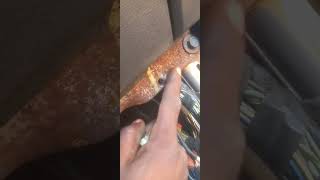
Generation note: The Ford Flex was produced in one generation from 2009-2019, but it received a significant facelift for the 2013 model year which included updated electronics and dashboard controls. 🎬 Watch: Diagnosing U0100 and U0121 codes on a 2013 Flex. While the fundamental cause of U0100 is the same, wiring diagrams and module locations may differ between 2009-2012 and 2013-2019 models. For example, the PCM part numbers are different and some wiring harnesses were rerouted.
Symptoms You May Notice
- Check Engine Light is on (may be intermittent or accompanied by other lights)
- Vehicle will not start or is very hard to start
- Engine stalls intermittently while driving
- Transmission may not shift correctly or may get stuck in one gear
- Multiple other warning lights (ABS, Traction Control, Airbag, Service AdvanceTrac) may illuminate
- Instrument cluster gauges may not work or behave erratically
- Reduced engine power or 'limp mode'
- Security light flashing rapidly
- Odometer may display dashes instead of mileage
- Replacing the PCM first. The PCM is expensive and rarely the root cause. The problem is almost always in the wiring, power, or ground supply to the PCM.
- Replacing individual sensors. While a faulty sensor can cause performance issues, it will not typically cause a U0100 communication code.
Most Likely Causes
- Weak or Failing Battery 🔴 High Probability Modern vehicles like the Flex are highly sensitive to system voltage. A battery that can't provide a stable 12.6V can cause random communication dropouts between modules. This is the most common and easiest-to-fix cause.
How to confirm: Test the battery with a multimeter. It should read at least 12.6 volts with the engine off. A reading below 12.4V suggests it needs charging or replacement. A load test at an auto parts store is the most definitive test.
Typical fix: Recharge or replace the battery.
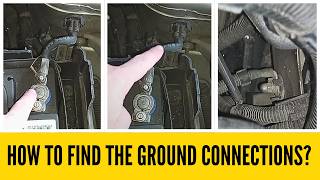
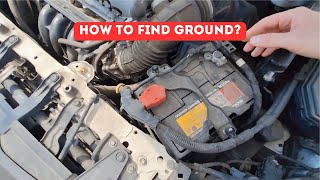
Est. part cost: $150-$250 - Corroded or Loose Battery Terminals/Ground Wires 🟡 Medium Probability Corrosion on battery terminals or a loose/corroded main ground strap can create high resistance, mimicking a weak battery and disrupting module communication. Key ground points are on the firewall, inner fender, and engine block. 🎬 Watch: A guide to finding ground connections on your car.
How to confirm: Visually inspect the battery terminals for white or greenish corrosion. Follow the negative battery cable to its connection point on the chassis and the engine block; check for tightness and corrosion. A voltage drop test on the ground circuits should show no more than 0.05 volts (50 millivolts).
Typical fix: Clean the battery terminals and cable ends with a wire brush. Disassemble, clean, and tighten all main ground connections. Applying electrical grease (not dielectric grease on the connection itself) can prevent future corrosion.
Est. part cost: $5-$15 - Damaged Wiring Harness or Connectors 🟡 Medium Probability Wires in the CAN bus network can become frayed, shorted, or corroded over time, especially in areas exposed to moisture or vibration. A single compromised wire can take down the entire network. A common failure point on similar Ford platforms is a large connector located near the driver's side e-brake pedal bracket, which can become loose or corroded.
How to confirm: Visually inspect the wiring harness leading to the PCM for any signs of damage, corrosion, or loose pins in the connectors. Pay close attention to harnesses near the firewall, under the battery tray, and around the engine where chafing can occur. Check for pushed-out or spread terminals in connectors.
Typical fix: Repair the damaged section of wiring or replace the affected connector. The connector must be thoroughly dried and cleaned if water intrusion is found.
Est. part cost: $20-$500 - Faulty Powertrain Control Module (PCM) ⚪ Low Probability While possible, internal failure of the PCM is the least common cause. It should only be suspected after all other power, ground, and wiring issues have been ruled out. A specific failure mode on some 3.5L Fords is damage to the PCM's ignition coil driver circuit, which can sometimes cause communication issues, often accompanied by P035x codes.
How to confirm: This requires professional diagnosis. A technician will verify the PCM has proper power and ground and that the CAN bus wiring is intact before condemning the module. A reflash or software update may be attempted before replacement.
Typical fix: Replace the PCM. The new module must be programmed to the vehicle's VIN using a process called Programmable Module Installation (PMI).
Est. part cost: $800-$1200
Rare But Worth Checking
- Faulty Gateway Module (GWM) or other module: A different module on the CAN bus can fail and broadcast erroneous data, disrupting communication. The Gateway Module (on the Flex, this is integrated with the OBD-II port) is a central point of failure. A technician can use a tool like Ford's IDS to see which module is 'screaming' or not responding on the network.
- Aftermarket Device Interference: Improperly installed remote starters, alarms, or OBD-II tracking devices can interfere with the CAN bus network and cause communication codes like U0100.
- PCM Software Glitch: On some Ford platforms, software issues can cause a U0100 code to be set erroneously. Ford has issued TSBs for other models like the Explorer for this exact issue, recommending a PCM reflash. While no specific TSB for the Flex is widely cited, it remains a possibility that a software update could resolve the issue.
Diagnosis Steps
- Check Battery Health: Start by fully charging and load testing the battery. Ensure it provides a stable voltage above 12.4V. A voltage below 12.2V can cause the PCM to set a P0562 (System Voltage Low) DTC.
- Inspect Power and Grounds: Clean any corrosion from the battery terminals. Inspect and tighten the main battery cables and all major ground straps from the battery to the chassis and engine. Key locations include the firewall and inner fenders. Perform a voltage drop test on PCM power and ground circuits; the drop should not exceed 0.05 volts.
- Scan for All Codes: Use a high-quality scanner like Ford's IDS to read codes from ALL modules (ABS, BCM, TCM, etc.), not just the engine computer. The presence of U-codes in multiple modules points to a network-wide issue.
- Visual Wiring Inspection: Carefully inspect the wiring harness and connectors to the PCM. Look for any signs of chafing, melting, corrosion, or rodent damage. Check for water intrusion in connectors. Pay special attention to pushed-out or spread terminals in all related connectors.
- Check CAN Bus Resistance: (Professional Step) With the battery disconnected, measure the resistance between the two CAN bus wires (pins 6 and 14 on the OBD-II port). It should be approximately 60 ohms. A reading of 120 ohms indicates an open circuit or a problem with a terminating resistor. A reading near 0 ohms indicates a short circuit.
- Check CAN Bus Voltage: (Professional Step) With the key on, measure the voltage on the CAN lines. CAN High (Pin 6) should be between 2.5V and 3.5V, and CAN Low (Pin 14) should be between 2.5V and 1.5V. Both lines shorted together will read a steady 2.5V.
- Isolate Modules: (Professional Step) If the bus is shorted or the resistance is incorrect, a technician may unplug modules one by one to see when the fault clears, isolating the problematic component or wiring section. The IDS Network Test can help identify non-responsive modules.
- Condemn the PCM: Only after all wiring, power, and ground tests have passed should the PCM be considered faulty.
Parts You'll Likely Need
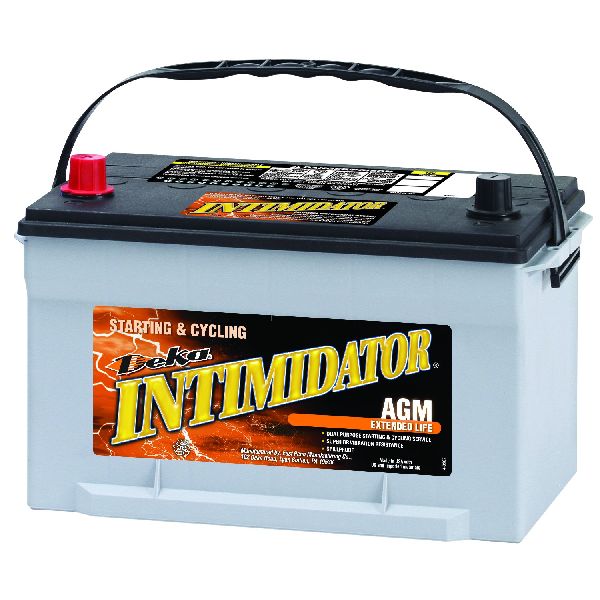
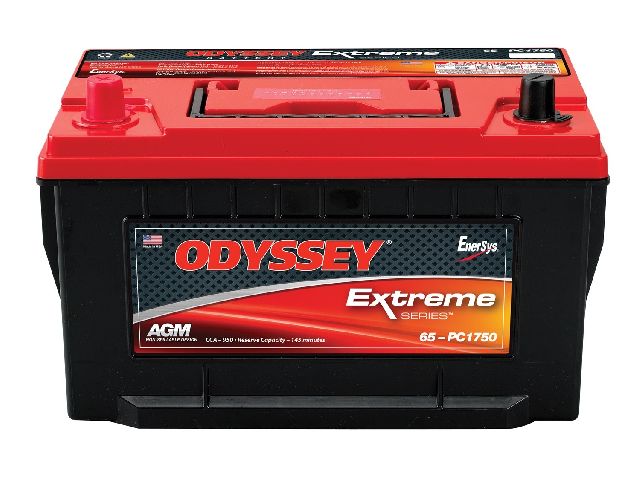
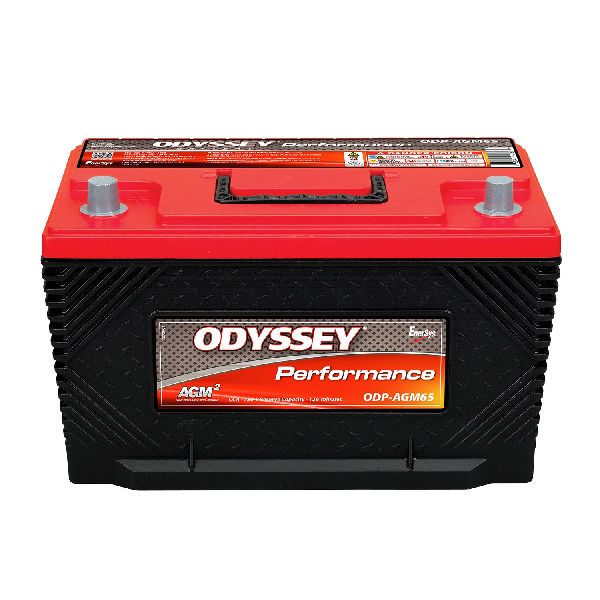
- Battery — A weak or failing battery is the most common trigger for communication codes on modern vehicles.
Trusted brands: Motorcraft, Interstate, DieHard
OEM price range: $170-$250
Aftermarket price range: $150-$220 - Powertrain Control Module (PCM)
(OEM #DA8A-12A650-HG (Example for 2013 3.5L, many variations exist))— This is the last resort after all other possibilities are exhausted. It is the 'brain' of the engine, and if it fails internally, it must be replaced.
Trusted brands: Motorcraft, Cardone (remanufactured), FS1 (remanufactured)
OEM price range: $800-$1200
Aftermarket price range: $400-$700
Related Codes That Often Appear With This One
- U0101 — Lost Communication with TCM. If the main network is down, communication with the Transmission Control Module is also often lost.
- U0121 — Lost Communication with ABS Control Module. This often appears with U0100 because a network-wide fault affects multiple critical modules.
- U0140 — Lost Communication with Body Control Module (BCM). A systemic electrical issue will often cause both the PCM and BCM to lose communication at the same time.
Technical Service Bulletins (TSBs) & Recalls
- TSB 20-2429: While for the 2020-2021 Explorer Hybrid, this TSB shows a precedent for Ford addressing a U0100 code via a PCM software update. It indicates that software glitches can be a root cause for this code on Ford platforms.
- TSB Bulletin #SSM 54333: Notes that some Ford vehicles may exhibit a no crank/no start or intermittent no crank/no start with multiple warning indicators and DTC U0100 stored in the ABS, audio front control module (ACM), and power steering control module (PSCM).
- TSB Bulletin #SSM 54574: Describes a "Service Immediately" message displayed in the instrument panel cluster (IPC) along with DTC U0100 and other codes stored in the anti-lock brake system (ABS) module.
Platform-Specific Known Issues
- Water intrusion into a main harness connector
- NHTSA ODI #11644872 notes that some Ford vehicles may exhibit an illuminated malfunction indicator lamp with DTCs U0100 and U0401, potentially falling under service bulletin SSM 49157.
Mechanic-Grade Diagnostic Values
- CAN Bus Resistance — expected: Approximately 60 Ω (measured between Pin 6 and Pin 14 of the OBD-II port with the battery disconnected).. Failure: 120 Ω indicates an open in the circuit or a faulty terminating resistor. ~0 Ω indicates a short between the CAN High and CAN Low wires.
- CAN High Voltage (Key On) — expected: Fluctuating between 2.5V and 3.5V (measured between Pin 6 of OBD-II port and chassis ground).. Failure: No voltage, steady voltage, or voltage outside this range indicates a bus problem.
- CAN Low Voltage (Key On) — expected: Fluctuating between 2.5V and 1.5V (measured between Pin 14 of OBD-II port and chassis ground).. Failure: No voltage, steady voltage, or voltage outside this range indicates a bus problem.
- PCM Ground Circuit Voltage Drop — expected: Less than 0.05 Volts (50 millivolts).. Failure: A reading higher than 0.05V indicates high resistance in the ground circuit, which can cause module communication issues.
- PCM Power Circuit Voltage Drop — expected: Less than 0.05 Volts (50 millivolts).. Failure: A reading higher than 0.05V indicates high resistance in the power supply circuit to the PCM.
Scan Tool Commands That Help
- Ford IDS (Integrated Diagnostic System): Network Test — This is a primary diagnostic step. The command 'pings' all modules on the CAN bus and reports which ones fail to respond, quickly identifying offline modules like the PCM.
- Ford IDS (or equivalent high-level scan tool): Programmable Module Installation (PMI) — This function is required when replacing a PCM or other major control module. It reads configuration data (As-Built Data) from the old module and writes it to the new one. If the old module is dead, IDS can retrieve this data from Ford's online database.
- Ford IDS: Self Test - All CMDTCs — To retrieve Diagnostic Trouble Codes from all modules on the network, not just the PCM. This provides a complete picture of the network's health and can reveal patterns of communication loss.
Wiring & Ground Locations
- G100 / G101 — Located in the engine compartment at the left and right front, near the core support/headlamp area.. These are primary chassis grounds for the front of the vehicle. Corrosion or looseness here can cause a host of electrical issues, including module communication problems.
- G103 / G107 — Located on the left side and right rear of the engine compartment, respectively, often near the shock towers or firewall.. These are critical engine and component grounds. A poor connection at G107, for example, can directly impact PCM grounding and cause a U0100 code.
- G200 / G201 — Located inside the passenger cabin, at the right and left front of the center console area, respectively.. These ground points serve interior modules like the Body Control Module (BCM) and audio/SYNC modules. A fault here can cause other modules to drop off the network.
- C175B — This is the main, large electrical connector for the Powertrain Control Module (PCM).. All power, ground, and CAN bus signals for the PCM pass through this connector. Checking for power/ground at the specific pins on this connector is a critical diagnostic step.
- OBD-II Port (DLC) — Under the driver's side dashboard. On the Flex, the Gateway Module (GWM) is integrated with this port.. This is the primary access point for network diagnostics. CAN bus resistance and voltage are measured at pins 6 (CAN-H) and 14 (CAN-L). A problem with the integrated GWM can take down the entire network.
Real Owner Repair Stories
- YouTube Comment on a U0100 diagnostic video (2017 Ford Transit (similar CAN architecture)) — No crank, no start.
❌ Tried (didn't work) Initial checks were inconclusive.
✅ What actually fixed it The owner found a main ground wire terminal that was loose enough to be moved by hand. After tightening the ground connection, the vehicle started and the U0100 code was resolved. - Ford Truck Enthusiasts Forum (Ford Super Duty (similar CAN architecture)) — No start, 'Service Advancetrack' message, no gear indicator light on the dash, U0100:00-8B code.
❌ Tried (didn't work) Checking firewall connections and grounds., Inspecting and reseating a large connector by the e-brake bracket, which is a common fix for this issue.
✅ What actually fixed it The owner eventually found the source of the problem, though the specific fix was not detailed in the available snippet. The key takeaway is that a common fix (the e-brake connector) does not always resolve the issue, pointing towards a more hidden wiring fault. - NHTSA ODI #11669147 — An owner reported engine loss of power, mechanical noise, and diagnostic codes including P0014, P0303, and U0100 (lost communication with ECM/PCM).
- NHTSA ODI #11704877 — A driver experienced steering problems while turning and parking; multiple communication fault codes appeared including U0100, U0131, U0140, and U0151 when the ignition was on with the engine off.
OEM Part Supersession History
9A8A-12A650-AA through AH→Later revisions like 9A8A-12A650-Bx or -Cx— Internal component updates and software revisions by the manufacturer.
Heads up: While many part numbers exist, replacement PCMs must be correct for the vehicle's model year, engine, and drivetrain (FWD/AWD). Using the wrong part number can lead to programming failure or operational issues even if it physically connects. Always verify the part number with the VIN.
Model Year Variations Within This Range
- 2013-2019: The 2013 facelift introduced updated electronics, including changes to the SYNC system, instrument cluster, and other modules. While the fundamental CAN bus architecture is similar, specific wiring diagrams, connector locations, and ground points may differ from the 2009-2012 models.
- 2009-2015 (3.5L NA): A known issue exists where a failed ignition coil can short and send excessive voltage back to the PCM, damaging the coil driver circuit. This can manifest as misfire codes (P0351-P0356) and can sometimes lead to broader PCM failure and communication codes like U0100.
Diagnostic Flowchart
Other Known Issues on This Vehicle
Issues unrelated to this code that are worth knowing about as an owner of this generation:
- Internal Water Pump Failure (3.5L/3.7L) 🔴 High — Common after 80,000-150,000 miles. A weep hole may show a small coolant leak before catastrophic failure. Failure can cause coolant to mix with engine oil, leading to complete engine failure.
- Electric Power Steering (EPAS) Failure 🔴 High — Can occur without warning at various mileages. Owners report sudden loss of power assist, making steering extremely difficult. Heat from nearby exhaust components on EcoBoost models is a suspected contributor. (Ref: A recall (15S18) was issued for some 2011-2013 models, but owners of other years report identical failures.)
- Power Transfer Unit (PTU) Failure (AWD Models) 🟠 Medium — Common due to overheating of the non-serviceable fluid. Often occurs between 60,000-120,000 miles. Symptoms include a grinding noise or a burning gear oil smell. Failure requires expensive replacement.
- Fuel Pump Control Module Failure 🟠 Medium — Common on 2013-2015 models, leading to a no-start or stalling condition. (Ref: Ford Recall 16S31)
- Rear Suspension Toe Link Fracture 🔴 High — Can occur on 2013-2018 models, particularly in regions that use road salt. A fracture can cause a sudden loss of steering control. (Ref: Ford Recall 20S22)
Used vs. New Parts: Buying Guide for This Vehicle
When a used part is the smart pick: For this repair, obtaining a used wiring harness or a specific connector pigtail from a junkyard is a very smart choice, especially if the damage is localized to a small area. This is often much cheaper than buying a new harness from the dealer.
Donor-vehicle mileage cap: roughly under 150000 miles for the part to have meaningful remaining life.
What to inspect on the donor part:
- For wiring, look for a donor vehicle from a dry climate to minimize corrosion.
- Inspect harnesses for any signs of previous repair (tape, butt connectors).
- Ensure connectors are not cracked and that locking tabs are intact.
- When pulling a connector, get as much wire as possible (a 'pigtail') to make splicing easier.
OEM-only on this vehicle (don't cheap out):
- Powertrain Control Module (PCM): While remanufactured units are available, a new OEM module from Ford is the safest bet for compatibility and longevity. Used PCMs are risky as they are VIN-locked and may have hidden electronic damage.
Aftermarket brands forum-validated for this vehicle:
- Motorcraft (for ignition coils if related to PCM failure)
- Cardone (for remanufactured PCMs, a viable alternative to new OEM)
- Flagship One / FS1 (for remanufactured and programmed PCMs)
Brands owners have reported issues with on this vehicle:
- Unbranded, 'white box' ignition coils from online marketplaces should be avoided, as a coil failure can destroy the replacement PCM.
Real Owner Stories
Aggregated from forums and TSBs cited above. Mileages and costs reflect what owners reported in those sources.
2013 Ford Flex
Symptoms: The vehicle would not communicate with the scan tool and threw code U0100 and U0121.
What fixed it: Cleaning water and corrosion out of one of the main electrical connectors on the passenger side which was interrupting the CAN bus.
Source hint: YouTube - '2013 Ford Flex With Code U0100/U0121 Communication with Powertrain Control Module (PCM) is lost'
2013 Ford F-250 (Similar Ford Electronics)
Symptoms: No-crank/no-start condition with U0100; the gear indicator on the dash was not working.
What fixed it: Checking and repairing firewall connections and grounds.
Source hint: Ford Truck Enthusiasts Forums - 'U0100:00-8B - Missing Communication...'
Ford Flex (Year Unspecified)
Symptoms: Intermittent electrical issues with the media center and A/C controls after already replacing the battery and alternator.
What fixed it: Identifying and repairing a bad ground connection.
Source hint: r/FordFlex on Reddit - 'Need some help on my Ford Flex'
Related OBD-II Codes
Frequently Asked Questions
Could a weak battery really cause a U0100 code on my Ford Flex?
Where are the main ground points I should check on my Flex to resolve communication issues?
Is there a specific electrical connector known to fail on the Flex platform?
Does TSB 20-2429 apply to my 2009-2019 Ford Flex?
What should the resistance be when testing the CAN bus at the OBD-II port?
My Flex shows dashes on the odometer and won't start; is this related to U0100?
Helpful Videos

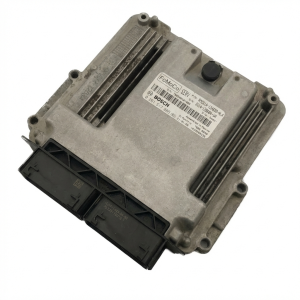
Used OEM Parts in Stock



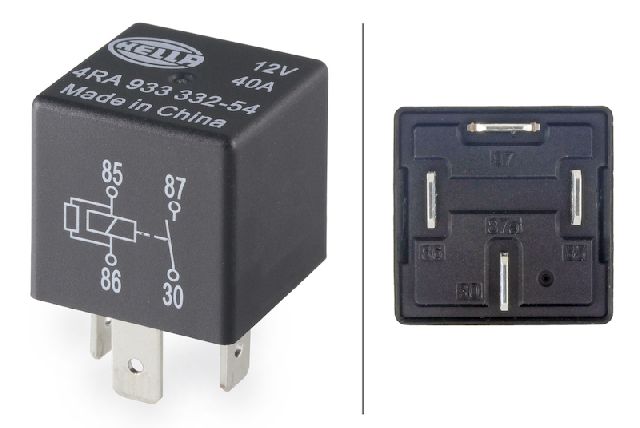
New Aftermarket Parts Available

The information in this article is provided for general reference and educational purposes only. Vehicle specifications, procedures, and part compatibility can vary by production date, trim level, and region. Always consult your vehicle's factory service manual and verify part numbers before purchasing or performing repairs. Safety-critical components such as airbags, seat belts, and braking systems should be installed by a qualified professional.
- Ford Flex:
- 🎬 Helpful Videos
- 🛍️ Shop This Part
- What's Unique About the 2009-2019 Ford Flex
- Symptoms You May Notice
- Most Likely Causes
- Rare But Worth Checking
- Diagnosis Steps
- Parts You'll Likely Need
- Related Codes That Often Appear With This One
- Technical Service Bulletins (TSBs) & Recalls
- Platform-Specific Known Issues
- Mechanic-Grade Diagnostic Values
- Scan Tool Commands That Help
- Wiring & Ground Locations
- Real Owner Repair Stories
- OEM Part Supersession History
- Model Year Variations Within This Range
- Diagnostic Flowchart
- Other Known Issues on This Vehicle
- Used vs. New Parts: Buying Guide for This Vehicle
- Real Owner Stories
- 2013 Ford Flex
- 2013 Ford F-250 (Similar Ford Electronics)
- Ford Flex (Year Unspecified)
- Related OBD-II Codes
- Frequently Asked Questions
- 🎟️ Get 5% Off