

U0100 on 2007-2014 Ford Edge: Lost Communication with PCM Causes and Fixes
On a 2007-2014 Ford Edge, code U0100 often points to a failing Powertrain Control Module (PCM), sometimes damaged by a bad ignition coil. Other common causes include poor battery voltage, corroded grounds, or damaged wiring. A PCM replacement can cost over $1,000, so always check the simpler electrical issues first.
- U0100 on a 2007-2014 Edge is a critical code indicating the engine computer (PCM) is offline, and the vehicle should not be driven.
- The most probable cause is a failed PCM, often damaged by a bad ignition coil. If you replace the PCM, you MUST replace all six ignition coils and spark plugs as well.
- Before condemning the expensive PCM, always rule out simpler issues: test the battery, check all related fuses, and inspect the PCM wiring and ground connections for damage or corrosion.
- Symptoms often include a no-start or stalling condition, multiple dashboard warning lights, and the odometer displaying dashes instead of numbers.
What's Unique About the 2007-2014 Ford Edge
The first-generation Ford Edge (2007-2014) has a known weakness where a failing ignition coil can short out and send a voltage spike back to the Powertrain Control Module (PCM), damaging its internal circuits. This design flaw means that what starts as a simple ignition coil failure can cascade into a much more expensive PCM replacement. 🎬 See how a simple spark plug can destroy your PCM. For this reason, when codes like P0351-P0356 appear alongside U0100, a damaged PCM is highly likely. Forum discussions are filled with owners who experienced a coil failure that immediately took out the PCM, resulting in repair bills over $2,500 at dealerships.
Generation note: This covers the entire first generation of the Ford Edge. A major facelift occurred in 2011, but the core powertrain architecture and PCM-related issues are similar across the 2007-2010 and 2011-2014 model years. The 3.5L Duratec V6 engine is the primary powertrain affected.
Symptoms You May Notice
- Engine will not start, or cranks for a long time before starting.
- Engine stalling intermittently while driving.
- Multiple warning lights on the dashboard, such as Check Engine, wrench light, ABS, and advanced trac service warnings.
- Transmission shifting erratically or getting stuck in one gear.
- Odometer display shows dashes (-------) instead of mileage.
- Loss of power and acceleration, vehicle may enter 'limp mode'.
- Scan tool cannot communicate with the PCM or shows 'No Communication' errors.
- Replacing other modules (like ABS or BCM) that are reporting the U0100 code. These modules are typically setting the code because they cannot hear the PCM; they are not the source of the problem.
Most Likely Causes
- Failing or faulty Powertrain Control Module (PCM) 🔴 High Probability A common failure pattern on this platform is for a bad ignition coil to short and damage the PCM driver circuits, causing communication loss. This is a well-documented issue in owner forums.
How to confirm: After verifying all power/ground connections and CAN bus wiring to the PCM are intact, the module itself is the likely culprit. This is often confirmed by a professional using advanced scan tools to see if the module is offline. 🎬 Watch: Step-by-step diagnosis for a PCM with no communication. The presence of ignition coil codes (P0351-P0356) strongly points to a damaged PCM. Some owners send their PCM to a repair service like Automotive Circuit Solutions for diagnosis and repair of the specific coil driver circuit.
Typical fix: Replace the Powertrain Control Module. It is critical to also replace all six ignition coils and spark plugs at the same time to prevent the new PCM from being damaged again. 🎬 Watch: How to replace the ignition coils on your Edge. The new PCM will need to be programmed to the vehicle's VIN and key information.
Est. part cost: $800-$1200 - Weak or Failing Battery 🟡 Medium Probability
How to confirm: Test the battery voltage with a multimeter. A healthy, fully charged battery should read approximately 12.6 volts with the engine off. If the voltage is below 12.2V, the battery is discharged and may be unable to properly power all the modules, causing communication glitches.
Typical fix: Recharge or replace the battery. Ensure terminals are clean and tight.
Est. part cost: $150-$250 - Corroded or Damaged Wiring / Connectors 🟡 Medium Probability
How to confirm: Visually inspect the wiring harness leading to the PCM for any signs of corrosion, chafing, or rodent damage. Pay close attention to the main PCM connectors and ground straps. Check for continuity on the CAN bus wires (CAN_H and CAN_L) between the OBD-II port and the PCM connector.
Typical fix: Repair or replace the damaged section of the wiring harness. Clean any corroded connectors and apply dielectric grease.
Est. part cost: $20-$500 - Poor Ground Connections ⚪ Low Probability
How to confirm: Locate the main PCM and chassis ground points. On the 2011 Edge, key grounds are G100 and G103 on the left side of the engine compartment, and G101 on the right rear of the engine. Remove, clean, and tighten them to ensure a solid connection. A voltage drop test can be performed on the ground circuit to confirm its integrity.
Typical fix: Clean the contact surfaces of the ground strap and chassis with a wire brush and re-secure the connection.
Est. part cost: $0-$5
Rare But Worth Checking
- Failed Ignition Coil(s): While the coil itself doesn't directly cause U0100, its failure is a well-documented cause of the PCM failing, which then triggers the U0100 code. If you have any P035x codes, this is the root cause.
- Blown Fuse: A blown fuse for the PCM or another critical module can cause a loss of power and communication. Always check fuses for the PCM, ECM, and OBD-II port.
- Faulty Throttle Body: While less common, some owners have reported that a faulty electronic throttle body can cause communication issues and codes, sometimes in conjunction with U0100. Cleaning or replacing the throttle body has resolved the issue in some cases.
Diagnosis Steps
- Check for other DTCs. Pay special attention to any U-codes in other modules and any P-codes (like P035x) in the PCM.
- Test the battery and charging system. Ensure battery voltage is above 12.4V and the terminals are clean and tight.
- Inspect all fuses related to the PCM and other control modules, including the fuse for the OBD-II port.
- Perform a thorough visual inspection of the wiring harness to the PCM, located in the engine bay near the firewall/cowl area. Look for any damage, corrosion, or loose connections.
- Inspect the main PCM ground connections to the chassis. Ensure they are clean and tight. A loose ground can cause intermittent communication loss.
- Using a multimeter, check for ~60 ohms of resistance across pins 6 (CAN-H) and 14 (CAN-L) at the OBD-II port with the battery disconnected. This verifies the integrity of the CAN bus termination resistors.
- If all wiring, power, and grounds are good, the PCM is the most likely failed component, especially if ignition coil codes are also present.
Parts You'll Likely Need
- Powertrain Control Module (PCM)
(OEM #8T4A-12A650-JE (2008 model example), 9T4A-12A650-CB (2010 model example))— This is the most common point of failure for a U0100 code on this vehicle, often damaged by a faulty ignition coil.
Trusted brands: Motorcraft
OEM price range: $800-$1200
Aftermarket price range: $500-$900 - Ignition Coil Set
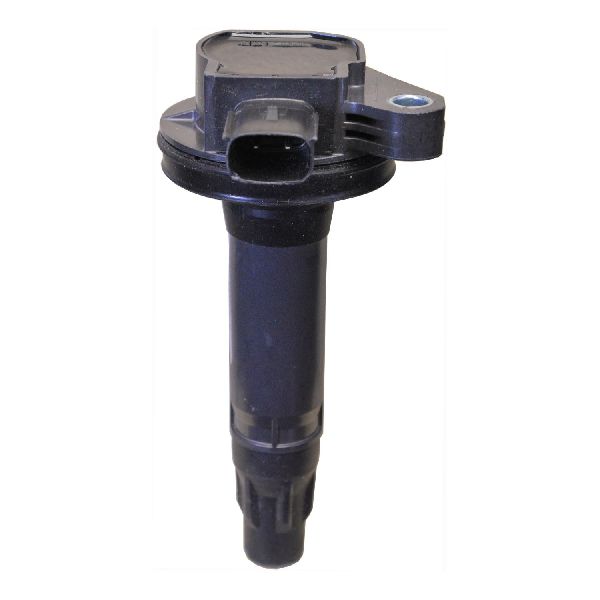
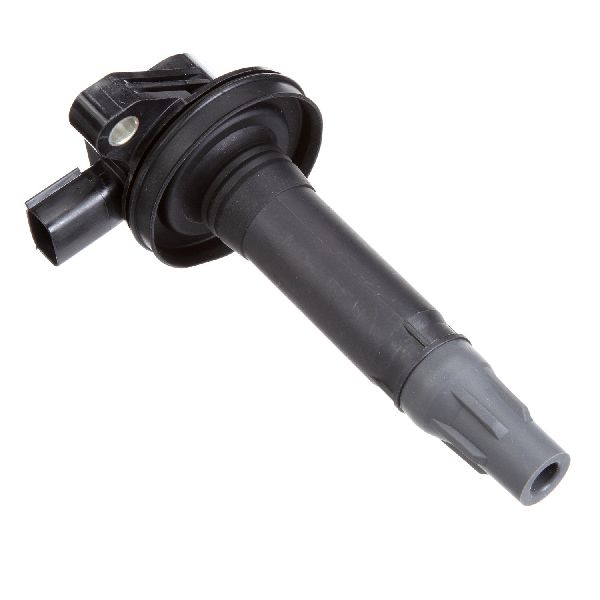
(OEM #DG520 / DG585)— It is mandatory to replace all six ignition coils when replacing a PCM that failed due to a coil short. This prevents immediate damage to the new module.
Trusted brands: Motorcraft, Denso, NGK, Duralast
OEM price range: $300-$450
Aftermarket price range: $150-$250 - Battery — A weak or failing battery can cause low voltage issues, leading to communication errors between modules.
Trusted brands: Motorcraft
OEM price range: $180-$250
Aftermarket price range: $150-$220
Related Codes That Often Appear With This One
- U0401 — Stands for 'Invalid Data Received From ECM/PCM'. This code is often set in other modules (like ABS, BCM, HVAC) at the same time as U0100, indicating they are not getting the correct information from the offline PCM.
- P0351-P0356 — These codes correspond to 'Ignition Coil [A-F] Primary/Secondary Circuit'. On the Ford Edge, one of these codes is a strong indicator that a failing coil has damaged the PCM, leading to the U0100 communication failure.
Technical Service Bulletins (TSBs) & Recalls
- TSB 09-22-11: While not directly for U0100, this TSB addresses a software fix for brake-related issues, highlighting that software updates can resolve module communication problems.
- TSB 10-22-4: Addresses driveline vibrations on AWD models, which could be misconstrued as engine/transmission issues related to U0100 if not properly diagnosed.
- Bulletin #SSM 54333: While issued for other Ford models, this bulletin notes that a no crank/no start condition with multiple warning indicators and DTC U0100 stored in the ABS and other modules can be caused by incorrect module communication.
- Bulletin #SSM 54574: Describes a "Service Immediately" message and U0100 stored in the ABS module, requiring specific technical instructions to correct the communication fault.
Platform-Specific Known Issues
- A known design flaw where a failing ignition coil can short and destroy the driver circuit within the PCM is a very common cause for this code on 2007-2014 Edge models.
- One owner on Ford Edge Forum detailed their experience where a bad coil killed the PCM. They avoided a $2500 dealer bill by sending the PCM to Circuit Board Medics for a $360 repair and replaced all coils and plugs themselves.
Mechanic-Grade Diagnostic Values
- CAN Bus Termination Resistance — expected: ~60 ohms. Failure: A reading of ~120 ohms indicates an open in the circuit or a missing termination resistor. A reading of 0 ohms indicates a short between CAN_H and CAN_L.
- CAN_H Voltage (Key On, Engine Off) — expected: ~2.5V to 3.5V. Failure: Voltage stuck near 0V or 5V indicates a hard fault (short to ground or power).
- CAN_L Voltage (Key On, Engine Off) — expected: ~1.5V to 2.5V. Failure: Voltage stuck near 0V or 5V indicates a hard fault (short to ground or power).
- PCM Ground Voltage Drop — expected: < 100-200 mV. Failure: Higher voltage indicates high resistance in the ground circuit, which can cause the module to malfunction.
Scan Tool Commands That Help
- Ford IDS (Integrated Diagnostic System) or equivalent J2534 tool: Network Test — This is a primary automated test to run when a U-code is present. It pings all modules on the network and provides a list of which ones are communicating and which are not, quickly isolating the source of the communication loss.
- Ford IDS (Integrated Diagnostic System) or equivalent J2534 tool: Programmable Module Installation (PMI) — This function is required when replacing the PCM. It downloads the as-built data from the old module (if possible) and programs the new module with the correct VIN, software, and vehicle configuration.
- Ford IDS (Integrated Diagnostic System) or equivalent J2534 tool: Parameter Reset — This function is necessary after installing a new PCM to relearn the Passive Anti-Theft System (PATS) key information. Without this step, the vehicle will not start. It typically requires having two programmed keys available.
Wiring & Ground Locations
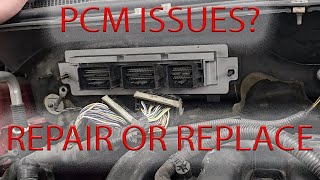
- PCM Connectors C175B, C175E, C175T — The PCM is located in the engine bay, on the firewall/cowl area. It has three large multi-pin connectors.. These are the main data, power, and ground connections for the PCM. Checking for power at the correct pins (e.g., Pins 1, 2, 4 on C175B for grounds on some models) and the integrity of the CAN bus wires at these connectors is a critical diagnostic step.
- G100 / G103 — Located on the left side of the engine compartment (driver's side).. These are primary chassis ground points for various components in the engine bay, including potentially the PCM. A corroded or loose connection here can cause intermittent power loss to the PCM, triggering a U0100.
- G101 — Located on the right rear of the engine.. Another critical engine ground point. Verifying its integrity is essential when diagnosing communication faults.
- CAN Bus Wires at PCM Connector — On connector C175B for some models, the CAN bus wires are located at pins 2 (CAN+) and 3 (CAN-). On other models, they may be at pins 53 and 54. Pin locations vary by year and engine.. These specific pins allow a technician to test the CAN bus signals directly at the module to determine if the fault is in the wiring harness or internal to the PCM.
Real Owner Repair Stories
- Ford Edge Forum user (2011 Ford Edge) — U0100, no communication with PCM, odometer shows dashes, multiple warning lights, no crank/no start.
❌ Tried (didn't work) Checking all fuses and relays., Testing battery voltage., Inspecting wiring for obvious damage.
✅ What actually fixed it The root cause was a faulty Instrument Panel Cluster (IPC). The CAN bus network runs through the IPC, and its internal failure brought down the entire network, preventing the PCM from communicating. Replacing the instrument cluster and having it programmed by the dealer resolved all issues. - Ford Edge Forum user (2008 Ford Edge SEL, 120,000 miles) — Fried PCM, likely U0100 and related codes.
✅ What actually fixed it Confirmed bad ignition coils had destroyed the PCM. The owner was quoted $1500 for the repair and was considering trading the vehicle in rather than fixing it, highlighting the high cost of this specific failure pattern.
Documented NHTSA Reports
- An owner reported in NHTSA ODI #11704877 that multiple communication fault codes, including U0100, U0131, U0140, and U0151, appeared when the ignition was on with the engine off, though they disappeared after starting.
- NHTSA ODI #11669147 describes a vehicle experiencing loss of power, mechanical noise, and diagnostic codes including P0014, P0303, and U0100 (lost communication with ECM/PCM).
- NHTSA ODI #11644872 references manufacturer bulletin SSM 49157, noting an illuminated malfunction indicator lamp with DTCs U0100 and U0401 among others.
OEM Part Supersession History
8T4A-12A650-JE→8T4Z-12A650-JE— Standard part number revision by Ford. The 'A' in the prefix indicates the original part design, while the 'Z' indicates a service replacement part.
Heads up: While part numbers should be matched, PCMs for this generation are often interchangeable as long as they are for the same engine and transmission, but they will always require programming (PMI and PATS Parameter Reset) to function.
Model Year Variations Within This Range
- 2011-2014: The 2011 facelift introduced a refreshed interior and updated electronics, including changes to the Body Control Module (BCM) and SYNC system. While the U0100 root causes are similar, wiring diagrams and ground locations may differ slightly from the 2007-2010 models. For example, wiring diagrams for a 2011 model specifically list grounds G100, G101, and G103 as key points in the engine bay.
Diagnostic Flowchart
Other Known Issues on This Vehicle
Issues unrelated to this code that are worth knowing about as an owner of this generation:
- Power Transfer Unit (PTU) Failure (AWD Models) 🔴 High — Common, especially on vehicles over 75,000 miles. The 'lifetime' fluid overheats due to proximity to the exhaust, breaks down, and causes gear failure. (Ref: TSB 10-22-4 (Related to driveline shudder))
- Faulty Brake Booster 🔴 High — Common across 2007-2015 models. A diaphragm inside the booster can tear, leading to a hard brake pedal and a hissing noise. (Ref: Customer Satisfaction Program 13N02 (Extends warranty to 10 years/150k miles))
- Internal Water Pump Failure (3.5L/3.7L V6) 🔴 High — Can occur after 80,000 miles. The water pump is internally chain-driven. When it fails, it leaks coolant directly into the engine oil, which can lead to catastrophic engine failure if not caught immediately.
- Door Ajar Sensor Failure 🟡 Low — Very common, particularly in 2011-2013 models. A faulty switch in the door latch causes the 'Door Ajar' light to stay on, draining the battery and preventing doors from locking properly.
- Water Leaks into Cabin 🟠 Medium — Reported in early models, often due to poorly sealed A-pillars or clogged moonroof drains, leading to wet carpets and potential electrical issues. (Ref: Field Service Action 15B21 (A-Pillar Leak Inspection))
Used vs. New Parts: Buying Guide for This Vehicle
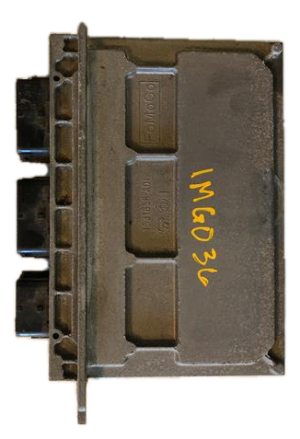
When a used part is the smart pick: A used PCM from a salvage yard can be a cost-effective option, but ONLY if you have access to a professional with a Ford IDS scan tool or equivalent high-level tool. A used PCM is essentially a brick until it is professionally programmed to your vehicle's VIN and security keys.
Donor-vehicle mileage cap: roughly under 120000 miles for the part to have meaningful remaining life.
What to inspect on the donor part:
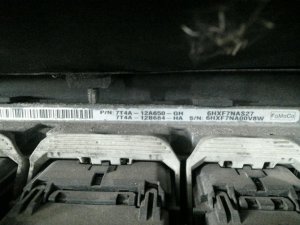
- Match the hardware part number exactly (e.g., 8T4A-12A650-JE).
- Ensure the donor vehicle had the same engine (3.5L) and drivetrain (FWD/AWD).
- Ask the salvage yard if they know why the vehicle was junked. Avoid PCMs from vehicles with known electrical fires or flood damage.
- Inspect the connectors on the used PCM for any bent, corroded, or pushed-out pins.
OEM-only on this vehicle (don't cheap out):
- Powertrain Control Module (PCM): While remanufactured units from reputable sources like Automotive Circuit Solutions are viable, cheap, unverified aftermarket PCMs should be avoided due to programming and quality control issues. OEM (Motorcraft) is the safest bet.
- Ignition Coils: Given that faulty coils are the primary cause of PCM failure on this vehicle, using high-quality OEM (Motorcraft) or top-tier aftermarket (Denso, NGK) coils is critical to prevent repeat failure.
Aftermarket brands forum-validated for this vehicle:
- Denso (for Ignition Coils)
- NGK (for Ignition Coils)
Brands owners have reported issues with on this vehicle:
- Unbranded, 'white box' ignition coils and PCMs from online marketplaces. The risk of premature failure and causing repeat damage to the expensive PCM is too high.
Real Owner Stories
Aggregated from forums and TSBs cited above. Mileages and costs reflect what owners reported in those sources.
2007 Ford Edge 3.5L V6
Symptoms: Ignition coil #1 failed, which destroyed the PCM. The owner faced a potential $2500 dealer bill.
What fixed it: Sent the PCM to a mail-in repair service (Circuit Board Medics) and replaced all coils and plugs personally.
Cost: $360-$500
Source hint: Ford Edge Forum: 'Bad Coil Went Backwards and Killed PCM/ECM FIX - 3.5L'
2007 Ford Edge
Symptoms: Ignition coils melting, taking out the PCM, resulting in stalling and no-start conditions.
What fixed it: Replacement of the PCM and ignition coils.
Source hint: CarComplaints.com
2007 Ford Edge
Symptoms: Common failure pattern where a bad coil kills the PCM; dealer quoted nearly $3,000 for the repair.
What fixed it: PCM and coil replacement as per a dealer-cited common problem/TSB.
Cost: $2,500-$3,000
Source hint: Ford Truck Enthusiasts Forums: '2007 Edge PCM Coils Problems'
Related OBD-II Codes
Frequently Asked Questions
Why does my Ford Edge odometer show dashes (-------) instead of the mileage?
Is there a TSB for the driveline vibrations I'm feeling alongside this code?
Can a bad ignition coil really destroy the PCM on a 2007-2014 Ford Edge?
Do I need to replace my spark plugs if I'm replacing the PCM for a U0100 code?
Where are the main ground points I should check on my 2011 Ford Edge?
Is there a warranty extension for the brake booster issues mentioned in my diagnosis?
Helpful Videos
Used OEM Parts in Stock




New Aftermarket Parts Available


The information in this article is provided for general reference and educational purposes only. Vehicle specifications, procedures, and part compatibility can vary by production date, trim level, and region. Always consult your vehicle's factory service manual and verify part numbers before purchasing or performing repairs. Safety-critical components such as airbags, seat belts, and braking systems should be installed by a qualified professional.
- Ford Edge:
- 🎬 Helpful Videos
- 🛍️ Shop This Part
- What's Unique About the 2007-2014 Ford Edge
- Symptoms You May Notice
- Most Likely Causes
- Rare But Worth Checking
- Diagnosis Steps
- Parts You'll Likely Need
- Related Codes That Often Appear With This One
- Technical Service Bulletins (TSBs) & Recalls
- Platform-Specific Known Issues
- Mechanic-Grade Diagnostic Values
- Scan Tool Commands That Help
- Wiring & Ground Locations
- Real Owner Repair Stories
- Documented NHTSA Reports
- OEM Part Supersession History
- Model Year Variations Within This Range
- Diagnostic Flowchart
- Other Known Issues on This Vehicle
- Used vs. New Parts: Buying Guide for This Vehicle
- Real Owner Stories
- 2007 Ford Edge 3.5L V6
- 2007 Ford Edge
- 2007 Ford Edge
- Related OBD-II Codes
- Frequently Asked Questions
- 🎟️ Get 5% Off