

U0100 on 2020-2025 Chevrolet Corvette: Lost Communication with ECM Fixes
On a 2020-2025 Corvette, code U0100 typically indicates a loss of communication with the Engine Control Module (ECM), often caused by low battery voltage or a poor connection. Before suspecting a faulty ECM, fully charge and test the AGM battery and check all related power and ground connections. The C8's Global B electrical architecture makes professional diagnosis with GM-specific tools highly recommended if simple checks don't resolve the issue.
- U0100 on a C8 Corvette is a critical code that will likely prevent the vehicle from starting or cause it to stall.
- The most common and easiest-to-fix cause is a weak battery or poor electrical connection. Always start your diagnosis here.
- Do not immediately assume the ECM has failed. It is an expensive part and rarely the root cause.
- Due to the C8's complex Global B electrical system, advanced network diagnostics should be left to a qualified professional.
- This code will almost always be accompanied by other communication codes from modules that rely on the ECM, such as the TCM (U0101).
What's Unique About the 2020-2025 Chevrolet Corvette
The 2020-2025 Corvette (C8) uses GM's advanced Vehicle Intelligence Platform (VIP), also known as Global B architecture. This system is more complex and network-intensive than prior generations, utilizing Ethernet for high-speed data transfer between core modules. While the root causes of U0100 remain consistent (power, ground, wiring), diagnosing network faults on this platform requires specialized tools (like GM's GDS2 software) and knowledge due to enhanced cybersecurity and data protocols. Unlike some other GM vehicles where specific ground points like G218 are common culprits, there are no widely-known Technical Service Bulletins (TSBs) citing a single, common failure point for U0100 on the C8 Corvette as of early 2026. However, TSBs on other Global B vehicles for similar issues often point to the Serial Data Gateway Module (SDGM) or specific power circuits to the ECM.
Symptoms You May Notice
- Complete no-crank / no-start condition, just a 'click'.
- Engine stalls intermittently while driving.
- Check Engine Light is illuminated.
- Multiple other warning lights (e.g., 'Service StabiliTrak', ABS, Transmission) may appear simultaneously.
- Transmission may shift harshly or become stuck in one gear (limp mode).
- Cooling fans may run at maximum speed as a fail-safe measure.
- Inability for a standard OBD-II scanner to connect to the engine module.
- Instrument cluster gauges may sweep erratically or go blank after a failed start attempt.
- Replacing the Engine Control Module (ECM) first. The ECM is expensive and rarely the true cause. The problem is much more likely to be with the power or data supplied *to* the ECM, or a fault in the network gateway (SDGM).
Most Likely Causes
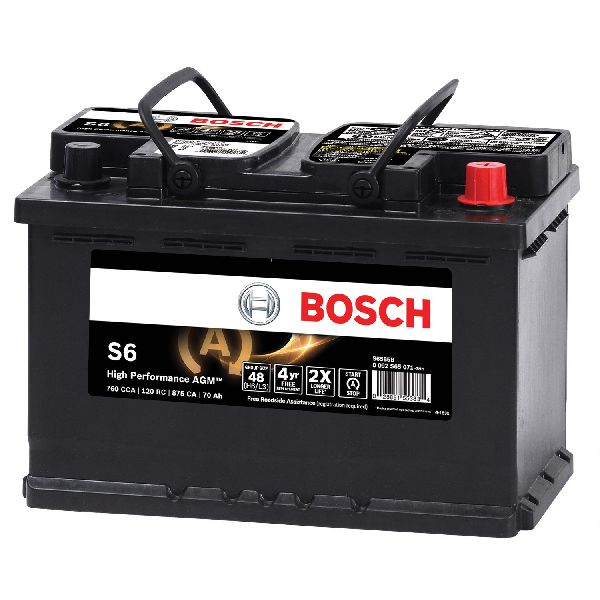
- Low Battery Voltage or Faulty Battery 🔴 High Probability Modern vehicles like the C8 Corvette are extremely sensitive to voltage. The C8 uses an Absorbent Glass Mat (AGM) battery, and low voltage from a weak or dying battery is the most common cause of network communication codes.
How to confirm: Use a multimeter to test the battery voltage with the car off; it should be at least 12.6 volts. A reading below 12.4V is a cause for concern. Perform a load test on the battery to confirm its health, as a battery can show good voltage but fail under load.
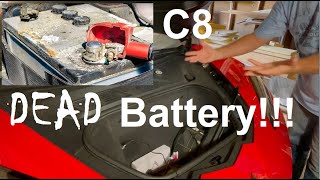
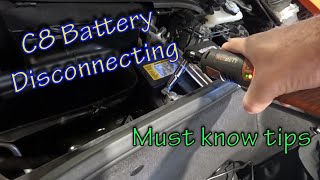
Typical fix: Recharge or replace the battery. Ensure terminals are clean and tight. After replacement, the windows will need to be re-indexed. 🎬 Watch: Essential tips for C8 battery replacement and maintenance.
Est. part cost: $250-$450 - Poor ECM Power or Ground Connections 🟡 Medium Probability Vibration and heat can affect electrical connections over time. While specific C8 ground locations are not as widely documented as problematic compared to other GM trucks, checking the main engine-to-chassis and battery ground straps is a critical step.
How to confirm: Check the main ECM/PCM fuses and relays in the fuse box. Locate the primary engine and ECM ground straps and inspect for corrosion or looseness. A wiring diagram is needed to test for B+ (battery positive) and ground directly at the ECM connector pins.
Typical fix: Clean or tighten ground connections (less than 0.2 ohms resistance is ideal). Replace faulty fuses or relays.
Est. part cost: $5-$50 - Damaged CAN Bus Wiring or Connectors ⚪ Low Probability While not a common failure, wiring can be damaged by road debris, improper service, or aftermarket modifications (e.g., incorrectly tapped wires for radar detectors or lighting).
How to confirm: Visually inspect the wiring harness leading to the ECM and other major modules for any signs of chafing, melting, or physical damage. A professional would use a multimeter to check for 60 ohms of resistance across the CAN bus (with battery disconnected) to verify network integrity.
Typical fix: Repair or replace the damaged section of the wiring harness.
Est. part cost: $10-$1000+
Rare But Worth Checking
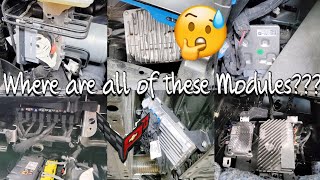
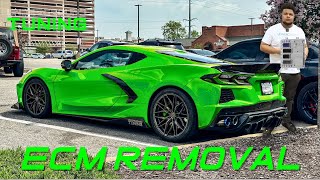
- Faulty Engine Control Module (ECM): This is rare and should only be considered after all other possibilities (power, ground, wiring) have been exhaustively ruled out. A forum user with a C6 reported needing a new ECM for a U0100 code after extensive diagnosis. Replacement requires dealer programming. 🎬 Watch this walkthrough on how to remove the C8 ECM.
- Interference from another faulty module: A different module on the CAN bus can sometimes fail in a way that it floods the network with erroneous data (a 'babbling' module), preventing the ECM from communicating. This requires a network-wide scan with an advanced tool to isolate the problematic module.
- Faulty Serial Data Gateway Module (SDGM): On GM's Global B platform, the SDGM acts as a central router for all network traffic. A software glitch ('logic lock') or internal failure of the SDGM can prevent communication with the ECM, mimicking a failed ECM. TSBs for other GM trucks frequently point to this module.
Diagnosis Steps
- Check Battery Health: Confirm the AGM battery voltage is above 12.6V (engine off) and that the battery passes a load test. A weak battery is the most common cause. Clean and tighten battery terminals, including the small wire on the negative terminal clamp.
- Scan for All Codes: Use a high-quality OBD-II scanner capable of reading codes from all modules (BCM, TCM, ABS, SDGM, etc.), not just the ECM. Note all stored 'U' codes to see which modules are offline.
- Check Fuses and Relays: Inspect all fuses and relays related to the ECM/PCM and ignition system in both the front and rear fuse boxes. A simple blown fuse can take the ECM offline.
- Inspect Grounds: Visually inspect the main engine-to-chassis and battery-to-chassis ground connections for tightness and corrosion. On older Corvettes, key grounds are on the bell housing bolts and frame rails; while C8 specifics differ, the principle is the same.
- Check for Aftermarket Devices: Inspect for any aftermarket electronics (radar detectors, aftermarket stereos, lighting) that may be improperly wired into the CAN bus, causing interference.
- Inspect Wiring: Visually inspect the wiring harness connected to the ECM for any obvious signs of damage, melting, or corrosion.
- Professional CAN Bus Diagnostics: If the steps above do not resolve the issue, professional diagnosis is required. This involves using an oscilloscope to check for proper voltage (approx. 2.5V on CAN High and Low) and signal on the data lines at the ECM connector and OBD-II port, and using GM's GDS2 software to diagnose the Serial Data Gateway Module (SDGM).
Parts You'll Likely Need
- Battery (AGM)
(OEM #88866309 (ACDelco 48GHRA))— The most frequent cause of network communication codes is low system voltage from a weak or failing AGM battery.
Trusted brands: ACDelco
OEM price range: $250-$400
Aftermarket price range: $200-$350 - Engine Control Module (ECM) — This is a rare but possible cause. It is the final step after all wiring, power, and ground issues have been ruled out. Replacement requires programming by the dealer or a specialized shop.
Trusted brands: ACDelco
OEM price range: $800-$1200
Related Codes That Often Appear With This One
- U0101 — Lost Communication with TCM. Since the Transmission Control Module (TCM) relies on data from the ECM, a U0100 fault will almost always trigger a U0101.
- U0073 — Control Module Communication Bus 'A' Off. This is a more general network code that can appear alongside U0100, indicating a broader bus communication problem.
- P0700 — Transmission Control System (MIL Request). This code is set when the TCM requests the Check Engine Light to be turned on. It's a flag indicating the TCM has its own codes stored, often as a result of losing communication with the ECM.
- U0121 — Lost Communication With Anti-Lock Brake System (ABS) Control Module. If the network is down, communication with multiple modules is often lost simultaneously.
Technical Service Bulletins (TSBs) & Recalls
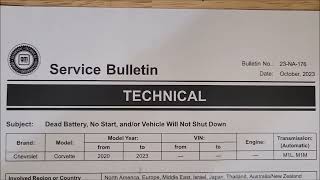
- While no TSB directly addresses U0100 on the C8, related bulletins for other GM Global B platform vehicles like the Silverado/Sierra are relevant. TSB #PIT6198 points to checking the ECM's accessory wake-up circuit, and TSB #PIT5586G discusses 'logic lock' on the Serial Data Gateway Module (SDGM), both of which could cause a U0100 code.
- Manufacturer TSB Bulletin #08-07-30-021H notes that communication DTCs including U0100 and U0073 can set alongside symptoms like intermittent door lock cycling, various warning lamps, and a transmission that may not shift.
Platform-Specific Known Issues
- While no widespread U0100-specific issue is documented for the C8, forum discussions for C6 and C7 Corvettes consistently point to battery voltage and loose/corroded ground connections as the resolution for this code, a principle that strongly applies to the more electrically sensitive C8.
Mechanic-Grade Diagnostic Values
- CAN Bus Network Resistance — expected: Approximately 60 Ω across pins 6 and 14 of the OBD-II port (battery disconnected).. Failure: A reading of 120 Ω indicates an open circuit to one of the two terminating resistors. A reading near 0 Ω indicates a short between the CAN High and Low wires. A reading of ~45 Ω could indicate a third, unintended terminating resistor on the bus or a faulty transceiver.
- CAN Bus Network Resistance (Global B Specific) — expected: May read ~120-123 Ω across pins 6 and 14 of the OBD-II port.. Failure: On Global B architecture, the DLC is connected directly to the Serial Data Gateway Module (SDGM), so a 120 Ω reading may be normal and does not necessarily indicate a fault, unlike older CAN systems.
- CAN Bus Voltage — expected: Approximately 2.5V on both CAN High (Pin 6) and CAN Low (Pin 14) with the key on, engine off.. Failure: Voltages that are stuck high (5V) or low (0V) indicate a short to power or ground. A DMM may show fluctuating values around 2.0-2.8V due to the high speed of data transmission; an oscilloscope is required for a true signal diagnosis.
- Module Ground Connection Resistance — expected: Less than 0.2 Ω between the module's ground pin and a clean chassis ground point.. Failure: Higher resistance indicates a poor ground, which is a common cause of communication faults.
Hidden / Shadow Codes Worth Checking
- Latched/Unrecoverable U0100: In some GM vehicles, after a battery discharge or unrelated electrical repair, a U0100 code can become 'latched' in a specific module (e.g., Power Steering Control Module). It will not clear with a standard scan tool command and may display a 'Rejected by Control Module' error message. (see via This is not a separate code but a state of the U0100 code, identified when it refuses to clear using a professional scan tool like the GM GDS2.)
Scan Tool Commands That Help
- GM GDS2: Module Presence / Network Scan — This is the first step to get a complete list of all modules on the vehicle's networks and identify which specific modules are not communicating.
- GM GDS2: Data Bus Diagnostics Tool — This function provides a real-time voltage trace of the CAN bus lines, allowing a technician to visually identify signal integrity issues, shorts, or electrical noise that a multimeter cannot capture.
- GM GDS2: Ethernet Enable via Pin 8 — For Global B vehicles, service programming is performed with the ignition OFF. The scan tool uses Terminal 8 of the DLC to send a wake-up signal to the Serial Data Gateway Module (SDGM) to enable communication for programming.
- N/A - Manual Procedure: Latched Code Clear Procedure — If a U0100 code is latched and won't clear, a specific drive cycle may be required. One such procedure involves driving the vehicle for at least 10 minutes at over 10 kph (6 mph), followed by a full 5-minute shutdown to allow all modules to go to sleep.
Wiring & Ground Locations
- Engine Control Module (ECM) — Located in the rear of the car, on the driver's side of the engine bay.. This is the module that has lost communication. Its connectors and ground connections are primary points of inspection.
- Serial Data Gateway Module (SDGM) — Located inside the vehicle, tucked underneath and behind the Body Control Module (BCM), which is below the main infotainment radio unit.. The SDGM is the central router for all network traffic on the Global B platform. A failure or software lock-up in this module can cut off communication to the ECM, directly causing a U0100 code.
- Body Control Module (BCM) — Located inside the vehicle, directly under the infotainment radio unit, with numerous large connectors.. The BCM is a central hub for many networks. While the SDGM is the primary gateway, issues with the BCM or water intrusion in this area could potentially affect network stability.
Real Owner Repair Stories
- CorvetteForum user (2008 Chevrolet Corvette C6 (Automatic)) — No-crank, no-start, gauges sweep after 10 seconds, single code U0100.
❌ Tried (didn't work) Battery tested good, Cleaned battery terminals, Checked all known ground points, Checked all fuses and relays in both fuse boxes, Checked alternator output, Inspected transmission 16-pin connector per TSB
✅ What actually fixed it The dealership replaced the Engine Control Module (ECM). The new ECM had to be pre-loaded with the vehicle's tune before installation. - CorvetteForum user (2007 Chevrolet Corvette C6 (Automatic)) — No-crank, multiple warning lights (ABS, traction, etc.), transmission stuck in 2nd gear, codes U0073 and U0100.
❌ Tried (didn't work) Replaced valve body and TCM, Cleaned transmission harness connector, Replaced pigtail end of the transmission harness, Replaced a power connector to the BCM
✅ What actually fixed it The shop found that a module located behind the right wheel well was 'soaked with water'. After addressing the water intrusion and related components, the issue was temporarily resolved, though it later returned, indicating a persistent water leak or resulting damage.
OEM Part Supersession History
Varies→Varies— Incompatibility with OTA Updates
Heads up: GM Service Update N242470190 notes that certain 2024 Corvette units were built with an incompatible Serial Data Gateway Module (SDGM) that requires module replacement rather than just reprogramming. This indicates a mid-cycle part change.
Model Year Variations Within This Range
- 2024-2025: These models are subject to GM Customer Satisfaction Program N242476670 for an SDGM software issue that can cause battery drain after an OTA update, requiring a dealer reprogram. The infotainment system also changed to a Google-based OS, and some owners report more minor electrical gremlins on 2024 models.
- 2020-2021: These models are subject to Service Update N212353390 if the SDGM was replaced during service, as it may have been programmed incorrectly and be unable to receive OTA updates. 2020 models also came with wired-only CarPlay/Android Auto, unlike later years.
Diagnostic Flowchart
Other Known Issues on This Vehicle
Issues unrelated to this code that are worth knowing about as an owner of this generation:
- Dual-Clutch Transmission (DCT) Problems 🔴 High — Common enough to generate over 17 TSBs, particularly in 2020-2022 models. Issues include fluid leaks, shuddering, error messages, and internal failures often requiring full transmission replacement. (Ref: Multiple TSBs exist. GM also initiated programs to analyze returned DCT filters and replace transmissions with certain faults.)
- Broken Engine Valve Springs 🔴 High — Specifically affects a batch of 2020 models built between June 1, 2020, and September 15, 2020. Can cause sudden engine failure. (Ref: TSB #PIP5752A advises technicians to inspect for broken springs and, if found, replace all valve springs on affected engines.)
- Wheel Casting Porosity / Cracking 🟠 Medium — A known issue on C7 models that also affects 2020-2021 C8s with 'Open Spoke' and 'Trident' wheel designs. Porosity in the casting can cause slow air leaks or lead to cracks. (Ref: TSB #N202315730 / N202315731. GM initiated a service campaign to inspect and replace affected wheels.)
- Brake Boost System Communication Fault 🟠 Medium — Affects certain 2020 models. Contamination in a sensor connection can interrupt communication within the electronic brake boost system. (Ref: Recall #20V489000)
- Rear Half-Shaft Assembly Failure 🔴 High — Affects certain 2021-2022 models. Assemblies may be missing ball bearings, which can result in a sudden loss of drive power. (Ref: Recall #22V091000)
Used vs. New Parts: Buying Guide for This Vehicle
When a used part is the smart pick: For this specific fault on this vehicle, using a second-hand part is NOT recommended for the primary suspect modules (ECM, SDGM).
OEM-only on this vehicle (don't cheap out):
- Engine Control Module (ECM/E99)
- Serial Data Gateway Module (SDGM)
- Body Control Module (BCM)
- Transmission Control Module (TCM)
Aftermarket brands forum-validated for this vehicle:
- For module tuning/unlocking services (not replacement parts), HP Tuners is the primary service used by the community.
Brands owners have reported issues with on this vehicle:
- Unknown/pre-programmed modules from non-reputable online sellers. The Global B architecture's security makes proper VIN and software matching critical, which is not guaranteed by generic aftermarket suppliers.
Real Owner Stories
Aggregated from forums and TSBs cited above. Mileages and costs reflect what owners reported in those sources.
2005-2013 Chevrolet Corvette (C6)
Symptoms: No-crank, no-start condition with a single U0100 code stored.
What fixed it: The owner traced the issue to a faulty ECM after exhausting all other diagnostic possibilities.
Source hint: CorvetteForum.com thread: 'No Crank, No Start, 1-Code U0100'
2014-2019 Chevrolet Corvette (C7)
Symptoms: No-start issue accompanied by a U0100 code.
What fixed it: The owner resolved the issue by checking all fuses and reseating the engine control relays.
Source hint: CorvetteForum.com thread: 'C7 Code U0100'
Chevrolet Sonic
Symptoms: No-crank/no-start after major work; the battery had dropped below 5 volts.
What fixed it: Replacing the completely dead battery restored power and cleared the communication loss code.
Source hint: Sonic Owners Forum thread: 'Please help! Got a code U0100, no start, no crank!'
Related OBD-II Codes
Frequently Asked Questions
My 2020 Corvette won't start and just clicks; could this be related to the U0100 code?
Is there a TSB for the Serial Data Gateway Module (SDGM) logic lock on the C8 platform?
Do I need to do anything special after replacing the battery to fix a U0100?
Could my aftermarket radar detector be causing this communication error?
Does the C8 Corvette share this U0100 issue with other GM vehicles?
What is the 'accessory wake-up circuit' mentioned in GM bulletins?
Helpful Videos
Used OEM Parts in Stock

New Aftermarket Parts Available

The information in this article is provided for general reference and educational purposes only. Vehicle specifications, procedures, and part compatibility can vary by production date, trim level, and region. Always consult your vehicle's factory service manual and verify part numbers before purchasing or performing repairs. Safety-critical components such as airbags, seat belts, and braking systems should be installed by a qualified professional.
- Chevrolet Corvette:
- 🎬 Helpful Videos
- 🛍️ Shop This Part
- What's Unique About the 2020-2025 Chevrolet Corvette
- Symptoms You May Notice
- Most Likely Causes
- Rare But Worth Checking
- Diagnosis Steps
- Parts You'll Likely Need
- Related Codes That Often Appear With This One
- Technical Service Bulletins (TSBs) & Recalls
- Platform-Specific Known Issues
- Mechanic-Grade Diagnostic Values
- Hidden / Shadow Codes Worth Checking
- Scan Tool Commands That Help
- Wiring & Ground Locations
- Real Owner Repair Stories
- OEM Part Supersession History
- Model Year Variations Within This Range
- Diagnostic Flowchart
- Other Known Issues on This Vehicle
- Used vs. New Parts: Buying Guide for This Vehicle
- Real Owner Stories
- 2005-2013 Chevrolet Corvette (C6)
- 2014-2019 Chevrolet Corvette (C7)
- Chevrolet Sonic
- Related OBD-II Codes
- Frequently Asked Questions
- 🎟️ Get 5% Off