

U0100 on 2005-2013 BMW 3-Series (E90/E91/E92/E93): Lost Communication with DME Causes and Fixes
On a 2005-2013 BMW 3-Series, code U0100 is most often caused by a weak battery, a faulty Intelligent Battery Sensor (IBS), or water damage in the electronics box that houses the engine computer (DME). Before suspecting an expensive DME failure, fully test the battery and charging system, and inspect the DME compartment under the passenger-side cabin air filter for signs of moisture or corrosion.
- U0100 on an E90-generation 3-Series is a critical fault that makes the car unsafe to drive.
- Always start diagnostics by testing the battery and charging system. A weak battery is the most frequent cause.
- The second most likely cause is water damage. Inspect the DME compartment under the passenger-side cowl for moisture and corrosion.
- Clean the cowl drains regularly as preventative maintenance to avoid catastrophic and expensive DME failure.
- Do not assume the DME is bad until all other possibilities (battery, water, wiring) have been professionally ruled out.
What's Unique About the 2005-2013 BMW 3-Series
The E9x generation of the BMW 3-Series (E90, E91, E92, E93) has two well-known vulnerabilities that directly lead to the U0100 code. 🎬 Watch to learn common causes and fixes for code U0100 First, its complex electronic systems are extremely sensitive to battery voltage; a weak or improperly registered battery is a primary trigger for communication faults. The Intelligent Battery Sensor (IBS) on the negative terminal can also fail, causing erratic power management and communication dropouts. Second, the DME is located in a plastic electronics box (E-box) in the engine bay plenum, which is prone to water intrusion from clogged cowl drains. This leads to corrosion on the DME connectors and internal module failure.
Symptoms You May Notice
- Engine cranks but does not start.
- Sudden engine stalling, sometimes with an 'Engine Malfunction' or 'Reduced Power' message on the iDrive screen or instrument cluster.
- Check Engine Light (Service Engine Soon) is illuminated.
- Multiple warning lights for other systems like ABS, DSC, or transmission may appear simultaneously, often with a 'Christmas tree' effect on the dashboard.
- A diagnostic scanner is unable to establish communication with the DME/engine computer, showing it as 'offline' or 'not responding'.
- Cooling fan runs at maximum speed immediately upon ignition-on, even with a cold engine (a failsafe response to no DME communication).
- Wipers may activate on their own or other electronic accessories may behave erratically.
- Replacing the DME without first testing the battery, charging system, and DME main relay.
- Replacing the DME without first thoroughly inspecting the E-box for water damage and cleaning the cowl drains.
- Assuming a crank-no-start is a fuel or spark issue without first checking for communication with the DME.
Most Likely Causes
- Weak, Failing, or Unregistered Battery 🔴 High Probability Modern BMWs have a high electrical demand and a sophisticated power management system controlled by the DME and IBS. Low voltage from a dying battery can cause modules to randomly drop off the communication network, especially during engine cranking. A replacement battery must also be 'registered' to the car's computer to reset the charging logic; failure to do so can overcharge or undercharge the new battery, leading to premature failure and persistent electrical faults.
How to confirm: Use a multimeter to check the battery voltage at rest (should be ~12.6V). Perform a load test on the battery, as a battery can show good voltage but fail under load. Check the charging system output (should be ~13.7-14.7V). Use a BMW-specific scan tool (like ISTA or a Foxwell scanner) to check battery registration status and read faults from the power management system.
Typical fix: Replace the battery with a high-quality AGM battery of the correct specification. Register the new battery to the vehicle using a capable scan tool. This is a critical step.
Est. part cost: $200-$450 - Water Damage in DME Electronics Box (E-box) 🔴 High Probability The DME is housed in a plastic box under the passenger-side cowl panel. The drains for this cowl area frequently become clogged with leaves and debris, causing rainwater to overflow and flood the E-box, submerging the DME, its connectors, and the main DME relay.
How to confirm: Remove the passenger-side cabin air filter and housing to access the white plastic E-box cover. Open the box and visually inspect for any signs of moisture, standing water, or blue/green corrosion on the DME connectors, wiring harness, and the blue DME relay. One owner on Bimmerpost found a pin completely corroded away after their car sat outside for the winter.
Typical fix: If corrosion is present, disconnect the battery, then remove and carefully clean the DME and its connectors with electronics cleaner. If a connector pin has corroded away or the DME is internally damaged, it will need to be repaired or replaced. The source of the leak (clogged drains) must be cleared to prevent recurrence.
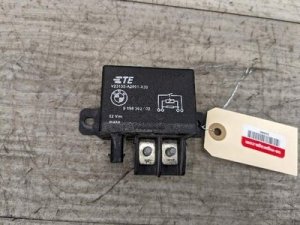
Est. part cost: $0 (cleaning) - $1500+ (DME replacement and programming) - Failed DME Main Relay 🟡 Medium Probability The main relay that supplies power to the DME is located inside the same E-box that is prone to water intrusion. Corrosion on the relay pins or internal failure of the relay itself will prevent the DME from powering on, resulting in a U0100 code.
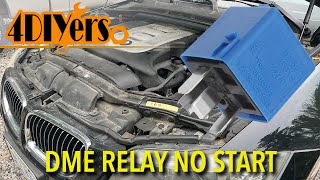
How to confirm: After accessing the E-box, locate the sky-blue relay. Check for 12V power at the relay's input pin (Pin 6, Red wire). You can attempt to swap it with an identical relay from another system for a quick test. A definitive test involves checking for power output on the orange wires (Pins 2 & 5) when the relay is commanded on. 🎬 Watch this guide on troubleshooting DME relay no-start faults
Typical fix: Replace the DME relay. 🎬 Watch how to locate and replace the BMW DME relay It is an inexpensive part and often replaced as a preventative measure when addressing U0100 faults.
Est. part cost: $15-$30 - Wiring Harness or Connector Fault 🟡 Medium Probability
How to confirm: Visually inspect the wiring harness leading to the DME for any signs of chafing, breaks, or rodent damage. Check the main power and ground connections to the DME for tightness and corrosion. A forum user on Bimmerpost reported a crank-no-start with U0100 after a valve cover gasket job where one of the DME connectors was not fully seated, even though it appeared to be.
Typical fix: Repair the damaged section of wiring or replace the corroded connector. Ensure all power and ground connections are clean and secure.
Est. part cost: $10-$300 - Failed Digital Motor Electronics (DME) ⚪ Low Probability While less common than external causes, the DME can fail internally due to electrical surges, heat cycles, or as a result of unaddressed water damage. For N54-equipped cars (335i), the MSD80 DME is known for MOSFET failures that typically cause misfires but can also lead to communication issues.
How to confirm: This is a diagnosis of exclusion. If the battery, charging system, DME relay, all power/ground connections, and all CAN bus wiring have been verified as good, the DME itself is the likely culprit. This requires professional confirmation, often by sending the DME to a specialist for bench testing.
Typical fix: Replace the DME. The replacement unit must be programmed (cloned) with the vehicle's specific VIN and immobilizer (CAS) data. This is not a plug-and-play part. Services exist to clone a failed DME to a used unit.
Est. part cost: $800-$1800
Rare But Worth Checking
- Failed Intelligent Battery Sensor (IBS):
- Failed Car Access System (CAS) Module:
Diagnosis Steps
- Read all fault codes from all modules using a BMW-specific scanner. Note any other 'U' codes and which modules are not responding.
- Perform a comprehensive test of the battery and charging system. Check voltage at rest (~12.6V), while cranking (>10.5V), and with the engine running (~14.0V). A load test is essential.
- If the battery was recently replaced, use a scan tool to confirm it was properly registered. If unsure, register it.
- Access the DME electronics box. Remove the passenger side cowl panel and cabin air filter housing. Open the white plastic E-box.
- Thoroughly inspect the E-box, DME, its connectors, and the blue DME relay for any signs of water, moisture, or corrosion.
- While in the cowl area, locate and clean the drains to ensure water can exit properly. Pour water into the cowl to verify it drains quickly.
- If no water is found, inspect the DME's power and ground wires for integrity and tightness. Check the main engine ground strap (chassis to engine block) for corrosion or breakage.
- Test the DME Main Relay. Swap the blue relay with a known-good one if possible. Otherwise, use a multimeter to verify power is being supplied to the DME fuses (e.g., F01-F04 in the E-box) when the ignition is on.
- If the problem persists, advanced diagnostics are needed. This involves using a multimeter to check for 60 Ohms of resistance between CAN High (Pin 6) and CAN Low (Pin 14) at the OBD-II port (with the battery disconnected) to verify the integrity of the network's terminating resistors.
- If all wiring, power, grounds, and the network itself test good, the DME is the most likely point of failure and should be sent for professional testing or replacement.
Parts You'll Likely Need
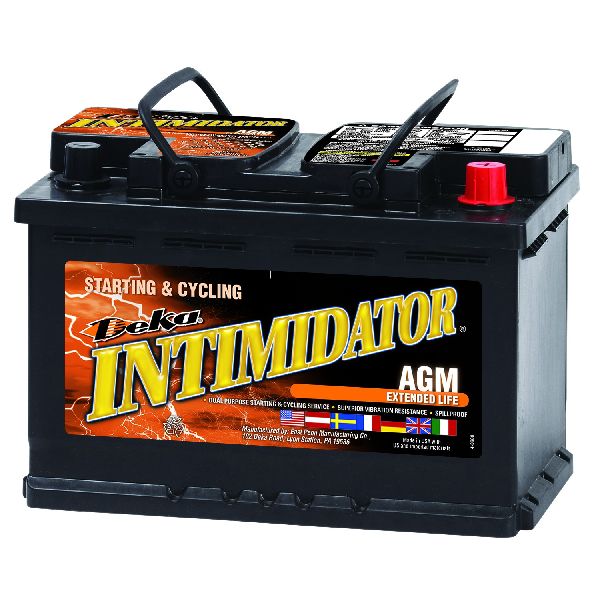
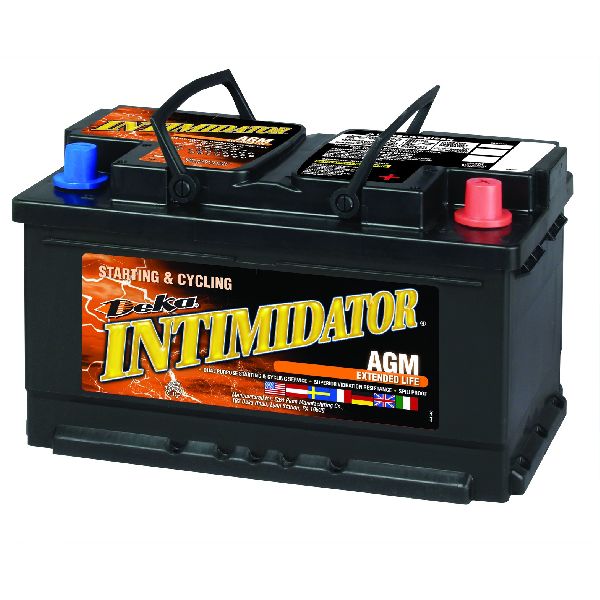
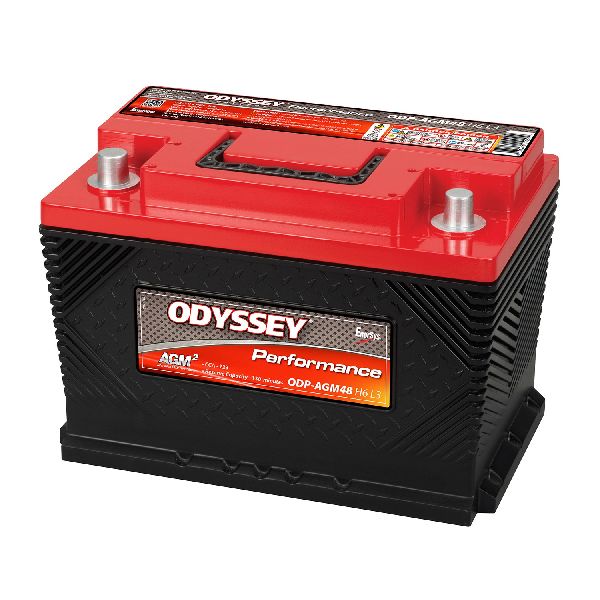
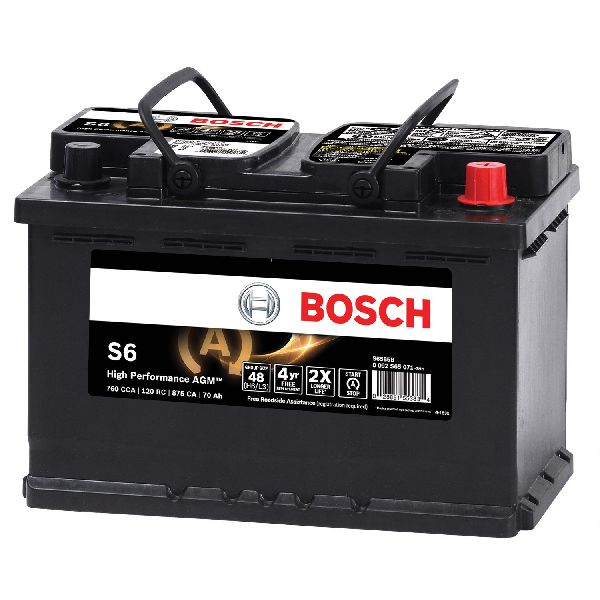
- AGM Battery — The most common cause of communication faults on this platform is a weak or failing battery.
Trusted brands: Varta, Bosch, Interstate, Duralast
OEM price range: $250-$350
Aftermarket price range: $200-$300 - DME Main Relay
(OEM #61366915327)— This inexpensive relay provides power to the DME and is a common failure point, especially when exposed to moisture in the E-box.
Trusted brands: Genuine BMW, VEMO
OEM price range: $25-$35
Aftermarket price range: $15-$25 - Digital Motor Electronics (DME)
(OEM #Varies (e.g., MSV80 for N52, MSD80/MSD81 for N54))— Required if the original DME is internally damaged by water or has an electronic failure. Part number is vehicle-specific and requires programming/cloning.
Trusted brands: Bosch/Siemens (OEM supplier), Genuine BMW
OEM price range: $1200-$1800
Aftermarket price range: $600-$1000 (Remanufactured/Cloned)
Related Codes That Often Appear With This One
- U0101 — Lost Communication with Transmission Control Module (TCM/EGS). Both the DME and EGS are on the same high-speed powertrain CAN bus (PT-CAN), and a network-wide issue like low voltage or a wiring fault will often cause both codes to appear.
- U0121 — Lost Communication with ABS/DSC Module. This is also on the PT-CAN and often fails to communicate for the same reasons (low voltage, wiring fault), frequently triggering a 'Chassis Stabilization' warning.
- Multiple codes from FRM — The Footwell Module (FRM) controls lights and windows. While on a different bus (K-CAN), severe voltage issues or a failing CAS module
Technical Service Bulletins (TSBs) & Recalls
- SI B12 08 08 - While not directly for U0100, this TSB involves reprogramming the DME for emissions issues, showing that DME software updates are a common dealer procedure that can affect module behavior.
- SI B12 05 12 - TSB for N63 engines describes reprogramming the DME to fix an engine speed drop issue, another example of software-related drivability fixes.
Platform-Specific Known Issues
- The cowl drains located below the windshield are a common point of failure. When they become clogged with leaves and debris, rainwater backs up and floods the electronics box containing the DME, causing corrosion and catastrophic failure.
Mechanic-Grade Diagnostic Values
- PT-CAN Bus Resistance — expected: Approximately 60 Ohms when measured between CAN High and CAN Low pins at the OBD-II port (Pin 6 & Pin 14) with the battery disconnected. A reading of 120 Ohms indicates a missing termination resistor, often in the DME or DSC module.. Failure: A reading of 120 Ohms or an open circuit (infinite resistance).
- PT-CAN Bus Voltage (Key On, Engine Off) — expected: CAN High (e.g., Pin 14 on DME connector) should be ~2.7V. CAN Low (e.g., Pin 1 on DME connector) should be ~2.3V. The sum of both voltages should be approximately 5V.. Failure: Voltages shorted to ground (0V), shorted to power (5V or 12V), or one line mirroring the other.
- DME Main Relay (K6300) Activation Signal — expected: Near 0V (ground) on the Red/Gray wire at the relay socket when the ignition is turned on. This signal comes from the DME (e.g., Pin 13 on connector X60005 for MSD80).. Failure: Voltage remains at 12V, indicating the DME is not providing the ground signal to activate the relay.
Hidden / Shadow Codes Worth Checking
- 2ACB / 2ACC: These codes specifically indicate a fault with the DME main relay. They often appear when the relay is failing intermittently or not being activated correctly, leading to a loss of power to the DME and triggering the U0100 in other modules. (see via BMW-specific diagnostic software like ISTA or a capable aftermarket scanner.)
- A0B4: Fault in the Car Access System (CAS) related to engine start. This can indicate that the CAS is failing to authenticate or wake up the DME, which would cause other modules to report a U0100 code because the DME never came online. (see via BMW-specific diagnostic software like ISTA.)
- 332E: Terminal 87_1: No Voltage. This fault directly points to a loss of power on the circuit supplied by the DME main relay. It is a strong indicator that the relay itself, its fuse (e.g., F11), or the activation signal is the root cause. (see via BMW-specific diagnostic software like ISTA.)
Scan Tool Commands That Help
- ISTA: Vehicle Test / Control Unit Tree — This is the first step in diagnosis. It provides a graphical layout of all control modules. A module that is not communicating, like the DME, will be shown in red or yellow, immediately confirming the scope of the communication loss.
- ISTA: Display Fault Memory — After running a vehicle test, this function lists all stored fault codes from all communicating modules. This is crucial for seeing which other modules are reporting the U0100 and if the DME has stored any internal power supply faults (like 2ACB) before it went offline.
- ISTA: DME Supply Test Plan — If the DME is offline, ISTA can guide the technician through a step-by-step test plan. This plan will prompt the user to check specific fuses, measure voltage at DME connector pins, and test the main relay, providing expected values and wiring diagrams along the way.
Wiring & Ground Locations
- Engine Ground Strap — Located on the driver's side of the engine (for US LHD models), connecting the engine block/oil pan area to the chassis. It is often hidden by underbody panels.. This is the main ground for the engine and DME. Corrosion or breakage of this strap can cause a poor ground reference for the DME, leading to erratic behavior, no-start conditions, and communication faults like U0100. It is a very common failure point due to its exposure to the elements.
- DME PT-CAN Pins — On the main DME connectors in the E-box. For many E9x DMEs, PT-CAN High is on Pin 14 and PT-CAN Low is on Pin 1 of the X60001 connector.. These are the specific pins where a technician would use an oscilloscope or multimeter to check the CAN bus signal integrity directly at the module. This helps determine if the fault is with the DME itself or the network wiring.
- DME Main Relay Activation Pin — For MSD80 DMEs (common on N54 engines), the ground signal to activate the main relay comes from Pin 13 of connector X60005.. If the DME has power but isn't activating its own main relay, there will be no power to its main processing circuits, causing a U0100. A known failure is a cracked solder joint for this pin inside the DME itself.
- Junction Box Electronics (JBE) — Located behind the glove box.. On models built after March 2007, the DME main relay (K6300) is soldered directly onto the JBE circuit board, not in the E-box. A failure of the JBE or this soldered relay will cut power to the DME.
Real Owner Repair Stories
- Bimmerpost user (BMW E9x (model not specified)) — Crank-no-start with U0100 code.
❌ Tried (didn't work) Not specified, but the issue occurred after a valve cover gasket replacement.
✅ What actually fixed it One of the large DME connectors in the E-box was not fully seated. Even though it looked and felt clipped in, it had to be removed and re-installed with significant force to make a proper connection, which resolved the communication fault. - M5Post user (similar S85 V10 platform, but relevant principle) (BMW M5) — Drivetrain malfunction, limp mode, and U0100 code under hard acceleration after installing catless downpipes.
❌ Tried (didn't work) Assuming it was a tuning issue related to the new downpipes.
✅ What actually fixed it A loose electrical connection to one of the DMEs. The increased engine movement under hard acceleration was enough to momentarily break the connection, causing the communication loss. Re-securing the DME connectors fixed the issue.
OEM Part Supersession History
12427552556→12427840580— Updated design for the main engine ground strap.
Heads up: The parts are interchangeable, but the updated part is recommended for durability.V23134-B57-X158 (Tyco)→61366915327 (BMW PN for the blue relay)— Standard component sourcing and updates.
Heads up: This is the common blue relay found in the E-box on pre-LCI models. Ensure the replacement has the same pin configuration and amperage rating.
Model Year Variations Within This Range
- 2005 - early 2007 (Pre-LCI): The DME main relay is typically a replaceable, sky-blue relay located in the E-box in the engine bay, next to the DME itself.
- March 2007 - 2013 (LCI): The DME main relay (K6300) was moved and soldered directly onto the Junction Box Electronics (JBE) circuit board, which is located behind the glove compartment. This makes diagnosis and replacement significantly more difficult, often requiring JBE replacement or specialized board repair.
- N/A - Engine Dependent: The specific DME model varies by engine (e.g., MSV70/MSV80 for N52, MSD80/MSD81 for N54, DDE6/DDE7 for diesels). While the U0100 causes are similar, the exact connector pinouts for power, ground, and CAN signals will differ. Always use a wiring diagram specific to the vehicle's engine and production date.
Diagnostic Flowchart
Other Known Issues on This Vehicle
Issues unrelated to this code that are worth knowing about as an owner of this generation:
- Electric Water Pump & Thermostat Failure 🔴 High — Very common, typically fails between 60,000-100,000 miles. Failure can cause rapid overheating and engine damage.
- Oil Filter Housing Gasket (OFHG) & Valve Cover Gasket (VCG) Leaks 🔴 High — Extremely common on all engines (N52, N54, N55). Gaskets harden and leak oil, which can drip onto the serpentine belt, causing it to slip off and be ingested by the front main seal, leading to catastrophic engine failure.
- N54 High-Pressure Fuel Pump (HPFP) Failure 🔴 High — Affects 335i models (2007-2010). Extremely common, leading to long cranks, stalling, and reduced power. Subject to recalls and extended warranties. (Ref: NHTSA Action Number: PE10037, BMW Recall 10E-A02)
- N54 Turbocharger Wastegate Rattle 🟠 Medium — Common on higher-mileage N54 engines. Caused by wear in the wastegate actuator rod/bushing. Creates a rattling noise on deceleration. Does not typically cause turbo failure but is a significant annoyance.
- Footwell Module (FRM) Failure 🟠 Medium — Common across the E9x platform. The module's memory can become corrupted due to low battery voltage or jump-starting, causing failure of lights, windows, and mirrors.
- N52 'HVA Ticking' 🟡 Low — Common on early N52 engines (2006-2008). Hydraulic Valve Adjusters (lifters) can bleed down, causing a ticking noise on startup. BMW released an updated cylinder head design to resolve it, but it's mostly a noise issue. (Ref: SI B11 09 07)
Used vs. New Parts: Buying Guide for This Vehicle
When a used part is the smart pick: A used DME (engine computer) is a viable option if the original has failed internally and is unrepairable. However, it is NOT plug-and-play. The used DME must be 'cloned' by a specialized service, where the VIN, immobilizer (CAS) data, and programming from your original DME are transferred to the donor unit. This is significantly cheaper than a new DME from BMW.
Donor-vehicle mileage cap: roughly under 150000 miles for the part to have meaningful remaining life.
What to inspect on the donor part:
- For a used DME, ensure the part number matches your original exactly (e.g., MSD80).
- Verify the donor car was not involved in a flood or fire.
- Inspect the connector pins on the used DME for any signs of corrosion, damage, or previous repair attempts.
- When buying a used CAS module, it must be purchased with its corresponding key fobs.
OEM-only on this vehicle (don't cheap out):
- DME Main Relay: While aftermarket relays exist, the cost of an OEM or OES (Original Equipment Supplier, e.g., Tyco/TE) relay is very low, and its reliability is critical. Using a cheap, unbranded relay is not worth the risk of being stranded.
- Intelligent Battery Sensor (IBS): Aftermarket IBS sensors have a poor reputation for reliability and can cause persistent power management faults. It is strongly recommended to use a genuine BMW part.
Aftermarket brands forum-validated for this vehicle:
- For the battery, brands like Varta, Bosch, and Interstate are well-regarded OEM-quality AGM replacements.
Brands owners have reported issues with on this vehicle:
- Unbranded or 'white-box' electronic sensors and relays from online marketplaces should be avoided due to high failure rates.
Real Owner Stories
Aggregated from forums and TSBs cited above. Mileages and costs reflect what owners reported in those sources.
BMW 3-Series (E9x)
Symptoms: The car sat outside for the winter and then experienced a no-start condition with a U0100 code.
What fixed it: Inspection of the DME revealed a connector pin had completely corroded away due to water intrusion in the E-box. The DME required repair or replacement.
Source hint: Bimmerpost thread titled 'Water damaged DME now with pics Update car runs with codes'
BMW 3-Series (E9x)
Symptoms: Crank-no-start with a U0100 code immediately following a valve cover gasket replacement job.
What fixed it: One of the DME connectors was not fully seated, even though it appeared to be properly connected.
Source hint: Bimmerpost forum user report
BMW 3-Series (E9x)
Symptoms: DME got wet, leading to communication issues and fault codes.
What fixed it: The owner had to access the white plastic E-box under the passenger side cowl to address moisture issues.
Source hint: Bimmerpost thread titled 'DME got wet, Help!'
Related OBD-II Codes
Frequently Asked Questions
Why does my 3-Series cooling fan run at maximum speed as soon as I turn the key?
Can a bad battery really cause a U0100 communication code on a BMW?
Where is the DME located on the 2005-2013 3-Series, and why is it prone to water damage?
Is there a specific relay I should check for a U0100 code?
Does TSB SI B12 08 08 relate to my DME issues?
What should I look for if I suspect water damage in the E-box?
Helpful Videos


Used OEM Parts in Stock




New Aftermarket Parts Available


The information in this article is provided for general reference and educational purposes only. Vehicle specifications, procedures, and part compatibility can vary by production date, trim level, and region. Always consult your vehicle's factory service manual and verify part numbers before purchasing or performing repairs. Safety-critical components such as airbags, seat belts, and braking systems should be installed by a qualified professional.
- BMW 3-Series:
- 🎬 Helpful Videos
- 🛍️ Shop This Part
- What's Unique About the 2005-2013 BMW 3-Series
- Symptoms You May Notice
- Most Likely Causes
- Rare But Worth Checking
- Diagnosis Steps
- Parts You'll Likely Need
- Related Codes That Often Appear With This One
- Technical Service Bulletins (TSBs) & Recalls
- Platform-Specific Known Issues
- Mechanic-Grade Diagnostic Values
- Hidden / Shadow Codes Worth Checking
- Scan Tool Commands That Help
- Wiring & Ground Locations
- Real Owner Repair Stories
- OEM Part Supersession History
- Model Year Variations Within This Range
- Diagnostic Flowchart
- Other Known Issues on This Vehicle
- Used vs. New Parts: Buying Guide for This Vehicle
- Real Owner Stories
- BMW 3-Series (E9x)
- BMW 3-Series (E9x)
- BMW 3-Series (E9x)
- Related OBD-II Codes
- Frequently Asked Questions
- 🎟️ Get 5% Off