

U0074 on 2014-2016 GMC Sierra 1500: Communication Bus 'B' Off Causes and Fixes
On a 2014-2016 GMC Sierra, code U0074 indicates a loss of communication between the Engine Control Module (ECM) and the Fuel Pump Control Module (FPCM). This is a known issue, often caused by wiring problems or a faulty control module, and frequently appears with code P2635. Diagnosis should always start with the communication issue before addressing any fuel pressure codes, especially if scan data shows actual fuel pressure is much higher than desired.
- U0074 on a 2014-2016 Sierra indicates a communication failure, most often between the Engine Control Module (ECM) and the Fuel Pump Control Module (FPCM).
- If you also have a P2635 code, DO NOT replace the fuel pump. The P2635 is a symptom of the U0074 communication problem.
- Diagnosis should focus on the wiring, connectors, and grounds between the ECM and FPCM before replacing any expensive modules.
- This is a complex electrical issue; professional diagnosis is highly recommended to avoid costly misdiagnosis.
- Check for TSBs related to your specific VIN, as GM has published extensive guidance on this issue.
What's Unique About the 2014-2016 Gmc SIERRA 1500

On the K2XX platform (which includes the 2014-2016 Sierra), the ECM and Fuel Pump Control Module (FPCM) communicate on a separate, isolated high-speed CAN bus. A U0074 code is often triggered by a loss of communication on this specific bus. This is a known pattern documented in GM Technical Service Bulletin PIP5427B, which states that this communication fault can cause a secondary fuel pressure code (P2635). The key diagnostic clue is that when this fault occurs, the FPCM defaults to maximum pressure, causing the 'Actual Fuel Pressure' on a scan tool to read significantly higher (10+ PSI) than the 'Desired Fuel Pressure'. This confirms U0074 is the root cause and must be diagnosed first, as replacing fuel system parts will not fix the problem.
Diagnostic Flowchart

Tap your situation to follow the diagnostic path that matches what you're seeing on this vehicle.
Symptoms You May Notice

- Service Engine Soon (SES) / Check Engine Light illuminated
- Service Stabilitrak / Traction Control messages on the dash
- Vehicle may stall or not start 🎬 Watch this diagnostic walkthrough for hard start and stalling symptoms.
- Erratic gauge behavior
- Loss of power steering or ABS warnings (if the fault extends to the main chassis bus)
- Fuel pressure reading significantly higher than desired on a scan tool.
- Replacing the low-pressure fuel pump or fuel pressure sensor. GM explicitly states in TSB PIP5427B that if U0074 is present with P2635 and actual fuel pressure is significantly *higher* than desired, the communication fault must be fixed first and that replacing fuel system components will not resolve the issue.
Most Likely Causes

- Wiring Harness Issues (Open/Short/Corrosion) 🔴 High Probability The wiring harness connecting the ECM and FPCM is long and exposed to the elements. Specific known chafe points include the harness section running inside the square tube of the frame directly under the underhood fuse panel on the driver's side, and near the transfer case on 4WD models. Connectors like X125 (under the hood) and X25 (on top of the driver's side shock tower) are also susceptible to moisture and corrosion.
How to confirm: Visually inspect the wiring harness between the ECM and FPCM (located near the spare tire) for visible damage, chafing, or corrosion, paying close attention to the known problem areas. Use a multimeter to check for continuity on the two CAN bus wires (end-to-end) and for shorts to power or ground.
Typical fix: Repair the damaged section of wiring or clean/replace the corroded connector. Applying dielectric grease can prevent future corrosion.
Est. part cost: $10-$100 - Failed Fuel Pump Control Module (FPCM) 🟡 Medium Probability The FPCM is an electronic module located under the vehicle on the driver's side frame rail, making it vulnerable to moisture, road salt, and vibration, which can lead to internal failure.
How to confirm: After confirming powers, grounds, and the integrity of the communication wiring to the FPCM are all good, the module itself becomes the primary suspect. Diagnosis often involves substitution with a known-good part.
Typical fix: Replace the Fuel Pump Control Module. Some aftermarket modules may not require programming, but OEM is often recommended for reliability.
Est. part cost: $80-$250 - Failed Engine Control Module (ECM) ⚪ Low Probability While robust, the ECM can fail internally, causing it to stop communicating on one of its networks. An internal failure of the CAN transceiver for the Powertrain Expansion Bus can set this code.
How to confirm: This is typically a diagnosis of exclusion. If the FPCM, all wiring, powers, and grounds have been verified as good, the ECM is the likely culprit. A technician in a detailed diagnostic video confirmed this exact failure mode after consulting with GM tech assistance; all wiring tested good, but communication could not be established, leading to a successful fix by replacing the ECM.
Typical fix: Replace the Engine Control Module. This requires programming specific to the vehicle's VIN.
Est. part cost: $300-$700
Rare But Worth Checking
- Low Battery Voltage: Control modules can stop communicating properly when system voltage is too low. While this usually sets multiple communication codes, it's a simple and important first check.
Diagnosis Steps
- Verify the battery is fully charged (above 12.4V) and the charging system is working correctly.
- Use a professional scan tool to check for all DTCs in all modules. Confirm the presence of U0074 and note any other codes, especially P2635 or U18A2.
- Follow TSB guidance: Prioritize diagnosis of U0074 before any other codes.
- On the scan tool, view live data for 'Desired Fuel Rail Pressure' and 'Actual Fuel Rail Pressure'. If actual pressure is more than 10 PSI (70 kPa) higher than desired, the U0074 communication fault is the confirmed root cause. Proceed with network diagnosis.
- Inspect the vehicle undercarriage for any obvious wiring damage between the engine bay and the rear of the vehicle where the FPCM is located. Pay special attention to the harness inside the driver's side frame rail.
- Locate the FPCM (mounted to the driver's side frame rail, often near the spare tire) and inspect its connector and nearby wiring for corrosion or damage.
- Check the power and ground fuses for the FPCM in the underhood fuse block.
- If wiring appears intact, perform electrical tests on the Powertrain Expansion Bus. Disconnect the ECM and FPCM and check for 60 ohms of resistance across the two communication wires (CAN High and CAN Low) to verify the circuit and termination resistors are intact.
- Check each communication wire for a short to ground or a short to power.
- If wiring and termination resistance are good, the fault is likely one of the modules. Given its location and higher likelihood of failure, the FPCM is often the first module to be suspected. However, if a known-good FPCM does not resolve the issue, the ECM is the next likely cause.
Parts You'll Likely Need
- Fuel Pump Control Module (FPCM)
(OEM #23487338, 23382215 (ACDelco))— This module is a common failure point due to its location under the truck, exposed to the elements. It is responsible for communicating with the ECM to control the fuel pump.
Trusted brands: ACDelco, Standard Motor Products, Dorman
OEM price range: $120-$180
Aftermarket price range: $80-$150 - Engine Control Module (ECM) — Less common, but an internal failure of the ECM's communication driver can cause this code when all other components and wiring test good.
Trusted brands: ACDelco
OEM price range: $400-$700
Aftermarket price range: $300-$500
Related Codes That Often Appear With This One
- P2635 — This code for 'Fuel Pump 'A' Low Flow / Performance' is often set as a direct result of the U0074 fault. The loss of communication causes the FPCM to default to a high-pressure state that the ECM cannot control, triggering the P2635 code.
- U18A2 — This is another communication code related to the FPCM. TSB #PIP5427B states that U0074 should be diagnosed with priority over U18A2, indicating they stem from the same root cause.
Technical Service Bulletins (TSBs) & Recalls
- PIP5427B: Diagnostic tips for SES light with DTCs P2635, U0074 and/or U18A2 set. This is the primary TSB for this issue, confirming U0074 is the root cause when actual fuel pressure is much higher than desired.
- PIT5076E: Lists U0074 as a code that points to a fault on the Chassis bus. This is a separate network from the Powertrain Expansion Bus, so this TSB is less relevant to the common FPCM communication issue but indicates U0074 can be set by other network problems.
Platform-Specific Known Issues
- A known issue documented in GM TSB #PIP5427B involves loss of communication on the Powertrain Expansion Bus. The bulletin specifically points to the U0074 code in conjunction with P2635 and provides a key diagnostic clue: 'It may be found that actual fuel pressure (low pressure system) will be reading substantially higher than desired fuel pressure.' This confirms the communication DTC is the root cause and should be diagnosed before replacing any fuel system parts.
Mechanic-Grade Diagnostic Values
- CAN Bus Network Total Resistance — expected: ~60 Ohms. Failure: A reading significantly higher or lower than 60 Ohms indicates a problem with the wiring or a termination resistor.
- CAN Bus Isolated Leg Resistance — expected: ~120 Ohms. Failure: When isolating a leg of the network (e.g., testing from a disconnected module towards the ECM or FPCM), a reading other than ~120 Ohms suggests a problem with that leg or the terminating resistor at its end.
- FPCM Power Supply Voltage — expected: 12V+ (Battery Voltage). Failure: A significantly lower voltage (e.g., 1.4V as seen in one case) indicates a wiring issue like a break or corrosion between the fuse box and the module.
- FPCM Fuel Pump Command Signal — expected: Pulsing or steady voltage with key on or cranking.. Failure: No voltage indicates a break in the wire or a problem with the ECM not sending the signal.
Scan Tool Commands That Help
- GDS2 / Professional Scan Tool: Live Data Monitoring: 'Desired Fuel Pressure' vs. 'Actual Fuel Pressure' — This is the primary diagnostic step per TSB PIP5427B. If U0074 is present and Actual Fuel Pressure is substantially higher than Desired Fuel Pressure, it confirms the communication fault is the root cause, not a fuel pump failure.
Wiring & Ground Locations

- Harness Chafe Point 1 — Inside the square tube of the frame, where the harness makes a turn directly under the underhood fuse panel on the driver's side.. A confirmed failure location where the main power wire to the FPCM can break, causing a voltage drop and loss of module function, which can be misinterpreted as a module failure.
- Harness Chafe Point 2 — On 4WD models, the harness can rub against the transfer case or rear driveshaft.. This can damage the CAN bus wires or the fuel pump command signal wire running from the ECM to the FPCM.
- G300 — A frame ground located under the vehicle at the driver's door on a body mount.. A poor frame ground can cause a variety of electrical issues, including communication faults between modules.
- G218 — Under the driver's side A-pillar/kick panel trim.. This is a major interior ground point. The factory sound-deadening foam can get pinched between the nut and the terminal, causing a poor connection and leading to various communication and electrical faults.
- ECM Main Ground — On the engine block, often just above the vacuum pump.. A poor engine-to-chassis ground can cause the ECM to malfunction, leading to network communication codes. This ground can be compromised by paint from the factory.
Real Owner Repair Stories
- 2CarPros Forum User 'DPS1028' (2016 Chevrolet Silverado 5.3L V8 4WD, 80,000 miles) — Fuel pump control module not communicating. Checked power at the fuse box (12V) but only had 1.4 volts at the FPCM connector's main power wire.
❌ Tried (didn't work) Initially suspected a bad module but tested wiring first.
✅ What actually fixed it Found a broken power wire inside the square tube of the frame, right under the driver's side fuse panel. Running a jumper wire confirmed the location, and then the harness was repaired. - YouTube Channel 'Injector Fault 2014 GMC Sierra Part 3... The Conclusion' (2014 GMC Sierra) — Check engine light, severe misfire, multiple codes including communication faults.
❌ Tried (didn't work) Extensive electrical testing of injector circuits., Considered replacing modules.
✅ What actually fixed it The main ground for the ECM, located on the engine block, had a poor connection due to paint. The technician removed the ground, sanded the block surface to bare metal, and re-secured the ground, which resolved all issues.
OEM Part Supersession History
Melted/Corroded FPCM Connector→ACDelco 19178089— The original connector for the Fuel Pump Control Module is susceptible to heat damage and corrosion, particularly at the ground terminal, which can lead to melting.
Heads up: This is a replacement connector/pigtail for when the original housing is damaged beyond repair. It requires splicing into the existing harness.
Helpful Videos
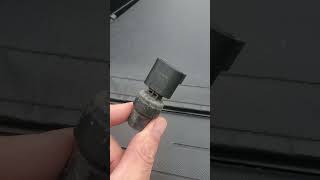
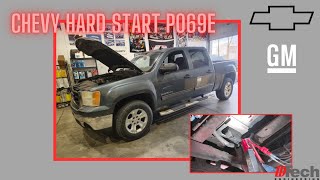
Used OEM Parts in Stock
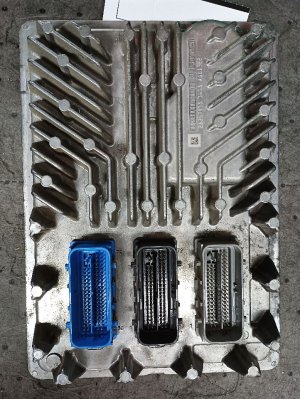

New Aftermarket Parts Available


The information in this article is provided for general reference and educational purposes only. Vehicle specifications, procedures, and part compatibility can vary by production date, trim level, and region. Always consult your vehicle's factory service manual and verify part numbers before purchasing or performing repairs. Safety-critical components such as airbags, seat belts, and braking systems should be installed by a qualified professional.
- Gmc SIERRA 1500:
- 🎬 Helpful Videos
- 🛍️ Shop This Part
- What's Unique About the 2014-2016 Gmc SIERRA 1500
- Diagnostic Flowchart
- Symptoms You May Notice
- Most Likely Causes
- Rare But Worth Checking
- Diagnosis Steps
- Parts You'll Likely Need
- Related Codes That Often Appear With This One
- Technical Service Bulletins (TSBs) & Recalls
- Platform-Specific Known Issues
- Mechanic-Grade Diagnostic Values
- Scan Tool Commands That Help
- Wiring & Ground Locations
- Real Owner Repair Stories
- OEM Part Supersession History
- 🎟️ Get 5% Off