

U0073 on 2009-2017 Toyota Venza: Causes and Fixes for Communication Bus Failure
U0073 on a Toyota Venza indicates a CAN bus communication failure. Before starting complex wiring diagnostics, check for and replace a weak or failing battery, as low voltage is a very common cause for this code on many modern vehicles. If the battery is healthy, the issue is likely a wiring fault, a poor ground connection, or a failed module such as the Skid Control ECU.
- Code U0073 means the vehicle's main computer network is down.
- The most common and easiest-to-fix cause on a Toyota Venza is a weak 12V battery. Always check this first.
- Driving is not recommended as the vehicle can become unpredictable and key safety systems (ABS, VSC) may be disabled.
- Diagnosis is complex and best left to a professional, as it involves testing wiring resistance and isolating modules.
- Do not replace expensive modules like the ECM without confirming they are the source of the network failure through proper diagnostic steps.
What's Unique About the 2009-2017 Toyota Venza

The Toyota Venza (2009-2017) is a single-generation vehicle built on the reliable Toyota K platform, which it shares with the Camry and Highlander. Unlike some vehicles with well-known, specific wiring chafe points that trigger U0073, the Venza does not have a single, widely documented 'smoking gun' cause. Instead, issues are typically related to general CAN bus principles, with a particular sensitivity to low battery voltage. A significant recall (NHTSA #21V190000) for the 2009-2016 models regarding airbag wiring in the driver's door that can fracture over time highlights a known vulnerability in harness design, even though it's not directly linked to U0073.
Symptoms You May Notice
- Multiple warning lights on the dashboard (Check Engine, ABS, VSC, TRAC, AWD).
- Vehicle may not start or may stall unexpectedly.
- Erratic or non-functional instrument cluster gauges.
- Transmission may not shift correctly or may be stuck in one gear.
- Loss of power features like power steering or cruise control.
- Inability to communicate with the vehicle's computer using a standard OBD-II scanner.
- AWD, ABS, and stability control system error messages on the multi-information display. 🎬 Watch: How to fix multiple dashboard warning lights and codes.
- Replacing individual sensors (like wheel speed sensors) when multiple unrelated system lights are on. The root cause is the communication failure between modules, not the sensors themselves.
- Replacing the ECM or another expensive module without first confirming it is the one bringing the network down. A thorough wiring and network resistance check must be done first.
- Ignoring a weak battery. Low voltage is a very common and simple-to-fix cause that is often overlooked in favor of more complex diagnostics.
Most Likely Causes

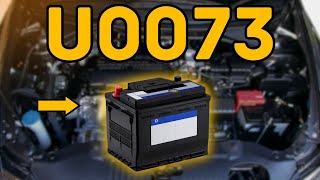
- Weak or Failing Battery 🔴 High Probability Modern Toyotas have numerous control modules that are sensitive to low voltage. During startup, a weak battery can cause system voltage to drop below the threshold required for stable communication, triggering a network fault. This is a common first check for any U-code diagnosis.
How to confirm: Test the battery voltage with a multimeter. A healthy battery should read at least 12.4V with the engine off and 13.7V-14.7V with the engine running. Also, check for corroded or loose battery terminals. Many auto parts stores will test your battery and charging system for free.
Typical fix: Replace the vehicle's 12V battery and clean the terminal connections.
Est. part cost: $150-$300 - Damaged CAN Bus Wiring or Connectors 🟡 Medium Probability Wiring can become damaged from vibration, moisture, rodent activity, or previous improper repairs. A short between the CAN High and CAN Low wires, or a short to power/ground, will bring down the entire network. Water intrusion in kick panel fuse boxes or under carpets can also corrode connectors.
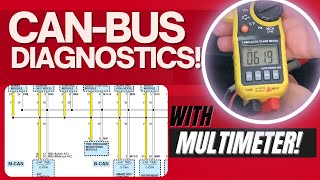
How to confirm: With the battery disconnected, measure the resistance between Pin 6 (CAN-H) and Pin 14 (CAN-L) on the OBD-II port. A healthy bus should read ~60 Ohms. A reading of ~120 Ohms indicates an open circuit (like a disconnected module or broken wire), while a reading below 60 Ohms suggests a short. 🎬 See this quick guide on testing CAN bus resistance and voltage. A thorough visual inspection of harnesses, especially near the firewall, under the dash, and around major modules, is necessary.
Typical fix: Locate and repair the damaged section of the wiring harness or clean/replace the corroded connector.
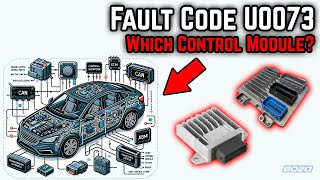
Est. part cost: $5-$100 - Faulty Control Module ⚪ Low Probability An internal failure in any module on the CAN bus (e.g., ECM, ABS, BCM, Skid Control ECU) can cause it to broadcast corrupt data or short the network internally, taking all other modules offline. The Skid Control ECU (ABS module) is a central hub and a potential point of failure.
How to confirm: This is difficult without a professional scan tool that shows network topology. The diagnostic approach is to physically disconnect one module at a time and re-check the CAN bus resistance (~60 Ohms) to see if the network comes back online. The module that, when disconnected, restores the network is the faulty one.
Typical fix: Replace the failed module. The new module will likely require programming or calibration by a dealer or qualified shop.
Est. part cost: $400-$2000+
Rare But Worth Checking
- Poorly Installed Aftermarket Electronics: Aftermarket remote starters, alarms, or stereos that are improperly spliced into the vehicle's wiring can interfere with CAN bus signals and cause communication faults. These devices can introduce noise or voltage irregularities onto the network.
- Faulty Terminating Resistor: The CAN bus has two 120-ohm resistors, typically located within the ECM and another module (often the Skid Control ECU or instrument cluster). While rare, one can fail. This is usually diagnosed when the bus resistance measures 120 ohms instead of the correct 60 ohms, indicating one terminator is offline.
- Blown Fuse: A blown fuse for a critical control module can take that module offline, causing communication codes. Check fuses labeled ECU, ECM, BCM, or ABS in the interior and under-hood fuse boxes.
- Cooling System Failures: In some Toyota models, a failed water pump can lead to a loss of coolant and trigger communication codes; NHTSA ODI #11681883 notes a case where a failed water pump was associated with codes U0073 and U0163.
Diagnosis Steps
- Check Battery Health: Verify the 12V battery is fully charged and healthy. A resting voltage below 12.4V is suspect. Clean the battery terminals of any corrosion. Confirm the charging system is operating correctly (13.7V-14.7V when running). Low voltage is a primary trigger for communication codes.
- Scan for All Codes: Use a professional-grade scanner to check for codes in all modules, not just the ECM. Note which modules are not responding, as this provides a major clue to the location of the fault.
- Check CAN Bus Resistance: Turn the ignition off and disconnect the negative battery terminal. Measure the resistance between Pin 6 (CAN-H) and Pin 14 (CAN-L) at the OBD-II port. The reading should be approximately 60 Ohms.
- Interpret Resistance Reading: If resistance is ~120 Ohms, there is an open in the bus wiring or a terminating resistor/module is offline. If it's significantly less than 60 Ohms, there is a short circuit between the CAN wires. If it's correct (60 Ohms), the problem may be intermittent, power/ground related to a specific module, or a module is sending corrupt data.
- Visual Inspection: Thoroughly inspect visible wiring harnesses, especially around the engine bay, under the dashboard, in the driver's kick panel, and at major module connectors, for any signs of damage, corrosion, or rodent activity.
- Isolate Modules (Advanced): If a wiring fault isn't found, begin disconnecting modules from the CAN bus one by one, re-checking the bus resistance each time. If disconnecting a specific module (e.g., the Skid Control ECU) restores the 60 Ohm reading or allows other modules to communicate, that module is likely faulty.
- Check Power and Grounds (Advanced): If wiring and modules seem okay, check for proper power and ground at the connectors of the main control modules (ECM, BCM, Skid Control ECU). A poor ground is a common, overlooked cause of network issues.
- Seek Professional Help: If the cause is not obvious, further diagnosis with an oscilloscope to analyze the CAN signal waveform is required to identify noise, interference, or a module sending corrupt data.
Parts You'll Likely Need
- 12V AGM Battery — Low system voltage from a weak or failing battery is a very common trigger for this communication code on modern Toyotas.
Trusted brands: Toyota TrueStart, Bosch, Interstate, DieHard
OEM price range: $200-$350
Aftermarket price range: $150-$250 - Skid Control ECU / ABS Module
(OEM #89540-0T041 (Example for 2013-2016 V6 AWD, verify by VIN))— If a module is identified as the cause, the ABS/Skid Control ECU is a central communication hub and a potential failure point. It also contains one of the CAN bus terminating resistors.
Related Codes That Often Appear With This One
- U0100 — Lost Communication with ECM/PCM.
- U0129 — Lost Communication With Brake System Control Module.
- U0140 — Lost Communication With Body Control Module.
- C1241 — Low or High Power Supply Voltage, often logged alongside U-codes when a battery or charging system issue is the root cause.
Technical Service Bulletins (TSBs) & Recalls
- T-SB-0005-11: Addresses a rattle from the steering column on 2009-2011 models, requiring column replacement. While not a U0073 cause, it involves work in the dashboard area where CAN wiring is routed.
- T-SB-0128-14: Notes a condition where holes can form in the driver's side carpet on 2009-2014 models, potentially exposing wiring underneath to damage or moisture.
Platform-Specific Known Issues
- Recall (NHTSA 21V190000 / Canada 2021-195): A recall was issued for 2009-2016 Venza models for wiring in the driver's side door that could become damaged from regular use. This can cause the side and curtain shield airbags to be disabled. While not directly linked to U0073, it demonstrates a known potential for wiring harness fatigue and failure in the vehicle.
- Recall (NHTSA 13V442000): A recall for 2012-2013 models where a clogged A/C condenser drain hose could cause water to leak onto the Airbag Control Module, potentially causing a short circuit. Water intrusion into any module can cause CAN bus communication failures.
Mechanic-Grade Diagnostic Values

- CAN Bus Voltage (Oscilloscope) — expected: A two-wire differential voltage network. Both CAN-H and CAN-L lines show a base voltage of approximately 2.5V in a recessive (idle) state. During data transmission, CAN-H should rise to ~3.5V and CAN-L should drop to ~1.5V, creating a near mirror-image waveform.. Failure: A flat line on one or both wires, voltages that do not mirror each other, or a signal that does not switch between ~1.5V/3.5V indicates a bus fault, short, or open circuit.
- CAN Bus Voltage (Multimeter) — expected: With the key on, CAN-H to ground should be ~2.5-2.7V. CAN-L to ground should be ~2.3-2.5V. The total voltage between CAN-H and CAN-L should be near 5V.. Failure: Significant deviation from these voltages, such as 0V or 12V on either line, indicates a short to ground or power. If both lines read ~2.5V and do not change, they may be shorted together.
Scan Tool Commands That Help
- Toyota Techstream: Communication Bus Check — This is a primary diagnostic step after an initial code scan. It provides a live, color-coded network map of all CAN bus modules, instantly showing which modules are communicating and, more importantly, which are not. This allows a technician to quickly identify the source of the 'Bus Off' message without having to physically disconnect modules one by one initially.
Wiring & Ground Locations
- Skid Control ECU — On the Toyota Venza, the Skid Control ECU (also known as the ABS actuator assembly) is typically located in the engine compartment. However, some documentation suggests a control module component may be located behind the dashboard on the right (passenger) side, requiring removal of the scuff plate, cowl side trim, and lower instrument panel pieces for access.. The Skid Control ECU is a central hub on the CAN bus and often contains one of the two 120-ohm terminating resistors. A failure of this module, its connector, or its ground can bring down the entire network.
- A-Pillar Grounds and Connectors — The A-pillars (the pillars on either side of the windshield) contain wiring harnesses that run up to the roof and down into the kick panels. Ground points are typically located in the kick panel areas.. The Venza, especially models with a panoramic sunroof, can be prone to water leaks from clogged roof drains or a bad windshield seal. This water can run down the inside of the A-pillar, corroding connectors and ground points located in the driver or passenger kick panel area, leading to intermittent or total CAN bus failure.
- Junction Connectors D57 & E31 — These are major junction connectors located under the dashboard, linking various modules and systems.. These connectors are a central point where multiple CAN bus lines converge. A loose pin, corrosion from a water leak, or damage from a previous repair at this location can cause a widespread communication failure across multiple systems.
Real Owner Repair Stories
- Reddit user post (for a similar Toyota model) (2019 Toyota Corolla) — Sluggish performance, poor stability when cornering, multiple warning lights (ABS/VSC/TRC), and codes U0073, U0100, U0129, U0140.
❌ Tried (didn't work) Dealership diagnosed faulty ABS wheel speed sensors, which was declined., Dealership then recommended replacing the expensive ABS module, which was also declined.
✅ What actually fixed it The owner used a Carista scanner to view live data and noticed the ignition voltage was only around 9 volts. After replacing the weak 12V battery, all symptoms and codes disappeared, and normal vehicle operation was restored. - NHTSA ODI #10851309: An owner reported that the ABS and brake lights came on, and the speedometer, odometer, and A/C stopped working. The dealer found code U0073 and required the replacement of the ABS actuator assembly, including the ABS pump and ECU.
- NHTSA ODI #10704941: A report describes a failure where various warning lights illuminated and the RPMs started bouncing, which the dealership attributed to communication code U0073.
"I Checked Everything" — The Actual Cause
- In a documented case for a similar Toyota with code U0073, the dealership's diagnostic path pointed towards expensive component replacement (ABS sensors, then the ABS module). The actual root cause was a weak battery providing only 9V, which was discovered by the owner checking live data with a consumer-grade scan tool. This highlights a pattern where standard diagnostic procedures can miss a simple, underlying power supply issue.
Documented NHTSA Reports
- NHTSA ODI #11697829: An owner noted that the dashboard displayed ABS, brake, engine, and master warning lights with OBD codes including U0142, U0155, and previously U0073.
- NHTSA ODI #10639478: A technician found code U0073 present during tests but could not pinpoint the exact problem, suggesting the difficulty of diagnosing intermittent network faults.
Model Year Variations Within This Range
- 2013-2017: For the 2013 model year, the Venza received a significant mid-cycle refresh that included revised styling and the introduction of the Toyota Entune multimedia infotainment system as a standard or optional feature. This more complex, integrated system adds another layer to the CAN bus network. While not a direct cause of U0073, diagnosing network faults on these later models may require checking for issues related to the head unit and its connections, which is less of a factor on 2009-2012 models.
Diagnostic Flowchart
Other Known Issues on This Vehicle
Issues unrelated to this code that are worth knowing about as an owner of this generation:
- VVT-i Oil Line Rupture (2GR-FE V6) 🔴 High — Common on earlier models (approx. 2009-2011) equipped with a rubber hose section. Can lead to rapid oil loss and catastrophic engine failure. (Ref: Limited Service Campaign (LSC 90K) was issued to replace the rubber hose with an all-metal line.)
- Torque Converter Shudder (U760E/F Transmission) 🟠 Medium — Some owners report a shudder during light acceleration between 25-50 mph. More documented on platform-mates like Camry and RAV4 but can affect Venza with the same transmission. (Ref: TSBs like T-SB-0023-15 and T-SB-0034-14 were issued for other models, involving a new torque converter and an ECM software update.)
- Steering Column Rattle 🟡 Low — A rattling or clunking noise may be heard from the intermediate steering shaft when turning or driving on rough roads. (Ref: T-SB-0005-11 was issued for 2009-2011 models, recommending replacement of the steering column assembly.)
- Interior Rattles and Sunroof Issues 🟡 Low — Owners frequently report various interior rattles, particularly from the dashboard and sunroof/moonroof area.
- VVT Gear Rattle at Startup (1AR-FE I4) 🟠 Medium — A brief rattle or knock for about one second on cold startup can be caused by a faulty VVT gear assembly. (Ref: T-SB-0041-13 describes this issue and the fix, which involves replacing the gear assembly with an updated part.)
Used vs. New Parts: Buying Guide for This Vehicle
When a used part is the smart pick: For a U0073 repair, a used Skid Control ECU (ABS Module) can be a cost-effective choice, as they are generally reliable electronic components. Ensure the part number from the donor vehicle matches your original part exactly. Used junction blocks or fuse boxes can also be considered if a specific connector is damaged.
Donor-vehicle mileage cap: roughly under 80000 miles for the part to have meaningful remaining life.
What to inspect on the donor part:
- Verify the part number on the used module matches your original part precisely.
- Source the part from a vehicle in a dry, salt-free climate to minimize the risk of hidden corrosion.
- Inspect the connectors on the used module for any signs of bent pins, corrosion, or water marks.
- If possible, get the VIN of the donor car to check its history for flood or fire damage.
OEM-only on this vehicle (don't cheap out):
- Wiring Harnesses: Never use a used wiring harness. They are prone to hidden damage (brittle wires, previous poor repairs) that can cause endless, untraceable issues.
- Aftermarket Modules: Avoid non-brand-name aftermarket control modules. They are notorious for causing communication errors and may not integrate properly with the rest of the vehicle's systems.
Aftermarket brands forum-validated for this vehicle:
- For this repair, sticking to used OEM or new OEM parts is the safest bet. There are no widely-validated aftermarket module brands for this specific, critical application.
Brands owners have reported issues with on this vehicle:
- Any generic or unbranded aftermarket stereo, remote starter, or alarm system. These are frequently installed improperly by splicing into CAN bus wires, directly causing codes like U0073.
Real Owner Stories
Aggregated from forums and TSBs cited above. Mileages and costs reflect what owners reported in those sources.
2013 Toyota Venza 2.7L AWD
Symptoms: The owner experienced a dead battery which led to a cascade of warning lights and multiple codes including U0073, U0129, and C1241.
What fixed it: Replacing the weak 12V battery resolved the low voltage condition and restored communication between modules.
Source hint: CarKiller.com Forum Post: 'Toyota Venza communication trouble codes'
2012 Toyota Venza
Symptoms: Potential for CAN bus communication failure due to water leaking from a clogged A/C condenser drain hose onto internal electronic modules.
What fixed it: Repairing/clearing the A/C condenser drain hose to prevent water intrusion into the Airbag Control Module (as part of a safety recall).
Source hint: Recall (NHTSA 13V442000)
Related OBD-II Codes
Frequently Asked Questions
Could the driver's door wiring recall (NHTSA 21V190000) be causing my U0073 communication code?
My 2013 Venza has a U0073 and a C1241 code. What is the most likely cause?
Is there a TSB for the driver's side floor area that might affect my Venza's wiring?
Can a clogged A/C drain cause a U0073 code on my 2012 Venza?
I have a rattle in my steering column; could this be related to my communication errors?
How can I check if a specific module like the Skid Control ECU is causing the U0073 code?
Helpful Videos

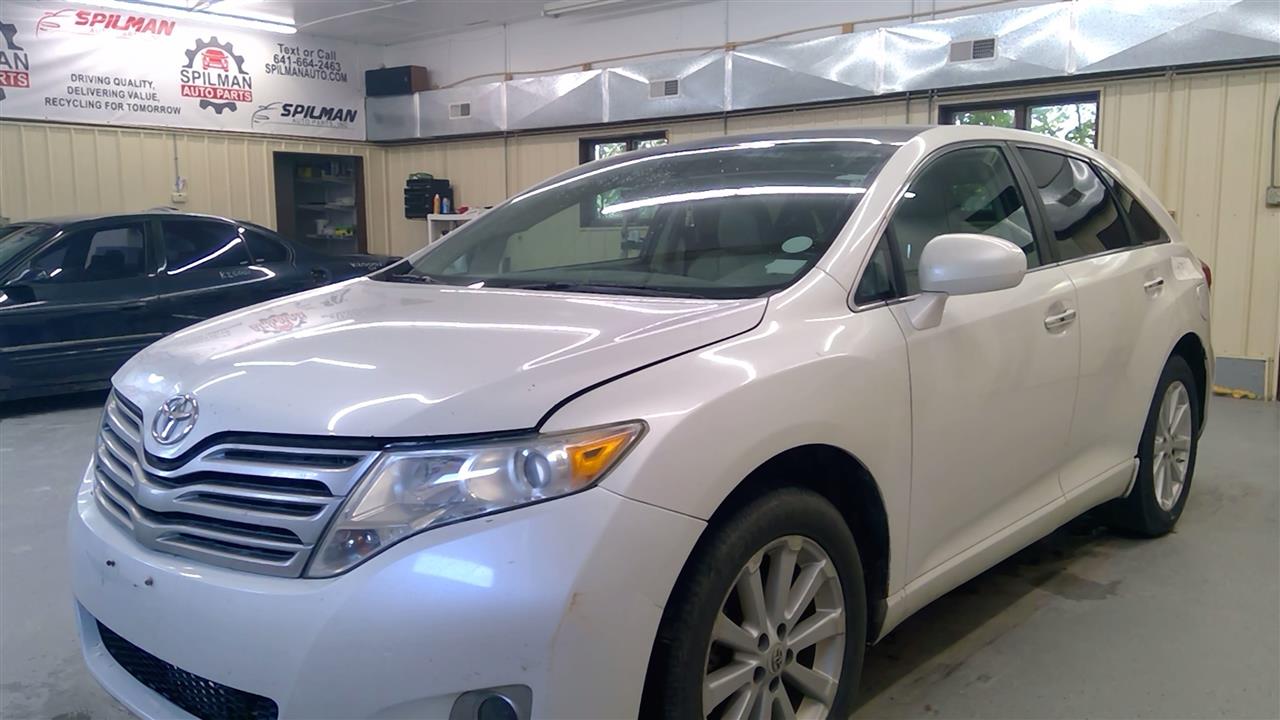
We Have This Part in Stock





The information in this article is provided for general reference and educational purposes only. Vehicle specifications, procedures, and part compatibility can vary by production date, trim level, and region. Always consult your vehicle's factory service manual and verify part numbers before purchasing or performing repairs. Safety-critical components such as airbags, seat belts, and braking systems should be installed by a qualified professional.
- Toyota Venza:
- 🎬 Helpful Videos
- 🛍️ Shop This Part
- What's Unique About the 2009-2017 Toyota Venza
- Symptoms You May Notice
- Most Likely Causes
- Rare But Worth Checking
- Diagnosis Steps
- Parts You'll Likely Need
- Related Codes That Often Appear With This One
- Technical Service Bulletins (TSBs) & Recalls
- Platform-Specific Known Issues
- Mechanic-Grade Diagnostic Values
- Scan Tool Commands That Help
- Wiring & Ground Locations
- Real Owner Repair Stories
- "I Checked Everything" — The Actual Cause
- Documented NHTSA Reports
- Model Year Variations Within This Range
- Diagnostic Flowchart
- Other Known Issues on This Vehicle
- Used vs. New Parts: Buying Guide for This Vehicle
- Real Owner Stories
- 2013 Toyota Venza 2.7L AWD
- 2012 Toyota Venza
- Related OBD-II Codes
- Frequently Asked Questions
- 🎟️ Get 5% Off