

U0073 on 2007-2013 Toyota Tundra: CAN Bus Communication Failure Causes and Fixes
Code U0073 on a 2007-2013 Tundra means a critical communication failure between modules. Before complex diagnostics, check for a weak battery, as low voltage is a common trigger. If the battery is healthy, the cause is often a wiring issue, such as a short circuit from an unused connector behind the glove box or a fault related to an aftermarket trailer brake controller.
- U0073 indicates a serious network failure; do not continue to drive the vehicle.
- Always check the battery and charging system first. Low voltage is a very common and simple-to-fix cause.
- On a 2007-2013 Tundra, a primary suspect for a wiring fault is the area behind the glove box, where a harness may short to a metal bracket.
- Do not immediately replace expensive control modules. The fault is more likely in the wiring, connections, or power supply that serves the entire network.
- This is a difficult code for DIY diagnosis and often requires professional help to avoid costly mistakes.
What's Unique About the 2007-2013 Toyota Tundra
On the second-generation Tundra, the U0073 code doesn't point to a single, common part failure. Instead, owners and technicians most often trace it to electrical issues. These can range from a simple weak battery to more obscure wiring shorts. One documented, hard-to-find issue on this platform is an unused wiring connector behind the glove compartment shorting against a metal bracket, which can bring the entire network down intermittently. Improperly installed aftermarket trailer brake controllers are also a known source of CAN bus interference on these trucks.
Symptoms You May Notice
- Multiple warning lights on the dashboard (Check Engine, ABS, VSC, TRAC)
- Vehicle enters 'limp mode' with reduced engine power
- Transmission may shift harshly or become stuck in one gear
- Engine may stall or fail to start
- Gauges on the instrument cluster may drop to zero or behave erratically
- Loss of power steering or other electronic features
- Scan tool may not be able to communicate with multiple control modules
- Replacing a control module (e.g., ABS, Skid Control, or Steering Angle Sensor) that is simply reporting a loss of communication. The U0073 code indicates a network-wide problem, not necessarily a failure of the module that stored the code.
Most Likely Causes
- Weak or Failing Battery 🔴 High Probability All modern vehicles are sensitive to low voltage. If system voltage drops below a certain threshold (e.g., 10V-11V) during startup, control modules may not initialize correctly, causing communication errors on the CAN bus.
How to confirm: Test the battery voltage with a multimeter. A healthy, resting battery should be at or above 12.4V. With the engine running, the alternator should be charging it at 13.7V to 14.7V. Check for corroded or loose battery terminals.
Typical fix: Recharge or replace the battery. Clean or tighten battery terminals.
Est. part cost: $150-$300 - Wiring Harness Short Circuit Behind Glove Box 🟡 Medium Probability A specific case identified on the Tundra platform involves an unused wiring connector, tucked behind the glove box near the passenger airbag assembly, that can rub or vibrate against a metal mounting bracket. This chafing can wear through the wire insulation and cause the CAN bus wires (CAN High and CAN Low) to short to ground, taking the network offline.
How to confirm: This issue is often intermittent and may be triggered by bumps or tapping on the dash. Access the area by removing the glove box assembly. Inspect the wiring harnesses for any signs of chafing, especially where they might contact metal brackets. A technician in a YouTube video demonstrated how tapping in this area caused the CAN signal to drop out on an oscilloscope. 🎬 Watch: Real-world diagnosis of the Tundra glove box wiring short.
Typical fix: Repair the damaged wires and insulate them with anti-abrasion tape or loom. Secure the harness away from the metal bracket using a zip tie to prevent future contact.
Est. part cost: $5-$25 - Faulty Aftermarket Electronics (Trailer Brake Controller) 🟡 Medium Probability Improperly installed aftermarket devices, especially trailer brake controllers, are often tapped into the vehicle's wiring. If they are connected incorrectly to the CAN bus or create electrical noise, they can disrupt communication and trigger a U0073 code.
How to confirm: If the problem started after installing a new device, this is a prime suspect. Temporarily disconnect the aftermarket device completely from the vehicle's wiring and see if the code clears and communication is restored.
Typical fix: Remove the device or have it professionally re-installed using a proper vehicle-specific harness that does not interfere with the CAN bus. 🎬 See how to properly install a Tundra trailer brake controller.
Est. part cost: $0-$100
Rare But Worth Checking
- Faulty Control Module: While possible, a module failure is less common than wiring or voltage issues. A module's internal CAN transceiver can fail, causing it to flood the network with bad data or stop communicating entirely. This is difficult to prove without advanced diagnostic tools and a process of elimination by disconnecting modules one by one until communication is restored. In a related Toyota case, NHTSA ODI #10851309 describes a dealer finding U0073 and requiring the replacement of the ABS actuator assembly, including the pump and ECU, after the speedometer and odometer stopped working.
- Corroded Connectors or Bad Grounds: Corrosion in a major harness connector or a loose/corroded main ground strap for the engine or body can create intermittent communication problems. A visual inspection of major ground points and harness connectors, especially those exposed to the elements, is worthwhile.
- Water Intrusion: Leaks from the windshield, sunroof, or cowl area can allow water to drip onto fuse boxes, junction blocks, or control modules located in the cabin or kick panels, leading to corrosion and short circuits that can bring down the CAN network.
Diagnosis Steps
- Check Battery Health: Before any other step, verify the battery is fully charged (12.4V+ resting) and the charging system is working (13.7-14.7V running). Clean and tighten the battery terminals. Low voltage is a very common cause of communication codes.
- Scan for All Codes: Use a high-quality scanner to read codes from ALL modules, not just the engine. Note which modules are not communicating. This can help pinpoint the area of the fault.
- Check for Aftermarket Devices: Visually inspect for any aftermarket electronics, particularly remote starters or trailer brake controllers. If any are present, disconnect them completely and re-test.
- Inspect Wiring Behind Glove Box: Remove the glove box and carefully inspect the wiring harnesses for chafing or contact with metal brackets, as this is a known issue on Tundras. Look for an unused connector that may be shorting out.
- Check CAN Bus Resistance: With the battery disconnected, measure the resistance between Pin 6 (CAN High) and Pin 14 (CAN Low) at the OBD-II port. A healthy network should read approximately 60 Ohms. A reading of 120 Ohms indicates an open circuit or a problem with one of the two terminating resistors (usually inside the ECM or another module). A reading near 0 Ohms indicates a short between the CAN lines.
- Check for Shorts to Ground: Measure the resistance from Pin 6 (CAN-H) to a good chassis ground (Pin 4) and from Pin 14 (CAN-L) to ground. Both should show an open circuit (infinite resistance). A low resistance reading indicates a short to ground, a common failure mode.
- Isolate the Fault: This is an advanced step. If resistance is incorrect, you must check wiring continuity and inspect connectors. If resistance is correct but the problem persists, a faulty module may be bringing down the network. This requires disconnecting modules one by one until communication is restored, a task best left to a professional.
Parts You'll Likely Need
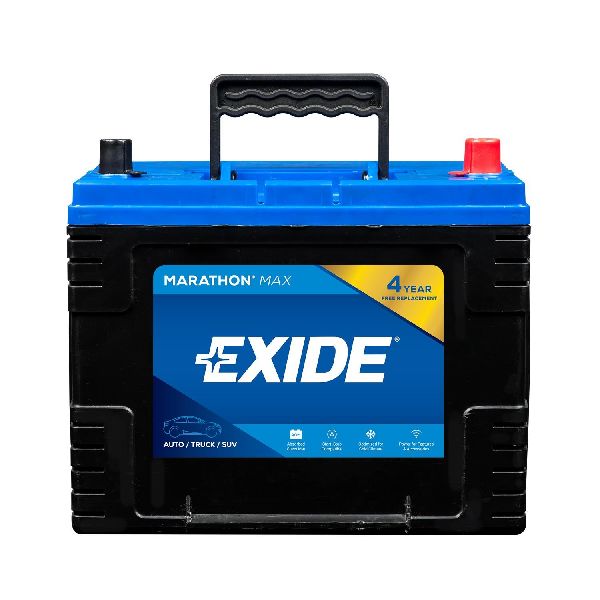
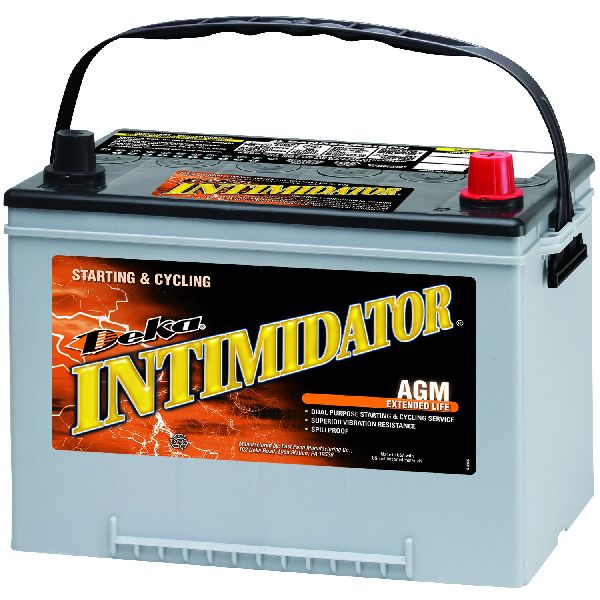
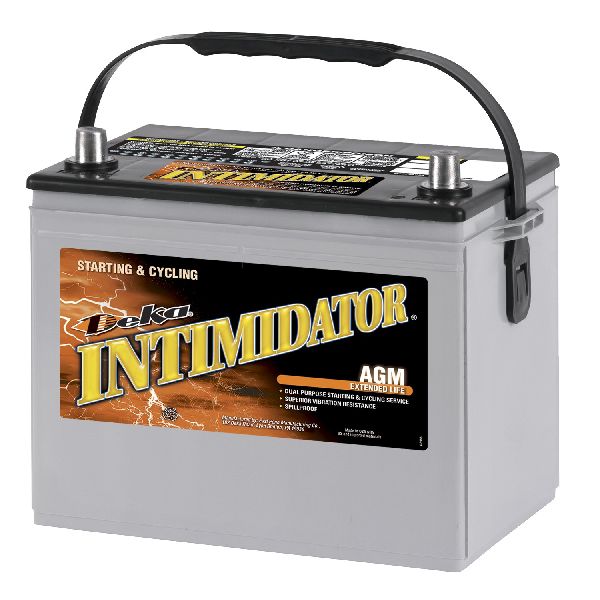
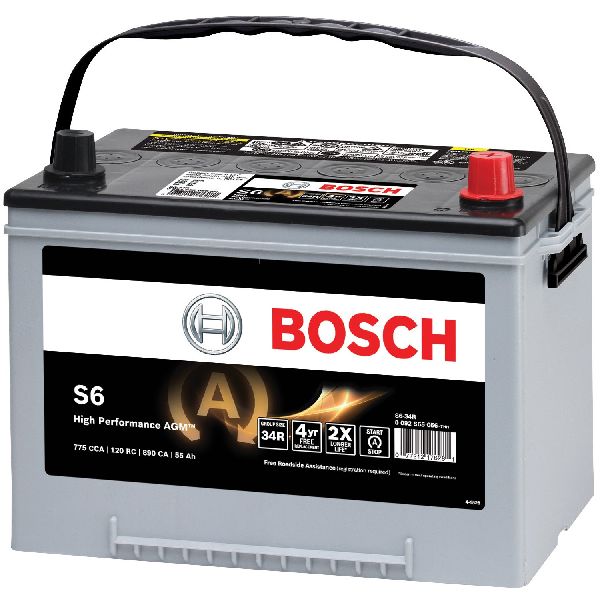
- Vehicle Battery — A weak or failing battery is a frequent cause of network communication errors due to low system voltage.
Trusted brands: Toyota TrueStart, Interstate, DieHard
OEM price range: $200-$350
Aftermarket price range: $150-$300 - Wiring Repair Supplies — If the cause is a short or open in the harness, you will need supplies like wiring, solder, heat shrink, and anti-abrasion tape to perform a durable repair.
Trusted brands: 3M
OEM price range: $10-$30
Aftermarket price range: $5-$25
Related Codes That Often Appear With This One
- U0100 — Lost Communication With ECM/PCM. This code often appears with U0073 because the ECM is a primary module on the CAN bus.
- U0129 — Lost Communication With Brake System Control Module. This indicates the ABS/VSC module is offline, a common symptom when the CAN bus fails.
- U0140 — Lost Communication With Body Control Module. The BCM is another key module on the network, and its loss is common with a U0073 fault.
- C1223 — ABS Control System Malfunction. This is often logged alongside the 'U' codes when the ABS module loses communication with other essential modules.
Technical Service Bulletins (TSBs) & Recalls
- source — A Toyota technical document (not a formal TSB for public release, but a dealer diagnostic procedure) outlines the steps for diagnosing a CAN bus off condition (U0073). It details checking for bus OFF states, delays in receiving data, and procedures for inspecting the CAN communication system when multiple 'U' codes are present.
Platform-Specific Known Issues
- A known, but not officially recalled, issue is an unused wiring harness connector behind the glove box that can rub against a metal frame member, causing an intermittent short on the CAN bus and triggering code U0073.
Mechanic-Grade Diagnostic Values
- CAN Bus Resistance (at OBD-II Port) — expected: ~60 Ω. Failure: A reading of ~120 Ω indicates an open circuit or one missing terminating resistor. A reading near 0 Ω indicates a short between CAN-H and CAN-L wires. A reading of ~40-45 Ω could indicate a third, unwanted resistor on the network (like from an improper trailer brake controller) or a failing module.
- CAN Bus Voltage (Key On, Engine Off) — expected: CAN-High (Pin 6) and CAN-Low (Pin 14) should both read approx. 2.5V relative to ground when the bus is idle.. Failure: When transmitting data, CAN-H should pulse to ~3.5V and CAN-L should pulse to ~1.5V. If either line is stuck high or low, or if voltages are significantly different (e.g., CAN-H at 2.0V and CAN-L at 2.7V), it indicates a short or an open circuit.
- CAN Module Internal Resistance to Ground — expected: Mega-ohms or an open circuit (OL).. Failure: A low resistance reading from either the CAN-H or CAN-L pin of a disconnected module to the module's ground pin indicates an internal short, a common failure from lightning or welding damage.
Scan Tool Commands That Help
- Toyota Techstream: CAN Bus Check — This function, found under the main utility or system selection menu, pings all expected modules on the network and displays their communication status in real-time, often with a color-coded list. It is the primary tool for quickly identifying which specific module(s) are not responding, which is crucial for isolating the fault. It can also help differentiate between a module that is truly offline versus one that is not installed on a particular vehicle trim, preventing a technician from chasing a non-existent part.
- Toyota Techstream: Health Check — Before diving into the CAN Bus Check, a full Health Check will query all ECUs for any stored DTCs. This is useful because a module might be communicating intermittently and may have stored specific codes related to its own failure (e.g., an internal processor fault) before it went completely offline, providing a clue to the root cause.
Wiring & Ground Locations
- J74 — Behind the glove box, near the passenger airbag assembly.. This is a CAN Bus junction connector. On many Tundras, it is unused and has a terminating cap. It has been identified as a source of chafing against a metal bracket, which can short the CAN bus wires and cause a U0073 code.
- J113 / J118 — J113 is the No. 2 CAN Junction Connector. J118 is the No. 1 CAN Junction Connector. Their exact locations are detailed in the factory Electrical Wiring Diagram (EWD).. These are primary junction connectors for the CAN bus. A service manual procedure for diagnosing a short to B+ on the CAN line involves disconnecting these connectors sequentially to isolate which branch of the harness contains the short.
- Main Engine Grounds — The main engine grounds are located on the rear of the cylinder heads, one on each side, near the transmission bell housing.. A poor engine-to-chassis ground can create a floating ground for the ECM and other engine-bay modules. This can cause unpredictable voltage differences and disrupt CAN communication, leading to U-codes even if the CAN wiring itself is intact.
- Passenger Kick Panel Ground / Connector — In the passenger side kick panel area.. This area contains multiple connectors and ground points. A forum user identified a faulty Skid Control ECU (ABS Module) in this location as the cause of their U0073 code. Water intrusion in this area is also a potential cause of corrosion on connectors.
Real Owner Repair Stories
- TundraTalk.net forum user (2007 Toyota Tundra) — ABS, VSC, and Slip Indicator lights on. Scan tool showed multiple codes including U0073, C1241, C1223, and others pointing to a loss of communication with the Skid Control ECU.
❌ Tried (didn't work) Checked battery and alternator (both good)., Inspected wiring for visible damage., Checked CAN bus resistance (was 60 ohms, indicating the main bus was intact).
✅ What actually fixed it The user replaced the Skid Control ECU (ABS module). After replacement, all communication was restored and the codes were cleared. The faulty module was identified as the source bringing down the network. - Tundras.com forum user (2007 Toyota Tundra) — Multiple warning lights including ABS, Brake, VSC OFF, 4-lo flashing. Truck would not go into 4WD. Codes U0073, U0124, U0126 present.
❌ Tried (didn't work) Initial diagnosis suggested a bad ABS module or wiring., Checked fuses.
✅ What actually fixed it The problem was traced to a faulty aftermarket trailer brake controller that had been previously installed. Disconnecting the controller resolved the communication errors and all warning lights went away. - NHTSA ODI #10639478 — An owner reported that multiple warning lights came on and their mechanic was unable to pinpoint the problem despite code U0073 being present during tests at a Toyota service center.
Documented NHTSA Reports
- NHTSA ODI #10704941 describes a failure where various warning lights illuminated and "RPMs started bouncing" alongside communication code U0073, which the dealership attributed to an assembly failure.
- NHTSA ODI #11697829 notes a case where the dashboard displayed ABS, brake, engine, and master warning lights with OBD codes including U0073, U0142, and U0155.
- NHTSA ODI #11681883 (Cross-manufacturer reference) mentions U0073 appearing alongside a "top where it's safe" message and other codes (P26CB71, U0163) during a failure event involving a loss of coolant.
Model Year Variations Within This Range
- 2007-2013: The 2007-2013 Tundra uses the 'Classical CAN' (CAN 2.0) protocol. This is a robust but slower protocol compared to the CAN FD (Flexible Data-Rate) found in later model vehicles. Diagnostic procedures and expected data rates are specific to this older standard. The wiring, connector locations, and common failure points are generally consistent across this model year range before the 2014 facelift.
Diagnostic Flowchart
Other Known Issues on This Vehicle
Issues unrelated to this code that are worth knowing about as an owner of this generation:
- Secondary Air Injection System Failure 🔴 High — Very common, especially on 2007-2012 models. Pumps and/or valves fail, often due to moisture intrusion, putting the truck in limp mode. Repair can cost thousands at a dealer. (Ref: Toyota issued a warranty extension for this issue on some models, but not all affected years were covered.)
- Frame Rust/Corrosion 🔴 High — A significant problem for Tundras used in rust belt states. While the first generation was worse, second-gen trucks are also susceptible. Can compromise structural integrity. (Ref: Recalls and warranty programs were issued for first-gen trucks, and inspections were extended to some second-gen models.)
- Cam Tower Oil Leak (5.7L V8) 🟠 Medium — A common oil leak from the sealant between the cam housing and the cylinder head. It's a labor-intensive repair that can cost a lot if done at a shop.
- Water Pump Failure 🟠 Medium — Water pumps on both the 4.7L and 5.7L V8 engines are a common failure point, typically after 100,000 miles. Symptoms include coolant leaks and potential overheating.
- Sticking Accelerator Pedal 🔴 High — Affected 2007-2010 models. A friction device in the pedal assembly could wear and cause the pedal to return slowly or get stuck. (Ref: Toyota recalled affected vehicles to install a reinforcement bar in the accelerator pedal assembly.)
Used vs. New Parts: Buying Guide for This Vehicle
When a used part is the smart pick: For a U0073 repair, a used control module (like a Skid Control ECU or main ECM) from a reputable salvage yard can be a cost-effective option. Since the most common causes are wiring and battery issues, the modules themselves are relatively reliable. A used wiring harness or harness pigtail is also a good choice for repairing localized damage.
Donor-vehicle mileage cap: roughly under 150000 miles for the part to have meaningful remaining life.
What to inspect on the donor part:
- Check for a donor vehicle with no signs of flood or fire damage.
- Inspect the module's connectors for any corrosion, bent pins, or physical damage.
- If possible, get the VIN of the donor vehicle to verify compatibility and check its history.
- For wiring harnesses, ensure the insulation is still flexible and not brittle, and that there are no obvious previous repairs or cuts.
OEM-only on this vehicle (don't cheap out):
- There are no specific parts for this repair that absolutely must be OEM-only, but using a new OEM battery is always a safe bet to eliminate voltage supply issues.
Aftermarket brands forum-validated for this vehicle:
- For battery replacement: Interstate, DieHard, Toyota TrueStart.
- For control modules: A used OEM unit is generally preferred over a new aftermarket one due to potential programming and compatibility issues.
Brands owners have reported issues with on this vehicle:
- Be cautious with no-name, ultra-cheap aftermarket trailer brake controllers, as improper design and lack of filtering can introduce noise onto the CAN bus, causing this code.
Real Owner Stories
Aggregated from forums and TSBs cited above. Mileages and costs reflect what owners reported in those sources.
2014 Toyota Tundra
Symptoms: ABS light was on and the vehicle had an intermittent CAN bus failure that could be triggered by tapping on the dashboard.
What fixed it: Found an unused connector behind the glove box rubbing against a metal airbag bracket; repaired the damaged wires and insulated them with tape.
Source hint: YouTube - 2014 Toyota Tundra ABS light nightmare U0073
2008 Toyota Tundra
Symptoms: Electrical and communication issues following the installation of an aftermarket device.
What fixed it: Troubleshooting and correcting the aftermarket trailer brake controller installation.
Source hint: etrailer.com - Troubleshooting Brake Controller on 2008 Toyota Tundra
Toyota Tundra (2007-2013 era)
Symptoms: A cluster of codes including U0073, U0100, and C1223, indicating widespread communication failure affecting the ABS and Engine control modules.
What fixed it: Diagnostic focus on the CAN communication system and module connectivity.
Source hint: Tundras.com - ABS connection issues
Related OBD-II Codes
Frequently Asked Questions
Is there a specific wiring issue on the 2007-2013 Tundra that causes the U0073 code?
Why did my Tundra's dashboard lights (ABS, VSC, TRAC) all come on at once with U0073?
Can a weak battery really cause a U0073 communication code on my Tundra?
I just installed a trailer brake controller and now have a U0073 code. Are they related?
Is there an official Toyota diagnostic procedure for U0073 on this platform?
How can I test if my Tundra's CAN bus network is physically damaged?
Helpful Videos
We Have This Part in Stock


The information in this article is provided for general reference and educational purposes only. Vehicle specifications, procedures, and part compatibility can vary by production date, trim level, and region. Always consult your vehicle's factory service manual and verify part numbers before purchasing or performing repairs. Safety-critical components such as airbags, seat belts, and braking systems should be installed by a qualified professional.
- Toyota Tundra:
- 🎬 Helpful Videos
- 🛍️ Shop This Part
- What's Unique About the 2007-2013 Toyota Tundra
- Symptoms You May Notice
- Most Likely Causes
- Rare But Worth Checking
- Diagnosis Steps
- Parts You'll Likely Need
- Related Codes That Often Appear With This One
- Technical Service Bulletins (TSBs) & Recalls
- Platform-Specific Known Issues
- Mechanic-Grade Diagnostic Values
- Scan Tool Commands That Help
- Wiring & Ground Locations
- Real Owner Repair Stories
- Documented NHTSA Reports
- Model Year Variations Within This Range
- Diagnostic Flowchart
- Other Known Issues on This Vehicle
- Used vs. New Parts: Buying Guide for This Vehicle
- Real Owner Stories
- 2014 Toyota Tundra
- 2008 Toyota Tundra
- Toyota Tundra (2007-2013 era)
- Related OBD-II Codes
- Frequently Asked Questions
- 🎟️ Get 5% Off