

U0073 on 2016-2021 Hyundai Tucson: Control Module Communication Failure Causes and Fixes
U0073 means there's a communication breakdown in your Tucson's computer network. The most common causes are a weak battery, corroded ground wires, or damaged wiring. A faulty ABS module is also a known culprit on this platform. This is a complex electrical issue, and professional diagnosis is strongly recommended.
- U0073 is a serious electrical fault indicating a network communication failure. Do not continue to drive the vehicle.
- Before suspecting expensive modules, always start by verifying the battery is fully charged and the terminals are clean and tight.
- A visual inspection of wiring harnesses for damage, especially after any recent service or if you live in an area with rodents, can sometimes reveal the cause.
- Due to the complexity of vehicle networks, this code is very difficult to diagnose at home and typically requires professional service with advanced diagnostic tools.
- There are no common, recurring part failures specifically tied to U0073 on the 2016-2021 Tucson; diagnosis must follow a logical process of elimination.
What's Unique About the 2016-2021 Hyundai Tucson
For the 2016-2021 (Third Generation) Tucson, a significant vehicle-specific issue is the recall for the Anti-lock Brake Hydraulic Electronic Control Unit (HECU). This unit can short circuit internally due to corrosion, posing a fire risk and potentially causing a CAN bus failure that would log a U0073 code. While no TSB is specifically for U0073, the symptoms of a failing HECU align with a network communication failure. Owner and technician reports confirm that CAN bus failures can occur, often presenting as a dashboard full of warning lights and malfunctioning systems.
Symptoms You May Notice
- Multiple warning lights on the instrument cluster (Check Engine, ABS, Traction Control, etc.)
- Loss of communication with the OBD-II scanner
- Engine may not start or may stall while driving
- Erratic or non-functional gauges, like the speedometer
- Transmission may shift harshly or get stuck in one gear
- Loss of features like power windows, turn signal sounds, or cruise control
- A/C may blow warm air or not function
- Message on dash displaying 'Check ABS system' or similar warnings
- Replacing a single control module without confirming it is the root cause of the network failure. The replaced module may also fail to communicate if the underlying wiring or power issue is not resolved.
- Replacing the battery without testing the alternator, leading to a recurrence of the issue.
Most Likely Causes
- Weak or Failing Battery / Poor Power Supply 🔴 High Probability Control modules are sensitive to voltage. Low voltage during startup or driving can cause modules to drop off the network and trigger communication codes.
How to confirm: Test the battery voltage with a multimeter; it should be above 12.4V at rest. Check the charging system voltage with the engine running (should be ~13.5-14.5V). Ensure battery terminals are clean and tight.
Typical fix: Charge or replace the battery. Clean battery terminals and cable ends.
Est. part cost: $150-$300 - Damaged or Corroded Wiring/Connectors 🟡 Medium Probability The CAN bus wiring is a twisted pair of wires that runs throughout the vehicle. Damage from road debris, moisture, rodents, or previous repairs can disrupt the signal. Connectors to modules located in wheel wells or under the vehicle are particularly vulnerable.
How to confirm: Perform a detailed visual inspection of the main wiring harnesses, especially around the engine bay, under the dashboard, and near the fuse boxes and ABS module. Look for chafed wires, green/white corrosion on connectors, or signs of rodent damage.
Typical fix: Repair the damaged section of wiring. Clean or replace corroded connectors. This is often labor-intensive.
Est. part cost: $10-$100 - Poor Ground Connection 🟡 Medium Probability All modules rely on a solid ground connection to the chassis. A loose or corroded ground strap can create electrical noise and communication faults.
How to confirm: Locate the main chassis and engine ground points, often found near the battery tray, on the inner fender, and from the engine to the frame. Inspect them for rust or looseness. A voltage drop test on the ground side can confirm a bad connection.
Typical fix: Remove, clean, and securely re-attach the ground strap or cable.
Est. part cost: $5-$25 - Faulty Control Module (Especially ABS) ⚪ Low Probability An internal failure in one module can cause it to broadcast corrupted data or short out the entire network. On the 2016-2021 Tucson, the ABS module (HECU) is a known failure point and subject to a recall for internal shorting, which can directly cause a CAN bus shutdown and a U0073 code.
How to confirm: This requires a professional scan tool that can see which modules are online. The technician will disconnect modules one by one (starting with the ABS module 🎬 Watch: A real-world diagnosis of a Tucson CAN bus failure. given its known issues) until communication is restored on the network. A burning smell from a module is a rare but clear sign of failure.
Typical fix: Replace the faulty module and program the new one to the vehicle. The ABS module is a common culprit.
Est. part cost: $300-$1200
Rare But Worth Checking
- Interference from Aftermarket Electronics: Poorly installed remote starters, alarms, or stereo systems can tap into CAN bus wires incorrectly, causing interference that disrupts communication. If the problem started after an installation, this is a likely cause.
Diagnosis Steps
- Check Battery Health: Ensure the battery is fully charged (12.4V+ at rest) and terminals are clean and tight. A weak battery is a very common cause of communication codes.
- Scan for All Codes: Use a high-quality OBD-II scanner to pull codes from all available modules (Engine, ABS, Body, etc.). Note which modules are not responding. U0073 is often accompanied by other 'U' codes that can help pinpoint the faulty module.
- Visual Inspection: Thoroughly inspect all visible wiring harnesses and ground connections in the engine bay and under the dash. Pay special attention to the harness leading to the ABS module. Look for any signs of damage, corrosion, or looseness.
- Check Fuses: Inspect all fuses related to control modules, often labeled ECU, BCM, TCM, or ABS in the fuse box. Also check the main fuses in the engine bay fuse box related to the ABS HECU, per recall #195.
- Disconnect Aftermarket Devices: If any aftermarket electronics are installed, temporarily disconnect them to see if communication is restored.
- Check CAN Bus Resistance: This is an advanced step. With the battery disconnected, measure the resistance between the CAN High and CAN Low pins at the OBD-II port (pins 6 and 14). 🎬 See how to test the CAN bus network with a multimeter. It should be approximately 60 ohms. If it's 120 ohms, one of the two terminating resistors (usually in the ECM and instrument cluster) is offline. If it's near 0 ohms, the wires are shorted together.
- Professional Network Diagnosis: If the steps above do not resolve the issue, the vehicle needs professional diagnosis. A technician will use a scope and advanced scanner to test the CAN bus voltage and isolate the faulty circuit or module by disconnecting components one at a time, likely starting with the ABS module.
Parts You'll Likely Need
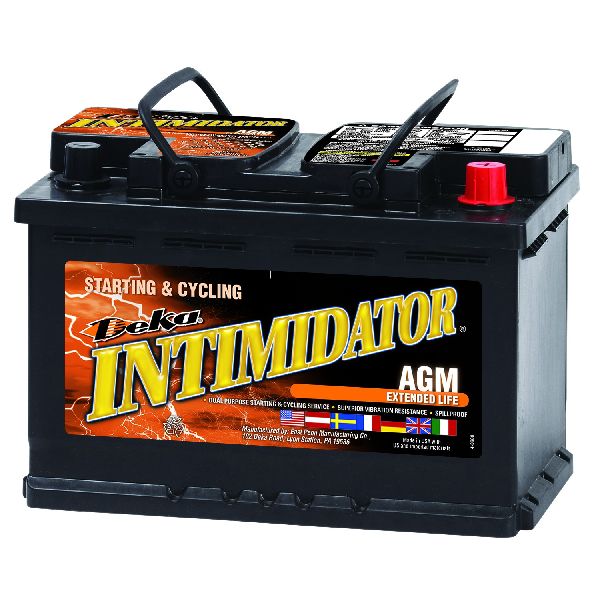
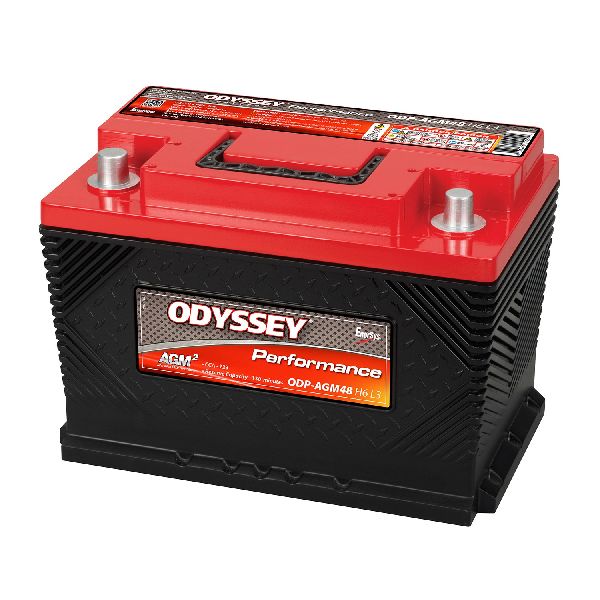
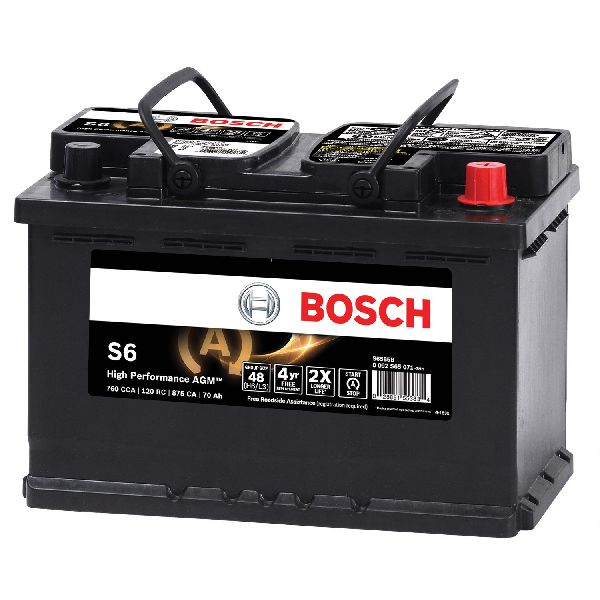
- Battery — A weak or failing battery is a primary cause of low-voltage situations that lead to module communication errors.
Trusted brands: Bosch, Interstate, DieHard
OEM price range: $200-$350
Aftermarket price range: $150-$250 - ABS Control Module / HECU
(OEM #58920-2E150 (example from older gen, confirm by VIN))— The ABS module is a critical node on the CAN bus. If it fails internally, it can bring down the entire network. This is a known failure point on this platform, subject to a recall for internal shorting.
Trusted brands: Hyundai OE, Mando
OEM price range: $800-$1500 - Body Control Module (BCM) — The BCM acts as a central hub for many vehicle functions and communications. Its failure can cause a U0073 code.
Trusted brands: Hyundai OE
OEM price range: $400-$700
Related Codes That Often Appear With This One
- U0100 — Lost Communication With ECM/PCM
- U0121 — Lost Communication With Anti-Lock Brake System (ABS) Control Module
- U0140 — Lost Communication With Body Control Module (BCM)
- C1616 — CAN Bus Off - Often logged in the ABS module itself, pointing towards a network-wide failure.
- B1603 — CAN Bus Off - A manufacturer-specific (B-Body) code logged in modules like the Smart Key Module, indicating a CAN communication failure from that module's perspective.
Technical Service Bulletins (TSBs) & Recalls
- NHTSA ID: 10165455 / TSB 19-AT-015H: While not for U0073, this TSB addresses replacing solenoids for various transmission DTCs, showing a pattern of electrical issues within major components.
- NHTSA Recall 20V543000 (Hyundai Recall 195): Addresses the faulty HECU (ABS module) that can short circuit and cause a fire. This electrical failure is a prime candidate for causing a U0073 code by taking the ABS module and potentially the whole CAN bus offline.
Platform-Specific Known Issues
- A recall on the ABS Hydraulic Electronic Control Unit (HECU) for internal corrosion and short-circuiting is a major potential cause for this code. The short can disrupt the entire CAN network. Owners are advised to park outside due to fire risk.
Mechanic-Grade Diagnostic Values
- CAN Bus Network Resistance — expected: ~60 Ohms. Failure: 120 Ohms indicates an open circuit or a missing terminating resistor. Near 0 Ohms indicates a short between CAN High and CAN Low wires.
- CAN High Voltage (KOEO) — expected: ~2.6 Volts DC. Failure: Voltage stuck at 0V, 5V, or not showing a fluctuating signal on an oscilloscope indicates a fault.
- CAN Low Voltage (KOEO) — expected: ~2.4 Volts DC. Failure: Voltage stuck at 0V, 5V, or not showing a fluctuating signal on an oscilloscope indicates a fault.
Scan Tool Commands That Help
- Hyundai GDS or equivalent professional scanner: All Module Network Scan / Health Check — This is the first step to get a topology map of the network and see which modules are online and which are not responding. This helps narrow down the location of the break in communication.
- Hyundai GDS or equivalent professional scanner: Read DTCs from all modules — Used after a network scan to see if a non-communicating module has logged any specific internal fault codes (like the B1603 CAN Bus Off code) before it went offline.
Wiring & Ground Locations
- OBD-II Port Pins 6 & 14 — Driver's side footwell, under the dashboard.. These are the direct access points for testing the high-speed CAN (C-CAN) bus resistance and voltage. Pin 6 is CAN High, Pin 14 is CAN Low.
- CF11 Connector — A multi-purpose junction connector, likely in the engine bay or under the dash.. In a documented case on a 2017 Tucson, a poor connection at this specific junction connector was the root cause of the CAN bus failure, not a faulty module.
- Smart Junction Block (BCM) — Behind the cover on the driver's side of the instrument panel.. This block is a central hub for multiple networks, including the Body CAN (B-CAN). A failure here or in its connectors (e.g., M02-A, I/P-E) can cause widespread communication issues.
- G-01 / G-02 Grounds — Engine compartment, typically on the inner fender structure near the battery or airbox.. These are primary chassis ground points for the engine bay wiring harness. A loose or corroded connection here can cause fluctuating voltages and disrupt communication for multiple modules.
Real Owner Repair Stories
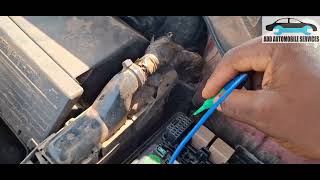
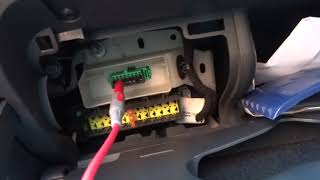
- YouTube - ADD AUTOMOBILE SERVICES (2017 Hyundai Tucson) — CAN C Bus Off codes, no communication with multiple control units, multiple warning lights.
❌ Tried (didn't work) Disconnecting the ABS module did not resolve the CAN bus signal issue.
✅ What actually fixed it The technician identified a junction connector labeled CF11. After disconnecting and reconnecting it, the CAN network came back online. The fault was isolated to a poor connection or wiring issue at this specific connector, not a failed module.
Model Year Variations Within This Range
- 2019-2021 (facelift models): The wiring and CAN bus protocol for the infotainment system may differ from pre-facelift (2016-2018) models. Aftermarket CAN bus decoders for head units are often listed specifically for 2015-2018, implying a change for 2019+. This could affect diagnosis if an aftermarket stereo is installed.
Diagnostic Flowchart
Other Known Issues on This Vehicle
Issues unrelated to this code that are worth knowing about as an owner of this generation:
- Theta II Engine Failure and Fires 🔴 High — Widespread across millions of Hyundai/Kia vehicles, including the Tucson. A class-action lawsuit valued at $1.3 billion was settled. The issue stems from manufacturing debris causing connecting rod bearing failure. (Ref: Multiple recalls and a major class-action settlement (hyundaithetaenginesettlement.com) provide lifetime warranties for affected engines that have had a Knock Sensor Detection System (KSDS) update.)
- 7-Speed Dual-Clutch Transmission (DCT) Hesitation and Failure 🔴 High — Very common on 1.6L Turbo models. Owners report severe hesitation from a stop, shuddering, and complete loss of movement, often requiring TCM reprogramming or full transmission replacement. (Ref: Recall 16V628000 (NHTSA ID) was issued for 2016 models to reprogram the TCM due to the vehicle not moving from a stop. TSBs like 19-AT-015H address related DTCs.)
- ABS Module (HECU) Electrical Short and Fire Risk 🔴 High — Affects a large number of 2016-2021 Tucsons. The Hydraulic Electronic Control Unit (HECU) can corrode internally, causing an electrical short that can lead to an engine compartment fire, even when the vehicle is off. (Ref: Hyundai Recall 195 (NHTSA #20V543000) advises owners to park outside and away from structures until the repair is completed.)
- Excessive Oil Consumption 🟠 Medium — Reported on various engines in the lineup, particularly the 2.0L Nu and 2.4L Theta II engines, leading to engine damage if not monitored closely. (Ref: Part of the broader engine-related class action settlements.)
Used vs. New Parts: Buying Guide for This Vehicle
When a used part is the smart pick: Used parts are a good option for components that do not require VIN programming. This includes wiring harness sections, connectors, peripheral switches (like a mirror switch), and potentially some non-critical control modules. Always source from a vehicle with a similar trim level and options.
Donor-vehicle mileage cap: roughly under 100000 miles for the part to have meaningful remaining life.
What to inspect on the donor part:
- Inspect module connectors for any signs of green or white corrosion on the pins.
- Check the casing of electronic modules for cracks or signs of water intrusion.
- When buying a wiring harness section, ensure the plastic sheathing is not brittle and there are no visible cuts, abrasions, or shoddy previous repairs (e.g., wrapped in electrical tape).
- Verify the part number on the used module matches the original part exactly.
OEM-only on this vehicle (don't cheap out):
- Body Control Module (BCM) / Smart Junction Block: This module is central to the vehicle's security and features and requires programming to the vehicle's VIN.
- Engine Control Module (ECM/PCM): Requires VIN programming and software flashing.
- ABS Module (HECU): While some specialists can reprogram used units, it is complex. Given the safety-critical nature and the existing recall, a new OEM part is strongly recommended to ensure you get the latest revision without internal defects.
Aftermarket brands forum-validated for this vehicle:
- For this repair, which primarily involves OEM electronics, there are no widely validated 'known good' aftermarket module brands. Stick to OEM for control modules.
Brands owners have reported issues with on this vehicle:
- Avoid generic, unbranded CAN bus decoders often bundled with cheap Android head units, as they are a common source of network interference.
Real Owner Stories
Aggregated from forums and TSBs cited above. Mileages and costs reflect what owners reported in those sources.
2016-2021 Hyundai Tucson
Symptoms: All dash lights on, no speedometer, and classic CAN bus failure symptoms.
What fixed it: Diagnosis of the CAN bus architecture to identify the specific module or wiring failure causing the network shutdown.
Source hint: Reddit r/HyundaiTucson
2016 Hyundai Tucson 1.6L Turbo
Symptoms: Vehicle not moving from a stop, severe hesitation, and transmission-related communication issues.
What fixed it: TCM reprogramming per Recall 16V628000.
Source hint: Recall 16V628000 (NHTSA ID)
Related OBD-II Codes
Frequently Asked Questions
Could the ABS recall on my 2016-2021 Tucson be the reason for the U0073 code?
Is there a TSB for transmission-related electrical issues on my Tucson?
Why did my Tucson's speedometer stop working and the dash light up with 'Check ABS'?
Can a weak battery really cause a U0073 code on a 2017 Tucson?
Should I park my Tucson outside if I have ABS-related communication codes?
Helpful Videos
Used OEM Parts in Stock


New Aftermarket Parts Available


The information in this article is provided for general reference and educational purposes only. Vehicle specifications, procedures, and part compatibility can vary by production date, trim level, and region. Always consult your vehicle's factory service manual and verify part numbers before purchasing or performing repairs. Safety-critical components such as airbags, seat belts, and braking systems should be installed by a qualified professional.
- Hyundai Tucson:
- 🎬 Helpful Videos
- 🛍️ Shop This Part
- What's Unique About the 2016-2021 Hyundai Tucson
- Symptoms You May Notice
- Most Likely Causes
- Rare But Worth Checking
- Diagnosis Steps
- Parts You'll Likely Need
- Related Codes That Often Appear With This One
- Technical Service Bulletins (TSBs) & Recalls
- Platform-Specific Known Issues
- Mechanic-Grade Diagnostic Values
- Scan Tool Commands That Help
- Wiring & Ground Locations
- Real Owner Repair Stories
- Model Year Variations Within This Range
- Diagnostic Flowchart
- Other Known Issues on This Vehicle
- Used vs. New Parts: Buying Guide for This Vehicle
- Real Owner Stories
- 2016-2021 Hyundai Tucson
- 2016 Hyundai Tucson 1.6L Turbo
- Related OBD-II Codes
- Frequently Asked Questions
- 🎟️ Get 5% Off