

OBD-II Code C1234: Wheel Speed Sensor Signal Fault
What C1234 means, why it triggers, and how to fix it
- Code C1234 disables your ABS and traction control because the ABS module lost the speed signal from a specific wheel, usually the right front.
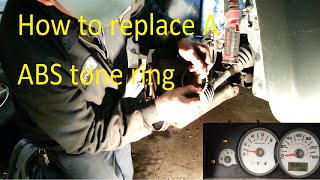
- On 2001-2007 Ford and Mazda SUVs, a cracked ABS tone ring on the front CV axle causes 90% of C1234 codes, requiring a $250-$450 axle replacement.
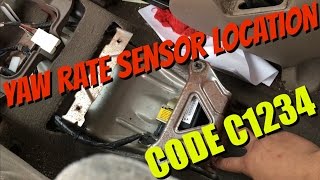
- Toyota and Lexus vehicles use code C1234 to flag a faulty Yaw Rate Sensor under the center console, which requires a scan tool for a Zero Point Calibration after replacement.
- Physically grab and twist the tone ring during diagnosis; a loose ring confirms the failure and saves you from buying an unnecessary $150 wheel speed sensor.
What Does C1234 Mean?

Code C1234 indicates the ABS control module lost the signal from a specific wheel speed sensor, typically the right front. These sensors report individual wheel speeds. When a signal drops, the computer disables ABS and traction control as a fail-safe and triggers dashboard warning lights.
Technical definition: For Ford and Mazda, C1234 means "Right Front Wheel Speed Input Signal Missing," indicating the ABS module receives no signal from that sensor while the vehicle moves. For Toyota and Lexus, it indicates a "Yaw Rate Sensor Malfunction." The module sets this code when it detects zero speed from one wheel while others report speeds above 9-12 MPH (20 km/h).
Can I Drive With C1234?
Yes, But With Caution. Yes, you can drive, but your Anti-lock Braking System (ABS) and Traction/Stability Control are disabled. Your regular hydraulic brakes still function. Without ABS, your wheels lock up during hard braking, increasing stopping distances and causing a loss of steering control in wet or icy conditions. Diagnose and repair this immediately to restore critical safety systems.
Common Causes

- Cracked or Damaged ABS Tone Ring (Very Common) — This is the most frequent cause, especially on Ford and Mazda vehicles. The tone ring (a toothed or magnetic ring on the axle or wheel hub) cracks or swells with rust, causing it to spin freely, provide an erratic signal, or fall off completely.
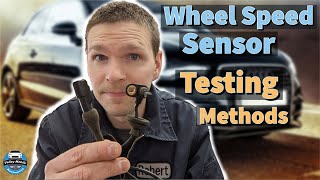
- Failed Wheel Speed Sensor (Common) — The sensor itself fails internally due to age, heat cycles, or moisture intrusion. It is a highly common wear item in the braking system.
- Damaged Wiring or Corroded Connector (Common) — The wires leading to the wheel speed sensor are exposed to the elements and get damaged, frayed, or corroded. The connector pins also lose contact or corrode, interrupting the signal.
- Faulty or Incorrectly Installed Wheel Bearing/Hub (Less Common) — On modern vehicles, the magnetic tone ring is integrated into the wheel bearing assembly. A worn-out bearing introduces excessive movement, disrupting the signal. If a new bearing is installed backward, the sensor has nothing to read, immediately triggering this code.
- Excessive Air Gap Between Sensor and Tone Ring (Uncommon) — Rust or corrosion buildup on the hub's sensor mounting surface pushes the sensor slightly away from the tone ring, increasing the air gap. If this gap becomes too large, the signal becomes too weak for the ABS module to read.
- Low Battery Voltage or Bad Ground (Uncommon) — ABS modules are highly sensitive to voltage drops. A weak battery or a poor ground connection for the ABS module causes strange electrical issues, including setting false sensor codes. The module requires a stable voltage above 10V to function correctly.
- Faulty Yaw Rate Sensor (Toyota-specific) (Rare) — On specific Toyota and Lexus models, C1234 points directly to a malfunction in the yaw rate sensor, which is part of the Vehicle Stability Control (VSC) system, rather than a wheel speed sensor. 🎬 See this video to locate the Toyota yaw rate sensor
- Defective ABS Control Module (Rare) — In rare cases, the computer module that reads the signal fails internally. This is a last resort diagnosis after definitively ruling out the sensor, tone ring, and wiring.
Symptoms
- ABS and Traction/Stability Control Lights Illuminated — The primary symptom is the illumination of the ABS, Traction Control (TCS), and Stability Control (VSC, ESC) warning lights on the dashboard, as these systems are disabled without accurate wheel speed data.
- ABS and Traction Control Disabled — During hard braking, your wheels lock up. When accelerating on a slippery surface, your wheels spin excessively because the traction control is inactive.
- Brake Pedal Pulsation or Grinding Noise at Low Speeds — A cracked or debris-covered tone ring sends a false signal, causing the ABS to activate unnecessarily at low speeds, often just before coming to a stop.
- Speedometer Malfunction or Cruise Control Disabled — On vehicles where speed is calculated using wheel speed sensors, a faulty sensor causes the speedometer to read incorrectly and disables the cruise control system.
- Flashing 4WD Light (on applicable vehicles) — On 4WD vehicles like the Ford Escape, a wheel speed sensor fault causes the 4WD warning light to flash, as the system relies on wheel speed data to distribute power.
Diagnostic Flowchart
Tap your situation to follow the diagnostic path that matches what you're seeing on this code.
Common Fixes & Costs
- Replace CV Axle Shaft Assembly — Parts: $80-$150, Labor: $150-$250, ~1.8 hr book time (Intermediate)
- Replace Wheel Speed Sensor — Parts: $40-$150, Labor: $100-$150, ~1.1 hr book time (DIY)
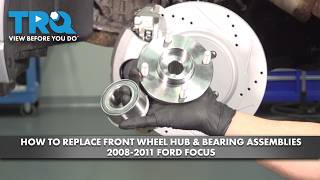
- Replace Wheel Hub & Bearing Assembly — Parts: $150-$300, Labor: $150-$300, ~2.2 hr book time (Intermediate)
- Repair Damaged Wiring or Connector — Parts: $15-$50, Labor: $75-$200, ~1.5 hr book time (Intermediate)
- Replace Yaw Rate Sensor (Toyota/Lexus) — Parts: $300-$700, Labor: $100-$200, ~1 hr book time (Intermediate)
- Replace ABS Control Module — Parts: $300-$1100, Labor: $150-$250, ~2 hr book time (Professional)
DIY vs Professional
- Replace Wheel Speed Sensor — Beginner:
Tools: Jack, jack stands, lug wrench, basic socket/wrench set, Torx or Allen key socket. - Replace CV Axle Shaft Assembly — Beginner:
Tools: Large axle nut socket, breaker bar, torque wrench, ball joint separator, large hammer, pry bar, comprehensive socket set. - Replace Wheel Hub & Bearing Assembly — Beginner:
Tools: Similar to CV axle replacement, plus potentially a hydraulic press if the bearing is a press-in type. - Repair Damaged Wiring or Connector — Beginner:
Tools: Wire strippers, crimpers, heat shrink tubing, butt connectors or solder, multimeter.
Used vs. New Parts: Buying Guide
When a used part is worth it: For electronic parts like wheel speed sensors or ABS modules, used parts are not recommended due to high failure risk. For mechanical parts like a CV axle or wheel hub assembly, a used part from a low-mileage vehicle is a budget-friendly option, but new aftermarket parts provide a better warranty.
Donor-vehicle mileage cap: roughly under 60000 miles for the part to have meaningful remaining life.
Donor quality checklist:
- Verify the donor vehicle's mileage and that it wasn't scrapped for a related failure.
- For CV axles, inspect the rubber boots for any signs of tearing or dry rot.
- For hub assemblies, ensure the bearing feels smooth with no play or roughness when turned by hand.
- Match part numbers exactly, as variations exist even within the same model year.
Decision logic:
- If The part is a wheel speed sensor → Buy new. The cost savings for a used sensor are minimal and not worth the risk of premature failure.
- If The part is a CV axle or wheel hub assembly and budget is the primary concern → A used part from a reputable salvage yard with a short-term warranty is an option. A new aftermarket part is often a better value.
- If The vehicle is being repaired for resale or long-term reliability is key → Buy new OEM or high-quality aftermarket parts. The warranty and expected lifespan justify the higher initial cost.
Warranty tradeoff: Used parts typically come with a 30-90 day warranty, which typically covers only the part itself. New aftermarket parts often have a 1-year to limited lifetime warranty. OEM parts offer a factory warranty, typically for 12 months.
Worst-case if a used part fails: $250-600 if a used CV axle or hub assembly fails, requiring a second repair (parts + labor).
What Happens If You Wait — Timeline
- Immediate: ABS, Traction Control, and Stability Control warning lights illuminate. The systems are disabled. Your base hydraulic brakes still work. (MPG impact: 0%% · Added cost: $0 (but significant immediate safety risk))
- 1 week - 2 months: Vehicle fails a state safety inspection. If the fault is an erratic signal from a cracked ring, you experience unwanted ABS activation at low speeds, causing grinding noises. (MPG impact: 0%% · Added cost: $50-$200 (for failed inspection/fines) + potential for premature brake pad wear.)
- 2-6 months: Continued unwanted ABS activation accelerates wear on brake pads and rotors. The primary risk remains the lack of safety systems during an emergency maneuver. (MPG impact: 0%% · Added cost: $300-$600 (Potential cost to replace pads and rotors on one axle due to accelerated wear).)
- 6+ months: The root cause worsens, potentially making the final repair more difficult if a sensor or bolt seizes. The primary cost remains the high risk of an accident. (MPG impact: 0%% · Added cost: Potential cost of an accident far exceeds the cost of repair.)
Cost of Not Fixing It
- Immediate: ABS and Traction/Stability Control are disabled. Increased risk of wheel lock-up and loss of control during emergency braking or on slippery surfaces. (Added cost: Potential cost of an accident.)
- 0-6 months: Failed vehicle safety inspection in many states. A faulty sensor causes incorrect speedometer readings or disables cruise control. (Added cost: $50-$200 (cost of failed inspection and potential fines).)
- 6+ months: A bad sensor signal causes unwanted ABS activation at low speeds, leading to premature wear of brake pads and rotors. (Added cost: $200-$500 (potential for additional brake component wear).)
Diagnosis Steps

- Read the Code and Identify the Wheel
Use an OBD-II scanner capable of reading ABS codes to confirm C1234. The code definition specifies which wheel is affected (e.g., Right Front). Note any communication (U-series) codes, as they must be addressed first.
Tools: ABS-capable OBD-II Scanner (Beginner) - Visually and Physically Inspect the Tone Ring
Safely lift the vehicle and remove the affected wheel. Locate the tone ring on the CV axle or back of the wheel hub. Look for obvious cracks, missing teeth, heavy rust, or debris. Physically grab the tone ring and try to rotate it by hand; it must be completely solid. A loose or cracked ring is a definitive failure.
Tools: Jack, Jack Stands, Lug Wrench, Flashlight (Beginner) - Inspect the Sensor, Air Gap, and Wiring
Inspect the sensor for physical damage. Check the air gap between the sensor and ring; it must be clear of debris. Follow the sensor wire, looking for breaks, chafing, or sharp bends. Disconnect the sensor and check the connector for corrosion, moisture, or backed-out pins.
Tools: Flashlight, Feeler Gauge (optional) (Intermediate) - Monitor Live Data with a Scan Tool
Use your scanner to view live data from all four wheel speed sensors while driving slowly. All four readings must be nearly identical. A reading that stays at 0 MPH, is erratic, or significantly differs from the others confirms the signal loss is at that wheel.
Tools: ABS-capable OBD-II Scanner (Intermediate) - Test Passive Sensor Resistance (2-wire)
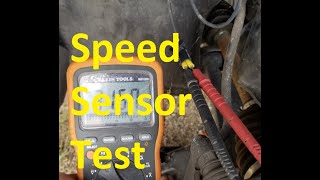
Disconnect the sensor and set your multimeter to Ohms. Measure the resistance across the two pins. Most passive sensors read between 800 and 1,700 Ohms. A reading of infinite resistance (OL) means an open circuit, while a reading near zero indicates a short circuit. Wiggle the wire while testing to check for intermittent breaks.
Tools: Multimeter, Vehicle-specific Repair Manual (Advanced) - Test Passive Sensor AC Voltage Output (2-wire)
Keep the sensor connected and backprobe the two wires. Set your multimeter to AC Volts. Safely raise the vehicle and spin the suspect wheel by hand. You should see a small, fluctuating AC voltage that increases with wheel speed, typically starting around 100mV. No voltage points to a bad sensor or an excessive air gap.
Tools: Multimeter, Backprobe Pins, Jack and Jack Stands (Advanced) - Test Active Sensor Voltage and Signal (3-wire)
With the sensor unplugged and ignition on, use a multimeter to test the harness side. You should find a power wire, a ground wire, and a signal wire. Use an oscilloscope to view the signal wire while spinning the wheel. A good active sensor produces a clean square wave. A flat line indicates a bad sensor or wiring issue.
Tools: Multimeter, Oscilloscope, Backprobe Pins (Advanced) - Check for Voltage and Ground at the Module
If voltage or ground is missing at the sensor connector, trace the circuit back to the ABS module. Check for continuity on the signal and ground wires between the sensor connector and the ABS module. If the wiring is good but power is missing, the fault lies within the ABS module itself.
Tools: Multimeter, Vehicle-specific Wiring Diagram (Advanced) - Perform a Zero Point Calibration (Toyota/Lexus)
If working on a Toyota or Lexus where C1234 indicates a Yaw Rate Sensor fault, replacing the sensor is not the final step. You must perform a 'Zero Point Calibration' using a compatible scan tool to allow the VSC system to learn the new sensor's baseline reading.
Tools: Advanced Scan Tool (e.g., Techstream) (Professional)
When This Code Triggers (Freeze-Frame Conditions)
- DTC that caused freeze frame: C1234 (The code that triggered the data snapshot.)
- Vehicle Speed (VSS): 10-25 MPH (Code is often set during initial acceleration as the ABS module performs its self-check.)
- Wheel Speed Sensor (Faulting): 0 MPH (The problematic sensor reports 0 or an erratic speed while others report vehicle speed.)
- Wheel Speed Sensors (Working): 10-25 MPH (The other three sensors report a plausible, matching speed.)
- ABS System Status: FAIL SF (Fail Safe) (Indicates the ABS module detected a fault and entered a fail-safe mode, disabling the system.)
Related Codes
- C1233 — This code is for the 'Left Front Wheel Speed Input Signal Missing.' If both C1233 and C1234 are present, suspect a common cause like a recent front brake job where both bearings were installed incorrectly, or a systemic issue like low voltage.
- C1235 / C1236 — These codes indicate a missing signal from the 'Right Rear' and 'Left Rear' wheel speed sensors, respectively. The diagnostic process is identical.
- U-Series Codes (e.g., U0121, U0415) — Network codes like U0121 (Lost Communication With ABS Control Module) indicate a broader network problem. Diagnose the communication fault FIRST, as it is often the root cause of the C1234.
- C1210 / C1336 (Toyota) — On Toyota vehicles, if C1234 is present for the Yaw Rate Sensor, you also see codes like C1210 or C1336, which indicate that the 'Zero Point Calibration' for the sensor has not been performed.
Climate & Environmental Factors
- Cold Weather, Snow, and Ice: Packed snow and ice physically block the sensor's view of the tone ring, causing a temporary signal loss. Temperature swings from freezing to thawing allow moisture to enter connectors, which then freezes and interrupts the signal.
- High Humidity and Road Salt (Rust Belt): Areas with heavy use of road salt see a much higher incidence of this code. Salt accelerates corrosion of the tone ring, causing it to swell and crack. Wiring connectors and ABS module ground points are also highly susceptible to corrosion.
How to Talk to a Mechanic About This Code
Say this: "I have an ABS light on and my scanner shows code C1234 for the right front wheel. I'd like to book a diagnostic appointment. Can you please have the technician start by visually inspecting the tone ring, sensor, and wiring at that wheel before testing components?"
This shows you understand the code and the most common failure points. It directs the technician to perform the cheapest and most effective diagnostic step first, preventing them from immediately quoting an expensive sensor or module replacement without proper diagnosis.
Avoid saying:
- 'My ABS light is on, can you fix it?'
- 'Just replace the right front wheel speed sensor.'
- 'Do whatever you think is best.'
Questions to ask before authorizing the repair:
- Did you visually inspect the tone ring? Was it cracked, loose, or rusted?
- Did you check the live data from all four wheel sensors to confirm the fault is at the right front wheel?
- If you are recommending a sensor replacement, did you test the old sensor's resistance and voltage output to confirm it failed?
- What is the warranty on the recommended parts and labor?
Where to Take It: Dealer vs Independent vs Chain
- Dealer:
Best for: Vehicles under warranty., Toyota/Lexus models where C1234 indicates a Yaw Rate Sensor, which requires specific knowledge and calibration tools., Complex electrical issues where wiring diagrams and manufacturer-specific tools are essential.
Downsides: Significantly higher labor rates (often 1.5-2x vs. independent shops)., Defaults to replacing an entire assembly (like a CV axle) when a cheaper fix is possible, though this is often the more reliable repair. (Typical cost: +50% vs. baseline) - Independent Shop:
Best fit for most C1234 repairs. A reputable independent shop easily handles the common causes like tone rings, sensors, and wiring at a lower cost than a dealer.
Best for: Out-of-warranty vehicles, especially common models like Ford, Mazda, and Hyundai where C1234 is a well-known issue., Owners looking for the best balance of cost and quality., Getting a second opinion on a dealership quote.
Downsides: Shop quality and diagnostic skill vary widely; vet shops based on reviews and ASE certifications., Often lacks expensive, specialized tools for brand-specific issues (e.g., Toyota Yaw Rate Sensor calibration). (Typical cost: +0% vs. baseline) - Chain Shop:
Use with caution. Acceptable for a straightforward sensor swap, but AVOID for initial diagnosis, as they often misdiagnose a bad tone ring as a bad sensor, leading to unnecessary repairs.
Best for: Simple, clear-cut part replacements like a single wheel speed sensor if you have already diagnosed it yourself.
Downsides: Technician skill differs dramatically., Often lacks the advanced diagnostic tools to differentiate between a sensor, wiring, or module fault., High pressure to upsell common services like brake jobs or fluid flushes. (Typical cost: -10% vs. baseline)
When to Walk Away From the Repair
If the estimated repair cost for the C1234 fault exceeds 40-50% of your car's private-party value, it's time to seriously consider selling or trading it in.
- Car worth $4000, fix is $700: Fix it. This repair for a hub assembly is well below the 50% threshold and restores a critical safety system.
- Car worth $3000, fix is $1600: Walk away. A quote for a new ABS module plus labor is over 50% of the car's value. The repair is not economically viable.
- Car worth $8000, fix is $1200: Borderline. If this is for an expensive Yaw Rate Sensor on a Toyota, get a second opinion from an independent specialist before proceeding.
What Scan Tool You Need for This Code

Minimum: A scanner that reads and clears Anti-lock Brake System (ABS) fault codes and displays live data from all four wheel speed sensors.
A basic $20 engine code reader cannot access the ABS module. It will not see the C1234 code or display the live wheel speed data, which is the most important tool for diagnosing whether the sensor, ring, or wiring is at fault.
Budget: BlueDriver Pro Scan Tool (~$100) — Pairs with your smartphone and reads/clears ABS codes. Its key feature is the ability to graph live data from all four wheel speed sensors simultaneously, making it easy to spot the one that drops out.
Mid-range: Innova 5610 (~$350) — A powerful handheld scanner that provides ABS live data and code reading. It offers advanced functions like ABS brake bleeding and tests some ABS system actuators.
Professional: Autel MaxiCOM MK808S / Topdon ArtiDiag Pro (~$450-600) — Professional-level tablet scanners offering full bidirectional control to command the ABS module directly. For a Toyota with a Yaw Rate Sensor fault, these tools perform the required 'Zero Point Calibration' after replacement.
Rent vs buy: Many AutoZone locations offer a loaner tool program. You borrow a scanner capable of reading ABS codes for free with a deposit. This is the best option for a one-time fix. Buy a scanner only if you plan to do your own diagnostics regularly.
How to Clear the Code After You Fix It
- Use an ABS-capable OBD-II scan tool to clear the fault code.
- Perform the ABS drive cycle to allow the system to self-test.
- Re-scan for codes to ensure the fault does not return.
Drive cycle (~10 minutes): After clearing the code, start the vehicle. Drive forward and accelerate to a speed above 15 MPH. This allows the ABS module to check all wheel speed sensors. If the repair was successful, the ABS light remains off.
Readiness monitors affected: This is an ABS code and does not directly affect emissions readiness monitors.
Watch out for:
- Using a basic OBD-II scanner that cannot read or clear ABS codes.
- Not driving the vehicle after the repair to confirm the light stays off.
- Simply disconnecting the battery, which fails to clear the code from the ABS module's memory.
Will This Fail Emissions / State Inspection?
No — by itself this code doesn't fail OBD inspection (but it can keep readiness monitors from setting, which causes a separate fail).
- California: An illuminated ABS light is a reason for failure of the required vehicle safety systems inspection on salvaged vehicles, but it will not cause a failure of the standard biennial smog check.
- New York: An illuminated ABS warning light is grounds for the vehicle to fail the annual safety inspection.
- Texas: As of 2025, most non-commercial vehicles are exempt from safety inspections. In the 17 counties still requiring an emissions test, an illuminated ABS light will NOT cause a failure.
Most Commonly Affected Vehicles

- Ford Escape (2001-2007) — Extremely prone to the ABS tone ring on the front CV axle cracking due to rust buildup underneath it. Replacing the entire CV axle is the standard repair.
- Mazda Tribute (2001-2006) — Mechanically identical to the Ford Escape, it suffers from the exact same cracked tone ring issue on the front axles.
- Ford Focus (2000-2011) — The tone ring is often part of the wheel bearing, requiring a hub replacement. For the 2008-2011 models, installing a non-ABS bearing triggers the code.
- Hyundai Elantra (2011-2016) — Prone to wheel speed sensor failures. The sensor is located behind the brake dust shield and can be replaced independently of the hub.
- BMW 3-Series (E90/E91/E92) (2006-2013) — Corrosion on the hub mounting surface pushes the sensor out slightly, increasing the air gap and causing a signal fault. Cleaning the mounting surface is critical.
- Volkswagen Jetta (2005-2010) — The magnetic reluctor ring is integrated into the rear wheel bearing. Damage to this ring or installing the bearing backwards causes an ABS fault.
- Toyota Sequoia (2001-2002) — A Technical Service Bulletin (TSB-0012-18) points to a faulty Yaw Rate Sensor under the center console, not a wheel speed sensor.
- Chevrolet Corvette (C5) (1997-2004) — This code often appears due to wiring issues. A common failure point is the harness connector located under the battery tray, which is susceptible to corrosion from battery acid leakage.
Manufacturer-Specific Notes
- Ford / Mazda: The most common cause of C1234 is a cracked ABS tone ring on the front CV axle. Rust builds up under the ring, causing it to expand and crack. The best fix is to replace the entire CV axle.
- Toyota / Lexus: On many Toyota and Lexus vehicles, C1234 points to a 'Yaw Rate Sensor Malfunction,' a component of the Vehicle Stability Control (VSC) system. TSB T-SB-0012-18 specifically addresses this for the '01-'02 Sequoia.
- General Motors (Chevrolet / GMC): On the C5 Corvette, a common failure point is a wiring harness connector located under the battery, prone to corrosion from acid leaks. A rusty ground connection for the EBCM also triggers this code.
- BMW: On E90-chassis cars, corrosion on the wheel hub where the sensor mounts is a frequent issue. This rust buildup increases the air gap between the sensor and the reluctor ring, causing a lost signal.
Real Owner Stories
2006 Ford Escape with ABS and 4WD lights on
Owner experienced ABS and flashing 4WD lights, along with a surging, growling feeling from the brake pedal when coming to a stop. A scan tool confirmed code C1234 for the Right Front wheel speed sensor.
Outcome: The owner replaced the entire CV axle, which comes with a new tone ring pre-installed. The axle replacement fixed the code and the symptoms permanently.
Lesson: On Ford and Mazda SUVs from this era, a C1234 code is almost always a cracked tone ring due to rust. Always perform a visual and physical inspection of the ring before replacing the sensor.
2002 Toyota Sequoia with VSC, TRAC, and ABS lights on
The driver experienced sudden, uncommanded ABS activation, followed by the illumination of the VSC, TRAC, and ABS warning lights. A scan revealed codes C1234 and C1361.
Outcome: Replacing the Yaw Rate Sensor and performing a Zero Point Calibration with a compatible scan tool resolved the issue.
Lesson: Always verify the manufacturer-specific meaning of a code. On many Toyotas, C1234 is not a wheel speed sensor issue. Replacing the wrong part results in a costly misdiagnosis.
Ford Focus with C1234 immediately after a wheel bearing replacement
The ABS light came on immediately after having new front wheel bearings installed by a shop. The scanner showed code C1234.
Outcome: The actual cause was incorrect installation of the new wheel bearing. The magnetic encoder for the ABS sensor is built into the bearing, and it was pressed in backward. Flipping the bearing to the correct orientation solved the problem.
Lesson: If a C1234 code appears immediately after a wheel bearing or hub replacement, the bearing was installed backward or a non-ABS compatible part was used.
BMW E90 with intermittent C1234 code
The ABS and traction control lights came on intermittently, especially at low speeds or after driving in wet weather. The code was C1234.
Outcome: The problem was discovered after removing the sensor again. Significant rust buildup on the hub surface pushed the sensor slightly away from the tone ring, increasing the air gap. Thoroughly cleaning the mounting surface with a wire brush provided a permanent fix.
Lesson: On European cars, an excessive air gap due to corrosion on the sensor mounting surface is a common cause for this code. Simply replacing the sensor without cleaning the hub fails to fix the issue.
How to Prevent This Code From Triggering
- Regular Undercarriage Washes (Monthly in winter (in salt-belt regions)) — Washing away road salt and grime prevents the corrosion that causes tone rings to crack and sensor mounting points to rust.
- Apply Dielectric Grease to Connectors (Whenever brake work is performed or connectors are disconnected) — Applying non-conductive dielectric grease into electrical connectors seals them from moisture, preventing pin corrosion.
- Clean Sensor Mounting Surfaces During Brake Service (Every time brake pads/rotors are replaced) — Using a wire brush to clean rust from the sensor mounting surface ensures the correct air gap is maintained and prevents future signal loss.
- Periodically Inspect and Secure Wiring (During tire rotations or oil changes) — Visually checking that ABS sensor wires are properly secured prevents them from rubbing against suspension components and breaking.
- Maintain a Healthy Battery (Test annually after 3 years of age) — A weak battery causes voltage drops during startup that trigger false ABS codes and disable the system.
Frequently Asked Questions
Can I just clean the sensor to fix this?
Sometimes, if the sensor tip is covered in metallic debris, cleaning it provides a temporary fix. However, the code usually stems from a broken tone ring, failed sensor, or wiring issue. Cleaning alone rarely offers a permanent solution.
My ABS light comes on only when I drive over 10 MPH. Why?
The ABS module performs a self-test when the vehicle starts moving. If it receives no plausible signal from all four wheels by 9-12 MPH, it triggers the warning light and sets the code.
What is the most common misdiagnosis for C1234?
The most common misdiagnosis is replacing the wheel speed sensor when the actual problem is a cracked or missing tone ring. Always perform a physical inspection of the tone ring before buying parts. On vehicles with press-in bearings, installing the new bearing backward also misaligns the integrated magnetic ring.
I replaced the sensor and bearing, but the light came back. What now?
If a new sensor and bearing fail to fix it, the problem lies in the wiring or the ABS module. Inspect the wiring harness for intermittent breaks or connector corrosion, using a multimeter to check continuity back to the ABS module. If the wiring is intact, the ABS module itself requires replacement.
The live data on my scanner shows all four wheels spinning at the same speed, but the code keeps coming back. Why?
This happens with an intermittent fault, often a hairline crack in the tone ring or a loose wire. The connection holds during testing but drops out when hitting a bump or turning the wheel. A cracked tone ring that spins freely on the axle shaft catches and reads correctly sometimes, but fails at other times.
Why is the repair shop telling me I need a whole new axle?
Replacing the entire CV axle is the industry-standard, reliable repair for the common Ford/Mazda tone ring failure. The faulty part is just the small tone ring, but replacing only the ring is labor-intensive and often fails again. A new axle includes a properly installed tone ring and is more cost-effective in terms of labor.
What does 'Yaw Rate Sensor' mean on my Toyota?
The Yaw Rate Sensor measures the vehicle's rotation on its vertical axis to determine if it is spinning or turning. It is a key component of the Vehicle Stability Control (VSC) system. On certain Toyota models, code C1234 specifically points to a problem with this sensor rather than a wheel speed sensor.
If the ABS light is on, will I fail a safety inspection?
In many regions, an illuminated ABS warning light results in an automatic failure during a vehicle safety inspection. Because ABS is a critical safety system, it must be fully functional to pass. Check your local state or provincial inspection laws for specific requirements.
Key Takeaways
- Code C1234 disables your ABS and traction control because the ABS module lost the speed signal from a specific wheel, usually the right front.
- On 2001-2007 Ford and Mazda SUVs, a cracked ABS tone ring on the front CV axle causes 90% of C1234 codes, requiring a $250-$450 axle replacement.
- Toyota and Lexus vehicles use code C1234 to flag a faulty Yaw Rate Sensor under the center console, which requires a scan tool for a Zero Point Calibration after replacement.
- Physically grab and twist the tone ring during diagnosis; a loose ring confirms the failure and saves you from buying an unnecessary $150 wheel speed sensor.
Helpful Videos

The information in this article is provided for general reference and educational purposes only. Vehicle specifications, procedures, and part compatibility can vary by production date, trim level, and region. Always consult your vehicle's factory service manual and verify part numbers before purchasing or performing repairs. Safety-critical components such as airbags, seat belts, and braking systems should be installed by a qualified professional.
- 🎬 Helpful Videos
- What Does C1234 Mean?
- Can I Drive With C1234?
- Common Causes
- Symptoms
- Diagnostic Flowchart
- Common Fixes & Costs
- DIY vs Professional
- Used vs. New Parts: Buying Guide
- What Happens If You Wait — Timeline
- Cost of Not Fixing It
- Diagnosis Steps
- When This Code Triggers (Freeze-Frame Conditions)
- Related Codes
- Climate & Environmental Factors
- How to Talk to a Mechanic About This Code
- Where to Take It: Dealer vs Independent vs Chain
- When to Walk Away From the Repair
- What Scan Tool You Need for This Code
- How to Clear the Code After You Fix It
- Will This Fail Emissions / State Inspection?
- Most Commonly Affected Vehicles
- Manufacturer-Specific Notes
- Real Owner Stories
- 2006 Ford Escape with ABS and 4WD lights on
- 2002 Toyota Sequoia with VSC, TRAC, and ABS lights on
- Ford Focus with C1234 immediately after a wheel bearing replacement
- BMW E90 with intermittent C1234 code
- How to Prevent This Code From Triggering
- Frequently Asked Questions
- Can I just clean the sensor to fix this?
- My ABS light comes on only when I drive over 10 MPH. Why?
- What is the most common misdiagnosis for C1234?
- I replaced the sensor and bearing, but the light came back. What now?
- The live data on my scanner shows all four wheels spinning at the same speed, but the code keeps coming back. Why?
- Why is the repair shop telling me I need a whole new axle?
- What does 'Yaw Rate Sensor' mean on my Toyota?
- If the ABS light is on, will I fail a safety inspection?
- Key Takeaways
- 🎟️ Get 5% Off