

U0029 on 2011-2015 Honda Civic: F-CAN Bus Communication Failure Causes and Fixes
On a 2011-2015 Honda Civic, code U0029 is a network communication failure. The most common fix is a software update for the Engine Control Module (ECM) performed by a dealer, as recommended by Honda. If that doesn't work, the cause is likely a wiring issue, a faulty gauge control module, or a failed ECM.
- U0029 on a 2011-2015 Civic is a network communication error, not a mechanical part failure.
- The first and most important diagnostic step is to check if the Engine Control Module (ECM) needs a software update, which must be done by a dealer or qualified shop with a Honda HDS tool.
- Do not replace the expensive ECM until you have ruled out the much more common software update fix, as well as wiring issues and a potentially faulty gauge control module.
What's Unique About the 2011-2015 Honda Civic

For this generation of Honda Civic, the U0029 code is frequently related to software glitches within the Engine Control Module (ECM). Unlike other vehicles where this code often points directly to a wiring fault, the common diagnostic procedure for the 9th generation Civic starts with checking for and applying an ECM software update. This strongly suggests Honda has addressed known communication bugs through firmware patches. The diagnostic process often involves using the Honda Diagnostic System (HDS) to specifically check for this code and determine if a software update is the required fix.
🎬 Watch: How to perform a Honda ECM software update using I-HDSSymptoms You May Notice

- Check Engine Light is on
- Engine may run poorly, with misfires or reduced power
- Vehicle may not start
- Multiple dashboard warning lights may illuminate simultaneously
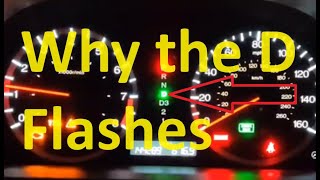
- The 'D' (Drive) indicator on the shifter display may blink 🎬 See why the D light flashes and how to fix it
- Instrument panel gauges (speedometer, tachometer) may behave erratically or stop working
- Loss of communication with multiple modules when checked with a standard OBD-II scanner
- Replacing the ECM without first checking for software updates. An update is a much cheaper and more common solution.
- Replacing other modules on the network (like the TCM) before confirming the fault isn't in the wiring or the ECM itself.
- Overlooking a faulty Gauge Control Module (instrument cluster), which is a critical node on the F-CAN network for this vehicle.
Most Likely Causes

- Outdated Engine Control Module (ECM) Software 🔴 High Probability Honda has released software updates to fix communication bugs that can trigger this code. This is the most frequently cited first step in official diagnostic procedures for this specific vehicle and code.
How to confirm: A Honda dealer or a shop with a Honda Diagnostic System (HDS) can check the current software version against the latest available version. This is not something that can be checked with a standard OBD-II reader.
Typical fix: Update the ECM software to the latest version. This is often the first and only required step.
Est. part cost: $0 - Wiring Harness or Connector Issue 🟡 Medium Probability Wires can become damaged, corroded, or loose over time, especially at connector points for the ECM and gauge control module (instrument cluster). The F-CAN H and F-CAN L wires are critical.
How to confirm: Visually inspect the F-CAN wiring harness for any signs of damage, pinching, or corrosion. Use a multimeter to check for continuity and for shorts between the CAN-H and CAN-L lines and to ground. A proper check involves disconnecting the ECM and gauge control module connectors and testing specific pins.
Typical fix: Repair the damaged section of the wire or clean/replace the corroded connector.
Est. part cost: $10-$50 - Unstable Power Supply ⚪ Low Probability All modern cars are sensitive to voltage fluctuations. A weak battery or failing alternator can cause modules to malfunction and throw communication codes. This is a common issue for this Civic generation in general.
How to confirm: Test the battery voltage with the engine off (should be ~12.6V). Test the alternator output with the engine running (should be ~13.5-14.5V). A weak battery is a frequently reported minor problem for 9th gen Civics.
Typical fix: Replace the battery or alternator if they fail the tests.
Est. part cost: $150-$400
Rare But Worth Checking
- Faulty Gauge Control Module: The instrument cluster's control module is a key node on the F-CAN network. If it fails internally, it can bring down communication and trigger a U0029 code. This can happen alongside code U0155 (Lost Communication with Instrument Panel). Diagnosis involves checking for opens or shorts in the wiring between the ECM and the gauge module before condemning the module itself.
- Faulty Engine Control Module (ECM): While not common, the ECM itself can fail internally. This is usually diagnosed after all software, wiring, and power supply issues have been ruled out. Diagnosis often involves substituting a known-good ECM for testing, a step typically performed at a dealership.
Diagnosis Steps
- Check the battery and charging system to ensure a stable power supply of 12.6V (engine off) and 13.5-14.5V (engine running).
- Connect a professional scan tool (preferably a Honda HDS) and check for any available software updates for the Engine Control Module (ECM). If an update is available, perform the update. This is the most critical first step.
- Clear the U0029 code and drive the vehicle to see if the code returns. If it does not, the software update fixed it.
- If the code returns, perform a thorough visual inspection of the F-CAN wiring harness and all related connectors, especially at the ECM (Connector A, 49P) and the gauge control module (32P connector). Look for corrosion, damage, or loose pins.
- Using a wiring diagram, disconnect the battery and relevant modules. Use a multimeter to check for resistance between the CAN-H and CAN-L wires (should be around 60 ohms). 🎬 Watch: How to test CAN BUS resistance with a multimeter Check each line for a short to ground or a short to power. For example, check continuity between ECM connector A pin 3 (F-CAN-H) and gauge module connector pin 19.
- If a wiring fault is found, repair it.
- If the wiring and software are confirmed to be good, the fault is likely in a module. This requires advanced diagnostics, often by substituting a known-good ECM or Gauge Control Module to see if the problem is resolved.
Parts You'll Likely Need
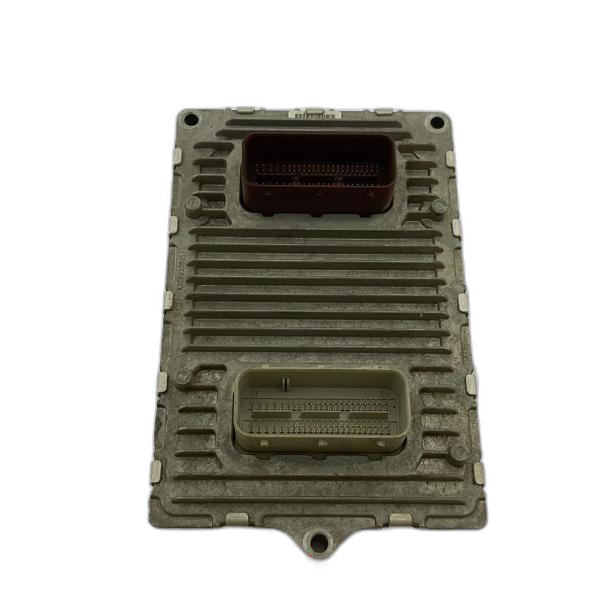
- Engine Control Module (ECM)
(OEM #Varies by year, model, and transmission (e.g., 37820-R1A-Axx series). Must be matched by VIN.)— This is typically only replaced if a software update and wiring repairs do not solve the problem. An internal failure in the ECM can cause the bus to go offline.
Trusted brands: Honda (OEM), Flagship One (Remanufactured)
OEM price range: $700-$1000
Aftermarket price range: $300-$500 (Remanufactured) - Gauge Control Module (Instrument Cluster)
(OEM #Varies by trim level (e.g., 78100-TRX-Axx series). Must be matched by VIN.)— If the cluster itself fails, it can disrupt the entire F-CAN network, causing a U0029 code. This is diagnosed after wiring and ECM software are ruled out.
Trusted brands: Honda (OEM)
OEM price range: $400-$800
Aftermarket price range: $200-$400 (Used/Salvage)
Related Codes That Often Appear With This One
- U0100 — U0100 means 'Lost Communication with ECM/PCM'. It often appears with U0029 because if the bus has a performance issue (U0029), other modules will report that they can't hear from the ECM (U0100).
- U0155 — U0155 indicates 'Lost Communication with Instrument Panel Cluster (IPC) Control Module'. This can appear with U0029 if the gauge control module is the source of the network problem or is also unable to communicate due to the bus failure.
Technical Service Bulletins (TSBs) & Recalls
- TSB A17-023 (April 2017): While not directly for U0029, this TSB for 2012 Civics addresses an improper PCM calibration that requires a software update, establishing the precedent for software fixes on this platform's ECU.
Mechanic-Grade Diagnostic Values
- F-CAN Bus Terminating Resistance — expected: ~60 Ω. Failure: A reading of ~120 Ω indicates an open circuit or one of the two terminating resistors is offline. A reading near 0 Ω indicates a short between the CAN-H and CAN-L lines.
- Alternator Output Voltage at Idle — expected: 13.5 V - 14.5 V. Failure: Voltage below 13.5V or above 14.5V can indicate a failing alternator or voltage regulator, causing electrical instability for modules.
- F-CAN Resistance at PCM Connector (Honda-specific example) — expected: 45 Ω - 58 Ω. Failure: Readings outside this range suggest a problem on the bus. This specific value is from a hybrid model but illustrates the type of specific resistance check available in service manuals.
Hidden / Shadow Codes Worth Checking
- i-HDS 'Not Available' Status: During an 'F-CAN Bus Connected Unit Check' with the Honda i-HDS, a module (like the Gauge Control Module) may report a status of 'Not Available'. This does not always mean the unit is faulty or offline; it can be a normal response depending on the specific diagnostic test being run. The technician must verify communication by trying to access the module directly from the HDS system selection menu. (see via Honda i-HDS (dealer-level scan tool).)
Scan Tool Commands That Help
- Honda HDS / i-HDS: F-CAN Bus Connected Unit Check — This function is used to poll all modules on the F-CAN network and see which ones are reporting. It is a primary step in diagnosing U-prefix communication codes to get a network-wide status, but results must be interpreted carefully.
- Honda HDS / i-HDS: Jump SCS Line — This is a service function initiated through the HDS to put the system into a specific diagnostic or reset mode. On modern Hondas, this is not a physical jumper but a command sent through the DLC to the appropriate module.
- Honda HDS / i-HDS: Immobilizer Key/ECM Reprogramming — This is required after replacing the ECM. The replacement module must be programmed with the vehicle's specific VIN and key data, or the engine will not start.
Wiring & Ground Locations

- ECM/PCM — Located in the engine compartment, on the left side (driver's side), often near the battery tray.. The ECM is the source of the U0029 'Bus Off' status. Its connectors (specifically Connector A) and ground connections are critical points of failure.
- Gauge Control Module (Tachometer) — Located within the instrument panel, behind the gauge cluster trim.. This is a primary terminating module on the F-CAN network. A failure here or in its 36-pin connector can bring the entire network down.
- G501 — Ground point located at the left end of the dashboard.. A poor ground at this location can cause issues for multiple modules connected to the dashboard harness, including the Gauge Control Module, leading to communication errors.
- G101 — Ground point located at the left rear of the engine.. This is a primary engine ground. A loose or corroded connection here can affect the ECM and other engine-related sensors, potentially causing electrical noise or voltage issues that disrupt CAN communication.
- ECM Connector A, Pins 3 & 4 — On the main connector for the Engine Control Module.. These are the F-CAN-H and F-CAN-L pins on some Honda models. Probing these specific pins (often white and red wires) is necessary for resistance and voltage checks of the F-CAN network directly at the ECM.
"I Checked Everything" — The Actual Cause
- The electrical equivalent of a 'smoke test clean' scenario for code U0029 is when a technician performs a full wiring check—testing for continuity, shorts to power, and shorts to ground on the F-CAN harness—and finds no issues. In this situation on the 2011-2015 Civic, the root cause is very often an internal software bug within the ECM. The wiring is physically perfect, but the module's logic is flawed, causing it to erroneously declare a 'Bus Off' state. The fix is not a physical repair but a software update performed by a dealer with an HDS tool.
OEM Part Supersession History
37820-R1J-A81, 37820-R1J-A82, 37820-R1J-A83, 37820-R1J-A84→37820-R1J-A85— Hardware and/or software revisions by the manufacturer to improve reliability or address known issues.
Heads up: The newer part number is backward compatible with the older ones. However, any replacement ECM must be programmed to the vehicle's immobilizer.37820-R1J-A51, 37820-R1J-A52, 37820-R1J-A53, 37820-R1J-A54→37820-R1J-A55— Incremental hardware or software updates during the production run.
Heads up: Later revisions typically replace earlier ones. Part must be for the correct engine, transmission, and emissions type, and requires programming.
Model Year Variations Within This Range
- 2012 vs 2013-2015: The 2012 model year was heavily criticized for its low-cost interior materials and bland styling. For 2013, Honda performed an emergency refresh, significantly upgrading the interior with soft-touch materials, revising the front and rear exterior styling, and making a backup camera standard. While the core F-CAN architecture between the ECM and Gauge Cluster is expected to be the same, the different dashboard and interior components could lead to minor variations in harness routing or connector access.
Diagnostic Flowchart
Other Known Issues on This Vehicle
Issues unrelated to this code that are worth knowing about as an owner of this generation:
- Peeling/Fading Exterior Paint 🟡 Low — Very common, especially on dark colors. Honda issued warranty extensions (e.g., TSB 14-034) but many are now expired. The issue affects both 8th and 9th generation Civics. (Ref: TSB 14-034 (Expired))
- Prematurely Worn Engine Mounts 🟠 Medium — A common source of vibration and clunking noises when shifting or accelerating. The passenger-side hydraulic mount is a frequent failure point.
- Cracked Air Intake Hose 🟡 Low — The rubber intake duct between the air filter box and throttle body is prone to cracking, causing unmetered air to enter the engine, leading to rough idle and hesitation.
- CVT Transmission Shudder/Vibration (on applicable models) 🟠 Medium — Some models equipped with a CVT can develop a shudder or vibration, particularly between 90,000 and 130,000 miles, sometimes attributed to internal belt wear.
- Weak Battery / Starter Motor Issues 🟡 Low — Generally considered a minor but common problem. A weak battery is known to cause a variety of seemingly unrelated electrical gremlins on this platform.
Used vs. New Parts: Buying Guide for This Vehicle
When a used part is the smart pick: For this repair, obtaining a used Engine Control Module (ECM) or Gauge Control Module (Instrument Cluster) from a reputable salvage yard is a very smart and cost-effective strategy, often saving hundreds of dollars over a new OEM part.
Donor-vehicle mileage cap: roughly under 120000 miles for the part to have meaningful remaining life.
What to inspect on the donor part:
- Part Number MUST Match: Verify the OEM part number on the used module is an exact match or a documented superseded part number for your original.
- No Physical Damage: Inspect the module casing for cracks, signs of being pried open, or water damage.
- Clean Connector Pins: Look at the electrical connector pins. They should be straight, clean, and free of any green or white corrosion.
- Verify Donor Vehicle Specs: Ensure the donor car had the same engine, transmission (auto/manual), and emissions type (Federal/California) as your vehicle.
OEM-only on this vehicle (don't cheap out):
- Engine Control Module (ECM/PCM)
- Gauge Control Module
Aftermarket brands forum-validated for this vehicle:
- Honda (Used OEM)
- Flagship One (Remanufactured with Programming Service)
- Module Mechanics (Remanufactured with Cloning Service)
Brands owners have reported issues with on this vehicle:
- Unknown/unbranded modules from online marketplaces without a warranty or programming support. The immobilizer programming is a critical step that makes generic, unprogrammed modules useless without specialized tools.
Real Owner Stories
Aggregated from forums and TSBs cited above. Mileages and costs reflect what owners reported in those sources.
2015 civic hybrid
Symptoms: All the lights came on and a bunch of error messages flashed on the screen. The check engine light came on, showing code U0029.
What fixed it: I unplugged the battery for 30 seconds and the error went away and hasn't come back in 50 miles.
Source hint: hondaclub.org
Documented NHTSA Reports
Vehicle Communication Bus A Performance Issue
Symptoms: An owner reported a "Vehicle Communication Bus A Performance" issue as one of multiple recurring problems with their vehicle.
Source: NHTSA ODI #11442348
Multiple Permanent Communication Codes
Symptoms: A report filed with the NHTSA describes a vehicle experiencing a wide array of permanent communication codes, including U0029-00 (CAN Gateway), alongside codes for the anti-lock brakes (U040168) and the electric power train traction motor control module (U1204, U12A5, U1205, U0100).
Source: NHTSA ODI #11496856
Related OBD-II Codes
Frequently Asked Questions
My mechanic says the first step for a U0029 code on my 2013 Civic is to update the ECM software. Is this correct?
Is there a specific TSB for the U0029 code on my 2012 Honda Civic?
My 2014 Civic has a U0029 code, the 'D' light is blinking, and all the dashboard warning lights are on. Could a weak battery be the cause?
Can I check for the required ECM software update myself with a basic OBD-II scanner?
I'm inspecting the wiring for a U0029 code. Are there specific connectors on my Civic I should focus on?
Is the U0029 communication problem also found on other Honda models from the same era?
Helpful Videos
![How To Test CAN BUS With A Multimeter [CAN Bus Resistance Check] Mechanic Mindset](https://img.youtube.com/vi/JPE42HSJxAk/mqdefault.jpg)
Used OEM Parts in Stock




New Aftermarket Parts Available

The information in this article is provided for general reference and educational purposes only. Vehicle specifications, procedures, and part compatibility can vary by production date, trim level, and region. Always consult your vehicle's factory service manual and verify part numbers before purchasing or performing repairs. Safety-critical components such as airbags, seat belts, and braking systems should be installed by a qualified professional.
- Honda Civic:
- 🎬 Helpful Videos
- 🛍️ Shop This Part
- What's Unique About the 2011-2015 Honda Civic
- Symptoms You May Notice
- Most Likely Causes
- Rare But Worth Checking
- Diagnosis Steps
- Parts You'll Likely Need
- Related Codes That Often Appear With This One
- Technical Service Bulletins (TSBs) & Recalls
- Mechanic-Grade Diagnostic Values
- Hidden / Shadow Codes Worth Checking
- Scan Tool Commands That Help
- Wiring & Ground Locations
- "I Checked Everything" — The Actual Cause
- OEM Part Supersession History
- Model Year Variations Within This Range
- Diagnostic Flowchart
- Other Known Issues on This Vehicle
- Used vs. New Parts: Buying Guide for This Vehicle
- Real Owner Stories
- 2015 civic hybrid
- Documented NHTSA Reports
- Vehicle Communication Bus A Performance Issue
- Multiple Permanent Communication Codes
- Related OBD-II Codes
- Frequently Asked Questions
- 🎟️ Get 5% Off