

U0029 on 2008-2012 Honda Accord: F-CAN Bus Communication Failure Causes and Fixes
This code indicates a communication failure on the F-CAN network, which connects vital modules like the engine computer and VSA system. The most common causes are a weak battery, a faulty VSA modulator, or wiring issues. A proper diagnosis using a Honda-specific scanner is crucial to avoid replacing expensive parts unnecessarily, with the VSA modulator being a frequently confirmed culprit in owner forums.
- U0029 means there is a serious communication breakdown on the network connecting your car's most important computers.
- Always check the battery and charging system first; low voltage is a very common and simple-to-fix cause.
- Do not replace the expensive engine computer (PCM) without performing a full diagnosis. The fault is more likely a wiring issue or a different, less expensive module like the VSA unit.
- Diagnosis is a process of elimination, typically by disconnecting modules one by one to see which one is causing the network to fail.
- This is not a good code for DIY guesswork; professional diagnosis is strongly recommended to save time and money.
What's Unique About the 2008-2012 Honda Accord

For the 8th generation Accord, the U0029 code is frequently linked to an internal failure of the Vehicle Stability Assist (VSA) modulator control unit. While any module on the network can theoretically cause this fault, Honda service procedures and extensive owner experiences on forums like DriveAccord.net point towards diagnosing the VSA modulator early in the process. A failure within this specific unit can disrupt the entire F-CAN network, leading to a cascade of warning lights and communication errors with other modules.
Symptoms You May Notice
- Check Engine Light illuminated.
- Vehicle Stability Assist (VSA) indicator light on
- ABS light on
- Power Steering (EPS) light on
- Multiple warning lights on the dashboard simultaneously, often described as a 'Christmas tree' effect.
- Blinking 'D' (Drive) indicator light.
- Poor or rough engine performance, including rough idle.
- Erratic or harsh transmission shifting.
- Gauges on the instrument cluster behaving erratically or not working.
- Occasional loss of power while driving.
- Replacing the PCM first. The PCM is the 'brain' but is often the most robust module. The fault is more commonly in the 'limbs' (wiring or other modules like the VSA unit).
- Replacing O2 sensors. One generic source incorrectly links U0029 to an O2 sensor, which is incorrect for Honda. This code is strictly a network communication issue.
Most Likely Causes

- Failing Battery or Poor Connection 🔴 High Probability All modern vehicles are sensitive to voltage. The complex network of modules in the Accord requires a stable voltage to communicate properly. Low voltage during startup is a very common trigger for CAN bus errors.
How to confirm: Test the battery with a multimeter or electronic battery tester. It should read approximately 12.6V with the engine off and 13.5V-14.5V with the engine running. Ensure terminals are clean, tight, and free of corrosion. Many forum posts cite a weak battery as the simple fix after getting a U0029 code.
Typical fix: Replace the battery and clean the terminal connections.
Est. part cost: $150-$250 - Faulty VSA Modulator Control Unit 🟡 Medium Probability This is the most widely reported component failure for U0029 on this platform. An internal fault in the VSA modulator's electronics can cause it to broadcast corrupt data or stop communicating, taking the entire F-CAN network down.
How to confirm: Using a Honda-compatible scan tool (HDS), the definitive test is to disconnect the main electrical connector from the VSA modulator. Clear the codes and see if communication with other modules (like the PCM and Gauge Cluster) is restored. If U0029 disappears and other modules come back online, the VSA modulator is the culprit.
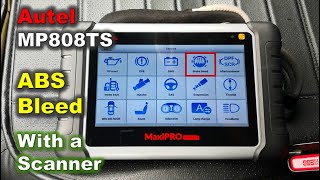
Typical fix: Replace the VSA modulator control unit. This requires professional programming with an HDS and a specific brake bleeding procedure to remove air from the new unit. 🎬 Watch: How to perform a professional ABS modulator bleed.
Est. part cost: $500-$1800 - Wiring Harness or Connector Issue 🟡 Medium Probability Wiring for the CAN bus runs throughout the vehicle and can be susceptible to damage from vibrations, moisture, previous repairs, or rodents chewing on wires.
How to confirm: Visually inspect the wiring harnesses between the PCM, VSA module, and gauge control module for any signs of damage, corrosion, or rodent activity. A multimeter can be used to check for continuity and shorts between the CAN-High and CAN-Low wires at the OBD-II port or module connectors.
Typical fix: Repair the damaged section of the wiring harness or clean/replace the corroded connector.
Est. part cost: $20-$500 - Faulty Alternator ⚪ Low Probability
How to confirm: With the engine running, check the voltage at the battery terminals. If the voltage is outside the typical 13.5V-14.5V range (either too low or too high), the alternator is likely failing and causing electrical interference or insufficient voltage.
Typical fix: Replace the alternator.
Est. part cost: $200-$500
Rare But Worth Checking
- Faulty PCM (Powertrain Control Module): While possible, the PCM is rarely the cause of the failure. It should only be considered after all other possibilities (wiring, other modules, power supply) have been exhaustively ruled out.
- Aftermarket Electronics Interference: A poorly installed aftermarket stereo, alarm, or remote start system can tap into the wrong wires and disrupt CAN bus communication. This is a common issue on modified vehicles. Diagnosis involves disconnecting the aftermarket device to see if the fault clears.
- Faulty Gauge Control Module (Instrument Cluster): The instrument cluster is also a key module on the F-CAN network. A failure within the cluster can sometimes cause this code. Diagnosis involves disconnecting it (similar to the VSA modulator) to see if communication is restored with the remaining modules.
Diagnosis Steps
- Check Battery Health: Verify battery voltage is above 12.4V (engine off) and the charging system is working correctly (13.5-14.5V engine on). Clean any corrosion from the battery terminals. A weak battery is a frequent and simple cause.
- Scan for All Codes: Use an advanced scan tool (preferably a Honda HDS) capable of reading codes from all modules (ABS/VSA, PCM, Gauge Cluster, etc.). Note all 'U' codes and any freeze frame data.
- Check for TSBs: Check for any Technical Service Bulletins (TSBs) related to U0029, VSA, or communication issues for your specific vehicle. TSB 10-017 is a known recall for VSA modulator issues.
- Isolate the Faulty Module: This is the key step. Begin by disconnecting the most likely culprit: the VSA modulator control unit. Disconnect its electrical connector, clear all DTCs, and cycle the ignition. Re-scan the system. If U0029 is gone and communication with the PCM is restored, the VSA modulator is bad. If the code returns, reconnect the VSA unit and repeat the process by disconnecting the gauge control module, then any aftermarket devices.
- Inspect Wiring: If disconnecting modules doesn't isolate the problem, the issue is likely in the wiring. Visually inspect the F-CAN harness between the PCM, VSA module, and OBD-II port. Look for chafing, breaks, corrosion, or signs of rodent damage.
- Check CAN Bus Resistance: With the battery disconnected, use a multimeter to measure the resistance between the CAN-High (Pin 6) and CAN-Low (Pin 14) terminals at the OBD-II port. A healthy network should read approximately 60 ohms. A reading of 120 ohms indicates a missing terminating resistor (often part of a module), and a reading near 0 ohms indicates a short circuit between the two wires.
- Final Diagnosis: If a module is identified as the cause, replace it. If wiring is the cause, repair it. If no fault is found after these steps, the PCM could be the issue, but this is the least likely cause and should be the last resort.
Parts You'll Likely Need

- VSA Modulator Control Unit
(OEM #57110-TA0-A72 (for 2011-2012 Sedan 2.4L Auto), 57110-TA0-A62. Part numbers vary by year and trim. Always verify with VIN.)— This module is the most frequent point of failure on the F-CAN network for this generation of Honda, causing a U0029 code.
Trusted brands: Honda (OEM), Bosch (OEM supplier), Cardone (Remanufactured)
OEM price range: $1000-$1800
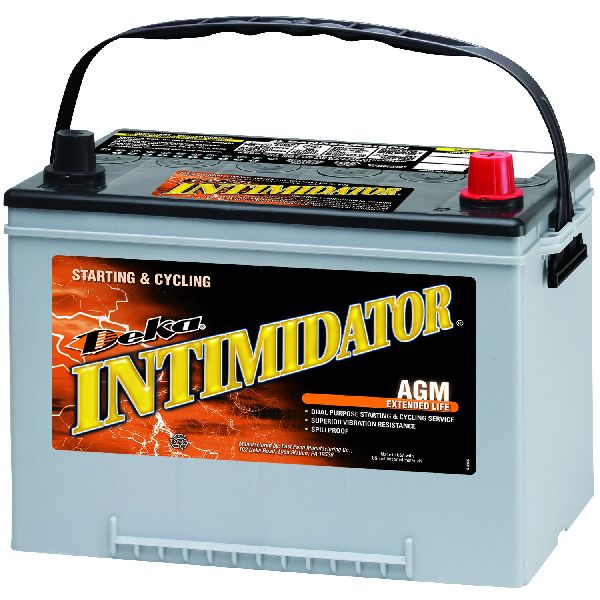
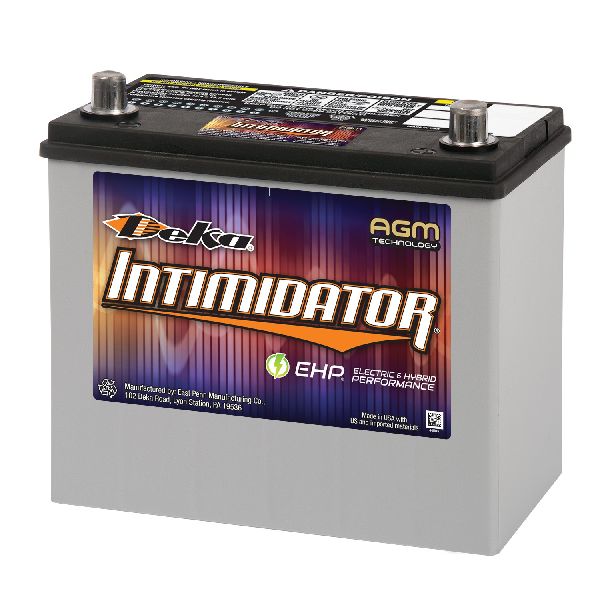
Aftermarket price range: $400-$800 (Remanufactured) - Battery — Low or unstable voltage is a primary cause of communication network errors in modern vehicles.
Trusted brands: Interstate, DieHard, Duralast
OEM price range: $200-$300
Aftermarket price range: $150-$250
Related Codes That Often Appear With This One
- U0122 — Lost Communication With Vehicle Dynamics Control Module. This code is often seen with U0029 because the VSA (Vehicle Stability Assist) module is a key component on the F-CAN network, and its failure is a common cause of the bus malfunction.
- U0100 — Lost Communication With ECM/PCM 'A'. This is a more generic code that can appear when the main engine computer is not communicating, which is the direct result of the F-CAN bus being down.
- U0155 — Lost Communication With Instrument Panel Cluster (IPC) Control Module. This can appear alongside U0029 if the gauge cluster is the source of the bus-off error or is simply unable to communicate due to another module's failure.
Technical Service Bulletins (TSBs) & Recalls
- TSB 10-017: Safety Recall: Air In VSA Modulator-Control Unit Causes Low/Soft Brake Pedal: While not directly for U0029, this recall addresses a known issue with the VSA modulator on 2007-08 models (and other Hondas) where air can enter the system. This highlights the VSA unit as a component with known factory issues and involves a specific bleeding procedure using the HDS.
Mechanic-Grade Diagnostic Values
- CAN Bus Network Resistance — expected: Approximately 60 Ω. Failure: A reading of 120 Ω suggests a terminating resistor is offline (likely a disconnected or faulty module). A reading near 0 Ω indicates a short between the CAN High and CAN Low wires.
- CAN High Voltage to Ground — expected: 2.5V to 3.0V DC. Failure: Voltage significantly outside this range can indicate a short or module failure.
- CAN Low Voltage to Ground — expected: 2.0V to 2.5V DC. Failure: Voltage significantly outside this range can indicate a short or module failure.
Scan Tool Commands That Help
- Honda Diagnostic System (HDS) or equivalent: VSA Sensor Neutral Position Memorization — This is a mandatory calibration procedure after replacing the VSA modulator control unit. Failure to perform this will leave the VSA warning light on and the system inoperative.
- Honda Diagnostic System (HDS) or equivalent: Fast CAN Bus Connected Unit Check — This function polls the network to see which modules are actively communicating. It can quickly show if a major module like the PCM or VSA unit is offline, helping to narrow down the source of the bus-off error.
- Honda Diagnostic System (HDS) or equivalent: Clear All DTCs — Used during the module isolation process. After disconnecting a suspected faulty module (e.g., the VSA unit), clearing all codes and re-scanning will confirm if the bus-off fault (U0029) disappears, thereby confirming the disconnected module was the cause.
Wiring & Ground Locations

- OBD-II DLC Pins 6 & 14 — Under the driver's side dashboard, to the left of the steering column.. These are the F-CAN High (Pin 6, often a TAN or PNK wire) and F-CAN Low (Pin 14, often a BLU or RED wire) terminals. They are the primary access point for testing network-wide resistance and voltage.
- G101 — Typically located on the driver's side of the engine bay, bolted to the intake manifold plenum or cylinder head.. This is a primary ground point for the engine wiring harness and the PCM. A loose or corroded G101 can cause a host of electrical issues, including communication codes like U0029.
- VSA Modulator Connector (46-Pin) — The VSA modulator is located in the engine bay, on the passenger side near the firewall.. This connector is the main interface for the VSA unit. Key pins include power inputs, ground connections (often multiple black wires), and the F-CAN H and F-CAN L wires. Disconnecting this is the primary step in isolating a faulty VSA module.
Real Owner Repair Stories
- ScannerDanner Forum user 'Paul6004' (2008 Honda Accord Euro (similar architecture)) — ABS code 86-01 'F-CAN communication malfunction', which is closely related to U0029. Code would appear immediately upon cranking.
❌ Tried (didn't work) Scoping CAN wires (showed good signal), Checking CAN resistance (was a healthy 56 ohms), Replacing the YAW rate sensor, Installing a replacement VSA/ABS module from a donor car
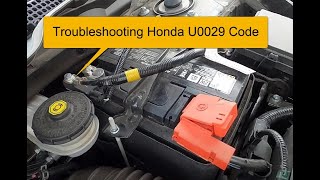
✅ What actually fixed it The replacement VSA module came from a vehicle with an automatic transmission, while the patient car had a manual transmission. The incompatibility caused the module to report a CAN communication error. Re-installing the original module (after the YAW sensor was replaced for a separate issue) cleared the F-CAN fault code. - NHTSA ODI #11442348 — An owner reported a "Vehicle Communication Bus A Performance 🎬 See this walkthrough for troubleshooting the Honda U0029 code." issue specifically identified as U0029-00, noting it as a recurring problem with their vehicle.
- NHTSA ODI #11496856 — While reported on a different Honda model (Insight), this record demonstrates how U0029-00 often appears as a "CAN Gateway Permanent code" alongside a cascade of other communication faults (U0111, U0110, U0100) affecting the anti-lock brakes and electric powertrain modules.
When the Usual Fixes Don't Work
- While a faulty VSA modulator is the most common cause, simply swapping it with a random used unit is not a guaranteed fix. A case documented on a technician forum showed that installing a VSA modulator from an automatic transmission Accord into a manual transmission model caused an F-CAN communication fault, even though the part was otherwise functional. This highlights the critical importance of matching OEM part numbers exactly or using a repair service for the original unit to avoid introducing new compatibility-related faults.
OEM Part Supersession History
57110-TA0-A63→57110-TA0-306— Part revision or manufacturer change.
Heads up: This part is specified for models with a Manual Transmission.57110ta0415→57110-TA0-A72— Part revision or manufacturer change.
Heads up: This part is specified for 2.4L Sedans with an Automatic Transmission.
Model Year Variations Within This Range
- 2008-2010 vs 2011-2012: The VSA modulator part numbers are different for the pre-facelift (08-10) and facelift (11-12) models. Furthermore, there are different part numbers for vehicles with automatic versus manual transmissions within those year ranges. Using the wrong module, even if it fits, can cause a U0029 code.
Diagnostic Flowchart
Other Known Issues on This Vehicle
Issues unrelated to this code that are worth knowing about as an owner of this generation:
- Excessive Oil Consumption (V6 Engine) 🔴 High — Common on J35 engines with Variable Cylinder Management (VCM). A class-action lawsuit was settled regarding this issue. (Ref: Honda extended powertrain warranties for affected vehicles as part of a class-action settlement.)
- VTC Actuator Rattle at Cold Start (4-Cyl Engine) 🟠 Medium — A very common issue on the K24Z engine, causing a brief, loud rattle upon starting the engine after it has sat for several hours. (Ref: TSB 09-010 addresses this issue, recommending the replacement of the VTC actuator.)
- Premature Rear Brake Pad Wear 🟠 Medium — Widespread complaints for 2008-2010 models where rear brake pads wear out in as little as 15,000-25,000 miles. (Ref: Honda released updated rear brake pads (P/N 43022-TA0-A40) to address the rapid wear.)
- Soft or Spongy Brake Pedal 🔴 High — Some vehicles may allow a small amount of air to enter the VSA modulator over time, resulting in a low or soft brake pedal. (Ref: Safety Recall / TSB 10-017 was issued to bleed the brake system and install sealing caps on the VSA modulator to correct this.)
- Alternator Failure 🟡 Low — Alternators can fail over time, leading to a dead battery and stalling.
Used vs. New Parts: Buying Guide for This Vehicle
When a used part is the smart pick: A used VSA modulator from a junkyard or recycler is a smart financial choice given the high cost of a new OEM unit, but ONLY if you have access to a professional-grade bidirectional scan tool for programming.
Donor-vehicle mileage cap: roughly under 80000 miles for the part to have meaningful remaining life.
What to inspect on the donor part:
- **Exact Part Number Match:** The OEM part number stamped on the donor module MUST be identical to your original module. Variations for transmission type or model year will cause communication faults.
- No Physical Damage: Inspect the housing for cracks and the electrical connector for bent or corroded pins.
- Donor Vehicle History: If possible, choose a part from a vehicle that was not involved in a major front-end collision.
OEM-only on this vehicle (don't cheap out):
- While the VSA modulator itself can be sourced used or remanufactured, any required software updates should only be performed using official Honda software via the HDS to ensure stability.
Aftermarket brands forum-validated for this vehicle:
- Cardone (Remanufactured)
- Circuit Board Medics (Repair Service)
- MyAirbags (Repair Service)
Brands owners have reported issues with on this vehicle:
- Unbranded, no-name units from online marketplaces should be avoided due to high failure rates and lack of support. A better alternative is having your original module repaired by a reputable service, which avoids programming issues entirely.
Real Owner Stories
Aggregated from forums and TSBs cited above. Mileages and costs reflect what owners reported in those sources.
2009 Honda Accord
Symptoms: The VSA and Check Engine lights came on suddenly, and the car's 'D' (Drive) indicator was blinking. The code pulled was U0029.
What fixed it: After initial checks on the battery were fine, diagnosis pointed to an internal failure of the VSA modulator. Replacing the VSA modulator control unit and performing the required brake bleeding procedure resolved the issue.
Source hint: driveaccord.net thread titled 'vsa and check engine light on code u0029.541094/'
2011 Honda Accord
Symptoms: A 'Christmas tree' of warning lights appeared on the dash, including ABS, VSA, and the Check Engine light. The engine had a rough idle and the transmission was shifting harshly.
What fixed it: A simple battery test showed it was weak and failing to hold a proper charge. Replacing the old battery and cleaning the terminal connections completely cleared the U0029 code and all associated symptoms.
Source hint: driveaccord.net thread titled 'u0029-f-can-malfunction-bus-off-ecm-pcm.549992/'
2008 Honda Accord
Symptoms: The primary complaint was a brake pedal that felt soft and went too low to the floor, requiring more effort to stop the vehicle.
What fixed it: The vehicle was taken to a dealer for the safety recall. The fix involved a specific brake bleeding procedure using the Honda HDS scan tool to remove trapped air from the VSA modulator, as detailed in the TSB.
Source hint: TSB 10-017: Safety Recall: Air In VSA Modulator-Control Unit Causes Low/Soft Brake Pedal
Related OBD-II Codes
Frequently Asked Questions
My mechanic says the VSA modulator is the problem. How can I be sure before replacing such an expensive part?
Why are my VSA, ABS, Power Steering, and Check Engine lights all on at the same time with code U0029?
Could a bad battery really cause this many problems? What voltage should I be looking for?
I have a U0029 code. Is this related to the safety recall TSB 10-017?
How can I test the CAN bus wiring myself?
My 4-cylinder Accord has a loud rattle on cold starts. Is this related to the U0029 code?
Helpful Videos
We Have This Part in Stock


The information in this article is provided for general reference and educational purposes only. Vehicle specifications, procedures, and part compatibility can vary by production date, trim level, and region. Always consult your vehicle's factory service manual and verify part numbers before purchasing or performing repairs. Safety-critical components such as airbags, seat belts, and braking systems should be installed by a qualified professional.
- Honda Accord:
- 🎬 Helpful Videos
- 🛍️ Shop This Part
- What's Unique About the 2008-2012 Honda Accord
- Symptoms You May Notice
- Most Likely Causes
- Rare But Worth Checking
- Diagnosis Steps
- Parts You'll Likely Need
- Related Codes That Often Appear With This One
- Technical Service Bulletins (TSBs) & Recalls
- Mechanic-Grade Diagnostic Values
- Scan Tool Commands That Help
- Wiring & Ground Locations
- Real Owner Repair Stories
- When the Usual Fixes Don't Work
- OEM Part Supersession History
- Model Year Variations Within This Range
- Diagnostic Flowchart
- Other Known Issues on This Vehicle
- Used vs. New Parts: Buying Guide for This Vehicle
- Real Owner Stories
- 2009 Honda Accord
- 2011 Honda Accord
- 2008 Honda Accord
- Related OBD-II Codes
- Frequently Asked Questions
- 🎟️ Get 5% Off