

U0002 on 2022-2024 Volkswagen Taos: Diagnosing High Speed CAN Bus Performance Issues
On a 2022-2024 VW Taos, code U0002 usually points to intermittent electrical issues like a faulty CAN bus connection, a problematic control module, or a software glitch. These issues are widely reported by Taos owners. Since the vehicle is new, the most likely fix is a warranty repair at the dealership to diagnose and fix a faulty connection or reprogram a module.
- U0002 on a 2022-2024 Taos is a serious code indicating a problem with the vehicle's core communication network.
- Given the vehicle's age and known electrical issues, the problem is very likely a manufacturing or software defect that should be covered under warranty.
- The most common causes are a bad connection at a module, a software/coding error, or a faulty module itself. Do not start replacing parts without a full network diagnosis.
- Before seeking professional help, try the simple step of unplugging all aftermarket accessories from the 12V and USB ports.
- Do not ignore this code. Continued driving could lead to unpredictable behavior, including stalling or the loss of safety systems.
What's Unique About the 2022-2024 Volkswagen Taos
The 2022-2024 VW Taos is known among owners for experiencing a wide range of intermittent and seemingly unrelated 'electrical gremlins,' from infotainment glitches to random warning lights and stalling. Code U0002 is often at the heart of these complaints, suggesting a systemic issue with network stability. Unlike a simple sensor failure, this code on a Taos often points towards a deeper, more complex problem like a faulty module connection, a software coding error after a dealer service, or a wiring harness issue that can be difficult to replicate. Some owners theorize that these network instability issues are the root cause for other well-documented Taos problems, like premature brake wear and even head gasket failure, by causing control modules to mis-time commands.
Symptoms You May Notice
- Multiple, seemingly random warning lights on the dashboard (Check Engine, ABS, Traction Control, EPC etc.).
- Infotainment or navigation system freezing, shutting down, or acting erratically.
- Instrument cluster gauges dropping to zero or the entire panel going black intermittently.
- Vehicle entering 'limp mode' with severely restricted speed.
- Sudden engine stalling, particularly when coming to a stop.
- Features like power windows or auto start/stop behaving incorrectly.
- No-start or intermittent starting issues.
- Appearance of an EPC (Electronic Power Control) light, which indicates a problem with the electronic systems controlling the engine.
- Replacing individual components (like an ABS sensor or a switch) that are reporting errors, without first diagnosing the underlying network communication problem. The sensor itself is often fine; it's the message from the sensor that is getting lost or corrupted.
Most Likely Causes
- Faulty Connection at a Control Module 🔴 High Probability Owner reports for the Taos specifically mention dealers finding and fixing a 'faulty BUS connection in the control module' to resolve widespread electrical issues. One owner of a 2021 Taos with similar symptoms found the issue to be a damaged wiring harness connector at the fuel pressure sensor. This suggests potential manufacturing defects or vulnerabilities in module connectors and wiring.
How to confirm: A technician will use a scan tool to see which modules are offline or reporting errors. This is followed by a visual inspection and 'wiggle test' of the connectors and wiring harness at the suspect module (e.g., Gateway Module, BCM, Instrument Cluster).
Typical fix: Reseating the connector or repairing the specific pins/wires leading to the module. In some cases, a new wiring pigtail is installed.
Est. part cost: $10-$50 for a connector repair kit. - Control Module Software/Coding Issue 🟡 Medium Probability Multiple Taos owners have reported that electrical issues began after a dealer service, which were later resolved by the dealer finding and completing an incomplete software update or correcting the module's coding. A similar issue on a VW Tiguan was resolved by reprogramming the control module with correct parameters after a service update caused false alarms. Recalls 24HH and 21V615000 were issued to update ECU software to prevent stalling.
How to confirm: This can only be confirmed by a VW dealership or a specialist with OEM diagnostic tools (like ODIS) who can check the software versions and coding of all installed control modules against the vehicle's factory configuration.
Typical fix: Recalibrating and reprogramming the affected control module(s) with the correct software and coding. This is a software-only fix.
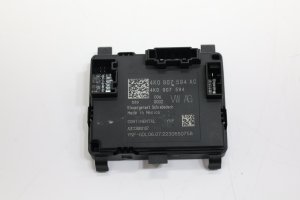
Est. part cost: $0 - Failing or Faulty Control Module 🟡 Medium Probability The Gateway Module is the central hub for all CAN bus traffic. If it fails, it can disrupt communication across the entire network. Other modules like the instrument cluster or BCM can also fail and flood the network with bad data. The Gateway Module is a known failure point.
How to confirm: Diagnosis involves using a scan tool to identify which module is not communicating or is sending corrupt data. The final step is to isolate the module by disconnecting it and seeing if network stability returns.
Typical fix: Replacement of the faulty control module, followed by programming and coding it to the vehicle. Common part numbers for the Gateway Module include 3Q0-907-530-AL, 3Q0-907-530-E, 3Q0907530AR, and 3Q0907530BF.
Est. part cost: $35-$800 depending on the module and if new or used. - Low Battery Voltage or Poor Ground ⚪ Low Probability Modern vehicles are highly sensitive to voltage. A weak battery or a poor ground connection can cause modules to drop off the network and trigger communication codes. One Taos owner's issues were linked to low voltage after repeated start attempts. Another user on Reddit suggests that many phantom warning lights can be resolved by temporarily disconnecting the battery.
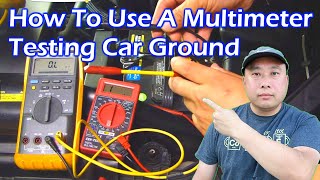
How to confirm: Test the battery with a digital battery tester to check its state of health and cranking amps. With the engine running, check alternator output (typically 13.5-14.5V). Inspect and clean the main battery terminals, chassis ground strap, and engine ground. 🎬 See how to test your car's ground
Typical fix: Replace the battery if it fails a load test. Clean or replace corroded ground straps.
Est. part cost: $150-$350 for a new AGM battery.
Rare But Worth Checking
- Aftermarket 12V Accessory: A VW service document for a different model notes that poorly designed aftermarket devices (like phone chargers or navigation units) plugged into the 12V socket can create electrical feedback and trigger a U0002 code. Before extensive diagnosis, unplug all aftermarket devices and see if the code returns.
- Wiring Harness Damage: While less common on a new vehicle, a wiring harness could be chafed, pinched, or damaged. This requires a meticulous visual inspection along the main harness routes, particularly where they pass through the firewall or near sharp metal edges.
Diagnosis Steps
- Check for TSBs and Recalls: Since this is a new vehicle, the first step is always to check with a VW dealer for any open recalls or Technical Service Bulletins. Recalls 24HH (ECU software), 21V615 (ECU software), and 90Z5 (Instrument Cluster) are particularly relevant to CAN bus modules and associated symptoms.
- Professional Scan: Connect a VW-specific scan tool (like VCDS or ODIS) to read codes from ALL modules. Note which modules are reporting communication faults or are not responding.
- Check Battery and Grounds: Test the battery's state of health. Ensure battery terminals are clean and tight. Inspect the main chassis ground strap for corrosion or looseness. A healthy alternator should output between 13.5-14.5V.
- Unplug Aftermarket Devices: Remove any and all devices plugged into the 12V or USB ports, as these can sometimes cause electrical interference.
- CAN Bus Resistance Check: With the battery disconnected, measure the resistance between Pin 6 (CAN-H) and Pin 14 (CAN-L) at the OBD-II port. A healthy network should read approximately 60 Ohms. A reading of 120 Ohms indicates a break in the circuit or a missing termination resistor, while a reading near 0 Ohms indicates a short between the two lines.
- Isolate the Fault: If a specific module is suspected, a technician may disconnect it from the network and re-check bus resistance and communication. If the network returns to normal, the disconnected module is the likely culprit.
- Wiring Inspection: If resistance is incorrect or intermittent, visually inspect the CAN bus wiring harness for any signs of chafing, pinching, or corrosion, paying close attention to the wiring going to the Gateway module and instrument cluster.
Parts You'll Likely Need
- Gateway Control Module
Related Codes That Often Appear With This One
- U0001 — U0001 (High Speed CAN Communication Bus) indicates a total bus failure, while U0002 is a performance issue. They can appear together if the network is intermittently going down completely.
- U01xx — Codes like U0100 (Lost Communication with ECM), U0121 (Lost Communication with ABS), or U0146 (Lost Communication with Gateway) indicate specific modules are not responding. They help pinpoint which part of the network is affected.
- P0193, P0087 — These codes point to fuel rail pressure problems and have appeared on Taos vehicles with rough running and stalling, sometimes traced back to faulty wiring to the fuel pressure sensor, which can mimic a CAN bus issue.
Technical Service Bulletins (TSBs) & Recalls
- 24iL
- 24HH
- 90Z5
- 2071245/1
Platform-Specific Known Issues
- A Reddit user with a 2022 Taos SE experienced EPC light and engine warnings, which was diagnosed as a failed head gasket requiring a month-long repair.
- Another Reddit user reported their 2022 Taos required a head gasket replacement at their 20k checkup after the dealer found low coolant. The same user also had rear brakes replaced at 12k miles.
- A user on Carly.com reported a 2022 Taos with multiple error messages had the issue resolved by correcting the main control module's coding, which was improperly updated during a prior service.
Mechanic-Grade Diagnostic Values
- CAN Bus Resistance — expected: ~60 Ohms. Failure: A reading of ~120 Ohms indicates an open circuit or a faulty terminating resistor in a module. A reading near 0 Ohms indicates a short between the CAN-High and CAN-Low lines.
- Alternator Output Voltage (Engine Running) — expected: 13.5 - 14.5 Volts. Failure: A reading below 13.5V, such as 11.8V at idle, points to a failing alternator or voltage regulator, which can cause widespread electrical issues and communication faults.
- Battery Voltage (Engine Off) — expected: ~12.6 Volts. Failure: A reading significantly below 12.4V indicates a discharged or failing battery, which is a common cause of intermittent module communication errors on modern VWs.
Scan Tool Commands That Help
- ODIS (OEM VW Software): Software Version Management (SVM) — Used to perform official software updates on control modules, such as the ECU update specified in recall 24HH. This is critical for resolving software-based stalling and communication issues.
- ODIS or VCDS (by Ross-Tech): Control Module Coding — After replacing a module like the Gateway, Instrument Cluster, or BCM, the new module must be coded with the vehicle's specific configuration. Failure to code the module will result in it not functioning correctly and can cause network communication faults.
- ODIS or VCDS: Gateway Installation List — This function allows a technician to see which control modules are registered on the CAN network and which are communicating. It's a primary tool for identifying which module has dropped off the bus or is reporting errors.
Wiring & Ground Locations
- Gateway Control Module (J533) — Located under the driver's side dashboard, to the right of the steering column. The knee bolster panel must be removed for access.. This is the central router for all CAN bus traffic. A loose connection, corrosion, or failure of this module is a primary suspect for a U0002 code.
- Main Engine Bay Ground Point — On the MQB platform, a primary ground point with multiple brown wires is located on the chassis/bulkhead, often behind or above the battery.. A loose or corroded main ground can cause voltage fluctuations and unpredictable behavior across all electronic modules, leading to communication performance codes like U0002.
- A-Pillar Ground Points (43, 44) — Located at the lower part of the left and right A-pillars, accessible after removing interior trim.. These ground points serve various interior modules, including potentially the instrument cluster and other components on the convenience CAN bus. A fault here could cause intermittent issues.
- Door Wiring Harness — The harness that passes from the A-pillar into the driver's and passenger's doors.. VW issued a TSB (97-21-02TT) for door wiring harnesses on 2019-2022 models, including the Taos. Wires can break from repeated opening and closing of the door, causing faults in door modules which can disrupt the CAN bus.
Real Owner Repair Stories
- Reddit user on /r/VWTaos (2024 Taos) — Dashboard lit up with multiple warnings: solid check engine light, EPC light, cruise control not working, and messages about safety features not working.
✅ What actually fixed it The dealership diagnosed and replaced a faulty Oil Separator. The user reported this was the fastest repair they'd had at VW, implying it was a known and straightforward fix for the dealer. - Reddit user on /r/Volkswagen (2022 Taos) — EPC light and Start-Stop error appeared. The car went into limp mode with limited RPMs. After restarting, the lights remained but the car seemed to run fine.
❌ Tried (didn't work) Restarting the car cleared the limp mode but not the warning lights.
✅ What actually fixed it A commenter suggested a common 'soft reset' for phantom warning lights on the Taos: disconnect the negative battery terminal for 2 minutes, then reconnect. This is intended to clear temporary software glitches in modules. If the issue persists, professional diagnosis is needed.
OEM Part Supersession History
3Q0-907-530-E→3Q0-907-530-AL— Part revision or update by the manufacturer. The -AL version is listed for 2022 Taos models produced from 06/21/2021 onward.
Heads up: While both part numbers may be listed, it is critical to use the correct revision for the vehicle's production date. Using an incompatible Gateway module will prevent it from being coded and functioning correctly.
Model Year Variations Within This Range
- 2022 (AWD models): A specific ECU software version on some 2022 AWD models could cause the engine to stall when coming to a stop. This was addressed by safety recall 24HH, which involves a software update.
- 2025-2026: A recall (NHTSA 26V258) was issued for some 2025-2026 Taos models because the fuel tank pressure sensor wiring harness was manufactured too short. This could cause the sensor to become dislodged in a crash, creating a fuel leak risk. While not directly a U0002 cause, it highlights known wiring harness production issues on the platform.
- 2025: A recall (90Z5) was issued for a software error in the instrument cluster that could cause it to be blank at startup. The fix is a software update or, if necessary, a replacement of the cluster. A failing instrument cluster can cause numerous CAN bus communication faults.
Diagnostic Flowchart
Other Known Issues on This Vehicle
Issues unrelated to this code that are worth knowing about as an owner of this generation:
- Head Gasket Failure 🔴 High — Widespread on 2022-2023 models, often occurring at low mileage (under 30,000 miles). Symptoms include coolant loss, overheating, and EPC light. (Ref: TSB 2071245/1 acknowledges a faulty head gasket design.)
- Engine Stalling 🔴 High — Common on early 2022 AWD models, typically when coming to a stop. (Ref: Recalls 21V615 and 22V687 (Campaign 24HH) issued for an ECU software update to fix the issue.)
- Faulty Fuel System Components 🔴 High — Multiple issues reported including faulty fuel pumps causing stalls, leaking connectors, and defective suction jet pumps leading to fuel spills and odor. (Ref: Recalls issued for fuel line connectors (21V651) and fuel delivery pumps (23V214000). A class-action lawsuit was filed in 2024 regarding suction jet pump failures.)
- Faulty Fuel Injectors 🟠 Medium — Owners report rough idle, lack of power, and Start/Stop errors, sometimes leading to fuel injector replacement. This can be a precursor or concurrent with head gasket issues.
- Premature Brake Wear 🟠 Medium — Numerous owners report needing to replace rear brakes and rotors at unusually low mileage (e.g., 12,000 miles). (Ref: Volkswagen extended the warranty for brakes to 2 years or 24,000 miles for some owners due to complaints.)
- Instrument Cluster Failure 🟠 Medium — Affects 2025 models at startup, causing the screen to go blank. (Ref: Recall 90Z5 issued for a software update or cluster replacement.)
- EPC Light Illumination 🟠 Medium — The EPC light frequently illuminates, often triggering 'limp mode'. Causes are varied, from throttle body issues to sensor failures, and it often appears alongside other major faults like head gasket failure.
Used vs. New Parts: Buying Guide for This Vehicle
When a used part is the smart pick: For the primary suspect part, the Gateway Control Module, a used OEM part from a reputable salvage yard is a very sensible choice. These modules are not high-wear items and are often available for a fraction of the new price.
Donor-vehicle mileage cap: roughly under 80000 miles for the part to have meaningful remaining life.
What to inspect on the donor part:
- Verify the part number EXACTLY, including the suffix letter (e.g., 3Q0-907-530-AL).
- Ensure the donor vehicle was not in a flood or fire.
- Inspect the connector pins on the used module to ensure none are bent, broken, or corroded.
- Buy from a seller that offers a warranty, even if it's just 30-90 days.
OEM-only on this vehicle (don't cheap out):
- Gateway Control Module: While used OEM is good, avoid unbranded aftermarket clones. These often have software/firmware issues and may not be programmable to the vehicle, causing more problems than they solve.
Brands owners have reported issues with on this vehicle:
- Unbranded, no-name Gateway Modules from online marketplaces. These are high-risk due to the need for specific software and vehicle coding.
Real Owner Stories
Aggregated from forums and TSBs cited above. Mileages and costs reflect what owners reported in those sources.
2022 Volkswagen Taos SE
Symptoms: EPC light and various engine warnings appeared on the dashboard.
What fixed it: The vehicle required a head gasket replacement, which was a month-long repair process.
Source hint: Reddit r/VWTaos thread titled 'major_issues_with_2022_se_taos/'
2022 Volkswagen Taos — 20000 miles
Symptoms: Dealer found low coolant during a routine checkup; previously had rear brakes replaced at 12k miles.
What fixed it: Head gasket replacement.
Source hint: Reddit r/VWTaos thread titled 'head_gasket_tsb_issued_aug_17_2023/'
2022 Volkswagen Taos
Symptoms: Multiple error messages appeared on the dashboard.
What fixed it: Correcting the main control module's coding, which had been improperly updated during a prior service.
Source hint: Carly.com report cited in vehicle_specific_issues
2021 Volkswagen Taos
Symptoms: Widespread electrical issues and communication faults.
What fixed it: Repairing a damaged wiring harness connector at the fuel pressure sensor.
Source hint: Owner reports cited in common_causes for Faulty Connection at a Control Module
Related OBD-II Codes
Frequently Asked Questions
Are there any specific recalls for the 2022-2024 Volkswagen Taos that address the U0002 communication code symptoms?
My Taos is showing an EPC light and multiple dashboard warnings; could this be a software issue from a recent service?
What specific Gateway Module part numbers are used in the Taos if I need a replacement?
Can a head gasket failure cause the EPC and engine lights I'm seeing alongside U0002?
Is there a simple way to reset 'phantom' warning lights on the Taos dashboard?
Helpful Videos

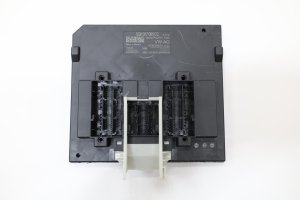
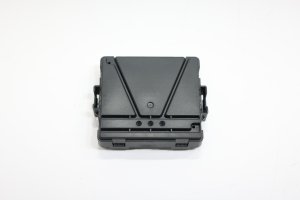
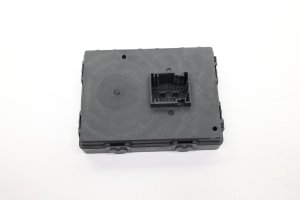
We Have This Part in Stock


The information in this article is provided for general reference and educational purposes only. Vehicle specifications, procedures, and part compatibility can vary by production date, trim level, and region. Always consult your vehicle's factory service manual and verify part numbers before purchasing or performing repairs. Safety-critical components such as airbags, seat belts, and braking systems should be installed by a qualified professional.
- Volkswagen Taos:
- 🎬 Helpful Videos
- 🛍️ Shop This Part
- What's Unique About the 2022-2024 Volkswagen Taos
- Symptoms You May Notice
- Most Likely Causes
- Rare But Worth Checking
- Diagnosis Steps
- Parts You'll Likely Need
- Related Codes That Often Appear With This One
- Technical Service Bulletins (TSBs) & Recalls
- Platform-Specific Known Issues
- Mechanic-Grade Diagnostic Values
- Scan Tool Commands That Help
- Wiring & Ground Locations
- Real Owner Repair Stories
- OEM Part Supersession History
- Model Year Variations Within This Range
- Diagnostic Flowchart
- Other Known Issues on This Vehicle
- Used vs. New Parts: Buying Guide for This Vehicle
- Real Owner Stories
- 2022 Volkswagen Taos SE
- 2022 Volkswagen Taos — 20000 miles
- 2022 Volkswagen Taos
- 2021 Volkswagen Taos
- Related OBD-II Codes
- Frequently Asked Questions
- 🎟️ Get 5% Off