

U0001 on 2007-2011 Subaru Impreza: High-Speed CAN Bus Failure Causes and Fixes
Code U0001 on a 2007-2011 Impreza indicates a critical network communication failure. The most likely causes are a faulty Body Control Module (BCM), damaged wiring behind the steering column, or a weak battery. Diagnosis is complex and should start with checking the battery and CAN bus wiring resistance before suspecting expensive modules.
- U0001 is a critical network failure code; do not continue to drive the vehicle.
- The most likely causes on a 2007-2011 Impreza are a bad Body Control Module (BCM), damaged wiring (especially under the dash), or a weak battery/bad grounds.
- Diagnosis is complex and should be done by a professional. Do-it-yourself diagnosis should not go beyond checking the battery, grounds, and visually inspecting for obvious wiring damage.
- Before replacing any expensive module, a full network diagnostic, including a CAN bus resistance check, is mandatory to avoid misdiagnosis.
- If the BCM is replaced, it will require programming to the vehicle's VIN.
What's Unique About the 2007-2011 Subaru Impreza
For this generation of Subaru Impreza, the U0001 code is frequently linked to electrical issues within the cabin, rather than under the hood. Owner and technician reports often point towards two main culprits: an internal failure of the Body Control Module (BCM) or damage to the complex wiring harnesses located around the adjustable steering column and under the dashboard. While a weak battery can trigger this code on any car, on these Imprezas, it's crucial to investigate the BCM and nearby wiring as a primary potential cause once the battery is confirmed to be healthy.
Symptoms You May Notice
- Multiple warning lights on the dashboard simultaneously (Check Engine, ABS, AWD, AT OIL TEMP, Traction Control).
- Engine stalls, runs poorly, or will not start.
- Transmission shifts erratically or gets stuck in one gear (limp mode).
- Erratic or non-functional electrical components like power windows, door locks, interior lights, or the radio.
- Loss of power steering assist, making the wheel very hard to turn.
- The 'CRUISE' light on the dashboard may flash.
- Instrument cluster gauges behaving erratically, sweeping wildly, or freezing.
- Security system may act up, or the car may fail to recognize the key.
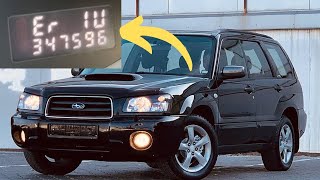
- Odometer displays dashes ('------') or an 'Er IU' message, indicating a Body Integrated Unit communication error. 🎬 Watch: See how a faulty BCM causes the Er IU error.
- Replacing the Engine Control Module (ECM) or Transmission Control Module (TCM) without proper diagnosis. The U0001 code is a network-wide fault, and often a different module (like the BCM) or the wiring itself is the root cause.
Most Likely Causes
- Faulty Body Control Module (BCM) 🔴 High Probability The BCM acts as a central hub for many electronic functions and CAN bus signals. Internal failures from age or electrical faults can cause it to stop communicating, bringing down the entire network. A failing BCM can also cause a parasitic battery drain, where it continues to draw power after the car is off.
How to confirm: After confirming wiring is intact, a professional scan tool can be used to see if the BCM is offline or not communicating. The module's power and ground connections should be tested directly at its connector before condemning the unit. A technician may try to communicate directly with the BCM; failure to do so points to an internal fault.
Typical fix: Replacement of the Body Control Module. The new module must be programmed to the vehicle's specific VIN and options by a dealer or a properly equipped independent shop.
Est. part cost: $150-$400 - Damaged Wiring Harness or Connectors 🟡 Medium Probability Wiring harnesses, especially around the adjustable (tilt/telescope) steering column, can become chafed from movement over time. This can cause the CAN High and CAN Low wires to short together or to ground, disrupting the entire network. A similar issue has been noted in a TSB for other makes, where a missing cable tie allows a harness to rub through.
How to confirm: Visually inspect harnesses for any signs of damage, chafing, or corrosion, paying close attention to the area behind the dashboard and around the steering column. Perform a resistance test between Pin 6 (CAN High) and Pin 14 (CAN Low) at the OBD-II port with the battery disconnected. A healthy network should read approximately 60 Ohms. A reading of 120 Ohms suggests an open circuit (like a module being unplugged), while a reading near 0 Ohms indicates a short circuit between the two CAN wires.
Typical fix: Carefully repair the damaged section of wire or replace the corroded connector. This requires precision soldering and heat-shrinking to ensure a durable, weather-proof repair. Securing the harness away from moving parts is critical to prevent a repeat failure.
Est. part cost: $5-$50 - Weak Battery or Poor Ground Connections 🟡 Medium Probability Low system voltage can cause control modules to malfunction and drop off the network, triggering a U0001 code. Age and corrosion can weaken the main engine-to-chassis ground straps, creating unstable power for all electronics. On Subarus, the ECU grounds through the intake manifold, and if this path is compromised (e.g., by non-conductive spacers), it can cause widespread issues.
How to confirm: Test the battery voltage with a multimeter; it should be above 12.4V with the engine off. With the engine running, the alternator should be charging at 13.5V-14.5V. Inspect and clean all main battery terminals and chassis ground points, which can be found in the vehicle's service manual wiring diagrams. Specifically check the main engine ground on the top starter bolt and the ground path from the intake manifold to the chassis.
Typical fix: Replace the battery if it fails a load test. Clean or replace corroded battery terminals and ground straps. Consider adding a supplementary grounding kit to improve the factory's mediocre grounding system.
Est. part cost: $10-$250
Rare But Worth Checking
- Faulty ABS, TCM, or ECM Module: While less common than the BCM, any of the main control modules on the high-speed CAN bus can fail and disrupt the network. This is usually accompanied by other codes specific to that module's function.
- Aftermarket Electronics: Improperly installed aftermarket stereos, alarms, or remote starters can interfere with the CAN bus network and cause communication errors. These devices are sometimes spliced incorrectly into the CAN wiring, causing interference or shorts.
- Module Software Corruption: An interrupted software update, voltage spike, or internal memory failure can corrupt the software on a module, causing it to broadcast invalid data or stop communicating, which can trigger a U0001. Sometimes this can be fixed by reprogramming the module, avoiding costly replacement.
Diagnosis Steps
- Check the Battery and Charging System: Ensure the battery has a full charge (12.4V+) and that the alternator is working correctly (13.5-14.5V when running). Clean any corrosion from battery terminals and check that the main chassis grounds are clean and tight.
- Perform a Full Vehicle Scan: Use a professional-grade OBD-II scanner to pull codes from all modules, not just the engine. Make a list of all 'U' codes and note which modules are not responding. This is a critical first step to see the scope of the network failure.
- Check CAN Bus Resistance: Disconnect the battery. Set a multimeter to Ohms and measure the resistance between Pin 6 (CAN High) and Pin 14 (CAN Low) of the OBD-II port. A reading of approximately 60 Ω is normal, indicating both 120 Ω terminating resistors are online. 120 Ω indicates an open circuit or one terminating resistor is offline. A very low reading (near 0 Ω) indicates a short between the CAN High and CAN Low wires.
- Visual Inspection: Thoroughly inspect the wiring harnesses under the dashboard, specifically around the tilt/telescoping steering column, and near the BCM for any signs of chafing, rodent damage, or loose connectors.
- Isolate Modules: If the resistance check is abnormal, a technician may start unplugging modules one by one from the CAN network and re-testing the resistance to isolate the faulty module or wiring section. This is an advanced step that requires a wiring diagram.
- Test the BCM: If the BCM is suspected, locate it (often integrated into the fuse box under the driver's side dash) and inspect its connectors for corrosion or damage. Test for proper power and ground at the BCM connector before condemning the module itself.
Parts You'll Likely Need
- Body Control Module (BCM)
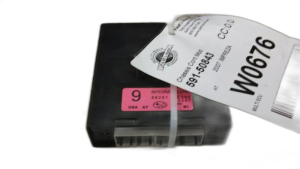
(OEM #88281FG700, 88035FG010, 88281FG550, 28201FG000)— This module is a common point of failure on this platform that can bring down the entire high-speed communication network. Note: Multiple part numbers exist and are not always interchangeable; always verify the correct one using the vehicle's VIN before ordering.
Trusted brands: Subaru (OEM), Cardone (Remanufactured)
OEM price range: $300-$500
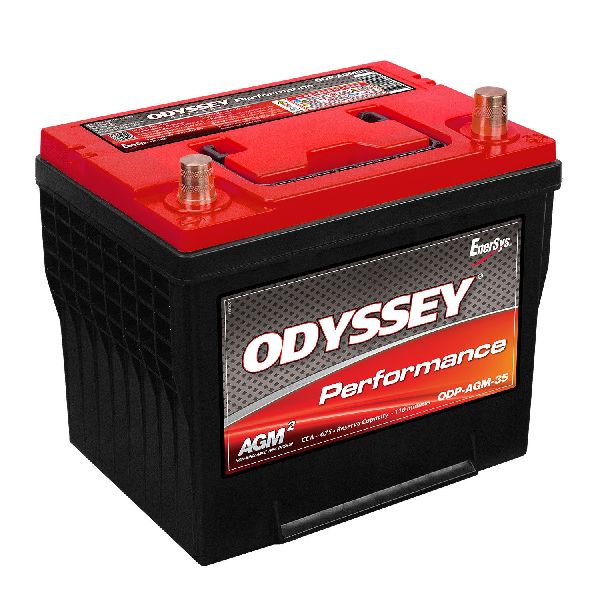
Aftermarket price range: $150-$300 - Battery — A weak or failing battery provides unstable voltage, which is a frequent cause of network communication codes.
Trusted brands: Interstate, DieHard, Duralast
OEM price range: $200-$300
Aftermarket price range: $150-$250
Related Codes That Often Appear With This One
- P0700 — This code indicates a fault has been registered in the Transmission Control Module (TCM). It often appears with U0001 because the network failure prevents the ECM from communicating with the TCM.
- U0101 — This code means 'Lost Communication with TCM'. It is a more specific version of U0001, pointing directly to a communication breakdown with the transmission module.
- U0121 — This code means 'Lost Communication with ABS Control Module'. It indicates the ABS module is offline, which is a common symptom of the larger network failure indicated by U0001.
Technical Service Bulletins (TSBs) & Recalls
- NHTSA TSB J-20-003-305 (for Jaguar, not Subaru): While not a Subaru TSB, it describes an identical failure scenario where a 'missing cable tie on the transmission electrical wiring harness' leads to chafing and a U0001-87 code. This corroborates the 'damaged wiring' cause as a common pattern across manufacturers.
Platform-Specific Known Issues
- Flashing 'AT OIL TEMP' Light: A very common symptom accompanying U0001 on automatic transmission models is a flashing 'AT OIL TEMP' light. This does not always mean the transmission fluid is hot. Instead, it often serves as a general transmission system fault indicator. When the TCM loses communication with the ECM or other modules due to the U0001 fault, it triggers this light as a warning. In rare cases, physical damage like a dented transmission pan can cause the temperature sensor to ground out, triggering the light and potentially other electrical faults.
Mechanic-Grade Diagnostic Values
- CAN Bus Resistance (Battery Disconnected) — expected: ~60 Ω. Failure: 120 Ω indicates an open circuit or a missing terminating resistor. ~0 Ω indicates a short between CAN High and CAN Low wires.
- CAN High Voltage (Key On, Engine Off, Multimeter) — expected: ~2.6 V. Failure: Significant deviation from this voltage suggests a bus problem.
- CAN Low Voltage (Key On, Engine Off, Multimeter) — expected: ~2.4 V. Failure: Significant deviation from this voltage suggests a bus problem.
- Voltage at Data Link Connector (DLC) Pin 16 — expected: 10 V or more. Failure: Less than 10V indicates a power supply issue to the diagnostic system and potentially other modules.
Hidden / Shadow Codes Worth Checking
- Er IU: An error message displayed on the odometer instead of mileage. It indicates a communication failure with the Body Integrated Unit (BIU), which is a primary suspect for a U0001 code. (see via This message appears on the instrument cluster's odometer display when the fault is active.)
- Odometer showing '------': Similar to 'Er IU', a display of dashes on the odometer indicates a high/low speed CAN communication error, often pointing towards a failing Body Integrated Unit (BIU). (see via Visible on the instrument cluster odometer during the fault condition.)
Scan Tool Commands That Help
- Subaru Select Monitor: Communication line check — This is a specific bidirectional test found under {Engine Control System} -> {System Operation Check Mode} -> {Immobilizer System}. It directly checks the communication circuit between the ECM and the Body Integrated Unit (BIU), which is a common failure point for this code.
- Professional Scan Tool: Module Isolation Test — This is a manual procedure, not a single command. If CAN resistance is incorrect (e.g., 120 ohms), you disconnect modules one by one from the bus and re-measure resistance. When the resistance returns to 60 ohms, you have likely found the faulty module or the wiring branch causing the open circuit. This requires a vehicle wiring diagram.
Wiring & Ground Locations
- CAN Joint Connector — Located on the left side of the dash, behind the instrument panel/fuse box area.. This is a junction where multiple CAN bus wires meet. A poor connection or corrosion in this single connector can bring down the entire network.
- Body Integrated Unit (BIU / BCM) — Located on the left side of the dash, often integrated with the in-cabin fuse box.. This is the most common module to fail and cause a U0001. Knowing its location is critical for inspection of connectors and for replacement.
- Main Engine Ground — A primary ground strap bolts onto the top starter bolt.. A poor main engine ground can cause unstable voltage and noise for all electronic modules, leading to communication codes.
- ECU Ground Path — The ECU grounds through its mounting points to the intake manifold, which in turn is grounded to the engine block.. This ground path can be compromised by modifications like plastic TGV spacers, which isolate the manifold. This poor ground can cause erratic ECU behavior and network codes.
- Gb-3 (Ground Point) — Located at the right end of the dashboard.. This is one of the main chassis ground points for dashboard-area components. Corrosion or a loose connection here can affect multiple systems.
Real Owner Repair Stories
- LegacyGT.com forum user (2005 Subaru Legacy GT (similar CAN architecture)) — Odometer displayed '------', indicating a CAN communication error. Gauges worked intermittently.
❌ Tried (didn't work) Owner was considering replacing parts randomly.
✅ What actually fixed it The dealer diagnosed a failing Body Integrated Unit (BIU). A forum expert confirmed that the BIU is the likely culprit and that it is not plug-and-play; it must be programmed to the car's immobilizer system using the dealer's Subaru Select Monitor tool. - YouTube user 'Backyard Built' (Subaru with Automatic Transmission (after an engine swap)) — AT OIL TEMP light flashing constantly immediately after starting the car.
❌ Tried (didn't work) Replacing the external spin-on transmission filter, checking fluid levels, checking all electrical connectors.
✅ What actually fixed it The transmission oil pan had been slightly bent when jacked up during the engine swap. This caused the internal oil temperature sensor to ground out against the pan. The fix was to drop the pan, replace the internal filter, and install a new pan, which resolved the short and the flashing light.
"I Checked Everything" — The Actual Cause
- A flashing 'AT OIL TEMP' light, often associated with CAN communication faults, was not caused by an electrical or module failure. The root cause was a physically dented transmission oil pan, which caused the internal temperature sensor to short to ground. This type of mechanical-to-electrical fault would not be found with standard wiring or module diagnostics.
Model Year Variations Within This Range
- 2008-2011: The 2008 model year was the first for the Impreza line to feature a CAN bus system. Earlier models used simpler analog wiring. Within the CAN bus era, later models tend to have deeper integration of modules like the immobilizer system with the Body Integrated Unit and instrument cluster, making diagnosis and part swapping more complex than in the very first CAN implementations.
Diagnostic Flowchart
Other Known Issues on This Vehicle
Issues unrelated to this code that are worth knowing about as an owner of this generation:
- Head Gasket Failure (EJ253 Engine) 🔴 High — Very common on the naturally aspirated 2.5L engine, typically occurring between 100,000 and 150,000 miles. The failure is often an external leak of oil or coolant.
- Premature Wheel Bearing Failure 🟠 Medium — Wheel bearings, particularly in the rear, are known to fail earlier than expected, sometimes as early as 70,000 miles. Symptoms include a humming or grinding noise that changes with vehicle speed.
- Timing Belt Replacement Interval 🔴 High — This is a critical maintenance item, not a failure. The timing belt on the EJ25 engine must be replaced at the recommended interval (typically around 105,000 miles). Failure to do so can result in catastrophic engine damage if the belt snaps.
- Catalytic Converter Failure / O2 Sensor Issues 🟠 Medium — Failure of the oxygen sensors is a common cause for a check engine light. Over time, the catalytic converters can also become inefficient or fail, which is a more expensive repair.
Used vs. New Parts: Buying Guide for This Vehicle
When a used part is the smart pick: A used Body Control Module (BCM/BIU) is a viable option to save money, but ONLY if you use a cloning service. It is not a plug-and-play part. Other related parts like wiring harnesses or connectors from a junkyard are perfectly acceptable if they are in good condition.
Donor-vehicle mileage cap: roughly under 150000 miles for the part to have meaningful remaining life.
What to inspect on the donor part:
- For a BCM/BIU, ensure the part number matches your original unit EXACTLY.
- Inspect the donor unit for any signs of water damage, corrosion on the pins, or physical damage to the case.
- When sourcing a wiring harness, check for any cut wires, brittle insulation, or previous amateur repairs (e.g., excessive electrical tape, non-soldered connections).
OEM-only on this vehicle (don't cheap out):
- Body Control Module (BCM/BIU): While you can use a used OEM part, avoid unbranded aftermarket BCMs. The complexity and need for precise programming make OEM or reputable remanufacturers (like Cardone) the only reliable choices.
Aftermarket brands forum-validated for this vehicle:
- Cardone (for remanufactured BCMs)
Brands owners have reported issues with on this vehicle:
- Unbranded, no-name BCMs from online marketplaces should be avoided due to high failure rates and programming incompatibility.
Real Owner Stories
Aggregated from forums and TSBs cited above. Mileages and costs reflect what owners reported in those sources.
2008 Impreza
Symptoms: The car was dead and had a no-start condition, accompanied by a U0001 code.
What fixed it: The owner traced the fault to a short in the wiring harness located near the steering column and repaired it.
Source hint: NASIOC Forum: 'U0001 code, car is dead'
Related OBD-II Codes
Frequently Asked Questions
My 2009 Impreza has a U0001 code and the 'AT OIL TEMP' light is flashing. Is my transmission overheating?
Why is my odometer showing '------' or 'Er IU' along with a U0001 code on my Impreza?
I heard wiring near the steering column is a common problem. Could that cause a U0001 code on my 2007-2011 Impreza?
What should the CAN bus resistance be when I test it at the OBD-II port on my 2010 Impreza?
If I replace the Body Control Module (BCM) on my 2008 Impreza to fix U0001, is it a simple swap?
I'm checking grounds for a U0001 code. Are there any specific spots to look at on my Impreza?
Helpful Videos
Used OEM Parts in Stock


New Aftermarket Parts Available


The information in this article is provided for general reference and educational purposes only. Vehicle specifications, procedures, and part compatibility can vary by production date, trim level, and region. Always consult your vehicle's factory service manual and verify part numbers before purchasing or performing repairs. Safety-critical components such as airbags, seat belts, and braking systems should be installed by a qualified professional.
- Subaru Impreza:
- 🎬 Helpful Videos
- 🛍️ Shop This Part
- What's Unique About the 2007-2011 Subaru Impreza
- Symptoms You May Notice
- Most Likely Causes
- Rare But Worth Checking
- Diagnosis Steps
- Parts You'll Likely Need
- Related Codes That Often Appear With This One
- Technical Service Bulletins (TSBs) & Recalls
- Platform-Specific Known Issues
- Mechanic-Grade Diagnostic Values
- Hidden / Shadow Codes Worth Checking
- Scan Tool Commands That Help
- Wiring & Ground Locations
- Real Owner Repair Stories
- "I Checked Everything" — The Actual Cause
- Model Year Variations Within This Range
- Diagnostic Flowchart
- Other Known Issues on This Vehicle
- Used vs. New Parts: Buying Guide for This Vehicle
- Real Owner Stories
- 2008 Impreza
- Related OBD-II Codes
- Frequently Asked Questions
- 🎟️ Get 5% Off