

U0001 on 2023-2024 Mazda CX-50: High-Speed CAN Bus Communication Failure Causes and Fixes
Code U0001 on a 2023-2024 Mazda CX-50 means there's a critical failure in the main vehicle communication network (the High-Speed CAN bus). This is often caused by wiring issues or a faulty control module. A known recall (NHTSA 23V-275) for a defective ABS module on a very small number of 2023 models could be a direct cause, so checking for open recalls is a crucial first step.
- U0001 is a critical network failure code. Do not drive the vehicle.
- The first and most important step for a 2023 CX-50 is to check if your vehicle is part of the recall for the ABS Hydraulic Control Unit (HCU), as this is a known cause.
- Diagnosis is complex and not suitable for DIY. It requires professional tools to avoid replacing expensive parts unnecessarily.
- Beyond the recall, the cause is likely a wiring fault or, less commonly, another failed control module or a simple low voltage issue.
What's Unique About the 2023-2024 Mazda CX-50
For the 2023-2024 CX-50, this code requires immediate attention due to a specific, though very limited, safety recall. Mazda recalled a small number of 2023 CX-50 vehicles (10 units in the US and Canada) for a potentially defective Anti-lock Braking System (ABS) Hydraulic Control Unit (HCU). Since the ABS module is a key component on the high-speed CAN bus, its failure can disrupt the entire network and trigger a U0001 code. While the number of affected vehicles is small, the severity of the potential failure makes it imperative that a diagnosis on any 2023 model begins by checking its VIN for this open recall (Mazda Recall 5823D / NHTSA 23V-275).
Symptoms You May Notice
- Multiple warning lights on the dashboard (Check Engine, ABS, Traction Control, Airbag).
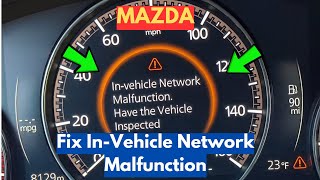
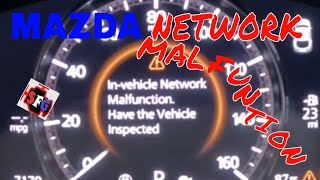
- "In-vehicule network malfunction 🎬 Watch this quick video on fixing Mazda network malfunction warnings" message on the instrument cluster.
- Loss of power steering assist.
- Engine stalling or inability to start.
- Transmission shifting erratically or getting stuck in one gear.
- Infotainment screen or instrument cluster going blank or acting erratically.
- Failure of convenience features like power windows or climate control.
- Sudden failure of driver-assist systems (e.g., adaptive cruise control, lane keep assist).
- Replacing a single control module without confirming it is the source of the network failure. The U0001 code indicates a bus-wide problem, and often one module will store 'lost communication' codes for many other modules, making it seem like the culprit when it is actually the victim.
Most Likely Causes
- Faulty ABS Hydraulic Control Unit (HCU) 🔴 High Probability A safety recall (Mazda recall 5823D, NHTSA recall 23V-275) was issued for a small batch of 2023 CX-50 models (10 units total) and 2022-2023 CX-30s due to potentially damaged ABS HCUs that can fail and disrupt braking and network communication. Though rare, it's a known, critical failure point.
How to confirm: Check the vehicle's VIN on Mazda's official recall website or the NHTSA website to see if it is part of the recall. A dealer can also confirm this. According to Mazda, all affected CX-50s in this campaign were repaired at launch, but it is still the first check to perform.
Typical fix: If the vehicle is part of the recall, a Mazda dealer will replace the ABS HCU free of charge.
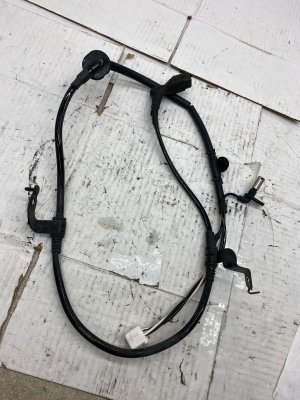
Est. part cost: $0 (if under recall) - Wiring Harness Damage or Corrosion 🟡 Medium Probability The CAN bus wiring runs throughout the vehicle. Damage can occur from road debris, improper repairs, or rodent damage. Connectors, particularly those exposed in the engine bay or under the chassis, can also corrode from moisture intrusion.
How to confirm: Visually inspect the main wiring harnesses, especially around the engine bay, under the dashboard, and near each control module. A technician will use a multimeter to check for continuity and resistance between the CAN-High and CAN-Low wires (should be ~60 ohms across the bus with the battery disconnected).
Typical fix: Repairing the specific section of damaged wire or cleaning/replacing the corroded connector.
Est. part cost: $5-$50 for wiring repair supplies - Faulty Control Module (Other than ABS) ⚪ Low Probability Any of the dozens of modules on the CAN bus can fail internally, causing it to either stop communicating or, worse, flood the network with bad data (a 'babbling node'). Common culprits can include the Powertrain Control Module (PCM), Body Control Module (BCM), or the central Gateway Module.
How to confirm: A technician uses a process of elimination. They disconnect one module at a time from the CAN bus and see if communication is restored. The module whose disconnection restores the network is the faulty one. This requires a breakout box and vehicle-specific wiring diagrams.
Typical fix: Replacement and reprogramming of the failed module (e.g., PCM, BCM, or Gateway Module).
Est. part cost: $400-$1500 depending on the module - Low Battery Voltage or Poor Ground Connection ⚪ Low Probability Modern vehicles are extremely sensitive to voltage. A weak or failing battery can cause unpredictable electronic glitches across various modules, sometimes triggering a general network fault code like U0001 before specific low voltage codes appear.
How to confirm: Test the battery voltage (should be >12.4V with engine off) and the charging system output (should be ~13.5-14.5V with engine running). Inspect and clean main battery terminals and chassis ground points. Some owners report premature battery failure within 18 months.
Typical fix: Charge or replace the battery, or clean and tighten ground connections.
Est. part cost: $0-$350
Rare But Worth Checking
- Aftermarket Device Interference: Poorly installed remote starters, alarms, dash cams, or telematics devices that are improperly spliced into the CAN bus can disrupt the network and cause a U0001 code.
- Software Glitch in a Control Module: Sometimes, a communication breakdown can be caused by a software issue. A Reddit user with a 2023 Turbo model reported an 'In-vehicule network malfunction' message that was resolved by a 10-minute software update at the dealership 🎬 See how a similar Mazda network error was resolved, indicating that software fixes are a possibility for network problems on this platform.
Diagnosis Steps
- Check for Recalls: Enter the vehicle's VIN on the NHTSA or Mazda recall website to check for the open recall on the ABS HCU (Recall 5823D). If active, take the vehicle to a dealer.
- Scan All Modules: Use a professional-grade scan tool (like Mazda's MDARS) to pull codes from ALL vehicle modules, not just the engine computer. Note all 'U' codes present.
- Check Battery and Grounds: Ensure the battery is fully charged and terminals are clean. Test battery health. Inspect the main engine and chassis ground straps for tightness and corrosion.
- Disconnect Aftermarket Devices: If any aftermarket electronics (remote start, alarm, etc.) are installed, disconnect them completely to see if the fault clears.
- Inspect Wiring: Perform a thorough visual inspection of the main wiring harnesses for any signs of pinching, chafing, or damage, paying close attention to connectors.
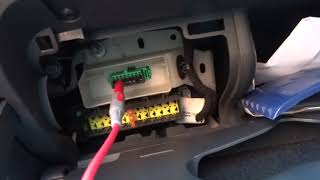
- Measure CAN Bus Resistance: With the battery disconnected, use a multimeter to measure the resistance between Pin 6 (CAN-H) and Pin 14 (CAN-L) 🎬 Watch a guide on testing CAN bus resistance with a multimeter on the OBD-II port. A healthy network should read approximately 60 ohms. A reading of 120 ohms suggests a missing termination resistor or a break in the circuit. A reading near 0 ohms indicates a short between the two wires.
- Isolate the Faulty Module: If wiring seems okay, a technician will use a breakout box to disconnect modules one by one from the CAN bus and re-check the network status until communication is restored, identifying the faulty module.
Parts You'll Likely Need
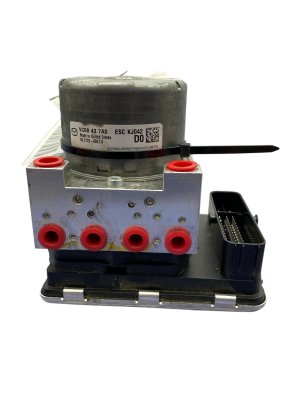
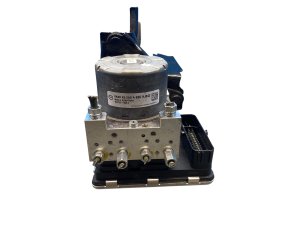
- ABS Hydraulic Control Unit / Modulator
(OEM #VAY0-43-7A0A)— This is the subject of a specific, though very limited, recall for the 2023 CX-50 and its failure is a known cause of network disruption on this vehicle.
Trusted brands: Mazda (OEM)
OEM price range: $1200-$1800
Aftermarket price range: Not typically available
Related Codes That Often Appear With This One
- U01xx, U02xx, etc. — These codes indicate 'Lost Communication' with a specific module (e.g., U0100 - Lost Communication with ECM). When the entire CAN bus goes down with a U0001, it's common for multiple modules to log these codes because they can no longer hear from their counterparts.
Technical Service Bulletins (TSBs) & Recalls
- Mazda Recall 5823D / NHTSA 23V-275: Recall for potentially damaged ABS Hydraulic Control Unit on 2023 CX-50 vehicles.
- TSB 05-001/23: Addresses jerky motion at low speeds by updating the Transmission Control Module (TCM) software. While not directly for U0001, it shows the prevalence of software-based fixes for control module issues on this platform.
Platform-Specific Known Issues
- Safety Recall 5823D (NHTSA 23V-275): Affects 10 specific 2023 CX-50 models in the US & Canada. The ABS Hydraulic Control Unit may be damaged, leading to increased brake pedal travel and reduced braking ability, which can also cause CAN network communication failures like U0001.
Mechanic-Grade Diagnostic Values
- CAN Bus Resistance (Battery Disconnected) — expected: ~60 Ω between Pin 6 (CAN-H) and Pin 14 (CAN-L) of the OBD-II port.. Failure: A reading of ~120 Ω indicates an open circuit or missing terminating resistor. A reading near 0 Ω indicates a short circuit between the CAN-H and CAN-L wires. A reading of ~40 Ω may indicate an unauthorized third terminating resistor on the network.
- Module CAN Transceiver Power (Ignition ON) — expected: 5.0 V (± 0.5 V) at the CAN transceiver power pin of each module.. Failure: Unstable or out-of-range voltage indicates a power supply issue to that specific module, which can disrupt the network.
- Module Ground Resistance (Battery Disconnected) — expected: ≤ 0.1 Ω between the module's ground pin and a clean chassis ground.. Failure: Higher resistance indicates a poor ground, which can cause floating voltages and communication errors.
Scan Tool Commands That Help
- Mazda MDARS (Mazda Diagnostic and Repair Software): Network Scan / Module Ping — This is a primary step to identify which specific control module(s) are not responding on the CAN bus. A module that fails to respond is a primary suspect for the network failure.
- Mazda MDARS: ECU Reprogramming / Software Update — Used when a Technical Service Bulletin (TSB) or owner forum experience suggests a known software glitch is causing the U0001 code or "In-vehicle network malfunction" message.
Wiring & Ground Locations
- HS-CAN Termination Resistors — On many modern Mazdas, the two 120-ohm terminating resistors for the High-Speed CAN bus are located internally within the Powertrain Control Module (PCM) and the Instrument Cluster.. If either of these modules fails internally or is disconnected, the bus resistance will change from 60 ohms to 120 ohms, causing communication instability and logging a U0001 code.
- Front Fender Stay Ground Point — The ground point for the front wiring harness where it attaches to the front fender stay.. A Mazda TSB indicates that after body repair, paint on this grounding surface can create a poor connection, leading to multiple, difficult-to-diagnose electrical malfunctions, including network issues. This is a critical check if the vehicle has had recent front-end bodywork.
- Main Chassis Ground (for Jump-Starting) — A designated metal point on the chassis in the engine bay, used as the negative connection point for jump-starting.. This is a known-good, heavy-duty grounding location. It can be used as a reference point when testing the resistance of other ground connections for various modules on the CAN bus.
Real Owner Repair Stories
- Reddit user in r/mazda (Mazda CX-50 (year not specified)) — "In vehicle network malfunction" message appeared after signing up for the MyMazda app.
❌ Tried (didn't work) Calling the dealership, who insisted on a $180 diagnostic fee to perform a software update.
✅ What actually fixed it The owner disconnected the negative battery terminal for one hour. After reconnecting, the error message was gone. - Reddit user in r/CX50 (Brand new Mazda CX-50 (less than 1000 km)) — "in vehicle system malfunction" message, infotainment system dead.
❌ Tried (didn't work) A dealership software update initially fixed the issue, but the warning came back.
✅ What actually fixed it The user was advised by another owner that the cause could be a loose fuse that the dealership is supposed to connect during the Pre-Delivery Inspection (PDI). The user had to fight with the dealership to investigate this instead of just attempting another software update.
Model Year Variations Within This Range
- 2024: The 2024 CX-50 features new dampers and a recalibrated electric power-assist steering (EPAS) system. While not directly linked to U0001, changes to the EPAS software and hardware could potentially lead to different network communication behavior compared to the 2023 model under certain fault conditions.
Diagnostic Flowchart
Other Known Issues on This Vehicle
Issues unrelated to this code that are worth knowing about as an owner of this generation:
- Jerky Low-Speed Transmission Behavior 🟠 Medium — Commonly reported by owners of 2023-2024 models, especially in stop-and-go traffic. Tends to happen at low speeds (5-8 mph). (Ref: TSB 05-001/23 was issued to address this with a Transmission Control Module (TCM) software update.)
- Rear Differential Noise/Failure 🔴 High — Reported in a subset of vehicles, both Turbo and non-Turbo. Owners describe a knocking, clunking, or ticking sound from the rear that speeds up with the vehicle. Can occur at low mileage. (Ref: No specific TSB or recall, but Mazda Engineering is aware of the issue. Dealers are diagnosing on a case-by-case basis, sometimes leading to rear differential replacement under warranty.)
- Harsh Ride Quality / Suspension Noise 🟡 Low — A common subjective complaint is that the suspension is overly stiff, transmitting road imperfections like expansion joints harshly into the cabin. Some owners also report knocking from the front or rear suspension over bumps. (Ref: A recall (NHTSA 25V737000) was issued for a small number of 2025 models for improperly tightened front suspension bolts, which could cause noise or detachment. Some front knocking noises have been traced to improperly seated strut mounts.)
- Premature Battery Drain / No-Start 🟠 Medium — Some owners report their vehicle failing to start due to a dead battery, sometimes caused by parasitic drains from components like a rear wiper that won't shut off.
- Infotainment System Glitches 🟡 Low — Reports of sporadic Apple CarPlay/Android Auto connectivity issues, screen freezing, or system lag. Often requires a vehicle restart to resolve. (Ref: Mazda has issued multiple software updates for the Mazda Connect system (e.g., TSB 16-001/23 for the CX-50) to address various bugs.)
Used vs. New Parts: Buying Guide for This Vehicle
When a used part is the smart pick: A used wiring harness from a low-mileage, non-corroded donor vehicle can be a cost-effective solution if a specific section of the original harness is physically damaged.
Donor-vehicle mileage cap: roughly under 50000 miles for the part to have meaningful remaining life.
What to inspect on the donor part:
- For modules: check for zero corrosion on connector pins, no water marks on the housing, and intact factory seals.
- For wiring harnesses: ensure insulation is not brittle or cracked, all connectors are intact, and there are no signs of previous repairs or splices.
OEM-only on this vehicle (don't cheap out):
- Powertrain Control Module (PCM)
- Body Control Module (BCM)
- Anti-lock Brake System (ABS) Module
- Gateway Module
Brands owners have reported issues with on this vehicle:
- Avoid used control modules (PCM, BCM, ABS) from junkyards, as they are often VIN-locked and cannot be reprogrammed by dealerships for a different vehicle.
- Be wary of any aftermarket electronic device that does not explicitly state it is CAN bus safe or lacks detailed installation instructions.
Real Owner Stories
Aggregated from forums and TSBs cited above. Mileages and costs reflect what owners reported in those sources.
2023 Mazda CX-50 Turbo
Symptoms: The instrument cluster displayed an 'In-vehicule network malfunction' warning light.
What fixed it: The dealership performed a 10-minute software update which resolved the communication error.
Source hint: Reddit r/CX50 - 'In-vehicule network malfunction' fixed by software update
2023 Mazda CX-50
Symptoms: Increased brake pedal travel and reduced braking ability, accompanied by CAN network communication failures.
What fixed it: Replacement of the ABS Hydraulic Control Unit (HCU) under Mazda Recall 5823D.
Cost: $0-$0
Source hint: Mazda Recall 5823D / NHTSA 23V-275
Related OBD-II Codes
Frequently Asked Questions
Is there a recall for the U0001 code on my 2023 Mazda CX-50?
My CX-50 shows an 'In-vehicle network malfunction' message; does this always mean a hardware failure?
Can a weak battery cause the U0001 code on a newer 2023-2024 CX-50?
How can a technician confirm if a specific module is causing the U0001 network error?
What is the standard resistance for the CAN bus on the CX-50 when testing for U0001?
Helpful Videos
We Have This Part in Stock



The information in this article is provided for general reference and educational purposes only. Vehicle specifications, procedures, and part compatibility can vary by production date, trim level, and region. Always consult your vehicle's factory service manual and verify part numbers before purchasing or performing repairs. Safety-critical components such as airbags, seat belts, and braking systems should be installed by a qualified professional.
- Mazda CX-50:
- 🎬 Helpful Videos
- 🛍️ Shop This Part
- What's Unique About the 2023-2024 Mazda CX-50
- Symptoms You May Notice
- Most Likely Causes
- Rare But Worth Checking
- Diagnosis Steps
- Parts You'll Likely Need
- Related Codes That Often Appear With This One
- Technical Service Bulletins (TSBs) & Recalls
- Platform-Specific Known Issues
- Mechanic-Grade Diagnostic Values
- Scan Tool Commands That Help
- Wiring & Ground Locations
- Real Owner Repair Stories
- Model Year Variations Within This Range
- Diagnostic Flowchart
- Other Known Issues on This Vehicle
- Used vs. New Parts: Buying Guide for This Vehicle
- Real Owner Stories
- 2023 Mazda CX-50 Turbo
- 2023 Mazda CX-50
- Related OBD-II Codes
- Frequently Asked Questions
- 🎟️ Get 5% Off