

U0001 on 2007-2015 Jaguar XF: High-Speed CAN Bus Failure Causes and Fixes
U0001 on a 2007-2015 Jaguar XF indicates a critical failure on the High-Speed CAN Bus communication network. This is often caused by wiring issues, a failing control module (like the TCM or ABS module), or low battery voltage. Diagnosis is complex and usually requires professional tools to isolate the fault on the network.
- U0001 is a critical network failure code that makes the vehicle unsafe to drive.
- Do not start replacing modules. The first step is always to verify battery health and charging system performance.
- The most common causes are wiring faults, a single bad module (like the TCM or ABS module), or low voltage.
- Diagnosis is complex and requires professional-level tools to test the network's integrity. This is not a typical DIY repair.
What's Unique About the 2007-2015 Jaguar XF
The first-generation Jaguar XF (X250) relies heavily on its Controller Area Network (CAN bus) for all major functions. While the U0001 code is generic, on this platform it frequently points to issues with specific modules, wiring harnesses, or low battery voltage, which these cars are notoriously sensitive to. Forum discussions and technical service bulletins for Jaguar models suggest that problems with the Transmission Control Module (TCM), ABS module, or even the Telematics Control Unit (TCU) can bring down the network. Water ingress into module connectors, particularly in the trunk/boot area around the battery and under the front passenger seat, is a well-documented issue that can trigger this fault.
Symptoms You May Notice
- Check Engine Light (Malfunction Indicator Lamp) is on.
- Multiple warning lights on the dashboard (ABS, DSC, Airbag, Park Brake Fault), often called a 'Christmas tree' effect.
- 'Gearbox Fault' message displayed on the instrument cluster.
- Transmission may be stuck in Park or exhibit harsh, erratic shifting.
- Engine may stall, be difficult to start, or not crank at all.
- Loss of power windows, infotainment screen (may flash or go blank), or climate control functions.
- Vehicle enters 'Limp Mode' or 'Restricted Performance'.
- Replacing a single module without confirming it is the source of the network failure. The U0001 code often appears in multiple modules, but only one is typically the root cause. Proper network diagnosis is required to avoid replacing good parts.
- Ignoring a weak battery. Due to the XF's sensitivity to voltage, a simple battery issue can manifest as a complex network fault, leading to unnecessary and expensive diagnostic paths.
Most Likely Causes
- Low Battery Voltage or Poor Ground Connection 🔴 High Probability The XF is extremely sensitive to battery voltage. Control modules require a stable voltage to operate correctly. A weak or dying battery, a failing alternator, or a corroded main ground can cause modules to drop off the network intermittently, triggering a cascade of communication faults. Many owners report that the first sign of a weak battery is a collection of random error messages.
How to confirm: Test the battery voltage with a multimeter; it should be above 12.6V at rest. With the engine running, it should be 13.5V-14.5V. A reading below 12.4V at rest indicates a discharged or failing battery. Inspect and clean the main battery terminals (in the trunk) and chassis ground points for corrosion. Perform a ground voltage drop test by cranking the engine; the reading between the negative battery post and the ground point should be well under 0.5V (500mV).
Typical fix: Fully charge or replace the battery. Ensure the replacement is the correct type (often AGM) and size. Clean or repair ground connections. After a battery change, a 'hard reset' by disconnecting the battery and shorting the vehicle's positive and negative cables together (NOT the battery terminals) for a minute may be needed to clear persistent faults.
Est. part cost: $150-$400 - Wiring Harness or Connector Fault 🟡 Medium Probability The CAN bus uses a twisted pair of wires that run throughout the vehicle. These can become damaged from chafing, corrosion, or impact. TSB JTB00579NAS1 specifically points to a missing cable tie on the transmission wiring harness in AWD models, allowing it to get damaged and cause a U0001 code. Other common problem areas are wiring in the trunk lid and near critical modules.
How to confirm: Visually inspect harnesses in common problem areas (around the transmission, engine bay, under carpets, near modules). Check for 60 ohms of resistance across the CAN High (Pin 6) and CAN Low (Pin 14) pins at the OBD-II port 🎬 See how to perform a CAN bus resistance check with a multimeter with the battery disconnected. An incorrect reading (e.g., 120 ohms or infinite) points to a wiring or module issue.
Typical fix: Repair the damaged section of the wiring harness or clean/replace corroded connectors. This requires precision and is often best left to a professional. In the case of TSB JTB00579NAS1, the fix involves repairing the harness and securing it with a new cable tie.
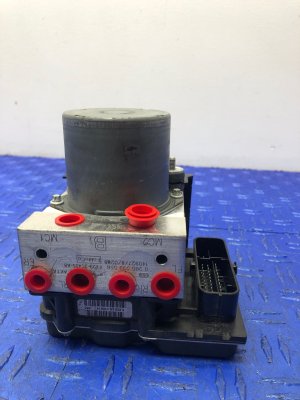
Est. part cost: $10-$100 - Failing Control Module (e.g., ABS, TCM) 🟡 Medium Probability Any single module on the high-speed network can fail internally and disrupt all communication by 'shouting' on the bus or going silent. The ABS module and Transmission Control Module (TCM) are common culprits. A faulty ABS module can cause a U0001 code along with ABS and DSC fault lights.
How to confirm: This is difficult without advanced diagnostics. A technician can use JLR SDD to see which modules are not communicating. They may then disconnect modules one by one from the CAN bus while monitoring resistance to see if it returns to 60 ohms. If unplugging a specific module (e.g., the ABS module) restores the network, that module is the likely culprit.
Typical fix: Replace the faulty control module. The new module will require programming to the vehicle's VIN. Alternatively, some modules like the ABS controller can be sent to a specialist for repair and will not require reprogramming.
Est. part cost: $300-$1800
Rare But Worth Checking
- Water Ingress into a Control Module: Jaguar service bulletin SSM73814 warns that water getting into the Telematics Control Unit (TCU) can cause a U0001 code and a no-crank condition. On the XF, water leaks into the trunk are common, often from failed rear vent seals behind the bumper or the high-mounted stop lamp, flooding the battery and module area. Water can also enter the cabin from clogged sunroof drains, saturating modules under the front seats.
- Faulty Brake Light Switch: A failing brake light switch can cause a cascade of seemingly unrelated error messages, including 'Gearbox Fault', 'DSC Not Available', and 'Parking Brake Fault', which can be mistaken for a major CAN bus failure.
Diagnosis Steps
- Perform a full vehicle scan with a high-level tool (like JLR SDD) to see which modules are reporting the U0001 code and which modules are not communicating at all.
- Check and verify battery health and charging system operation. Ensure voltage is stable, above 12.6V at rest and 13.5V-14.5V when running. This is the most critical first step on an XF.
- Disconnect the battery. Access the OBD-II port and measure the resistance between Pin 6 (CAN High) and Pin 14 (CAN Low). A healthy network should read approximately 60 Ohms.
- If resistance is 120 Ohms, it indicates a fault in the wiring or one of the two terminating resistors (usually in the ECM or Instrument Cluster) is offline. If it's near 0 Ohms, the CAN High and Low wires are shorted together.
- Visually inspect the wiring harnesses for any signs of physical damage, chafing, or corrosion, paying close attention to the transmission harness (per TSB JTB00579NAS1), trunk area, and around the ABS module.
- Check for evidence of water ingress in the trunk near the battery, specifically from the rear cabin pressure vents located behind the bumper. Also check in the front passenger footwell under the seat where modules are located.
- If wiring seems intact, begin disconnecting modules from the high-speed CAN bus one at a time, re-measuring resistance each time to isolate the faulty component or wiring section. The terminating resistors are located in the Instrument Cluster and the ABS module.
- For advanced diagnosis, use an oscilloscope to check the CAN signal waveform at the OBD-II port. A healthy signal will show two clean, mirroring square waves with CAN High at ~2.6V and CAN Low at ~2.4V.
Parts You'll Likely Need
- Transmission Control Module (TCM)
(OEM #0260550043 / 9X23-7000-CC (For 6HP28 Transmissions, check specific VIN))— The TCM is a common point of failure that can bring down the CAN network, as suggested by forum reports and TSBs. It is often part of the mechatronic unit inside the transmission.
Trusted brands: Genuine Jaguar, ZF (Original Manufacturer)
OEM price range: $800-$1500
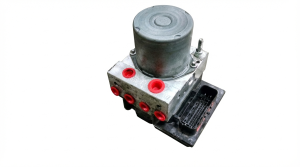
Aftermarket price range: $400-$900 (remanufactured) - ABS Control Module — Like the TCM, the ABS module is a critical node on the high-speed CAN bus and its internal failure can cause a U0001 code and a host of related warnings. It is also one of the network's terminating resistors.
Trusted brands: Bosch, ATE, Genuine Jaguar
OEM price range: $1000-$1800
Aftermarket price range: $300-$700 (remanufactured) - Vehicle Battery — Low or unstable voltage is a frequent and primary cause of network communication errors on the Jaguar XF. Always rule this out first.
Trusted brands: Interstate, Bosch, Varta
OEM price range: $250-$400
Aftermarket price range: $150-$300 - Rear Body Vent Seal
(OEM #C2D18113)— The seals for the rear vents behind the bumper are a known failure point, allowing water into the trunk which can destroy electronics located there, causing CAN bus faults.
Trusted brands: Genuine Jaguar / Volvo
OEM price range: $10-$20
Related Codes That Often Appear With This One
- U0101 — Indicates 'Lost Communication with TCM'. This often appears with U0001 when the Transmission Control Module is the source of the bus failure or is unable to communicate due to the bus failure.
- U0121 — Indicates 'Lost Communication with ABS Control Module'. This is frequently seen with U0001 and points towards the ABS module or its wiring as a potential cause of the network crash.
- U0155 — Indicates 'Lost Communication with Instrument Panel Cluster (IPC) Control Module'. The IPC is often one of the two terminating resistors in the CAN network. If it fails or loses communication, it can bring down the bus.
Technical Service Bulletins (TSBs) & Recalls
- JTB00579NAS1: Mentions U0001-87 stored in the Transmission Control Module (TCM) due to a damaged wiring harness on AWD models.
- SSM73814: Links U0001-87 and a no-crank condition to water ingress in the Telematics Control Unit (TCU).
Platform-Specific Known Issues
- TSB JTB00579NAS1: Transmission Harness Damage: Notes that on AWD models, DTC U0001-87 can be stored in the Transmission Control Module (TCM) due to a missing cable tie on the transmission wiring harness, leading to chafing and damage. The fix is to repair the wiring and secure the harness.
- TSB SSM73814: Telematics Module Water Ingress: Highlights that water ingress into the Telematics Control Unit (TCU) can cause DTC U0001-87 and a no-start condition. This is relevant to the XF due to known water leak issues in the trunk.
- Common Water Leaks: Owners frequently report water leaks into the trunk/boot area from failed rear air vents (behind the bumper) or the center brake light seal. This water floods the area around the battery, Battery Monitoring System, and other electronics, causing widespread electrical faults including U0001.
Mechanic-Grade Diagnostic Values
- CAN Bus Network Resistance — expected: ~60 Ohms. Failure: 120 Ohms indicates an open circuit or one terminating module is offline. ~0 Ohms indicates a short between CAN High and Low wires.
- CAN Bus Terminating Resistor Resistance — expected: ~120 Ohms. Failure: An open or significantly different reading indicates a faulty terminating module (Instrument Cluster or ABS module).
- CAN Bus Voltage (Key On, Engine Off) — expected: CAN High (Pin 6): ~2.6V to ground. CAN Low (Pin 14): ~2.4V to ground.. Failure: Voltages that are the same, at 0V, or at battery voltage indicate a short to each other, ground, or power.
- Ground Point Voltage Drop (during crank) — expected: < 0.5V (500mV). Failure: A reading higher than 0.5V indicates a poor ground connection that needs to be cleaned or repaired.
Hidden / Shadow Codes Worth Checking
- U0001-87: High Speed CAN Communication Bus - Missing Message. This suffix indicates that a specific, expected message from another module was not received. This is often logged by multiple modules when one module goes completely offline. (see via JLR SDD or a compatible high-level diagnostic scanner.)
- U0001-81: High Speed CAN Communication Bus - Invalid Serial Data Received. This suffix suggests that data is being received, but it is corrupt, nonsensical, or not what was expected. This can point to electrical interference or a module that is failing and 'shouting' garbage data onto the network. (see via JLR SDD or a compatible high-level diagnostic scanner.)
Scan Tool Commands That Help
- JLR SDD (Symptom Driven Diagnostics): Vehicle Identification / Read All DTCs — This is the first step. SDD will automatically scan all modules, display a network topology map showing which modules are communicating (green) and which are not (grey), and list all stored DTCs, including hidden codes.
- JLR SDD (Symptom Driven Diagnostics): Recommendations Tab - Datastream / Live Data — After identifying non-communicating modules, you can use this function on the remaining modules to check live data (like wheel speeds, module voltages) to see if inputs are plausible, which can help rule out sensor issues.
- JLR SDD (Symptom Driven Diagnostics): Recommendations Tab - Clear All DTCs — After a repair is performed. The software will guide you through the required ignition cycles to confirm the fault is cleared. It's important to re-read codes after clearing to see which ones return immediately.
Wiring & Ground Locations
- HS CAN Terminating Resistors — One is located inside the Instrument Panel Cluster (IPC) and the other is inside the Anti-Lock Brake System (ABS) module.. These two 120-ohm resistors at opposite ends of the network are critical for signal integrity. If either the IPC, ABS module, or the wiring to them fails, the total network resistance will change from 60 ohms to 120 ohms, causing communication to fail.
- Rear Cabin Vents — Located in the bodywork behind the rear bumper on either side of the trunk.. The seals on these vents fail, allowing water directly into the trunk/boot area. This water floods the battery compartment, corrodes the main battery connections, and can destroy the Rear Junction Box (fuse box) and other modules located there, leading to U0001.
- Alternator Cable Pass-Through Stud — Inside a plastic box behind the passenger-side (US) front wheel arch liner.. This box can fill with road grime and salt, which becomes conductive when wet. This can cause the main power cable stud to arc to ground, creating a massive short or severe voltage drop that disrupts module communication.
- Main Engine-to-Chassis Ground Strap — Located directly under the starter motor, connecting the engine/transmission assembly to the vehicle's frame.. Corrosion or looseness at this primary ground point can cause intermittent and widespread electrical issues, including module communication failures that trigger U0001.
Real Owner Repair Stories
- PistonHeads UK forum user (2013 Jaguar XF) — 'Gearbox fault', car would not drive.
❌ Tried (didn't work) Replacing the main vehicle battery (only worked for a short while)., Charging the battery overnight.
✅ What actually fixed it Performing a 'hard reset'. The user disconnected the battery and then short-circuited the car's positive and negative battery CABLES (not the battery itself) together to fully discharge any residual power in the vehicle's capacitors. This cleared the persistent gearbox fault. - JaguarForums user (Jaguar XF (X250)) — ABS, DSC, Cruise not available, U0001-81 code, among others.
❌ Tried (didn't work) Cleaning wheel speed sensors and connections., Visually inspecting fuses., Having the ABS module professionally rebuilt., Replacing a 3-year-old battery that tested good., Performing a hard reset.
✅ What actually fixed it The car was taken back to the dealer where it was found that a wheel speed sensor had failed again. Replacing the faulty wheel speed sensor for a second time finally cleared all the codes and fixed the issue. - Jaguar XF Club forum user (Jaguar XF) — 5cm of water in the boot/trunk, various electrical issues starting with battery messages.
❌ Tried (didn't work) Taking the car to multiple garages who could not find the source of the leak.
✅ What actually fixed it The owner identified the leak was from a failed rear vent seal behind the rear bumper. One user replaced the vent, while another successfully sealed the old one with silicone sealant to stop the water ingress. This is a confirmed design flaw.
"I Checked Everything" — The Actual Cause
- A user reported perfect CAN bus resistance readings (60 ohms connected, 120 ohms when disconnecting a module), yet their diagnostic tool (JLR SDD) could not communicate with the TCM. This indicates that while the main wiring bus was electrically intact, the module itself had an internal failure preventing communication, a fault a simple multimeter test cannot detect.
- A 'Gearbox Fault' message persisted even after replacing the battery. The standard diagnostic path would point towards a faulty transmission component or module. However, the actual fix was a non-standard 'hard reset' by shorting the vehicle's battery cables (disconnected from the battery) to drain all capacitors, which resolved the software glitch.
When the Usual Fixes Don't Work
- In several documented cases, replacing the battery—the most common advice for any Jaguar XF electrical issue—did not resolve the U0001 code or associated 'Gearbox Fault' message. In one instance, the problem was only solved by a subsequent 'hard reset' to clear module memory glitches. In another, the underlying cause was a faulty brake light switch, proving that not all widespread electrical warnings on this car are due to battery voltage. This demonstrates that while checking the battery is a critical first step, it should not be considered the only possible cause.
OEM Part Supersession History
Unknown→C2D18113— The original rear cabin vent seals were prone to failure, allowing water into the trunk.
Heads up: The replacement part C2D18113 is the updated vent assembly. Interestingly, forum users note that this part often comes with a Volvo logo, suggesting shared parts between the manufacturers.
Model Year Variations Within This Range
- 2012-2015: The 2012 model year introduced a significant facelift with revised exterior styling (headlights, grille, taillights) and an updated interior (new screens, switchgear). A new 2.2L 4-cylinder diesel engine was introduced. While the infotainment and some electronics were updated, the fundamental high-speed CAN bus architecture and its vulnerabilities (battery sensitivity, water ingress points, module failure modes) remained largely the same across the first generation (X250).
Diagnostic Flowchart
Other Known Issues on This Vehicle
Issues unrelated to this code that are worth knowing about as an owner of this generation:
- 5.0L V8 & 3.0L V6 Water Pump Failure 🔴 High — Common failure, sometimes under 20,000 miles. Coolant corrodes the bearing, leading to leaks and potential overheating.
- Cracked Plastic Coolant Hoses/Pipes 🔴 High — The plastic cooling system components become brittle with age and heat cycles, leading to cracks and significant coolant loss. Often recommended to replace all plastic parts if one fails.
- Rear Differential Failure (Early Models) 🔴 High — Affects early models up to 2009 due to contaminated 'lifetime' differential oil from the factory, causing excessive wear and noise.
- Sticking/Faulty Rotary Gear Selector 🟠 Medium — The selector can get stuck in position or fail to rise/retract. This was subject to a recall (K063) to replace the Transmission Control Switch assembly. (Ref: Recall K063, K048)
- Water Leaks into Trunk/Boot 🟠 Medium — Commonly caused by failed rear vent seals behind the bumper or a bad high-mounted stop lamp seal, leading to water pooling in the spare tire well and damaging electronics. (Ref: JTB01231 (for a related issue on the X260))
- Bubbling/Delaminating Dashboard Leather 🟡 Low — Very common issue where the leather on top of the dashboard shrinks and pulls away from the substrate due to sun exposure, creating large 'bubbles'.
Used vs. New Parts: Buying Guide for This Vehicle
When a used part is the smart pick: A used part can be a smart choice for major mechanical components that don't require coding, or for cosmetic pieces. For U0001-related repairs, obtaining a complete wiring harness from a donor car can be more cost-effective than repairing multiple breaks in an old one. Body modules that don't control security functions can sometimes be swapped with success.
Donor-vehicle mileage cap: roughly under 80000 miles for the part to have meaningful remaining life.
What to inspect on the donor part:
- For wiring harnesses, inspect for any signs of previous repairs, brittleness, or corrosion on the connectors.
- For any electronic module, check the donor vehicle's history for flood or collision damage.
- Ensure the part numbers match exactly, as there are many variations.
- If possible, check the resistance of a used ABS module's terminating resistor (~120 Ohms) before purchasing.
OEM-only on this vehicle (don't cheap out):
- Vehicle Battery: Due to the vehicle's extreme sensitivity to voltage and charging profiles, a new, correct-spec (AGM) battery is strongly recommended over a used one.
- Transmission Control Module (TCM): As this often requires complex programming to the vehicle's VIN and is located inside the transmission, a new or professionally remanufactured unit is a safer investment.
Aftermarket brands forum-validated for this vehicle:
- XeMODeX: This brand is frequently mentioned for its ABS module repair service, which is a cost-effective alternative to buying a new OEM unit and does not require reprogramming.
Brands owners have reported issues with on this vehicle:
- Avoid unbranded, cheap electronic modules from mass online marketplaces. These often have high failure rates and can introduce new, unpredictable faults onto the CAN network.
Real Owner Stories
Aggregated from forums and TSBs cited above. Mileages and costs reflect what owners reported in those sources.
2013 Jaguar XF
Symptoms: A massive number of communication codes appeared across multiple modules including ABS, RCM, and IPC. The dashboard displayed a 'parade of every fault' including U0001-88.
What fixed it: The owner spent $6000 replacing a rear module to no avail, illustrating that these codes often stem from a single CAN bus fault propagating through the system rather than multiple module failures.
Cost: $6000-$6000
Source hint: JaguarForums.com threads: 'Double check me on diagnosis?' and 'Transmission Fault'
Jaguar XF (X250)
Symptoms: Water leaking into the boot/trunk where the spare wheel and battery are kept, resulting in a no-start condition.
What fixed it: Identifying and sealing the source of the leak, which is typically the rear vents located behind the bumper or the body seams.
Source hint: JaguarForums.com: 'Boot/trunk leaking water xf'
Related OBD-II Codes
Frequently Asked Questions
My 2013 Jaguar XF AWD is showing a U0001-87 code; is there a known specific fault for this model?
Can a water leak in my Jaguar XF trunk cause a U0001 communication code?
Why does my Jaguar XF dashboard look like a 'Christmas tree' with ABS and Gearbox faults?
How can I test if my Jaguar XF's CAN bus network is physically intact?
I replaced my battery but the U0001 code persists. What is the 'hard reset' procedure for the XF?
Can a faulty ABS module cause a U0001 code on my Jaguar?
Helpful Videos
![How To Test CAN BUS With A Multimeter [CAN Bus Resistance Check] Mechanic Mindset](https://img.youtube.com/vi/JPE42HSJxAk/mqdefault.jpg)
We Have This Part in Stock





The information in this article is provided for general reference and educational purposes only. Vehicle specifications, procedures, and part compatibility can vary by production date, trim level, and region. Always consult your vehicle's factory service manual and verify part numbers before purchasing or performing repairs. Safety-critical components such as airbags, seat belts, and braking systems should be installed by a qualified professional.
- Jaguar XF:
- 🎬 Helpful Videos
- 🛍️ Shop This Part
- What's Unique About the 2007-2015 Jaguar XF
- Symptoms You May Notice
- Most Likely Causes
- Rare But Worth Checking
- Diagnosis Steps
- Parts You'll Likely Need
- Related Codes That Often Appear With This One
- Technical Service Bulletins (TSBs) & Recalls
- Platform-Specific Known Issues
- Mechanic-Grade Diagnostic Values
- Hidden / Shadow Codes Worth Checking
- Scan Tool Commands That Help
- Wiring & Ground Locations
- Real Owner Repair Stories
- "I Checked Everything" — The Actual Cause
- When the Usual Fixes Don't Work
- OEM Part Supersession History
- Model Year Variations Within This Range
- Diagnostic Flowchart
- Other Known Issues on This Vehicle
- Used vs. New Parts: Buying Guide for This Vehicle
- Real Owner Stories
- 2013 Jaguar XF
- Jaguar XF (X250)
- Related OBD-II Codes
- Frequently Asked Questions
- 🎟️ Get 5% Off