

U0001 on 2015-2018 Dodge Challenger: High-Speed CAN Bus Failure Causes and Fixes
Code U0001 on a 2015-2018 Dodge Challenger means there's a critical failure on the high-speed CAN C communication bus. This often leads to serious symptoms like loss of power steering. Before suspecting complex issues, always check the battery first, as low voltage is a very common and simple cause. Otherwise, the most frequent culprits are wiring issues or a single faulty control module (like the ABS or Power Steering) bringing down the network. Diagnosis is complex and professional help is str
- U0001 on a 2015-2018 Challenger is a critical network failure, not a simple sensor issue.
- The most dangerous symptom is a sudden loss of power steering or the inability to disengage cruise control. Do not drive the vehicle.
- Diagnosis is complex and should be performed by a professional with network diagnostic tools.
- Always check the battery and ground connections first, as this is a simple and common cause of network errors.
- Be aware of the cruise control safety recall, as a software update may be required for your vehicle.
What's Unique About the 2015-2018 Dodge Challenger
On this generation of Dodge Challenger, the U0001 code is particularly serious because the electric power steering system is a key module on the high-speed CAN bus. As documented in NHTSA complaints, a total bus failure can, and does, lead to an immediate and unexpected loss of power steering, creating a significant safety risk. Furthermore, FCA (Dodge's parent company) initiated a major safety recall (NHTSA 18V-332000) because a specific U0001 fault condition could prevent the cruise control from disengaging. The fault handling strategy in the software would fail to clear a positive torque request if the CAN-C bus shorted out at the precise moment cruise control was active, potentially causing the vehicle to maintain speed or accelerate. The fix was a mandatory software update for the Powertrain Control Module (PCM).
Symptoms You May Notice
- Complete loss of power steering, possibly with a 'Servicing Power Steering' message.
- Multiple warning lights on the instrument cluster, such as Check Engine, ABS, and Traction Control.
- Engine may stall, fail to start, or the transmission may not shift correctly.
- Loss of convenience features like infotainment screens or power windows.
- Cruise control may not disengage.
- Inaccurate or dead speedometer, as it relies on wheel speed data from the ABS module via the CAN bus.
- Replacing the Powertrain Control Module (PCM) first. While the PCM can be the cause, it's often more reliable than other modules on the network. It's crucial to diagnose the entire network before condemning the most expensive part.
- Ignoring the battery. Many intermittent communication faults are caused by low voltage during startup or high electrical load, and are often misdiagnosed as a more complex module or wiring failure.
Most Likely Causes
- Weak Battery or Poor Ground Connection 🔴 High Probability Modern vehicles are highly sensitive to voltage. A weak battery or corroded ground can cause modules to drop off the network intermittently, triggering a U0001 code. Owners on forums for platform mates like the Dodge Charger report that replacing an aging battery often resolves mysterious U-codes.
How to confirm: Test the battery voltage with the engine off (should be >12.4V). Check the alternator output with the engine running (should be ~13.5-14.5V). Inspect and clean all major battery and chassis ground connections. Sometimes a simple battery reset (disconnecting for 30 minutes) can clear the fault, indicating a transient voltage issue.
Typical fix: Replacing the battery, cleaning terminals and ground points, or replacing a faulty alternator.
Est. part cost: $150-$400 for a new battery and/or cables - Wiring Harness or Connector Issues 🟡 Medium Probability The CAN bus wiring runs throughout the vehicle, and can be susceptible to chafing, corrosion, or rodent damage, especially in the engine bay, behind wheel well liners, or near the ABS module.
How to confirm: Visually inspect the main wiring harnesses for damage. A technician will use a multimeter to check for continuity and proper resistance (should be ~60 ohms between CAN High and CAN Low wires with the battery disconnected).
Typical fix: Repairing the damaged section of the wiring harness or cleaning/replacing a corroded connector.
Est. part cost: $5-$50 for wiring repair supplies - Failing or Faulty Control Module 🟡 Medium Probability Any single module on the network (ABS, PSCM, TCM, etc.) can fail internally and broadcast junk data or short the bus, disrupting the entire network. The ABS module is a common point of failure on this platform and can cause loss of ABS and traction control.
How to confirm: A technician will use an advanced scan tool to see which modules are not communicating. They may then disconnect modules one by one to see if communication is restored to the rest of the network. A faulty ABS module often stores its own codes, such as C2116 (Pump Motor Fault).
Typical fix: Replacing the faulty control module. The new module will require programming to the vehicle's VIN.
Est. part cost: $200-$1500 depending on the module
Rare But Worth Checking
- CAN Bus Termination Resistor Failure: The CAN bus has two 120-ohm terminating resistors, often integrated into modules like the PCM or instrument cluster. If one of these modules fails, it can take the resistor with it, disrupting the whole network. Diagnosis requires measuring the resistance of the entire bus; a reading of 120 ohms instead of ~60 ohms points to a termination issue.
- Aftermarket Device Interference: A poorly installed remote starter, alarm system, or even a cheap OBD-II plugin device can interfere with CAN bus signals and cause communication errors. It is a common diagnostic step to remove all aftermarket electronics when troubleshooting a U0001 code.
Diagnosis Steps
- Check Battery and Charging System: This is the most important first step. Ensure the battery is fully charged (>12.4V) and the alternator is working correctly (~13.5-14.5V). Clean any corrosion from terminals and grounds.
- Perform a Full Vehicle Scan: Use a high-level scan tool to see which modules are reporting 'no communication'. This helps create a list of suspects.
- Check for TSBs and Recalls: Check for any relevant Technical Service Bulletins (TSBs) or recalls, especially NHTSA Campaign 18V332000, as a software update may be required.
- Inspect Wiring: Visually inspect major wiring harnesses, especially around the engine, ABS module, and behind the wheel wells, for any signs of damage, chafing, or corrosion.
- Check CAN Bus Resistance: Disconnect the battery. Use a multimeter to measure the resistance between Pin 6 (CAN-H) and Pin 14 (CAN-L) on the OBD-II port. A healthy network should read approximately 60 ohms. A reading of 120 ohms suggests a terminating resistor is offline or there's a break in the circuit. A reading near 0 ohms indicates a short between the CAN lines.
- Isolate the Faulty Module: If resistance is incorrect, begin disconnecting modules one by one from the CAN bus and re-testing until the resistance returns to 60 ohms. The last module disconnected is likely the source of the fault. Common modules to start with are the ABS and Power Steering modules.
- Remove Aftermarket Devices: Temporarily uninstall any aftermarket remote starters, alarms, or OBD-II dongles to rule out interference.
Parts You'll Likely Need
- ABS Control Module
(OEM #68258644AA (superseded by 68399772AG for 2015-16 models))— The ABS module is a central communication hub and a frequent point of failure that can bring down the entire CAN network.
Trusted brands: Mopar, Bosch
OEM price range: $500-$900
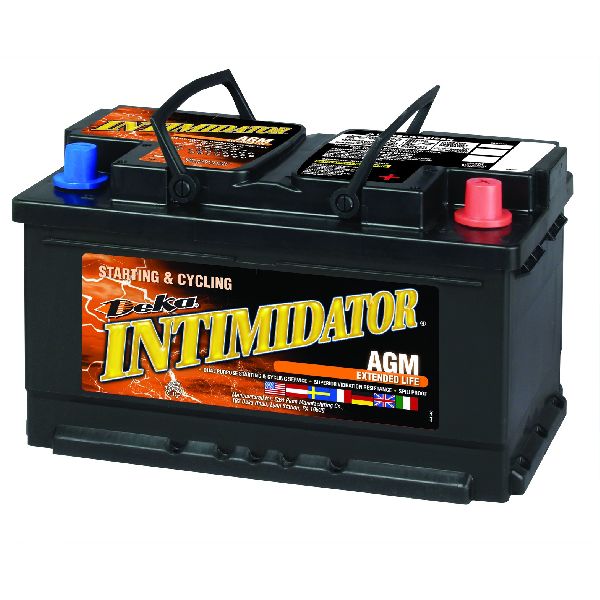
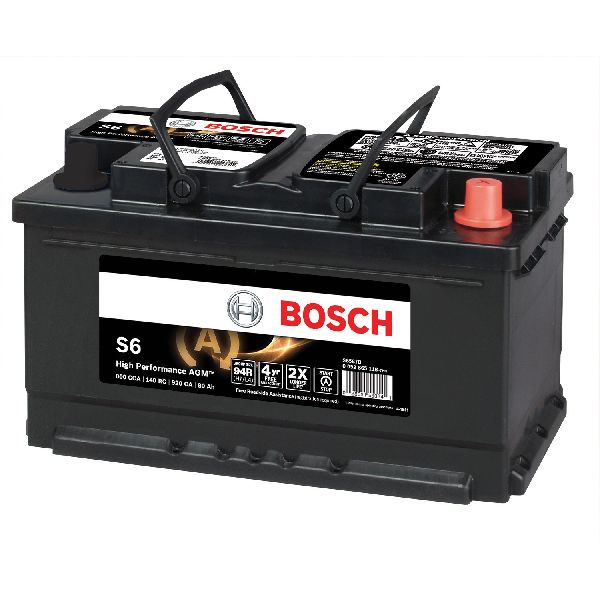
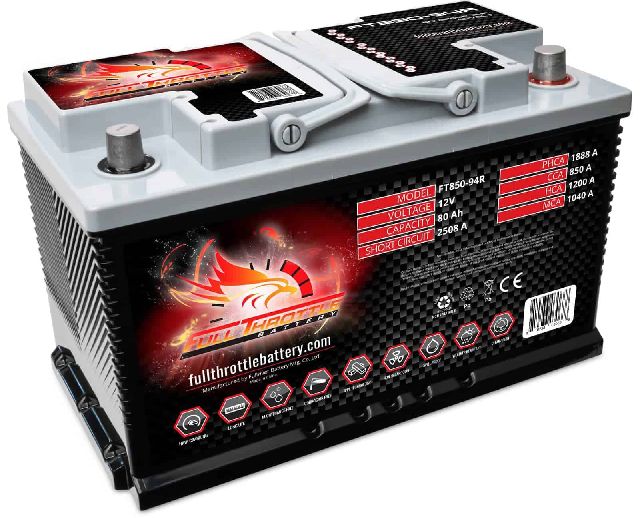
Aftermarket price range: $300-$600 - Automotive Battery — Low or unstable voltage is a common and simple-to-fix cause of network communication errors.
Trusted brands: Mopar, Interstate, DieHard
OEM price range: $200-$300
Aftermarket price range: $150-$250 - Power Steering Control Module (PSCM) — As seen in owner complaints, the PSCM can fail and cause this code, leading to a loss of power steering.
Trusted brands: Mopar
OEM price range: $800-$1500
Aftermarket price range: N/A
Related Codes That Often Appear With This One
- U11E8-00 — This code was reported alongside U0001 in an NHTSA complaint related to power steering failure, suggesting a direct link between the network failure and the power steering control module.
- U0002 — This code also indicates a CAN Bus communication performance issue and can appear with U0001, pointing to a more severe or widespread network problem.
- C2116 — This code for 'Pump Motor Fault' or 'Pump Supply Low Voltage' is a strong indicator that the ABS module itself has failed, which in turn can cause the U0001 network code.
Technical Service Bulletins (TSBs) & Recalls
- While not a TSB, Safety Recall U49/U59-U65/U68/U73 (NHTSA Campaign 18V332000) is the most critical software update related to a U0001 fault condition. It addresses the issue where cruise control may not disengage during a CAN bus failure.
Platform-Specific Known Issues
- NHTSA ODI #11091931: A 2015 Challenger owner reported the 'Servicing The Power Steering' warning appeared, followed by a complete loss of power steering. The vehicle stored codes U0001-00 and U11E8-00.
- FCA Safety Recall 18V-332000 (U49): FCA initiated a recall because a specific CAN bus fault could prevent the cruise control from disengaging, requiring a PCM software update.
Mechanic-Grade Diagnostic Values
- CAN Bus Network Resistance — expected: ~60 Ohms. Failure: 120 Ohms indicates an open circuit or missing terminating resistor. ~0 Ohms indicates a short between CAN-H and CAN-L lines. 40-45 Ohms may indicate a third, unintended resistor on the network or a failing module.
- CAN Bus Voltage (Key On, Engine Off) — expected: CAN-H (Pin 6): ~2.5V to 3.5V. CAN-L (Pin 14): ~1.5V to 2.5V. The two voltages should be mirror images and sum to ~5V.. Failure: Voltages stuck high, low, or at battery/ground potential indicate a short in the wiring or a faulty module transceiver.
Hidden / Shadow Codes Worth Checking
- U01xx, U02xx (e.g., U0121, U0101, U0140): These are not hidden codes, but a critical cluster of 'Lost Communication With...' codes that accompany the general U0001. For example, U0121 is 'Lost Communication with ABS Control Module'. The list of these codes tells a technician exactly which modules are offline, providing a starting point for diagnosis. (see via A professional scan tool (like wiTECH) will display the full list of active and stored U-codes from all modules, not just the primary U0001 from the PCM.)
Scan Tool Commands That Help
- wiTECH (OEM FCA Tool): Network Topology / View CAN Bus — This is the first step in digital diagnosis. It provides a graphical map of all vehicle modules and highlights the ones that are not communicating (often shown in red), immediately narrowing down the search.
- wiTECH (or compatible high-end scanner): PROXI Alignment (also called Restore Vehicle Configuration) — This procedure is mandatory after replacing a major control module like the ABS, BCM, or PCM. It synchronizes the new module with the vehicle's central configuration, allowing it to be recognized on the network. Failure to perform a PROXI alignment will cause the U0001 code to persist even with a new part.
Wiring & Ground Locations
- Star Connector (CAN C Bus Hub) — Located behind the glove box on the passenger side. Requires lowering or removing the glove box assembly to access.. This is a central junction point where the CAN C bus wires from multiple modules connect. Corrosion, moisture, or a single loose pin in this connector can take down the entire high-speed network, causing a U0001 code. It's a critical point for inspection and testing.
- ABS Module & Connector — In the engine bay on the driver's side, near the windshield washer fluid reservoir.. The ABS module is a common failure point. The wiring harness leading to it is in a high-heat, high-vibration area and can be prone to chafing or corrosion, causing intermittent or total loss of communication.
- G120 Ground — Under the driver's seat.. This is a major chassis ground point. While not directly for the CAN bus itself, a poor ground here can affect modules connected to it, causing voltage irregularities that can lead to communication codes like U0001.
Real Owner Repair Stories
- Challengertalk.com forum user (2016 Dodge Challenger) — U0001 code, loss of power steering, multiple dash lights.
❌ Tried (didn't work) Replacing the battery.
✅ What actually fixed it The dealership found a corroded and chafed wire in the wiring harness located in the front driver's side wheel well area. Repairing the damaged wire resolved all issues. - LXForums.com user (Dodge Charger (same platform)) — U0001 code, ABS and traction control lights, vehicle going into limp mode.
❌ Tried (didn't work) Checking wiring harnesses., Resetting the computer.
✅ What actually fixed it The ABS module was internally faulty. Replacing the ABS module and having the dealer program it (PROXI alignment) fixed the problem. - Reddit user r/MechanicAdvice (2015 Dodge Charger Pursuit (same platform)) — U0001, no communication with PCM, engine cranks but does not start.
❌ Tried (didn't work) Checking all fuses and relays., Testing CAN bus resistance (was a correct 60 ohms)., Checking for power and ground at the PCM connector.
✅ What actually fixed it The Powertrain Control Module (PCM) itself had failed. Replacing the PCM and performing a PROXI alignment resolved the no-start condition and cleared the U0001 code.
OEM Part Supersession History
68258644AA→68399772AA, 68399772AB, 68399772AC, 68399772AD, 68399772AE, 68399772AF, 68399772AG— Part revisions and updates by the manufacturer to improve reliability or address issues.
Heads up: While later part numbers are generally backward compatible for the specified model years, any replacement ABS module, new or used, MUST be programmed to the vehicle with a PROXI alignment.
Model Year Variations Within This Range
- 2015-2018: The primary variation within this range is software. Earlier models (e.g., 2015) that have not had the FCA Safety Recall 18V-332000 (U49) performed are susceptible to a cruise control lock-on issue during a CAN bus fault. Models from 2018 or earlier models that have been updated have a revised PCM software that prevents this specific dangerous behavior.
Diagnostic Flowchart
Other Known Issues on This Vehicle
Issues unrelated to this code that are worth knowing about as an owner of this generation:
- Uconnect 8.4" Screen Delamination 🟠 Medium — Very common on 2017 and newer models. The screen adhesive fails, causing bubbling and 'ghost touches' that make the infotainment system unusable. (Ref: No recall has been issued, but it is a widely known defect with pending class-action lawsuits.)
- Hemi V8 Lifter Failure ('Hemi Tick') 🔴 High — A common problem on 5.7L and 6.4L Hemi engines, often occurring between 60,000 and 120,000 miles. Failure of the roller lifters (especially on MDS cylinders) can cause a distinct ticking noise and, if ignored, lead to camshaft destruction and catastrophic engine damage.
- Premature Water Pump Failure 🟠 Medium — Water pumps on both V6 and V8 models are known to fail earlier than expected, sometimes around 60,000 miles. Symptoms include a grinding noise from the front of the engine, and coolant leaks leading to overheating.
Used vs. New Parts: Buying Guide for This Vehicle
When a used part is the smart pick: For most electronic modules on this platform, including the Power Steering Control Module (PSCM) or Body Control Module (BCM), a used part can be a cost-effective option, provided the donor vehicle had low mileage and the part is guaranteed to be functional. However, programming will still be required.
Donor-vehicle mileage cap: roughly under 80000 miles for the part to have meaningful remaining life.
What to inspect on the donor part:
- Check for any signs of water damage, corrosion on pins, or physical damage to the casing.
- Obtain the VIN of the donor car to check its history for flood, fire, or major accidents.
- Purchase from a reputable recycler that offers a warranty and return policy.
OEM-only on this vehicle (don't cheap out):
- ABS Control Module: It is strongly recommended to purchase this part new from Mopar. Used ABS modules are notoriously difficult to reprogram as the VIN is often permanently locked. While some third-party specialists claim to 'virginize' them, it is a significant risk and may not work, whereas a new module is guaranteed to accept programming.
Aftermarket brands forum-validated for this vehicle:
- For batteries, brands like Interstate and DieHard are widely accepted alternatives to OEM Mopar.
Brands owners have reported issues with on this vehicle:
- Avoid no-name, unbranded electronic modules from online marketplaces. For critical components like the ABS module, sticking to OEM (Mopar) is the safest choice.
Real Owner Stories
Aggregated from forums and TSBs cited above. Mileages and costs reflect what owners reported in those sources.
2015 Dodge Challenger Hellcat
Symptoms: The vehicle threw a code for U0001 (high speed CAN communication bus) during an inspection.
What fixed it: The technician reset the code and advised a drive cycle to see if it returned, as it can sometimes be a momentary glitch.
Source hint: Reddit r/hellcat - Thread 'Check Engine code U0001'
2015 Dodge Challenger
Symptoms: The 'Servicing The Power Steering' warning appeared, followed by a complete loss of power steering.
What fixed it: The vehicle stored codes U0001-00 and U11E8-00; diagnostic steps involve checking the CAN bus and potentially the Power Steering Control Module (PSCM).
Source hint: NHTSA ODI #11091931
2015-2018 Dodge Charger (Platform Mate)
Symptoms: Multiple U-codes appearing intermittently.
What fixed it: Replacing an aging battery or cleaning/reconnecting battery terminals to ensure proper voltage.
Source hint: DodgeChargerForum.com - Thread 'U0001 code'
Related OBD-II Codes
Frequently Asked Questions
Is there a recall for my 2015-2018 Dodge Challenger regarding the U0001 code and cruise control?
My Challenger is showing 'Servicing Power Steering' and code U0001; what is the most likely cause?
Can a bad battery really cause a U0001 High Speed CAN Bus communication code on a Dodge Challenger?
How can I tell if my Challenger's ABS module is the reason for the U0001 code?
Should I immediately replace parts if my 2015 Hellcat throws a U0001 code?
What resistance should I see when testing the CAN bus at the OBD-II port of my Challenger?
Helpful Videos
Used OEM Parts in Stock


New Aftermarket Parts Available


The information in this article is provided for general reference and educational purposes only. Vehicle specifications, procedures, and part compatibility can vary by production date, trim level, and region. Always consult your vehicle's factory service manual and verify part numbers before purchasing or performing repairs. Safety-critical components such as airbags, seat belts, and braking systems should be installed by a qualified professional.
- Dodge Challenger:
- 🎬 Helpful Videos
- 🛍️ Shop This Part
- What's Unique About the 2015-2018 Dodge Challenger
- Symptoms You May Notice
- Most Likely Causes
- Rare But Worth Checking
- Diagnosis Steps
- Parts You'll Likely Need
- Related Codes That Often Appear With This One
- Technical Service Bulletins (TSBs) & Recalls
- Platform-Specific Known Issues
- Mechanic-Grade Diagnostic Values
- Hidden / Shadow Codes Worth Checking
- Scan Tool Commands That Help
- Wiring & Ground Locations
- Real Owner Repair Stories
- OEM Part Supersession History
- Model Year Variations Within This Range
- Diagnostic Flowchart
- Other Known Issues on This Vehicle
- Used vs. New Parts: Buying Guide for This Vehicle
- Real Owner Stories
- 2015 Dodge Challenger Hellcat
- 2015 Dodge Challenger
- 2015-2018 Dodge Charger (Platform Mate)
- Related OBD-II Codes
- Frequently Asked Questions
- 🎟️ Get 5% Off