

P3189 on 2021-2025 GMC Yukon: Broken Valve Spring and Misfire Guide
Code P3189 on a 2021-2025 GMC Yukon is a serious indicator, most commonly pointing to a broken valve spring. This requires immediate attention to prevent catastrophic engine damage. The repair involves replacing the spring and potentially other valvetrain components like lifters.
- P3189 on a 2021-2025 Yukon is a critical code that strongly suggests a mechanical engine problem.
- The most likely cause is a broken valve spring, a known issue for this vehicle, especially the 2021 model year.
- Do not drive the vehicle. A flashing check engine light indicates a severe misfire that can cause further damage.
- Diagnosis requires removing the valve cover to visually inspect the springs.
- Repair is not a simple DIY job and should be handled by a professional technician to prevent catastrophic engine failure.
What's Unique About the 2021-2025 Gmc YUKON
The 2021-2025 GMC Yukon, particularly with the 5.3L (L84) and 6.2L (L87) V8 engines, is known for valvetrain issues affecting both valve springs and the lifters associated with the Dynamic Fuel Management (DFM) system. A batch of faulty valve springs led to a notable number of failures, especially in the 2021 model year. Therefore, unlike on other vehicles where a circuit code might just be a sensor or wire, on this specific platform, P3189 must be treated as a potential sign of serious internal engine damage until proven otherwise.
Diagnostic Flowchart
Tap your situation to follow the diagnostic path that matches what you're seeing on this vehicle.
Symptoms You May Notice
- Check Engine Light (MIL) illuminated or flashing
- Engine misfire, which may feel like a rough or shaking idle
- Audible engine noise, such as ticking, chirping, or a distinct 'pop' followed by loss of power
- Reduced engine power and performance
- Potential for engine stalling, sometimes while driving at speed
- Stabilitrak service message may appear on the driver information center
- Replacing ignition coils or spark plugs without checking the valvetrain. While these can cause misfires, they will not resolve a P3189 code caused by a mechanical spring or lifter failure.
- Replacing the MAP sensor. A broken valve spring can cause erratic manifold pressure, triggering a MAP sensor code (P0106) alongside P3189. Replacing the sensor will not fix the underlying mechanical problem.
Most Likely Causes
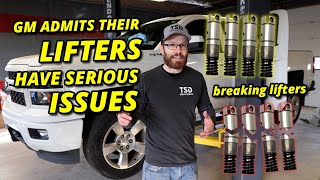
- Broken Valve Spring 🔴 High Probability A known issue on 2020-2021 GM V8 engines (5.3L L84, 6.2L L87) due to a potential batch of faulty parts, as documented in GM TSB #PIP5801A 🎬 Watch: A breakdown of GM's service bulletins for lifter issues. and its successor, PIP5752M. Failures were common enough to be discussed widely in owner forums and were noted on vehicles with very low mileage.
How to confirm: Listen for a distinct ticking or misfire. The definitive check requires removing the valve cover for visual inspection of the springs. A break can be a clean snap, but sometimes the spring remains stacked, requiring a light tap with a pick or screwdriver to reveal the fracture. A cylinder leakage test is mandatory to check for bent valves or piston damage before repair.
Typical fix: Replace the broken valve spring. Per TSB #PIP5752M, on low-mileage 6.2L engines (under 500 miles), all 16 springs should be replaced. On higher mileage 6.2L and all 5.3L engines, only the affected spring may need replacement. The camshaft and lifters should also be inspected for collateral damage.
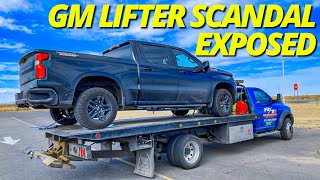
Est. part cost: $10-$25 for a single spring, $200-$400 for a full set. - Failed AFM/DFM Lifter 🟡 Medium Probability The Active/Dynamic Fuel Management systems on these GM V8s have lifters that are a known failure point, either by collapsing, getting stuck, or having the lock pin spring break. This issue is widespread across many GM trucks and SUVs with these engines and has led to class-action lawsuits. 🎬 See why these widespread lifter failures are causing legal action.
How to confirm: This also requires removing the valve covers and often the cylinder head(s) to inspect the lifters and camshaft. A failed lifter often causes a distinct tick and frequently damages the corresponding camshaft lobe, requiring camshaft replacement.
Typical fix: Replace the failed bank of AFM/DFM lifters, the valve lifter oil manifold (VLOM), and often the camshaft and all lifters due to the high risk of metal contamination and wear. Some owners opt for an 'AFM/DFM delete' to prevent future failures.
Est. part cost: $400-$1200 for lifters, camshaft, and gaskets. - Crankshaft Position System Variation Not Learned ⚪ Low Probability TSB #PIP5774B notes that P3189 can be set when a crankshaft variation relearn procedure is needed, often after other service has been performed or if there was a battery issue. The PCM loses its reference for minor variations in the crankshaft reluctor wheel, affecting its ability to accurately detect misfires.
How to confirm: This is a software-based check. If no mechanical noises or severe misfires are present, and especially if recent repairs or a battery disconnect occurred, performing the relearn procedure with a capable scan tool is the first step.
Typical fix: Perform the crankshaft position variation relearn procedure using a GM-compatible diagnostic scan tool (like a Tech 2 or GDS2). The procedure typically involves bringing the engine to operating temperature and then revving it to the fuel cut-off point to allow the PCM to learn the crank profile.
Est. part cost: $0 if you have the tool, or typically one hour of shop labor ($100-$200).
Diagnosis Steps
- Scan for all DTCs. Note P3189 and any accompanying misfire codes (P0300-P0308), MAP codes (P0106), or idle codes (P0506).
- Listen carefully to the engine at idle and while revving slightly. A rhythmic ticking, clatter, or squeak is a strong indicator of a valvetrain issue.
- Visually inspect the Power Balance screen on a capable scan tool to confirm which cylinder is showing a significant power contribution drop.
- If a specific cylinder is identified by the codes (e.g., P0301 and P3189 for Cylinder 1), remove the valve cover for that cylinder bank.
- Visually inspect all valve springs for fractures. A break can be a clean snap or a small crack. Use a small tool to lightly push on the springs, as a broken spring may remain stacked and hide the fracture.
- If a spring is broken, perform a cylinder leakage test on that cylinder to check for valve or piston damage before proceeding with repair. Any leakage indicates a bent valve or damaged piston, requiring cylinder head removal.
- If no springs are broken, inspect the rocker arms and pushrods for unusual wear, looseness, or damage. Roll pushrods on a flat surface to check for bends.
- If the top-end valvetrain appears normal, the diagnosis must go deeper to inspect the valve lifters and camshaft, which requires removing the cylinder head(s). Look for collapsed lifters or scored camshaft lobes.
- If no mechanical faults are found at all, and especially if other work was recently performed, perform the crankshaft variation relearn procedure as mentioned in TSB #PIP5774B.
Parts You'll Likely Need
- Engine Valve Spring
(OEM #12691120)— This is the most common cause of code P3189 and related misfires on this vehicle, as documented in GM TSB #PIP5801A and PIP5752M. An updated part number may be available.
Trusted brands: ACDelco (Genuine GM), Melling
OEM price range: $15-$25
Aftermarket price range: $10-$20 - AFM/DFM Valve Lifter Kit — If a lifter fails, it's the second most likely cause. A failed lifter often damages the camshaft, requiring a more extensive repair. It is recommended to replace them in banks or as a full set.
Trusted brands: ACDelco, Enginetech, Sealed Power
OEM price range: $300-$500
Aftermarket price range: $200-$400 - Valve Cover Gasket
(OEM #12723317 (Example for Left Side))— Required to be replaced anytime the valve cover is removed for inspection or repair. Often sold as part of a valve cover assembly.
Trusted brands: ACDelco, Fel-Pro
OEM price range: $40-$70
Aftermarket price range: $25-$50 - Cylinder Head Gasket Set — Necessary if the cylinder head must be removed to service failed lifters or a bent valve.
Trusted brands: ACDelco, Fel-Pro
OEM price range: $150-$250
Aftermarket price range: $100-$200
Related Codes That Often Appear With This One
- P0300 — A random/multiple cylinder misfire is a direct result of the mechanical failure (like a broken spring) that also triggers P3189.
- P0301-P0308 — A misfire code for a specific cylinder (e.g., P0301 for cylinder 1) will often accompany the P3189 code for that same cylinder's valve control circuit.
- P0506 — Indicates Idle Air Control RPM is lower than expected, which can be caused by the instability from a severe misfire. This code is specifically mentioned in TSBs related to broken valve springs.
- P0106 — Indicates a Manifold Absolute Pressure (MAP) sensor performance issue, which can be triggered by erratic intake manifold pressure from a misfiring cylinder. It is also listed in the valve spring TSBs.
- P318A, P318B, P318C, P318D, P318E, P318F, P3190 — These are similar 'Trapped High Pressure Exhaust Charge' codes for other cylinders (Cylinder 2, 3, 4, etc.). It's common to see a group of these codes if there's a systemic issue or multiple component failures.
Technical Service Bulletins (TSBs) & Recalls
- PIP5801A / PIP5752M: Mentions service engine light, misfire, engine noise, and lists P3189 as a possible code for a broken valve spring. Provides detailed correction steps based on engine type and vehicle mileage.
- PIP5774B: States that codes P3189 through P3190 may be set and advises performing a crankshaft variation relearn procedure as a potential fix if no mechanical faults are found.
- 21-NA-074 / 22-NA-074: Provides guidelines for replacing the oil cooler and lines if an engine is replaced due to bearing failure or significant metal debris, which can be a consequence of a major valvetrain failure.
Platform-Specific Known Issues
- A known issue of broken valve springs affected many 2021 model year GM trucks and SUVs with the 5.3L L84 and 6.2L L87 engines due to a bad batch of parts from a supplier.
- Widespread and ongoing issues with Active Fuel Management (AFM) and Dynamic Fuel Management (DFM) lifters collapsing or seizing, which can bend pushrods and damage the camshaft. This has been the subject of multiple service bulletins and class-action lawsuits.
Mechanic-Grade Diagnostic Values
- Manifold Absolute Pressure (MAP) Sensor Voltage — expected: Key On, Engine Off (KOEO): ~4.5-5.0V (reflecting atmospheric pressure). Engine Idling: ~1.0-1.5V.. Failure: Voltage at idle that is erratic or fluctuating in sync with an engine misfire. A reading that doesn't change with engine RPM or load.
- Low-Side Fuel Pressure (at Schrader valve) — expected: Key On, Engine Off (KOEO): 55-65 PSI.. Failure: Pressure below 50 PSI can indicate a weak in-tank fuel pump, but this is not a primary cause for code P3189.
- High-Side Fuel Pressure (Scan Tool Data) — expected: Engine Idling: 300-700 PSI. Under Load: Up to 2,900+ PSI.. Failure: While not a direct cause of P3189, erratic high-side pressure would indicate a separate issue with the high-pressure fuel pump (HPFP).
Scan Tool Commands That Help
- GM GDS2 / Tech2: Cylinder Power Balance — This is a primary diagnostic screen to use before any disassembly. It graphically displays the power contribution of each cylinder, immediately highlighting the misfiring cylinder that corresponds to the P3189 code.
- GM GDS2 / Tech2: Cylinder Deactivation (AFM/DFM) — Used to command specific DFM lifters on and off. If a cylinder fails to respond correctly or the misfire count doesn't change as expected, it strongly suggests a mechanical failure in the lifter for that cylinder.
- GM GDS2 / Tech2: Crankshaft Position Variation Learn — This should be performed after any major engine work, battery replacement, or if no other mechanical faults can be found. Failure to perform this procedure can cause the ECM to incorrectly interpret crankshaft speed fluctuations and set false misfire codes, including P3189.
Wiring & Ground Locations
- G102 / G103 — G102 is typically located on the left rear of the engine block. G103 is often found on the front or rear of the passenger side cylinder head.. These are primary grounds for the Engine Control Module (ECM) and various sensors. While a bad ground is more likely to cause multiple, random codes, a poor connection at these points can create electrical noise that could interfere with the sensitive readings from the crankshaft position sensor, which is critical for detecting the fault that triggers P3189.
- Crankshaft Position Sensor Connector — Located on the passenger side of the engine block, typically above the starter motor.. This 3-wire connector provides the ECM with its primary data for engine speed and misfire detection. The pins are typically: Pin A - Signal (White/Black), Pin B - Low Reference/Ground (Gray/Black), Pin C - 5V Reference (Purple). Verifying 5V power and a solid ground here is a key step in ruling out a wiring issue.
Real Owner Repair Stories
- Tahoe Yukon Forum user (2021 GMC Yukon Denali, 6.2L L87, ~26,600 miles) — Audible lifter tick sound, followed by severe misfire and Check Engine Light.
❌ Tried (didn't work) Initial repair where only one bank of lifters was replaced. The problem reoccurred shortly after.
✅ What actually fixed it The dealer had to replace a collapsed DFM lifter and the damaged camshaft. The user noted that after the second failure, the dealer replaced all lifters in the engine. - Reddit user r/gmc (2021 GMC Yukon XL Denali, 6,000 miles) — Engine failure requiring lifter replacement.
❌ Tried (didn't work) N/A, went straight to dealer.
✅ What actually fixed it Lifters were replaced under warranty. However, the user reported that after the repair, the engine began burning over a quart of oil per month and had other issues, highlighting the potential for collateral or incomplete repairs. - GM-Trucks.com forum user (similar platform) (2021 Chevrolet Silverado, 6.2L L87, ~15,000 miles) — Sudden 'pop' sound, followed by engine shaking and flashing Check Engine Light. Codes P0305, P0106, P0506, P318D (Cylinder 5).
❌ Tried (didn't work) N/A, diagnosed directly by dealer.
✅ What actually fixed it The dealership confirmed a broken valve spring on cylinder 5. The final repair was the replacement of the single broken spring under warranty.
"I Checked Everything" — The Actual Cause
- A smoke test is not a relevant diagnostic procedure for P3189. However, a common diagnostic trap is performing only a quick visual inspection of the valve springs. Mechanics report that a broken spring can remain 'stacked' and appear intact. The proper method is to use a small pick or screwdriver to physically push on each spring; a broken one will then separate or feel spongy.
OEM Part Supersession History
12691120→12728729 (and potentially others)— The original valve springs were prone to premature failure due to a supplier quality issue. The updated parts are manufactured to revised specifications to improve durability.
Heads up: Always confirm the correct part number with a GM dealer using the vehicle's VIN, as multiple running changes were made.Various older AFM lifter part numbers (e.g., 12639516)→Updated DFM lifter part numbers (e.g., 12698946)— The original AFM/DFM lifters were a significant failure point. GM has released several updated versions to improve the internal locking pin mechanism and overall durability.
Heads up: The newest DFM lifters are generally backward-compatible with older AFM applications, but the original AFM lifters are NOT forward-compatible with DFM engines. It is highly recommended to replace lifters as a full bank or complete engine set with the latest available part number.
Model Year Variations Within This Range
- 2021-2022: The widespread valve spring failure was most concentrated in vehicles built from mid-2020 through mid-2021, affecting the 2021 model year most significantly. While failures can occur on any year, the likelihood of this specific cause is highest for 2021 models.
- 2021-2025: The DFM lifter issue is a persistent problem across this entire generation. However, GM issued specific service bulletins for vehicles built between September 2020 and March 2021, outlining different repair procedures based on mileage (e.g., replacing one bank vs. both banks of lifters).
Helpful Videos
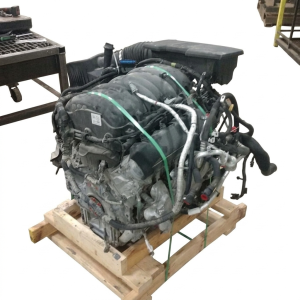
We Have This Part in Stock




The information in this article is provided for general reference and educational purposes only. Vehicle specifications, procedures, and part compatibility can vary by production date, trim level, and region. Always consult your vehicle's factory service manual and verify part numbers before purchasing or performing repairs. Safety-critical components such as airbags, seat belts, and braking systems should be installed by a qualified professional.
- Gmc YUKON:
- 🎬 Helpful Videos
- 🛍️ Shop This Part
- What's Unique About the 2021-2025 Gmc YUKON
- Diagnostic Flowchart
- Symptoms You May Notice
- Most Likely Causes
- Diagnosis Steps
- Parts You'll Likely Need
- Related Codes That Often Appear With This One
- Technical Service Bulletins (TSBs) & Recalls
- Platform-Specific Known Issues
- Mechanic-Grade Diagnostic Values
- Scan Tool Commands That Help
- Wiring & Ground Locations
- Real Owner Repair Stories
- "I Checked Everything" — The Actual Cause
- OEM Part Supersession History
- Model Year Variations Within This Range
- 🎟️ Get 5% Off