

P3000 on 2015-2021 Lexus NX 300h: Battery Control System Malfunction Causes and Fixes
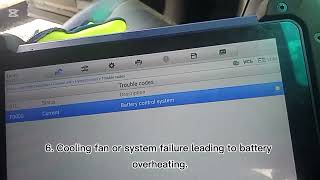
P3000 is a general alert for a fault in the high-voltage (HV) battery system. It almost always appears with more specific sub-codes that pinpoint the true cause, most commonly a failing hybrid battery pack (P0A80) or a clogged battery cooling fan (P0A85). Professional diagnosis with a tool like Toyota Techstream is required to read the sub-codes and safely service the HV system.
- P3000 is a general fault code for the hybrid battery system; it is not a specific diagnosis.
- You MUST have the sub-codes read with a professional-grade scanner to find the true cause.
- The most common fix is replacing the high-voltage battery pack, but always check for a much cheaper clogged battery cooling fan first.
- Never attempt to work on the orange high-voltage cables or battery components yourself due to the risk of fatal electric shock.
- Sometimes the code can be triggered by simply running out of gas; check fuel levels before assuming an expensive repair is needed.
What's Unique About the 2015-2021 Lexus NX 300h
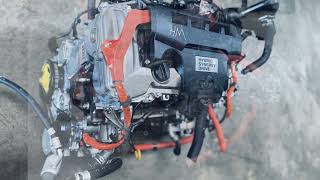
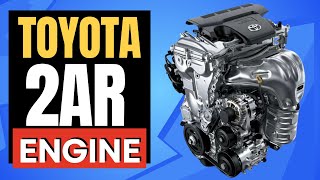
The Lexus NX 300h uses the highly reliable 2AR-FXE hybrid powertrain, shared with many other Toyota and Lexus models 🎬 Learn about common 2AR-FXE engine issues and weak points like the Camry and RAV4 Hybrid. For this platform, a P3000 code is a very common indicator of two main issues as the vehicle ages: natural degradation of the Nickel-Metal Hydride (NiMH) battery pack, or a clogged hybrid battery cooling fan leading to overheating. Because the powertrain is so widely used, diagnostic procedures and common failures are well-documented across the model range, and Lexus has issued a TSB (L-SB-0028-20) recommending periodic cleaning of the battery cooling system.
🎬 See how to diagnose and address the P3000 battery control codeSymptoms You May Notice
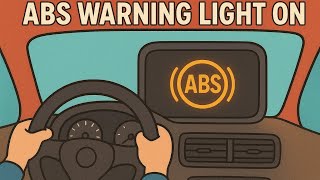
- Check Engine Light and other warning lights (e.g., 'Check Hybrid System', 'Brake Malfunction') on the dashboard.
- Reduced fuel efficiency.
- Decreased acceleration or overall performance, sometimes referred to as 'limp mode'.
- The gasoline engine running more often than usual or at higher RPMs.
- Vehicle fails to start or enter the 'Ready' mode.
- Replacing the 12V auxiliary battery. While a weak 12V battery can cause various electrical issues in a hybrid, P3000 specifically points to the high-voltage system. The 12V battery should still be tested as part of a comprehensive diagnosis but is rarely the direct cause of P3000.
Most Likely Causes
- Failing High-Voltage (HV) Hybrid Battery Pack 🔴 High Probability Like all batteries, the NiMH pack degrades over time and with high mileage, leading to imbalanced or weak cells. This is the most common root cause for P3000 on an aging hybrid, especially those over 8-10 years old or with 100,000+ miles.
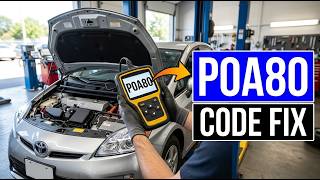
How to confirm: A professional scan tool (like Toyota Techstream) is needed to read the sub-codes. Code P0A80 ('Replace Hybrid Battery Pack') or P0A7F ('Hybrid Battery Pack Deterioration') is a direct confirmation. A technician can also measure the voltage of individual battery blocks; a difference greater than ~0.3V between blocks indicates failure.
Typical fix: Replacement of the entire high-voltage battery pack is the most reliable solution. In some cases, individual failed modules can be replaced or the pack can be reconditioned, but this is often a less durable, temporary repair.
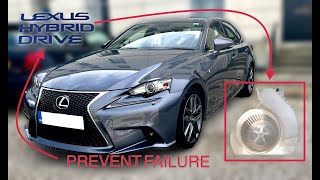
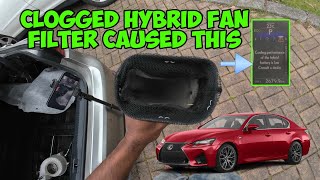
Est. part cost: $2000-$4500 - Clogged or Failed Hybrid Battery Cooling Fan 🟡 Medium Probability The battery cooling fan pulls cabin air through an intake vent (located under the rear passenger-side seat in the NX 300h) to cool the battery. Over time, the intake filter becomes clogged with dust, pet hair, and debris, causing the battery to overheat and trigger a fault. Lexus TSB L-SB-0028-20 acknowledges this and recommends inspection every 5,000 miles and cleaning every 20,000 miles.
How to confirm: Visually inspect the fan and its intake filter/vent for blockages. A technician can use a scan tool to command the fan on and verify its operation. Companion code P0A85 ('Hybrid Battery Pack Cooling Fan Control Circuit') often points to this issue.
Typical fix: Clean the fan assembly, filter, and air ducts thoroughly. If the fan motor has failed, it will need to be replaced.
Est. part cost: $150-$400 - Discharged HV Battery from External Factors ⚪ Low Probability This is not a part failure, but a state-of-charge issue. The HV battery can become depleted if the vehicle runs out of gasoline, is left in 'N' (Neutral) for an extended time (as the battery doesn't charge in Neutral), or is stored for many months without being started.
How to confirm: This is often indicated by the sub-code P3000-388 ('Discharge Inhibition Control Malfunction'). The diagnosis is based on recent vehicle history. If the car ran out of fuel, this is the likely cause.
Typical fix: Refuel the vehicle and attempt to start it, allowing the gasoline engine to run in 'Park' to recharge the HV battery. If the battery is too depleted to start the engine, it may require a special 'rescue charge' procedure from a qualified shop.
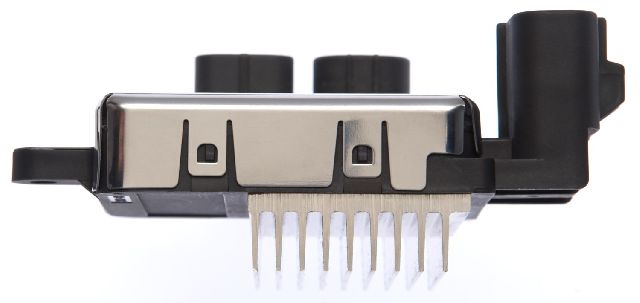
Est. part cost: $0 - Faulty Battery ECU (BMS) ⚪ Low Probability While reliable, the Battery ECU (also known as the Battery Management System or Battery Smart Unit) can fail electronically, causing it to misread the battery's condition and send a false fault signal.
How to confirm: This is a diagnosis of exclusion. If the battery pack, cooling system, and wiring all test perfectly, the ECU itself becomes the primary suspect. This is rare.
Typical fix: Replacement of the Battery ECU.
Est. part cost: $400-$800
Rare But Worth Checking
- Corroded Wiring or Poor Connections: Corrosion on the battery terminals, bus bars, or damage to the high-voltage wiring harness can cause communication errors or incorrect voltage readings, triggering the P3000 code. Water intrusion in the rear of the vehicle can sometimes lead to corrosion on connectors for the battery fan or ECU.
Diagnosis Steps
- SAFETY FIRST: Do not attempt to service the high-voltage system without proper training and safety equipment. Always disconnect the HV service plug and wait at least 10 minutes before inspecting components.
- Scan for Codes: Use a hybrid-compatible scan tool (like Toyota Techstream) to read the primary code (P3000) and, more importantly, any Information Codes (INFs) or sub-codes stored in the Hybrid Control and Battery ECUs.
- Analyze Sub-Codes: If P0A80 or P0A7F is present, the battery pack is the failure point. If P3000-388 is present, investigate if the car ran out of fuel or was left in Neutral. If P0A85 is present, focus on the cooling system.
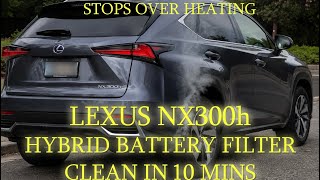
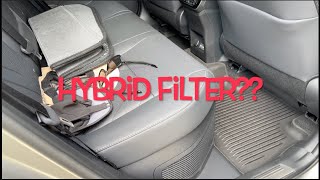
- Inspect Battery Cooling System: The intake is under the rear passenger-side seat. Remove the vent cover and inspect the filter (Part No. G92DH-42010). Clean or replace as necessary. A detailed DIY video is available for this procedure. 🎬 Watch this quick DIY guide on cleaning the hybrid battery filter
- Check Battery Block Voltages: If P0A80 is present, a technician should access the battery and measure the voltage of each of the individual blocks to confirm an imbalance. A difference greater than 0.3V between the highest and lowest block is a clear sign of failure.
- Inspect Wiring: Check the high-voltage battery cables and connectors for any signs of corrosion, damage, or looseness, paying close attention to the area around the battery ECU and cooling fan.
- Diagnose by Exclusion: If the battery pack, cooling system, and wiring are all confirmed to be in good condition, the Battery ECU is the most likely remaining cause.
Parts You'll Likely Need
- High-Voltage Hybrid Battery Assembly
(OEM #G9510-48082 (replaces G9510-48080, G9510-48081))— This is the most common cause of P3000 on an aging vehicle, triggered when the battery cells can no longer hold a balanced charge.
Trusted brands: Lexus (OEM), Dorman (Remanufactured), Best Hybrid Batteries (Aftermarket)
OEM price range: $3500-$5000
Aftermarket price range: $2000-$3500 - Hybrid Battery Cooling Fan
(OEM #G9230-48080)— A clogged or failed fan is a frequent cause of battery overheating, which triggers a protective fault code. Often only the filter needs cleaning, not full replacement.
Trusted brands: Lexus (OEM), Aisin
OEM price range: $250-$400
Aftermarket price range: $150-$250 - HV Battery Intake Filter
(OEM #G92DH-42010)— This filter is the first line of defense for the cooling fan and frequently gets clogged with debris, leading to overheating. It is a cheap and easy part to clean or replace.
Trusted brands: Lexus (OEM)
OEM price range: $15-$25 - Battery Control ECU / BMS — In rare cases, the control module itself fails and must be replaced after all other potential causes are ruled out.
Trusted brands: Lexus (OEM)
OEM price range: $400-$800
Related Codes That Often Appear With This One
- P0A80 — This is a sub-code that directly translates to 'Replace Hybrid Battery Pack'. When you see P3000 and P0A80 together, the high-voltage battery is almost certainly the cause.
- P0A85 — This code indicates a fault in the 'Hybrid Battery Pack Cooling Fan Control Circuit' and strongly suggests the problem is a clogged or failed cooling fan.
- P0A7F — This code for 'Hybrid Battery Pack Deterioration' is another direct indicator that the HV battery has reached the end of its service life.
- P3011-P3027 — These codes identify a specific weak battery 'block' (a group of cells). For example, P3017 means 'Battery Block 7 Becomes Weak'. They help pinpoint the failure within the pack.
Technical Service Bulletins (TSBs) & Recalls
- L-SB-0028-20 (August 4, 2020): Titled 'HV Battery Cooling System Maintenance', this bulletin addresses excessive buildup of dust and debris in the HV battery cooling fan and intake filter on various 2006-2020 Lexus models, including the NX 300h. It recommends inspecting the filter every 5,000 miles and cleaning the system every 20,000 miles.
Platform-Specific Known Issues
- The HV battery cooling fan intake for the NX 300h is located under the rear passenger-side seat. Accessing it for cleaning is a simple DIY job that involves removing a plastic vent cover. A video guide by a user on YouTube demonstrates the 10-minute process.
Mechanic-Grade Diagnostic Values
- Battery Block Voltage Difference — expected: Less than 0.3V difference between the highest and lowest block voltage under load.. Failure: A difference greater than 0.3V between any two blocks typically triggers a P0A80 or related cell failure code.
- HV Battery Temperature (Thermistors TB1, TB2, TB3) — expected: Normal operating range is ~77°F - 113°F (25°C - 45°C).. Failure: Temperatures consistently exceeding 122°F (50°C) can cause the HV ECU to limit power and set faults. A large spread between sensors can indicate an airflow blockage.
- Delta SOC (State of Charge) — expected: Should be at or near 0%.. Failure: When this value exceeds 20%, the Battery ECU may be unable to manage the state of charge between blocks and will set a fault code.
- Individual Battery Module Voltage — expected: Nominal voltage is ~7.2V per module.. Failure: A module with significantly lower voltage compared to others when tested directly is considered failed.
Hidden / Shadow Codes Worth Checking
- P3000 with Information Code (INF): P3000 is a general code; the specific cause is stored as a 3-digit INF code, readable by advanced scanners. (see via Toyota Techstream or equivalent professional hybrid scan tool.)
- INF 123: Abnormal signal from Battery ECU. This is a generic flag indicating the Battery ECU has detected an internal fault (like a weak cell) and has sent a signal to the main Hybrid ECU. The root cause is found in the Battery ECU's own codes (e.g., P0A80). (see via Toyota Techstream)
- INF 388: Discharge Inhibition Control Malfunction. Set when the HV battery's state of charge drops critically low, often because the vehicle ran out of fuel or was left in Neutral for a long time. (see via Toyota Techstream)
- INF 389: Drop of battery voltage detected. Similar to INF 388, indicates a depleted HV battery. (see via Toyota Techstream)
- P0AA6 with INF 612, 613, or 614: Indicates a High Voltage Isolation Fault. The INF code specifies the location: 612 (Hybrid Battery), 613 (Transaxle MG1/MG2), or 614 (Inverter/Power Control Unit). This is a critical safety fault. (see via Toyota Techstream)
Scan Tool Commands That Help
- Toyota Techstream: Health Check — This is the initial step to perform a full-system scan, retrieve all DTCs and Information Codes from all modules, and get a complete picture of the vehicle's status.
- Toyota Techstream: Data List (HV Battery) — To monitor critical live data parameters for diagnosing battery failure. Key parameters to watch are 'Battery Block Voltage' for all blocks, 'Delta SOC', and 'Battery Temperature' sensors.
- Toyota Techstream: Active Test (HV Battery) — To command specific components to operate, such as the 'Hybrid Battery Cooling Fan'. This is used to verify if the fan motor is functional, separate from whether it is being commanded on by the ECU.
Wiring & Ground Locations
- HV Battery Temperature Sensors — Inside the HV battery pack assembly. A service manual indicates temperature probes are specifically fixed on modules #1, #4, #8, #9, #12, and #17.. A failing temperature sensor or one reading incorrectly due to poor contact can cause the system to misinterpret battery temperature, leading to improper cooling fan operation and triggering overheating-related faults.
- HV Battery Bus Bars — Inside the HV battery pack, connecting the individual battery modules together.. Corrosion (a whitish or greenish powder) on these copper bars increases resistance, causing voltage drops between modules. This can mimic a failing cell and trigger codes for block voltage imbalance (P3011-P3027), leading to a P3000. Cleaning or replacing the bus bars can sometimes resolve the issue without replacing the entire battery pack.
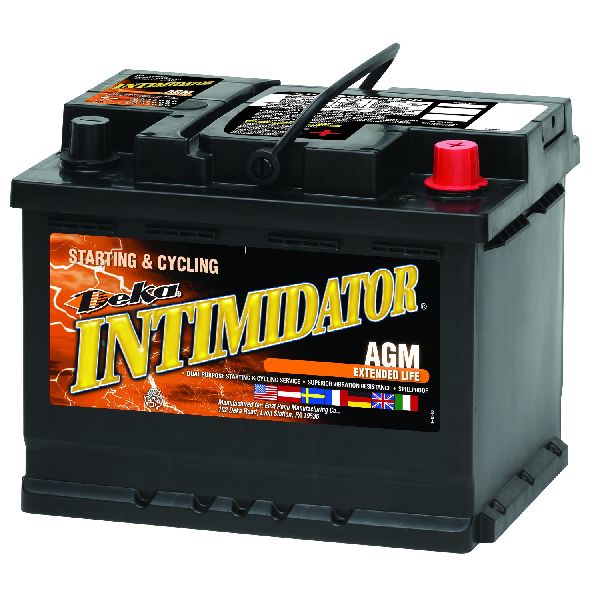
- 12V Auxiliary Battery — In the trunk/cargo area, on the passenger side, under the floor cover.. While not a direct cause of P3000, the 12V battery powers all the vehicle's ECUs, including the hybrid control modules. A weak or failing 12V battery can cause communication errors and other electrical gremlins that can complicate diagnosis. Its location is important for routine testing and replacement.
Real Owner Repair Stories
- Lexus Owners Club Forum (Lexus IS 300h (similar hybrid system)) — P3000 code appeared during a dealer Hybrid Health Check.
❌ Tried (didn't work) Initial diagnosis suggested a problem.
✅ What actually fixed it The owner had recently cleaned the hybrid cooling fan, which involved disconnecting it. The dealer cleared the code and advised driving the vehicle for 300-500 miles. After driving, the car was re-checked and passed the health check. The system required a period of driving to re-stabilize its monitoring data after the service and code clear.
OEM Part Supersession History
G9510-48080→G9510-48081, then G9510-48082— Standard part revisions for manufacturing process improvements or minor component updates.
Heads up: The newer parts are direct replacements for the older numbers. When ordering, always use the latest part number (G9510-48082) to ensure you get the most current revision.
Diagnostic Flowchart
Other Known Issues on This Vehicle
Issues unrelated to this code that are worth knowing about as an owner of this generation:
- Brake Actuator Failure 🔴 High — Can occur on higher-mileage vehicles (typically over 100,000 miles). The actuator pump may run frequently (every 15-30 seconds in 'Ready' mode) before failing. (Ref: L-SB-0011-23 applies to some Lexus hybrids (like the RX450h) for this issue, but not officially the NX. The failure mode is similar across platforms.)
- Premature Water Pump Leak/Failure 🟠 Medium — The 2AR-FXE is known for potential water pump leaks or failures, sometimes before 100,000 km. It's a common maintenance item to watch for.
- Infotainment System Freezing or Glitching 🟡 Low — Owners report occasional freezing or unresponsiveness of the infotainment screen, sometimes related to extreme temperatures. A software update can sometimes resolve it.
- VVT-i Cam Gear Rattle on Cold Start 🟡 Low — The VVTi system can produce a brief rattling or knocking sound on cold starts, which typically goes away after a few seconds. It is generally considered a minor annoyance and not indicative of imminent engine failure. (Ref: Toyota issued a service bulletin for this on the 2AR-FE engine.)
Used vs. New Parts: Buying Guide for This Vehicle
When a used part is the smart pick: A remanufactured or new aftermarket battery pack is a very common and financially sensible choice for this repair, as a new OEM battery is prohibitively expensive. A used (junkyard) battery is a high-risk gamble, as its remaining life is unknown and it carries no warranty.
Donor-vehicle mileage cap: roughly under 80000 miles for the part to have meaningful remaining life.
What to inspect on the donor part:
- Verify the donor vehicle's mileage and year; lower is better.
- Ask for a recent battery health check printout if available (e.g., from a Dr. Prius app test).
- Inspect the outer case for signs of physical damage or water intrusion.
- If possible, check the date codes on the individual modules.
OEM-only on this vehicle (don't cheap out):
- Battery Control ECU (BMS) - Aftermarket or used ECUs can have compatibility or programming issues. Given its rarity of failure, sticking with OEM is safest if it must be replaced.
Aftermarket brands forum-validated for this vehicle:
- GreenTec Auto: Offers remanufactured and new cell options with warranties, generally positive reviews for service.
- Best Hybrid Batteries: Another well-known option in the aftermarket space.
Brands owners have reported issues with on this vehicle:
- Dorman (Remanufactured): While widely available, owner experiences are mixed. Some report premature failures and difficulty with warranty claims through third-party retailers. Others have had no issues, but it appears to be less consistent than other options.
Real Owner Stories
Aggregated from forums and TSBs cited above. Mileages and costs reflect what owners reported in those sources.
2015 Lexus NX 300h 2.5L Hybrid — ~110000 miles
Symptoms: The vehicle displayed 'Check Hybrid System' and 'Brake Malfunction' lights. The car experienced reduced fuel efficiency and decreased acceleration, entering a 'limp mode' where the gasoline engine ran at higher RPMs than usual.
What fixed it: Replacement of the entire high-voltage battery pack, as individual module replacement was considered a less durable, temporary repair.
Cost: $2000-$4500
Source hint: common_causes and symptoms sections for aging hybrids over 100,000 miles
2013-2018 Lexus ES 300h (Platform Mate)
Symptoms: Owner noted the hybrid battery cooling fan was becoming loud and potentially clogged with dust and pet hair. Emphasized the need for safety precautions around high-voltage components during maintenance.
What fixed it: Cleaned the fan assembly, filter, and air ducts thoroughly after removing the plastic vent cover.
Source hint: ClubLexus - 'Cleaning the hybrid battery fan'
Lexus RX 450h (Platform Mate)
Symptoms: The ABS actuator failed, with the pump running every 15-30 seconds while in 'Ready' mode.
What fixed it: Replacement of the brake actuator assembly.
Cost: $3000-$3500
Source hint: ClubLexus - 'My RX450H ABS actuator failed! Why won't Lexus fix it?'
Related OBD-II Codes
Frequently Asked Questions
Does Lexus TSB L-SB-0028-20 apply to my NX 300h, and what does it recommend?
Where is the hybrid battery cooling fan intake located on the NX 300h?
Can leaving my NX 300h in Neutral cause a P3000 code?
What is the specific voltage difference that indicates a battery block failure on this model?
I'm seeing a 'Brake Malfunction' light along with P3000; is this related?
Is there a DIY way to clean the battery fan without removing the seats?
Helpful Videos

Used OEM Parts in Stock

New Aftermarket Parts Available



The information in this article is provided for general reference and educational purposes only. Vehicle specifications, procedures, and part compatibility can vary by production date, trim level, and region. Always consult your vehicle's factory service manual and verify part numbers before purchasing or performing repairs. Safety-critical components such as airbags, seat belts, and braking systems should be installed by a qualified professional.
- Lexus NX 300h:
- 🎬 Helpful Videos
- 🛍️ Shop This Part
- What's Unique About the 2015-2021 Lexus NX 300h
- Symptoms You May Notice
- Most Likely Causes
- Rare But Worth Checking
- Diagnosis Steps
- Parts You'll Likely Need
- Related Codes That Often Appear With This One
- Technical Service Bulletins (TSBs) & Recalls
- Platform-Specific Known Issues
- Mechanic-Grade Diagnostic Values
- Hidden / Shadow Codes Worth Checking
- Scan Tool Commands That Help
- Wiring & Ground Locations
- Real Owner Repair Stories
- OEM Part Supersession History
- Diagnostic Flowchart
- Other Known Issues on This Vehicle
- Used vs. New Parts: Buying Guide for This Vehicle
- Real Owner Stories
- 2015 Lexus NX 300h 2.5L Hybrid — ~110000 miles
- 2013-2018 Lexus ES 300h (Platform Mate)
- Lexus RX 450h (Platform Mate)
- Related OBD-II Codes
- Frequently Asked Questions
- 🎟️ Get 5% Off