

P2813 on 2014-2020 Nissan Rogue: CVT Pressure Control Solenoid 'G' Fault Guide
P2813 on a 2014-2020 Nissan Rogue indicates a performance issue with the 'G' pressure control solenoid in the CVT. This is a very common problem often requiring the replacement of the entire CVT valve body, a costly repair that should be done by a professional. This issue is so common that Nissan has issued multiple Technical Service Bulletins (TSBs) outlining a specific diagnostic procedure.
- P2813 on a 2014-2020 Rogue is a serious transmission code that points to a faulty CVT control valve body.
- Symptoms include harsh shifting, hesitation, and potential limp mode.
- This is a known issue acknowledged by Nissan in multiple service bulletins.
- Repair is not DIY-friendly and typically involves replacing the entire valve body assembly, which can be expensive.
- Ignoring the code can lead to the destruction of the entire CVT, a significantly more costly repair.
What's Unique About the 2014-2020 Nissan ROGUE

The 2014-2020 Nissan Rogue (T32 generation) uses a Jatco CVT (primarily the JF016E/RE0F10D), which is notorious for issues related to the valve body and its integrated solenoids. This specific code, P2813, is frequently cited in Nissan's own Technical Service Bulletins (TSBs) alongside a cluster of other CVT-related codes. [NTB19-076C, NTB16-110Q] The manufacturer's repair procedures often point directly to a valve body or complete transmission replacement, indicating this is a well-documented weak point. A major root cause of failure in these Jatco CVTs is a worn flow control valve in the oil pump, which leads to low pressure that can damage the entire unit.
Diagnostic Flowchart

Tap your situation to follow the diagnostic path that matches what you're seeing on this vehicle.
Symptoms You May Notice
- Harsh or delayed shifting, often feeling like a jolt or bump.
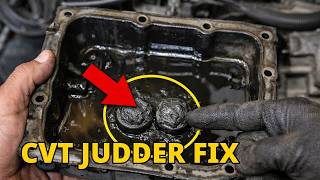
- Shuddering, jerking, or vibration during acceleration. 🎬 Watch: Diagnosing uphill shudder and valve body issues
- Slow, sluggish, or delayed acceleration.
- Vehicle may hesitate or have reduced power.
- Transmission may slip, where engine RPMs rise without a corresponding increase in vehicle speed.
- Check Engine Light is illuminated.
- Transmission may enter 'fail-safe' or 'limp' mode, limiting vehicle speed.
- Inability to shift or the vehicle won't move at all.
- Whining or humming noises from the transmission.
- Replacing only a single solenoid when the entire valve body is faulty or clogged.
- Assuming the entire transmission needs replacement without first inspecting the valve body and CVT belt with a borescope, as per Nissan's TSBs.
- Replacing the valve body without checking for a damaged CVT belt, leading to a repeat failure.
- Mistaking a wiring or connector issue for a failed valve body.
Most Likely Causes

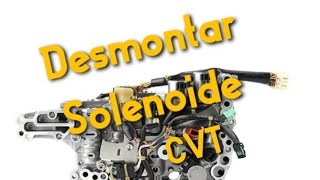
- Defective CVT Control Valve Body 🔴 High Probability This is a widely documented failure point on Nissan CVTs for this model range. The solenoids are integrated into the valve body, and one failing often requires replacing the entire unit. Debris and sludge can clog passages within the valve body, causing solenoids to malfunction.
How to confirm: Diagnosis requires a dealer-level scan tool (like Nissan CONSULT) to monitor solenoid performance and follow the diagnostic flowcharts outlined in Nissan TSBs NTB19-076C or NTB16-110Q. These TSBs provide a step-by-step process for technicians to follow.
Typical fix: Replace the CVT control valve body assembly. Per Nissan's TSBs, the procedure also requires inspecting the CVT belt with a borescope for scoring or damage; if damage is found, the entire CVT assembly must be replaced.
Est. part cost: $350-$900 - Low or Contaminated CVT Fluid 🟡 Medium Probability CVTs are extremely sensitive to fluid level and condition. Old, degraded, or incorrect fluid can cause solenoids to stick or malfunction and lead to premature wear and overheating.
How to confirm: Check the CVT fluid level and condition according to the manufacturer's procedure. The fluid should be clean, at the correct level, and not smell burnt. Burnt-smelling fluid is a strong indicator of internal damage.
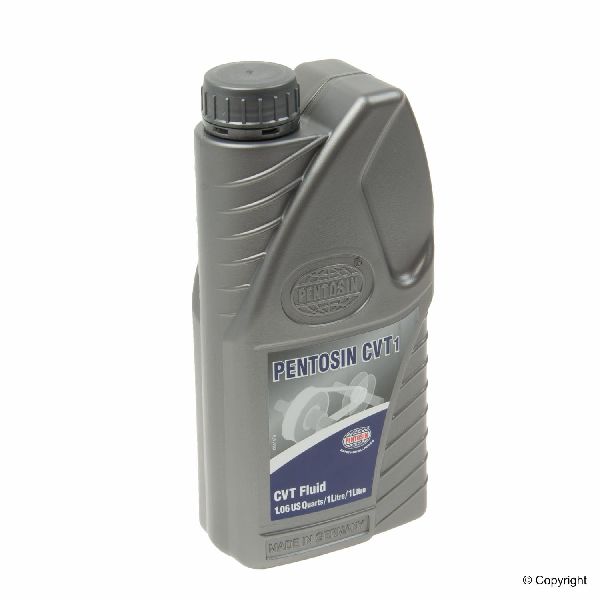
Typical fix: Perform a CVT fluid drain and fill or fluid exchange using only the correct Nissan-specific CVT fluid (NS-3). This is often a first step, but may not solve the problem if the valve body is already damaged.
Est. part cost: $100-$250 - Faulty Transmission Control Module (TCM) ⚪ Low Probability While less common than valve body failure, the TCM's internal driver circuits can fail, sending improper voltage to the solenoid. In some cases, a TCM software update or reprogramming is required after a valve body replacement.
How to confirm: This is typically a process of elimination. If the valve body, wiring, and fluid are all confirmed to be good, the TCM becomes the primary suspect. Advanced diagnostics are required to test the driver output from the TCM.
Typical fix: Replace and reprogram the Transmission Control Module. Sometimes, only a software re-flash to the latest version is needed.
Est. part cost: $500-$1000
Rare But Worth Checking
- Wiring Harness or Connector Issue: While less common than internal CVT failure, it's worth checking for damaged wires or corroded connectors between the TCM and the transmission. A visual inspection is the first step, followed by a continuity test with a multimeter. This can mimic a solenoid failure and is much cheaper to fix.
- Sticking Flow Control Valve in Oil Pump: A known root cause of low pressure in Jatco CVTs is a sticking flow control valve within the oil pump assembly. This leads to insufficient line pressure, causing belt slippage and triggering various performance codes, including P2813. This typically requires a full transmission teardown to address.
Diagnosis Steps

- Check and record any and all stored DTCs. Note if P2813 appears with other common CVT codes like P0776, P17F0, P17F1, etc.
- Check the CVT fluid level and condition. The fluid should be at the correct level and not appear dark, burnt, or contain debris.
- Visually inspect the wiring harness and connectors leading to the transmission for any signs of damage, corrosion, or loose connections.
- If available, use an advanced scan tool to monitor live data from the pressure control solenoids while operating the transmission to see if solenoid 'G' shows erratic readings.
- Consult Nissan Technical Service Bulletins NTB19-076C (for 2018-2020 models) or NTB16-110Q (for 2014-2017 models). The procedure will guide you through either replacing the valve body or inspecting the CVT belt for damage.
- Following the TSB, remove the transmission oil pan and valve body to visually inspect the CVT belt with a borescope (like Nissan's essential tool J-51951) for scoring or damage.
- If the belt is damaged, the entire CVT sub-assembly or the complete CVT assembly must be replaced. If the belt is okay, replace only the control valve body assembly.
- After replacement of the valve body or transmission, the TCM must be reprogrammed by writing the calibration data from the QR code or CD provided with the new part. This requires a dealer-level tool like Nissan CONSULT or a capable aftermarket tool.
Parts You'll Likely Need
- CVT Control Valve Body Assembly
(OEM #31705-28X2B)— This is the most common failure point for code P2813 on this vehicle, as identified in multiple Nissan TSBs. The solenoids are integrated into this assembly. This part number supersedes previous versions like 31705-28X0D.
Trusted brands: Hitachi, Nissan Genuine
OEM price range: $700-$900
Aftermarket price range: $350-$600 - Nissan CVT Fluid NS-3
(OEM #999MP-CSHNS3 (supersedes 999MP-NS300P))— The correct fluid is required when replacing the valve body or servicing the transmission. Using incorrect fluid can cause severe damage.
Trusted brands: Nissan Genuine
OEM price range: $20-$25 per quart
Aftermarket price range: $15-$20 per quart
Related Codes That Often Appear With This One
- P0776 — Pressure Control Solenoid 'B' Performance/Stuck Off. Both codes point to solenoid/valve body issues within the same CVT assembly and are grouped in the same TSBs. [NTB19-076C, NTB16-110Q]
- P17F0 — CVT Judder (T/M Inspection). This code indicates a mechanical judder and often accompanies electronic fault codes like P2813, pointing to a potential belt or pulley issue. [NTB19-076C, NTB16-110Q]
- P17F1 — CVT Judder (C/U Inspection). Similar to P17F0, this points to a judder condition detected by the control unit, often triggering the same repair path. [NTB19-076C, NTB16-110Q]
- P0841 — Transmission Fluid Pressure Sensor/Switch 'A' Circuit Range/Performance. This indicates a problem with a pressure sensor, often related to the same hydraulic control issues causing P2813. [NTB19-076C, NTB16-110Q]
- P1715 — Input Speed Sensor. An erratic input speed signal can be caused by the same internal hydraulic issues or mechanical slipping that triggers other CVT codes. [NTB19-076C, NTB16-110Q]
Technical Service Bulletins (TSBs) & Recalls
- NTB19-076C: Groups DTCs P17F0, P17F1, P0776, P2813, P1715, and/or P0841 for 2018-2020 Rogue models, pointing to a common CVT issue and providing a detailed diagnostic flowchart.
- NTB16-110Q: Covers 2014-2017 Rogue models with the same set of DTCs, including P2813, and provides a detailed repair flowchart involving borescope inspection of the CVT belt.
Platform-Specific Known Issues
- Nissan has issued multiple Technical Service Bulletins (TSBs) that group P2813 with other codes (P17F0, P17F1, P0776, P1715, P0841) and provide a specific diagnostic and repair path that often involves replacing the valve body and, in some cases, the entire CVT assembly.
Mechanic-Grade Diagnostic Values
- Pressure Control Solenoid 'G' Coil Resistance — expected: Typically 20-80 Ω, but refer to specific service manual for the JF016E.. Failure: A reading outside the specified range indicates a defective solenoid coil.
- Pressure Control Solenoid 'G' Voltage (Live Data) — expected: Typically 5-12 V during operation.. Failure: Voltage readings that are out of this range, erratic, or unresponsive to commanded changes.
- TCM Power Supply Voltage — expected: More than 11 V.. Failure: Voltage below 11V can cause the TCM to set various codes, including P2813.
Scan Tool Commands That Help
- Nissan CONSULT-III Plus (or capable aftermarket tool): WRITE IP CHARA - REPLACEMENT AT/CVT — This function is mandatory after replacing the CVT valve body or the entire CVT assembly. It writes the unique calibration data from the new part's QR code or supplied CD to the TCM. Failure to perform this step will result in improper transmission operation and likely set new fault codes.
- Nissan CONSULT-III Plus: READ IP CHARA - REPLACEMENT TCM — This function should be used *before* replacing a faulty TCM. It saves the existing valve body calibration data from the old TCM to the CONSULT PC, so it can be written to the new TCM.
- Nissan CONSULT-III Plus: WRITE IP CHARA - REPLACEMENT TCM — This function is used *after* installing a new TCM to write the previously saved calibration data to the new module.
- Nissan CONSULT-III Plus: Select Learning (Drive / Reverse Learning) — After a valve body or TCM replacement and calibration write, this procedure helps the TCM learn the new hydraulic characteristics. It involves shifting between Neutral, Drive, and Reverse a specific number of times while stationary.
- Nissan CONSULT-III Plus: Erase Calibration Data — This is a preliminary step used when programming a used transmission, which erases the old data before writing the correct QR code data for the replacement unit.
Wiring & Ground Locations
- Transmission Control Module (TCM) — On the 2014-2020 Rogue, the TCM is typically mounted to a bracket on the battery tray in the engine compartment. Some other Nissan models may have it under the dashboard near the passenger side airbag.. The TCM sends the control signal to the pressure control solenoid. A faulty TCM, poor connection at the TCM, or a bad ground for the module can mimic a solenoid failure and trigger code P2813. Verifying power and ground to the TCM is a critical diagnostic step.
- Valve Body Harness Connector — The main electrical connector on the outside of the CVT case that provides the connection to the internal valve body and solenoids.. This is the primary connection point to test the solenoid circuit externally. Corrosion or damage to the pins in this connector can cause a high resistance or open circuit, directly leading to code P2813.
Real Owner Repair Stories
- Reddit user in /r/MechanicAdvice (2016 Nissan Rogue, 70k miles) — Car went into limp mode with low power. After parking, it would not indicate the correct gear on the dash and would not move at all. Codes P17F1 and P2813 were present.
❌ Tried (didn't work) The user was at the initial diagnosis stage.
✅ What actually fixed it The user did not post a final fix, but the symptoms (limp mode, no movement, P17F1 judder code) are classic signs of a failed CVT that will likely require replacement of at least the valve body, and possibly the entire transmission assembly, as per Nissan's TSBs.
OEM Part Supersession History
31705-28X0D→31705-28X2B— Part revision and improvement by the manufacturer.
Heads up: The newer part (31705-28X2B) is the correct replacement for the older part. Always use the latest available part number when ordering.
Model Year Variations Within This Range
- 2014-2017: The primary guiding document for these years is Nissan TSB NTB16-110Q (and its revisions). This TSB covers the diagnostic procedure for P2813 and related codes for the earlier models in this generation.
- 2018-2020: The primary guiding document for these years is Nissan TSB NTB19-076C (and its revisions). While the fault and general procedure are similar, technicians should always refer to the specific TSB for their vehicle's model year as parts or software requirements may have changed with the Rogue's mid-cycle refresh.
Helpful Videos

Used OEM Parts in Stock

New Aftermarket Parts Available

The information in this article is provided for general reference and educational purposes only. Vehicle specifications, procedures, and part compatibility can vary by production date, trim level, and region. Always consult your vehicle's factory service manual and verify part numbers before purchasing or performing repairs. Safety-critical components such as airbags, seat belts, and braking systems should be installed by a qualified professional.
- Nissan ROGUE:
- 🎬 Helpful Videos
- 🛍️ Shop This Part
- What's Unique About the 2014-2020 Nissan ROGUE
- Diagnostic Flowchart
- Symptoms You May Notice
- Most Likely Causes
- Rare But Worth Checking
- Diagnosis Steps
- Parts You'll Likely Need
- Related Codes That Often Appear With This One
- Technical Service Bulletins (TSBs) & Recalls
- Platform-Specific Known Issues
- Mechanic-Grade Diagnostic Values
- Scan Tool Commands That Help
- Wiring & Ground Locations
- Real Owner Repair Stories
- OEM Part Supersession History
- Model Year Variations Within This Range
- 🎟️ Get 5% Off