

P2802 on 2013-2019 Ford Fusion: Transmission Range Sensor Circuit Low Causes and Fixes
On a 2013-2019 Ford Fusion, code P2802 is most often caused by water intrusion and corrosion in specific electrical connectors, not a failed sensor. This is a known issue, often due to clogged cowl or sunroof drains. Inspecting and cleaning connectors C146, C1651, and others mentioned in Ford's TSB SSM 47790 is the most likely fix, costing under $30 for cleaning supplies.
- Always check for corroded electrical connectors before replacing any parts for a P2802 code on a 2013-2019 Fusion.
- Reference Ford TSB #SSM 47790 for the specific list of connectors to inspect.
- Cleaning connectors with electrical cleaner and protecting them with dielectric grease is the most common and cost-effective fix.
- Do not automatically assume the Transmission Range Sensor is bad; on this car, it's more likely a wiring or connector problem.
What's Unique About the 2013-2019 Ford FUSION

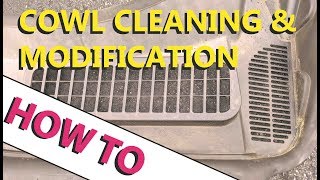
For the second-generation Ford Fusion and its platform-mate, the Lincoln MKZ, the P2802 code is uniquely and frequently tied to a known platform issue. While the code points to the Transmission Range Sensor, the actual root cause is very often water leaking into and corroding several key electrical connectors under the hood and in the cabin. This water intrusion is commonly caused by clogged cowl drains at the base 🎬 Watch: How to clean your cowl vents to prevent leaks of the windshield or clogged sunroof drains. Ford acknowledged this pattern in Technical Service Bulletin (TSB) #SSM 47790, which guides technicians to inspect these specific connectors before replacing any parts.
Diagnostic Flowchart
Tap your situation to follow the diagnostic path that matches what you're seeing on this vehicle.
Symptoms You May Notice
- Check Engine Light is on
- Vehicle will not start or has a no-crank condition
- Incorrect or no gear selection displayed on the dashboard
- Transmission may enter 'limp mode' (stuck in one gear)
- Harsh, erratic, or slipping gear changes
- Transmission warning light may be illuminated
- Flashing odometer or 'distance to empty' display
- Replacing the Transmission Range Sensor (TRS) without first inspecting the related wiring and connectors. On the Fusion and MKZ, the problem is much more likely to be corrosion from water intrusion, and a new sensor will not fix the issue.
Most Likely Causes

- Water Intrusion and Corrosion in Electrical Connectors 🔴 High Probability As documented in Ford TSB #SSM 47790, the location and sealing of certain connectors make them susceptible to water damage. This is a well-known issue on this platform, often originating from clogged cowl drains below the windshield or clogged sunroof drains, which allows water to overflow and seep into wiring harnesses and connectors.
How to confirm: Visually inspect connectors C146, C1651, C1812, C168C, C1717, and C134 for signs of moisture, or white and green corrosion on the pins and wires. These connectors are located in various places, including under the hood near the firewall and behind the front bumper. A Reddit user with a 2015 Fusion confirmed a dealer found water in connector C134, located by the driver's side front bumper lamp, which caused multiple electrical issues.
Typical fix: Disconnect the battery. Carefully clean the connector pins and sockets with electrical contact cleaner and a small brush. Allow to dry completely, then apply dielectric grease to the seal before reconnecting. If corrosion is severe, the connector pigtail and damaged wires may need to be replaced. Motorcraft offers pigtail kits for these repairs.
Est. part cost: $15-$40 - Damaged Wiring Harness 🟡 Medium Probability The same water intrusion that corrodes connectors can also damage the wiring itself over time, causing wires to become brittle or break within the harness.
How to confirm: Perform a continuity test on the wires for the TRS 'B' circuit between the sensor connector and the PCM connector to check for opens or shorts. Visually inspect the harness for any signs of chafing, melting, or physical damage, especially in areas where water is known to collect.
Typical fix: Repair the specific damaged section of wire. If damage is extensive or multiple connectors are corroded, replacing the affected harness section with a pigtail like the Motorcraft WPT-1125 may be necessary.
Est. part cost: $10-$100 - Failed Transmission Range Sensor (TRS) ⚪ Low Probability
How to confirm: If the wiring and connectors are confirmed to be in good condition, test the sensor itself using a multimeter to check for correct resistance or voltage output at each gear position, according to the factory service manual. This should only be done after ruling out the more common wiring/connector issues.
Typical fix: Replace the Transmission Range Sensor. Note: On the 6F35 transmission, this sensor is typically an internal component mounted to the valve body, requiring removal of the transmission side pan for access.
Est. part cost: $40-$120
Rare But Worth Checking
- Faulty Powertrain Control Module (PCM): This is extremely rare. The PCM should only be suspected after all wiring, connectors, and the sensor itself have been thoroughly tested and proven to be good.
Diagnosis Steps
- Scan for all Diagnostic Trouble Codes (DTCs) to see if P2802 is accompanied by other related codes listed in TSB #SSM 47790.
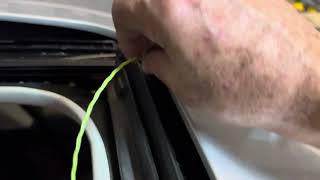
- Prioritize checking for the source of water intrusion. Inspect and clean the cowl drains at the base of the windshield and, if equipped, the sunroof drains. 🎬 See this quick guide on clearing clogged sunroof drains These are the primary culprits for water getting to the connectors.
- Begin by locating and inspecting the electrical connectors mentioned in the TSB: C146, C1651, C1812, C168C, C1717, and C134. Look for any evidence of water entry, corrosion (green or white powder), or backed-out pins. A Reddit user reported their issue was fixed by cleaning connector C134, found near the driver's side front bumper.
- If corrosion is found, disconnect the vehicle's battery.
- Clean the affected connector(s) thoroughly using a dedicated electrical contact cleaner and a small nylon brush. Ensure all residue is removed from both the male and female sides of the connector.
- Allow the connector to air dry completely. Apply a small amount of dielectric grease to the connector's weather seal to prevent future moisture intrusion.
- If a connector or its pins are too corroded to be cleaned, replace the connector pigtail. Motorcraft offers various pigtail kits for this purpose.
- Reconnect the connector(s) and the battery. Clear the DTCs and test drive the vehicle to see if the code returns.
- If the connectors are clean and the code persists, test the TRS 'B' circuit wiring for continuity and for a short to ground between the sensor and the PCM.
- If wiring is confirmed to be good, test the Transmission Range Sensor's internal resistance or voltage output to confirm it is functioning correctly.
- Only consider a PCM fault if all other possibilities have been exhausted.
Parts You'll Likely Need

- Electrical Contact Cleaner — Required for cleaning corrosion from the affected electrical connectors, which is the most common cause of this code.
Trusted brands: CRC, WD-40 Specialist
Aftermarket price range: $8-$15 - Dielectric Grease — Applied to connector seals after cleaning to prevent future water intrusion.
Trusted brands: Permatex, Motorcraft
Aftermarket price range: $5-$15 - Connector Pigtail
(OEM #e.g., WPT-1125, CU2Z14S411CA (WPT-1250))— If a connector is too damaged by corrosion, the pigtail must be replaced. The specific part number depends on which connector is damaged.
Trusted brands: Motorcraft
OEM price range: $30-$75
Aftermarket price range: $20-$50 - Transmission Range Sensor
(OEM #WD893JX)— This part is replaced if it is proven to be faulty after wiring and connector issues have been ruled out. It is typically internal to the 6F35 transmission.
Trusted brands: Motorcraft, Standard Motor Products
OEM price range: $80-$150
Aftermarket price range: $40-$90
Related Codes That Often Appear With This One
- P2800 — This code for 'Transmission Range Sensor 'A' Circuit Low' often appears with P2802 because the same water-damaged connector can affect multiple sensor circuits.
- P0707 — Another code for 'Transmission Range Sensor 'A' Circuit Low Input', indicating the same underlying fault.
- P26C3, P26CA, P26D0, U019F, U0284 — These codes are also listed in TSB #SSM 47790 as being caused by the same water intrusion issue in the electrical connectors.
Technical Service Bulletins (TSBs) & Recalls
- SSM 47790: States that multiple drivability or electrical concerns, with DTCs including P2802, may be caused by water entry or corrosion in specific connectors (C146, C1651, C1812, C168C, C1717, C134)
Platform-Specific Known Issues
- A primary issue for the 2013-2019 Fusion is water intrusion into various electrical connectors, as documented by Ford in TSB #SSM 47790. This bulletin specifically lists P2802 as a potential resulting DTC and points to connectors C146, C1651, C1812, C168C, C1717, and C134 as the inspection points.
- The root cause of the water leak is often clogged cowl drains located at the base of the windshield, which get blocked with leaves and debris. When clogged, rainwater overflows into the engine bay and onto wiring harnesses instead of draining away safely.
- Clogged sunroof drains are another common source of water intrusion that can affect interior connectors and modules, leading to a wide range of electrical problems.
Mechanic-Grade Diagnostic Values
- Continuity of TRS wiring — expected: Approx. 0 Ohms. Failure: High or infinite resistance (OL) indicates an open wire.
- TRS wiring short to ground — expected: >30 MOhms. Failure: A low resistance reading indicates a short circuit to ground.
- 6F35 Transmission Shift Solenoid Resistance (SSA, SSB, SSC, SSD, TCC, LPC) — expected: 4.00 - 5.89 Ohms at 68-86°F (20-30°C). Resistance varies with temperature.. Failure: Readings outside the specified range for a given temperature indicate a faulty solenoid.
Scan Tool Commands That Help
- Ford IDS, FORScan, high-end scanners (Snap-on, Autel): Clear Transmission Adaptive Tables — After replacing a transmission component like the valve body, lead frame, or the entire transmission, or to resolve erratic shifting issues. This resets the transmission's learned shift strategy.
- Ford IDS, FORScan: Transmission Characterization Update / Solenoid Body Strategy Update — Required when replacing the solenoid body/lead frame assembly. The new part comes with a specific strategy code that must be programmed into the PCM/TCM for correct operation.
- No Tool Required: Manual TCM Relearn Procedure — Can be attempted to resolve minor shifting issues after a battery disconnect or clearing codes. Involves a specific sequence of key cycles and gear shifts to reset adaptations.
Wiring & Ground Locations

- C134 — Located near the driver's side front bumper lamp, behind the bumper cover.. This is one of the primary connectors cited in TSB SSM 47790. Its location makes it vulnerable to water splashing up from the road or from overflowing drains, leading to corrosion that causes the P2802 code.
- C146 — Located in the engine bay, in front of the driver-side tire. Access requires pulling back the wheel well liner.. Another key connector from TSB SSM 47790. Described by technicians as being in a 'poorly placed' location, highly exposed to environmental moisture and corrosion.
- G101 / G107 / G108 — Main engine compartment grounds. G101/G107 are on the left front of the engine compartment. G108 is on the left rear of the engine compartment.. A poor ground connection at these points can cause floating voltages and erratic signals for multiple sensors, including the TRS, potentially triggering a 'Circuit Low' code.
- Frame Ground under Battery Tray — On the vehicle frame, directly underneath the battery tray.. This is a major chassis ground point. Corrosion here can lead to widespread electrical issues, including transmission sensor faults.
Real Owner Repair Stories
- Reddit user in r/fordfusion (2015 Ford Fusion) — Loss of power to A/C, passenger windows, passenger mirror, and external temperature display. Multiple DTCs present.
❌ Tried (didn't work) Initial diagnosis was inconclusive without checking specific connectors.
✅ What actually fixed it A Ford dealer performed a diagnostic and found water in connector C134, located by the driver's side front bumper lamp. The technician cleaned the connector with compressed air and applied dielectric grease, which resolved all electrical issues. The final cost was $150.
When the Usual Fixes Don't Work
- While the most common cause of P2802 is external connector corrosion, if the Transmission Range Sensor (TRS) itself is diagnosed as the failure point, the repair is significantly more complex than Pass 2 implies. On the 6F35 transmission, the sensor is an internal component mounted on the valve body's lead frame. This means a technician cannot simply unbolt an old sensor from the outside of the transmission case. The repair requires draining the transmission fluid, removing the side pan, and potentially removing the valve body to access and replace the lead frame assembly where the sensor resides. This elevates the repair from a simple DIY task to a job requiring significant mechanical skill and knowledge of transmission repair.
OEM Part Supersession History
N/A→N/A— Component Integration
Heads up: For the 6-speed 6F35 automatic transmission used in this Fusion, the Transmission Range Sensor (TRS) is not typically serviced as a separate, external part. It is integrated into the transmission's internal lead frame (or molded lead frame), which also contains the transmission control module (TCM) and speed sensors. If the TRS fails, the entire lead frame assembly often needs to be replaced.
Helpful Videos
Used OEM Parts in Stock

New Aftermarket Parts Available


The information in this article is provided for general reference and educational purposes only. Vehicle specifications, procedures, and part compatibility can vary by production date, trim level, and region. Always consult your vehicle's factory service manual and verify part numbers before purchasing or performing repairs. Safety-critical components such as airbags, seat belts, and braking systems should be installed by a qualified professional.
- Ford FUSION:
- 🎬 Helpful Videos
- 🛍️ Shop This Part
- What's Unique About the 2013-2019 Ford FUSION
- Diagnostic Flowchart
- Symptoms You May Notice
- Most Likely Causes
- Rare But Worth Checking
- Diagnosis Steps
- Parts You'll Likely Need
- Related Codes That Often Appear With This One
- Technical Service Bulletins (TSBs) & Recalls
- Platform-Specific Known Issues
- Mechanic-Grade Diagnostic Values
- Scan Tool Commands That Help
- Wiring & Ground Locations
- Real Owner Repair Stories
- When the Usual Fixes Don't Work
- OEM Part Supersession History
- 🎟️ Get 5% Off