

P2800 on 2012-2019 Hyundai Accent: Transmission Range Sensor Failure Causes and Fixes
On a 2012-2019 Hyundai Accent, code P2800 almost always means the transmission range sensor (inhibitor switch) has failed due to moisture or corrosion. This can cause a no-start condition or the transmission to get stuck in gear. Replacing the sensor is the most common fix, with the part costing around $40-$120. The sensor is a well-documented failure point, especially on the 2012-2017 (RB) generation.
- P2800 on a Hyundai Accent is almost always a problem with the transmission range sensor (inhibitor switch) or its wiring.
- The most common symptoms are a no-start condition, a blank gear display, and the transmission going into 'limp mode'.
- The root cause is typically moisture and corrosion due to the sensor's exposed location on the outside of the transmission.
- Before replacing any parts, visually inspect the sensor's connector for corrosion, as cleaning it may solve the problem.
- When replacing the sensor, proper alignment is critical to ensure the car starts and shifts correctly.
What's Unique About the 2012-2019 Hyundai Accent
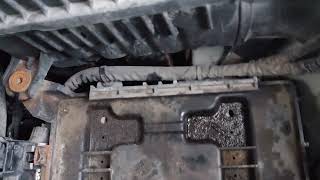
On the Hyundai Accent, particularly the fourth generation (RB, 2012-2017), the transmission range sensor is a well-documented weak point, confirmed by multiple Technical Service Bulletins (TSBs) and countless owner complaints. The sensor is mounted externally on the front of the transmission case, under the battery tray, making it highly vulnerable to water, road salt, and debris. This direct exposure is the primary reason for the high failure rate, as moisture gets inside the switch or corrodes the electrical connector pins (often turning them green), leading to the P2800 code and its associated no-start or drivability problems.
Generation note: The 2012-2019 range covers the fourth generation (RB, 2012-2017) and the start of the fifth generation (HC, 2018-2019). The transmission range sensor is a very common failure on the RB generation, with specific TSBs issued. While the HC generation can still experience this code, the part numbers may differ, and it's crucial to verify the correct part with the vehicle's VIN. The issue is shared with its platform-mate, the Kia Rio.
Symptoms You May Notice
- Check Engine Light (MIL) is illuminated.
- Engine will not crank or start, or only starts in Neutral.
- Transmission is stuck in one gear (fail-safe or 'limp mode'), often 3rd or 4th gear.
- Gear position indicator on the dashboard is blank, incorrect, or flickers.
- Harsh or erratic shifting between gears.
- Reverse lights do not turn on when in Reverse.
- Delayed engagement when shifting from Park to Drive or Reverse.
- Replacing the PCM/TCM when the actual fault is in the much cheaper sensor or its wiring.
- Replacing the starter motor because of a no-crank symptom, without first checking for transmission-related codes like P2800 or P0705.
- Replacing the battery or alternator when the no-start is caused by the inhibitor switch preventing the starter from engaging. 🎬 Watch: Quick fix for a Hyundai that won't crank
Most Likely Causes
- Failed Transmission Range Sensor (Inhibitor Switch) 🔴 High Probability The sensor is mounted externally on the transmission, where it is exposed to moisture, road salt, and debris, leading to internal corrosion and electrical failure. This is a known issue acknowledged by Hyundai TSBs and widely discussed by owners.
How to confirm: Use a scan tool to monitor the transmission range sensor live data. If the displayed gear does not match the shifter position, or if the signal is erratic/invalid as you shift, the sensor is likely bad. You can also test the sensor's internal resistance and voltage output across its pins for each gear position using a multimeter and compare it to the service manual specifications.
Typical fix: Replace the transmission range sensor and ensure the new sensor is properly aligned. 🎬 See this step-by-step range sensor replacement guide The new sensor is typically installed with the transmission in Neutral, aligning the marks on the sensor body with the lever.
Est. part cost: $40-$120 - Corroded Connector or Damaged Wiring 🟡 Medium Probability The same environmental exposure that damages the sensor also affects its electrical connector and wiring harness. Water intrusion can cause the connector pins to corrode (often showing green or white powder), leading to a poor connection or a short circuit.
How to confirm: Unplug the sensor and visually inspect both the sensor's pins and the harness connector for any signs of corrosion, bent pins, or damaged wires. Perform a 'wiggle test' on the connector while monitoring sensor data on a scan tool to see if the signal fluctuates, which indicates a poor connection.
Typical fix: Clean the connector terminals with an electrical contact cleaner. If corrosion is severe or wires are broken, the connector pigtail or a section of the harness may need to be replaced. In some cases, dielectric grease is applied to the new connector to prevent future moisture intrusion.
Est. part cost: $5-$50 - Misadjusted Sensor or Shift Linkage ⚪ Low Probability
How to confirm: With the vehicle in Neutral, check if the alignment marks on the sensor body line up correctly with the mark on the manual control lever. If they do not, the sensor's reported position will not match the actual gear position.
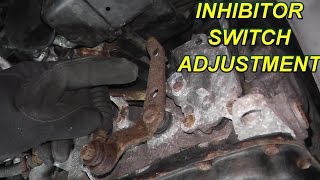
Typical fix: Loosen the sensor's mounting bolts and rotate it until the alignment marks are correctly positioned, then retighten the bolts. This is a critical step after replacing the sensor.
Est. part cost: $0
Rare But Worth Checking
- Faulty Powertrain Control Module (PCM) or Transmission Control Module (TCM): This is very rare. This should only be considered after the sensor, wiring, and connections have been thoroughly tested and confirmed to be good.
Diagnosis Steps
- Connect an OBD-II scanner and confirm the presence of the P2800 code. Note any other related codes, especially P0705 or P0708.
- Attempt to start the vehicle in both Park and Neutral. If it only starts in Neutral, this strongly points to the inhibitor switch circuit.
- Locate the transmission range sensor on the front of the transmission case. This requires removing the engine cover, air intake snorkel, air filter box, and battery/battery tray.
- Visually inspect the sensor's electrical connector and nearby wiring for obvious signs of corrosion (green/white powder), moisture, or physical damage.
- With the key on and engine off, use a scan tool to monitor the live data for the transmission range sensor. Shift the lever through all positions (P, R, N, D) and verify that the scanner displays the correct gear position for each selection.
- If the data is incorrect or erratic, the sensor is the primary suspect. If the data is good, the problem may be intermittent or within the PCM.
- If a scan tool is not available, you can perform a voltage and resistance test on the sensor's pins using a multimeter, following the specifications in the vehicle's service manual.
- If the sensor and wiring test good, check the alignment of the sensor. Ensure the marks align when the transmission is in Neutral.
- If all tests pass, the issue may lie with the Transmission Control Module (TCM) or Powertrain Control Module (PCM), though this is uncommon.
Parts You'll Likely Need
- Transmission Range Sensor / Inhibitor Switch
(OEM #42700-26700 (supersedes 42700-26500, 42700-26000))— This is the component that fails most frequently due to its exposed location and susceptibility to moisture, causing the P2800 code.
Trusted brands: Hyundai (OEM), Dorman, Standard Motor Products (SMP)
OEM price range: $80-$150
Aftermarket price range: $40-$90
Related Codes That Often Appear With This One
- P0705 — P0705 is a general 'Transmission Range Sensor Circuit Malfunction'. P2800 is more specific to the 'B' circuit. They often appear together as they point to the same component's failure.
- P0708 — This code means 'Transmission Range Sensor Circuit High Input'. It can be triggered along with P2800 if the sensor fails in a way that sends an abnormally high voltage signal.
Technical Service Bulletins (TSBs) & Recalls
- 15-AT-001: Addresses intermittent no-crank/no-start conditions and MIL illumination related to the range sensor switch on 2012 Accents.
- 18-AT-004: Provides diagnostic procedures for harsh/delayed shifts which can be related to range sensor faults on 2012-2017 Accents.
Platform-Specific Known Issues
- Hyundai issued Technical Service Bulletin (TSB) 15-AT-001 for the 2012 Accent (and other models) related to intermittent no-start conditions caused by the range sensor.
- TSB 18-AT-004 addresses harsh and/or delayed shifts on a wide range of Hyundai vehicles including the 2012-2017 Accent, which can be a symptom related to incorrect gear position information.
- Owner forums are filled with accounts of this specific failure. A common story involves the car failing to start in Park, but starting successfully in Neutral, followed by the appearance of the P2800 code.
Mechanic-Grade Diagnostic Values
- Inhibitor Switch Power Supply Voltage — expected: Battery Voltage (approx. 12V). Failure: No voltage indicates a blown fuse or wiring issue before the switch.
- Inhibitor Switch Signal Voltage (per gear) — expected: Approximately 12V on the specific signal wire for the selected gear (e.g., Signal 1 for Park, Signal 2 for Reverse).. Failure: No voltage or incorrect voltage on the signal wire for a selected gear points to an internal switch failure.
- Inhibitor Switch Continuity Test — expected: Continuity (a beep on a multimeter) between specific pins for each gear position as defined by the service manual.. Failure: No continuity on a specified pin combination for a given gear indicates an internal open circuit in the switch.
Scan Tool Commands That Help
- Hyundai GDS (Global Diagnostic System): DTC Analysis — To retrieve Hyundai-specific fault codes and access linked repair procedures and relevant TSBs directly from the scan tool.
- Hyundai GDS (Global Diagnostic System): Current Data / Live Data — To monitor the gear position signal reported by the inhibitor switch in real-time while shifting. This is the primary method to confirm if the sensor's output matches the shifter's physical position.
- Hyundai GDS (Global Diagnostic System): Flight Record — For intermittent faults, this function allows recording sensor data during a test drive to capture the exact moment the fault occurs, which can then be analyzed later.
Wiring & Ground Locations
- Inhibitor Switch Connector — On the front of the transmission case, located underneath the battery and battery tray.. This is the primary connection point for the sensor. It is highly susceptible to moisture and corrosion, which can cause the P2800 code even if the sensor itself is functional. Visual inspection here is critical.
- Chassis Ground — A factory ground point on the vehicle's bare metal frame, often a dedicated stud or bolt near the component.. A poor ground connection for the sensor circuit can cause erratic voltage readings, leading to fault codes. While testing, the multimeter's negative lead should be connected to a known-good chassis ground.
Real Owner Repair Stories
- AliExpress Reviewer (2014 Hyundai Elantra (uses same part 42700-26700)) — Car would not start unless the gearshift was wiggled into Neutral. Dashboard would flash a 'Transmission Error' message. OBD-II code P0705 was present.
❌ Tried (didn't work) Three separate dealership repair attempts costing over $600 each.
✅ What actually fixed it The owner replaced the inhibitor switch (part number 42700-26700) themselves, which permanently resolved the starting issue and error codes.
OEM Part Supersession History
42700-26000, 42700-26500→42700-26700— Part redesign and revision by Hyundai/Kia to improve reliability and address the high failure rate of the original design due to moisture intrusion.
Heads up: The updated part 42700-26700 may have a different physical appearance (e.g., case color or shape) than the original part being replaced, but the mounting points and electrical connector are identical for a direct fit. It is strongly recommended to use the newest part number and avoid old stock of the superseded numbers.
Model Year Variations Within This Range
- 2012-2017 (RB Generation) vs. 2018-2019 (HC/YC Generation): While the failure is common to both generations which share a similar 6-speed automatic transmission, the original part numbers may have varied. However, the current, updated replacement part, 42700-26700, is specified for the entire 2012-2019 range, consolidating previous part numbers. Some aftermarket listings for the 2018-2019 Accent with a CVT transmission mention a different part (42700-02800), so verifying the part against the VIN is critical for later model years.
Diagnostic Flowchart
Other Known Issues on This Vehicle
Issues unrelated to this code that are worth knowing about as an owner of this generation:
- Carbon Buildup on Intake Valves (GDI Engine) 🟠 Medium — Common on Gasoline Direct Injection (GDI) engines, typically becoming noticeable after 60,000-100,000 miles. Can cause misfires, rough idle, and reduced performance.
- Ignition Coil Failure 🟠 Medium — A frequently reported issue causing engine misfires, rough idling, and hesitation. Often occurs between 30,000 and 60,000 miles.
- Faulty Steering Column / Coupler 🔴 High — A flexible steering coupler can degrade, causing a clicking or clunking noise in the steering wheel. In some cases, steering column bolts were improperly tightened from the factory. (Ref: Recall 226 / NHTSA 22V-311)
- ABS Module Failure 🔴 High — The ABS module may leak brake fluid internally, causing an electrical short that can lead to an engine compartment fire, even when parked. Affects a wide range of Hyundai models. (Ref: Recall 195 / NHTSA 20V-520)
- Engine Bearing Wear (Knock Sensor Detection System) 🔴 High — Premature engine bearing wear can occur. Hyundai issued a service campaign to update the ECU software to better detect abnormal bearing noise (via knock sensor) and put the engine in a protection mode (limp mode) to prevent catastrophic failure. (Ref: Service Campaign 966 / TSB 21-01-023H-2)
Used vs. New Parts: Buying Guide for This Vehicle
When a used part is the smart pick: A used part is generally not recommended for this specific failure. The part is inexpensive new, and the failure mode is due to wear and environmental exposure. A used part carries a high risk of failing soon for the same reason the original part did.
Donor-vehicle mileage cap: roughly under 30000 miles for the part to have meaningful remaining life.
What to inspect on the donor part:
- Verify the part is from a vehicle with very low mileage.
- Inspect the electrical connector pins for any signs of green or white corrosion.
- Ensure the plastic housing is not cracked or showing signs of heat damage.
- If possible, confirm the donor vehicle was from a dry, salt-free climate.
OEM-only on this vehicle (don't cheap out):
- Transmission Range Sensor / Inhibitor Switch
Aftermarket brands forum-validated for this vehicle:
- Standard Motor Products (SMP)
- Dorman
Brands owners have reported issues with on this vehicle:
- Unbranded, no-name parts from online marketplaces should be avoided due to inconsistent quality control. Given the critical function of this switch (allowing the car to start and shift), using a reputable brand is important.
Real Owner Stories
Aggregated from forums and TSBs cited above. Mileages and costs reflect what owners reported in those sources.
2012 Hyundai Accent
Symptoms: The car would not start while in Park, but would start successfully when shifted into Neutral. Shortly after, the P2800 code appeared.
What fixed it: Replacement of the inhibitor switch (transmission range sensor).
Source hint: vehicle_specific_issues / hyundai-forums.com thread '2012 accent wont start no crank no click'
Related OBD-II Codes
Frequently Asked Questions
My 2012 Hyundai Accent won't start in Park but starts fine in Neutral. Is there a TSB for this?
I'm experiencing harsh and delayed shifts in my 2015 Accent. Could this be related to the P2800 code?
Where is the transmission range sensor located on the 2012-2019 Accent?
Why does the inhibitor switch fail so often on this specific vehicle?
Can I use a used range sensor from a salvage yard to fix my P2800 code?
Is there a specific way to install the new sensor to ensure the P2800 code doesn't return?
Helpful Videos

Used OEM Parts in Stock

New Aftermarket Parts Available


The information in this article is provided for general reference and educational purposes only. Vehicle specifications, procedures, and part compatibility can vary by production date, trim level, and region. Always consult your vehicle's factory service manual and verify part numbers before purchasing or performing repairs. Safety-critical components such as airbags, seat belts, and braking systems should be installed by a qualified professional.
- Hyundai Accent:
- 🎬 Helpful Videos
- 🛍️ Shop This Part
- What's Unique About the 2012-2019 Hyundai Accent
- Symptoms You May Notice
- Most Likely Causes
- Rare But Worth Checking
- Diagnosis Steps
- Parts You'll Likely Need
- Related Codes That Often Appear With This One
- Technical Service Bulletins (TSBs) & Recalls
- Platform-Specific Known Issues
- Mechanic-Grade Diagnostic Values
- Scan Tool Commands That Help
- Wiring & Ground Locations
- Real Owner Repair Stories
- OEM Part Supersession History
- Model Year Variations Within This Range
- Diagnostic Flowchart
- Other Known Issues on This Vehicle
- Used vs. New Parts: Buying Guide for This Vehicle
- Real Owner Stories
- 2012 Hyundai Accent
- Related OBD-II Codes
- Frequently Asked Questions
- 🎟️ Get 5% Off