

P2800 on 2013-2019 Ford Fusion: Transmission Range Sensor 'B' Circuit Causes and Fixes
On a 2013-2019 Ford Fusion, code P2800 usually points to a problem with the Transmission Range Sensor 'B' circuit. Before replacing the sensor, inspect specific electrical connectors near the transmission for water intrusion or corrosion, a known issue covered by Ford's Technical Service Bulletin #SSM 47790, especially on 2.0L Hybrid models. Also, check for a common failure of the shift cable bushing at the transmission, which can cause the same code.
- P2800 on a 2013-2019 Fusion indicates a fault in the Transmission Range Sensor 'B' circuit.
- Before buying any parts, inspect the electrical connectors mentioned in TSB #SSM 47790 for water damage, as this is a known and highly probable cause.
- Common symptoms include a no-start condition, incorrect gear display, and the transmission entering 'limp mode'.
- The fix is often inexpensive, requiring only cleaning and sealing connectors. If that fails, the Transmission Range Sensor is the next part to replace.
What's Unique About the 2013-2019 Ford FUSION

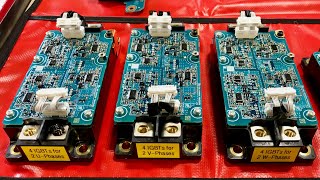
For the second-generation Ford Fusion, the P2800 code is frequently linked to two specific, documented problems. First, Ford issued a Technical Service Bulletin (TSB #SSM 47790) acknowledging that water entry and corrosion in several key electrical connectors can cause this and other related electrical faults, an issue most relevant to 2.0L HEV/PHEV models. 🎬 Learn more about the hybrid inverter and transmission control module. This means the root cause is often not the sensor itself, but a poor connection. Second, a common failure point is the shifter cable bushing where it attaches to the transmission, which can degrade and break, causing a mismatch between the shifter position and the sensor's reading.
Diagnostic Flowchart
Tap your situation to follow the diagnostic path that matches what you're seeing on this vehicle.
Generation note: The 2013-2019 year range covers the second generation of the Ford Fusion (2013-2020). The issues, particularly the TSB regarding water intrusion, are specific to this generation and its platform mates, the Lincoln MKZ and Ford C-Max. The shifter cable bushing issue is also prevalent in this generation.
Symptoms You May Notice
- Check Engine Light is on
- Vehicle may not start, or only starts in Neutral
- Incorrect gear position displayed on the dashboard
- Transmission may enter "limp mode," limiting speed and engine RPM
- Harsh or delayed transmission engagement
- Backup lights may not work
- Flashing wrench icon on the instrument cluster
- Shifter moves but the vehicle does not change gears
- Replacing the Transmission Range Sensor without first checking the connectors and wiring for corrosion, as specified in TSB #SSM 47790.
- Diagnosing an electrical fault when the actual cause is a failed mechanical shifter cable bushing at the transmission.
Most Likely Causes


- Water Intrusion / Corrosion in Electrical Connectors 🔴 High Probability Ford TSB #SSM 47790 specifically calls out this issue on the Fusion, identifying connectors C146, C1651, C1812, C168C, C1717, and C134 as being susceptible to water entry and corrosion, particularly on 2.0L HEV/PHEV models.
How to confirm: Visually inspect the listed connectors for signs of moisture, green or white crust (corrosion), or backed-out pins. A Fusion owner reported success after a dealer found water in connector C134, which they noted was located 'by the lamp behind the front bumper, driver side'. Other connectors are located around the transmission and engine bay.
Typical fix: Disconnect the battery, unplug the affected connector(s), clean the pins and terminals thoroughly with an electrical contact cleaner, let dry, apply dielectric grease to seal out moisture, and reconnect securely. One owner reported a dealer charged $150 for this service.
Est. part cost: $5-$20 - Failed Shifter Cable Bushing 🔴 High Probability The plastic bushing that connects the shifter cable to the transmission lever is a known failure point due to heat and age, causing it to crumble. Ford issued recalls for this on some models. When it fails, the cable detaches from the lever, so moving the shifter in the cabin does not change the gear at the transmission, leading to a mismatch that can trigger P2800.
How to confirm: Locate the shift lever on top of the transmission. Have a helper move the gear shifter inside the car. If the lever on the transmission does not move, or if you can see the cable end is detached from the lever pin, the bushing has failed.
Typical fix: Replace the bushing. The OEM replacement part is inexpensive. The old bushing remnants are removed, and the new one is pressed onto the transmission lever. Soaking the new bushing in hot water for a minute can make it more pliable for installation. Ford also provides a protective cap (DG9Z7S004A) to install over the new bushing.
Est. part cost: $5-$15 - Faulty Transmission Range Sensor (TRS) 🟡 Medium Probability The sensor itself can fail from internal wear or electronic failure over time, which is common across many vehicles.
How to confirm: After confirming the wiring and shift linkage are good, use a scan tool to monitor the TRS 'B' circuit voltage while moving the shifter. If the voltage is erratic, doesn't change, or is out of specification, the sensor is likely bad.
Typical fix: Replace the Transmission Range Sensor. On Fusions, it is typically located on the outside of the transmission case, near where the shift linkage attaches.
Est. part cost: $40-$120 - Damaged Wiring Harness ⚪ Low Probability
How to confirm: Perform a continuity and resistance check on the wires between the TRS connector and the TCM/PCM connector. Look for any open circuits (infinite resistance) or shorts to ground. Check for chafing or melting, especially where the harness might contact the exhaust.
Typical fix: Repair or replace the damaged section of the wiring harness. This may involve soldering in a new wire or replacing a connector pigtail.
Est. part cost: $10-$50
Rare But Worth Checking
- Faulty Powertrain or Transmission Control Module (PCM/TCM): This is the least likely cause and should only be considered after all wiring and sensor issues have been definitively ruled out. A faulty module will fail to interpret a known-good signal from the sensor.
Diagnosis Steps
- Scan for Codes: Use an OBD-II scanner to confirm P2800 and check for any other related transmission or communication codes. The OBD-II port is located under the dashboard in the driver's side footwell.
- Inspect Shifter Cable Bushing: Visually inspect the shifter cable connection on top of the transmission. Have a helper move the shifter; if the cable end is detached from the transmission lever, the bushing has failed and must be replaced. This is a very common and simple fix.
- Inspect TSB-Mentioned Connectors: If the linkage is intact, follow Ford TSB #SSM 47790. Locate and inspect connectors C146, C1651, C1812, C168C, C1717, and C134 for water damage or corrosion. Start with C134, located 'by the lamp behind the front bumper, driver side'.
- Clean and Seal Connectors: If corrosion is found, disconnect the battery, clean the connector terminals with electrical contact cleaner, let it dry, apply dielectric grease, and reconnect.
- Clear Codes and Test Drive: Clear the codes and drive the vehicle to see if the P2800 code returns. If it does not, the issue is resolved.
- Test the TRS Circuit: If the code returns, use a multimeter to check for the correct reference voltage (usually 5V or 12V) at the TRS connector. Test the signal wire to ensure voltage changes smoothly as you move the shifter. Expected values can range from ~0.5V to ~4.5V.
- Replace the Transmission Range Sensor: If the wiring and linkage are confirmed to be good but the sensor signal is faulty, replace the Transmission Range Sensor (TRS).
- Check for PCM/TCM Issues: If a new sensor and verified wiring do not resolve the code, the final step is to investigate a potential fault within the PCM or TCM, which may require professional diagnosis.
Parts You'll Likely Need

- Electrical Contact Cleaner & Dielectric Grease — This is the first line of defense for the water intrusion issue, used to clean and protect the corroded connectors identified in the Ford TSB.
Trusted brands: CRC, Permatex, Motorcraft
OEM price range: $15-$30
Aftermarket price range: $10-$20 - Transmission Shifter Cable Bushing
(OEM #KV6Z-7K340-A)— A very common failure point. This small plastic part disintegrates, detaching the shift cable from the transmission and causing this code. It is an inexpensive part and a frequent fix.
Trusted brands: Motorcraft, Dorman
OEM price range: $5-$10
Aftermarket price range: $5-$15 - Transmission Range Sensor
(OEM #JM5Z-7H557-A (Verify with VIN))— If cleaning connectors and checking the linkage doesn't solve the issue, the sensor itself is the next most likely component to have failed.
Trusted brands: Motorcraft, Delphi, Dorman
OEM price range: $140-$220
Aftermarket price range: $40-$120
Related Codes That Often Appear With This One
- P2802 — This code for 'Transmission Range Sensor B Circuit Low' is explicitly mentioned in TSB #SSM 47790 as appearing with P2800.
- P0707 — This code for 'Transmission Range Sensor A Circuit Low' can appear alongside P2800, suggesting a problem affecting multiple sensor circuits, reinforcing the likelihood of a connector or wiring issue.
- U019F — This is a communication code. TSB #SSM 47790 lists it with P2800 as a common result of water intrusion in the electrical connectors.
- U0284 — Another communication code mentioned in TSB #SSM 47790 that can be triggered by the same water intrusion issue.
Technical Service Bulletins (TSBs) & Recalls
- SSM 47790: Addresses multiple drivability or electrical concerns, including DTC P2800, caused by water entry or corrosion in specific electrical connectors on 2013-2019 Ford Fusion and Lincoln MKZ models, and 2013-2018 Ford C-Max models.
Platform-Specific Known Issues
- TSB SSM 47790: Water Intrusion in Connectors: A known issue documented in Ford Technical Service Bulletin #SSM 47790 points to water intrusion and corrosion in various electrical connectors (C146, C1651, C1812, C168C, C1717, C134) as a primary cause for P2800. This TSB specifically applies to 2013-2019 Fusion/MKZ and 2013-2018 C-Max vehicles with the 2.0L HEV/PHEV engine.
Mechanic-Grade Diagnostic Values
- TRS Signal Wire Voltage (Live Data) — expected: Smoothly transition from ~0.5V to ~4.5V as the shifter moves from Park to Drive.. Failure: Voltage is stuck, erratic, jumps, or reads 'Invalid' or 'Fault' on the scan tool.
- TRS Reference Voltage at Connector — expected: Steady 5V or 12V with key on, engine off.. Failure: Voltage is low or absent, indicating a wiring or PCM/TCM supply issue.
- TRS Circuit Resistance to Ground — expected: Greater than 10,000 ohms (>10 kΩ).. Failure: Resistance less than 10,000 ohms indicates a short to ground in the wiring harness.
- TRS Hall-Effect Sensor PIDs (Scan Tool) — expected: Observe PIDs for Duty Cycle (TR_DC) and Frequency (TR_FREQ) for smooth changes when shifting.. Failure: PID values are out of range, intermittent, or do not correspond to the selected gear.
Scan Tool Commands That Help
- Ford IDS / High-End Bi-Directional Scanner: Read PCM/TCM Input Status or Transmission Range Sensor Test — Use this command to directly query the control module's status for the TRS input. If the module reports 'No Signal' even when voltage is confirmed at the sensor, it points towards a module fault.
- Ford IDS / High-End Bi-Directional Scanner: Live Data Monitoring of PIDs: TR_DC and TR_FREQ — For Hall-effect type sensors, monitoring the Duty Cycle and Frequency PIDs while wiggling harnesses or driving can reveal intermittent circuit issues that a simple voltage test might miss.
Wiring & Ground Locations
- C134 — By the lamp behind the front bumper on the driver's side.. This is one of the primary connectors cited in TSB #SSM 47790 for water intrusion and has been confirmed by owners as a source of the problem.
- C146 — A harness connector related to the Power Steering Control Module (PSCM) circuit.. Also cited in TSB #SSM 47790. Its location in a shared harness means corrosion here can affect multiple systems, including transmission sensor signals.
- G101 / G104 — G101 is at the left front of the engine compartment; G104 is at the right side of the engine compartment.. These are major chassis ground points for the engine bay. A corroded or loose ground here can cause floating voltages and erratic behavior in multiple sensors, including the TRS.
- ECU/PCM Connectors — Located in the engine bay, typically near the firewall, with three large multi-pin connectors.. The TRS wiring harness terminates at the PCM/TCM. A poor connection, bent pin, or corrosion at the module itself can cause this code after ruling out the sensor and harness path.
Real Owner Repair Stories
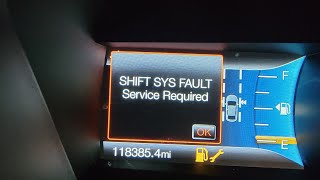
- YouTube channel 'fletch916' (2019 Ford Fusion 2.0L EcoBoost) — Car would not shift into any gear, 'Shift Sys Fault' message on dash.
❌ Tried (didn't work) Attempted to use a generic parts-store bushing which did not fit correctly.
✅ What actually fixed it The plastic shifter cable bushing on the transmission lever had disintegrated. The owner replaced it with an OEM Ford bushing (Part #KV6Z-7K340-A) and added the protective cap (Part #DG9Z7S004A). The repair took only a few minutes once the correct part was obtained.
When the Usual Fixes Don't Work
- In cases where the 'Shift Sys Fault' message appears and the vehicle will not shift out of Park or change gears, the root cause is frequently not the P2800 electrical circuit itself, but a complete mechanical failure of the shifter cable bushing. Owners report that after replacing the $5 bushing, all electrical faults and codes related to the range sensor cleared, proving the issue was mechanical, not electrical.
OEM Part Supersession History
JM5Z-7H557-A→JM5Z-7H557-B, JM5Z-7H557-AC— Part revision and improvement by the manufacturer.
Heads up: The parts are generally interchangeable for the specified transmissions (e.g., 8F35), but it is always best to verify the latest part number with a dealer using the vehicle's VIN.
Model Year Variations Within This Range
- 2013-2020: The Fusion used different automatic transmissions depending on the engine. The most common is the 6F35 (for 1.5L, 2.0L EcoBoost, 2.5L). Hybrid models use an e-CVT (HF35), and the 2.7L Sport model used the 6F55. While the code is generic, the TSB for water intrusion is most specific to the Hybrid models, whereas the shifter bushing failure is very common on models with the 6F35.
- 2017-2019: The Ford Fusion received a mid-cycle refresh for the 2017 model year, which included changes to the front fascia, rear taillights, and interior (including a rotary gear shift dial). This can lead to minor differences in wiring harness routing and connector access compared to the 2013-2016 models, though the fundamental causes of P2800 remain the same.
Helpful Videos

Used OEM Parts in Stock

New Aftermarket Parts Available



The information in this article is provided for general reference and educational purposes only. Vehicle specifications, procedures, and part compatibility can vary by production date, trim level, and region. Always consult your vehicle's factory service manual and verify part numbers before purchasing or performing repairs. Safety-critical components such as airbags, seat belts, and braking systems should be installed by a qualified professional.
- Ford FUSION:
- 🎬 Helpful Videos
- 🛍️ Shop This Part
- What's Unique About the 2013-2019 Ford FUSION
- Diagnostic Flowchart
- Symptoms You May Notice
- Most Likely Causes
- Rare But Worth Checking
- Diagnosis Steps
- Parts You'll Likely Need
- Related Codes That Often Appear With This One
- Technical Service Bulletins (TSBs) & Recalls
- Platform-Specific Known Issues
- Mechanic-Grade Diagnostic Values
- Scan Tool Commands That Help
- Wiring & Ground Locations
- Real Owner Repair Stories
- When the Usual Fixes Don't Work
- OEM Part Supersession History
- Model Year Variations Within This Range
- 🎟️ Get 5% Off