

P2764 on 2011-2018 Dodge Durango: TCC Solenoid and Torque Converter Guide
On a 2011-2018 Dodge Durango, code P2764 most often points to a faulty Torque Converter Clutch (TCC) solenoid located in the transmission valve body. However, a manufacturer TSB warns that if the solenoid is okay, the code indicates a failing torque converter. Diagnosis is key to avoiding unnecessary, expensive repairs. For models with the W5A580/NAG1 transmission, this failure is often tied to the conductor plate which houses the solenoids.
- P2764 on a Dodge Durango indicates a low voltage problem in the torque converter clutch solenoid circuit.
- The two most likely causes are a faulty TCC solenoid or a failed torque converter.
- A Chrysler/Dodge TSB (#9004009) is critical: if the solenoid checks out, the torque converter is the likely culprit.
- Do not immediately replace the torque converter without first testing the TCC solenoid, its wiring, and checking the transmission fluid condition.
- Due to the complexity and high cost of potential parts, professional diagnosis is strongly recommended.
What's Unique About the 2011-2018 Dodge DURANGO
The 2011-2018 Durango spans several transmission types, including the 5-speed W5A580 (NAG1), the 6-speed 65RFE, and the 8-speed ZF transmissions (phased in from 2014). The diagnostic approach varies significantly: * W5A580 (NAG1): Used in early V6 models, this Mercedes-designed transmission is known for failures of the conductor plate, which is a circuit board inside the transmission that holds all the solenoids. For P2764, the issue is often a failing TCC solenoid that is part of this conductor plate assembly. * 65RFE: Found in V8 models, this transmission uses a solenoid pack (a block containing multiple solenoids) mounted to the valve body. P2764 often points to a failure within this pack. * ZF 8-Speed: More advanced and generally more robust, but can still suffer from solenoid or valve body issues. While the provided NHTSA TSB #9004009 specifically mentions the 62TE transmission (not used in the Durango), it highlights a critical diagnostic pattern for Chrysler/Dodge vehicles: P2764 can be caused by either the TCC solenoid or the torque converter itself. This pattern holds true across the different transmissions used in the Durango, making it crucial for owners to understand that a simple solenoid swap might not be the final fix.
Diagnostic Flowchart
Tap your situation to follow the diagnostic path that matches what you're seeing on this vehicle.
Symptoms You May Notice
- Check Engine Light is on
- Vehicle shudders or vibrates, especially during light acceleration or when lock-up should occur (around 40-50 MPH).
- Transmission slipping (engine RPMs rise without a corresponding increase in speed).
- Harsh or erratic shifting.
- Engine may stall when coming to a stop, as the converter may fail to unlock.
- Reduced fuel economy.
- Transmission may enter "limp mode," limiting available gears and speed.
- Replacing only the TCC solenoid/pack when the actual failure is the torque converter. The TSB explicitly warns against this.
- Replacing the entire transmission when only a solenoid pack, conductor plate, wiring, or the torque converter was needed.
- Confusing transmission-related stalling with the well-known fuel pump relay failure on this platform, which was subject to a recall and can cause the engine to stall unexpectedly.
Most Likely Causes
- Faulty Torque Converter Clutch (TCC) Solenoid / Conductor Plate 🔴 High Probability On 65RFE transmissions, the solenoid is part of a block that can fail electronically or become clogged. On W5A580/NAG1 transmissions, the entire conductor plate which houses the solenoids is a very common failure point, with electrical traces cracking or sensors failing.
How to confirm: A technician can use a bidirectional scan tool to command the TCC solenoid on and off while monitoring voltage. The solenoid's resistance can also be tested with a multimeter to see if it's within spec. For the 65RFE, the pressure control solenoid should be around 4.9 Ohms. For the NAG1, the TCC lock-up solenoid should be around 2.7 Ohms when tested through the TCM connector.
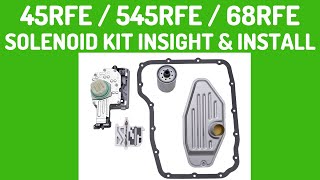
Typical fix: For 65RFE, replace the solenoid pack. 🎬 See how to install a new RFE solenoid block kit. For W5A580/NAG1, replace the entire conductor plate assembly 🎬 Watch: Step-by-step guide to replacing the NAG1 conductor plate. inside the transmission pan.
Est. part cost: $150-$450 - Failed Torque Converter 🟡 Medium Probability A manufacturer TSB specifically states that if the TCC solenoid tests okay, this code is indicative of torque converter failure. Internal seals or clutch material within the converter can fail, causing the hydraulic lock-up to fail and shed debris into the fluid.
How to confirm: This is typically diagnosed by exclusion. If the fluid, wiring, and TCC solenoid/conductor plate all test good, the torque converter is the next logical point of failure, per the TSB logic.
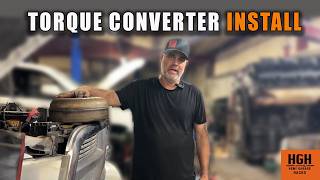
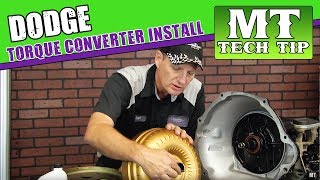
Typical fix: Replace the torque converter. This is a major repair that requires removing the entire transmission from the vehicle. 🎬 Watch: A professional walkthrough of the torque converter replacement process.
Est. part cost: $400-$1200 - Low or Contaminated Transmission Fluid 🟡 Medium Probability Leaks can develop over time, and fluid breaks down, accumulating clutch material and metal debris that can clog solenoid passages and cause erratic operation.
How to confirm: Check the transmission fluid level and condition. The fluid should be at the correct level, bright red (or its specified color), and free of metal shavings or a burnt smell.
Typical fix: Perform a transmission fluid and filter change. If a leak is present, the source (e.g., pan gasket, cooler line, electrical connector sleeve on NAG1) must be repaired.
Est. part cost: $150-$350 - Damaged Wiring or Connectors ⚪ Low Probability The wiring harness leading to the transmission is exposed to heat and road debris. On W5A580/NAG1 models, the 13-pin electrical connector's O-rings are a known failure point, allowing fluid to leak and wick up the harness, causing shorts.
How to confirm: Visually inspect the wiring harness from the TCM to the transmission case connector. Test for continuity and proper voltage at the solenoid connector. Specifically check the 13-pin connector on NAG1 transmissions for any signs of fluid contamination.
Typical fix: Repair or replace the damaged section of the wiring harness. For a leaking NAG1 connector, replace the connector sleeve, which is an inexpensive part.
Est. part cost: $50-$300
Rare But Worth Checking
- Faulty Transmission Control Module (TCM): While rare, the TCM itself can fail, sending an incorrect low voltage signal. This should be the last item to check after all other possibilities (wiring, solenoid, fluid) have been ruled out, as it is an expensive component.
Diagnosis Steps
- Check and document any other stored trouble codes.
- Inspect the transmission fluid level and condition. Burnt fluid or metal particles indicate a serious internal problem.
- Visually inspect the transmission wiring harness and connectors for any signs of damage, corrosion, or loose connections. On NAG1 models, pay close attention to the 13-pin connector for fluid leaks.
- Using a professional scan tool, monitor the live data for TCC solenoid command and actual status.
- Test the TCC solenoid circuit for correct voltage and resistance using a digital multimeter. Compare readings to the manufacturer's specifications.
- If the solenoid and wiring test good, the problem is likely an internal transmission issue, with the torque converter being the most probable cause as per the diagnostic logic in TSB #9004009.
- If the torque converter is replaced, it is highly recommended to also replace the TCC solenoid/pack/conductor plate and flush the transmission cooler to prevent contamination of the new parts.
Parts You'll Likely Need
- Torque Converter Clutch (TCC) Solenoid Pack / Conductor Plate
(OEM #65RFE Solenoid Pack: Mopar 52119435AF (supersedes earlier numbers). W5A580/NAG1 Conductor Plate: Mopar 52108308AC.)— This is the most common electrical component to fail for this code. It directly controls the lock-up function. The specific part depends on the transmission type.
Trusted brands: Mopar, Dorman, Rostra, Sonnax (for conductor plates)
OEM price range: $250-$500
Aftermarket price range: $150-$350 - Torque Converter — If the solenoid and its circuit are functional, TSB logic points to a mechanical failure inside the torque converter as the cause of the code.
Trusted brands: Mopar, LuK, Transtar, Whatever
OEM price range: $600-$1200
Aftermarket price range: $400-$800 - Automatic Transmission Fluid — Any repair involving the solenoid or torque converter will require draining and refilling the transmission fluid. Use the correct type (e.g., Mopar ATF+4 for 65RFE, Shell ATF 134/Mopar ATF for NAG1, Mopar ZF 8&9 Speed ATF for 8-speed).
Trusted brands: Mopar, Valvoline, Castrol, Shell
OEM price range: $15-$25 per quart
Aftermarket price range: $8-$18 per quart
Related Codes That Often Appear With This One
- P0740 — P0740 ('Torque Converter Clutch Circuit Malfunction') is a closely related code that often appears with P2764, as both point to a problem with the TCC system. The TSB #9004009 explicitly groups these two codes together.
Technical Service Bulletins (TSBs) & Recalls
- Bulletin #9004009: Advises that if the TCC solenoid is not at fault for code P2764, the torque converter is the likely cause and should be replaced.
Platform-Specific Known Issues
- TSB #9004009 Diagnostic Logic: NHTSA Technical Service Bulletin #9004009 is a key document. It states that for codes P0740 or P2764, if the TCC solenoid operation is confirmed to be okay, the torque converter should be replaced. While the TSB names the 62TE transmission, this diagnostic principle is widely applied by technicians to other Chrysler/Dodge/Jeep transmissions like the 65RFE and NAG1 as a standard procedure.
- NAG1 Conductor Plate Failure: For Durangos with the W5A580 (NAG1) 5-speed transmission, P2764 is very frequently caused by a failure of the conductor plate inside the transmission. This part contains the speed sensors and the electrical pathways to the solenoids. Hairline cracks in the plastic or failure of the molded sensors are common, leading to circuit codes and limp mode.
- Potential Confusion with Fuel Pump Relay Recall: Many 3rd generation Durangos were recalled for a faulty fuel pump relay (NHTSA Recall 15V115000). A failing relay can cause the engine to stall unexpectedly, especially when coming to a stop or at low speeds. This symptom is very similar to a TCC that is stuck locked. Owners should verify if their vehicle's recall was performed, as this could be a separate, non-transmission-related issue causing similar drivability problems.
Mechanic-Grade Diagnostic Values
- TCC Solenoid Circuit Voltage at Connector — expected: Approximately 12V (+/- 0.5V) with ignition on.. Failure: Anything below 9V indicates a low voltage condition requiring a wiring or TCM check.
- 65RFE Pressure Control Solenoid Resistance — expected: 4.9 Ohms. Failure: A reading significantly higher or lower than 4.9 Ohms indicates a failed solenoid within the pack.
- W5A580/NAG1 TCC Lock-up Clutch Modulating Solenoid Resistance — expected: Approximately 2.7 Ohms. Failure: An open circuit (infinite resistance) or a short (near zero resistance) points to a failed solenoid or conductor plate trace.
- 62TE TCC VFS (Variable Force Solenoid) Resistance — expected: Approximately 1.6-1.8 Ohms at 70°F. Failure: A reading outside this range suggests a faulty TCC solenoid within the pack.
Scan Tool Commands That Help
- Chrysler wiTECH or equivalent professional scan tool: Solenoid Actuation Test / Bidirectional Control — This allows a technician to command the TCC solenoid on and off manually to verify if the solenoid clicks and if the circuit voltage changes as expected. It's a primary step to isolate an electrical fault from a mechanical one.
- Chrysler wiTECH or equivalent professional scan tool: Quick Learn Procedure — This function is mandatory after replacing the valve body, solenoid pack, or the entire transmission. It allows the TCM to adapt to the hydraulic and electronic characteristics of the new parts to ensure proper shift quality and prevent setting new codes.
Wiring & Ground Locations
- 62TE Transmission Connector - Pin 3 — On the main electrical connector of the 62TE transmission (for reference, not used on Durango).. This is the specific pin for the TCC VFS (Variable Force Solenoid) control circuit. Technicians can test voltage and resistance at this pin to diagnose the solenoid and its wiring without removing the transmission pan.
- W5A580/NAG1 TCM Connector - Pin 17 & 38 — At the Transmission Control Module (TCM), typically located under the dash below the steering wheel.. Pin 38 is the common ground for the solenoids, and Pin 17 is for the TCC lock-up clutch solenoid. A technician can test the resistance between these two pins (expecting ~2.7 Ohms) to check the entire circuit, including the conductor plate and solenoid, without getting under the vehicle.
- Engine/Chassis Ground Straps — Multiple locations, including from the engine block to the chassis and from the alternator to the chassis.. A poor or broken ground can cause widespread electrical issues, including low voltage faults in sensitive circuits like transmission solenoids. While not a direct cause, verifying grounds are clean and tight is a crucial step in diagnosing any electrical code.
Real Owner Repair Stories
- YouTube user 'The Car Life' (Dodge Charger with NAG1/W5A580 transmission (same as early Durango V6)) — Transmission would go into limp mode, getting stuck in the current gear. If stopped and shifted to Park then Drive, it would be stuck in 2nd gear. Scan showed a code for a lost input speed sensor signal.
❌ Tried (didn't work) Initial diagnosis pointed to speed sensor failure.
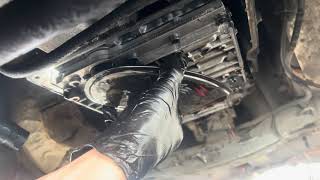
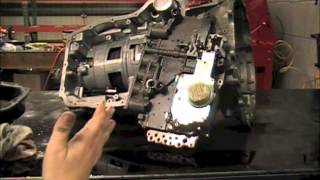
✅ What actually fixed it The conductor plate, which houses the speed sensors and solenoids, was replaced. The video shows the process of removing the valve body to access and replace the plate, which resolved the limp mode issue.
OEM Part Supersession History
52119435AF (and earlier numbers like 5170877AA, 52119435AB)→68353383AC— Component revision and updates by the manufacturer for improved reliability or manufacturing changes.
Heads up: While 52119435AF fits many 65RFE applications in the 2011-2018 range, always verify the correct part number with a VIN at the dealership. The superseding part 68353383AC may be for later model year Ram trucks with the 68RFE and might not be backward compatible.52108308AB→52108308AC— Updated design for the W5A580/NAG1 conductor plate to improve durability and prevent common failures of the speed sensors or electrical traces.
Heads up: The updated part is generally backward compatible. Ensure you are not using a conductor plate intended for a Sprinter van (which uses a different part number) on a Durango.
Helpful Videos

Used OEM Parts in Stock


New Aftermarket Parts Available


The information in this article is provided for general reference and educational purposes only. Vehicle specifications, procedures, and part compatibility can vary by production date, trim level, and region. Always consult your vehicle's factory service manual and verify part numbers before purchasing or performing repairs. Safety-critical components such as airbags, seat belts, and braking systems should be installed by a qualified professional.
- Dodge DURANGO:
- 🎬 Helpful Videos
- 🛍️ Shop This Part
- What's Unique About the 2011-2018 Dodge DURANGO
- Diagnostic Flowchart
- Symptoms You May Notice
- Most Likely Causes
- Rare But Worth Checking
- Diagnosis Steps
- Parts You'll Likely Need
- Related Codes That Often Appear With This One
- Technical Service Bulletins (TSBs) & Recalls
- Platform-Specific Known Issues
- Mechanic-Grade Diagnostic Values
- Scan Tool Commands That Help
- Wiring & Ground Locations
- Real Owner Repair Stories
- OEM Part Supersession History
- 🎟️ Get 5% Off