

P2714 on 2018-2025 GMC Yukon: Causes and Fixes for Pressure Control Solenoid 'D' Faults
On 2018-2025 GMC Yukons, especially 2021+ models with the 10-speed transmission, code P2714 most often points to a serious internal transmission issue, not just a bad solenoid. A known problem, documented in GM TSB PIP6008E, is a dislodged retainer ring causing a loss of reverse. This is not a DIY fix and requires professional diagnosis and repair, which may involve valve body replacement or a full transmission rebuild.
- P2714 on a 2018-2025 GMC Yukon is a serious transmission code that requires immediate attention.
- For 2021-2025 models, do not assume it's just a bad solenoid. A known issue is a dislodged internal retainer ring, per GM TSB #PIP6008E.
- Symptoms often include harsh shifting, transmission slipping, and a potential loss of reverse gear.
- This is not a DIY-friendly repair. Professional diagnosis is essential to determine the root cause, which could range from low fluid to a major internal mechanical failure.
- Do not continue to drive the vehicle, as this can lead to catastrophic transmission damage and leave you stranded.
What's Unique About the 2018-2025 Gmc YUKON
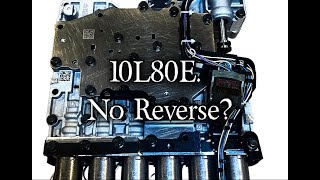
For the 2021-2025 GMC Yukon equipped with the 10L80 10-speed automatic transmission, this code is strongly linked to a specific mechanical failure. General Motors Technical Service Bulletin (TSB) #PIP6008E points to a dislodged retainer ring (item #502) inside the transmission. This failure can cause the Input Internal Gear (500) to separate from the Direct Overdrive Sun Gear Shaft (501), frequently resulting in a loss of reverse gear. 🎬 Watch: See how this common failure causes loss of reverse. This issue is known to occur even on transmissions with very low mileage (under 1,500 miles), highlighting that P2714 on this platform is a primary indicator of an internal mechanical problem, not just a simple electronic fault.
Diagnostic Flowchart
Tap your situation to follow the diagnostic path that matches what you're seeing on this vehicle.
Generation note: This range covers two generations of the GMC Yukon: the fourth generation (K2XX; 2018-2020) and the fifth generation (T1; 2021-2025). The fourth generation used 6-speed (6L80) and later 8-speed (8L90) or 10-speed (10L80) transmissions. While P2714 can occur on any of these, the highly specific TSB #PIP6008E regarding a dislodged retainer ring is explicitly noted for 2021-2025 models, which primarily use 10-speed automatic transmissions (RPOs like MHS, MQC). On older models or different transmissions, the code is more likely due to traditional causes like a failed solenoid, valve body issues, or wiring problems.
Symptoms You May Notice
- Check Engine Light illuminated
- Loss of Reverse gear
- Vehicle acts as if in neutral when in Reverse
- Harsh or delayed shifting
- Transmission slipping (engine RPMs increase but speed does not)
- Vehicle enters 'Limp Mode' with reduced power
- Inability to shift into certain gears
- Transmission overheating
- Immediately replacing the entire transmission without proper diagnosis. The issue could be a serviceable component like a solenoid or a specific internal part as noted in the TSB.
- Replacing only the Pressure Control Solenoid 'D' on 2021-2025 models without checking for the dislodged retainer ring, leading to a repeat failure and wasted expense.
Most Likely Causes
- Dislodged Internal Retainer Ring 🔴 High Probability A specific GM TSB (#PIP6008E and its revisions) identifies this as a known issue on 2021-2025 models with the 10L80 transmission, sometimes occurring on very low-mileage vehicles. The retainer ring for the input internal gear can become dislodged, leading to gear separation.
How to confirm: Requires internal transmission disassembly by a professional technician to visually confirm if the retainer ring (item #502 in service documents) is out of place. This is typically diagnosed after confirming the code and symptom (no reverse).
Typical fix: The transmission must be partially or fully disassembled to reinstall or replace the retainer ring and inspect for any related component damage. In many dealer cases, this results in a full transmission replacement.
Est. part cost: $20-$100 for the ring itself, but labor is the major cost. - Faulty Pressure Control Solenoid 'D' 🟡 Medium Probability Solenoids are wear items that can fail electrically (open/shorted coil) or mechanically (stuck plunger) over time due to heat and contaminated fluid.
How to confirm: A technician can use a professional scan tool to command the solenoid and monitor its response. The solenoid's electrical resistance can also be tested with a multimeter, with typical values between 5-15 Ohms.
Typical fix: Replacement of the individual solenoid or the entire solenoid/valve body assembly. This is located inside the transmission oil pan.
Est. part cost: $50-$250 - Low or Contaminated Transmission Fluid 🟡 Medium Probability These transmissions are 'sealed' and lack a traditional dipstick, discouraging owner checks. 🎬 Watch: How to check fluid levels on a 10L80 transmission. Low fluid levels reduce hydraulic pressure, while contaminated fluid (often with clutch material or metal shavings) can cause solenoids and valves to stick or wear prematurely.
How to confirm: The fluid level and condition must be checked via the fill plug on the side of the transmission, a process that must be done at a specific operating temperature. Fluid should be bright red and clear, not dark, burnt, or gritty.
Typical fix: Perform a transmission fluid and filter service using the correct specification fluid (e.g., DEXRON ULV). If fluid is heavily contaminated, a more serious internal issue is likely.
Est. part cost: $150-$300 for fluid and filter - Faulty Transmission Valve Body ⚪ Low Probability Debris or sludge can clog the small passages within the valve body or cause regulator valves to stick, preventing proper fluid flow. Some owner experiences point directly to valve body replacement as the fix.
How to confirm: This is typically diagnosed after confirming the solenoid and wiring are good. A technician may perform pressure tests or inspect the valve body upon removal. Sometimes the entire valve body is replaced as a unit with the solenoids.
Typical fix: Replacement of the valve body assembly. An OEM part number for a 10L80 valve body assembly is 24049465.
Est. part cost: $700-$1500
Rare But Worth Checking
- Damaged Wiring or Connectors: The wiring harness leading to the transmission can be damaged by road debris or heat, causing an electrical fault. A visual inspection of the harness and connector pins for corrosion or damage is a crucial early step.
- Faulty Transmission Control Module (TCM): While rare, the TCM itself can fail and stop sending the correct signal to the solenoid. This is usually the last item to be considered after all other possibilities are exhausted.
Diagnosis Steps
- Verify the transmission fluid level and condition. The fluid must be at the correct level and at the proper operating temperature (typically 140°-176°F or 60°-80°C) for an accurate reading.
- Scan the TCM for trouble codes. Confirm that P2714 is the primary code and note any other transmission-related codes.
- Using a professional bi-directional scan tool (like GM GDS2), monitor the commanded state versus the actual state of Pressure Control Solenoid 'D' (or Solenoid 4).
- Perform a visual inspection of the transmission wiring harness and connectors for any signs of damage, corrosion, or loose connections.
- If symptoms (especially loss of reverse) and vehicle year (2021+) align with TSB PIP6008E, prioritize internal inspection for the dislodged retainer ring.
- If the solenoid is accessible after dropping the transmission pan, test its resistance with a multimeter to check for an open or shorted coil (typically 5-15 Ohms).
- If the retainer ring is intact and the solenoid tests good, the issue may lie within the greater valve body assembly (e.g., a stuck clutch regulator valve) or, rarely, the TCM itself.
Parts You'll Likely Need
- Input Internal Gear Retainer Ring — This is the specific failure part identified in TSB #PIP6008E for 2021-2025 models, causing P2714 and loss of reverse. Its failure requires significant labor to access.
Trusted brands: GM Genuine Parts
OEM price range: $10-$50
Aftermarket price range: $5-$25 - Transmission Pressure Control Solenoid — If the retainer ring issue is not present, the solenoid itself may have failed electrically or mechanically. For the 10L80, this is often sold as part of the valve body.
Trusted brands: ACDelco, Bosch
OEM price range: $100-$200
Aftermarket price range: $50-$120 - Transmission Valve Body Assembly
(OEM #24049465)— Often replaced as a complete unit with all solenoids to fix sticking internal valves or failed solenoids. Some owners report this as the dealer's solution.
Trusted brands: ACDelco, GM Genuine Parts
OEM price range: $700-$1500
Aftermarket price range: $500-$1000
Technical Service Bulletins (TSBs) & Recalls
- PIP6008E: Communicates a possible dislodged retainer ring as the cause for DTC P2714 and loss of reverse on 2021-2025 GM trucks and SUVs with the 10L80 transmission. It identifies the
Platform-Specific Known Issues
- TSB #PIP6008E: Specifically for 2021-2025 models with 10-speed transmissions, this bulletin highlights that DTC P2714, often accompanied by a loss of reverse, can be caused by a dislodged retainer ring on the input internal gear. This is noted to occur even on very low-mileage vehicles (under 1,500 miles).
Mechanic-Grade Diagnostic Values
- Pressure Control Solenoid 'D' Coil Resistance — expected: 5 to 15 Ohms. Failure: A reading of infinite resistance (∞ Ω) indicates an open circuit, while a very low reading (<1 Ω) indicates a shorted coil.
- TCM Power Supply Voltage — expected: ~12–14.5 Volts (V). Failure: Voltage below this range can indicate a charging system or wiring issue, causing erratic module behavior.
- TCM Ground Circuit Continuity — expected: Near 0 Ohms (Ω). Failure: A higher resistance reading indicates a poor ground connection, which can cause a variety of electrical faults.
Scan Tool Commands That Help
- GM GDS2 (or equivalent professional scanner): Output Control > Solenoid Valve Control — To manually command the Pressure Control Solenoid 'D' on and off while the vehicle is stationary. A technician can listen for an audible click from the solenoid or, if performing a bench test with a test plate, observe an air pressure gauge to confirm mechanical operation.
- GM GDS2 (or equivalent professional scanner): Data Display > Transmission Data — To monitor the live data stream for 'PC Solenoid 4 Commanded State' and 'PC Solenoid 4 Actual State' (or similar parameters). This allows a technician to see if the TCM is sending the command and if the solenoid is responding as expected during a test drive.
OEM Part Supersession History
24049465 (Gen 2 Valve Body)→19436456 (Gen 2 Service Replacement)— Standard part lifecycle update. This part number also replaces numerous older numbers including 24043767, 24048696, and 24299093.
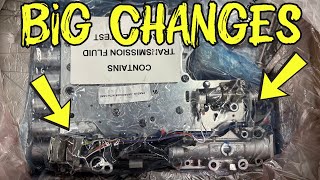
Heads up: As of mid-2025, service replacements are increasingly the newer 'Gen 3' design, which may require a new bolt kit.Gen 2 Valve Body (various PNs)→Gen 3 Service Valve Body— Redesign for robustness and debris tolerance. The Gen 3 design eliminates the separate auxiliary valve body and relocates several solenoids.
Heads up: The Gen 3 valve body is a significant design change. While it is the official service replacement, technicians should be aware of the consolidated design and simplified harness. It may also require a specific new bolt kit for installation.
Model Year Variations Within This Range
- 2025+: Starting in mid-2025, GM began phasing in a redesigned 'Gen 3' valve body for the 10L80 transmission. Vehicles from this period onward may have the new design from the factory. Any valve body replacement on an older (2018-2024) model will likely receive this updated Gen 3 part, which consolidates the auxiliary valve body and has a different solenoid layout.
Helpful Videos
We Have This Part in Stock



The information in this article is provided for general reference and educational purposes only. Vehicle specifications, procedures, and part compatibility can vary by production date, trim level, and region. Always consult your vehicle's factory service manual and verify part numbers before purchasing or performing repairs. Safety-critical components such as airbags, seat belts, and braking systems should be installed by a qualified professional.
- Gmc YUKON:
- 🎬 Helpful Videos
- 🛍️ Shop This Part
- What's Unique About the 2018-2025 Gmc YUKON
- Diagnostic Flowchart
- Symptoms You May Notice
- Most Likely Causes
- Rare But Worth Checking
- Diagnosis Steps
- Parts You'll Likely Need
- Technical Service Bulletins (TSBs) & Recalls
- Platform-Specific Known Issues
- Mechanic-Grade Diagnostic Values
- Scan Tool Commands That Help
- OEM Part Supersession History
- Model Year Variations Within This Range
- 🎟️ Get 5% Off