

P2709 on 2011-2014 Kia Forte Koup: Shift Solenoid 'F' Failure Causes and Fixes
On a 2011-2014 Forte Koup with a 6-speed automatic, code P2709 almost always means a shift solenoid has failed inside the transmission. In this A6MF1 transmission, this is often designated as Shift Solenoid 'B' (SS-B). Kia issued a Technical Service Bulletin (TSBTRA051R1) advising technicians to replace the faulty solenoid(s), not the entire transmission. The repair is moderately difficult, involving dropping the transmission pan to access the valve body.
- P2709 on a 2011-2014 Forte Koup points directly to an electrical fault with Shift Solenoid 'F'.
- Do not replace the transmission. A Kia TSB (TSBTRA051R1) confirms the correct, and much cheaper, fix is to replace the faulty solenoid(s) inside the transmission pan.
- This is a known issue for the 6-speed automatic transmission used in many Kia and Hyundai vehicles of this era.
- The repair requires dropping the transmission pan and is best left to a professional or experienced DIYer.
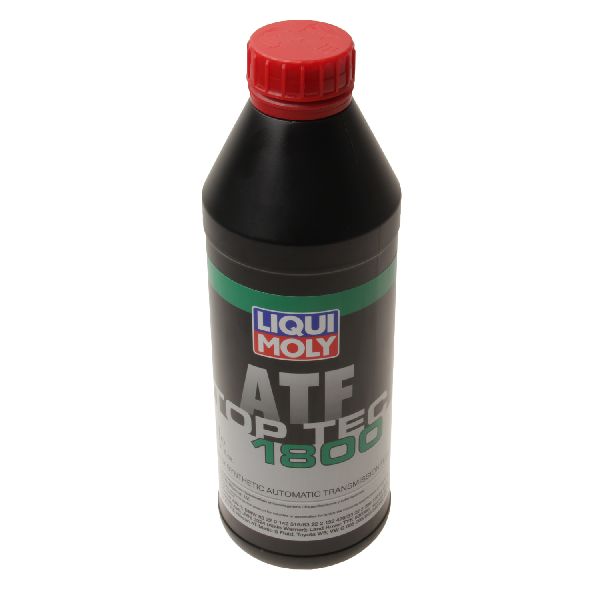
- Always use the correct Kia-specific SP-IV automatic transmission fluid when refilling.
What's Unique About the 2011-2014 Kia FORTE KOUP
The 6-speed automatic transmission (A6MF1 family) used in the Forte Koup and many other Kia/Hyundai vehicles of this era is known for premature shift solenoid failure. The problem was common enough that Kia issued a specific Technical Service Bulletin (TSBTRA051R1) to address it. The bulletin guides technicians to replace the individual solenoids, which is a much more affordable repair than replacing the entire transmission assembly. The solenoids can fail electrically due to internal coil windings breaking down from heat and vibration over time.
Diagnostic Flowchart
Tap your situation to follow the diagnostic path that matches what you're seeing on this vehicle.
Generation note: This year range covers the end of the first generation (TD, 2011-2013) and the start of the second generation (YD, 2014). Both generations used a 6-speed automatic transmission (A6GF1/A6MF1) that is susceptible to this solenoid issue, as confirmed by TSB TSBTRA051R1 and extensive owner reports across the Hyundai/Kia lineup.
Symptoms You May Notice
- Check Engine Light is on.
- Harsh, erratic, or delayed gear shifts.
- Transmission gets stuck in a single gear (fail-safe or 'limp mode'), often 4th gear.
- Sudden, hard downshifts that can feel like hitting the brakes.
- Inability to shift into certain gears, particularly 5th gear.
- Hesitation or a feeling of slipping during shifts.
- Replacing the entire transmission assembly. The official Kia TSB TSBTRA051R1 specifically advises against this, identifying the much cheaper solenoid replacement as the correct fix for P2709.
Most Likely Causes
- Failed Shift Solenoid 'F' (SS-B) 🔴 High Probability This is a widely documented failure for this specific transmission, as confirmed by Kia's own Technical Service Bulletin (TSBTRA051R1). The internal coil windings of the solenoid can develop an open or short circuit.
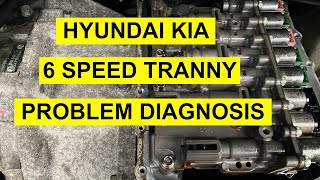
How to confirm: After accessing the valve body, test the solenoid's resistance with a multimeter. The expected resistance for this on/off solenoid is 10-11 Ohms at 68°F (20°C). A reading of infinity (Open Loop) or near zero confirms failure. A 9V or 12V battery can also be used to listen for an audible click, confirming mechanical operation. 🎬 See how to diagnose and test solenoids on Kia models
Typical fix: Replace the faulty shift solenoid. Many technicians and DIY guides recommend replacing all the on/off solenoids or the entire solenoid wire harness assembly as a set, since the transmission is already opened and other solenoids may be near the end of their service life.
Est. part cost: $40-$160 for a single solenoid, $150-$350 for a full harness assembly. - Low or Contaminated Transmission Fluid 🟡 Medium Probability These transmissions are often called 'sealed for life' and lack a traditional dipstick, leading owners to neglect fluid checks. Low fluid can cause overheating and erratic solenoid operation.
How to confirm: The vehicle must be level and the transmission fluid temperature between 122-140°F (50-60°C) to check the level via the fill plug. Fluid should be red and not smell burnt. Dark, contaminated fluid warrants a change.
Typical fix: Perform a transmission fluid drain-and-fill using the manufacturer-specified fluid (Kia/Hyundai SP-IV ATF). If fluid is very dirty, a full flush may be recommended by a professional.
Est. part cost: $50-$120 - Faulty Internal Transmission Wiring Harness ⚪ Low Probability The internal harness (OEM part #46307-3B650 or similar) is submerged in hot transmission fluid and can become brittle with age. This can lead to intermittent open or short circuits that can mimic a solenoid failure.
How to confirm: Visually inspect the harness for cracked insulation, brittleness, or damaged connector pins when the transmission pan is removed. Perform a continuity test from the solenoid connector back to the main transmission case connector.
Typical fix: Replace the internal transmission wiring harness. This is often done preventatively when replacing the solenoids.
Est. part cost: $100-$250
Rare But Worth Checking
- Faulty Powertrain/Transmission Control Module (PCM/TCM): This is extremely rare. The internal driver circuit in the computer that sends power to the solenoid can fail, but all other possibilities (solenoid, wiring, fluid) must be exhaustively ruled out first.
- Clogged Valve Body Passages: If the transmission fluid is very old or contaminated, sludge and debris can block the small hydraulic passages in the valve body, preventing proper operation even with a new solenoid. A professional cleaning or valve body replacement would be required.
Diagnosis Steps
- Scan the vehicle's computer for P2709 and any other related transmission codes.
- Check the transmission fluid level and condition. This must be done with the vehicle level and the ATF temperature between 122-140°F (50-60°C). If the fluid is low, dirty, or smells burnt, address this first.
- Inspect the external wiring harness and connector at the transmission case for any visible damage, corrosion, or loose connections.
- If the fluid and external wiring are okay, the next step is internal inspection. Drain the transmission fluid and remove the transmission oil pan.
- Visually inspect the internal wiring harness for any signs of damage or brittleness.
- Identify Shift Solenoid 'F' (also known as Shift Solenoid 'B' or SS-B). It is one of the on/off type solenoids.
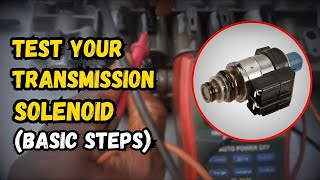
- Disconnect the solenoid and test its internal resistance with a digital multimeter. 🎬 Watch: Basic steps for testing a transmission solenoid The reading should be between 10-11 Ohms. An open circuit (O.L.) or short (near 0 Ohms) indicates failure.
- If the solenoid tests good, check the wiring harness for continuity from the solenoid connector to the main case connector.
- If the solenoid and harness are good, the problem may rarely lie in the TCM itself.
- After replacing parts, reinstall the pan with a new gasket, refill with the correct type and amount of Kia SP-IV automatic transmission fluid, clear the codes, and perform a test drive to allow the TCM to relearn shift points.
Parts You'll Likely Need
- Automatic Transmission Shift Solenoid
(OEM #46313-3B030)— This is the component that most commonly fails and directly causes the P2709 code, as documented by Kia's TSB. This part number corresponds to the on/off type solenoid used for SS-B.
Trusted brands: Kia/Hyundai (OEM), Mando, Rostra
OEM price range: $90-$160
Aftermarket price range: $40-$100 - Transmission Solenoid Wire Harness Assembly
(OEM #46307-3B650 (supersedes 46307-3B610, 46307-3B620))— Often, the entire harness which includes all solenoids is replaced. This prevents future failures of other solenoids and addresses potential harness wiring issues. The updated harness also integrates the temperature sensor, which was a separate component on older versions.
Trusted brands: Kia/Hyundai (OEM)
OEM price range: $200-$350 - Automatic Transmission Fluid (ATF)
(OEM #Kia/Hyundai SP-IV)— The transmission must be refilled with 4-6 quarts of the correct fluid after dropping the pan for the repair.
Trusted brands: Kia/Hyundai (OEM), Idemitsu, ENEOS
OEM price range: $15-$25 per quart
Aftermarket price range: $10-$18 per quart - Transmission Oil Pan Gasket
(OEM #45285-3B810)— A new gasket is required to prevent leaks when reinstalling the transmission pan.
Trusted brands: Kia/Hyundai (OEM), Fel-Pro, Mahle
OEM price range: $25-$40
Aftermarket price range: $15-$30
Related Codes That Often Appear With This One
- P0741 — Relates to the Torque Converter Clutch solenoid, which is part of the same valve body assembly and is also addressed in TSB TSBTRA051R1.
- P0753, P0758, P0763, P0768, P0773 — These are all electrical fault codes for other shift solenoids (A, B, C, D, E) in the same transmission. The TSB TSBTRA051R1 groups all these codes together as having the same root cause (solenoid failure) and fix. [TSBTRA051R1]
Technical Service Bulletins (TSBs) & Recalls
- TSBTRA051R1: Addresses DTCs including P2709 and recommends the replacement of various shift solenoids on 6-speed automatic transaxles, advising against transaxle replacement for this issue. It covers a wide range of Hyundai and Kia models from the era.
Platform-Specific Known Issues
- This model is covered by Kia Technical Service Bulletin TSBTRA051R1, which was issued to address a known high failure rate of shift solenoids in the 6-speed automatic transmission. The bulletin specifically mentions P2709 and recommends replacing the solenoids rather than the entire transaxle.
- Owners across multiple forums for Kia and Hyundai vehicles with the A6MF1/A6GF1 transmission report the same pattern: sudden harsh shifting, a P2709 code (or related solenoid codes), and a successful repair by replacing the solenoid pack/harness assembly.
Mechanic-Grade Diagnostic Values
- On/Off Shift Solenoid (SS-B / 'F') Resistance — expected: 10 - 11 Ohms. Failure: A reading of O.L. (infinity) for an open circuit or near 0 Ohms for a short circuit.
- Variable Force (PWM) Solenoid Resistance — expected: ~5.1 Ohms. Failure: A reading significantly different from 5.1 Ohms. While not the direct cause of P2709, it's a useful value when testing the entire solenoid block.
- Solenoid Power at External Connector Pin 5 — expected: Battery Voltage (approx. 12V) with Key On. Failure: 0V or low voltage indicates a wiring issue from the TCM, as this pin provides shared power to solenoids SS-B, 2-6, and UD.
- Transmission Fluid Temperature for Level Check — expected: 122°F - 140°F (50°C - 60°C). Failure: Checking the fluid level outside this temperature range will lead to an inaccurate reading (either appearing too low or too high).
Scan Tool Commands That Help
- Kia GDS (or equivalent professional scanner): Actuation Test for Automatic Transaxle — This bidirectional command allows a technician to directly command the TCM to activate a specific solenoid. It's used to verify if the TCM, wiring, and solenoid are electrically functional at that moment. A technician can listen for an audible 'click' from the transmission pan with a stethoscope to confirm mechanical movement.
- Kia GDS, Autel MaxiSys, or equivalent: Resetting Auto Trans Adapted Values / Init of TCU Learning — This function MUST be performed after replacing the transmission, valve body, or solenoids. It clears the TCM's learned shift data, forcing it to relearn shift pressures and timing with the new components for smooth operation.
Wiring & Ground Locations
- Transmission External Connector Pin #5 — On the main electrical connector on the outside of the transmission case.. This pin supplies shared power to Shift Solenoid 'B' (SS-B, which corresponds to 'F'), the 2-6 solenoid, and the UD solenoid. Testing for voltage here can quickly determine if a power supply issue is affecting multiple solenoids, pointing to a problem upstream of the individual solenoid.
- Transmission Ground Strap (e.g., 918601M140) — A specific ground strap connecting the transmission case to the chassis, typically near the transmission mount.. A corroded, loose, or broken main ground strap for the transmission can cause a floating ground, leading to erratic voltage readings and incorrect operation of all electrical components, including the solenoids, potentially triggering a P2709 code.
Real Owner Repair Stories
- Owner report on Kia-Forums (paraphrased) (2011-2015 Kia Optima (shares A6MF1 transmission)) — P2709 code and a jerky 2-3 shift.
❌ Tried (didn't work) Initial diagnosis pointed towards a single bad solenoid.
✅ What actually fixed it The owner performed the repair themselves, replacing the entire internal wire harness assembly for approximately $200, which resolved both the P2709 code and the harsh shifting symptom.
OEM Part Supersession History
46307-3B610, 46307-3B620→46307-3B650— Updated design for the internal transmission wiring harness assembly.
Heads up: The updated harness (46307-3B650) integrates the transmission fluid temperature sensor, which was a separate, disconnectable part on older harnesses. When replacing an old-style harness, the new integrated one must be used.
Model Year Variations Within This Range
- 2011-2014: The A6GF1 (used with smaller engines like the 1.6L) and A6MF1 (used with 1.8L, 2.0L, 2.4L engines) are part of the same family and share the same solenoid failure issue and TSB. While largely similar, there are minor differences in case mounting points for things like shifter cable brackets, but the core internal components like the solenoid harness are often interchangeable or follow the same part number supersession.
Helpful Videos



Used OEM Parts in Stock


New Aftermarket Parts Available

The information in this article is provided for general reference and educational purposes only. Vehicle specifications, procedures, and part compatibility can vary by production date, trim level, and region. Always consult your vehicle's factory service manual and verify part numbers before purchasing or performing repairs. Safety-critical components such as airbags, seat belts, and braking systems should be installed by a qualified professional.
- Kia FORTE KOUP:
- 🎬 Helpful Videos
- 🛍️ Shop This Part
- What's Unique About the 2011-2014 Kia FORTE KOUP
- Diagnostic Flowchart
- Symptoms You May Notice
- Most Likely Causes
- Rare But Worth Checking
- Diagnosis Steps
- Parts You'll Likely Need
- Related Codes That Often Appear With This One
- Technical Service Bulletins (TSBs) & Recalls
- Platform-Specific Known Issues
- Mechanic-Grade Diagnostic Values
- Scan Tool Commands That Help
- Wiring & Ground Locations
- Real Owner Repair Stories
- OEM Part Supersession History
- Model Year Variations Within This Range
- 🎟️ Get 5% Off