

P2700 on 2009-2014 Ford E-150: Transmission Apply Time Fault Causes and Fixes
This code indicates a slow clutch engagement time in the transmission. On E-150 models with the TorqShift® transmission, this is a known issue covered by Ford TSB 16-0057, which points to a required internal repair of the coast clutch assembly. For other transmissions, it can be caused by low fluid, faulty solenoids, or wiring issues.
- P2700 means a transmission clutch is engaging too slowly.
- For E-150s with a TorqShift® transmission, this code is very likely caused by a specific internal failure outlined in Ford TSB 16-0057.
- The repair for the TSB issue is not a simple DIY fix and requires transmission removal.
- For other transmissions, check the fluid level and condition first, then inspect the wiring harness for damage before suspecting internal components.
- This code is often seen with P0751 and P0730, which reinforces the diagnosis of an internal transmission fault.
What's Unique About the 2009-2014 Ford E-150
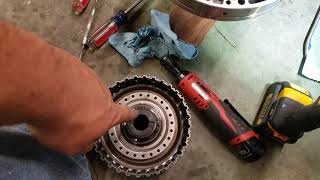
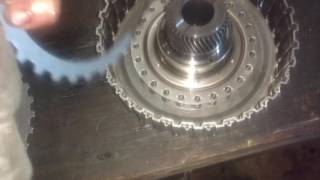
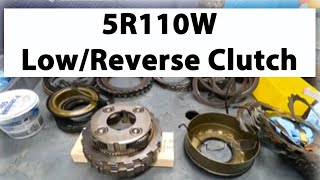
For the 2009-2014 Ford E-150, the key factor is which transmission the van is equipped with. Vans could be equipped with the 4-speed 4R75E or the heavy-duty 5-speed 5R110W TorqShift®. The authoritative NHTSA records link this code directly to Ford's Technical Service Bulletin #16-0057 for vehicles with a TorqShift® transmission. This TSB outlines a specific, known internal failure related to the coast clutch assembly 🎬 Watch: See what a 5R110 coast clutch failure looks like., indicating a pattern of failure that is more specific than generic causes. If the van has the 4R75E, the cause is more likely to be general, such as wiring, fluid issues, or solenoid problems.
Diagnostic Flowchart
Tap your situation to follow the diagnostic path that matches what you're seeing on this vehicle.
Symptoms You May Notice
- Delayed or harsh shifting between gears.
- Transmission slipping, where the engine RPMs increase but the vehicle doesn't accelerate accordingly.
- Illuminated Check Engine Light or flashing Tow/Haul light.
- Vehicle entering "limp mode," where it gets stuck in a single gear.
- Loss of engine braking when descending hills, particularly when Tow/Haul mode is active.
- Replacing only the shift solenoid when the actual cause is the internal coast clutch failure described in TSB 16-0057. A forum user replaced the solenoid only to have the issue return, indicating the deeper mechanical fault.
- Condemning the entire transmission for a rebuild when the issue is a simple wiring problem or low fluid level.
- Assuming the issue is electronic when it is a mechanical failure of the clutch cylinder snap ring or one-way clutch diode, as detailed in the TSB.
Most Likely Causes
- Internal Coast Clutch Assembly Failure (TorqShift® Only) 🔴 High Probability This is a known issue documented by Ford in TSB 16-0057 for TorqShift® transmissions built on or before 12/15/2015. The failure of the coast clutch cylinder or one-way clutch prevents proper hydraulic pressure application.
How to confirm: Confirm the vehicle has a TorqShift® transmission and check the build date. If it matches the TSB criteria and codes P0751 or P0730 are also present, this is the most likely cause. A user on Ford Truck Enthusiasts forums confirmed that getting P2700 along with P0751 was a key diagnostic clue.
Typical fix: The transmission must be removed and partially disassembled to replace the coast clutch cylinder and the coast one-way clutch (OWC) assembly as per TSB 16-0057.
Est. part cost: $200-$400 - Low or Contaminated Transmission Fluid 🟡 Medium Probability Fluid is critical for hydraulic pressure. Leaks or neglecting service intervals can lead to low or dirty fluid, causing apply time issues. Dirty fluid can clog passages and solenoids, preventing proper clutch engagement.
How to confirm: Check the transmission fluid level and condition with the engine running and transmission warm. The fluid should be at the correct level, red in color, and not smell burnt. Significant metallic or clutch material debris in the pan indicates a severe internal problem.
Typical fix: Top off the fluid if low and inspect for leaks. If the fluid is dirty or burnt, perform a fluid and filter change.
Est. part cost: $50-$150 - Faulty Shift Solenoid or Solenoid Body 🟡 Medium Probability
How to confirm: A professional scan tool can command solenoids on and off to test their function. Resistance can also be checked with a multimeter after dropping the transmission pan. This is often a first step for DIY diagnosis, as seen in forum discussions. The SSPC-A (Coast Clutch) solenoid should have a resistance of 4.1 - 4.7 Ω.
Typical fix: Replace the faulty shift solenoid (specifically SSPC-A for the coast clutch) or the entire solenoid body. This requires draining the fluid and removing the transmission pan.
Est. part cost: $100-$400 - Damaged Wiring Harness ⚪ Low Probability On vans, wiring harnesses can be routed near hot exhaust components, leading to melted wires and intermittent shorts that disrupt signals to the transmission. This can cause a loss of communication with a solenoid or sensor, triggering the code.
How to confirm: Visually inspect the wiring harness leading to the transmission for any signs of melting, chafing, or corrosion, particularly near the exhaust manifolds and at the main connector to the transmission.
Typical fix: Repair the damaged section of the wiring harness and re-route it away from heat sources.
Est. part cost: $10-$50
Rare But Worth Checking
- Failing Transmission Control Module (TCM): While less common, a faulty TCM can cause this code due to software glitches or internal failure. This is usually diagnosed after all other mechanical and electrical possibilities have been ruled out.
- Failed Internal Transmission Pump: A failing pump will not generate enough hydraulic pressure for any clutches to engage properly. This is often accompanied by a whining noise and large amounts of debris in the transmission pan. A forum user described a no-pressure situation at the test port, pointing towards a pump or major internal blockage. A worn pressure regulator valve in the pump cover can also cause low line pressure.
- Clogged Transmission Filter: If the transmission filter is severely clogged with debris from normal wear or a previous component failure, it can restrict fluid flow to the pump. This starves the pump of fluid, leading to low line pressure and triggering apply-time codes. This can mimic the symptoms of a failed pump.
Diagnosis Steps
- Check the transmission fluid level and condition.
- Use a professional scan tool to check for other DTCs, especially P0751 and P0730.
- If the vehicle has a TorqShift® transmission, check its build date to see if TSB 16-0057 applies (on or before 12/15/2015).
- If TSB 16-0057 applies, follow the service procedure which requires transmission removal and replacement of the coast clutch components.
- If the TSB does not apply, or for a 4R75E transmission, inspect the transmission wiring harness for any visible damage, such as melting or chafing near the exhaust.
- Perform a hydraulic pressure test at the transmission test port to verify correct line pressure from the pump. Low pressure could indicate a failing pump, clogged filter, or major internal leak. Expected pressure in Drive at idle is ~70 PSI.
- Drop the transmission pan to inspect for excessive metal debris and to access the valve body and solenoids.
- Test the resistance and function of the relevant shift solenoids (SSPC-A for the coast clutch). Resistance should be between 4.1 and 4.7 ohms.
- If solenoids and wiring are good, the issue is likely a more significant internal mechanical problem like worn seals or clutches, or a failing transmission pump.
Parts You'll Likely Need
- Coast Clutch Cylinder
(OEM #7C3Z-7G387-B)— This is the primary replacement part called for in TSB 16-0057 to fix the known issue on TorqShift® transmissions.
Trusted brands: Motorcraft
OEM price range: $90-$140
Aftermarket price range: $70-$120 - Coast One-Way Clutch Assembly
(OEM #7C3Z-7A089-A)— This is the second component required for the TSB 16-0057 repair. It is also referred to as an Automatic Transmission Sprag Assembly. It supersedes part numbers 5C3Z-7A089-BA and 5C3Z-7A089-CA.
Trusted brands: Motorcraft
OEM price range: $100-$150
Aftermarket price range: $80-$130 - Transmission Filter and Gasket Kit
(OEM #8C3Z-7A098-D)— Required whenever servicing internal transmission components or changing the fluid. TSB 16-0057 lists this as a required part for the repair.
Trusted brands: Motorcraft, Wix, ATP
OEM price range: $40-$60
Aftermarket price range: $20-$40 - Main Control Gasket and Pump Gasket
(OEM #8C3Z-7C155-A, 3C3Z-7A136-AA)— TSB 16-0057 explicitly lists the Main Control Gasket (8C3Z-7C155-A) and Pump Gasket (3C3Z-7A136-AA) as required parts for the coast clutch replacement procedure.
Trusted brands: Motorcraft
Related Codes That Often Appear With This One
- P0751 — Stands for 'Shift Solenoid 'A' Performance/Stuck Off'. This code is explicitly mentioned in TSB 16-0057 alongside P2700 as part of the same internal coast clutch fault. Multiple owner forums confirm these two codes appearing together is a strong indicator of the TSB-related issue.
- P0730 — Stands for 'Incorrect Gear Ratio'. This code is also listed in TSB 16-0057 and indicates the transmission is slipping, which is a direct consequence of the clutch failing to apply correctly.
Technical Service Bulletins (TSBs) & Recalls
- TSB 16-0057: Addresses a Malfunction Indicator Lamp (MIL) with DTCs P0751, P0730 and/or P2700 on vehicles with a TorqShift® transmission, pointing to an internal failure of the coast clutch cylinder and/or coast one-way clutch assembly. It applies to vehicles built on or before 12/15/2015.
Platform-Specific Known Issues
- A Ford Technical Service Bulletin (TSB 16-0057) was issued for some 2009-2016 E-Series vans with a TorqShift® transmission that exhibit codes P2700, P0751, and/or P0730. The bulletin identifies the root cause as an internal failure of the coast clutch cylinder and/or the coast one-way clutch assembly. The official repair requires removing the transmission to replace these specific internal parts.
Mechanic-Grade Diagnostic Values
- Coast Clutch Solenoid (SSPC-A) Resistance — expected: 4.1 - 4.7 Ω (ohms) at approx. 70°F. Failure: A reading outside this range, or infinite resistance (open circuit), indicates a faulty solenoid.
- Line Pressure at Idle (in Drive) — expected: ~70 psi. Failure: Significantly lower pressure suggests a problem with the transmission pump, a clogged filter, a sticking pressure regulator valve, or a major internal leak.
- Line Pressure at Stall Speed (in Drive) — expected: ~320 psi. Failure: Low pressure under load points to a weak pump or significant internal hydraulic leaks. Do not perform this test for more than 5 seconds.
- Line Pressure to Cooler — expected: ~60 psi. Failure: This is not main line pressure but can be useful for diagnosing cooler or bypass valve issues. It varies with main line pressure.
Scan Tool Commands That Help
- Ford IDS (or equivalent J2534/FORScan): Transmission Characterization / Solenoid Identification — Used to read the solenoid strategy and individual solenoid band information from the TCM. This is critical if replacing the solenoid body or TCM to ensure the correct parts are ordered and programmed, preventing shift quality issues.
- Ford IDS (or equivalent): Clear Transmission Adaptive Tables — This function should be used after a transmission repair to reset the learned shift strategy. It should NOT be used as a fix for a slipping transmission, as it can make the condition worse.
- Ford IDS (or equivalent): Clear DTCs — After performing the TSB 16-0057 repair, any stored DTCs like P2700, P0751, and P0730 must be cleared from the PCM.
Wiring & Ground Locations
- Transmission Bulkhead Connector — A large, square, black plastic connector located on the passenger side of the transmission case, toward the bell housing.. This is the main external connection point for the entire internal wiring harness, including all solenoids. A poor connection, corrosion, or damage here can cause various transmission codes, including P2700. The connector is secured by a bolt.
- Internal Wiring Harness (4C3Z-7G276-AA) — Inside the transmission oil pan, connecting the bulkhead connector to the solenoid body.. This harness can become brittle from heat and age, causing intermittent connections to the solenoids. It must be removed to service the solenoid body.
- SSPC-A (Coast Clutch) Solenoid Connector — Inside the transmission pan, on the solenoid body. The SSPC-A solenoid is one of a pair of identical solenoids (the other being for direct drive).. This is the specific connector for the solenoid that controls the coast clutch. Testing resistance and voltage here can isolate a faulty solenoid from a wiring issue further up the circuit.
Real Owner Repair Stories
- Reddit user on r/powerstroke (2016 F-450 (with 5R110W)) — Malfunction Indicator Lamp (MIL) on with codes P2700 and P0751. Vehicle drove fine.
❌ Tried (didn't work) N/A - went straight to the TSB repair.
✅ What actually fixed it The user performed the TSB repair, replacing the coast clutch housing and one-way clutch. However, after reassembly, the transmission would engage hard, then clunk and lose the gear entirely in both Drive and Reverse. The story is a cautionary tale that even when following the correct TSB, other issues can arise or mistakes can be made during the complex reassembly process. The final resolution was not posted.
OEM Part Supersession History
5C3Z-7A089-BA, 5C3Z-7A089-CA→7C3Z-7A089-A— Updated part for the Coast One-Way Clutch (OWC) assembly, also called a sprag assembly. The TSB calls for replacing the original single-engaging OWC with a more robust dual-engaging OWC.
Helpful Videos
Used OEM Parts in Stock

New Aftermarket Parts Available




The information in this article is provided for general reference and educational purposes only. Vehicle specifications, procedures, and part compatibility can vary by production date, trim level, and region. Always consult your vehicle's factory service manual and verify part numbers before purchasing or performing repairs. Safety-critical components such as airbags, seat belts, and braking systems should be installed by a qualified professional.
- Ford E-150:
- 🎬 Helpful Videos
- 🛍️ Shop This Part
- What's Unique About the 2009-2014 Ford E-150
- Diagnostic Flowchart
- Symptoms You May Notice
- Most Likely Causes
- Rare But Worth Checking
- Diagnosis Steps
- Parts You'll Likely Need
- Related Codes That Often Appear With This One
- Technical Service Bulletins (TSBs) & Recalls
- Platform-Specific Known Issues
- Mechanic-Grade Diagnostic Values
- Scan Tool Commands That Help
- Wiring & Ground Locations
- Real Owner Repair Stories
- OEM Part Supersession History
- 🎟️ Get 5% Off