

P2610 on 2012-2017 Toyota Camry: Engine Off Timer Performance Causes and Fixes
On a 2012-2017 Camry, P2610 is almost always caused by a software glitch in the engine computer (ECM). The fix is a software update from a Toyota dealer, which is often covered under the 8-year/80,000-mile federal emissions warranty. Do not replace the ECM or battery before checking for this update, as Toyota explicitly warns against hardware replacement for this issue.
- P2610 on a 2012-2017 Camry is almost certainly a software issue, not a hardware failure.
- The fix is an ECM software update from a Toyota dealer, documented in TSBs like T-SB-0276-17.
- Before paying for any repairs, check if your vehicle is still covered by the 8-year/80,000-mile Federal Emissions Warranty.
What's Unique About the 2012-2017 Toyota Camry
For this generation of Toyota Camry and other contemporary Toyota models, the P2610 code is a widely recognized issue addressed directly by the manufacturer. 🎬 Watch: A detailed breakdown of the P2610 fix for Toyotas Toyota issued multiple Technical Service Bulletins (TSBs) acknowledging that the original ECM software logic was too sensitive and could falsely trigger the code. Unlike in other vehicles where this code might point to a failing computer or battery, the problem on these Camrys is almost always solved with a simple software update (reflash). TSB T-SB-0276-17, which applies to 2015-2017 Camrys, explicitly states, "The ECM (PCM) should NOT be replaced as part of the Repair Procedure."
Symptoms You May Notice
- Check Engine Light is on
- Inability to pass an emissions test because readiness monitors cannot complete
- Rarely, a brief hesitation on startup or rough idling
- Replacing the Engine Control Module (ECM). Toyota's own TSBs explicitly warn technicians NOT to replace the ECM, as the issue is with the software, not the hardware.
- Replacing the 12V battery without confirming it has failed a load test. While a bad battery can cause this code, it's far less likely than the software issue on this specific vehicle.
Most Likely Causes
- Outdated Engine Control Module (ECM) Software 🔴 High Probability Toyota released multiple Technical Service Bulletins (e.g., T-SB-0276-17, T-SB-0230-17) confirming the original software logic was too sensitive and would incorrectly set the P2610 code. The TSBs contain updated calibration files to correct this.
How to confirm: Contact a Toyota dealer with your VIN. They can check if the calibration update from the TSB has been performed. A technician can also use Techstream software to compare your ECM's current Calibration ID to the new IDs listed in the TSB. A sticker, called an 'Authorized Modifications Label' (P/N 00451-00001-LBL), may also be present under the hood if the update was done.
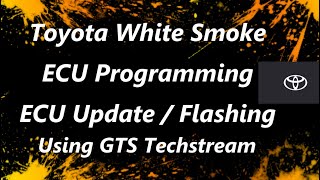
Typical fix: Reprogram (reflash) the ECM with the updated software provided by Toyota. According to TSB-0276-17, this is a 0.4-hour labor procedure. This is not a DIY repair and must be done by a dealer or a properly equipped independent shop using a tool like Techstream 🎬 Watch: How technicians perform a software update using Techstream and a stable power supply.
Est. part cost: $0
Rare But Worth Checking
- Weak or Failing 12V Battery: While the TSB is the most likely cause, a weak battery can cause various electrical anomalies that disrupt the ECM's internal processes, including its timer. If the battery is old or shows signs of weakness (voltage below 12.2V engine-off), it's a logical second check after verifying the software is up to date.
- Poor ECM Power or Ground Connection: A loose or corroded connection to the ECM can interrupt its power supply, which could interfere with the internal timer. This is uncommon but possible, especially in vehicles from regions with high humidity or road salt usage. The main engine harness grounds are located on the valve cover and attach to the chassis near the strut tower.
- Faulty Engine Control Module (ECM): This is extremely rare for this specific code on this platform. Toyota's TSBs explicitly warn technicians NOT to replace the ECM for this issue. An ECM should only be considered if the software reflash has been performed, the battery and connections are confirmed good, and the code still returns. An example OEM part number for a 2015 Camry ECM is 89661-06T22.
Diagnosis Steps
- Use an OBD-II scanner to confirm P2610 is the only code present. If other codes exist, especially for the battery or charging system, diagnose them first.
- Check for an 'Authorized Modifications Label' (P/N 00451-00001-LBL) under the hood. This sticker indicates if a TSB-related software update has already been performed.
- Contact a Toyota dealer with your vehicle's VIN. Ask them to check the service history and determine if the calibration has been updated per TSB T-SB-0276-17 or T-SB-0230-17.
- Inquire if the repair is covered under the Federal Emissions Warranty, which is in effect for 96 months or 80,000 miles from the vehicle's in-service date. This TSB explicitly states the repair is covered by this warranty.
- If the software is outdated, have the dealer or a qualified shop perform the ECM reflash. This is the most probable solution and takes about 0.4 hours.
- If the software is already up-to-date and the code persists, perform a load test on the 12V battery to ensure it is healthy. A simple voltage check is not sufficient.
- As a final step, inspect the ECM connectors and ground points for any signs of corrosion or damage. Key ground points are on the engine valve cover, connecting to the chassis near the strut towers.
Parts You'll Likely Need
- No parts are typically needed.
(OEM #EG1645 (Labor Op Code from TSB))— The most common fix is a software update (Labor Operation EG1645 per TSB T-SB-0276-17), not a part replacement. The cost is for labor unless covered by warranty.
OEM price range: $0
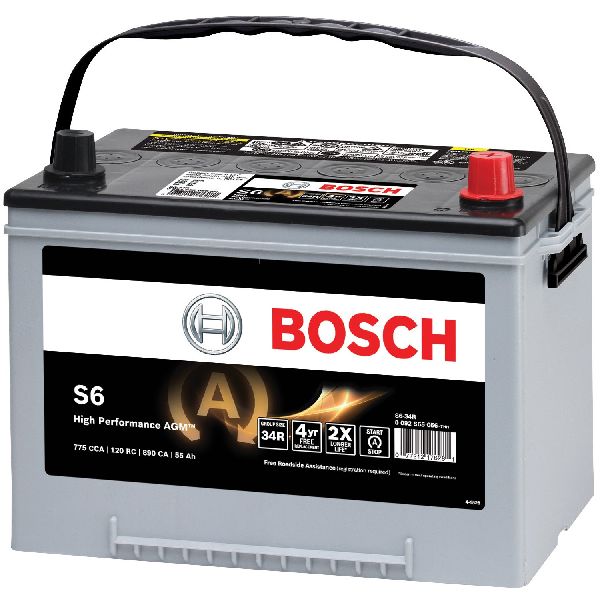
Aftermarket price range: $0 - 12V Automotive Battery
(OEM #28800-28100 (Example for 2016 Camry))— A weak battery is the most common cause after outdated software. It can disrupt the ECM's keep-alive memory and timer function.
Trusted brands: Toyota TrueStart, Interstate, DieHard
OEM price range: $200-$350
Aftermarket price range: $150-$250
Related Codes That Often Appear With This One
- P1604 (Startability Malfunction): An owner complaint filed with the NHTSA showed this code appearing alongside P2610, suggesting the ECM's confusion about its status can sometimes affect starting calculations.
Technical Service Bulletins (TSBs) & Recalls
- T-SB-0276-17: MIL ON DTC P2610 for 2015-2017 Camry, 2016-2017 Camry HV, and other models. Confirms the fix is a software reflash and is covered under the Federal Emissions Warranty. Explicitly states NOT to replace the ECM.
- T-SB-0230-17: MIL ON DTC P2610 specifically for some 2015 Camry HV vehicles. Provides specific old (306F7000) and new (306F7100) calibration IDs.
- T-SB-0336-17: A broader TSB for P2610 on many 2014-2018 Toyota models (including RAV4, Corolla, Yaris), showing the widespread nature of this software logic issue.
Platform-Specific Known Issues
- This code is a well-documented issue on 2015-2017 models, addressed by Toyota TSBs T-SB-0276-17 and T-SB-0230-17 (for Hybrid models).
Mechanic-Grade Diagnostic Values
- Stable Voltage During ECM Reflash — expected: 13.5 Volts. Failure: Voltage below this level can cause the reflash to fail and potentially damage the ECM.
- Battery Voltage, Engine Off — expected: 12.3V - 12.7V. Failure: A reading below 12.2V suggests a discharged or weak battery that could cause various electrical issues, including this code if the software fix has already been applied.
- Alternator Charging Voltage, Engine Running — expected: ~14.2V - 14.5V. Failure: Significantly higher or lower voltage indicates a charging system problem that could affect the ECM's power supply.
Scan Tool Commands That Help
- Toyota Techstream: ECU Reprogramming (Calibration Update) — This is the primary repair for P2610 on this vehicle. It is used to load the updated software logic from Toyota's TSBs into the ECM to correct the overly sensitive timer monitoring.
- Toyota Techstream: Read Calibration ID — This is the first diagnostic step after confirming the DTC. It is used to compare the currently installed software version against the new calibration IDs listed in the TSB to determine if the update is needed.
Wiring & Ground Locations
- Engine Harness Ground — There are two primary engine harness ground points on the valve cover which then attach to the chassis/frame near the strut tower.. A poor ground connection can cause electrical noise or unstable voltage for the ECM, which could disrupt its internal timer and memory, potentially causing P2610 if the primary software issue is not the cause.
- ECM Connectors — The ECM is located on the firewall behind the engine. The primary connectors are designated A24 and C24 in wiring diagrams.. In the rare event of a persistent code after a reflash, these connectors would be inspected for corrosion or damage, as they supply power and ground to the ECM.
Real Owner Repair Stories
- CarKiller Forum user 'plopez1' (2017 Toyota Camry SE 2.5L 2AR-FE with 48,505 miles) — A pending P2610 code was found with a scan tool. The Check Engine Light was not on yet. The user also noted previous history codes for P2109 and P1604 were found during a pre-purchase inspection.
❌ Tried (didn't work) N/A - User was in the diagnostic phase.
✅ What actually fixed it The user correctly identified the likely cause as the software issue documented in TSB T-SB-0276-17 and was asking for confirmation. The resolution is implied to be the TSB reflash, which is the standard, confirmed fix.
OEM Part Supersession History
89661-06T20, 89661-06T21→89661-06T22— Internal hardware/software revisions by the manufacturer to improve reliability or address issues.
Heads up: While a newer revision is better, replacing the ECM is explicitly not the fix for P2610. The software reflash applies to the existing ECM.89661-06T90→89661-06T91— Part revision for the 2015 Camry HV model, as noted in TSB T-SB-0230-17.
Heads up: This part is specific to the Hybrid model. As with other models, the TSB advises reprogramming the existing module, not replacing it.
Model Year Variations Within This Range
- 2015-2017: The primary TSB (T-SB-0276-17) for the non-hybrid 2AR-FE engine specifically covers the 2015-2017 model years, which correspond to the XV50 facelift. The 2012-2014 models are not listed, suggesting the software logic issue is specific to the facelift models' ECM calibration.
- 2015-2017: TSB T-SB-0276-17 lists different calibration IDs for LE Grade (Previous: 306E7000/306E7100, New: 306E7200) versus SE Grade (Previous: 306E8000/306E8100, New: 306E8200) trims, indicating trim-specific software.
- 2015: The 2015 Camry Hybrid has its own specific TSB (T-SB-0230-17) for this code, separate from the 2016-2017 Hybrid models which are covered under the more general TSB.
Diagnostic Flowchart
Used vs. New Parts: Buying Guide for This Vehicle
When a used part is the smart pick: For this specific P2610 repair, using used parts is NOT recommended. The primary fix is a software update to the existing Engine Control Module (ECM). A used ECM from a salvage yard will almost certainly have the same outdated software that caused the problem and will still require the dealer reflash, adding unnecessary cost and complexity.
What to inspect on the donor part:
- Do not source a used ECM for this repair.
OEM-only on this vehicle (don't cheap out):
- Engine Control Module (ECM): If the ECM genuinely fails (a very rare occurrence for this code), it must be replaced with a new or professionally remanufactured OEM unit. A used module may have VIN/immobilizer conflicts and will have outdated software.
Aftermarket brands forum-validated for this vehicle:
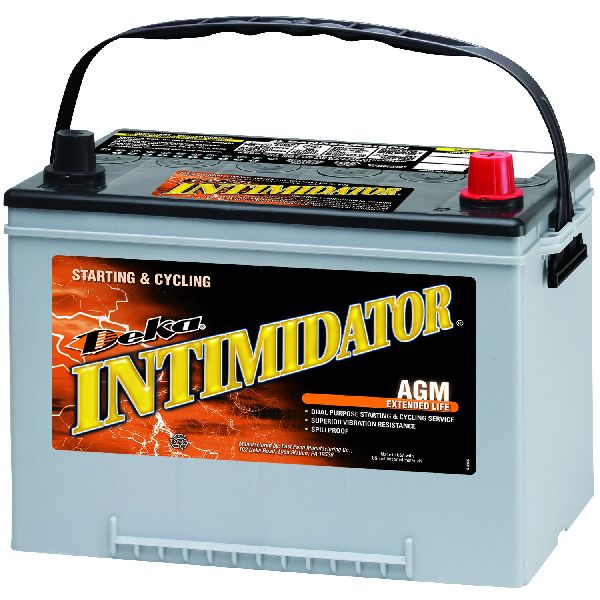
- For the 12V Battery (a rare cause): Toyota TrueStart (OEM), Interstate, DieHard, Deka, and other well-known brands with correct group size and CCA ratings are reliable choices.
Brands owners have reported issues with on this vehicle:
- Unknown or 'white-label' battery brands with poor warranty terms.
- Any used or salvage yard ECM.
Real Owner Stories
Aggregated from forums and TSBs cited above. Mileages and costs reflect what owners reported in those sources.
2017 Toyota Camry SE 2.5L 2AR-FE — 48505 miles
Symptoms: Scan tool showed P2610 as a pending code; the check engine light had not come on.
What fixed it: The owner was seeking advice, specifically asking if the ECM needed to be reprogrammed and if the issue was related to Toyota TSB T-SB-0276-17, which official documentation confirms is the correct fix.
Source hint: CarKiller (Ask Scotty Community)
Related OBD-II Codes
Frequently Asked Questions
Is the P2610 code on my 2017 Camry a serious mechanical problem?
My 2016 Camry has code P2610. Is there a TSB or recall for this?
Will Toyota cover the cost to fix the P2610 code under warranty?
The mechanic wants to replace the computer (ECM) for P2610. Is this correct?
How can I check if the P2610 software update has already been performed on my Camry?
Can I perform the ECM reflash myself to save money?
My ECM software is up-to-date, but the P2610 code returned. What should I check next?
Helpful Videos
Used OEM Parts in Stock

New Aftermarket Parts Available


The information in this article is provided for general reference and educational purposes only. Vehicle specifications, procedures, and part compatibility can vary by production date, trim level, and region. Always consult your vehicle's factory service manual and verify part numbers before purchasing or performing repairs. Safety-critical components such as airbags, seat belts, and braking systems should be installed by a qualified professional.
- Toyota Camry:
- 🎬 Helpful Videos
- 🛍️ Shop This Part
- What's Unique About the 2012-2017 Toyota Camry
- Symptoms You May Notice
- Most Likely Causes
- Rare But Worth Checking
- Diagnosis Steps
- Parts You'll Likely Need
- Related Codes That Often Appear With This One
- Technical Service Bulletins (TSBs) & Recalls
- Platform-Specific Known Issues
- Mechanic-Grade Diagnostic Values
- Scan Tool Commands That Help
- Wiring & Ground Locations
- Real Owner Repair Stories
- OEM Part Supersession History
- Model Year Variations Within This Range
- Diagnostic Flowchart
- Used vs. New Parts: Buying Guide for This Vehicle
- Real Owner Stories
- 2017 Toyota Camry SE 2.5L 2AR-FE — 48505 miles
- Related OBD-II Codes
- Frequently Asked Questions
- 🎟️ Get 5% Off