

P2610 on 2006-2011 Honda Civic: ECM/PCM Internal Timer Fixes
Code P2610 on an 8th generation Honda Civic means the engine's computer (PCM) has an internal timer fault. Before replacing the expensive PCM, check for a weak battery or bad ground connections. If those are good, the PCM likely needs a software update or replacement.
- P2610 means your car's main computer has a problem with its internal 'engine off' timer.
- Before spending a lot of money, ALWAYS check the easiest and cheapest things first: test your battery and clean the main engine ground (G101) on the thermostat housing.
- If electrical checks don't solve it, the next step is a software update at a dealership, which is cheaper than a full replacement.
- If all else fails, the Powertrain Control Module (PCM) itself has likely failed and will need to be replaced and programmed, which is the most expensive repair for this code.
What's Unique About the 2006-2011 Honda Civic

For the 8th generation (2006-2011) Civic, this code is a well-documented issue that often points toward an internal failure of the PCM itself. However, because the PCM's memory is sensitive to power supply, a weak battery or a corroded main ground wire (G101) can mimic a PCM failure. Owners and technicians on forums like Honda-Tech.com and 8thcivic.com have learned to exhaust all power and ground circuit checks before condemning the expensive computer, as these simple electrical issues are common culprits.
Symptoms You May Notice 🎬 Watch: A quick breakdown of P2610 causes and symptoms.
- Check Engine Light is on
- Inability to pass an emissions test
- Occasional rough idle or stalling
- Reduced fuel efficiency
- Possible no-start condition if related to a bad ground or complete PCM failure
- Multiple other warning lights (ABS, VSA, Power Steering) may appear simultaneously, especially if triggered by a low voltage event from a dead battery.
- Replacing the PCM without first checking the battery, connections, and ground wires. This is an expensive mistake, as a simple electrical issue is often the root cause.
- Ignoring a needed PCM software update and proceeding directly to PCM replacement.
Most Likely Causes

- Internal PCM Failure 🔴 High Probability This is the most common ultimate resolution for this code after other possibilities are eliminated. The internal timer circuit within the PCM simply fails over time due to heat, vibration, or component degradation.
How to confirm: After confirming all power/ground inputs are good and the software is up-to-date, the official Honda diagnostic procedure points to PCM replacement. A shop would substitute a known-good PCM to see if the code disappears.
Typical fix: Replace the Powertrain Control Module (PCM) and program it to the vehicle using a Honda Diagnostic System (HDS) tool for immobilizer relearn. 🎬 Watch this walkthrough on programming a Honda ECU and immobilizer.
Est. part cost: $400-$1200 - PCM Software Needs Update 🟡 Medium Probability Manufacturers often release software updates to fix bugs discovered after the vehicle is released. An update can sometimes correct the logic that triggers the P2610 code, especially if it's being set erroneously.
How to confirm: A Honda dealership or a qualified shop with a Honda Diagnostic System (HDS) or equivalent J2534 pass-thru tool must check the current software version against the latest available version from Honda.
Typical fix: Update the PCM software using a dealership-level scan tool. This is often referred to as 'reflashing' the PCM.
Est. part cost: $0 - Weak Battery or Poor Connections 🟡 Medium Probability A low voltage supply during startup or shutdown can corrupt the PCM's keep-alive memory, causing it to lose track of time and set this code. This is a very common trigger across many vehicle makes, not just Honda.
How to confirm: Test the battery's voltage and load capacity. It should be above 12.4 volts at rest and maintain voltage under load. Inspect battery terminals for corrosion and ensure they are tight. Check alternator output to ensure it's charging correctly (typically 13.5-14.5 volts).
Typical fix: Clean the battery terminals and cable ends, or replace the battery if it fails a load test.
Est. part cost: $150-$250 - Poor PCM Ground (G101) ⚪ Low Probability The main ground for the PCM, known as G101, is located on the thermostat housing, bolted to the end of the cylinder head. It is susceptible to corrosion or being left loose after engine service (like a coolant flush or thermostat replacement), which can cause a variety of electrical issues, including P2610 and no-start conditions.
How to confirm: Locate the G101 ground on the engine. Unbolt it, clean the contact surfaces of the wire terminal and the mounting point on the head with a wire brush until shiny, and re-tighten securely. A user on Honda-Tech noted a frayed wire within the loom near G101 caused their issue.
Typical fix: Clean and secure the G101 ground connection.
Est. part cost: $0
Rare But Worth Checking
- Faulty Engine Coolant Temperature (ECT) Sensor: The PCM may use the ECT sensor reading to cross-check how long the engine has been off (a hot engine was running recently). If the ECT sensor gives an illogical reading, it can contribute to this fault, though it's less common than the other causes and would typically set its own code.
- Aftermarket Electronics Interference: Poorly installed remote starters or alarms can interfere with the PCM's power supply or shutdown sequence, causing this code.
Diagnosis Steps
- Read the code with an OBD-II scanner and record any freeze frame data.
- Clear the code. Turn the ignition off for at least 30 seconds, then start the vehicle and drive to see if the code returns. If it does, the fault is active.
- Perform a full battery and charging system test. Battery voltage should be >12.4V at rest and >13.5V when running. Ensure terminals are clean and tight.
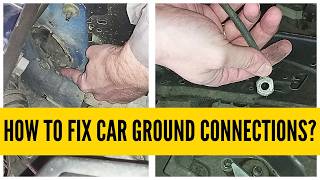
- Locate the main PCM ground (G101) on the thermostat housing. Remove the bolt, thoroughly clean the wire terminal and mounting surface with a wire brush, apply dielectric grease, and re-secure it tightly. 🎬 See how to properly clean and fix car ground connections.
- Inspect the wiring harness going to the PCM for any visible damage, corrosion, or loose pins at the connectors.
- Check for any available Technical Service Bulletins (TSBs) related to P2610. While no specific TSB for this code on this vehicle was found, it is always a critical step.
- If the above steps do not resolve the issue, consult a dealer or qualified shop to check if a PCM software update is available.
- If no software update is available or the update does not fix the problem, the PCM is the most likely cause and needs to be replaced and programmed.
Parts You'll Likely Need
- Powertrain Control Module (PCM/ECM)
(OEM #37820-RNA-A64)— This is the most common failed component for this code after all external electrical issues are ruled out. The internal timer circuit fails. Part number varies by year, transmission (AT/MT), and emissions standard (e.g., A6x, L6x series).
Trusted brands: Honda (Genuine OE), Cardone (Remanufactured), Flagship One (Remanufactured/Programmed)
OEM price range: $900-$1200
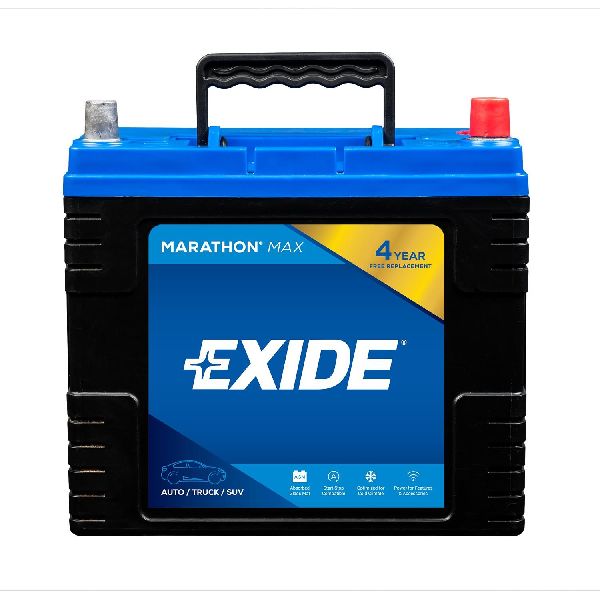
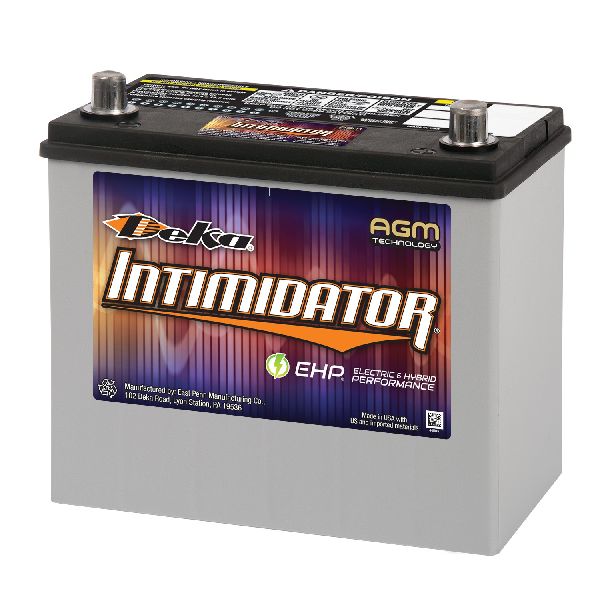
Aftermarket price range: $400-$700 (Remanufactured) - Car Battery — A weak or failing battery can cause low voltage issues that trigger this code. It should always be checked first as it's a common and simple fix.
Trusted brands: Interstate, DieHard, Duralast
Aftermarket price range: $150-$250
Platform-Specific Known Issues
- G101 Ground Location: The G101 ground, critical for the PCM, is located on the thermostat housing. It's often disturbed during cooling system service and can become corroded or loose, leading to P2610. Forum users on Honda-Tech.com confirm this is a key checkpoint.
- Real-World Forum Diagnosis: A thread on 8thcivic.com titled 'P2610 - P/ECM Internal Engine Off Timer Performance' details a user's diagnostic process. The consensus from experienced members was to check the G101 ground first, then check for a PCM software update, and only then consider PCM replacement, confirming the diagnostic hierarchy.
Mechanic-Grade Diagnostic Values
- Battery Voltage at Rest — expected: 12.4V - 12.8V. Failure: Below 12.4V indicates a weak or discharged battery that can cause memory corruption in the PCM.
- Charging System Voltage (Engine Running) — expected: 13.5V - 14.5V. Failure: Voltage outside this range indicates a faulty alternator or regulator, which can cause electrical issues including P2610.
- Voltage Drop on Ground Circuit (e.g., G101) — expected: < 0.2 Volts. Failure: A reading higher than 0.2V indicates excessive resistance in the ground path, which can starve the PCM of a stable ground and cause erratic behavior. A drop of 0.4V or more strongly points to a problem.
- PCM Power Supply Voltage — expected: Should be within 0.5V of battery voltage. Failure: A larger voltage drop indicates high resistance in the power feed circuit to the PCM.
Scan Tool Commands That Help

- Honda Diagnostic System (HDS): Clear DTC — Used at the beginning of diagnosis to see if the code returns immediately, which indicates a hard fault versus an intermittent one.
- Honda Diagnostic System (HDS): Check for Software Update — Used to verify if the installed PCM software is the latest version. An update may fix the logic that triggers P2610. This must be done before condemning the PCM.
- Honda Diagnostic System (HDS) or equivalent: Immobilizer Relearn / PCM Replacement — Required after installing a new or used PCM to program the vehicle's keys to the new module, allowing the engine to start.
- Honda Diagnostic System (HDS): ECM Reset — A function to reset adaptations and internal module memory. This is often performed before and after certain diagnostic procedures or part replacements.
Wiring & Ground Locations

- G101 — On the thermostat housing, bolted to the cylinder head.. This is a primary ground point for the PCM. Corrosion or looseness here is a well-documented cause of P2610 and other electrical faults. It is often disturbed during cooling system service.
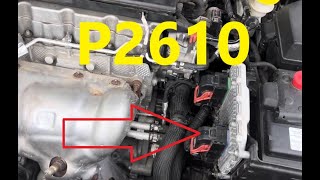
- PCM Connectors — Located behind the battery tray in the engine bay.. The connectors and pins for the PCM are susceptible to corrosion or damage. A voltage drop test should be performed at the power and ground pins directly at these connectors to confirm the PCM is receiving proper voltage.
Real Owner Repair Stories
- Honda-Tech Forum Member 'miketunstall' (7th Generation Honda Civic (2001-2005, but principle is relevant)) — Fried ECU/PCM due to alternator issue, car in limp mode, no tachometer, no communication with ECU.
❌ Tried (didn't work) Direct replacement of ECU resulted in immobilizer issues (blinking green key light).
✅ What actually fixed it The user desoldered a small EPROM chip (labeled IC240) from the original, fried ECU and soldered it onto a used (junkyard) ECU. This transferred the immobilizer data, allowing the car to start with the original keys without needing dealer reprogramming.
OEM Part Supersession History
37820-RNA-A64→37820-RNA-A68— Part revision by manufacturer, likely for hardware or firmware improvements to address reliability issues.
Heads up: While A68 replaces A64, it's critical to match the part number to the vehicle's specific year, transmission (AT/MT), and emissions type (e.g., US vs. Canada). Using the wrong series can cause compatibility issues.37820-RNA-A71 through A75→Later revisions within the same family.— Incremental updates for 2009-2011 models.
Heads up: Part numbers for 2009-2011 models (e.g., 37820-RNA-A7x) are generally not interchangeable with 2006-2008 parts (e.g., 37820-RNA-A6x) due to wiring or software differences.
Model Year Variations Within This Range
- 2006-2008 vs 2009-2011: PCM part numbers changed between the pre-facelift (06-08) and post-facelift (09-11) models. For example, 37820-RNA-A6x series are common for earlier models, while 37820-RNA-A7x series are for later models. It is critical to use the correct part number for the specific year and vehicle configuration.
Diagnostic Flowchart
Other Known Issues on This Vehicle
Issues unrelated to this code that are worth knowing about as an owner of this generation:
- Cracked Engine Block 🔴 High — Common on 2006-2008 and some early 2009 models with the R18 engine. A casting defect causes a crack to form, leading to coolant loss and overheating. (Ref: Honda TSB 10-048 extended the warranty on the engine block to 10 years with unlimited mileage, but this has since expired.)
- Failing Clear Coat and Peeling Paint 🟡 Low — Extremely common across this generation, especially on dark colors. The clear coat fails and peels, typically starting on the roof, hood, and trunk. (Ref: Honda addressed this with a warranty extension (up to 7 years), but no formal recall was issued. Many owners report the issue occurring after the extension expired.)
- Defective Sun Visors 🟡 Low — Very common. The plastic housing for the visor cracks at the pivot point, causing the visor to droop and obstruct the driver's view. (Ref: A class-action lawsuit resulted in a settlement and a warranty extension to 7 years/100,000 miles, which has now expired for all affected vehicles.)
- Premature/Uneven Rear Tire Wear 🟠 Medium — Common on 2006-2009 models. The original rear upper control arms did not allow for proper camber adjustment, leading to rapid inner tire wear. (Ref: Honda released updated rear upper control arms (part number 06423-SNA-A01) to correct the geometry, but this was not a recall and was a customer-pay repair unless under warranty.)
Used vs. New Parts: Buying Guide for This Vehicle
When a used part is the smart pick: A used PCM from a junkyard is a cost-effective option, but ONLY if you use a programming service or are capable of swapping the immobilizer chip yourself. Many companies offer services where you send them your original PCM and the used donor PCM, and they will clone the necessary data (VIN and immobilizer keys) to the donor unit, making it plug-and-play.
Donor-vehicle mileage cap: roughly under 150000 miles for the part to have meaningful remaining life.
What to inspect on the donor part:
- Match the OEM part number EXACTLY. Even a single digit difference can mean incompatibility.
- Ensure the donor vehicle has the same engine, transmission (Automatic vs. Manual), and emissions standard.
- Inspect the PCM connectors for any signs of corrosion, bent pins, or water damage.
- If possible, get the VIN of the donor car to help with programming verification.
OEM-only on this vehicle (don't cheap out):
- Powertrain Control Module (PCM): While remanufactured units from reputable brands like Cardone or programmed units from specialists like Flagship One are viable, a brand new OEM unit from Honda is the most reliable, albeit most expensive, option. Avoid unbranded, 'no-name' new units from online marketplaces.
Aftermarket brands forum-validated for this vehicle:
- Flagship One (Pre-programmed)
- Module Mechanics (Programming Service)
- Auto Computer Performance (Pre-programmed)
- SIA Electronics (Repair Service)
Brands owners have reported issues with on this vehicle:
- Generic, unbranded PCMs from non-specialist online vendors without a warranty or programming support.
Real Owner Stories
Aggregated from forums and TSBs cited above. Mileages and costs reflect what owners reported in those sources.
2006-2011 Honda Civic
Symptoms: P2610 code and possible no-start condition.
What fixed it: The owner discovered a frayed wire within the wiring loom near the G101 ground connection on the thermostat housing.
Source hint: honda-tech.com: (Thread: 'g101 ground')
Acura TL
Symptoms: P2610 code appeared.
What fixed it: The owner found that the ECU (Engine Control Unit) was wet because of a clogged A/C drain line, which caused the electrical fault.
Source hint: acurazine.com: (Thread: 'help! p2610 code')
Related OBD-II Codes
Frequently Asked Questions
Where is the G101 ground located on my 2006-2011 Civic? I heard it's a common problem.
My check engine light is on for P2610, but my ABS and VSA lights also came on. Are these related?
Could a simple weak battery really cause the P2610 code?
The dealership wants to update my car's computer software for P2610. Is this a legitimate fix?
I just had my thermostat replaced and now I have a P2610 code. Could the repair be related?
Is it common for the main computer (PCM) to fail on these Civics and cause a P2610?
Helpful Videos
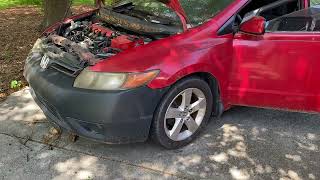
Used OEM Parts in Stock


New Aftermarket Parts Available


The information in this article is provided for general reference and educational purposes only. Vehicle specifications, procedures, and part compatibility can vary by production date, trim level, and region. Always consult your vehicle's factory service manual and verify part numbers before purchasing or performing repairs. Safety-critical components such as airbags, seat belts, and braking systems should be installed by a qualified professional.
- Honda Civic:
- 🎬 Helpful Videos
- 🛍️ Shop This Part
- What's Unique About the 2006-2011 Honda Civic
- Symptoms You May Notice
- Most Likely Causes
- Rare But Worth Checking
- Diagnosis Steps
- Parts You'll Likely Need
- Platform-Specific Known Issues
- Mechanic-Grade Diagnostic Values
- Scan Tool Commands That Help
- Wiring & Ground Locations
- Real Owner Repair Stories
- OEM Part Supersession History
- Model Year Variations Within This Range
- Diagnostic Flowchart
- Other Known Issues on This Vehicle
- Used vs. New Parts: Buying Guide for This Vehicle
- Real Owner Stories
- 2006-2011 Honda Civic
- Acura TL
- Related OBD-II Codes
- Frequently Asked Questions
- 🎟️ Get 5% Off