

P2583 on 2017-2024 Audi A4: Adaptive Cruise Control Sensor Fault Causes and Fixes
P2583 on a 2017-2024 Audi A4 likely indicates a fault with the front distance range sensor for the Adaptive Cruise Control (ACC). The most common fix is cleaning the sensor in the front bumper; if that fails, professional recalibration ($250-$600) or sensor replacement may be necessary. This is a known issue on the B9 platform, often accompanied by a C110300 'misadjusted' code.
- P2583 most likely means your Audi's Adaptive Cruise Control (ACC) has a problem, disabling it and the Pre Sense system.
- Before paying for any repairs, your first step should always be to thoroughly clean the radar sensor on the front of the car.
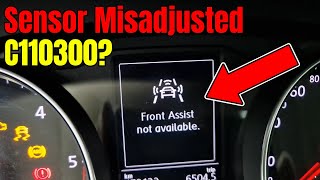
- Check for the companion code C110300, which specifically means the sensor is misaligned and needs calibration, not necessarily replacement.
- If cleaning doesn't work, the fix is not DIY-friendly. The system needs professional recalibration, which costs several hundred dollars.
- Do not replace the expensive radar sensor unless a technician has proven it is internally faulty after attempting calibration.
What's Unique About the 2017-2024 Audi A4

On the B9 generation Audi A4, the Adaptive Cruise Control (ACC) system is highly integrated with the Pre Sense collision avoidance system. A fault in the ACC radar will disable both features, leading to multiple warnings on the dashboard. While the specific code P2583 is not the most commonly cited in Audi forums, the failure of the ACC radar is a known issue. Owners report failures can be triggered by something as simple as heavy rain or as complex as internal water damage to the sensor unit itself. The B9 platform uses one or two radar sensors (master and slave) which communicate over the FlexRay bus, and a fault in either can disable the system.
Symptoms You May Notice

- "Adaptive cruise assist: currently unavailable" message on the dashboard.
- "Audi pre sense: currently restricted" warning light.
- "Distance warning: unavailable" message
- Adaptive Cruise Control (ACC) cannot be activated
- Standard cruise control may also be disabled
- Illuminated check engine light or EPC light
- Intermittent functionality, where the system works and then fails during the same drive.
- Replacing the ACC sensor when it only needs recalibration. Always perform or request a calibration before approving a costly sensor replacement, unless there is clear physical damage.
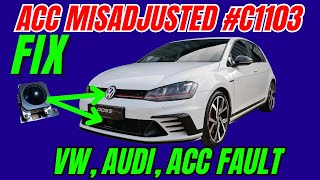
- Ignoring related faults. A fault in a wheel speed sensor or the ABS module can sometimes disable the ACC system as a precaution, even if the radar sensor itself is fine. A fault in the front camera (J852), often after a windshield replacement, 🎬 Watch this guide on calibrating the front-facing driver assistance camera. can also disable the ACC system.
Most Likely Causes

- Obstructed Radar Sensor 🔴 High Probability The sensor is located in the front bumper, making it susceptible to blockage from snow, ice, heavy dirt, or other debris.
How to confirm: Visually inspect the front radar sensor, which is a square-shaped unit often in the lower grille, for any obstructions. The warning may appear temporarily in heavy rain or fog, which can sometimes set a hard fault that doesn't clear itself.
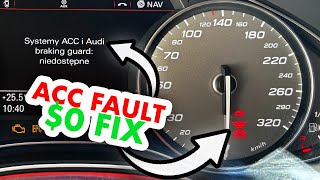
Typical fix: Thoroughly clean the sensor and the area around it with a soft cloth. 🎬 See how to fix Audi ACC and brake guard faults for free. The system may reset itself after cleaning and restarting the car a few times.
Est. part cost: $0 - Radar Sensor Misalignment 🟡 Medium Probability Minor front-end impacts, such as hitting a curb, a parking block, or even significant road jarring, can knock the sensor out of its precise alignment. The sensor is mounted to the flexible plastic bumper cover, making it highly susceptible to being knocked out of alignment.
How to confirm: This is almost always accompanied by the Audi-specific fault code C110300 ('Adaptive Cruise Control sensor misadjusted'). A diagnostic tool like VCDS or OBDeleven can read the sensor's live data for misalignment angles in module 13 or 8B. If the P2583 code appeared after any minor front-end incident, misalignment is highly likely.
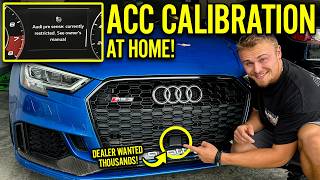
Typical fix: The sensor must be recalibrated by a dealership or a qualified independent shop with ADAS calibration equipment. Some advanced DIY tools like OBDeleven claim to offer a calibration function that can work for minor deviations by resetting learned values. 🎬 Watch: How to calibrate your ACC radar using DIY tools.
Est. part cost: $0 (Labor cost is high, $400-$800) - Failed ACC Radar Sensor ⚪ Low Probability Forum users report water ingress from cracked housings or physical damage from road debris causing the radar unit to fail completely. Internal circuitry can also fail over time.
How to confirm: This is diagnosed after ruling out obstruction and misalignment. A technician will test the sensor's power, ground, and FlexRay/CAN bus communication lines. If all are good but the sensor is unresponsive or fails calibration, it has failed internally. A 'Lost Communication' code like U0235 may also be present.
Typical fix: Replacement of the ACC radar sensor, followed by mandatory online component protection removal and ADAS calibration.
Est. part cost: $900-$1500
Rare But Worth Checking
- Wiring or Connector Damage: The wiring harness leading to the ACC sensor can be damaged from road debris or corrosion at the connector pins. Forum users have found corrosion on connector pins causing communication errors.
- Low Battery Voltage or Faulty Gateway Module: Sensitive electronic modules like the ADAS controller (address 13) can malfunction if the vehicle's battery voltage is low or unstable. In rare cases, a faulty CAN Gateway module can cause communication errors with the ACC sensors, as documented by users performing retrofits.
Diagnosis Steps
- Read all fault codes from all modules using an Audi-compatible scanner (like VCDS or OBDeleven) to check for more specific codes like C110300 alongside P2583.
- Thoroughly inspect and clean the front ACC radar sensor surface in the bumper/grille. Ensure it is not loose or physically damaged.
- After cleaning, clear the codes and test drive the vehicle to see if the fault returns. Sometimes a few ignition cycles are needed.
- If the code returns, use a scan tool to check the live data from the 'Auto Dist. Reg' (Module 13) and the slave sensor (Module 8B). Check the 'Misalignment angle' values. Values outside a very narrow tolerance (e.g., +/- 0.8 degrees) will trigger a fault.
- If misalignment is confirmed by code C110300, attempt a software reset/calibration using a tool like OBDeleven or VCDS if you are an advanced user. This involves accessing the basic settings for module 13 and selecting 'Reset misalignment angle for sensors'. This may resolve minor deviations.
- For pre-facelift models (2017-2019) with physical adjustment screws, minor physical adjustments can be attempted by advanced DIYers. Turn the T20 or 3.5mm hex screws in small increments, reset the learned values with a scan tool, and test drive to see the new calculated angle.
- If software calibration fails or for facelift models (2020+), the vehicle must go to a qualified shop for static ADAS calibration using a specific alignment rig (e.g., VAS6430).
- If calibration fails repeatedly or the sensor is unresponsive in live data, inspect the wiring and connectors for power (12V), ground, and CAN/FlexRay signals.
- If wiring is intact and calibration is not possible, the ACC radar sensor itself has likely failed and requires replacement, component protection removal, and calibration.
Parts You'll Likely Need
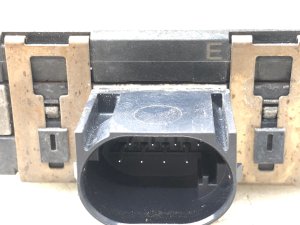
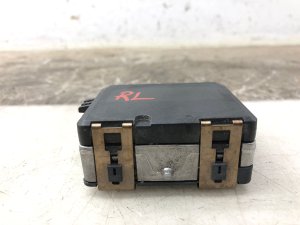
- Adaptive Cruise Control Radar Sensor
(OEM #8W0907561 (supersedes to F, G, H, J, K); 4M0907561 (various suffixes J, L, M, etc.))— This is the part that fails in cases of internal damage or water intrusion, after obstruction and misalignment have been ruled out. Part number varies by vehicle options (master/slave) and model year.
Trusted brands: Bosch, Continental
OEM price range: $1200-$1600
Aftermarket price range: $400-$900 (Used/Remanufactured)
Related Codes That Often Appear With This One
- C110300 — This is the most common Audi-specific code for 'Adaptive Cruise Control; misadjusted', which directly points to the root cause of the P2583 warning.
- U0235 — Indicates 'Lost Communication With Cruise Control Front Distance Range Sensor', suggesting a wiring problem or a completely failed sensor module rather than just misalignment.
Technical Service Bulletins (TSBs) & Recalls
- While no TSB directly addresses P2583, TSB 2047493/7 is known to relate to ACC and Pre Sense malfunctions on this platform, often involving software updates or calibration procedures for the camera and radar systems.
Platform-Specific Known Issues
- Some owners report the 'ACC unavailable' warning appearing temporarily in heavy rain, which can sometimes lead to a persistent fault that requires a reset or recalibration.
- A user on AudiWorld forums with a 2018 S4 experienced the C110300 fault after a minor tap to the front bumper while parked, highlighting the sensor's sensitivity to physical shock.
Mechanic-Grade Diagnostic Values

- ACC Sensor Misalignment Angle (Horizontal & Vertical) — expected: -0.8° to +0.8°. Failure: A value outside of the +/- 0.8 degree tolerance will set fault C110300 and disable the ACC/Pre-Sense system.
- ACC Sensor Connector Voltage — expected: Pin 8: 12V (Ignition On), Pin 1: Ground (continuity to chassis). Failure: Absence of 12V power or a bad ground will cause communication faults (like U0235).
Scan Tool Commands That Help
- VCDS or OBDeleven: Basic Settings: 'Reset misalignment angle for sensors' — After making a physical adjustment on a pre-facelift model, or to attempt a reset for a very minor deviation. This command clears the learned angle values, forcing the system to recalculate during a test drive. Requires Security Access code (e.g., 91153, 14117) for Module 13.
- ODIS (Dealer Tool): Guided Functions: Component Protection Removal — This is mandatory after installing a new or used ACC radar sensor. It uses an online connection to Audi's servers (GEKO account) to pair the sensor's serial number to the vehicle's VIN. Without this, the sensor will not function.
- ODIS (Dealer Tool) with ADAS Rig (VAS6430): Guided Functions: Calibrate ACC Sensor — This is the required procedure for significant misalignment, for all facelift (2020+) models, or when a software reset fails. It uses a physical target board placed at a precise distance from the car to perform a static calibration.
Wiring & Ground Locations
- ACC Master Sensor (J428 / Module 13) Connector — Connector on the back of the driver's side radar sensor in the lower front bumper.. Provides power, ground, and communication. Pin 1 is Ground, Pin 8 is 12V power from a fuse in the driver's footwell. Pins 5 & 6 are FlexRay bus lines to the Gateway. Pins 2 & 3 are FlexRay lines to the slave sensor.
- ACC Slave Sensor (J850 / Module 8B) Connector — Connector on the back of the passenger's side radar sensor in the lower front bumper.. Receives power and communicates with the master sensor. Pin 1 is Ground, Pin 8 gets power from the same fuse as the master. Pins 5 & 6 are FlexRay lines from the master sensor.
- Ground Point 671 / 685 — On the front of the left (671) and right (685) longitudinal members (frame rails) in the engine bay.. These are the primary chassis ground locations for front-end components, including the ACC sensors. A loose or corroded ground here can cause intermittent communication faults.
Real Owner Repair Stories
- AudiWorld Forum User (2019 Audi SQ5 (B9 Platform)) — Presense outage warnings and ACC stopped working, with fault code C110300 present in module 13. Live data showed a horizontal misalignment of +1.7 degrees.
❌ Tried (didn't work) Initially, the owner was unable to reset the error with OBDeleven as security codes were not working and the live data values would not change once the error was latched.
✅ What actually fixed it The owner made a small physical adjustment by turning the upper-left adjustment screw on the passenger-side sensor counter-clockwise by one turn. After a test drive the next day, the errors cleared and ACC function returned. The live data then updated to show an angle within the acceptable +/- 0.8 degree range. This confirms that on pre-facelift models, minor physical adjustment is a viable DIY fix. - Mr-Fix YouTube Channel (Audi S6 C7 (similar system architecture)) — ACC and Audi Brake Guard errors on the dashboard.
❌ Tried (didn't work) Initial scan for misalignment codes did not point to the root cause.
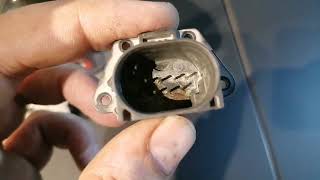
✅ What actually fixed it Upon physical inspection of the sensor connectors, one of the pins (CAN-BUS line) showed white residue from water corrosion. Cleaning the pin with contact cleaner and drying with compressed air resolved the communication issue, and the faults were cleared successfully. This highlights the importance of checking for physical connector damage or corrosion.
OEM Part Supersession History
8W0907561 / 8W0907541→Suffixes change frequently (e.g., F, G, H, J, K).— Hardware and software revisions to improve performance and reliability.
Heads up: Installing a used sensor is highly problematic due to Component Protection, which locks the sensor to the original car's VIN. While some specialists claim to be able to 'virginize' or swap EEPROM chips from the old sensor to the new one, the official and most reliable method is dealer replacement with online CP removal via ODIS. Using a sensor with a much newer software version on an older car may also require a gateway module firmware update to ensure compatibility.
Model Year Variations Within This Range
- 2017-2019 (Pre-Facelift): The ACC radar sensors on these models are mounted with physical adjustment screws (typically T20 Torx or 3.5mm hex). This allows for minor manual adjustments to correct misalignment, which can be monitored via live data in VCDS/OBDeleven.
- 2020-2024 (B9.5 Facelift): The ACC radar sensors on facelift models do not have physical adjustment screws. The bracket is fixed. Any and all alignment corrections must be done via a static calibration procedure using a dealer-level tool (ODIS) and a physical ADAS alignment rig.
Diagnostic Flowchart
Other Known Issues on This Vehicle
Issues unrelated to this code that are worth knowing about as an owner of this generation:
- Premature Water Pump & Thermostat Housing Failure 🔴 High — Commonly fails between 30,000 and 60,000 miles. Leaks start small and can lead to overheating if ignored. (Ref: No official recall, but it is a widely documented failure. The plastic housing can crack and leak coolant.)
- Rocker Arm Bearing Failure (EA839 3.0T V6) 🔴 High — Primarily affects early B9 models (2017-2019) with the 3.0T V6 engine (S4). Failure rate is estimated to be low (1-2%) but can cause catastrophic engine damage. A ticking noise from the top of the engine is the primary symptom. (Ref: No recall has been issued, but Audi updated the rocker arm design in production around mid-2018.)
- Carbon Buildup on Intake Valves (2.0T & 3.0T) 🟠 Medium — As a direct-injection engine, buildup is inevitable over time, typically requiring cleaning every 60,000-80,000 miles. Symptoms include rough idle, hesitation, and reduced power.
- 48V Mild Hybrid System Malfunction (B9.5 models) 🔴 High — On 2020+ models with the MHEV system, failure of the Belt Starter Generator (BSG) is a known issue that can cause a sudden loss of all electronics and leave the vehicle stranded. (Ref: TSB 2067906 and 2069259/4 address diagnosis and software updates for the 48V system and BSG issues.)
Used vs. New Parts: Buying Guide for This Vehicle
When a used part is the smart pick: Buying a used ACC sensor is generally NOT recommended for this vehicle unless you have a guaranteed method for removing Component Protection (CP). The cost savings can be wiped out by the complexity and potential failure of adapting the used part. It only makes sense if the price is exceptionally low and you have confirmed access to a specialist who can handle the CP removal, which is not a standard dealer service for used parts.
Donor-vehicle mileage cap: roughly under 50000 miles for the part to have meaningful remaining life.
What to inspect on the donor part:
- Inspect the sensor housing for any cracks, especially around the seams, which could indicate water intrusion.
- Ensure the connector pins are clean, straight, and free of any corrosion or white/green residue.
- Verify the part number and suffix match what is appropriate for your vehicle's model year and options.
- Ask the seller if the part was 'unlocked' or removed from the donor vehicle's gateway before being pulled, though this is rare and difficult to verify.
OEM-only on this vehicle (don't cheap out):
- Adaptive Cruise Control Radar Sensor
Aftermarket brands forum-validated for this vehicle:
- No forum-validated aftermarket brands exist for the sensor itself. The original parts are made by Bosch or Continental for Audi.
Brands owners have reported issues with on this vehicle:
- Avoid any unbranded sensors from online marketplaces. These are unlikely to be recognized by the vehicle's gateway, will fail calibration, and cannot have Component Protection managed.
Real Owner Stories
Aggregated from forums and TSBs cited above. Mileages and costs reflect what owners reported in those sources.
2018 Audi S4 3.0T
Symptoms: The owner experienced a C110300 fault code and ACC failure immediately after a minor tap to the front bumper while the vehicle was parked.
What fixed it: The owner attempted to use VCDS for diagnosis but found they were unable to reset the misalignment without specific dealer tools, confirming the sensitivity of the B9 platform's radar mounting.
Source hint: AudiWorld Forums: 'ACC radar sensor recalibration on B9 platform'
2017-2019 Audi A4 (Pre-facelift)
Symptoms: Adaptive Cruise Control sensor misadjusted (Code C110300) with intermittent system availability.
What fixed it: Users performed a trial-and-error physical adjustment of the sensor using the adjustment screws and monitored the 'Misalignment angle' live data via OBDeleven to bring the sensor back within tolerance.
Source hint: OBDeleven Forum: 'C110300 Adaptative Cruise Control sensor misadjusted'
2017-2024 Audi A4 B9
Symptoms: Intermittent ACC and front parking sensor faults appearing and disappearing during the same drive.
What fixed it: A full vehicle scan was required to identify the link between the ACC system and other modules like parking sensors to ensure a proper diagnosis.
Source hint: AudiWorld Forums: 'Intermittent ACC/front parking sensor fault'
Related OBD-II Codes
Frequently Asked Questions
My 2018 Audi A4 is showing 'Adaptive cruise assist: currently unavailable' after a minor bump. Is there a TSB for this?
Can I use OBDeleven to fix the P2583 code on my B9 Audi A4?
Where is the ACC radar sensor located on the 2017-2024 Audi A4?
Why does my 'Audi pre sense: currently restricted' light only come on during heavy rain?
I have a 2017 Audi A4; can I manually adjust the radar sensor myself?
How much does it cost to fix the ACC sensor misalignment on an Audi A4?
Helpful Videos

We Have This Part in Stock



The information in this article is provided for general reference and educational purposes only. Vehicle specifications, procedures, and part compatibility can vary by production date, trim level, and region. Always consult your vehicle's factory service manual and verify part numbers before purchasing or performing repairs. Safety-critical components such as airbags, seat belts, and braking systems should be installed by a qualified professional.
- Audi A4:
- 🎬 Helpful Videos
- 🛍️ Shop This Part
- What's Unique About the 2017-2024 Audi A4
- Symptoms You May Notice
- Most Likely Causes
- Rare But Worth Checking
- Diagnosis Steps
- Parts You'll Likely Need
- Related Codes That Often Appear With This One
- Technical Service Bulletins (TSBs) & Recalls
- Platform-Specific Known Issues
- Mechanic-Grade Diagnostic Values
- Scan Tool Commands That Help
- Wiring & Ground Locations
- Real Owner Repair Stories
- OEM Part Supersession History
- Model Year Variations Within This Range
- Diagnostic Flowchart
- Other Known Issues on This Vehicle
- Used vs. New Parts: Buying Guide for This Vehicle
- Real Owner Stories
- 2018 Audi S4 3.0T
- 2017-2019 Audi A4 (Pre-facelift)
- 2017-2024 Audi A4 B9
- Related OBD-II Codes
- Frequently Asked Questions
- 🎟️ Get 5% Off