

P2544 on 2008-2014 Cadillac CTS: Causes for Torque Management and Harsh Shifting
On a 2008-2014 Cadillac CTS, code P2544 is almost always caused by a poor electrical connection at the main transmission harness connector (X1). Inspecting, cleaning, or repairing the connector terminals is the most common fix, as highlighted in GM Technical Service Bulletin #PIC4740E. A secondary known failure point is harness chafing near the bell housing.
- P2544 on a 2008-2014 CTS indicates a communication failure between the engine and transmission computers.
- The most likely cause is not a bad module, but a poor connection at the main transmission wiring harness connector.
- Symptoms are severe, including harsh, slamming shifts that can damage the transmission over time.
- Diagnosis should always begin with a full scan and a physical inspection of the transmission connector before considering replacing any expensive parts.
What's Unique About the 2008-2014 Cadillac CTS
For the second-generation Cadillac CTS, this code is strongly linked to a known issue with the vehicle's wiring. General Motors issued a Technical Service Bulletin (TSB #PIC4740E) that specifically directs technicians to investigate the transmission's main electrical connector (X1) for unseated pins or corrosion. The TSB also highlights a harness chafing point near the bell housing on the CTS and related ATS models. This suggests a wiring or connector problem is far more likely than a failed control module on this particular car.
Diagnostic Flowchart
Tap your situation to follow the diagnostic path that matches what you're seeing on this vehicle.
Symptoms You May Notice
- Harsh, erratic, or slamming gear shifts.
- Check Engine Light is on.
- Transmission may be locked in one gear (Limp Mode).
- Other warning lights, such as for the stability system (StabiliTrak), may illuminate due to the communication breakdown.
- Reduced engine power.
- Vehicle may not crank or may start and then stall.
- Replacing the Transmission Control Module (TCM) without first thoroughly inspecting the transmission connector (X1) and the wiring harness for chafing near the bell housing. The TSB for this platform makes it clear that the wiring is the primary suspect.
Most Likely Causes
- Poor Connection at Transmission Connector X1 🔴 High Probability As documented in GM TSB #PIC4740E, the terminals within the main transmission harness connector are a known failure point due to becoming unseated, corroded, or damaged by moisture, leading to communication loss between the TCM and ECM.
How to confirm: Visually inspect the transmission's main electrical connector (a large, round connector) for signs of corrosion or moisture. Per the TSB, carefully tug on each individual wire going into the connector to ensure the pins are fully seated and locked. A 'wiggle test' on the connector while monitoring scan tool data can also identify intermittent faults.
Typical fix: Clean the connector and pins with a dedicated electrical contact cleaner. If pins are damaged or unseated, they must be professionally replaced or re-pinned. In severe cases, the entire connector pigtail may need to be replaced.
Est. part cost: $10-$150 - Damaged Wiring Harness 🟡 Medium Probability The wiring harness running to the transmission can be exposed to heat and vibration. TSB #PIC4740E specifically calls out a harness securing bracket on the passenger side of the bell housing on the CTS where the harness can chafe through, causing shorts in the CAN bus wires.
How to confirm: Visually inspect the harness, paying close attention to the area near the bell housing bracket for any signs of chafing, melting, or breaks. With the connectors at the ECM and TCM disconnected, use a multimeter to check for continuity and resistance on the CAN bus wires. There should be no opens or shorts to ground/power.
Typical fix: Repair the specific broken or shorted wire. This involves soldering in a new section of wire and protecting it with heat shrink tubing. Reroute the harness to prevent future chafing.
Est. part cost: $5-$25
Rare But Worth Checking
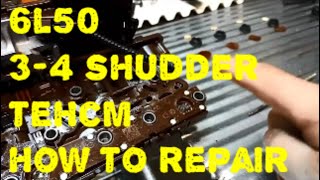
- Faulty Transmission Control Module (TCM): While possible, the TSB strongly suggests checking wiring first. A faulty TCM is a common misdiagnosis. Only consider replacing the TCM after 🎬 See how internal module issues can cause shifting shudders. all wiring and connection issues have been definitively ruled out.
- Faulty Engine Control Module (ECM): This is the least likely cause. The ECM is the receiving module, and failures are more common on the transmitting side (TCM) or in the wiring between them.
Diagnosis Steps
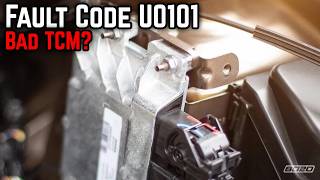
- Perform a full vehicle diagnostic scan. Note all DTCs, especially communication (U-codes) like U0073, U0100, and U0101, as they are 🎬 Watch: How to diagnose and fix lost communication with the TCM. crucial clues pointing to a network fault.
- Following TSB #PIC4740E, locate and disconnect the main transmission electrical connector (X1).
- Thoroughly inspect both sides of the connector for green/white corrosion, moisture, or bent pins.
- Perform a 'tug test' by gently pulling on each wire at the back of the connector to ensure every terminal is fully seated and locked in place.
- If corrosion is found, clean it using an electronics-safe contact cleaner and a small brush. Ensure the connector is completely dry before reconnecting.
- Specifically for the CTS, inspect the wiring harness near the securing bracket on the passenger side of the transmission bell housing. Look for any signs of the harness rubbing or chafing against the bracket or engine block.
- If no visible issues are found, advanced diagnostics are needed to test the continuity and resistance of the CAN bus wires between the ECM and TCM connectors.
- Only after confirming the wiring and connectors are perfect should you consider a faulty TCM or ECM as the cause.
Parts You'll Likely Need
- Transmission Connector Terminals/Pins — The small metal pins inside the connector are the most common point of failure due to corrosion or becoming unseated, as indicated by the TSB.
Trusted brands: ACDelco
OEM price range: $5-$15 per pin
Aftermarket price range: $2-$10 per pin - Transmission Main Connector (X1)
(OEM #88988938)— If the entire connector housing is cracked, melted, or too corroded to be salvaged, the complete connector assembly will need to be replaced and spliced into the harness.
Trusted brands: GM Genuine Parts, ACDelco
OEM price range: $70-$100
Aftermarket price range: $40-$70 - Electrical Contact Cleaner — Necessary for safely cleaning corrosion from the sensitive connector pins without leaving a residue.
Trusted brands: CRC, WD-40 Specialist
OEM price range: $10-$20
Aftermarket price range: $8-$15
Related Codes That Often Appear With This One
- P0700 — P0700 is a generic code indicating the TCM has stored a fault. It often appears with P2544 because P2544 is a transmission-related communication fault detected by the ECM.
- U0073, U0100, U0101, U0121, U0140 — These are network communication codes (CAN bus faults). Their presence alongside P2544 strongly reinforces the diagnosis of a wiring or connector issue, as a physical fault will disrupt communication for multiple modules simultaneously. The full list of related codes in TSB #PIC4740E is extensive.
Technical Service Bulletins (TSBs) & Recalls
- PIC4740E: Addresses a loss of communication with the TCM or ECM, storing codes including P2544, and directs technicians to inspect the transmission X1 connector terminals for being unseated and to inspect for harness chafing near the bell housing.
Platform-Specific Known Issues
- A known issue documented in GM TSB #PIC4740E points to communication failures, including P2544, originating from unseated or corroded terminals in the transmission X1 connector.
- The same TSB also identifies a specific failure point on the CTS and ATS models where the transmission wiring harness can chafe against a securing bracket on the passenger side of the bell housing, causing shorts.
Mechanic-Grade Diagnostic Values
- CAN Bus Network Resistance — expected: Approximately 60 Ω (Ohms). Failure: A reading of ~120 Ω indicates an open in the circuit or that one of the two terminating resistors is offline. A reading near 0 Ω indicates a short between the CAN High and CAN Low wires.
- CAN Bus Voltage (Key On, Engine Off) — expected: CAN High (Pin 6 to Ground): ~2.6-2.7V. CAN Low (Pin 14 to Ground): ~2.3-2.4V. The two voltages should be mirror images of each other around 2.5V and their sum should be ~5V.. Failure: Voltages that are stuck high, stuck low, or do not mirror each other indicate a short to power, short to ground, or an open circuit.
Scan Tool Commands That Help
- GDS2 (GM Global Diagnostic System 2): Module Status / Network-Wide DTC Clear — When diagnosing communication codes like P2544 and associated U-codes, a technician uses the GDS2 to view the status of all modules on the CAN bus in real-time. This can show if the TCM is actively communicating or has dropped off the network. This is a primary step before checking physical wiring.
Wiring & Ground Locations
- X1 Connector — The main transmission electrical connector, a large, round, black, twist-lock connector located on the driver's side of the 6L50 automatic transmission case.. This is the primary failure point identified in TSB #PIC4740E. It carries all communication and power between the vehicle's main harness and the internal Transmission Control Module (TCM).
- G101 / G106 — G101 is located on the lower front of the engine block. It is often jumpered to G106, which is on the front center of the frame cross rail, under the crank pulley.. These are the primary engine and transmission control module grounds. A loose or corroded connection at these points can cause floating voltages and unpredictable communication errors across the CAN bus, mimicking a module failure.
- ECM Connector (X1/X2) — The Engine Control Module (ECM) is located on the front of the right-side valve cover.. This is the receiving end of the torque request signal. The CAN bus wires must have a solid connection here. It is a key test point for checking continuity back to the transmission's X1 connector.
Real Owner Repair Stories
- CadillacForums user (2008 Cadillac CTS) — Harsh shifting, Check Engine Light with codes P0700 and U0100 (Lost Communication with TCM).
❌ Tried (didn't work) Replacing the Transmission Control Module (TCM).
✅ What actually fixed it The final fix was finding and repairing a broken wire in the transmission wiring harness near the bell housing, exactly where the TSB warns about potential chafing.
Model Year Variations Within This Range
- 2012-2014: Around 2012, the 3.6L engine was updated from the LLT to the LFX version. While mechanically different (e.g., integrated exhaust manifolds, composite intake), the ECM also changed from a Bosch unit to a Delphi unit. However, for the P2544 fault, the GMLAN communication protocol and the primary wiring failure points (X1 connector, bell housing chafe) remained consistent across the 2008-2014 generation.
Helpful Videos

Used OEM Parts in Stock


New Aftermarket Parts Available

The information in this article is provided for general reference and educational purposes only. Vehicle specifications, procedures, and part compatibility can vary by production date, trim level, and region. Always consult your vehicle's factory service manual and verify part numbers before purchasing or performing repairs. Safety-critical components such as airbags, seat belts, and braking systems should be installed by a qualified professional.
- Cadillac CTS:
- 🎬 Helpful Videos
- 🛍️ Shop This Part
- What's Unique About the 2008-2014 Cadillac CTS
- Diagnostic Flowchart
- Symptoms You May Notice
- Most Likely Causes
- Rare But Worth Checking
- Diagnosis Steps
- Parts You'll Likely Need
- Related Codes That Often Appear With This One
- Technical Service Bulletins (TSBs) & Recalls
- Platform-Specific Known Issues
- Mechanic-Grade Diagnostic Values
- Scan Tool Commands That Help
- Wiring & Ground Locations
- Real Owner Repair Stories
- Model Year Variations Within This Range
- 🎟️ Get 5% Off