

P2463 on 2012-2017 Mazda CX-5 2.2L SkyActiv-D: DPF Restriction Causes and Fixes
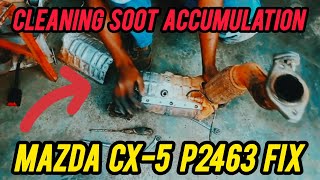
P2463 means the Diesel Particulate Filter (DPF) is clogged with soot. This is very common on the Mazda CX-5 SkyActiv-D and is often caused by frequent short trips, a faulty DPF pressure sensor, or underlying engine issues preventing proper DPF regeneration. The most likely fix is a forced regeneration or professional cleaning, but the root cause, such as leaking injector seals or a worn camshaft, must be addressed to prevent a recurrence.
- P2463 means your DPF is critically clogged and the engine is in limp mode to prevent damage.
- Do not immediately replace the DPF. The cause is often a failed sensor, incorrect driving habits, or another engine issue preventing regeneration.
- Check the engine oil level. If it is high, fuel has diluted the oil, and an oil change is mandatory.
- Diagnosis requires a scan tool to read soot levels, check sensor data, and perform a forced regeneration.
- For long-term health of the DPF, ensure the vehicle is regularly driven on the highway to allow for complete regeneration cycles.
What's Unique About the 2012-2017 Mazda CX-5

The 2.2L SkyActiv-D engine in the first-generation CX-5 is notoriously prone to a cascade of issues that culminate in code P2463. The primary culprits are leaking copper fuel injector seals, which allow combustion gases to blow by and diesel fuel to contaminate the engine oil. This leads to a rising oil level (oil dilution), which thins the oil and reduces its lubricating properties. The contaminated oil can then carbonize, blocking the oil pump pickup strainer, starving the engine and turbocharger of oil. Furthermore, early models suffered from premature exhaust camshaft wear, where the lobes would wear down, affecting engine performance and contributing to soot production. These underlying mechanical faults, combined with driving habits that prevent DPF regeneration, make this platform highly susceptible to P2463.
Symptoms You May Notice

- Check Engine Light is on
- DPF warning light is on or flashing
- SCBS (Smart City Brake Support) warning light may illuminate
- TPMS (Tire Pressure Monitoring System) warning may also illuminate with other lights
- Significant loss of engine power (limp mode)
- Increased fuel consumption
- Engine may run rough or stall
- Change in exhaust smell or sound
- Engine oil level is high (above the 'X' mark on the dipstick) and smells of diesel
- Replacing the DPF without diagnosing the root cause. The P2463 code indicates the DPF is full, but it doesn't explain why. A new DPF will quickly clog again if the underlying issue (e.g., bad sensor, driving habits, injector leak, worn camshaft) is not resolved.
- Performing a forced regeneration or chemical cleaning without addressing intake manifold carbon buildup. If the intake is severely restricted, the engine will continue to produce excessive soot and the DPF will clog again quickly.
Most Likely Causes

- Insufficient DPF Regeneration Due to Driving Habits 🔴 High Probability The SkyActiv-D requires sustained driving at speed (e.g., highway driving) for the DPF to get hot enough to perform a 'passive' or 'active' regeneration cycle and burn off soot. Frequent short, low-speed trips prevent this process, causing soot to accumulate rapidly and leading to failed regenerations that dilute the engine oil with fuel.
How to confirm: Review driving history. If the vehicle is used primarily for short city trips, this is a likely cause. Check the oil dipstick; if the level has risen above the full mark towards or past the 'X', it's a strong indicator of failed regeneration cycles.
Typical fix: Perform an extended drive on a highway (e.g., 20 minutes over 60 km/h) to initiate a regeneration cycle. If the DPF is too clogged (P2463 is set), a 'forced regeneration' using a professional scan tool is required. An oil and filter change is mandatory if the oil level is high.
Est. part cost: $0 (for highway drive), $100+ (for oil change) - Faulty DPF Differential Pressure Sensor or Hoses 🟡 Medium Probability The pressure sensor or its connecting rubber hoses can fail, get clogged with soot, or provide inaccurate readings to the ECM. Mazda released an updated sensor to address known weaknesses with the original part. A faulty sensor can mislead the ECM into thinking the DPF is not full, so it doesn't trigger a regeneration when needed, leading to an eventual P2463 code.
How to confirm: Using a scan tool, monitor the DPF pressure sensor readings at idle and while revving the engine. A high reading with the key on, engine off (KOEO) is a definitive sign of a failed sensor. Inspect the sensor's hoses for cracks, blockages, or loose connections.
Typical fix: Replace the DPF differential pressure sensor and/or its hoses. The Mazda OEM part number is SH01-18-2B2 or S550-18-2B2. 🎬 Watch: How to diagnose and replace the exhaust pressure sensor. After replacement, the sensor values must be reset in the ECM using a capable scan tool.
Est. part cost: $60-$180 - Excessive Soot Production (Underlying Engine Issue) 🔴 High Probability This is a critical and common problem. Leaking fuel injector seals are a primary cause, leading to oil dilution and carbon buildup that blocks the oil pickup strainer, causing oil starvation. Additionally, severe carbon buildup in the intake manifold restricts airflow and creates more soot. A worn exhaust camshaft can also cause improper combustion and excessive soot.
How to confirm: Check the engine oil level; a level that is too high and smells of fuel confirms dilution from injector seal leaks or excessive failed regens. A professional diagnosis is needed to check injector balance rates, inspect for camshaft lobe wear (TSB R073/15), and visually inspect the intake manifold for carbon.
Typical fix: Repair the underlying engine fault. This often involves replacing injector seals and washers, cleaning the oil pickup strainer, and performing a full oil/filter change. In many cases, the intake manifold must be removed for professional cleaning. If the camshaft is worn, it must be replaced. 🎬 See this walkthrough for replacing a worn exhaust camshaft.
Est. part cost: $200-$2000+
Rare But Worth Checking
- Faulty Exhaust Gas Temperature Sensor: The DPF regeneration process requires specific exhaust temperatures. If a temperature sensor is faulty, the ECM may not be able to initiate or sustain a regeneration cycle, allowing soot to build up. A Reddit user reported this as a potential cause after repeated DPF clogging.
- Incorrect Engine Oil: Using engine oil that is not low-SAPS (Sulphated Ash, Phosphorus, Sulphur) rated for DPF-equipped vehicles (e.g., ACEA C3) can lead to premature clogging with ash, which cannot be burned off during regeneration.
Diagnosis Steps
- Connect a professional-grade scan tool capable of reading Mazda-specific parameters.
- Read all fault codes from the ECM. Note any codes accompanying P2463, such as P242F, P2458, or P0471.
- Check the engine oil level and condition. A high oil level that smells of diesel confirms fuel dilution from failed regeneration attempts or leaking injector seals and requires an immediate oil change.
- Using the scan tool, view live data for DPF soot accumulation (PM_ACC), DPF differential pressure (DPF_PRES), and exhaust gas temperatures. Check the DPF pressure sensor reading with Key On, Engine Off (KOEO). A reading above 0-5 mbar indicates a faulty sensor.
- A very high differential pressure at idle (e.g., over 50-100 mbar) confirms a severe blockage.
- Inspect the rubber hoses going to the DPF differential pressure sensor for cracks, kinks, or blockages.
- If sensors and hoses are good, investigate causes of excessive soot. This is the most critical step. Visually inspect the intake manifold and EGR passages for heavy carbon buildup. This is a very common failure point.
- Investigate leaking injector seals by having a mechanic perform a leak-off test or by inspecting the seals directly. This is a known precursor to major engine damage.
- Inspect the exhaust camshaft lobes for wear, following the procedure in TSB R073/15 if possible.
- If the soot level is high but not critical and no mechanical faults are found, attempt a forced (stationary) regeneration using the scan tool. Follow the procedure carefully, ensuring the vehicle is in a safe, outdoor location.
- If regeneration fails, or if intake carbon/injector leaks are found, the DPF will require professional off-car cleaning or, in worst-case scenarios, replacement AFTER the root cause is fixed.
Parts You'll Likely Need
- DPF Differential Pressure Sensor
(OEM #SH01-18-2B2, S550-18-2B2)— This sensor frequently fails or its readings drift, preventing proper DPF regeneration. Mazda has released an upgraded part to address this. - Engine Oil and Filter — Mandatory replacement if the oil level is high due to fuel dilution. Must be a Low-SAPS oil (ACEA C3) to protect the DPF.
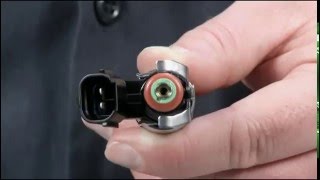
- Fuel Injector Seals/Washers — A very common failure point on this engine. Leaking seals cause combustion blow-by, contaminating the oil and leading to a cascade of problems including oil starvation and excessive soot.
- Exhaust Camshaft
(OEM #SH01-12-440B)— The original camshafts are known to wear prematurely, causing incorrect valve timing, poor combustion, and excessive soot. The worn metal particles also contaminate the engine oil.
Related Codes That Often Appear With This One
- P242F — This code means 'Diesel Particulate Filter Restriction - Ash Accumulation'. It often appears with P2463, indicating the filter is clogged with not just soot (burnable) but also ash (non-burnable residue), which often requires off-car cleaning or replacement.
- P2458 — This code means 'Diesel Particulate Filter Regeneration Duration'. It indicates that a regeneration cycle is taking too long to complete, which is a direct consequence of the filter being too full or an underlying issue preventing proper temperature rise.
- P0471 — 'Exhaust Pressure Sensor 'A' Circuit Range/Performance'. A fault with the exhaust pressure sensor is a common cause for failed DPF regeneration and can trigger P2463. Mazda has an updated sensor to fix this known issue.
Technical Service Bulletins (TSBs) & Recalls
- TSB R073/15: Provides an official dealer procedure for inspecting the exhaust camshaft for the characteristic wear on the high-lift lobes.
- Mazda Service Campaign (Australia, 2012): Mazda acknowledged the oil dilution problem on early CX-5 diesels and provided a fix consisting of a PCM software update to alter DPF operation and a revised, longer dipstick.
- SA-026/18: While for different models, this service alert describes the exact mechanism of oil dilution with fuel in direct injection engines during short trips, which is the same phenomenon affecting the SkyActiv-D.
- TSB 05-005/20: Addresses a whining noise from the automatic transaxle in 2013-2016 CX-5 models.
Platform-Specific Known Issues

- Oil Dilution: A notorious problem where failed DPF regeneration cycles or leaking injector seals cause diesel fuel to enter the crankcase, raising the oil level. This thins the oil, leading to low oil pressure warnings and potentially catastrophic engine damage if the oil pump strainer gets blocked. Mazda issued a software update and a revised dipstick to help manage this.
- Exhaust Camshaft Wear: The lobes on the exhaust camshaft, particularly the high-lift lobes, are made of a softer material and can wear down prematurely. This affects valve timing, reduces engine efficiency, and can lead to failure of the brake vacuum pump which runs off the camshaft. TSB R073/15 outlines an inspection procedure.
- Intake Carbon Buildup: The EGR system and short-trip driving cycles contribute to heavy carbon deposits in the intake manifold, which can severely restrict airflow, cause power loss, and overwhelm the DPF with soot.
Mechanic-Grade Diagnostic Values
- Calculated DPF Soot Accumulation (PCM Value) — expected: Below 13 g/l. Failure: Code P2463 is set when the PCM calculates soot accumulation is above 13 g/l.
- DPF Differential Pressure Sensor Signal Voltage (KOEO) — expected: 0.5V - 1.0V. Failure: A reading significantly higher than 1.0V (e.g., a stuck reading of 0.899 bar from a faulty sensor) or a reading that doesn't change with pressure indicates a failed sensor. Some service data suggests a reading of 0.5V or less is expected.
- DPF Differential Pressure Sensor Pressure (KOEO) — expected: 0 - 1 mbar. Failure: A reading significantly above 1 mbar with the engine off indicates a faulty sensor that is not zeroing out correctly. One technician reported a faulty sensor reading a static 65 kPa KOEO.
- DPF Differential Pressure Sensor Supply Voltage — expected: ~5.0V. Failure: No voltage or low voltage indicates a wiring or PCM issue.
- DPF Differential Pressure Sensor Ground — expected: ~0V. Failure: Voltage present on the ground wire indicates a bad ground connection.
Hidden / Shadow Codes Worth Checking
- Manufacturer-Specific PIDs (e.g., DPF_SOOT_LOAD, PM_ACC): While not 'shadow codes,' advanced scan tools like FORScan can access Mazda-specific Parameter IDs (PIDs) that are not part of the standard OBD-II set. These PIDs provide the raw data the PCM uses to calculate soot load, such as 'PM_ACC' (Particulate Matter Accumulation) and 'DPF_SOOT_LOAD' (Calculated Soot Load Percentage), which are essential for distinguishing a truly clogged filter from a sensor fault. (see via Use a capable scan tool like FORScan with an appropriate OBD2 adapter.)
Scan Tool Commands That Help

- Mazda IDS / FORScan: Compulsory Diesel Particulate Filter Regeneration — To initiate a stationary (forced) regeneration to burn off soot when the DPF is too clogged for a driving regen. This is a primary step after confirming no mechanical faults exist.
- Mazda IDS / FORScan: DPF Related Parts Replacement / DPF Pressure Sensor Initialization — This function must be performed after replacing the DPF or the DPF differential pressure sensor. It resets the learned values and recalibrates the new sensor to the PCM, preventing immediate re-triggering of the fault code.
- Mazda IDS / FORScan: Fuel Injector Injection Amount Correction — This procedure should be performed after addressing underlying engine issues, such as replacing injectors or injector seals, to ensure the PCM has the correct data for fuel delivery, which is critical for controlling soot production.
- Mazda IDS / FORScan: Oil Change Reset — After every oil change, the engine control unit's oil data must be reset. Failure to do so can cause the DPF light to flash as a service reminder and may affect regeneration strategies.
Wiring & Ground Locations
- DPF Differential Pressure Sensor Connector — On the sensor itself, typically mounted on the firewall or in the engine bay away from direct exhaust heat, connected by two rubber hoses to the DPF.. The sensor uses a 3-pin, D-shaped connector. Pin 1 is typically 5V Reference, Pin 3 is Ground, and the center pin is the Signal wire. Verifying voltage at these pins is a key diagnostic step to rule out a wiring fault before replacing the sensor.
- Chassis Ground Point — The owner's manual for jump-starting identifies a specific, unpainted bolt on the chassis inside the engine compartment as the official negative connection point.. Poor grounds can cause erratic sensor readings. This documented point provides a known-good ground for testing sensor circuits with a multimeter, ensuring accurate voltage and resistance measurements.
Real Owner Repair Stories
- Reddit user @htatla (2014 Mazda CX-5 2.2L SkyActiv-D) — Initial fault was for the vacuum pump (P258b), rough idling, and performance issues.
❌ Tried (didn't work) Diagnosing the vacuum pump as the sole issue.
✅ What actually fixed it The root cause was a worn exhaust camshaft. Metal particles from the worn cam lobes contaminated the engine oil, which then destroyed the vacuum pump. The ultimate fix required addressing the worn camshaft, which is also a primary cause of excess soot leading to P2463. - PistonHeads UK Forum (Mazda 2.2D models (CX-5, Mazda6)) — Catastrophic engine failure, oil starvation, DPF lights, excessive carbon buildup.
❌ Tried (didn't work) Adhering to the standard 12,500-mile oil change interval., Replacing or cleaning the DPF without addressing the cause of oil contamination.
✅ What actually fixed it The underlying issue was identified as leaking fuel injector seals (copper washers). These seals fail, allowing combustion gases to contaminate the oil, forming sludge that blocks the oil pump strainer. The recommended fix is the proactive replacement of the injector seals and cleaning the oil strainer, a repair costing a few hundred dollars that prevents an $8,000+ engine replacement. - YouTube channel MrNiceGuy (Mazda SkyActiv-D 2.2L (general)) — Recurring DPF warning lights and codes (like P2463 and P243C) even after DPF cleaning.
❌ Tried (didn't work) Repeatedly cleaning the DPF., Focusing on the DPF as the cause of the problem.
✅ What actually fixed it The expert mechanic states the true root cause is often faulty fuel injectors, noting Mazda had a 'bad batch' of nozzles. The injectors develop cavitation erosion, altering the spray pattern and delivering excess fuel. This creates excessive soot, causing regenerations to occur too frequently and eventually triggering DPF codes. The fix is to inspect and replace the faulty injectors, not just clean the filter.
"I Checked Everything" — The Actual Cause
- In one documented case, a vehicle had its DPF cleaned multiple times, but the blockage fault returned within a day. Standard checks on the DPF hoses with a smoke tester showed no leaks. The actual cause was a faulty DPF differential pressure sensor that was electrically failing and not responding to pressure changes. Its live data reading was stuck, preventing the ECU from ever seeing that the DPF was clean and stopping it from performing necessary self-regeneration cycles. Replacing the sensor resolved the recurring issue.
OEM Part Supersession History
SH01-12-440A→SH01-12-440B— The original exhaust camshaft was made of a material that was prone to premature lobe wear. The updated part is believed to use a revised, more durable material.Plastic L-shaped DPF Pressure Sensor (e.g., SH01-18-2B2)→SHY6-18-W00 (Upgrade Kit)— The original plastic sensors were prone to failure. Mazda released an official upgrade kit that replaces the plastic sensor with a more robust metal unit and includes a wiring conversion harness and new mounting brackets.
Heads up: The upgrade kit includes a wiring harness adapter, indicating the new sensor has a different connector than the original, making the harness essential for the retrofit.
Model Year Variations Within This Range
- 2012-2018: Models within this range are susceptible to premature exhaust camshaft wear due to a material defect where the cam lobes are 'softer' than the rocker arms. This issue was reportedly resolved in models from 2019 onwards.
- 2017: The 2017 model year marked the transition from the first generation (KE) to the second generation (KF). Some parts, like the updated exhaust camshaft (SH01-12-440B), are specified to fit the KE generation (2012-2016) and '2017 KF Models only', indicating a mid-year change or parts variation at the generation crossover.
Diagnostic Flowchart
Other Known Issues on This Vehicle
Issues unrelated to this code that are worth knowing about as an owner of this generation:
- Premature Exhaust Camshaft Wear 🔴 High — Common on 2012-2018 models. Worn lobes can be seen at higher mileage (over 60,000 miles) and can lead to vacuum pump failure and poor engine performance. (Ref: Mazda TSB R073/15 provides an inspection procedure for the exhaust camshaft.)
- Oil Dilution and Leaking Injector Seals 🔴 High — A very common issue, especially on earlier (2012-2014) models. Leaking injector seals allow diesel to contaminate the engine oil, raising the oil level above the 'X' mark on the dipstick. This thins the oil, leading to a blocked oil pickup strainer and potential starvation/failure of the vacuum pump, turbocharger, and engine. (Ref: Mazda issued a service campaign in some regions involving a software update and a revised dipstick to better manage the issue.)
- Intake System Carbon Buildup 🟠 Medium — Significant carbon can accumulate in the intake manifold and EGR system, especially on vehicles used for frequent short trips. This restricts airflow, causing rough running, loss of power, and can contribute to DPF issues by creating more soot.
- Automatic Transmission Whining Noise 🟡 Low — A whining noise may develop from the automatic transaxle on 2013-2016 models. (Ref: Mazda TSB 05-005/20 (superseding earlier versions) addresses this concern.)
- Excessive Oil Consumption (2.5T Gas Engine) 🔴 High — While not for the diesel, the 2021 2.5T gas engine had a widely reported issue with excessive oil consumption due to faulty valve stem seals. (Ref: Mazda TSB 01-012/21 addresses this issue for the 2.5T engine.)
Used vs. New Parts: Buying Guide for This Vehicle
When a used part is the smart pick: For this specific set of common failures, using used parts is highly discouraged. The only potentially viable used part would be a complete, low-mileage engine assembly from a post-2018 vehicle where the camshaft issue was resolved, but this is a high-cost, high-risk strategy.
Donor-vehicle mileage cap: roughly under 30000 miles for the part to have meaningful remaining life.
What to inspect on the donor part:
- For a DPF: Ask for proof of professional cleaning and flow testing.
- For an engine assembly: Must have verifiable service history showing consistent oil changes with correct low-SAPS oil. Avoid any donor that had a flashing DPF light or high oil level.
- Visually inspect for oil leaks around injector seals and the vacuum pump.
OEM-only on this vehicle (don't cheap out):
- Exhaust Camshaft: Due to the widespread material defect in original parts, only a new, genuine Mazda part (latest revision SH01-12-440B or newer) should be used. A used camshaft will likely have the same defect.
- DPF Differential Pressure Sensor: Given the high failure rate of the original and the availability of an official Mazda upgrade kit (SHY6-18-W00), using a new OEM upgraded part is the most reliable fix.
- Fuel Injector Seals: These are inexpensive, single-use copper washers. There is no reason to ever consider a used part. Always use new OEM seals during any related service.
Aftermarket brands forum-validated for this vehicle:
- No specific aftermarket brands have a consistently positive reputation for these critical components in owner forums. For sensors, brands like Bosch, Denso, or NGK are generally reputable if they offer a direct-fit replacement, but the Mazda upgrade kit is the safest option.
Brands owners have reported issues with on this vehicle:
- Unbranded, low-cost sensors from online marketplaces like AliExpress or eBay. While tempting, they have a high rate of out-of-box failure or incorrect calibration, leading to a repeat diagnosis.
Real Owner Stories
Aggregated from forums and TSBs cited above. Mileages and costs reflect what owners reported in those sources.
1st Gen Mazda CX-5 2.2L SkyActiv-D
Symptoms: A long and painful experience involving diesel fuel getting into the engine oil.
What fixed it: The underlying cause was identified as leaking injector seals. The fix required replacement of the seals, the oil pump, and a thorough carbon cleanout.
Source hint: Reddit r/CX5: Dont buy a 1st gen diesel!
Mazda 6 2.2L SkyActiv-D — 101300 miles
Symptoms: DPF clogged and set P2463, P2458, and P242F codes again just 150km after a forced regeneration was performed.
What fixed it: The discussion pointed towards underlying issues, such as faulty temperature sensors, that were preventing a proper and complete regeneration cycle from occurring.
Source hint: Reddit r/MechanicAdvice: Mazda 6 2.2 Diesel - DPF clogged again just 150km after forced regen
Related OBD-II Codes
Frequently Asked Questions
My 2014 CX-5 diesel's oil level is high and smells like fuel. Is this related to the P2463 code?
I only drive my CX-5 diesel for short city trips. Why did I get a DPF warning light?
What is TSB R073/15 and how does it relate to my DPF being clogged?
I replaced the DPF differential pressure sensor myself but the code came back. What did I miss?
My mechanic mentioned 'intake carbon buildup' is the real problem. How does that cause a DPF code?
I heard Mazda issued a software update and a new dipstick for this engine. What was that for?
Helpful Videos


We Have This Part in Stock


The information in this article is provided for general reference and educational purposes only. Vehicle specifications, procedures, and part compatibility can vary by production date, trim level, and region. Always consult your vehicle's factory service manual and verify part numbers before purchasing or performing repairs. Safety-critical components such as airbags, seat belts, and braking systems should be installed by a qualified professional.
- Mazda CX-5:
- 🎬 Helpful Videos
- 🛍️ Shop This Part
- What's Unique About the 2012-2017 Mazda CX-5
- Symptoms You May Notice
- Most Likely Causes
- Rare But Worth Checking
- Diagnosis Steps
- Parts You'll Likely Need
- Related Codes That Often Appear With This One
- Technical Service Bulletins (TSBs) & Recalls
- Platform-Specific Known Issues
- Mechanic-Grade Diagnostic Values
- Hidden / Shadow Codes Worth Checking
- Scan Tool Commands That Help
- Wiring & Ground Locations
- Real Owner Repair Stories
- "I Checked Everything" — The Actual Cause
- OEM Part Supersession History
- Model Year Variations Within This Range
- Diagnostic Flowchart
- Other Known Issues on This Vehicle
- Used vs. New Parts: Buying Guide for This Vehicle
- Real Owner Stories
- 1st Gen Mazda CX-5 2.2L SkyActiv-D
- Mazda 6 2.2L SkyActiv-D — 101300 miles
- Related OBD-II Codes
- Frequently Asked Questions
- 🎟️ Get 5% Off