

P2440 on 2009-2017 Volkswagen CC 2.0T: Secondary Air Valve Stuck Open Causes and Fixes
P2440 on a VW CC 2.0T almost always points to a problem with the Secondary Air Injection (SAI) system, which is present on the CBFA engine variant. The most common cause is a faulty Combination Valve (the switching valve) that is stuck open, followed by cracked plastic air hoses. A smoke test is the best way to find leaks. Expect to pay $150-$300 for a new OEM valve.
- P2440 on your VW CC means the Secondary Air Injection switching valve is stuck open.
- Before buying an expensive new valve ($150+), thoroughly inspect all plastic SAI hoses for cracks, as a simple air leak is a very common cause.
- The most likely failed parts are the Combination Valve itself or a cracked air hose.
- This is a DIY-friendly repair for those with basic tools, but accessing the valve and hoses can be tight.
- The car is safe to drive with this code, but you won't pass an emissions test and could cause more expensive damage to the SAI pump over time.
What's Unique About the 2009-2017 Volkswagen CC
On the 2.0T TSI engine, the CBFA version—designed for stricter emissions standards in states like California—is equipped with a Secondary Air Injection (SAI) system that is a known point of failure. The CCTA engine variant does not have this system. The components, including the plastic hoses and the combination valve itself, are located in the hot engine bay where they can become brittle and fail over time. While the code points to the valve, mechanics often find that cracked hoses are the root cause, as the system's pressure sensor interprets the air leak as a valve that's stuck open.
Symptoms You May Notice
- Check Engine Light is on.
- A loud noise, similar to a vacuum cleaner or hair dryer, coming from the engine bay for the first 30-90 seconds after a cold start.
- Failure to pass an emissions test.
- No noticeable loss of power or rough running during normal driving.
- In rare cases, if the issue is accompanied by a large vacuum leak, a rough or high idle may be present.
- Replacing the SAI pump when the actual problem is a cracked hose or a bad combination valve.
- Confusing the auxiliary water pump for the turbocharger with the SAI pump, as they can be located in similar areas.
- Replacing the combination valve without performing a smoke test first, thereby missing a significant vacuum leak in a hose that was the true cause.
Most Likely Causes
- Faulty Secondary Air Injection Combination Valve 🔴 High Probability The valve is exposed to constant heat and exhaust gases and can fail mechanically from carbon buildup or electrically when the internal solenoid burns out.
How to confirm: With the engine cold and key on, test for 12V power at the valve's connector. Check the valve's internal resistance with a multimeter; a reading of around 3-6 ohms is expected, while an infinite reading (open circuit) means it's failed. You can also apply 12V directly to the valve's pins and listen for a distinct 'click' and verify it holds vacuum when closed and passes air when open.
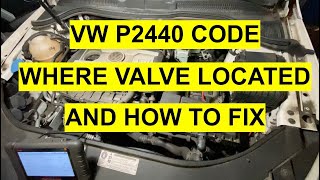
Typical fix: Replace the Combination Valve and its metal gasket. 🎬 See how to fix VW code P2440 step by step Some owners have had success cleaning the valve with carburetor cleaner if it is merely stuck with carbon.
Est. part cost: $150-$300 - Cracked or Disconnected SAI Hoses 🔴 High Probability The corrugated plastic hoses in the engine bay become brittle from constant heat cycles and age, leading to cracks and air leaks, especially at connection points or where they rub against other components.
How to confirm: Visually inspect all plastic hoses running from the SAI pump (typically located in the front driver's side fender area) to the combination valve on the engine. A smoke test is the most effective way to find small, hard-to-see leaks. Pay close attention to the main connecting pipe between the pump and valve.
Typical fix: Replace the cracked section of hose or the entire hose assembly. Temporary repairs with high-temp tape and glue have been documented but are not recommended for a permanent solution.
Est. part cost: $40-$120 - Faulty Secondary Air Injection (SAI) Pump ⚪ Low Probability Moisture can get into the pump if the one-way check valve fails, causing the electric motor to corrode and seize. The plastic housing can also split apart at the rivets, causing a loud noise and loss of pressure.
How to confirm: Listen for the pump to run during the first minute of a cold start. If there is no sound, check the pump's fuse and relay first (often located in the under-hood fuse box). If those are good, you can apply 12V directly to the pump's connector to see if the motor runs.
Typical fix: Replace the SAI pump. It is highly recommended to also replace the combination/check valve to prevent the new pump from failing due to back-flowing exhaust gas.
Est. part cost: $200-$400 - Wiring or Connector Issue ⚪ Low Probability
How to confirm: Inspect the electrical connector and wiring going to the combination valve for any signs of damage, corrosion, or breaks. Check for 12V at the connector with the ignition on. Verify continuity from the connector back to the ECU if necessary.
Typical fix: Repair the damaged wiring or replace the connector pigtail.
Est. part cost: $10-$50
Rare But Worth Checking
- Faulty Powertrain Control Module (PCM): This is extremely rare. The PCM's internal driver for the valve would have to fail. All other possibilities, including wiring continuity, should be exhausted before considering the PCM as the cause.
Diagnosis Steps
- Scan for Codes: Confirm P2440 is the primary code present and check for any other related SAI codes like P0491 or P0411.
- Cold Start Test: Start the engine from cold and listen for the SAI pump (a vacuum cleaner sound) for the first 30-60 seconds. If it runs, the pump motor, fuse, and relay are likely working. If not, investigate the pump's power supply.
- Visual Inspection: Carefully inspect all plastic hoses and lines connected to the SAI system for obvious cracks, brittleness, or disconnections. The main pipe from the pump to the valve is a common failure point.
- Smoke Test: This is the most definitive test. With the engine off, introduce smoke into the SAI system (a good entry point is the hose leading to the combination valve). Look for smoke leaking from cracked hoses, the valve gasket, or the pump housing.
- Test the Combination Valve: Unplug the electrical connector at the valve. With the ignition on, check for 12-volt power at the harness. Then, use a multimeter to check the resistance across the two pins on the valve itself. An open circuit (infinite resistance) or a dead short indicates a failed solenoid; a healthy valve should read a low resistance, e.g., 3-6 ohms. 🎬 Watch: How to diagnose P2440 and replace the valve
- (Optional) Bench Test Valve: If you remove the valve, you can apply 12 volts and a ground directly to its pins to verify it actuates with an audible click. You can also try to blow air through it; it should be closed by default and open when 12V is applied.
- Inspect Pump and Check Valve: If other tests are inconclusive, inspect the SAI pump and its one-way check valve for signs of water intrusion or damage. A failed valve can allow exhaust to flow backward and destroy the pump.
Parts You'll Likely Need
- Secondary Air Injection Combination Valve
(OEM #06J131097D)— This is the valve the code directly refers to. It can get stuck open due to carbon buildup or internal electrical failure.
Trusted brands: Pierburg (OEM), Bosch, Volkswagen (Genuine)
OEM price range: $200-$300
Aftermarket price range: $120-$200 - Combination Valve Gasket
(OEM #06J131120B)— This metal gasket seals the combination valve to the cylinder head and should always be replaced whenever the valve is removed to prevent exhaust and air leaks.
Trusted brands: Volkswagen (OEM), Victor Reinz, Elring
OEM price range: $10-$20
Aftermarket price range: $5-$15 - Secondary Air Injection Connecting Pipe
(OEM #1K0131128D)— This specific corrugated plastic hose runs from the SAI pump to the combination valve and is a very common failure point due to heat and vibration causing cracks.
Trusted brands: Volkswagen (OEM), Bremmen Parts
OEM price range: $60-$120
Aftermarket price range: $40-$80
Related Codes That Often Appear With This One
- P0491 — This code means 'Secondary Air Injection System Insufficient Flow.' It can appear alongside P2440 if there is a major leak or a failing pump that affects the entire system's performance.
- P0411 — This is another code for 'Secondary Air Injection System Incorrect Flow Detected.' It is functionally similar to P0491 and points to a general system performance issue, often caused by a cracked hose or failing pump.
- P2431 — 'Secondary Air Injection System Air Flow/Pressure Sensor Circuit Range/Performance'. This can be triggered if the pressure sensor readings are implausible, which can happen if the valve is stuck open.
Technical Service Bulletins (TSBs) & Recalls
- VIN4APIN20200617: A general TSB for the VW Atlas that mentions P2440 in a long list of possible engine-related trouble codes.
- Ross-Tech Wiki mentions TSB 054615 for a VW Tiguan DGUE engine where P2440 is one of several codes that may be addressed by an ECM update.
Platform-Specific Known Issues
- The CBFA engine variant, designed for stricter emissions states (PZEV), has this SAI system, while the more common CCTA variant does not. It's crucial to confirm which engine you have by checking the sticker on the upper timing cover before ordering parts.
- Access to the combination valve is tight. It is located on the cylinder head, often partially obscured by coolant lines. Mechanics often remove the battery and battery tray to get better access. The valve is typically held on by three T30 Torx bolts.
- A TSB for the VW Tiguan (054615) with a different 2.0T engine also lists P2440, suggesting a potential ECM software update could be part of the fix on related platforms.
Mechanic-Grade Diagnostic Values
- SAI Combination Valve (N112) Solenoid Resistance — expected: 3-6 Ohms. Failure: Infinite resistance (open circuit) or a dead short.
- SAI Combination Valve (N112) Connector Voltage — expected: 12V at the power wire with ignition on, engine off.. Failure: No voltage, indicating a wiring or fuse issue.
- SAI Pressure Sensor (G609) Signal Voltage - Engine Off — expected: ~2.9 VDC. Failure: Significant deviation from this baseline voltage.
- SAI Pressure Sensor (G609) Signal Voltage - Pump Running — expected: Rises to 3.3 - 3.5 VDC depending on ambient temperature.. Failure: A very small voltage change (e.g., only to 3.0-3.1V) may indicate insufficient pump pressure or a faulty sensor, even if the voltage does change.
Scan Tool Commands That Help
- VCDS (VAG-COM): Engine (01) -> Output Tests (03) — To manually activate the Secondary Air Injection Pump (V101) and the Combination Valve (N112) to listen for operation and feel for air leaks in the hoses.
- VCDS (VAG-COM): Engine (01) -> Basic Settings (04) -> Group 077 — To run the complete SAI system self-test. This is useful for verifying a repair and setting the readiness monitor without a full drive cycle.
- Autel MaxiSys (or similar): Active Test / Bidirectional Control — To cycle through and activate various system components, including the SAI pump relay, to confirm the electrical circuit and pump motor are functional.
Wiring & Ground Locations
- SAI Pump (V101) — In front of the driver's side wheel well, typically accessed by removing the fender liner.. This is the source of the air. A failed pump or corroded connector here will prevent the system from generating pressure.
- SAI Pump Relay / Fuse — In the under-hood electronics box, near the battery and brake master cylinder. The relay is often marked '100'.. This relay and its associated high-amperage fuse supply power to the SAI pump. A failed relay or blown fuse is a common reason for the pump not running at all.
- Combination Valve (N112) — Bolted to the cylinder head with three T30 Torx bolts, often located under the engine cover and near other coolant lines.. This is the valve the code directly references. Its two-pin connector needs 12V power and a ground signal from the ECU to operate.
- SAI Pressure Sensor (G609) — Mounted on the SAI line or near the combination valve.. This 3-wire sensor (power, ground, signal) provides the feedback to the ECU that determines if the system is working correctly. The ECU uses its readings to detect if the valve is stuck open.
Real Owner Repair Stories
- YouTube channel 'How To Fix VW 2.0T Code P2440' (2012 Volkswagen (model not specified, but 2.0T engine)) — Check Engine Light with code P2440.
❌ Tried (didn't work) A smoke test revealed a cracked SAI hose, which was repaired with glue and tape. However, the P2440 code returned, indicating the leak was not the sole cause.
✅ What actually fixed it The Combination Valve was removed and bench-tested. It showed correct electrical resistance (6 ohms) and actuated with 12V power, but was mechanically stuck with carbon. The valve and the port on the cylinder head were thoroughly cleaned with carburetor cleaner. After reinstallation, the code was resolved without replacing the part.
When the Usual Fixes Don't Work
- While P2440 directly flags the switching valve as 'stuck open', this does not always mean the valve requires replacement. In one documented case, the valve was electrically sound but mechanically stuck due to carbon buildup. A thorough cleaning with carburetor cleaner was sufficient to restore function and clear the code, saving the cost of an expensive new valve.
- Simply replacing a non-functional SAI pump may not be a permanent fix. One owner reported that after replacing the original pump with a cheap aftermarket unit, the P2440 code began appearing in hot weather. This suggests the aftermarket pump was not strong enough to generate the required pressure when warm, leading the ECU to misinterpret the low pressure as a stuck-open valve. This highlights the risk of using low-quality aftermarket electronic components.
OEM Part Supersession History
06J131097C→06J131097D— Revision and improvement of the part by the manufacturer.
Model Year Variations Within This Range
- 2009-2017: The entire SAI system, including the combination valve, pump, and hoses, is only present on the CBFA engine code variant, which was made for stricter emissions jurisdictions. The CCTA engine code does not have this system and will not experience this code.
Diagnostic Flowchart
Other Known Issues on This Vehicle
Issues unrelated to this code that are worth knowing about as an owner of this generation:
- Timing Chain Tensioner Failure 🔴 High — Common on pre-2013 models with the original tensioner design. Failure can occur without warning, often between 60k-100k miles, leading to catastrophic engine damage. (Ref: A class-action lawsuit settlement provided some coverage, but owners should proactively check for the updated tensioner.)
- Leaking Water Pump / Thermostat Housing 🟠 Medium — Very common failure. The plastic housing can crack or the gasket can fail, often due to swelling from oil leaks from above. Typically fails between 50k-90k miles.
- Intake Manifold Runner Flap Motor Failure (P2015) 🟠 Medium — Widespread issue where the plastic runner flap actuator arm breaks or wears, causing a P2015 fault code and a check engine light. Usually does not cause immediate drivability problems. (Ref: VW extended the warranty on this component for many vehicles.)
- Excessive Carbon Buildup on Intake Valves 🟠 Medium — As a direct-injection engine, fuel doesn't wash over the intake valves. This leads to significant carbon buildup over time (typically noticeable by 60k-80k miles), causing cold start misfires and reduced performance.
- PCV Valve Failure 🟡 Low — The diaphragm in the Positive Crankcase Ventilation (PCV) valve can tear, causing a loud whistling noise, high idle, and lean fault codes (P0171). It's a relatively common and easy part to replace.
- Camshaft Bridge Screen Failure 🔴 High — A metal screen on the camshaft bridge can detach and fall into the valvetrain, potentially causing the timing chain to jump and leading to catastrophic engine failure. A TSB recommends removing the screen during service. (Ref: VW/Audi TSB exists recommending screen removal.)
Used vs. New Parts: Buying Guide for This Vehicle
When a used part is the smart pick: A used SAI pump motor can be a cost-effective option, provided it can be tested before purchase. Hard plastic lines and connectors are also viable if sourced from a low-mileage, accident-free donor and show no signs of brittleness or cracking.
Donor-vehicle mileage cap: roughly under 80000 miles for the part to have meaningful remaining life.
What to inspect on the donor part:
- For SAI Pump: Use a 12V power source (like a drill battery) to confirm the motor runs strong and quiet before buying.
- For Hoses: Squeeze the plastic hoses to check for any brittleness or crunching sounds. They should be firm but have some pliability.
- For Combination Valve: Visually inspect the port for excessive carbon. If possible, check the solenoid resistance with a multimeter (should be 3-6 ohms).
OEM-only on this vehicle (don't cheap out):
- Secondary Air Injection Combination Valve: Due to its critical role and the potential for issues with aftermarket units, sticking with the OEM manufacturer (Pierburg) or a Genuine VW part is highly recommended if replacement is necessary.
- Secondary Air Injection Pump: As evidenced by forum reports, cheap, unbranded aftermarket pumps may not meet the required performance specifications, especially under varying temperatures, leading to persistent or new codes.
Aftermarket brands forum-validated for this vehicle:
- Pierburg (OEM manufacturer for the combination valve)
- Bosch
Brands owners have reported issues with on this vehicle:
- Unbranded, low-cost pumps from online marketplaces like Amazon or eBay have been reported by owners to be weak or fail prematurely.
Real Owner Stories
Aggregated from forums and TSBs cited above. Mileages and costs reflect what owners reported in those sources.
2011 VW GTI 2.0T (CBFA)
Symptoms: Check engine light for P2440. The repair required moving a coolant line bracket to reach the T30 bolts holding the valve.
What fixed it: Removed and replaced the secondary air injection combination valve (Part #06J131097D).
Source hint: YouTube - JDC Auto: A repair video on a 2011 GTI, "2011 VW GTI 2.0 Secondary air injection combination valve remove and replace"
2009+ VW CC 2.0T TSI
Symptoms: Loud vacuum cleaner sound during cold starts and a P2440 code.
What fixed it: Diagnosis involves checking for 12V at the valve connector and inspecting for cracked corrugated plastic hoses.
Source hint: YouTube - MotorCarNut: A detailed video titled "How To Diagnose & Fix a P2440 Code on VW Passat , Tiguan, CC, Jetta 2.0 Turbo 2009 & Up"
VW Golf MK6 GTI (CBFA)
Symptoms: P2440 code related to the SAI system components.
What fixed it: Some owners choose to perform an SAI delete, though the standard fix is replacing the combination valve or associated hoses.
Source hint: vwvortex.com / golfmk6.com: Forum discussions corroborate that P2440 is related to the SAI system and often caused by the combination valve or associated hoses on the 2.0T TSI engine.
Related OBD-II Codes
Frequently Asked Questions
How can I tell if my Volkswagen CC has the engine variant prone to P2440?
I hear a loud noise like a hair dryer for about a minute after starting my CC. Is this related to P2440?
Does TSB 054615 apply to the Volkswagen CC 2.0T?
Can I just clean the combination valve (06J131097D) instead of replacing it?
Where is the combination valve located on the 2.0T TSI engine?
What should the resistance be for a healthy SAI combination valve?
Helpful Videos
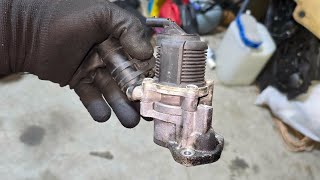

Used OEM Parts in Stock


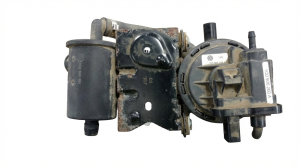

New Aftermarket Parts Available


The information in this article is provided for general reference and educational purposes only. Vehicle specifications, procedures, and part compatibility can vary by production date, trim level, and region. Always consult your vehicle's factory service manual and verify part numbers before purchasing or performing repairs. Safety-critical components such as airbags, seat belts, and braking systems should be installed by a qualified professional.
- Volkswagen CC:
- 🎬 Helpful Videos
- 🛍️ Shop This Part
- What's Unique About the 2009-2017 Volkswagen CC
- Symptoms You May Notice
- Most Likely Causes
- Rare But Worth Checking
- Diagnosis Steps
- Parts You'll Likely Need
- Related Codes That Often Appear With This One
- Technical Service Bulletins (TSBs) & Recalls
- Platform-Specific Known Issues
- Mechanic-Grade Diagnostic Values
- Scan Tool Commands That Help
- Wiring & Ground Locations
- Real Owner Repair Stories
- When the Usual Fixes Don't Work
- OEM Part Supersession History
- Model Year Variations Within This Range
- Diagnostic Flowchart
- Other Known Issues on This Vehicle
- Used vs. New Parts: Buying Guide for This Vehicle
- Real Owner Stories
- 2011 VW GTI 2.0T (CBFA)
- 2009+ VW CC 2.0T TSI
- VW Golf MK6 GTI (CBFA)
- Related OBD-II Codes
- Frequently Asked Questions
- 🎟️ Get 5% Off