

P2281 on 2012-2020 Chevrolet Sonic 1.4L Turbo: Air Leak Causes and Fixes
On the Chevy Sonic 1.4L Turbo, code P2281 is almost always caused by a major vacuum leak from the engine's integrated PCV system. The top two culprits are a torn rubber diaphragm inside the valve cover or a dislodged check valve inside the intake manifold. The most common fix is replacing the entire valve cover assembly, which costs around $80-$150 for the part. The second fix involves either replacing the intake manifold or installing an aftermarket external check valve kit.
- P2281 on a Chevy Sonic 1.4L Turbo almost always points to a failed PCV component, not a random hose leak.
- The most likely cause is a torn diaphragm in the valve cover. The easiest way to check is to listen for a loud hiss or feel for strong suction at the PCV vent hole on the cover.
- The second most likely cause is a missing check valve inside the intake manifold, which requires replacing the entire manifold.
- Do not replace the MAF or O2 sensors; they are reporting the symptoms of the air leak, not causing the problem.
- A smoke test is the most reliable method to confirm the exact location of any vacuum leak if the initial PCV checks are not conclusive.
What's Unique About the 2012-2020 Chevrolet Sonic
While P2281 is a generic code for an air leak, on the GM 1.4L Turbo engine (LUJ/LUV), it's rarely caused by a simple loose hose. This engine has a notoriously failure-prone Positive Crankcase Ventilation (PCV) system with multiple weak points integrated directly into major engine components. A torn diaphragm inside the valve cover and a fragile check valve inside the plastic intake manifold are the most common culprits. This makes P2281 a very specific diagnostic challenge on the Sonic and its platform mates like the Cruze, Trax, and Encore.
Symptoms You May Notice
- Check Engine Light is on
- Rough, unstable, or high idle.
- Loud hissing or whistling sound from the engine bay, especially at idle.
- Engine hesitation or stumbling during acceleration.
- Reduced engine power and poor turbo boost response.
- Poor fuel economy.
- Engine may stall at low speeds or when stopped.
- Oil cap is difficult to remove while the engine is running due to strong vacuum.
- Excessive oil consumption or blue smoke from exhaust.
- Replacing the MAF sensor. A P2281 code indicates the MAF sensor is likely *working* correctly and detecting a leak elsewhere in the system.
- Replacing oxygen (O2) sensors. Lean codes that often accompany P2281 (like P0171) are a *symptom* of the unmetered air, not a cause.
Most Likely Causes
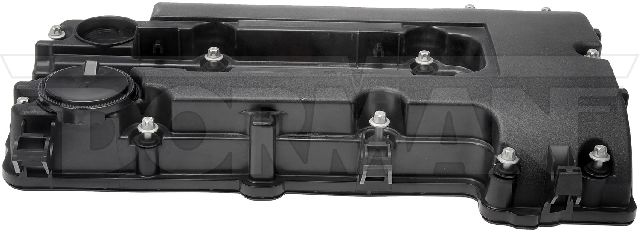
- Torn PCV Diaphragm in Valve Cover 🔴 High Probability The rubber diaphragm is a known weak point that degrades from heat and oil vapors, eventually tearing. This creates a direct, unmetered vacuum leak into the intake manifold via the PCV system.
How to confirm: With the engine running, listen for a distinct hissing sound from the circular PCV regulator on the valve cover. A definitive test is to remove the oil fill cap; if the hissing stops and the idle smooths out, the diaphragm is torn. Alternatively, place a piece of paper over the small vent hole on the regulator; strong suction confirms a tear.
Typical fix: Replace the entire valve cover assembly. The PCV diaphragm is integrated and not sold separately by GM. Aftermarket diaphragms are available, but their installation can be difficult and replacing the whole cover is often more reliable and includes new gaskets.
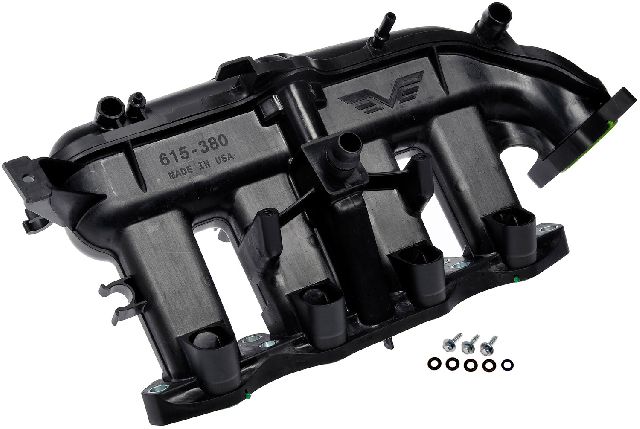
Est. part cost: $70-$150 - Failed/Missing Intake Manifold Check Valve 🟡 Medium Probability A small orange rubber check valve inside the plastic intake manifold can become brittle, break, and get ingested by the engine. This allows high-pressure turbo boost to enter the crankcase, which can blow out the valve cover diaphragm and cause other oil seals to fail.
How to confirm: Remove the PCV hose from the top of the intake manifold and look down into the port with a flashlight. You should see a small orange 'nipple'. If the port is an empty black hole, the valve is gone.
Typical fix: Official repair is to replace the entire intake manifold. However, a very popular and cost-effective DIY solution is to install an aftermarket external check valve kit (e.g., from CruzeKits.com). This bypasses the internal failure point permanently without needing to remove the manifold.
Est. part cost: $150-$300 (OEM Manifold), $75 (Aftermarket Kit) - Cracked or Loose Intake Air/Charge Pipes ⚪ Low Probability The corrugated plastic PCV hose running from the valve cover to the turbo inlet is known to become brittle and crack, creating a vacuum leak.
How to confirm: Visually inspect all ducting between the air filter, turbo, intercooler, and throttle body for cracks or loose clamps. Pay special attention to the thin, hard plastic PCV tube. A smoke test is the most effective way to find these leaks.
Typical fix: Tighten any loose clamps or replace the damaged pipe section. Many aftermarket PCV kits include a more durable replacement for the fragile PCV hose.
Est. part cost: $30-$200
Rare But Worth Checking
- Cracked Intake Manifold: The plastic intake manifold itself can develop cracks, especially at the seams, creating a vacuum leak that can be difficult to spot without a smoke test.
- Leaking Throttle Body Gasket: The gasket sealing the throttle body to the intake manifold can fail, causing a leak right at the source the code describes.
- Failed PCV Hose Check Valve (at Turbo): A less common failure, but the PCV hose that connects to the turbocharger inlet contains a check valve that can fail, contributing to improper crankcase ventilation and air leaks.
Diagnosis Steps
- Read all fault codes with an OBD-II scanner. Note any other codes present, especially P0171 or P1101, which strongly point to this platform's common PCV failures.
- With the engine running at idle, listen carefully for a loud hissing or sucking sound around the top of the engine, specifically from the valve cover.
- Perform the 'oil cap test': While the engine is idling and hissing, remove the oil fill cap. If the hissing stops and the idle quality changes or improves, the valve cover's internal PCV diaphragm is torn. This is a definitive test.
- If the oil cap test is negative, inspect the intake manifold check valve. Disconnect the PCV hose from the port on top of the intake manifold. Shine a light into the port and check for the presence of the small, orange check valve nipple. If it is a black, empty hole, the valve has failed and been ingested by the engine.
- If the common PCV failures are not obvious, perform a smoke test. Introduce smoke into the intake system after the MAF sensor to visually pinpoint the source of the leak. Check all hoses, the intake manifold gaskets, and the throttle body gasket.
- Inspect the corrugated PCV hose that runs from the valve cover to the turbo inlet pipe for cracks, as it is known to become brittle.
Parts You'll Likely Need
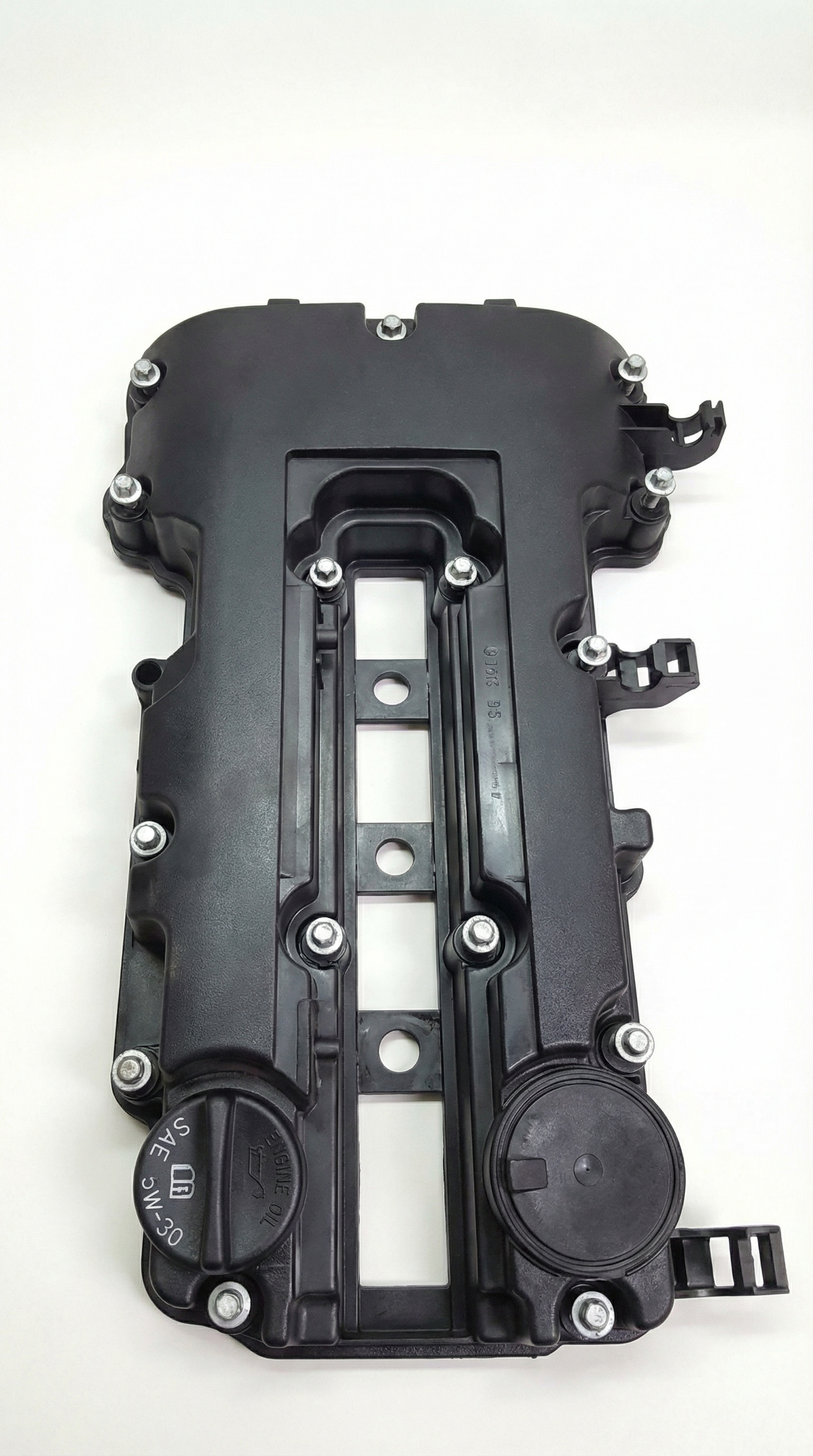
- Valve Cover / Camshaft Cover
(OEM #25198874, 25201934 (superseded))— This is the most common fix. The original PCV diaphragm inside tears, and the entire cover must be replaced as a unit for an OEM repair. Includes new gaskets.
Trusted brands: ACDelco (OEM), Dorman (264-968)
OEM price range: $120-$180
Aftermarket price range: $70-$120 - Intake Manifold
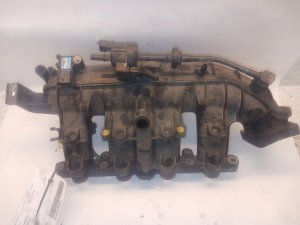
(OEM #55573171, 25200449 (superseded))— Required if the internal check valve has failed and is missing. The valve is not sold separately by GM.
Trusted brands: ACDelco (OEM), Dorman (615-380)
OEM price range: $250-$350
Aftermarket price range: $150-$250 - Aftermarket PCV Fix Kit — An alternative to replacing the intake manifold. These kits provide an external check valve and block off the failed internal port, offering a more permanent and serviceable solution.
Trusted brands: CruzeKits
OEM price range: N/A
Aftermarket price range: $75-$95
Related Codes That Often Appear With This One
- P0171 — System Too Lean. This code is extremely common with P2281 because the unmetered air leak creates a lean air/fuel mixture, which the oxygen sensors detect. They are almost always seen together for this issue.
- P1101 — MAF Sensor Out of Self-Test Range. This is another GM-specific code that often points directly to the same PCV-related vacuum leaks. It indicates a discrepancy between expected and actual airflow.
- P0106 — Manifold Absolute Pressure (MAP) Sensor Performance. The vacuum leak causes the MAP sensor readings to be inconsistent with what the ECM expects based on throttle position and MAF readings.
Technical Service Bulletins (TSBs) & Recalls
- PIP5197N: Addresses DTC P0171 (Fuel Trim System Lean) caused by a torn PCV diaphragm in the camshaft cover or a missing intake manifold non-return valve. This TSB outlines the diagnostic procedure of checking for vacuum at the valve cover port and visually inspecting for the intake check valve.
- PIP5240D: Addresses DTC P0171 and P1101 on Trax
Platform-Specific Known Issues
- The PCV system on the 1.4L Turbo engine is a well-documented, high-failure-rate system. The valve cover diaphragm and intake manifold check valve are the primary points of failure leading to vacuum leaks.
- GM issued Technical Service Bulletin PIP5197 (now on revision N or later) for code P0171, which details the diagnosis of the torn PCV diaphragm and missing intake check valve, root causes that also trigger P2281.
- The high failure rate of the intake manifold check valve has led to a strong aftermarket of 'PCV Fix Kits' that re-route the plumbing to use a durable, external, and serviceable check valve.
Mechanic-Grade Diagnostic Values
- Mass Airflow (MAF) Sensor Reading at Idle — expected: Approximately 1.4 to 4.5 g/s. A common rule of thumb is that the g/s reading should roughly match the engine displacement in liters (e.g., ~1.4 g/s for the 1.4L engine), but readings up to 4.4 g/s at a warm idle have been observed as normal.. Failure: A significantly higher reading at idle often indicates unmetered air is entering the system after the MAF sensor, causing the ECM to see a discrepancy. A very low reading could indicate a contaminated sensor or an upstream restriction like a clogged air filter.
- Long Term Fuel Trim (LTFT) at Idle — expected: Within +/- 10%. Ideally close to 0%.. Failure: A high positive LTFT (e.g., +20% or higher) indicates the ECM is adding a large amount of fuel to compensate for what it perceives as a lean condition, which is a classic sign of a vacuum leak.
- Manifold Absolute Pressure (MAP) Sensor Voltage (Key On, Engine Off) — expected: Should read near atmospheric pressure, which corresponds to a voltage of around 4.5-4.8V at sea level. This value decreases as altitude increases.. Failure: A reading that is significantly different from the Barometric Pressure (BARO) sensor reading (if available on the scan tool) can indicate a faulty MAP sensor.
- Crankcase Pressure at Maximum Boost — expected: Approximately 1 PSI.. Failure: Pressures of 4-5 PSI or higher indicate the intake manifold check valve has failed, allowing turbo boost pressure to enter the crankcase. This over-pressurization leads to oil leaks and can rupture the valve cover diaphragm.
Scan Tool Commands That Help
- GDS2 (GM Global Diagnostic System 2) or equivalent professional scanner: Fuel Trim Reset — After replacing a component that caused a vacuum leak (like the valve cover or intake manifold), a fuel trim reset should be performed. This forces the ECM to relearn the air/fuel mixture strategy immediately, rather than slowly adapting over time, which can resolve persistent poor running conditions after the repair.
- GDS2 or equivalent: Throttle/Idle Learn — If the throttle body was cleaned or replaced during diagnosis, this function should be performed to allow the ECM to relearn the idle position of the throttle plate. Failure to do so can result in an unstable or high idle.
Wiring & Ground Locations
- MAP Sensor Connector — On the top of the intake manifold.. The MAP sensor provides a key data point for the ECM to cross-reference with the MAF sensor. A loose connection or damaged wiring at this sensor can cause related codes like P0106 and contribute to incorrect air/fuel calculations. The 5-volt reference signal is critical.
- ECM (Engine Control Module) Ground — Key engine grounds (G103, G105) are typically located on the engine block or cylinder head near the front of the engine.. A poor ground connection for the ECM can cause erratic sensor readings and unpredictable behavior. While not a common cause for P2281 specifically, it's a foundational check for any complex electronic diagnostic issue.
Real Owner Repair Stories
- YouTube user 'J Tay187' (Buick Encore 1.4L Turbo (same engine/platform)) — P1101 code (MAF Sensor Out of Range), no boost.
❌ Tried (didn't work) Replaced MAF sensor with a new Bosch unit., Cleaned the throttle body., Replaced valve cover., Installed an aftermarket PCV fix kit (CruzeKits)., Replaced oil cap and dipstick O-rings.
✅ What actually fixed it A crack was found in the plastic intercooler charge pipe (GM Part #42698921). Replacing this hose resolved the code and performance issues. - SonicOwnersForum user (2015 LTZ 1.4L Turbo) — Low boost code, chirping from valve cover, oil burning smell, oil leak on top of intake manifold.
❌ Tried (didn't work) Replaced valve cover and gasket., Replaced turbocharger and exhaust manifold.
✅ What actually fixed it The user was advised that the root cause was likely the failed check valve inside the intake manifold, which caused excessive crankcase pressure, blowing oil out of the new valve cover gasket and likely causing the initial valve cover diaphragm failure. The final fix required replacing the intake manifold or installing a PCV fix kit.
"I Checked Everything" — The Actual Cause
- In some cases, a smoke test may not reveal a leak if the crack is in a flexible component like an intercooler hose that only opens under pressure or specific engine movement. One owner replaced the valve cover, MAF sensor, and installed a PCV kit to fix a P1101 code, but the issue persisted. The final cause was a crack in a plastic intercooler charge pipe that was likely missed during initial diagnosis.
OEM Part Supersession History
25198874→25201934, 25209141— Revisions to address the high failure rate of the internal PCV diaphragm.55573171→25200449— Revisions to the intake manifold assembly. The internal check valve remains a failure point across revisions.
Diagnostic Flowchart
Other Known Issues on This Vehicle
Issues unrelated to this code that are worth knowing about as an owner of this generation:
- Cracked Plastic Coolant Outlet / Thermostat Housing 🔴 High — Very common failure, often occurring between 60,000-100,000 miles. The plastic housing develops cracks from heat cycles, causing significant coolant leaks.
- Water Pump Failure 🔴 High — Widespread issue, often leaking from the weep hole or gasket. GM issued a special coverage extension (14371A) for some model years up to 10 years/150,000 miles. (Ref: 14371A)
- Leaking Turbocharger Coolant/Oil Lines 🟠 Medium — The O-rings and seals on the banjo bolt fittings for the turbo coolant and oil feed/return lines degrade over time, causing oil and coolant leaks onto the turbo and exhaust.
- Excessive Oil Consumption 🟠 Medium — Can be caused by PCV issues pressurizing the crankcase, but also linked to piston ring issues in some cases, leading to oil burning.
- Failed EVAP Purge Valve Solenoid 🟡 Low — A common wear item that can fail, causing a check engine light (often for EVAP codes, but can contribute to lean conditions) and sometimes difficulty starting after refueling.
Used vs. New Parts: Buying Guide for This Vehicle
When a used part is the smart pick: Due to the extremely high failure rate of the integrated PCV components, buying a used valve cover or intake manifold from a junkyard is strongly discouraged. The used part is likely to have the same defect or fail shortly after installation. The only exception might be for the plastic engine cover or ancillary brackets if they were damaged during a repair.
Donor-vehicle mileage cap: roughly under 10000 miles for the part to have meaningful remaining life.
What to inspect on the donor part:
- For an intake manifold, visually confirm the orange check valve 'nipple' is present and intact inside the PCV port. If it's a black hole, the part is already failed.
- For a valve cover, there is no reliable way to inspect the internal diaphragm. Assume any used valve cover is a high-risk purchase.
OEM-only on this vehicle (don't cheap out):
- While aftermarket parts are available, many owners report the highest long-term success with genuine ACDelco/GM valve covers and intake manifolds, especially when not using an external PCV fix kit.
Aftermarket brands forum-validated for this vehicle:
- CruzeKits: Widely regarded in owner forums as the go-to, permanent solution for the failed intake manifold check valve.
- Dorman (Valve Cover 264-968, Intake Manifold 615-380): A common and generally acceptable alternative to OEM parts, often with a lifetime warranty. Some users have had success, though OEM is often preferred for fit and finish.
Brands owners have reported issues with on this vehicle:
- Unbranded, low-cost valve covers and intake manifolds from online marketplaces. These often use inferior quality rubber and plastic, leading to rapid failure of the diaphragm or warping/cracking of the manifold itself.
Real Owner Stories
Aggregated from forums and TSBs cited above. Mileages and costs reflect what owners reported in those sources.
2011-2016 Chevrolet Cruze 1.4L Turbo
Symptoms: The PCV system failed due to a missing intake manifold check valve, which then caused high-pressure turbo boost to enter the crankcase and blow out the valve cover diaphragm.
What fixed it: Installed an aftermarket external check valve kit (CruzeKits.com) to permanently bypass the internal manifold failure point.
Source hint: CruzeTalk.com - '2011-2016 Chevy Cruze 1.4L PCV System Explained'
Chevrolet Sonic 1.4L Turbo
Symptoms: Loud hissing sound from the engine bay and a rough, unstable idle. The owner noticed the oil cap was extremely difficult to remove while the engine was idling.
What fixed it: Replaced the entire valve cover assembly because the integrated PCV diaphragm was torn.
Source hint: Reddit r/ChevySonic & r/Cruze
2015-2022 Chevrolet Trax 1.4L Turbo
Symptoms: Engine hesitation and stumbling during acceleration along with a Check Engine Light.
What fixed it: Diagnosis followed TSB PIP5240D, leading to the replacement of the valve cover to fix a vacuum leak.
Source hint: PIP5240D
Related OBD-II Codes
Frequently Asked Questions
Does TSB PIP5197N apply to my Chevrolet Sonic if I have a P2281 code?
Can I just replace the rubber PCV diaphragm on my Sonic's valve cover?
How can I tell if my Sonic's intake manifold check valve is missing without taking the engine apart?
Is there a way to fix the intake manifold issue without buying a whole new $300 OEM manifold?
Why is it so hard to take my oil cap off while the engine is running?
Are there any other common leaks on the Sonic 1.4L I should check while diagnosing P2281?
Used OEM Parts in Stock
New Aftermarket Parts Available



The information in this article is provided for general reference and educational purposes only. Vehicle specifications, procedures, and part compatibility can vary by production date, trim level, and region. Always consult your vehicle's factory service manual and verify part numbers before purchasing or performing repairs. Safety-critical components such as airbags, seat belts, and braking systems should be installed by a qualified professional.
- Chevrolet Sonic:
- 🛍️ Shop This Part
- What's Unique About the 2012-2020 Chevrolet Sonic
- Symptoms You May Notice
- Most Likely Causes
- Rare But Worth Checking
- Diagnosis Steps
- Parts You'll Likely Need
- Related Codes That Often Appear With This One
- Technical Service Bulletins (TSBs) & Recalls
- Platform-Specific Known Issues
- Mechanic-Grade Diagnostic Values
- Scan Tool Commands That Help
- Wiring & Ground Locations
- Real Owner Repair Stories
- "I Checked Everything" — The Actual Cause
- OEM Part Supersession History
- Diagnostic Flowchart
- Other Known Issues on This Vehicle
- Used vs. New Parts: Buying Guide for This Vehicle
- Real Owner Stories
- 2011-2016 Chevrolet Cruze 1.4L Turbo
- Chevrolet Sonic 1.4L Turbo
- 2015-2022 Chevrolet Trax 1.4L Turbo
- Related OBD-II Codes
- Frequently Asked Questions
- 🎟️ Get 5% Off