

P2201 on 2017-2019 Chevrolet Cruze 1.6L Diesel: NOx Sensor Causes and Fixes
This code means the upstream NOx sensor (Position 1) is sending faulty data. The most common fix is replacing the sensor itself and its integrated module, followed by a mandatory sensor relearn procedure using a GM-compatible scan tool. Expect to pay $300-$500 for an OEM sensor. Always check wiring for damage first.
- P2201 on the 1.6L Cruze diesel points directly to a problem with the upstream NOx sensor (Position 1).
- The most common solution is to replace the entire sensor and module assembly with GM part 24001907 (which supersedes 55498412).
- After replacement, a special 'relearn' or 'adaptation' procedure MUST be performed with a capable scan tool for the repair to be successful.
- Always check the wiring and connectors for damage before buying an expensive new sensor.
- If you also have a P20EE code, fix the P2201 code first, as it is the likely cause.
What's Unique About the 2017-2019 Chevrolet Cruze
The 1.6L 'Whisper Diesel' engine (GM code LH7) in the second-generation Cruze uses a sophisticated emissions system to meet strict standards. While no specific TSBs for P2201 on this exact model are widely documented, related GM diesel platforms have known issues with NOx sensor failures and software calibrations. The earlier 2.0L Cruze diesel had recalls for soot buildup on the NOx sensor, suggesting that these sensors can be a sensitive point in GM diesel emission systems. For the 1.6L, the failure is most often the sensor itself rather than a simple soot issue. The entire DEF and NOx sensor system is a known weak point on this platform.
Symptoms You May Notice
- Check Engine Light is on
- "Service Emission System" message on the driver information center
- Reduced engine performance or 'limp mode'
- Noticeable increase in DEF (Diesel Exhaust Fluid) consumption
- Fluctuations in engine RPM at idle
- Excessive smoke from the exhaust
- Replacing the downstream NOx sensor (Position 2) instead of the upstream one.
- Replacing the catalytic converter or DPF when the issue is sensor-related.
- Assuming the DEF injector is faulty without checking NOx sensor data first.
- Replacing the sensor without performing the mandatory relearn procedure, causing the code to return.
Most Likely Causes
- Failed Upstream NOx Sensor (Position 1) 🔴 High Probability NOx sensors are complex and operate in a harsh exhaust environment. Internal failure of the sensing element or the integrated control module is the most common reason for this code. These sensors are a known failure point on modern diesel engines, including the LH7.
How to confirm: Use an advanced scan tool to monitor live data for 'NOx Sensor Bank 1'. A healthy sensor's readings should fluctuate with engine load and drop to near zero during deceleration with fuel cut-off. A sensor that is stuck on a specific value, reads erratically, or does not respond to changes in engine conditions is likely faulty.
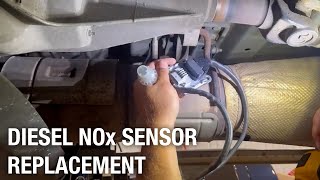
Typical fix: Replace the entire NOx sensor and module assembly. 🎬 Watch: Diesel NOx sensor replacement and diagnostic tips After replacement, a 'NOx Sensor Adaptation' or 'SCR System Service Regeneration' must be performed with a GM-specific scan tool (like a Tech2 or a high-end aftermarket scanner with GM software) to calibrate the new sensor.
Est. part cost: $300-$500 - Damaged Wiring or Corroded Connector 🟡 Medium Probability The sensor wiring runs along the underside of the vehicle and is exposed to heat, moisture, and road debris, which can cause damage over time. Water intrusion into the harness connector is a known issue on other platforms that use similar NOx sensors.
How to confirm: Visually inspect the entire wiring harness from the NOx sensor to its module and back to the main engine harness. Check for any breaks, melting, or chafing. Unplug the connector and check for green or white crusty corrosion, moisture, or bent pins.
Typical fix: Repair the damaged section of wiring or replace the connector pigtail. If corrosion is present, clean the terminals thoroughly and use dielectric grease to prevent future moisture intrusion.
Est. part cost: $20-$100 - Exhaust Leaks ⚪ Low Probability Leaks in the exhaust system upstream of the NOx sensor can introduce oxygen, which skews the sensor's readings and causes the ECM to flag a performance issue. The clamp between the turbocharger and the catalytic converter is a potential leak point on this platform.
How to confirm: With the engine running, carefully check for soot trails or audible leaks at the exhaust manifold gasket and the connection between the turbocharger and the downpipe. A smoke machine can also be used to pinpoint small leaks.
Typical fix: Replace the leaking gasket or tighten the loose connection to seal the exhaust leak.
Est. part cost: $20-$80
Rare But Worth Checking
- Faulty Engine Control Module (ECM): This is very rare. All other possibilities, especially the sensor and its wiring, should be exhaustively ruled out before considering ECM replacement, which requires professional programming.
- ECM Software Glitch: Occasionally, GM releases software updates to address overly sensitive emissions monitoring. A dealer can check if any emissions-related software updates or recalls are available for your vehicle's VIN. For example, recall 17337 involved an ECM reprogram for diesel particulate matter sensor diagnostics.
Diagnosis Steps
- Connect an OBD-II scanner and confirm P2201 is the primary code. Note any other codes present, especially P20EE.
- Use a scan tool with live data capability to monitor the 'Bank 1 Sensor 1 NOx' reading in parts-per-million (PPM). The value should change with engine speed and load.
- Observe the NOx sensor reading during a forced deceleration (coasting down from a higher RPM). The reading should drop to near zero as fuel is cut off. If it remains high or stuck, the sensor is likely faulty.
- Visually inspect the upstream NOx sensor, which is located on the exhaust manifold or just after the turbocharger.
- Thoroughly inspect the sensor's wiring harness and connector for any signs of melting, corrosion, or physical damage. Check for moisture intrusion in the connector.
- Check for any exhaust leaks between the engine and the NOx sensor. Pay close attention to the turbo-to-downpipe connection.
- If the sensor data is flat/erratic and the wiring is intact, the NOx sensor assembly is the most likely culprit.
- After replacing the sensor, clear all DTCs. Crucially, use a GM-compatible scan tool to perform the 'NOx Sensor Adaptation' or 'Reductant System' relearn procedure to ensure the ECM recognizes and correctly uses the new sensor. Failure to do this step will likely result in the code returning.
Parts You'll Likely Need
- Upstream NOx Sensor (Position 1)
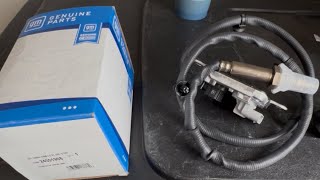
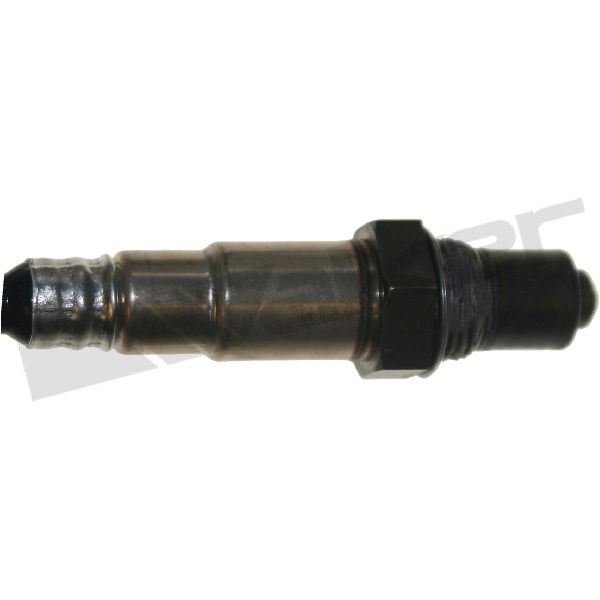
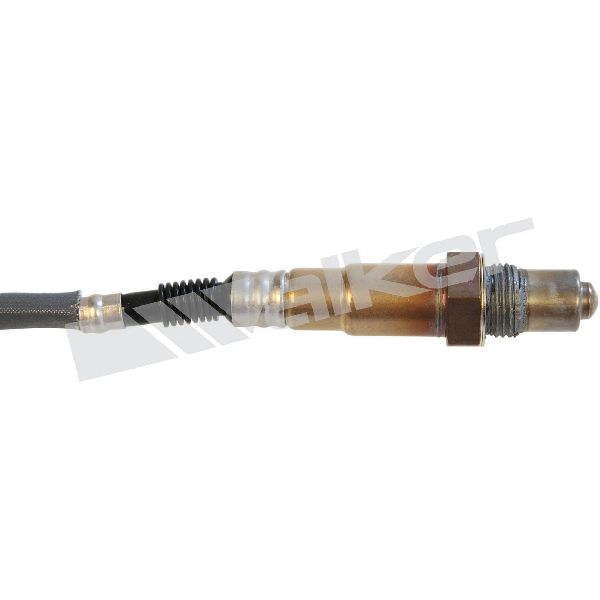
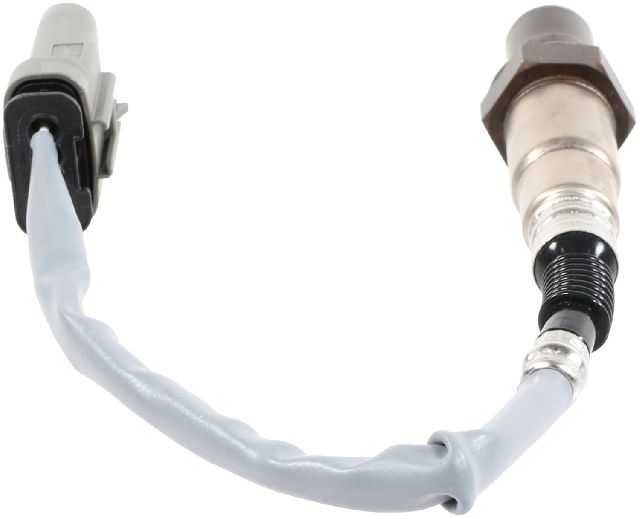
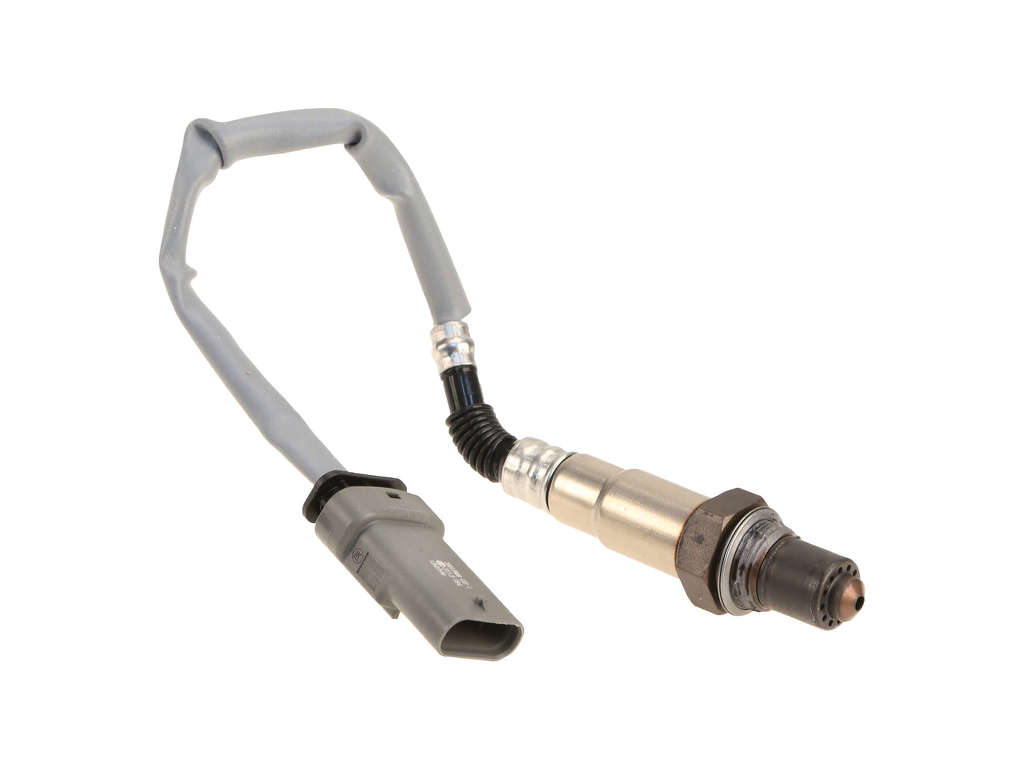
(OEM #55498412)— This is the sensor that directly triggers the P2201 code. It is sold as a complete assembly with the sensor probe and its integrated control module. The original part number 55498412 has been superseded by GM part number 24001907.
Trusted brands: ACDelco (GM Genuine)
OEM price range: $300-$500
Aftermarket price range: $200-$400
Related Codes That Often Appear With This One
- P20EE — P20EE indicates 'SCR NOx Catalyst Efficiency Below Threshold.' A faulty upstream NOx sensor (P2201) provides incorrect data to the ECM, which then cannot properly judge the catalyst's efficiency, often leading to a false P20EE code. Fixing P2201 first will almost always resolve P20EE.
Technical Service Bulletins (TSBs) & Recalls
- While no TSB is specific to P2201 on the Cruze, GM has issued related documents. For example, Customer Satisfaction Program 21N02 provided a one-time repair for P2201 on certain 2013-2016 Ford models after a recall, showing that NOx sensor issues are on the manufacturer's radar. Additionally, GM recall 17337 addressed ECM programming for particulate matter sensor diagnostics on 2017-2018 Cruze diesels, which could be related to overall emissions system logic.
- Manufacturer service bulletins for other GM diesel platforms, such as Bulletin #N242469060 and Bulletin #N232427260, note that certain vehicles may erroneously experience an illuminated Check Engine Light with DTC P2201 and/or P20EE, requiring an ECM reprogram.
Platform-Specific Known Issues
- Owner Experience with P20EE and NOx Sensor: A 2017 Cruze diesel owner on YouTube documented their experience with code P20EE, which is often paired with P2201. They first replaced the downstream NOx sensor, 🎬 Watch: How to replace the downstream NOx sensor which did not fix the issue, highlighting the importance of correct diagnosis. They later moved on to cleaning the DEF injector, 🎬 See how to clean the DEF injector nozzle showing the complexity and potential for misdiagnosis within this emissions system.
Mechanic-Grade Diagnostic Values
- Live Data - NOx Sensor 1 Reading (Normal Operation) — expected: Fluctuates between 200-800 ppm with engine load.. Failure: Reading is stuck, erratic, or does not drop to near 0 ppm during fuel cut-off on deceleration.
- Live Data - GDS2 Reductant Fluid Quality Test Graphing — expected: Graph parameter values should be set to a MIN of 0 and a MAX of 200.. Failure: Sensor readings that do not fall within or respond as expected inside this graphed range during the test indicate a problem.
Hidden / Shadow Codes Worth Checking
- P11CB: NOx Sensor 1 Performance - Signal High (see via A professional GM-compatible scan tool like a Tech2 or GDS2. Often set in conjunction with P2201.)
- P11CC: NOx Sensor 1 Performance - Signal Low (see via A professional GM-compatible scan tool like a Tech2 or GDS2. Often set in conjunction with P2201.)
- P11DB: NOx Sensor 1 Current Performance (see via A professional GM-compatible scan tool like a Tech2 or GDS2. Often set in conjunction with P2201.)
Scan Tool Commands That Help
- GDS2: NOx Sensor 1 Reset — This command must be performed after replacing the NOx sensor to clear learned values and allow the ECM to calibrate to the new sensor.
- GDS2: Reductant System Malfunction Warning Service Bay Test — This is a comprehensive test to verify the functionality of the entire SCR/DEF system, including the NOx sensors, after a repair. It can confirm if a sensor learn issue was the root cause.
- GDS2: Graphing NOx Sensor and Temperature Readings — Used during a DPF Service Regeneration or Reductant Fluid Quality Test to visually analyze sensor response and performance against known good values, aiding in diagnosing an intermittent or poorly performing sensor.
Wiring & Ground Locations
- F14, F18, F19 — Underhood Fuse Block. These fuses supply power to the Diesel NOx sensor system. A blown fuse will cause the sensor to be inoperative and set a fault code. This should be one of the first electrical checks performed.
Real Owner Repair Stories
- YouTube video by user 'Normal Guy DIY' (2017 Chevrolet Cruze 1.6L Diesel) — Check Engine Light with code P20EE (SCR NOx Catalyst Efficiency), rough/bouncing idle.
❌ Tried (didn't work) Initially misdiagnosed as a DEF injector issue.
✅ What actually fixed it The user replaced the downstream (Position 2) NOx sensor. While this story is for the related P20EE code, it serves as a critical real-world example of the common misdiagnosis of replacing the wrong sensor or focusing on other DEF components when a NOx sensor is the root cause. The video also details the physical difficulty of the repair and the tools needed (22mm offset wrench, 10mm socket).
OEM Part Supersession History
55498412→24001907— Not specified in documentation, but typically indicates a design revision for improved reliability or a change in manufacturer.
Diagnostic Flowchart
Other Known Issues on This Vehicle
Issues unrelated to this code that are worth knowing about as an owner of this generation:
- Timing Chain Stretch/Failure 🔴 High — Can occur as early as 50,000-60,000 miles. Owners report rattling noises on startup as an early symptom.
- DEF System Problems (Heater, Pump, Level Sensor) 🟠 Medium — Common issue where the DEF heater, pump, or level sensor fails, often causing 'Service Emission System' warnings or vehicle speed limitations. DEF fluid can crystallize and cause sensor reading issues.
- Intake Carbon Buildup 🟠 Medium — Like many direct-injection diesels with EGR systems, the LH7 is prone to carbon buildup in the intake manifold, which can lead to rough running and reduced performance over time.
- Oil Leaks 🟡 Low — Various oil leaks from components like the oil cooler, valve cover, and crankcase ventilation system are reported, often noticeable by a burning oil smell.
Used vs. New Parts: Buying Guide for This Vehicle
When a used part is the smart pick: For this specific repair, a used part is NEVER recommended. The only exception might be sourcing a used wiring harness pigtail if the original connector is physically damaged.
What to inspect on the donor part:
- If sourcing a connector pigtail, inspect for any signs of corrosion (green or white powder), melted plastic, or brittle wiring insulation.
OEM-only on this vehicle (don't cheap out):
- NOx Sensor Assembly: Due to high failure rates, electronic sensitivity, and the requirement for software compatibility, only a new OEM (ACDelco) sensor should be used to guarantee a lasting repair.
Aftermarket brands forum-validated for this vehicle:
- None are consistently recommended by technicians. While brands like Dorman or Dinex exist, forum discussions frequently report high out-of-box failure rates and compatibility issues with aftermarket sensors.
Brands owners have reported issues with on this vehicle:
- Generic, unbranded sensors from online marketplaces (e.g., Amazon, eBay) have a very high probability of being defective or failing prematurely, leading to repeat repairs.
Real Owner Stories
Aggregated from forums and TSBs cited above. Mileages and costs reflect what owners reported in those sources.
2017 Chevrolet Cruze 1.6L Diesel
Symptoms: Check engine light with code P20EE (often paired with P2201). The owner attempted to replace the downstream sensor first, which did not resolve the issue.
What fixed it: The owner documented that the downstream sensor was not the fix and proceeded to clean the DEF injector as part of the troubleshooting process for the complex emissions system.
Source hint: Vehicle_specific_issues: Owner Experience with P20EE and NOx Sensor (YouTube documentation)
2017 Chevrolet Cruze 1.6L Diesel
Symptoms: Difficulty accessing the NOx module mounting bolts during replacement of the upstream sensor.
What fixed it: Replacement of the upstream NOx sensor (NOx 1) located on the exhaust manifold.
Source hint: Reddit r/cruze
2017 Chevrolet Cruze 1.6L Diesel — 61000 miles
Symptoms: Reported a DEF-related code (P249D) and suspected a faulty NOx sensor.
What fixed it: Suspected bad NOx sensor replacement due to emissions system sensitivity at this mileage.
Source hint: CarKiller Forum Thread
Related OBD-II Codes
Frequently Asked Questions
Does GM Recall 17337 apply to my 2017-2018 Cruze diesel emissions system?
Is there a specific TSB for P2201 on the Chevrolet Cruze LH7?
Can I use a used NOx sensor from a salvage yard to fix P2201?
Where is the Upstream NOx sensor (Sensor 1) located on my 2017 Cruze?
Why did my P2201 code return immediately after I replaced the sensor?
Are there any other vehicles that share this same P2201 issue?
Helpful Videos
We Have This Part in Stock



The information in this article is provided for general reference and educational purposes only. Vehicle specifications, procedures, and part compatibility can vary by production date, trim level, and region. Always consult your vehicle's factory service manual and verify part numbers before purchasing or performing repairs. Safety-critical components such as airbags, seat belts, and braking systems should be installed by a qualified professional.
- Chevrolet Cruze:
- 🎬 Helpful Videos
- 🛍️ Shop This Part
- What's Unique About the 2017-2019 Chevrolet Cruze
- Symptoms You May Notice
- Most Likely Causes
- Rare But Worth Checking
- Diagnosis Steps
- Parts You'll Likely Need
- Related Codes That Often Appear With This One
- Technical Service Bulletins (TSBs) & Recalls
- Platform-Specific Known Issues
- Mechanic-Grade Diagnostic Values
- Hidden / Shadow Codes Worth Checking
- Scan Tool Commands That Help
- Wiring & Ground Locations
- Real Owner Repair Stories
- OEM Part Supersession History
- Diagnostic Flowchart
- Other Known Issues on This Vehicle
- Used vs. New Parts: Buying Guide for This Vehicle
- Real Owner Stories
- 2017 Chevrolet Cruze 1.6L Diesel
- 2017 Chevrolet Cruze 1.6L Diesel
- 2017 Chevrolet Cruze 1.6L Diesel — 61000 miles
- Related OBD-II Codes
- Frequently Asked Questions
- 🎟️ Get 5% Off