

OBD-II Code P2200: NOx Sensor Circuit Malfunction (Bank 1)
The Ultimate Guide to What P2200 Means, Why It Triggers, and How to Fix It for Good
- Code P2200 flags a critical electrical fault in the Bank 1 NOx sensor circuit, immediately disabling proper emissions control.
- Over 80% of P2200 codes stem from a failed NOx sensor module or melted wiring near the exhaust system.
- Ignoring P2200 drops fuel economy by up to 15% and risks a $2,500+ DPF or SCR catalyst replacement within 6 months.
- Test the sensor's power, ground, and CAN bus wiring with a multimeter before spending $500+ on a replacement sensor.
- Always install a genuine OEM NOx sensor, as aftermarket sensors have a 50% failure rate right out of the box.
What Does P2200 Mean?

P2200 signifies the Powertrain Control Module (PCM) detects a general electrical fault within the Nitrogen Oxide (NOx) sensor circuit on engine Bank 1. This sensor measures harmful nitrogen oxide levels in the exhaust. A circuit problem means the PCM receives an unreliable signal, disabling proper emissions system management—a critical failure for diesel vehicles equipped with a Selective Catalytic Reduction (SCR) system.
Technical definition: The official SAE/OBD-II definition is "NOx Sensor Circuit Malfunction (Bank 1 Sensor 1)". This indicates the Powertrain Control Module (PCM) detects an electrical fault in the NOx sensor circuit on Bank 1, typically positioned before the SCR catalyst. 🎬 Watch: A quick overview of the P2200 error code. The NOx sensor and its control unit operate as a single, inseparable component communicating with the engine control unit via a dedicated CAN bus.
Can I Drive With P2200?
Yes, But With Caution. You can drive, but it is not recommended for long distances. Your vehicle will likely enter a reduced power 'limp mode.' Ignoring the code causes the Selective Catalytic Reduction (SCR) system to malfunction, leading to a clogged Diesel Particulate Filter (DPF) or a damaged SCR catalyst—repairs costing between $1,000 and $3,000. Many modern diesel vehicles prevent the engine from starting after a set number of miles or key cycles with an active emissions fault.
Common Causes

- Failed NOx Sensor or Control Module (Very Common) — The sensor and its integrated control module operate in an extremely hot, harsh environment. They fail frequently due to thermal stress, vibration, and internal electronic component degradation.
- Damaged Wiring or Poor Connections (Very Common) — The wiring harness routes near the hot exhaust, causing wires to melt, chafe, or break. Connectors suffer from moisture and road salt intrusion, leading to corrosion and voltage drops.
- Contaminated or Clogged Sensor (Less Common) — Soot and carbon from diesel exhaust build up on the sensor probe, insulating it and preventing accurate readings. While cleaning is possible, it rarely solves a hard circuit code like P2200.
- Exhaust System Leaks (Less Common) — A crack or leak in the exhaust pipe upstream of the NOx sensor allows outside oxygen to enter. This skews the sensor's readings, which the PCM misinterprets as a circuit fault.
- Outdated PCM Software (Rare) — Manufacturers release software updates (TSBs) for the Powertrain Control Module (PCM) to correct overly sensitive diagnostic parameters. A dealer must reflash the PCM.
- Failed Catalytic Converter/SCR System (Rare) — A failing catalytic converter or SCR system causes erratic readings that the PCM interprets as a sensor circuit fault. This is accompanied by other efficiency-related codes.
- Faulty Powertrain Control Module (PCM) (Very Rare) — The vehicle's main computer fails, causing it to misinterpret the sensor's signal or fail to provide power. Consider this only after exhaustively ruling out wiring and the sensor itself.
Symptoms

- Check Engine Light is On — This is the most common and often the only initial sign of a problem. An emissions system warning light also illuminates.
- Reduced Engine Power (Limp Mode) — Diesel trucks intentionally limit engine power to prevent excessive emissions and potential damage when a critical emissions code like P2200 is active.
- Poor Fuel Economy — The engine consumes more fuel because the PCM has incorrect data about the exhaust gas composition and defaults to a rich, safe combustion map.
- Increased DEF Consumption — When the SCR system lacks an accurate NOx reading, it defaults to injecting more Diesel Exhaust Fluid (DEF) as a failsafe measure to ensure emissions compliance.
- Vehicle Won't Start — Modern diesel vehicles enter a no-start condition after a predetermined number of miles or engine starts once a serious emissions fault is detected.
- Excessive Smoke from Exhaust — Improper emissions control leads to visible smoke from the exhaust under acceleration, as the air/fuel mixture and aftertreatment systems malfunction.
Diagnostic Flowchart
Tap your situation to follow the diagnostic path that matches what you're seeing on this code.
Common Fixes & Costs

- Replace NOx Sensor Assembly
— Parts: $350-$800, Labor: $150-$250, ~1.5 hr book time
(Intermediate)
Ford F-250/F-350 (6.7L Power Stroke): OEM DC3Z-9D378-A (Upstream, 2013-16), HC3Z-5L248-A (Upstream, 2017-19) (Alt: Dorman 904-6018, Bosch 0281008667)
Mercedes-Benz Sprinter (BlueTEC): OEM A0009053503, A0009059112 (Alt: Bostech NX1117101, Standard Motor Products NOX016)
Volkswagen/Audi (TDI): OEM 03L907807AD (Alt: Bosch, Denso) - Repair Damaged Wiring or Connectors
— Parts: $20-$80, Labor: $150-$400, ~2 hr book time
(Intermediate)
Universal: OEM N/A (Vehicle-specific connector pigtails available from dealer) (Alt: Dorman, BWD pigtail kits) - Repair Exhaust Leak — Parts: $20-$100, Labor: $150-$300, ~1.5 hr book time (Intermediate)
- Update PCM Software — Parts: $0, Labor: $100-$200, ~1 hr book time (Professional)
- Replace Catalytic Converter / SCR Unit — Parts: $800-$2500, Labor: $150-$300, ~2.5 hr book time (Intermediate)
- Replace Powertrain Control Module (PCM) — Parts: $600-$1800, Labor: $150-$300, ~1.5 hr book time (Professional)
DIY vs Professional
- Replace NOx Sensor Assembly — Beginner: Yes, with caution.
Tools: Jack and jack stands, socket set, 22mm oxygen sensor socket, penetrating oil, torque wrench, advanced OBD-II scanner. - Repair Damaged Wiring or Connectors — Beginner: No.
Tools: Soldering iron, heat shrink tubing, wire strippers, digital multimeter, vehicle-specific pigtail connectors. - Update PCM Software — Beginner: No.
Tools: Manufacturer-specific diagnostic tool and software subscription.
Used vs. New Parts: Buying Guide
When a used part is worth it: Due to the high failure rate and sensitivity of NOx sensors, buying used is never recommended. A used sensor carries a high risk of being non-functional or failing shortly after installation. It only makes sense if it is from a very low-mileage wreck and is significantly cheaper than a new aftermarket part.
Donor-vehicle mileage cap: roughly under 30000 miles for the part to have meaningful remaining life.
Donor quality checklist:
- Verify the part number exactly; electronic modules are vehicle-specific.
- Inspect the wiring and connector for any signs of corrosion, melting, or physical damage.
- Avoid parts from regions with heavy road salt use.
Decision logic:
- If The price difference between a used part and a new quality aftermarket part is less than $150. → Buy the new aftermarket part for the warranty and reliability.
- If The vehicle is critical for daily use or business. → Buy a new OEM part to minimize the risk of repeat failure and downtime.
- If A used part is the only option due to budget or availability. → Accept the risk that it is dead on arrival or has a very short service life (50-60% failure rate reported by installers).
Warranty tradeoff: Used parts offer a 30-day warranty at best. Aftermarket new parts come with a 1-year warranty. OEM parts have a 1-2 year warranty, especially if installed by a dealer.
Worst-case if a used part fails: $250-$500, representing the cost of repeat labor and the need to purchase another sensor.
What Happens If You Wait — Timeline
- 0-2 weeks: Check Engine Light illuminates, and code P2200 is stored. Often no other symptoms are noticeable to the driver. (MPG impact: 0-5%% · Added cost: $0)
- 2 weeks - 3 months: The vehicle shows a noticeable drop in fuel economy (5-15%) and increased DEF consumption as the PCM defaults to a safe operating map. Intermittent 'limp mode' or power reduction occurs. (MPG impact: 5-15%% · Added cost: $50-$200 in wasted fuel and DEF.)
- 3-8 months: The risk of DPF clogging increases significantly due to incorrect regeneration cycles. The SCR system suffers from DEF crystallization due to improper injection rates. A forced DPF regeneration is required. (MPG impact: 10-20%% · Added cost: $500-$2,500 for DPF cleaning or potential SCR component damage.)
- 8+ months: Catastrophic failure of the DPF or SCR catalyst occurs. A severely clogged DPF creates high exhaust backpressure, risking damage to the turbocharger. Many modern diesels enter a permanent no-start condition. (MPG impact: 15-25%% · Added cost: $2,500-$10,000+ for replacement of the DPF, SCR catalyst, and damaged NOx sensors.)
Cost of Not Fixing It
- Short-Term (0-2 Months): Vehicle enters 'limp mode' with reduced power. Fuel economy decreases by 5-15% as the engine runs on a default, less efficient map. Increased DEF consumption occurs. (Added cost: $50-$150 in wasted fuel and DEF.)
- Medium-Term (2-6 Months): The SCR system injects incorrect amounts of DEF, leading to crystallization and blockages. The Diesel Particulate Filter (DPF) clogs due to inefficient regeneration cycles. (Added cost: $800-$2,500 for forced DPF regeneration or professional cleaning.)
- Long-Term (6+ Months): Catastrophic failure of the DPF or SCR catalyst. A clogged DPF causes excessive backpressure, damaging the turbocharger or engine. The SCR catalyst is permanently damaged by incorrect DEF dosing. (Added cost: $2,500-$10,000+ for DPF and/or SCR catalyst replacement.)
Diagnosis Steps

- Read Fault Codes & Freeze Frame Data
Use an OBD-II scanner to confirm P2200 is active. Check for related codes (heating circuits, communication, O2 sensors) and review freeze-frame data to see the exact conditions when the code set.
Tools: OBD-II Scanner (Beginner) - Visually Inspect the NOx Sensor System
Locate the Bank 1 NOx sensor (upstream of the SCR catalyst) and its wiring harness. Inspect for melted wires, chafing against brackets, loose connectors, and green/white corrosion inside the plug.
Tools: Flashlight, Safety Glasses (Beginner) - Analyze Live Sensor Data
Using an advanced scan tool, monitor the live data stream for the Bank 1 NOx sensor. The output voltage must fluctuate between 0V and 5V as engine load changes. A fixed or absent reading confirms a hard circuit or sensor fault.
Tools: Advanced OBD-II Scanner (Intermediate) - Test Sensor Power Supply & Ground
With the key on and engine off, disconnect the NOx sensor module connector. Use a multimeter to verify battery voltage (11V-14V) at the power supply pin and a solid ground (near 0V) at the ground pin. Missing voltage indicates a blown fuse or broken wire upstream.
Tools: Digital Multimeter, Vehicle-Specific Wiring Diagram (Advanced) - [PRO TIP] Perform a Voltage Drop Test
A multimeter shows voltage, but not current capacity. Disconnect the NOx sensor module and use a load (like a headlamp bulb) across the power and ground pins. If the bulb is dim, the circuit has high resistance that must be repaired.
Tools: Digital Multimeter, Headlamp Bulb with Wires (Advanced) - [PRO TIP] Check CAN Bus Voltages & Resistance
With the key on, check the two CAN wires at the module connector. CAN High should be ~3.5V and CAN Low ~1.5V during communication. Next, disconnect the battery and measure resistance between CAN High and CAN Low; it must be exactly 60 Ω. Deviations indicate a network failure.
Tools: Digital Multimeter (Advanced) - Check for Exhaust Leaks
With the engine running, carefully listen and feel for leaks around gaskets and flanges upstream of the NOx sensor. Leaks introduce oxygen and cause false readings.
Tools: Safety Glasses, Gloves (Intermediate) - Test Circuit Continuity
If power and ground are good, disconnect the sensor module and the PCM. Use a multimeter to check for continuity on each wire in the harness, and check for shorts to ground. Repair any broken wires.
Tools: Digital Multimeter, Vehicle-Specific Wiring Diagram (Advanced) - Isolate the Sensor
If all wiring, power, ground, and CAN bus tests pass perfectly, the NOx sensor assembly is the culprit. Replace the unit, as internal module or sensor probe failures are not repairable.
Tools: None (Professional)
When This Code Triggers (Freeze-Frame Conditions)
- Engine Coolant Temp: 180-210°F (82-99°C) (The engine must be fully warmed up for the NOx sensor heater to activate and for the diagnostic to run.)
- RPM: 1500-2500 RPM (The fault is detected during steady-state cruising or light acceleration, not at idle or heavy load.)
- Engine Load: 30-60% (Moderate engine load ensures the exhaust is hot and flow is consistent, required conditions for the NOx sensor self-test.)
- Vehicle Speed: 40-65 mph (65-105 kph) (Highway driving conditions trigger the monitor that checks the NOx sensor circuit.)
Related Codes
- P2201 — P2200 is a general circuit malfunction, while P2201 indicates a 'Range/Performance' problem. If live data shows a completely dead signal, suspect P2200. If the signal is erratic or illogical compared to engine load, it is a P2201 performance issue.
- P2202 — Points to a 'Low Input' in the NOx sensor circuit. While P2200 is a general fault, P2202 means the PCM sees a voltage signal below the expected range, pointing directly to a short to ground in the signal wire.
- P229F — This code is for 'NOx Sensor Circuit Range/Performance Bank 2'. P2200 refers to Bank 1 (cylinder #1 side). P229F refers to the opposite cylinder bank on a V-style engine. The diagnostic process is identical.
- U029D — A communication code meaning 'Lost Communication With NOx Sensor A'. P2200 indicates the PCM sees the module but detects a circuit fault. U029D means the PCM cannot communicate at all, pointing to a complete power loss or broken CAN bus wires.
- P220A — Indicates a 'NOx Sensor Power Supply Circuit' issue. While P2200 is a general circuit fault, P220A points directly to a problem with the voltage supplied to the module. Diagnosis must focus immediately on power and ground circuits.
Climate & Environmental Factors
- Road Salt & Humidity: In regions with high humidity or winter road salt, the NOx sensor's electrical connector is highly susceptible to moisture intrusion. This corrosion creates high resistance or shorts in the circuit, directly causing the P2200 code.
- Cold Climates & Short Trips: Frequent short-distance driving in cold weather prevents the exhaust system from reaching a high enough temperature to burn off condensation. Excess water accumulates and shatters the sensitive ceramic element of the NOx sensor.
- Vibration & Mechanical Shock: Driving on rough roads subjects the exhaust system to significant vibration. The NOx sensor contains a fragile ceramic probe that breaks from mechanical shock, leading to internal circuit failure.
How to Talk to a Mechanic About This Code
Say this: "I have an active P2200 code for the NOx sensor circuit on Bank 1. I'd like to schedule a diagnosis. Please make sure the technician checks the wiring harness and connector for power, ground, and corrosion before quoting a sensor replacement, as I understand wiring is a common issue."
This signals you understand that the problem isn't always the sensor itself. It directs the technician to perform a thorough electrical diagnosis first, preventing you from paying for an expensive sensor when a cheaper wiring repair is the true cause.
Avoid saying:
- 'My check engine light is on, can you look at it?'
- 'Just fix whatever is wrong.'
- 'The internet said to replace the NOx sensor.'
Questions to ask before authorizing the repair:
- Did you find the specific cause of the circuit fault? Was it the sensor, the wiring, or the connector?
- Did you test for proper voltage and ground at the sensor's connector?
- If the sensor needs replacement, is the quote for an OEM part or an aftermarket one?
- Will any special relearn or calibration procedure be required after the repair?
- What is the warranty on the new part and the labor for this repair?
Where to Take It: Dealer vs Independent vs Chain
- Dealer:
A strong choice if the vehicle is under warranty or has known, complex electronic issues specific to the manufacturer.
Best for: Vehicles still under an emissions or powertrain warranty., Complex diagnostics on German brands (VW, Mercedes, BMW) known for specific software or communication issues., When a Technical Service Bulletin (TSB) requires a specific software update.
Downsides: Highest labor rates and parts costs., Defaults to replacing entire assemblies instead of isolating a smaller wiring fault. (Typical cost: +40% vs. baseline) - Independent Shop:
The best fit for most out-of-warranty repairs, provided you choose a reputable shop with proven experience in diesel emissions systems.
Best for: Out-of-warranty vehicles, especially common domestic trucks (Ford, Ram, GM)., Shops that specialize in diesel or European vehicles, as they have deep experience with this specific code., Getting better value on parts and labor.
Downsides: Quality and diagnostic capability vary widely; vetting the shop's reputation and certifications (like ASE) is crucial., Lacks the expensive, manufacturer-specific tools for software updates. (Typical cost: +0% vs. baseline) - Chain Shop:
AVOID for initial diagnosis. The P2200 code requires careful electrical testing that is beyond the scope of a general chain repair shop.
Best for: Simple, straightforward parts replacement *after* a definitive diagnosis has already been made elsewhere.
Downsides: Technician skill varies dramatically., Lacks the advanced diagnostic tools and experience for complex electrical or communication faults., Higher likelihood of misdiagnosis, leading to unnecessary parts replacement. (Typical cost: -10% vs. baseline)
When to Walk Away From the Repair
If the estimated repair cost exceeds 40-50% of the car's private-party value, you should seriously consider selling or trading it in instead of repairing it.
- Car worth $8000, fix is $900: Fix it. The repair cost is well below the threshold.
- Car worth $4000, fix is $1800: Borderline. This repair is 45% of the car's value. Get a second opinion and consider the car's overall health before proceeding.
- Car worth $3000, fix is $2000: Walk away. The repair cost is nearly 67% of the car's value and is not a sound financial decision.
What Scan Tool You Need for This Code
Minimum: An OBD-II scanner that can read and graph live sensor data.
A basic $20 code reader only shows the P2200 code. It cannot display the live voltage or PPM (parts per million) readings from the NOx sensor, which is essential to determine if the sensor is dead, erratic, or if the wiring is the problem.
Budget: BlueDriver Pro (~$99) — Connects to your smartphone and provides detailed code definitions, freeze-frame data, and the ability to graph live data from the NOx sensor to see if its readings are logical.
Mid-range: Innova 5610 or Foxwell NT510 Elite (~$320) — These handheld units offer manufacturer-specific diagnostics and live data. The Foxwell NT510 Elite is excellent for European brands, offering deeper access to specific systems relevant for VW, Mercedes, and BMW vehicles affected by P2200.
Professional: Autel MaxiCOM MK808 / MK906BT (~$500-1200) — Provides full bidirectional control to actively test components, access to all OEM-level data, and advanced diagnostic functions necessary for performing specific NOx sensor relearn or SCR system adaptation procedures.
Rent vs buy: Most auto parts stores offer a free loaner tool program. However, these are often basic code readers lacking live data functions. For a P2200, you must own or borrow a scanner capable of live data streaming to perform a meaningful diagnosis.
How to Clear the Code After You Fix It
- Use an OBD-II scan tool to clear the P2200 and any related fault codes.
- Perform a specific NOx sensor or emissions system relearn procedure with an advanced scan tool if required by the manufacturer.
- Complete a full drive cycle to allow the vehicle's readiness monitors to run and confirm the fix.
Drive cycle (~30 minutes): A general drive cycle includes a cold start (engine off for 8+ hours), 5 minutes of idling, 15-20 minutes of mixed city/suburban driving with varied speeds and stops, followed by 5-10 minutes of steady highway speed (around 55-60 mph). The goal is to allow the exhaust to reach and maintain operating temperature.
Readiness monitors affected: Catalyst Monitor, NOx/SCR Aftertreatment Monitor, Oxygen Sensor Monitor
Before emissions retest: drive at least 100 miles to fully set monitors.
Watch out for:
- Disconnecting the battery clears the code but resets all readiness monitors, causing an automatic emissions test failure.
- The code returns immediately or within a few drive cycles if the root cause (e.g., bad wiring, faulty sensor) is not correctly repaired.
- Failing to perform the complete drive cycle leaves readiness monitors 'Not Ready', preventing you from passing an emissions test.
Will This Fail Emissions / State Inspection?
Yes — this code typically fails an OBD-II emissions inspection.
- California: An active P2200 code and illuminated Check Engine Light is an automatic failure. All OBD readiness monitors must be 'Ready' to pass, requiring a complete drive cycle after repair before re-testing.
- New York: The NYS DMV inspection includes an OBD-II scan. An illuminated Malfunction Indicator Lamp (Check Engine Light) for any reason, including P2200, results in an immediate test failure.
- Texas: In the 17 counties requiring emissions testing, an active P2200 code causes the vehicle to fail the OBD-II portion of the inspection.
Most Commonly Affected Vehicles
- Volkswagen/Audi Jetta, Golf, Passat, Touareg, A4, A6 (TDI models) (2009-2017) — Extremely common. Caused by corroded wiring in the harness connector or chafing against a bracket. The 2012-2014 Passat TDI is notorious for these faults. Part number 03L907807AD is frequently replaced.
- Mercedes-Benz Sprinter, E-Class, GL-Class (BlueTEC models) (2010-2016) — Very common issue. On Sprinter vans, P2200 is frequently associated with a failing DEF tank heater, causing cascading faults in the SCR system. TSB LI49.20-P-055434 applies.
- Ford F-250/F-350/F-450 (6.7L Power Stroke) (2011-2019) — NOx sensor failures are frequent. The upstream sensor (Sensor 1) triggers P2200. Using aftermarket sensors is highly discouraged as they fail to meet PCM parameters.
- Chevrolet/GMC Silverado/Sierra 2500/3500 (6.6L Duramax) (2011-2016) — Failures of the NOx sensor or its integrated control module are common. The sensor and module are replaced as a single unit.
- BMW 335d, 535d, X5 xDrive35d (2009-2018) — These models experience P2200 due to sensor failure. It is recommended to replace both the upstream and downstream NOx sensors simultaneously to prevent future SCR issues.
- Ram 2500/3500 (6.7L Cummins) (2013-2018) — NOx sensor circuit faults are a known issue. Owners report needing to replace both upstream (pre-SCR) and downstream (post-SCR) NOx sensors to fully resolve emissions warnings.
- Peugeot/Citroen Boxer, Relay, various models with BlueHDi engines (2014-2020) — These vehicles frequently log related codes like P220A (voltage supply) and U029D (communication fault) alongside P2200, pointing to a failed sensor module or wiring issue.
- Hyundai/Kia Santa Fe, Tucson, Sorento (Diesel models) (2016-2020) — Issues with the NOx sensor circuit appear frequently, requiring either a sensor replacement or a PCM software update from the dealer.
Manufacturer-Specific Notes
- Volkswagen/Audi: On TDI models, the NOx sensor wiring harness rubs against a metal bracket, causing wires to chafe and short out. The main connector also suffers from water ingress, causing green corrosion on the pins. TSB 26-15-01 applies for ECM reprogramming.
- Mercedes-Benz: In Sprinter vans and BlueTEC models, P2200 is frequently linked to a failure of the Diesel Exhaust Fluid (DEF) tank heater. A faulty heater triggers a cascade of faults within the SCR system, including NOx sensor codes.
- Ford: On 6.7L Power Stroke engines, NOx sensors are highly sensitive to exhaust leaks and contamination. Ensure all exhaust gaskets seal properly after any repair. Aftermarket sensors fail to meet PCM parameters and cause the code to return.
- Peugeot/Citroen: On BlueHDi engines, a cluster of NOx-related codes (P2200, P220A, U029D) appears together. This points to an internal failure of the NOx sensor's electronics module rather than a simple wiring break.
- General (All Makes): Some manufacturers specify which fault codes automatically warrant a NOx sensor replacement. For example, heavy-duty truck service bulletins list P2200-13 (Circuit Open) as a code justifying immediate sensor replacement, while performance codes require further diagnostics.
Real Owner Stories
2013 VW Passat TDI with multiple NOx codes
Check Engine Light came on. Scan revealed P2200, P220A, P2209, and a U-code for no communication.
What they tried:
- A visual inspection found the NOx sensor and module under the vehicle, near the exhaust.
- Technician tested the power supply pin at the connector and noticed the voltage was fluctuating erratically, pointing to a wiring or module issue.
Outcome: The diagnosis focused on a faulty power supply or connection, indicating that simply replacing the sensor would not fix the root cause. The fluctuating voltage proved a wiring harness problem needed to be addressed first.
Lesson: Don't immediately replace the sensor. Always test power, ground, and communication lines at the sensor connector first. Multiple codes, especially communication (U-codes) and power supply (P220A) codes, strongly suggest a wiring problem.
2019 VW Transporter T6 (36,000 miles) with intermittent limp mode
Vehicle intermittently went into limp mode with a flashing coil light. Restarting the engine temporarily cleared the issue. A generic scanner showed code P2200.
What they tried:
- The owner's friend used a generic scan tool which provided a conflicting definition for the code.
- Live data showed the NOx sensor temperature jumping between 0 and 650 degrees instantly, an impossible reading indicating a sensor or communication failure.
Outcome: The final fix was replacing the front NOx sensor (Bank 1, Sensor 1). The mechanic noted that with VWs, using a genuine OEM sensor is critical, as aftermarket versions fail to work correctly.
Lesson: Intermittent limp mode is a key symptom. Impossible live data readings (like instant temperature jumps) are a clear sign of a sensor or electrical fault. For VW/Audi, spending the extra money on a genuine OEM NOx sensor is necessary.
2018 Peugeot 2008 1.6 HDI with intermittent Check Engine Light
The Check Engine Light came on but turned off after a long drive. An OBD reader showed codes U029D (Lost Communication) and P2200.
What they tried:
- The owner was advised to first try cleaning the NOx sensor.
- The procedure was to remove the sensor, clean the tip with throttle body cleaner, and inspect the wiring harness connector for damage before reinstalling.
Outcome: The diagnosis pointed towards an intermittent fault, likely caused by a poor connection or a dirty sensor. Cleaning the sensor and checking the connector served as a low-cost first step.
Lesson: If the light is intermittent and you have communication codes (U029D) alongside P2200, a dirty sensor probe or a loose/corroded connector is a likely culprit. Cleaning the sensor tip and connector is a valid diagnostic step.
How to Prevent This Code From Triggering
- Use high-quality diesel fuel and API-certified Diesel Exhaust Fluid (DEF). (Every fill-up) — Low-quality fuel creates more soot, contaminating the sensor. Poor quality DEF crystallizes and damages the entire SCR system, leading to cascading failures that affect the NOx sensors.
- Perform regular DPF regeneration and avoid excessive idling. (As required by vehicle; daily habit) — Allowing the Diesel Particulate Filter (DPF) to complete regeneration cycles burns off soot that clogs the exhaust and contaminates NOx sensors. Excessive idling prevents the exhaust from getting hot enough for passive regeneration.
- Ensure the DEF tank cap and filling area are clean before adding fluid. (Every DEF refill) — Dirt and debris are the primary sources of DEF contamination. Contaminants damage the DEF pump and injector, leading to incorrect dosing and placing stress on the NOx sensors.
- Address engine maintenance issues like oil consumption or faulty injectors promptly. (As needed) — An engine that burns oil or has leaking injectors sends unburned fuel and oil residue into the exhaust, which coats and destroys the NOx sensor probe.
- Periodically inspect emissions system wiring, especially in harsh climates. (Every 20,000-40,000 miles) — In areas with road salt or high humidity, connectors corrode and wires chafe. A quick visual inspection during an oil change catches potential wiring issues before they cause a circuit failure.
Frequently Asked Questions
What is a NOx sensor and what does it do?
A NOx sensor measures the concentration of harmful nitrogen oxides in a vehicle's exhaust. It sends this data to the engine computer, which regulates the emissions control system to neutralize pollutants.
What are the most common misdiagnoses with a P2200 code?
The most common mistake is replacing the expensive NOx sensor without inspecting the wiring and connectors first. Corrosion, a broken wire, or a bad ground is a frequent and cheaper fix. Ignoring small exhaust leaks that trigger false circuit faults is another common error.
Can I clean a NOx sensor instead of replacing it?
While cleaning heavy soot off the sensor probe is possible, it will not fix a P2200 code. This code indicates a hard electrical circuit failure, not a performance issue due to contamination. Cleaning cannot repair an internal electronic failure.
I replaced the NOx sensor and the code came back. What now?
If a new OEM sensor fails to clear the code, the problem lies in the wiring or PCM. Re-inspect the harness for intermittent shorts and perform a voltage drop test under load. Finally, check for manufacturer PCM software updates.
What is 'Bank 1' and where is the sensor located?
On V-shaped engines, 'Bank 1' is the side containing cylinder #1. On an inline engine, there is only one bank. The P2200 code refers to the NOx sensor located upstream of the SCR catalyst, closer to the engine.
Will a P2200 code cause my vehicle to fail an emissions test?
Yes. A P2200 code indicates a critical fault in the emissions control system, illuminating the check engine light and causing an automatic failure.
Can a bad O2 sensor cause a P2200 code?
Indirectly, yes. The PCM uses data from O2 sensors to verify the plausibility of the NOx sensor's readings. If an O2 sensor provides incorrect data, the PCM flags the NOx sensor as faulty, though it typically stores a separate O2 code as well.
What is a drive cycle and why is it important after a repair?
A drive cycle is a specific sequence of driving that allows the vehicle's onboard diagnostics to run self-tests. You must perform a drive cycle after replacing a sensor to allow the PCM to verify the fix and clear readiness monitors.
Key Takeaways
- Code P2200 flags a critical electrical fault in the Bank 1 NOx sensor circuit, immediately disabling proper emissions control.
- Over 80% of P2200 codes stem from a failed NOx sensor module or melted wiring near the exhaust system.
- Ignoring P2200 drops fuel economy by up to 15% and risks a $2,500+ DPF or SCR catalyst replacement within 6 months.
- Test the sensor's power, ground, and CAN bus wiring with a multimeter before spending $500+ on a replacement sensor.
- Always install a genuine OEM NOx sensor, as aftermarket sensors have a 50% failure rate right out of the box.
Helpful Videos
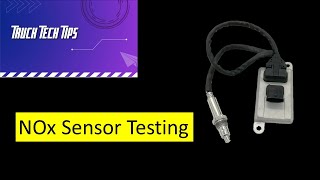
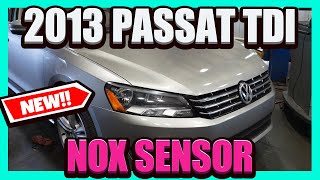
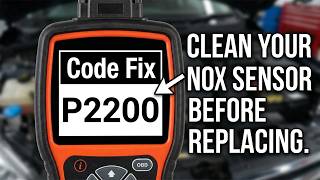

The information in this article is provided for general reference and educational purposes only. Vehicle specifications, procedures, and part compatibility can vary by production date, trim level, and region. Always consult your vehicle's factory service manual and verify part numbers before purchasing or performing repairs. Safety-critical components such as airbags, seat belts, and braking systems should be installed by a qualified professional.
- 🎬 Helpful Videos
- What Does P2200 Mean?
- Can I Drive With P2200?
- Common Causes
- Symptoms
- Diagnostic Flowchart
- Common Fixes & Costs
- DIY vs Professional
- Used vs. New Parts: Buying Guide
- What Happens If You Wait — Timeline
- Cost of Not Fixing It
- Diagnosis Steps
- When This Code Triggers (Freeze-Frame Conditions)
- Related Codes
- Climate & Environmental Factors
- How to Talk to a Mechanic About This Code
- Where to Take It: Dealer vs Independent vs Chain
- When to Walk Away From the Repair
- What Scan Tool You Need for This Code
- How to Clear the Code After You Fix It
- Will This Fail Emissions / State Inspection?
- Most Commonly Affected Vehicles
- Manufacturer-Specific Notes
- Real Owner Stories
- 2013 VW Passat TDI with multiple NOx codes
- 2019 VW Transporter T6 (36,000 miles) with intermittent limp mode
- 2018 Peugeot 2008 1.6 HDI with intermittent Check Engine Light
- How to Prevent This Code From Triggering
- Frequently Asked Questions
- What is a NOx sensor and what does it do?
- What are the most common misdiagnoses with a P2200 code?
- Can I clean a NOx sensor instead of replacing it?
- I replaced the NOx sensor and the code came back. What now?
- What is 'Bank 1' and where is the sensor located?
- Will a P2200 code cause my vehicle to fail an emissions test?
- Can a bad O2 sensor cause a P2200 code?
- What is a drive cycle and why is it important after a repair?
- Key Takeaways
- 🎟️ Get 5% Off