

P2198 on 2008-2016 Hyundai Genesis Coupe 3.8L: O2 Sensor Stuck Rich Causes and Fixes
This code means the engine's computer sees a constant 'rich' signal from the upstream oxygen sensor on Bank 2. The most common cause is a failed oxygen sensor itself. Other possibilities include a leaking fuel injector (especially on 2013+ GDI models) or a fuel pressure issue. Expect to pay $60-$180 for a new sensor.
- P2198 on your Genesis Coupe 3.8L means the Bank 2 (front side) upstream O2 sensor is stuck reading rich.
- The most probable cause is a failed O2 sensor, which is a standard maintenance item.
- Before buying parts, use a scan tool to watch the O2 sensor voltage. If it's stuck high (>0.8V), the sensor is the likely culprit.
- If a new sensor doesn't fix it, the next most likely cause is a leaking fuel injector on Bank 2, especially on 2013-2016 GDI models.
- Ignoring this code will hurt your gas mileage and can lead to costly catalytic converter damage.
What's Unique About the 2008-2016 Hyundai Genesis Coupe
The Genesis Coupe 3.8L was produced in two major versions: the BK1 (2008-2012) with Multi-Port Injection (MPI) and the BK2 (2013-2016) with Gasoline Direct Injection (GDI). While a faulty O2 sensor is a common cause on both, the GDI engines in the BK2 models are more susceptible to issues like leaking high-pressure fuel injectors, which can directly cause this 'stuck rich' condition on one bank. A leaking GDI injector can also dilute the engine oil with fuel, leading to a rising oil level that smells of gasoline, which can cause catastrophic engine damage if not addressed. It's crucial to differentiate the diagnostic approach based on which engine version you have.
Generation note: This covers two generations of the Genesis Coupe 3.8L: the BK1 (2008-2012, MPI engine) and BK2 (2013-2016, GDI engine). While the code's meaning is the same, the fuel systems are different. GDI-specific issues like a leaking high-pressure fuel injector are a more likely and more dangerous cause on BK2 models compared to BK1.
Symptoms You May Notice
- Check Engine Light is on
- Reduced fuel economy
- Rough or uneven idle
- Hesitation or stumbling during acceleration
- Black smoke from the exhaust in severe cases
- Smell of raw gasoline
- Replacing the catalytic converter. This code points to a problem *before* the converter. The converter may be damaged by the rich condition, but it is not the cause.
- Replacing the downstream (Sensor 2) oxygen sensor. The code P2198 specifically refers to Sensor 1, the upstream sensor responsible for fuel trim adjustments.
Most Likely Causes
- Faulty Bank 2, Sensor 1 Oxygen Sensor 🔴 High Probability Oxygen sensors are wear-and-tear items that degrade over time and with exposure to exhaust gases. Their internal heating elements can fail, or the sensing element can become contaminated, leading to a false rich reading.
How to confirm: Use a scan tool to monitor the live voltage data for the Bank 2, Sensor 1 O2 sensor. A healthy sensor's voltage should fluctuate rapidly between approximately 0.1V and 0.9V. If the voltage is stuck high (e.g., >0.8V) and doesn't change, the sensor is likely faulty. You can also swap the Bank 1 and Bank 2 upstream sensors; if the code changes to P2196 (Bank 1 Stuck Rich), the sensor is confirmed bad.
Typical fix: Replace the Bank 2, Sensor 1 (upstream) oxygen sensor.
Est. part cost: $60-$180 - Leaking Fuel Injector(s) on Bank 2 🟡 Medium Probability On GDI engines (2013-2016 BK2), high-pressure injectors can fail internally and leak fuel directly into a cylinder, causing a rich condition isolated to that bank. While less common on MPI engines (2008-2012 BK1), an injector can still get stuck open. This is a known issue on Hyundai GDI engines.
How to confirm: If a new O2 sensor doesn't fix the code, this is the next step. Check the spark plugs on Bank 2 (cylinders 2, 4, 6); a plug that is black, sooty, or wet with fuel indicates a leaking injector in that cylinder. For GDI engines, check the engine oil dipstick for a rising level or a strong smell of gasoline, which indicates fuel is contaminating the oil. A professional can perform a fuel injector balance test.
Typical fix: Replace the faulty fuel injector(s) on Bank 2. It's often recommended to replace them as a set on the affected bank. On GDI engines, this is a more complex job due to the high-pressure fuel system.
Est. part cost: $50-$200 per injector - High Fuel Pressure ⚪ Low Probability A failing fuel pressure regulator can cause system-wide high fuel pressure, forcing too much fuel into the engine. The ECM may be able to compensate on one bank but not the other, leading to a code on Bank 2 first.
How to confirm: Connect a mechanical fuel pressure gauge to the fuel rail's service port (if available) or use a scan tool to monitor the fuel pressure sensor data. Compare the reading at idle and under load to the manufacturer's specifications. If the pressure is too high, the regulator or fuel pump assembly is suspect.
Typical fix: Replace the fuel pressure regulator or, in some cases, the entire fuel pump assembly if the regulator is integrated.
Est. part cost: $100-$400
Rare But Worth Checking
- EVAP Purge Valve Stuck Open: A purge valve stuck open can allow un-metered fuel vapors to be drawn into the intake manifold, creating a rich condition. While this usually affects both banks and may set other codes, it can sometimes manifest on just one bank first.
- Damaged O2 Sensor Wiring or Connector: The wiring harness for the O2 sensor can be damaged by road debris or contact with hot exhaust components. A short in the signal wire to a voltage source can cause a constant high voltage reading, mimicking a stuck rich sensor. Rodents have also been known to chew through injector and sensor wiring.
- Exhaust Leak Before the O2 Sensor: While typically causing a lean code (by drawing in outside air), a significant exhaust manifold or gasket leak on Bank 2 could, in some circumstances, disrupt exhaust pulses and affect sensor readings in an unpredictable way, leading to a rich code. This is an unlikely but possible cause.
- ECM Software or Calibration Issue: Rarely, the Engine Control Module (ECM) may have outdated software that misinterprets sensor data. Checking for available TSBs related to ECM updates for fuel management is a valid diagnostic step, though less common for this specific code.
Diagnosis Steps
- Check for any other stored DTCs that could point to the root cause (e.g., misfire codes, EVAP codes).
- Connect a scan tool and view live data. Focus on the Short-Term (STFT) and Long-Term Fuel Trim (LTFT) for both Bank 1 and Bank 2. For P2198, you will likely see highly negative fuel trims on Bank 2 as the ECM tries to remove fuel.
- Observe the voltage of the Bank 2, Sensor 1 O2 sensor. Confirm it is stuck high (above 0.8V) and not fluctuating.
- Compare its behavior to the Bank 1, Sensor 1 O2 sensor, which should be fluctuating normally.
- Inspect the O2 sensor's wiring and connector for any signs of melting, corrosion, or physical damage.
- If the sensor appears to be the issue, the easiest confirmation is to swap the upstream O2 sensors between Bank 1 and Bank 2. Clear the codes and drive the vehicle. If the code returns as P2196 (Stuck Rich Bank 1), you have confirmed the O2 sensor is faulty.
- If the P2198 code returns after the swap, the problem is not the sensor. The engine is genuinely running rich on Bank 2.
- Investigate fuel delivery. Check fuel pressure to ensure it's within spec.
- Inspect the spark plugs on Bank 2 (cylinders 2, 4, 6) for signs of running rich (black, sooty deposits). A single fouled plug can point to a specific leaking injector.
- For GDI models (BK2), carefully check the engine oil level and smell. If the oil level is high or it smells strongly of gasoline, a leaking fuel injector is highly probable. DO NOT continue to drive the vehicle if this is the case.
- Test the EVAP purge valve to ensure it is not stuck open.
Parts You'll Likely Need
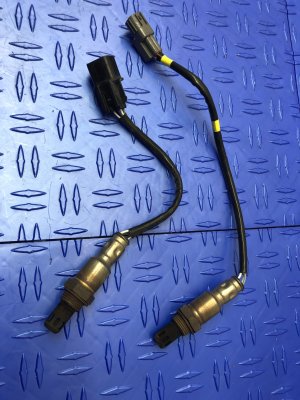
- Upstream Oxygen Sensor (Bank 2, Sensor 1)
(OEM #BK1 (MPI, 2008-2012): 39210-3C910. BK2 (GDI, 2013-2016): 39210-3CCC0 (or similar). Part numbers can vary, always verify with VIN.)— This is the most frequent failure point for a P2198 code. The sensor itself fails and sends a continuous 'rich' signal to the computer, even if the air/fuel mixture is normal.
Trusted brands: Denso, NGK/NTK, Bosch, Genuine Hyundai
OEM price range: $120-$180
Aftermarket price range: $60-$120
Related Codes That Often Appear With This One
- P0300, P0302, P0304, P0306 — If a leaking fuel injector is the cause, the excess fuel can foul the spark plug and cause misfires on the cylinders of Bank 2 (Cylinders 2, 4, and 6).
- P2098 — P2098 is 'Post Catalyst Fuel Trim System Too Lean Bank 2'. While it seems contradictory, a long-term rich condition from P2198 can damage the catalytic converter, reducing its efficiency. The downstream sensor may then incorrectly report a lean condition as it sees more oxygen than expected post-catalyst.
Technical Service Bulletins (TSBs) & Recalls
- TSB 13-AT-015 (and superseding TSB 14-AT-007): While not directly for P2198, this TSB addresses issues with the inhibitor switch (range sensor) on 2013+ Genesis Coupes which can cause various electrical and communication faults with the tra
Platform-Specific Known Issues
- BK2 GDI Injector Failure: The 2013-2016 models with the GDI engine are more prone to fuel injector failures that can cause a P2198 code. Unlike a simple sensor failure, a leaking GDI injector can lead to serious engine damage by washing oil from cylinder walls and diluting the crankcase oil with fuel. Owners should be extra vigilant for symptoms like a fuel smell in the oil.
Mechanic-Grade Diagnostic Values
- Low-Pressure Fuel System Pressure at Idle (GDI Models) — expected: 480 - 519 kPa (69.6 - 75.3 psi). Failure: Pressure significantly outside this range points to an issue with the in-tank fuel pump or low-pressure lines, rather than the high-pressure system.
- O2 Sensor Heater Circuit Resistance (Cold) — expected: 8.1 to 11.1 Ohms at 21°C / 70°F.. Failure: A reading of OL (Open Loop/infinite resistance) or 0 ohms (short circuit) indicates the internal heater has failed.
- O2 Sensor Signal Voltage (Live Data) — expected: Rapidly fluctuating between ~0.1V (lean) and ~0.9V (rich).. Failure: Voltage is stuck high, consistently reading above 0.8V-0.9V, even on deceleration.
Hidden / Shadow Codes Worth Checking
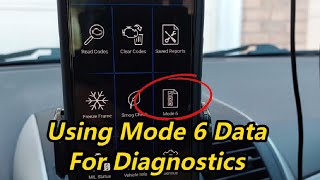
- Mode $06 Data: Mode 6 is not a specific code, but a diagnostic mode that shows results from non-continuously monitored system tests. For P2198, a technician can view the raw test data for the Bank 2 Sensor 1 oxygen sensor. Even if the sensor hasn't failed badly enough to set a hard code, Mode 6 might show it is performing marginally or close to its failure threshold, indicating an impending failure before it becomes a constant problem. (see via A professional-grade scan tool with Mode 6 capability, such as the Hyundai GDS or advanced aftermarket scanners.)
Scan Tool Commands That Help
- Hyundai GDS (Global Diagnostic System): Actuation Test — The GDS allows for individual component tests. While you cannot directly 'actuate' an O2 sensor, you can command other components like the EVAP purge solenoid or individual fuel injectors to test their function and observe the effect on the O2 sensor reading, helping to isolate the cause of the rich condition.
- Hyundai GDS (Global Diagnostic System): Adaptive Value Reset — After replacing a component like an O2 sensor or fuel injector, the ECM's learned fuel trim values (adaptives) may be incorrect. Using this function resets the long-term fuel trims to their baseline, forcing the ECM to relearn the fuel strategy with the new part, which can be crucial for clearing a persistent code.
Wiring & Ground Locations
- GF01 — Located on the left kick panel area, inside the cabin.. This is a major chassis ground point. A poor connection here can cause a variety of electrical issues, including incorrect sensor readings due to a floating ground reference for the ECM or sensor circuits.
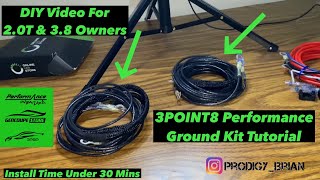
- Engine Block Grounds — Multiple points on the engine block, including a primary ground strap to the chassis near the engine mount and a ground point on the intake manifold.. The ECM and its sensors rely on a solid engine ground. Forum users and aftermarket suppliers often recommend adding a grounding kit to the 3.8L engine to improve electrical stability, which can help prevent floating grounds that may lead to erroneous sensor readings. Key locations include the starter bolt and intake manifold bolts.
- ECM Ground — The ECM is located in the left rear of the engine compartment. Its grounding is critical for all engine management functions.. A compromised ground for the ECM itself can lead to misinterpretation of sensor data, potentially causing it to incorrectly flag a rich condition.
Real Owner Repair Stories
- gencoupe.com forum user (2013 Hyundai Genesis Coupe 3.8 R-Spec) — Persistent P2198 code, rough idle, poor fuel economy.
❌ Tried (didn't work) Replaced Bank 2 Sensor 1 O2 sensor (twice), Swapped O2 sensors between banks (code stayed on Bank 2), Replaced all 3 fuel injectors on Bank 2, Cleaned MAF sensor, Checked for vacuum leaks
✅ What actually fixed it The owner took the vehicle to the dealership, which diagnosed and replaced a faulty Engine Control Module (ECU). The ECU was incorrectly interpreting the sensor data, causing the persistent rich code on Bank 2.
OEM Part Supersession History
39210-3CCC0→39210-3CCB0— Part has been updated or revised by the manufacturer for improved performance or to consolidate part numbers.
Heads up: While 39210-3CCC0 is listed for early BK2 models, 39210-3CCB0 is often cited for later models and other Hyundai/Kia vehicles with the 3.3L/3.8L engine. Always verify the correct part number with the vehicle's VIN, but be aware that a dealer may provide the superseded part number.
Model Year Variations Within This Range
- 2008-2012 (BK1) vs 2013-2016 (BK2): The BK1 uses a Multi-Port Injection (MPI) fuel system, while the BK2 uses a Gasoline Direct Injection (GDI) system. This is the most critical difference for diagnosing P2198. A leaking injector on a BK2 is a more probable and dangerous cause due to the high-pressure system and risk of oil dilution. The engine blocks are physically interchangeable, but the heads, fuel delivery systems, and intake manifolds are different.
- BK1 vs BK2: The exhaust systems, including downpipes and mid-pipes, have different flange sizes and routing, making them not directly interchangeable without modification. This is important to know if sourcing used exhaust parts to fix a suspected leak.
Diagnostic Flowchart
Other Known Issues on This Vehicle
Issues unrelated to this code that are worth knowing about as an owner of this generation:
- Manual Transmission Issues (BK1/BK2) 🟠 Medium — Common complaint, especially on earlier models. Includes grinding, 2nd gear lockout, and synchro wear. (Ref: TSB SB-10-01-039 and TSB T96 involved changing transmission oil and shift lever components on early models.)
- Timing Chain Rattle/Wear (BK1/BK2) 🔴 High — Can occur on higher mileage engines, potentially leading to jumped timing and engine damage if ignored.
- Interior Trim Peeling 🟡 Low — Very common. The silver/chrome finish on the steering wheel, door handles, and center console is known to flake and peel off over time.
- Taillight Gasket/Trunk Water Leaks 🟠 Medium — Common issue where failed taillight gaskets allow water to enter the trunk, potentially damaging electronics or causing mold.
- No Sound from Audio/Nav System 🟡 Low — A widely reported software glitch where the audio system goes completely silent. Often fixed by a hard reset (disconnecting the battery) or a system reset.
Used vs. New Parts: Buying Guide for This Vehicle
When a used part is the smart pick: Used parts are generally not recommended for this specific repair. The primary causes are wear-and-tear items (O2 sensors) or precision components (fuel injectors) where the remaining service life of a used part is unknown and potentially short.
Donor-vehicle mileage cap: roughly under 50000 miles for the part to have meaningful remaining life.
What to inspect on the donor part:
- For an O2 sensor, inspect the wiring and connector for any signs of melting, fraying, or corrosion. Avoid sensors from engines that had known oil burning or coolant leak issues, as this contaminates the sensor tip.
- For a GDI fuel injector, there is no reliable visual inspection. Buying used is a significant gamble, as a leaking used injector can cause catastrophic engine failure.
OEM-only on this vehicle (don't cheap out):
- Engine Control Module (ECM) - A used ECM must be an exact part number match and will require dealer-level programming (VIN flashing) to work with the vehicle's immobilizer system.
- GDI Fuel Injectors - Due to the high pressures and the severe risk of engine damage from a leaking injector, using new OEM or reputable aftermarket injectors is strongly advised.
Aftermarket brands forum-validated for this vehicle:
- NTK (NGK)
- Denso
Brands owners have reported issues with on this vehicle:
- Unbranded, 'white-box' oxygen sensors from online marketplaces are frequently reported by owners to be dead-on-arrival or fail within a few months.
Real Owner Stories
Aggregated from forums and TSBs cited above. Mileages and costs reflect what owners reported in those sources.
2010 Hyundai Genesis Coupe 3.8L V6 Track
Symptoms: Violent start and a flashing Check Engine Light.
What fixed it: Repairing two fuel injector wires that had been severed by rodent damage.
Source hint: reddit.com/r/genesiscoupe user report regarding rodent damage on a 2010 3.8 Track
2013-2016 Hyundai Genesis Coupe 3.8L V6 (GDI)
Symptoms: Fuel smell in the oil and potential for oil dilution/washing oil from cylinder walls.
What fixed it: Replacement of leaking GDI fuel injectors on the affected bank.
Source hint: vehicle_specific_issues: BK2 GDI Injector Failure
Hyundai Genesis Coupe 3.8L V6
Symptoms: Conflicting rich and lean codes occurring at the same time on Bank 2.
What fixed it: The issue was identified as a complex failure beyond a simple sensor, involving both P2098 and P2198.
Source hint: gencoupe.com: A thread titled 'P2098 and P2198 at the same time'
Related OBD-II Codes
Frequently Asked Questions
Which side of the engine is Bank 2 on my US-spec Genesis Coupe?
Does TSB 13-AT-015 apply to my 2013+ Genesis Coupe if I have a P2198 code?
I have a 2013-2016 GDI model; why is my oil level rising along with this code?
Can I swap parts to confirm if the Bank 2 Sensor 1 O2 sensor is actually bad?
Is the P2198 code related to the common manual transmission grinding issues on the BK1/BK2?
Helpful Videos

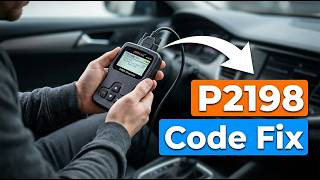
![How to Fix P2198 Engine Code in 5 Minutes [4 DIY Methods / Only $8.76]](https://img.youtube.com/vi/xmUc-qXmeK8/mqdefault.jpg)
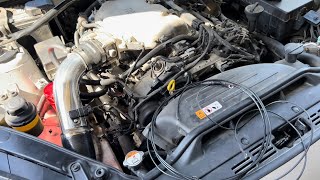
We Have This Part in Stock
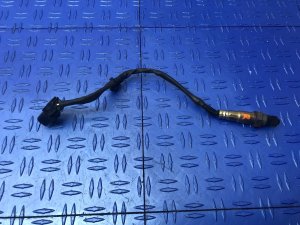
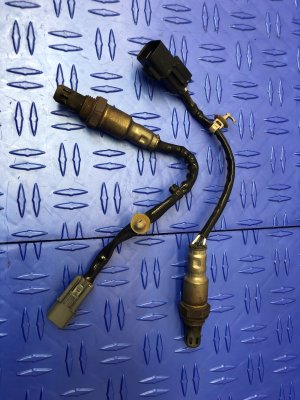
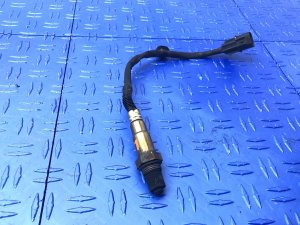

The information in this article is provided for general reference and educational purposes only. Vehicle specifications, procedures, and part compatibility can vary by production date, trim level, and region. Always consult your vehicle's factory service manual and verify part numbers before purchasing or performing repairs. Safety-critical components such as airbags, seat belts, and braking systems should be installed by a qualified professional.
- Hyundai Genesis Coupe:
- 🎬 Helpful Videos
- 🛍️ Shop This Part
- What's Unique About the 2008-2016 Hyundai Genesis Coupe
- Symptoms You May Notice
- Most Likely Causes
- Rare But Worth Checking
- Diagnosis Steps
- Parts You'll Likely Need
- Related Codes That Often Appear With This One
- Technical Service Bulletins (TSBs) & Recalls
- Platform-Specific Known Issues
- Mechanic-Grade Diagnostic Values
- Hidden / Shadow Codes Worth Checking
- Scan Tool Commands That Help
- Wiring & Ground Locations
- Real Owner Repair Stories
- OEM Part Supersession History
- Model Year Variations Within This Range
- Diagnostic Flowchart
- Other Known Issues on This Vehicle
- Used vs. New Parts: Buying Guide for This Vehicle
- Real Owner Stories
- 2010 Hyundai Genesis Coupe 3.8L V6 Track
- 2013-2016 Hyundai Genesis Coupe 3.8L V6 (GDI)
- Hyundai Genesis Coupe 3.8L V6
- Related OBD-II Codes
- Frequently Asked Questions
- 🎟️ Get 5% Off