

P2198 on 2015-2020 Ford F-150 3.5L EcoBoost: Causes and Fixes for Stuck Rich Signal
On the 3.5L EcoBoost F-150, code P2198 (O2 Sensor Stuck Rich, Bank 2) is often caused by a faulty upstream oxygen sensor or a leaking fuel injector on the driver's side of the engine. A stuck-open EVAP purge valve is another common culprit. Replacing the O2 sensor is a common DIY fix, but the issue could also be a more complex fuel system problem requiring deeper diagnosis.
- P2198 means the driver's side upstream O2 sensor is detecting too much fuel.
- Don't automatically replace the O2 sensor. First, test the EVAP purge valve, a common and inexpensive part to fail on these trucks.
- If the purge valve is good, the next most likely causes are a failed O2 sensor or a leaking fuel injector.
- Check for Ford Technical Service Bulletins (TSBs), as the fix might be a simple PCM software update at a dealership.
- Driving for too long with this code can lead to poor fuel mileage and expensive damage to your catalytic converter.
What's Unique About the 2015-2020 Ford F-150
For the 2015-2020 F-150 with the 3.5L EcoBoost engine, P2198 is not always a simple bad sensor. The second-generation (2017+) version of this engine features a dual-injection system (port and direct), but the direct injectors are still known to be a potential failure point. Leaking direct injectors can pour excess fuel into a cylinder, causing a true rich condition. Additionally, Ford vehicles of this era are known for issues with the EVAP canister purge valve sticking open, which allows unmetered fuel vapors into the intake manifold, also leading to a rich mixture. While several Technical Service Bulletins (TSBs) have been issued by Ford for rich conditions (P2196/P2198), they often specifically target the 2.7L engine; however, the diagnostic principles for leaking injectors and PCM software updates are highly relevant to the 3.5L as well. For instance, TSB Bulletin #TSB 18-2310 notes that vehicles may exhibit an illuminated MIL with P2198 and various misfire codes (P0301-P0306) stored in the PCM.
Symptoms You May Notice
- Check Engine Light is on
- Decreased fuel economy
- Rough or unstable idle
- Smell of gasoline from the exhaust
- Black smoke from the tailpipe (in severe cases)
- Sluggish acceleration or hesitation
- Difficulty starting immediately after refueling (points to EVAP issue)
- Replacing the O2 sensor when the actual cause is a leaking fuel injector or a stuck EVAP purge valve. It's crucial to diagnose whether the sensor is faulty or if it's accurately reporting a rich condition.
- Replacing the catalytic converter. P2198 is an upstream (pre-cat) sensor code related to the air-fuel mixture, not the efficiency of the converter itself.
Most Likely Causes
- Faulty Bank 2, Sensor 1 Oxygen Sensor 🔴 High Probability Oxygen sensors are wear-and-tear items that degrade over time, leading to slow or biased readings. Contamination from excess fuel (from a leaking injector) or oil can also cause premature failure.
How to confirm: Use a scan tool to monitor the live voltage data from the B2S1 O2 sensor. A healthy sensor fluctuates rapidly between approximately 0.1V and 0.9V. If it is stuck above 0.8V while the Bank 1 sensor is fluctuating normally, it is likely faulty. A definitive test is to swap the Bank 1 and Bank 2 upstream sensors; if the code changes to P2196 (Bank 1 Stuck Rich), the sensor is confirmed bad.
Typical fix: Replace the Bank 2, Sensor 1 (upstream, driver's side) oxygen sensor. The Motorcraft part number for the upstream left (Bank 2) sensor is often DY-1303.
Est. part cost: $50-$150 - Leaking Fuel Injector(s) on Bank 2 🟡 Medium Probability The direct-injected 3.5L EcoBoost engines are known to have issues with fuel injectors leaking fuel into the cylinders, even when the engine is off. This is a well-documented issue. Ford TSB 20-2324, while for the 2.7L, details this exact problem and diagnostic procedure, noting that P2198 may be stored alongside codes like P2BF0, P2BF2, and P0175.
How to confirm: This is more difficult for a DIYer. A professional method outlined in TSBs is a fuel rail pressure leak-down test: monitor fuel rail pressure with a scan tool after shutting off the engine. A significant pressure drop indicates a leak. Another strong sign is smelling fuel on the oil dipstick, which indicates fuel is contaminating the engine oil.
Typical fix: Replace the faulty direct fuel injector or, more commonly, all three injectors on Bank 2 (cylinders 4, 5, 6). An oil change is mandatory if the oil is contaminated with fuel. The Motorcraft part number for the direct (lower) injector is often CM-5254.
Est. part cost: $70-$200 per injector - Stuck-Open EVAP Canister Purge Valve 🟡 Medium Probability This is a very common failure part on many Ford vehicles, including the F-150. When it sticks open, it continuously allows fuel vapors from the gas tank to be drawn into the engine at idle, creating a rich condition that often presents on both banks (P2196 & P2198).
How to confirm: Locate the purge valve on the intake manifold. With the engine idling, disconnect the vapor line from the valve. If you can feel vacuum suction on the valve's port, it is stuck open and needs to be replaced. This issue is often accompanied by code P1450 or difficulty starting after refueling.
Typical fix: Replace the canister purge valve. This is typically an easy and inexpensive repair. The Motorcraft part is often CX2695.
Est. part cost: $30-$60
Rare But Worth Checking
- PCM Software Glitch: Ford has issued TSBs (e.g., TSB 20-2324 for the 2.7L) for some F-150s where the PCM logic is too sensitive or misinterprets sensor data, causing false rich codes. Bulletin #SSM 48957 also notes that some vehicles may experience an illuminated MIL with P2196 and/or P2198 with no drivability concerns, indicating a software-related solution may be required. The fix is a software update performed by a dealer. It's possible similar logic issues affect the 3.5L.
- High Fuel Pressure: A failing fuel pressure regulator or a problem with the high-pressure fuel pump (HPFP) can cause excessive fuel pressure, leading to a rich condition. This would typically affect both banks and set codes P2196 and P2198 together.
- Wiring or Connector Issue: A short in the O2 sensor's signal wire to a voltage source can cause the PCM to see a constant high-voltage (rich) signal. Inspect the wiring harness for damage, especially for melting near hot exhaust components or corrosion in the connector.
Diagnosis Steps
- Read all diagnostic trouble codes (DTCs) with a scanner. Pay close attention to any other codes present, as they can point to the root cause (e.g., P0175, P1450, misfire codes).
- Analyze live data on the scanner. Observe the short-term and long-term fuel trims for both Bank 1 and Bank 2. Highly negative numbers on Bank 2 (e.g., -15% or more) indicate the PCM is trying to remove fuel.
- Watch the live voltage for the Bank 2, Sensor 1 O2 sensor. Confirm if it is stuck high (above 0.8V) and not fluctuating like the Bank 1, Sensor 1 sensor.
- Test the EVAP purge valve. Locate it on the engine, disconnect the vapor line while the engine is idling, and check if it's sucking vacuum. It should be closed at idle.
- If the purge valve is good, test the O2 sensor itself. The most reliable method is to swap the upstream sensors from Bank 1 and Bank 2. Clear the codes and drive. If the code returns as P2196, the O2 sensor is faulty.
- If the sensor tests good, the engine is genuinely running rich. The next likely culprit is a leaking fuel injector. Perform a fuel rail pressure leak-down test by monitoring pressure with a scan tool after engine shutdown. A rapid drop points to a leak.
- Check for any applicable Technical Service Bulletins (TSBs) by contacting a Ford dealer with your VIN. The solution may be a PCM software update, although most documented TSBs for this code are for the 2.7L engine.
Parts You'll Likely Need
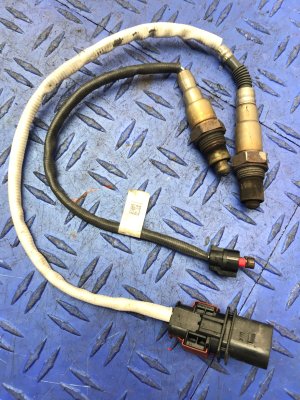
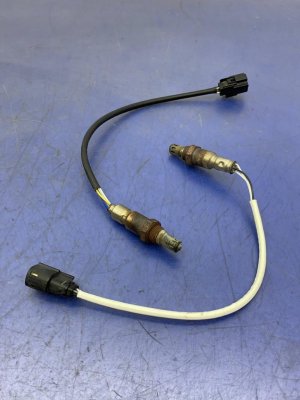
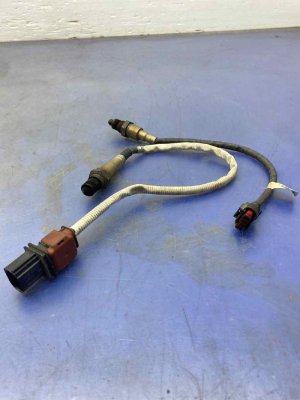
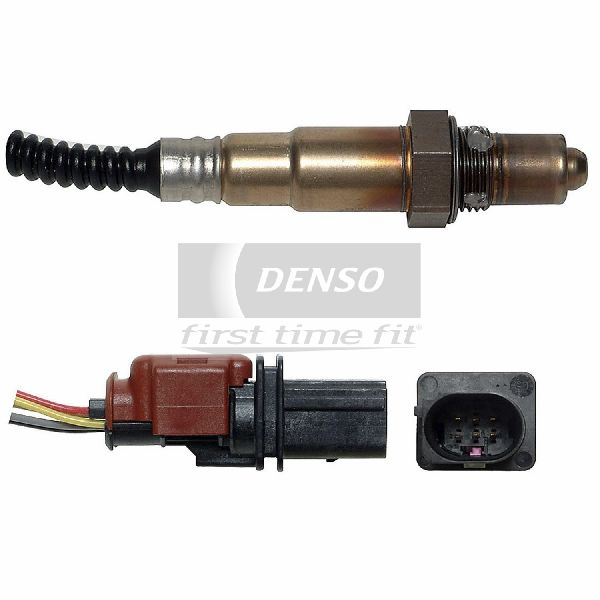
- Upstream Oxygen Sensor (Bank 2, Sensor 1)
(OEM #DY-1303)— This is the most direct cause if the sensor itself has failed and is sending a false rich signal. It's a common wear item.
Trusted brands: Motorcraft, Bosch, Denso, NTK
OEM price range: $80-$150
Aftermarket price range: $50-$100 - EVAP Canister Purge Valve
(OEM #CX2695)— A very common failure on Ford vehicles that causes a rich condition by allowing unmetered fuel vapor into the engine.
Trusted brands: Motorcraft, Standard Motor Products (SMP)
OEM price range: $40-$70
Aftermarket price range: $25-$50 - Direct Fuel Injector (Lower)
(OEM #CM-5254)— A known issue on the 3.5L EcoBoost engine; a leaking injector will cause a persistent rich condition on the affected bank.
Trusted brands: Motorcraft, Bosch
OEM price range: $100-$200
Aftermarket price range: $60-$150
Related Codes That Often Appear With This One
- P0175 — This code means 'System Too Rich (Bank 2)'. P2198 is an immediate sensor reading, while P0175 indicates the PCM has reached its maximum adjustment limit trying to correct the rich condition over the long term. Seeing them together confirms a persistent rich condition on Bank 2.
- P2196 — This is the identical 'Stuck Rich' code for Bank 1 (passenger side). If both codes appear together, it strongly suggests a common cause affecting both banks, such as a stuck-open EVAP purge valve, a mass airflow sensor issue, or a fuel pressure problem.
- P1450 — This code for 'Unable To Bleed Up Fuel Tank Vacuum' is frequently caused by the same stuck-open EVAP canister purge valve that can cause P2198.
- P0304, P0305, P0306 — Misfire codes for cylinders on Bank 2. A severely leaking fuel injector can foul the spark plug and cause misfires on the affected cylinders.
Technical Service Bulletins (TSBs) & Recalls
- TSB 20-2324: Leaking direct fuel injectors causing various codes including P2198.
- TSB 21-2045: PCM software calibration issue causing P2198 and other codes, potentially with cruise control problems. This bulletin specifically mentions that EcoBoost engines built on or before 04-Jul-2020 may experience an illuminated MIL with DTCs P2196, P2198, P2BF0, P2BF2, P2BF1, P2BF3, P2BEC, P2CEE, P2BED, P130D and/or P2BEF.
- TSB 18-2310: Notes that vehicles may exhibit an illuminated MIL with DTCs P0300, P0316, P0301-P0306, P2196, P2198, P0171, P0174, P219A, P219B, P0172 and/or P0175.
- SSM 48957: Engineering report for 2.7L engines experiencing P2196 and/or P2198 with no drivability concerns.
Platform-Specific Known Issues
- Owner Experience: Leaking Injector and Oil Contamination: In a YouTube video detailing issues with a 2017 3.5L EcoBoost, the owner describes an incident where the truck started misfiring and losing power. The codes included P2196 (the Bank 1 equivalent of P2198) and multiple misfire codes. The dealership diagnosed a stuck fuel injector which had dumped so much fuel it contaminated the engine oil, necessitating an injector replacement and an oil change, costing around $1,000.
- Diagnostic Frustration with Rich Codes: Multiple forum threads show owners replacing O2 sensors for P2196/P2198 codes, only for the codes to return. This reinforces that the O2 sensor is often correctly reporting a rich condition, and the root cause lies elsewhere in the fuel or air intake system. One user went through O2 sensors, MAF sensor, plugs, and coils before a dealer with an advanced injector tester found the faulty injector.
Mechanic-Grade Diagnostic Values
- Low-Pressure Fuel System Pressure — expected: 50-70 PSI at Key On, Engine Off (KOEO) and at idle.. Failure: Pressure is significantly higher than 70 PSI, which can cause a rich condition. Low or erratic pressure would cause lean codes or no-start issues.
- High-Pressure Fuel System Pressure (Direct Injection) — expected: Approximately 290-500 PSI at idle, rising to over 2,000 PSI under load. Desired and actual pressure should be within 30 PSI of each other.. Failure: Actual pressure is significantly higher than desired pressure. A large deviation between actual and desired pressure indicates a fuel system problem.
- Upstream O2 Sensor (HO2S) Heater Element Resistance — expected: 3 to 30 Ohms when measured across the two heater circuit pins on the sensor.. Failure: A reading of OL (Open Loop/infinite resistance) or a value outside the specified range indicates a failed heater element, requiring sensor replacement.
- Long-Term Fuel Trim (LTFT) for Bank 2 — expected: Close to 0%, typically within +/- 10%.. Failure: A strongly negative number (e.g., -15% to -25%) shows the PCM is trying to remove a large amount of fuel to compensate for a rich condition it is detecting.
- Fuel Rail Pressure Sensor (FRPS) Voltage — expected: Approximately 0.5V at KOEO. The voltage should vary between 0.5V and 4.5V with the engine running, corresponding to pressure changes.. Failure: Voltage that is stuck, unresponsive, or does not correlate with actual fuel pressure readings.
Hidden / Shadow Codes Worth Checking
- P2BF0, P2BF2, P2BEC, etc.: These are manufacturer-specific DTCs related to fuel system control. TSB 20-2324 and TSB 21-2045, which address rich conditions on EcoBoost engines, list these codes alongside P2196/P2198. Their presence can point more specifically towards a fuel injector or PCM software issue. (see via These codes may not be visible on all generic OBD-II scanners. A professional-grade tool or Ford's Integrated Diagnostic System (IDS) is often required to view them.)
- Mode $06 Data: Mode $06 is not a code but a diagnostic function that provides access to the results of the PCM's self-tests for various components. For P2198, a technician can look at Test ID $81 (Upstream O2 Sensor Monitor Bank 2) to see raw test data, which can help confirm if the sensor is failing its internal checks before a code is set. (see via Requires a scan tool that can access and interpret Mode $06 test data.)
Scan Tool Commands That Help
- Ford IDS/FDRS or equivalent: KOEO (Key On, Engine Off) and KOER (Key On, Engine Running) Self-Tests — These are fundamental diagnostic routines. The KOEO test checks for hard electrical faults in circuits like the O2 sensor heater. The KOER test runs the engine and can identify performance faults (like a stuck sensor) that only appear when the system is active.
- Advanced Scan Tool: Fuel Rail Pressure Leak-Down Test — After shutting the engine off, use the scan tool to graph the fuel rail pressure. This is the primary method to confirm a leaking direct fuel injector. A rapid pressure drop after shutdown indicates fuel is leaking from an injector into a cylinder.
- Ford IDS/FDRS: Reset All Adaptations / Fuel Trim Reset — After replacing a component that affects the air/fuel mixture (like fuel injectors or an EVAP purge valve), this function should be used to clear the PCM's learned fuel adjustments. This forces the computer to relearn the fuel strategy with the new parts, preventing it from running rich based on old data.
Wiring & Ground Locations
- Rear Firewall Ground Bolt — On the rear firewall of the cab, on the driver's side. The entire rear wall where seatbelt and seat bracket bolts mount are also reported as good ground points.. A poor ground for the PCM or related sensor circuits can introduce electrical noise or voltage offsets, potentially causing the PCM to misinterpret the O2 sensor signal. This is a known good ground location for a 2016 model.
- FPCM (Fuel Pump Control Module) Ground — The FPCM is typically located on a frame cross-member above the spare tire. Its ground connection is nearby on the frame.. While less likely to cause a single-bank rich code, a faulty FPCM ground can cause erratic fuel pressure, affecting the entire fuel system and potentially contributing to fuel control issues.
- Bank 2 Sensor 1 O2 Sensor Connector — The connector for the driver's side upstream O2 sensor is located up on the transmission bell housing area, accessible from underneath the truck. The harness is routed near hot exhaust and transmission components.. The wiring harness is susceptible to melting or chafing in this area. A short between the signal wire and the heater power wire could send a constant high voltage to the PCM, mimicking a stuck rich sensor.
Real Owner Repair Stories
- Ford F150 Forum user story (related to Transit with same engine/codes) (Ford F-150 with P2196 & P2198) — Check engine light, hard starting after sitting for a while.
❌ Tried (didn't work) Owner was considering replacing the O2 sensors.
✅ What actually fixed it The owner took the vehicle to a Ford dealer, who diagnosed and replaced the canister purge valve. This single repair resolved both the rich codes and the hard starting issue. This matches NHTSA ODI #11650362, where an owner reported a check engine light with codes P2196 and P2198 present, which the dealer resolved by replacing the purge valve. - YouTube channel "Mastering the Fix" (2012 Ford F-150 3.7L (demonstrates a principle applicable to the 3.5L EcoBoost)) — P2196 and P2198 codes, no-start condition, short term fuel trims maxed out positive (in that case, but principle applies).
❌ Tried (didn't work) Replacing the O2 sensors would not have fixed the issue.
✅ What actually fixed it The PCM had incorrectly learned the fuel's ethanol content, thinking it was 64% when it was actually 10%. This caused the PCM to command a much longer injector pulse width, flooding the engine with fuel. The fix was to perform a PCM reset to clear the learned ethanol value, which resolved the rich condition. - Ford Truck Enthusiasts Forums user story (2018 F-150 3.5L EcoBoost, 60,000 miles) — Sudden catastrophic failure of the high-pressure fuel pump (HPFP) at highway speed, resulting in significant power loss.
❌ Tried (didn't work) Initial failure required replacing the HPFP.
✅ What actually fixed it The vehicle had repeated HPFP failures, with the pump being replaced multiple times under warranty. The root cause appeared to be a mechanical failure of the pump itself or its mounting. This highlights the HPFP as a critical failure point on this engine.
"I Checked Everything" — The Actual Cause
- In many documented cases for the F-150 EcoBoost, a smoke test for vacuum leaks will come back clean when diagnosing P2198. This is because a smoke test is designed to find unmetered air entering the engine (a vacuum leak), which causes a *lean* condition. P2198 is a *rich* condition, which is caused by excess fuel being introduced. The actual causes, such as a leaking fuel injector or a stuck-open EVAP purge valve, will not be found with a smoke test of the intake manifold.
OEM Part Supersession History
BL3Z-9F593-A→BL3Z-9F593-B (Motorcraft CM-5255)— Part revision for improved reliability or manufacturing process change.
Heads up: CRITICAL: These part numbers are for the first-generation (2011-2016) 3.5L EcoBoost. They should NOT be used in the second-generation engine (2017+ F-150), as the fuel systems and injectors are different.
Model Year Variations Within This Range
- 2015-2016: These model years use the first-generation 3.5L EcoBoost, which features direct injection ONLY and is paired with a 6-speed automatic transmission. Diagnostic focus is primarily on the direct injectors, EVAP system, and sensors.
- 2017-2020: These model years use the second-generation 3.5L EcoBoost. The most significant change is the addition of a dual fuel injection system (port and direct injection) and a 10-speed automatic transmission. The dual-injection system was added partly to combat intake valve carbon buildup. While direct injector failures are still a cause for P2198, the system is more complex.
Diagnostic Flowchart
Other Known Issues on This Vehicle
Issues unrelated to this code that are worth knowing about as an owner of this generation:
- Cam Phaser Rattle on Cold Start 🔴 High — Very common, especially on 2017-2020 models. A rattling noise from the front of the engine for 2-5 seconds after a cold soak is the primary symptom. (Ref: Multiple TSBs issued, including 21-2119 and Customer Satisfaction Program 21N03. The fix involves replacing the original cam phasers with an updated design.)
- 10R80 Transmission Harsh/Delayed Shifting 🟠 Medium — Widespread issue affecting many F-150s with the 10-speed automatic transmission. Symptoms include clunky shifts, delayed engagement into Drive, and jerky behavior at low speeds. (Ref: Numerous TSBs exist, such as 18-2274, 20-2083, and 24-2046, which involve PCM reprogramming, valve body inspection/replacement, or replacement of the CDF clutch cylinder.)
- Intake Valve Carbon Buildup 🟠 Medium — An inherent issue with direct injection engines. The 2017+ Gen 2 3.5L EcoBoost added port injection to mitigate this, but it can still occur over high mileage (80k-100k+ miles), leading to reduced power and efficiency.
- Coolant Leaks from Plastic Fittings 🟠 Medium — The cooling system uses plastic Y-pipes and fittings that can become brittle and crack over time, leading to sudden coolant loss. A small leak can quickly lead to overheating.
- Panoramic Sunroof Drain/Track Issues 🟡 Low — Common on trucks equipped with the panoramic sunroof. Drain tubes can clog, causing water to leak into the cab and down the A-pillars. The track mechanism can also break.
Used vs. New Parts: Buying Guide for This Vehicle
When a used part is the smart pick: Used parts can be a cost-effective choice for non-wear items like wiring harnesses (with thorough inspection for cuts or corrosion), intake manifolds, or simple brackets. A used EVAP purge valve from a low-mileage donor can also be a viable option.
Donor-vehicle mileage cap: roughly under 80000 miles for the part to have meaningful remaining life.
What to inspect on the donor part:
- For wiring: Check for any signs of melting, brittle insulation, or corrosion inside connectors.
- For sensors: Inspect the sensor tip. A heavy coating of black, sooty carbon suggests it came from an engine with a severe rich condition and should be avoided.
- For mechanical parts: Look for obvious physical damage, cracks, or signs of extreme heat/discoloration.
OEM-only on this vehicle (don't cheap out):
- High-Pressure Fuel Pump (HPFP)
- Direct Fuel Injectors
Aftermarket brands forum-validated for this vehicle:
- NTK (for Oxygen Sensors)
- Denso (for Oxygen Sensors)
- Bosch (for Oxygen Sensors and Fuel Injectors)
Brands owners have reported issues with on this vehicle:
- Unbranded or 'white-box' electronic sensors and fuel injectors from online marketplaces are strongly discouraged. Failure rates are high, and they can cause incorrect diagnostic readings, leading to more confusion and expense.
Real Owner Stories
Aggregated from forums and TSBs cited above. Mileages and costs reflect what owners reported in those sources.
2017 Ford F-150 3.5L EcoBoost
Symptoms: The truck started misfiring and losing power. The Check Engine Light was on with codes P2196 (the Bank 1 equivalent) and multiple misfire codes.
What fixed it: The dealership diagnosed a stuck fuel injector that had dumped enough fuel to contaminate the engine oil. They replaced the injector and performed a mandatory oil change.
Cost: $1,000-$1,000
Source hint: YouTube video detailing issues with a 2017 3.5L EcoBoost cited in vehicle_specific_issues
2015-2020 Ford F-150 3.5L EcoBoost
Symptoms: P2196 and P2198 codes appearing only at idle.
What fixed it: Replacing the EVAP canister purge valve, which was stuck open and allowing fuel vapors into the intake at idle.
Source hint: f150forum.com thread 'p2196-p2198-codes-only-idle-help-if-you-can-531880'
2018-2022 Lincoln Navigator 3.5L EcoBoost
Symptoms: P2198 code along with misfires on all cylinders on the driver's side (Bank 2).
What fixed it: Diagnosis of a rich condition causing poor combustion across the entire bank, often linked to fuel injectors or O2 sensors.
Source hint: expeditionforum.com thread 'p2198-and-misfire-on-all-drivers-cylinders.12185'
2015-2020 Ford F-150 3.5L EcoBoost
Symptoms: Persistent P2196/P2198 codes that returned even after replacing O2 sensors, MAF sensor, spark plugs, and coils.
What fixed it: A dealer used an advanced injector tester to identify a faulty fuel injector that was reporting a rich condition correctly.
Source hint: f150forum.com thread 'Diagnostic Frustration with Rich Codes' cited in vehicle_specific_issues
Related OBD-II Codes
Frequently Asked Questions
Does TSB 20-2324 apply to my 3.5L EcoBoost if I have code P2198?
I'm having trouble starting my F-150 right after I fill up the gas tank; is this related to P2198?
Is there a specific PCM update for P2198 on the 2015-2020 Ford F-150?
Which oxygen sensor should I replace for a P2198 code on my 3.5L EcoBoost?
Why does my oil smell like gasoline when I check the dipstick?
Can a bad fuel pump driver module cause P2198 on my truck?
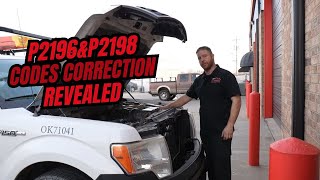
Helpful Videos

Used OEM Parts in Stock

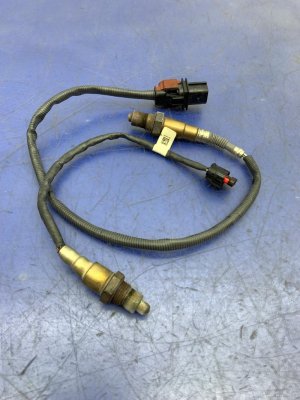
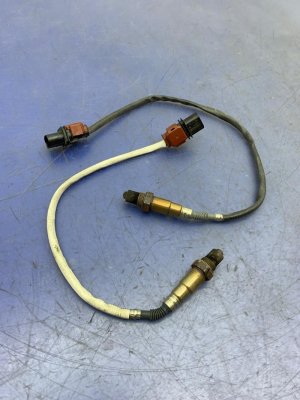
New Aftermarket Parts Available
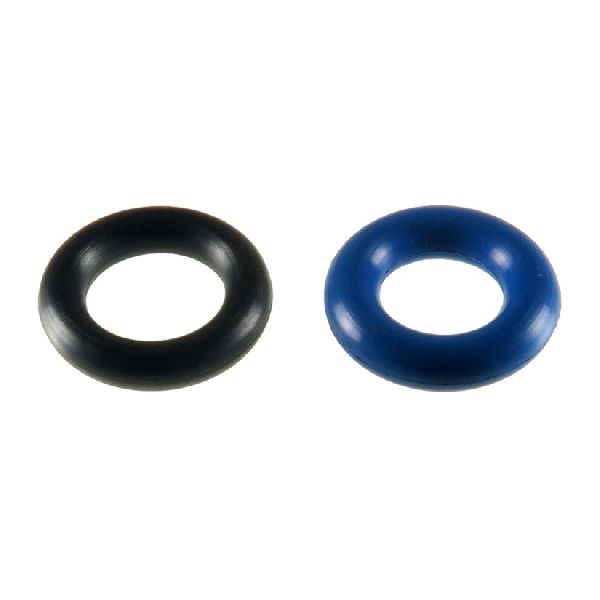

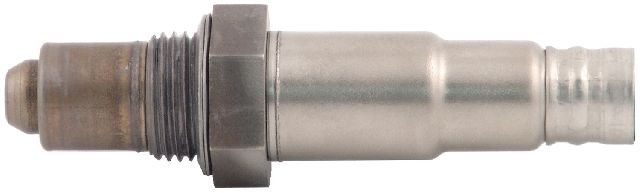

The information in this article is provided for general reference and educational purposes only. Vehicle specifications, procedures, and part compatibility can vary by production date, trim level, and region. Always consult your vehicle's factory service manual and verify part numbers before purchasing or performing repairs. Safety-critical components such as airbags, seat belts, and braking systems should be installed by a qualified professional.
- Ford F-150:
- 🎬 Helpful Videos
- 🛍️ Shop This Part
- What's Unique About the 2015-2020 Ford F-150
- Symptoms You May Notice
- Most Likely Causes
- Rare But Worth Checking
- Diagnosis Steps
- Parts You'll Likely Need
- Related Codes That Often Appear With This One
- Technical Service Bulletins (TSBs) & Recalls
- Platform-Specific Known Issues
- Mechanic-Grade Diagnostic Values
- Hidden / Shadow Codes Worth Checking
- Scan Tool Commands That Help
- Wiring & Ground Locations
- Real Owner Repair Stories
- "I Checked Everything" — The Actual Cause
- OEM Part Supersession History
- Model Year Variations Within This Range
- Diagnostic Flowchart
- Other Known Issues on This Vehicle
- Used vs. New Parts: Buying Guide for This Vehicle
- Real Owner Stories
- 2017 Ford F-150 3.5L EcoBoost
- 2015-2020 Ford F-150 3.5L EcoBoost
- 2018-2022 Lincoln Navigator 3.5L EcoBoost
- 2015-2020 Ford F-150 3.5L EcoBoost
- Related OBD-II Codes
- Frequently Asked Questions
- 🎟️ Get 5% Off