

P2196 on 2001-2012 Ford Ranger 2.3L: Causes for Stuck Rich O2 Sensor
Code P2196 on a 2.3L Duratec Ranger means the upstream oxygen sensor (Bank 1, Sensor 1) is detecting a constant rich fuel mixture. The most common causes are a faulty PCV valve or hose, a leaking fuel injector, a stuck-open EVAP purge valve, or a bad oxygen sensor. A new PCV valve is inexpensive, but can be difficult to access under the intake manifold.
- P2196 on your Ranger means the engine is running rich, or at least the main O2 sensor thinks it is.
- Before replacing the O2 sensor, thoroughly inspect for vacuum leaks, especially from the PCV system hoses, which are known to fail on this engine.
- Check for signs of a leaking fuel injector, such as a fuel smell on the oil dipstick or a single spark plug that is much darker than the others.
- A stuck-open EVAP purge valve is a common Ford issue that can cause this code and is relatively easy to test.
- The PCV valve itself is a cheap part, but its location on the 2.3L Duratec makes replacement a challenging job.
What's Unique About the 2001-2012 Ford Ranger

On the 2.3L Duratec engine in the Ranger, a common but often overlooked cause for a rich condition is a problem within the Positive Crankcase Ventilation (PCV) system. The PCV valve is notoriously difficult to access, located on the driver's side of the engine block, under the intake manifold. This can lead to it being neglected during routine maintenance. A stuck-open PCV valve or a deteriorated, cracked PCV hose can create a significant unmetered air leak (vacuum leak). While a vacuum leak typically causes a lean code, a large enough leak can sometimes cause the PCM to overcompensate by adding excessive fuel, leading to a rich condition and the P2196 code.
Symptoms You May Notice
- Check Engine Light is on
- Rough idle, sometimes feeling like a misfire, especially when stopped at a light
- Reduced fuel economy
- Noticeable smell of gasoline from the exhaust
- Loss of engine power and poor acceleration
- Excessive black smoke from the exhaust
- Hard starting, may require holding the throttle open (Clear Flooded Engine mode) to start
- Replacing the oxygen sensor without first checking for underlying issues like fuel delivery problems or vacuum leaks. The O2 sensor often correctly reports the problem; it isn't the cause. A user on Ranger-Forums.com replaced the sensor for P2196 only to have the code return, highlighting this common pitfall. 🎬 Watch: A breakdown of P2196 causes and common fixes
Most Likely Causes


- Leaking or Stuck-Open Fuel Injector 🔴 High Probability Injectors can fail mechanically, leaking fuel, or become clogged, disrupting the spray pattern. A single injector dripping fuel into a cylinder is enough to cause the entire bank to read rich.
How to confirm: Perform a fuel injector balance test. Alternatively, after the engine has run, pull the spark plugs and look for one that is black, sooty, and wet with fuel, which would indicate the injector for that cylinder is leaking. If a misfire code (e.g., P0301, P0302) is present, it often points to the faulty injector's cylinder.
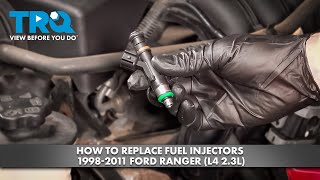
Typical fix: Replace the faulty fuel injector. It is often recommended to replace them as a set if they are high mileage. 🎬 See this walkthrough for replacing your 2.3L fuel injectors
Est. part cost: $40-$90 per injector - Faulty PCV Valve or Hose 🔴 High Probability The PCV valve on the 2.3L Duratec is located in a difficult-to-reach spot under the intake manifold, leading to infrequent replacement. The hoses are known to become brittle, crack, or collapse, creating a vacuum leak that the PCM may overcompensate for by adding excess fuel.
How to confirm: Inspect the PCV hoses for cracks, softness, or collapse. The valve itself is located in a black breather box on the driver's side of the block. Access requires removing the driver's side front wheel and splash shield. A detailed guide can be found on Ranger-Forums.com.
Typical fix: Replace the PCV valve and any damaged hoses. Due to the difficult location, this can be labor-intensive.
Est. part cost: $10-$50 - Faulty Upstream Oxygen (O2) Sensor 🟡 Medium Probability O2 sensors are wear items and have a finite lifespan. They can fail internally and send an incorrect, fixed 'rich' signal to the PCM even if the air-fuel mixture is correct. This is a common misdiagnosis; the sensor is often correctly reporting a problem caused by something else.
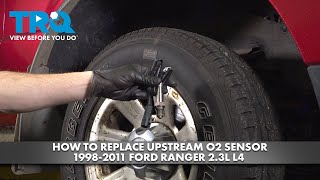
How to confirm: Use a scan tool to monitor the live data for the Bank 1 Sensor 1 O2 sensor. The voltage should fluctuate rapidly between approximately 0.1 and 0.9 volts. If it's stuck at a high voltage (e.g., >0.8V) and fuel trims are heavily negative, the sensor is likely reporting a true rich condition. If fuel trims are normal but the sensor is stuck high, the sensor itself is likely faulty. 🎬 Watch: How to replace the upstream oxygen sensor
Typical fix: Replace the Bank 1, Sensor 1 (upstream) oxygen sensor.
Est. part cost: $50-$120 - Stuck-Open EVAP Purge Valve 🟡 Medium Probability A purge valve that is stuck open allows unmetered fuel vapors from the charcoal canister to enter the intake manifold at idle, creating a rich mixture. This is a very common issue on many Ford vehicles that can trigger a P2196 code.
How to confirm: Disconnect the electrical connector and the vacuum line leading from the valve to the intake manifold. With the engine running, check for vacuum at the valve's port. There should be no vacuum at idle. If there is, the valve is stuck open.
Typical fix: Replace the EVAP purge valve/solenoid.
Est. part cost: $25-$60
Rare But Worth Checking
- Faulty Fuel Pressure Regulator or Pulse Damper: A failed fuel pressure regulator can cause excessive fuel pressure. More specific to some Rangers is a leaking fuel pulse damper, located at the end of the fuel rail. If its internal diaphragm ruptures, raw fuel can be sucked into the intake through its vacuum line, causing a severe rich condition.
- Contaminated Mass Airflow (MAF) Sensor: An oily or dirty MAF sensor can under-report the amount of air entering the engine, causing the PCM to calculate an incorrect (rich) fuel mixture. Cleaning with a dedicated MAF sensor cleaner is a simple first step.
- Leaking Intake Manifold Gasket: While a vacuum leak from an intake gasket typically causes a lean code, a significant leak can sometimes confuse the PCM, causing it to over-enrich the mixture in a failed attempt to compensate.
- Internal Coolant Leaks: Manufacturer service bulletin #SSM 48345 notes that an EGR cooler leaking coolant into the intake and exhaust system can trigger P2196 alongside temperature warnings or illuminated MILs.
Technical Service Bulletins (TSBs) & Recalls
- Bulletin #SSM 50116: This bulletin describes a condition where a wiring harness directly above the steering shaft u-joint near the upper steering column can become damaged, leading to a loss of voltage reference (VREF) or rough running, potentially setting DTC P2196.
- Bulletin #SSM 48345: Notes that P2196 may be stored in the PCM due to an EGR Cooler leaking coolant into the engine intake and exhaust system, which may also be accompanied by external coolant leaks or temperature warnings.
Diagnosis Steps

- Connect an OBD-II scanner and verify P2196 is the primary code. Note any other codes, especially misfire (P030x) or O2 circuit codes (P0132).
- View the live data stream for the Bank 1, Sensor 1 oxygen sensor. Confirm if the voltage is stuck high (above 0.8V) and not fluctuating.
- Check the short-term (STFT) and long-term (LTFT) fuel trims. For a true rich condition, they will be highly negative (e.g., -15% to -25%) as the PCM tries to remove fuel.
- Inspect the air intake system for any obstructions and check the air filter.
- Clean the Mass Airflow (MAF) sensor with a dedicated MAF sensor cleaner.
- Inspect all vacuum and PCV hoses for cracks, leaks, or soft spots. Pay close attention to the hoses connected to the intake manifold and the PCV valve itself.
- Locate the EVAP purge valve on the intake manifold. Disconnect it and check if it's stuck open by feeling for vacuum at idle.
- Locate the fuel pulse damper on the fuel rail. Pull its vacuum line and check for the presence or smell of raw fuel, which indicates a failed diaphragm.
- If a specific cylinder misfire code is present (e.g., P0301), suspect a leaking fuel injector for that cylinder. You can swap the injector with another cylinder's to see if the misfire follows.
- If fuel trims are normal but the O2 sensor voltage is stuck high, the sensor itself is the most likely culprit and should be replaced.
Parts You'll Likely Need

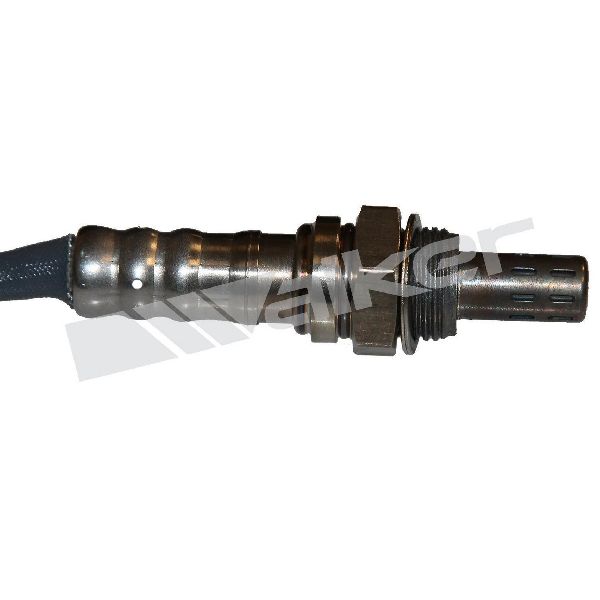
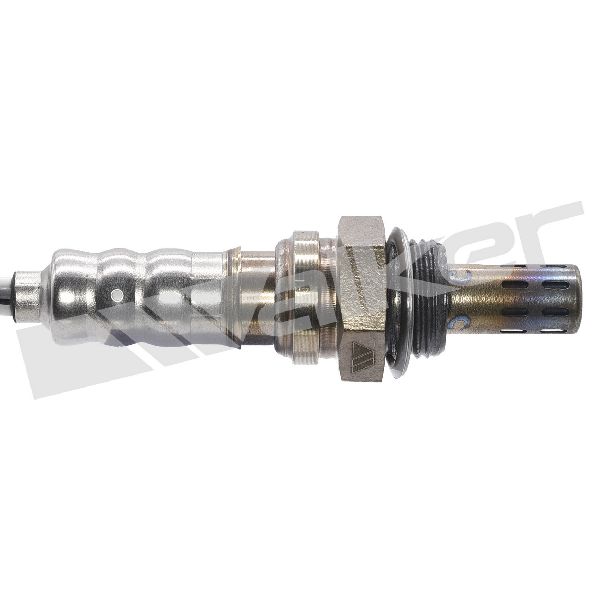
- Upstream Oxygen Sensor (Bank 1, Sensor 1)
(OEM #Motorcraft DY835 (check specific year for compatibility))— This sensor is the primary component that detects the rich condition and can fail by sending a false 'rich' signal.
Trusted brands: Motorcraft, Bosch, Denso, NTK
OEM price range: $80-$120
Aftermarket price range: $50-$80 - PCV Valve
(OEM #Motorcraft EV-274 (for 2004-2011) or EV-252 (for 2001-2003))— A stuck-open PCV valve is a common cause of fuel trim issues on the 2.3L Duratec. Due to its difficult location, it is often neglected.
Trusted brands: Motorcraft, Standard Motor Products
OEM price range: $15-$30
Aftermarket price range: $10-$20 - Fuel Injector — A single leaking injector can dump enough excess fuel to trigger a P2196 code.
Trusted brands: Motorcraft, Bosch
OEM price range: $80-$150
Aftermarket price range: $40-$90
Related Codes That Often Appear With This One
- P0132 — P0132 (O2 Sensor Circuit High Voltage) often appears with P2196 because a sensor that is 'stuck rich' is essentially stuck at a high voltage reading, and the codes describe the same electrical state.
- P0300, P0301, P0302, P0303, P0304 — A severely rich condition can foul spark plugs and lead to incomplete combustion, causing random (P0300) or specific cylinder misfires (P0301-P0304). A specific cylinder misfire code strongly suggests a leaking fuel injector on that cylinder.
- P2198 — This code is for Bank 2 Stuck Rich. It would not appear on a 4-cylinder Ranger but could appear alongside P2196 on V6 models if the cause (like a faulty fuel pressure regulator) affects both banks.
- P1450 / P144A — These codes often appear alongside P2196 when there is an issue with the EVAP system, specifically a faulty purge valve.
Platform-Specific Known Issues
- The PCV valve on the 2.3L Duratec engine is notoriously difficult to access. It is located on the driver's side of the engine block underneath the intake manifold. Replacement requires jacking up the vehicle and removing the driver's side front wheel and inner fender liner for access from the wheel well. A detailed user-submitted guide on Ranger-Forums.com walks through this challenging process.
Mechanic-Grade Diagnostic Values
- Fuel Pressure (KOEO - Key On, Engine Off) — expected: Approx. 65 psi, should hold steady.. Failure: Pressure below 55 psi or pressure that bleeds off quickly indicates a weak pump, leaking injector, or bad check valve.
- Long Term Fuel Trim (LTFT) at Idle — expected: Between -10% and +10%. Failure: Sustained negative values of -15% to -25% indicate the PCM is removing a large amount of fuel to compensate for a rich condition, often triggering the code.
- Mass Airflow (MAF) Sensor Reading at Idle — expected: Approx. 2.3 - 2.8 grams/second at a stable warm idle (~800 RPM).. Failure: A significantly lower reading can cause the PCM to inject less fuel than needed, but an artificially high reading (or a contaminated sensor misreading airflow) could contribute to a rich condition.
- Engine Coolant Temperature (ECT) Sensor Resistance — expected: Approx. 2000-3000 Ω at 20°C (68°F), dropping to 200-300 Ω at 90°C (194°F).. Failure: A sensor that stays at a high resistance value even when the engine is hot will trick the PCM into thinking the engine is always cold, causing constant fuel enrichment.
- Fuel Injector Resistance — expected: Approx. 11 to 18 Ω (value from preceding 2.3L Lima engine, but a good baseline).. Failure: A reading significantly outside this range, or an injector that reads very differently from the others, indicates a failed internal coil.
Hidden / Shadow Codes Worth Checking
- Mode $06, TID $86: This is the Ford-specific On-Board Test ID for the 'Upstream O2 Sensor Lack of Movement' monitor. A failure of this test is what directly triggers the P2196 (stuck rich) or P2195 (stuck lean) diagnostic trouble code. (see via A professional scan tool or advanced DIY tool (like ForScan with an extended license) that can access Mode $06 test results.)
Scan Tool Commands That Help
- Ford IDS (Dealer) / ForScan (Advanced DIY): Key On Engine Running (KOER) Self-Test — This test commands various actuators and monitors the response to help pinpoint faults. It can help verify if the PCM can control systems like the EVAP purge valve and IMRC (on applicable years).
- Ford IDS (Dealer) / ForScan (Advanced DIY): Injector Balance Test / Misfire Monitor — To identify a specific cylinder that is contributing more or less than others. If a cylinder shows a significant deviation when its injector is disabled, it can point to a leaking or clogged injector causing the rich condition.
- Ford IDS (Dealer) / ForScan (Advanced DIY): EVAP Purge Solenoid Command — To manually command the EVAP purge valve open and closed while monitoring fuel trims. If commanding it closed causes the rich condition to resolve (fuel trims return toward zero), it confirms the valve was stuck open.
Wiring & Ground Locations
- PCM Pin 60 — At the 104-pin Powertrain Control Module connector, located on the passenger side firewall.. This pin, with a Gray/Light Blue wire, is the direct signal input from the Bank 1 Sensor 1 O2 sensor. Testing for voltage here can determine if the signal is stuck high all the way to the PCM, helping differentiate a sensor/wiring issue from an actual rich condition.
- Engine Head to Firewall Ground Strap — Typically found on the back of the driver's side of the cylinder head, connecting to the firewall.. This is a critical ground for the PCM and many sensors. If this strap is loose, corroded, or was left off during engine work, it can cause erratic and incorrect readings from sensors, including the O2 sensor, leading to false codes.
- G104 — Main engine ground, typically located on the left front of the engine compartment, often on the frame rail near the motor mount.. This is the primary ground path for high-amperage components like the alternator and starter, but also provides a ground reference for the engine block. A poor connection here can introduce electrical noise and voltage offsets that affect sensor readings.
Real Owner Repair Stories
- CarKiller forum post (2017 Ford Mustang EcoBoost (2.3L)) — P2196 code, hard to start immediately after refueling.
❌ Tried (didn't work) The owner was aware of a pre-existing P1451 code for the purge valve circuit and suspected it was the cause.
✅ What actually fixed it Replacing the EVAP purge valve assembly. The owner noted this was the third time the part had failed in seven years, highlighting a potential high failure rate for this component on Ford vehicles. - NHTSA ODI #11321324: An owner reported experiencing P2196 and P1450 codes at low speeds and idle; a dealership diagnosis confirmed the fuel vapor canister purge valve required replacement.
- NHTSA ODI #10585836: A driver reported the check engine light and "fill cap" light were on with codes P144A, P1450, and P2196; the issue was resolved by replacing the purge valve.
- NHTSA ODI #11560714: An owner found codes P0303, P0300, and P2196 stored; a dealership inspection confirmed low coolant and coolant intrusion into the engine, indicating a bad head or head gasket.
"I Checked Everything" — The Actual Cause
- A common scenario where a smoke test for vacuum leaks comes back clean, yet the P2196 code persists, is a faulty Engine Coolant Temperature (ECT) sensor. A smoke test will not identify this issue. If the ECT sensor fails in a state that reads 'cold' at all times (high resistance), the PCM will continuously command a rich fuel mixture as if the engine is in a cold-start 'choke' cycle. This leads to a genuine rich condition and a P2196 code, even with no vacuum leaks.
Model Year Variations Within This Range
- 2001-2003: These early Duratec models are equipped with an Intake Manifold Runner Control (IMRC) system and a heated thermostat, both of which were deleted for the 2004 model year. The PCV valve is part number EV-252.
- 2004-2006: The IMRC and heated thermostat were removed. The engine received some reliability updates. The PCM hardware changed from the 2001-2003 models and uses a single large connector. The PCV valve is part number EV-274.
- 2007-2012: The PCM was changed to a new model featuring three smaller connectors instead of one large one. The digital instrument cluster and the PCM are electronically 'married' from the factory and cannot be swapped independently without dealer reprogramming using IDS software.
Diagnostic Flowchart
Other Known Issues on This Vehicle
Issues unrelated to this code that are worth knowing about as an owner of this generation:
- Intake Manifold Runner Control (IMRC) Failure 🟠 Medium — Common on 2001-2003 models. The system was removed in 2004. Failure is often due to broken plastic actuator linkage or vacuum leaks in the control solenoid hoses. Can cause rough idle, loss of power, and codes like P2004 or P1537.
- Cracked/Leaking Thermostat Housing 🟠 Medium — The thermostat housing on the 2.3L Duratec can develop leaks over time, often from the gasket seal or cracks in the housing itself. This can lead to coolant loss and potential overheating. The thermostat is located on the lower radiator hose side of the engine.
- Failing Crankshaft Position Sensor 🔴 High — A common failure item that can cause intermittent stalling (especially when hot) or a no-start condition where the engine cranks but won't fire. Often triggers code P0335.
- Deteriorated PCV Hoses 🟠 Medium — The rubber hoses in the PCV system become brittle and crack from heat and oil exposure, leading to vacuum leaks. This is a primary cause of lean codes (P0171) but can also contribute to rich codes like P2196.
Used vs. New Parts: Buying Guide for This Vehicle
When a used part is the smart pick: For this repair, sourcing structural components like a fuel rail, intake manifold, or specific wiring connectors from a reputable auto recycler is a cost-effective option. These parts have low failure rates and their condition is easy to verify visually.
Donor-vehicle mileage cap: roughly under 100000 miles for the part to have meaningful remaining life.
What to inspect on the donor part:
- When sourcing an engine or related parts, remove the oil cap and look for thick, black sludge. This indicates poor maintenance and potential for clogged PCV and oil passages.
- Check the donor vehicle's frame and rear leaf spring shackles for excessive rust, which is a common weak point on Rangers and can indicate a vehicle that was poorly maintained or from a harsh climate.
- Inspect rubber and plastic components like vacuum lines and wiring insulation for brittleness or cracking, as these are the first to degrade with age and heat.
OEM-only on this vehicle (don't cheap out):
- No specific parts for this repair are identified as requiring OEM-only replacements. High-quality aftermarket alternatives are widely available and considered reliable.
Aftermarket brands forum-validated for this vehicle:
- Oxygen Sensors: Bosch, Denso, and NGK/NTK are widely considered to be OEM-quality and are often recommended on forums.
- PCV Hoses/Components: Gates and Standard Motor Products (SMP) are reputable brands for emissions and vacuum components.
Brands owners have reported issues with on this vehicle:
- Avoid no-name, unbranded electronic sensors from online marketplaces. While cheap, they have a high rate of out-of-the-box failure and can cause significant diagnostic confusion.
Real Owner Stories
Aggregated from forums and TSBs cited above. Mileages and costs reflect what owners reported in those sources.
2003 Ford Ranger 2.3L
Symptoms: Check Engine Light came on with codes P0132 and P2196.
What fixed it: The owner replaced the oxygen sensor, fuel injectors, intake manifold gaskets, PCV valve, and MAF sensor. This did not resolve the issue but changed the code from a rich condition (P2196) to a lean condition (P2195), indicating the troubleshooting was still in progress.
Source hint: Ranger-Forums.com
Related OBD-II Codes
Frequently Asked Questions
Where is the PCV valve on my 2.3L Ranger, and why is it so hard to change?
My Ranger has a P2196 code. Should I just replace the O2 sensor?
I have a P2196 and a misfire code like P0302. What's the connection?
How can I test the EVAP purge valve on my Ranger?
What's the best way to confirm a leaking fuel injector without special tools?
Does this P2196 issue also affect the Mazda B2300?
Helpful Videos

Used OEM Parts in Stock


New Aftermarket Parts Available


The information in this article is provided for general reference and educational purposes only. Vehicle specifications, procedures, and part compatibility can vary by production date, trim level, and region. Always consult your vehicle's factory service manual and verify part numbers before purchasing or performing repairs. Safety-critical components such as airbags, seat belts, and braking systems should be installed by a qualified professional.
- Ford Ranger:
- 🎬 Helpful Videos
- 🛍️ Shop This Part
- What's Unique About the 2001-2012 Ford Ranger
- Symptoms You May Notice
- Most Likely Causes
- Rare But Worth Checking
- Technical Service Bulletins (TSBs) & Recalls
- Diagnosis Steps
- Parts You'll Likely Need
- Related Codes That Often Appear With This One
- Platform-Specific Known Issues
- Mechanic-Grade Diagnostic Values
- Hidden / Shadow Codes Worth Checking
- Scan Tool Commands That Help
- Wiring & Ground Locations
- Real Owner Repair Stories
- "I Checked Everything" — The Actual Cause
- Model Year Variations Within This Range
- Diagnostic Flowchart
- Other Known Issues on This Vehicle
- Used vs. New Parts: Buying Guide for This Vehicle
- Real Owner Stories
- 2003 Ford Ranger 2.3L
- Related OBD-II Codes
- Frequently Asked Questions
- 🎟️ Get 5% Off