

P2196 on 2008-2016 Audi A4 2.0L TDI: Causes for O2 Sensor Stuck Rich Signal
On the Audi A4 2.0L TDI, code P2196 most often means the upstream oxygen (O2) sensor has failed and needs replacement. However, a faulty Mass Airflow (MAF) sensor is another common cause specific to this diesel engine and should be checked before replacing the O2 sensor. Leaking fuel injectors are another possibility that can cause an actual rich condition.
- P2196 means the upstream O2 sensor is signaling a 'stuck rich' condition.
- For the 2.0L TDI engine, the most likely causes are a failed O2 sensor or a faulty MAF sensor.
- Always check live data from the MAF sensor with a scan tool before deciding to replace the O2 sensor.
- Continued driving with this code can hurt fuel economy and potentially damage the DPF.
- Replacing either the O2 sensor or MAF sensor is a DIY-friendly job for most home mechanics.
What's Unique About the 2008-2016 Audi A4

For the Audi A4 with the 2.0L TDI engine (including CAHA, CAHB, CAGC variants), this code presents a specific diagnostic challenge. While a failed oxygen sensor is a very common cause, a faulty Mass Airflow (MAF) sensor can also trigger a P2196 code, sometimes accompanied by a MAF-related code like P0101. The faulty MAF sensor under-reports the amount of air entering the engine, causing the ECM to think the mixture is rich when it may not be. Owners should investigate the MAF sensor's live data before immediately replacing the more expensive O2 sensor. Additionally, leaking fuel injectors are a documented problem on this platform and can cause a true rich condition, also leading to P2196.
Generation note: The 2008-2016 year range covers the Audi A4 B8 generation. This generation had a significant facelift for the 2013 model year (often called the B8.5), but the 2.0L TDI common-rail engine family (CAHA, CAHB, CAGC, CGLC etc.) and related emissions components for this code remained fundamentally the same.
Symptoms You May Notice
- Check Engine Light is on.
- Reduced fuel economy.
- Rough or uneven idle.
- Engine hesitation or lack of power, sometimes described as 'brutal' or dangerously slow.
- Black smoke from the exhaust under acceleration.
- In some cases, a flashing glow plug light may appear on the dashboard.
- Replacing the oxygen sensor without first checking the Mass Airflow (MAF) sensor's performance. On this TDI engine, a bad MAF can mimic a bad O2 sensor, leading to unnecessary replacement of the O2 sensor.
- Assuming the O2 sensor is faulty when there is a true rich condition caused by a leaking fuel injector or fuel pressure issue.
Most Likely Causes

- Faulty Upstream Oxygen Sensor (Lambda Sensor) 🔴 High Probability Oxygen sensors are wear items that degrade over time. On TDI engines, they are particularly susceptible to fouling from carbon and ash deposits, or internal failure from corrosion, which can cause the signal to bias high.
How to confirm: Using a diagnostic scan tool (like VCDS), monitor the live data for the Bank 1, Sensor 1 voltage. If the voltage is stuck high (typically >0.8V) and does not fluctuate during engine operation (warm-up, idle, revving), the sensor is likely faulty. Check for carbon deposits on the sensor tip upon removal.
Typical fix: Replace the upstream oxygen sensor. It is located on the exhaust system before the Diesel Particulate Filter (DPF). One owner on Audi-Sport.net confirmed a dealer replacement for £311 resolved the issue.
Est. part cost: $100-$250 - Faulty Mass Airflow (MAF) Sensor 🟡 Medium Probability A dirty or failing MAF sensor can under-report airflow, tricking the ECU into thinking the fuel mixture is rich. This is a documented issue on VW/Audi TDI engines and a common cause of a 'false' P2196 code.
How to confirm: With a scan tool, observe the live MAF sensor data (in g/s or mg/stroke) at idle and while revving the engine. Compare the actual value to the specified/requested value. If the actual reading is implausibly low or drops to zero when revved, the sensor is faulty.
Typical fix: First, try cleaning the MAF sensor element with a dedicated MAF sensor cleaner spray. If cleaning doesn't resolve the issue, the sensor must be replaced.
Est. part cost: $80-$200 - Leaking Fuel Injector(s) ⚪ Low Probability Fuel injector failures, including internal leaks causing excess fuel delivery, are a known issue on the B8 2.0 TDI platform, especially at higher mileage. This introduces an actual rich condition that the O2 sensor correctly reports.
How to confirm: This is more complex to diagnose on a TDI. It may require a fuel injector leak-down test or having a professional analyze fuel trim data in conjunction with injector balance rates using a tool like VCDS. A forum user on AUDI TECH TEAM suggested a leaking injector as a primary cause for a P2196.
Typical fix: Replace the faulty fuel injector(s). It is often recommended to replace all injector seals at the same time. This can be an expensive repair.
Est. part cost: $200-$500+ per injector - High Fuel Pressure ⚪ Low Probability
How to confirm: Test the fuel pressure using a scan tool to monitor the fuel rail pressure sensor. Compare the actual reading to the specified value. A reading that is consistently too high points to a faulty fuel pressure regulator or, in some cases, a failing High-Pressure Fuel Pump (HPFP).
Typical fix: Replace the fuel pressure regulator or sensor. If the HPFP is at fault, it requires a much more involved and costly repair.
Est. part cost: $50-$150
Rare But Worth Checking
- Damaged Wiring or Connectors: Before replacing any sensors, always visually inspect the wiring harness and connectors for the O2 sensor and MAF sensor. Look for frayed wires, corrosion, or loose connections, especially where the harness is exposed to heat. An open or short in the circuit can mimic a failed sensor.
- Engine Control Module (ECM) Fault: In very rare cases, an internal failure of the ECM (e.g., a failed analog-to-digital converter) can cause it to misinterpret sensor signals and generate a false P2196 code. This should only be considered after all other possibilities, including wiring, have been exhaustively ruled out by a professional.
- Clogged Air Filter: A severely clogged engine air filter can restrict airflow, causing the engine to run rich. This is a simple and inexpensive item to check before proceeding to more complex diagnostics.
Diagnosis Steps

- Connect an OBD-II scanner and check for any other stored fault codes, paying close attention to codes like P0101 (MAF Sensor) or fuel pressure codes.
- Using the scanner's live data function, monitor the signal from 'Bank 1, Sensor 1 O2 Sensor'. A healthy sensor will show fluctuating voltage. If it is stuck high (e.g., above 0.8V) and does not respond to changes in engine load, it indicates a rich signal or faulty sensor.
- Next, monitor the live data for the 'Mass Airflow Sensor'. At idle, compare the 'Actual' vs 'Specified' readings. The value should increase smoothly as you raise the engine RPM. If the reading is erratic, extremely low, or does not increase with RPM, the MAF sensor is likely the problem.
- Visually inspect the wiring and connectors for both the upstream O2 sensor and the MAF sensor. Look for any signs of damage, melting, or corrosion.
- If MAF data is suspect, try cleaning it with a dedicated MAF cleaner. Clear codes and re-test. If the problem persists, replace the MAF sensor.
- If the MAF sensor and its wiring are confirmed to be good, the upstream O2 sensor is the most likely culprit. Replace the Bank 1, Sensor 1 O2 sensor.
- If the code returns after replacing both sensors, further investigation into the fuel system is required. Check fuel rail pressure against specified values. Investigate fuel injectors for potential leaks, which may require professional diagnosis.
Parts You'll Likely Need

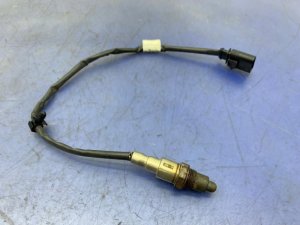
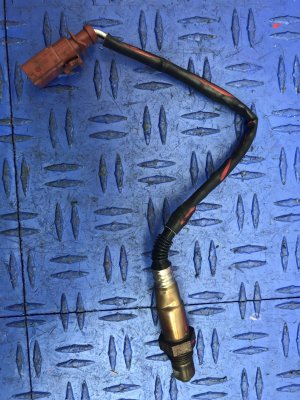
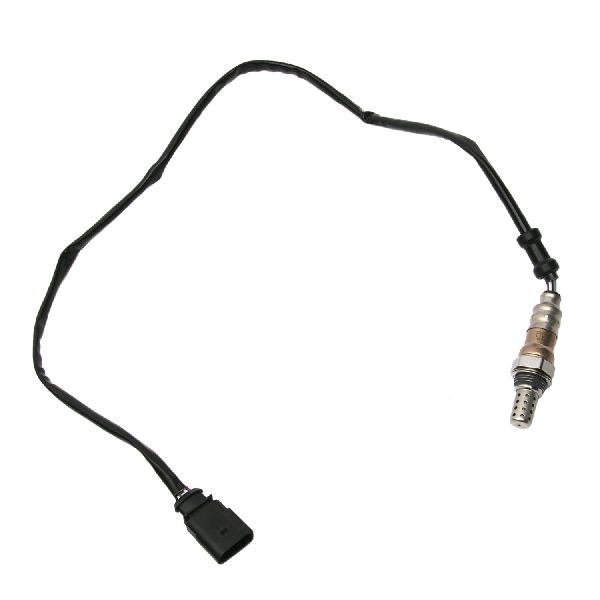
- Upstream Oxygen Sensor / Lambda Sensor
(OEM #8R0906262)— This is the most common component to fail and cause a P2196 code. It is a critical wide-band sensor for fuel mixture control and is exposed to harsh exhaust conditions, leading to fouling and internal failure.
Trusted brands: Bosch (OEM supplier), NTK, Denso, NGK
OEM price range: $180-$250
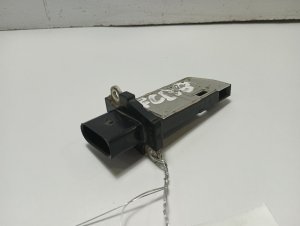
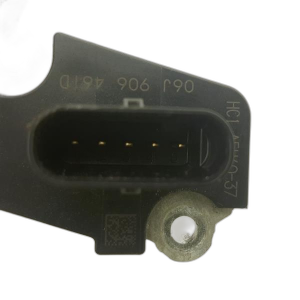
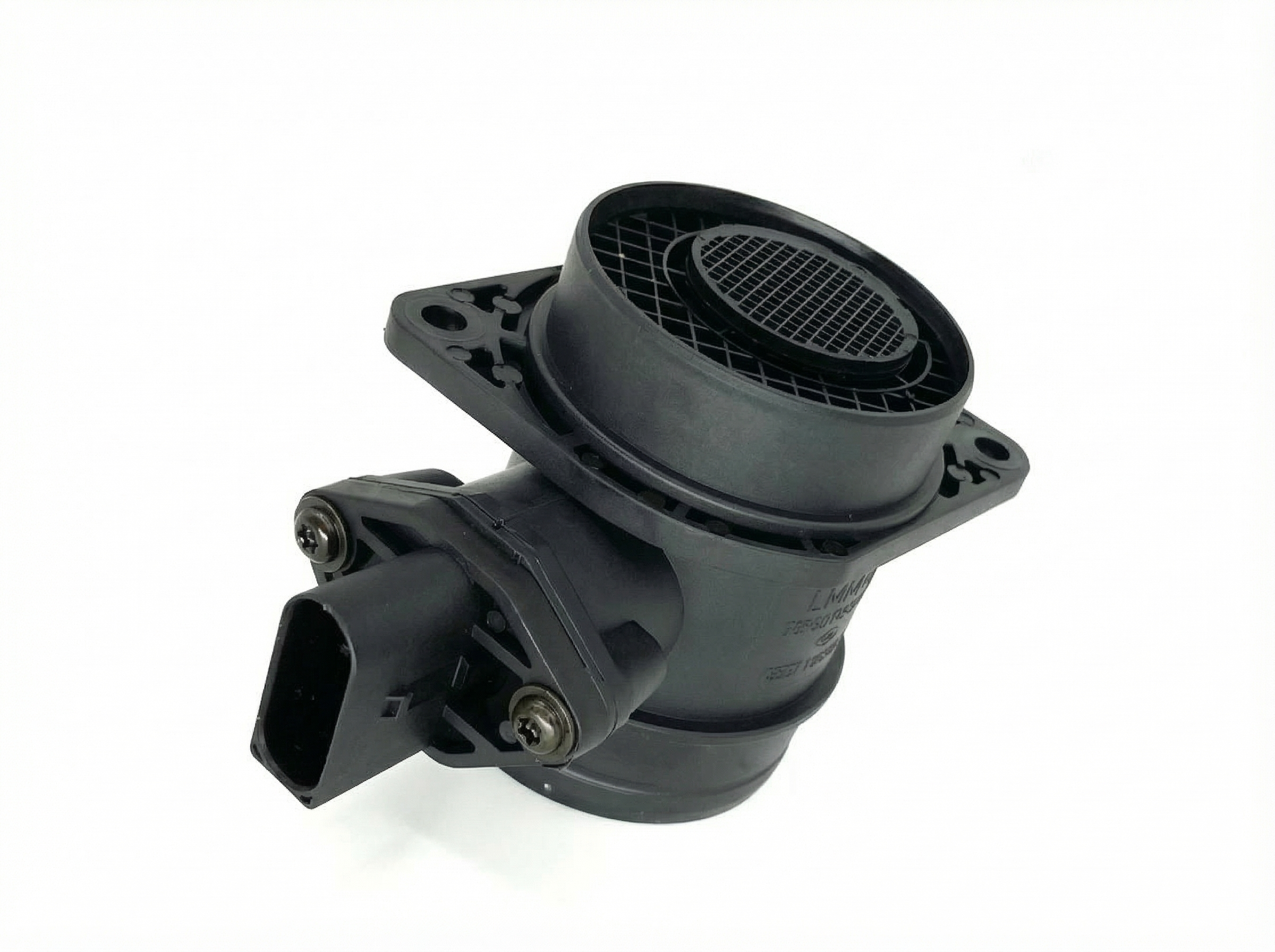
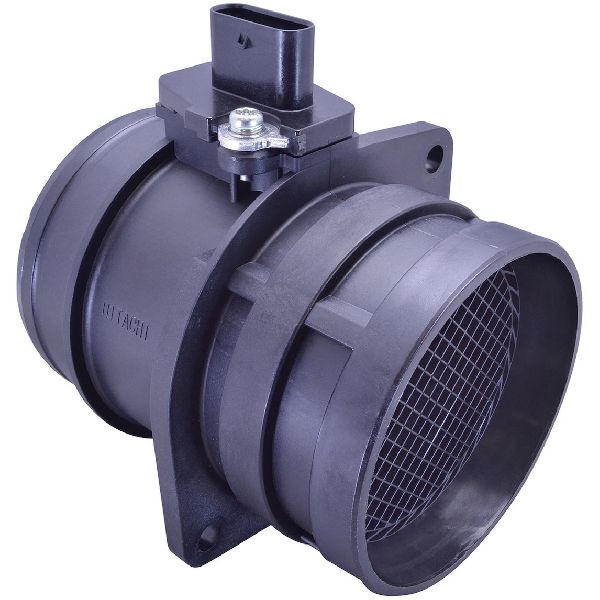
Aftermarket price range: $100-$170 - Mass Airflow (MAF) Sensor
(OEM #0281002757)— A known failure point on TDI engines that can cause a false rich reading by under-reporting airflow, leading to code P2196, often with P0101.
Trusted brands: Bosch (OEM supplier), Hitachi
OEM price range: $150-$200
Aftermarket price range: $80-$130
Related Codes That Often Appear With This One
- P0101 — This code for 'Mass Air Flow (MAF) Circuit Range/Performance' often appears with P2196 when the MAF sensor is the root cause of the problem.
- P0087 — This code for 'Fuel Rail/System Pressure - Too Low' can sometimes appear alongside P2196 if there are intermittent fuel delivery issues, although P2196 indicates a rich condition. One owner reported both codes simultaneously, suggesting a complex fuel system fault.
- P0135 — This code indicates a fault in the O2 sensor's heater circuit. If you see this alongside P2196, it strongly points to the O2 sensor itself being faulty.
Technical Service Bulletins (TSBs) & Recalls
- While no TSB directly for P2196 was found, TSB 2046611/5 addresses a related code (P2096, too lean) by replacing the *post-catalyst* O2 sensor due to internal contamination, showing that sensor contamination is a recognized issue by Audi.
Platform-Specific Known Issues
- MAF Sensor vs. O2 Sensor Diagnosis: On the 2.0L TDI engine, it is particularly important to diagnose the MAF sensor's live data before replacing the O2 sensor. A YouTube video specifically on a TDI with P2196 and P0101 demonstrated that the MAF was reading extremely low and dropping to zero on throttle, and replacing it fixed the issue completely. This highlights a common pitfall for this specific engine family.
- O2 Sensor Fouling: A Ross-Tech forum thread on a similar 2.0 TDI engine noted that P2196 is often caused by the O2 sensor itself failing internally due to ash pile-up or corrosion. The user's sensor was found to be covered in carbon deposits.
Mechanic-Grade Diagnostic Values
- Common Rail Fuel Pressure at Idle — expected: ~250 bar (3625 psi). Failure: Pressure fluctuating more than +/- 10% from the specified value.
- O2 Sensor Heater Element Resistance — expected: Below 20 ohms when cold.. Failure: A reading of 20 ohms or more indicates a defective heater element within the sensor.
- Injector Quantity Deviation at Idle (VCDS) — expected: As close to 0.0 mg/stroke as possible.. Failure: Consistent deviation values exceeding +/- 1.5 mg/stroke can indicate a leaking or malfunctioning injector. One user noted issues with values reaching 1.7-1.9.
Scan Tool Commands That Help
- VCDS (VAG-COM): Engine -> Meas. Blocks -> Group 013, 014 (for older TDIs) or Advanced Meas. Values for Injector Quantity Deviation — Use this to check the health of individual fuel injectors. High deviation values on one cylinder can point to a leaking injector causing a true rich condition.
- VCDS (VAG-COM): Engine -> Long Adaptation -> Channels 71, 72, 73, 74 — This is used to code new injectors to the ECU after replacement. Failure to code new injectors can cause the engine to run poorly and may set limp mode.
Wiring & Ground Locations
- O2 Sensor (Bank 1, Sensor 1) Connector — Located on the exhaust system before the Diesel Particulate Filter (DPF). The connector is typically accessible from the top of the engine bay, clipped to the firewall or a bracket.. The connector and its wiring are exposed to significant heat and vibration. Damage or corrosion at the connector pins can disrupt the sensor signal or heater circuit, causing fault codes like P2196 and P0135.
- Engine to Chassis Ground Strap — Typically located on the driver's side of the engine bay, connecting the engine block or transmission to the chassis frame rail.. A corroded or loose main ground strap can cause floating ground issues, leading to erratic voltage readings from various sensors, including the O2 and MAF sensors, potentially triggering false codes.
Real Owner Repair Stories
- Audi-Sport.net user 'Mutty2000' (2012 Audi A4 2.0 TDI) — Engine emissions light came on.
❌ Tried (didn't work) Resetting the code., Using high-performance diesel fuel as suggested by a local garage.
✅ What actually fixed it The user took the car to an Audi dealer, who performed diagnostics and replaced the faulty O2 sensor. The total cost was £311. - MHH AUTO forum user 'Fing32' (Audi A4 B8 2.0 TDI (CAH engine)) — Intermittent MIL (Check Engine Light) with code 5120 / P2196. Live data for lambda sensor was stuck at 0.4V.
❌ Tried (didn't work) Initial diagnosis was uncertain, user did not want to replace the sensor without confirmation.
✅ What actually fixed it The problem was solved by replacing the upstream oxygen (lambda) sensor with a new one. The fault did not return after replacement.
OEM Part Supersession History
79906262Q, 79906262R, 7P906262A, 7P906262B→8K0-906-262-J— Part revision and consolidation by the manufacturer.
Diagnostic Flowchart
Other Known Issues on This Vehicle
Issues unrelated to this code that are worth knowing about as an owner of this generation:
- High-Pressure Fuel Pump (HPFP) Failure 🔴 High — Can occur at various mileages, but more common over 100,000 miles. Failure can be catastrophic, sending metal debris throughout the entire fuel system. (Ref: No specific recall found, but it is a widely documented failure. An NHTSA investigation (EA11-003) looked into this issue on TDI engines.)
- Diesel Particulate Filter (DPF) Clogging 🟠 Medium — Common for vehicles used primarily for short trips, which prevents the DPF from reaching temperature for passive regeneration. Can lead to limp mode and costly cleaning or replacement. (Ref: TSB 2064398/2 exists for DPF issues on some VW/Audi models, indicating a recognized problem.)
- Dual-Mass Flywheel (DMF) Failure 🟠 Medium — Symptoms like rattling at idle (in gear) or clutch judder can appear, often more noticeable when cold. Failures have been reported at mileages as low as 34,000 miles, though it's more common at higher mileage. (Ref: No recall, but owner forums indicate Audi released upgraded parts to address premature failures.)
- Leaking/Failing Fuel Injectors 🟠 Medium — More common on high-mileage vehicles. Can cause rough idle, misfires, black smoke, and poor performance.
- EGR Valve/Cooler Clogging 🟡 Low — Carbon buildup can clog the EGR system, especially with urban driving, leading to rough idle and reduced power. Cleaning or replacement is often needed.
Used vs. New Parts: Buying Guide for This Vehicle
When a used part is the smart pick: For this repair, using used parts is generally not recommended for sensors. However, if a major component like a High-Pressure Fuel Pump (HPFP) or a full set of fuel injectors is diagnosed as faulty, a low-mileage used assembly from a reputable salvage yard can offer significant cost savings over new OEM parts.
Donor-vehicle mileage cap: roughly under 80000 miles for the part to have meaningful remaining life.
What to inspect on the donor part:
- For fuel system components, ask for proof the donor vehicle was running without fuel-related codes.
- Visually inspect injector nozzles for heavy carbon buildup or damage.
- Check electrical connectors on any used part for corrosion, cracks, or broken locking tabs.
OEM-only on this vehicle (don't cheap out):
- While not strictly 'OEM-only', it is highly recommended to use OEM-supplier parts for sensors. For this vehicle, that means Bosch for the Oxygen Sensor and MAF sensor.
Aftermarket brands forum-validated for this vehicle:
- Bosch (OEM supplier for O2 and MAF sensors)
- NTK / NGK (O2 Sensors)
- Denso (O2 Sensors)
- Hitachi (MAF Sensors)
- Delphi (MAF Sensors)
Brands owners have reported issues with on this vehicle:
- Avoid unbranded, 'white-box' sensors from online marketplaces. These often have high failure rates, incorrect calibration, and can cause more diagnostic confusion.
Real Owner Stories
Aggregated from forums and TSBs cited above. Mileages and costs reflect what owners reported in those sources.
2012 Audi A4 2.0 TDI
Symptoms: The Check Engine Light with code P2196 returned after a garage reset it and suggested using premium fuel.
What fixed it: A dealer replacement of the O2 sensor for £311 resolved the issue.
Source hint: Audi-Sport.net: A user with a 2012 A4 2.0 TDI reported code P2196-error.271398/
2009-2015 VW Jetta 2.0L TDI
Symptoms: Severe lack of power, accompanied by codes P2196 and P0101. Live data showed the MAF sensor reading was extremely low and dropped to zero on throttle.
What fixed it: Replacing the Mass Airflow (MAF) sensor resolved the problem completely.
Source hint: YouTube (Josh's Jetta's): A video titled 'Diagnosing P2196/P0101 on a TDI'
2009 VW Passat 2.0L TDI
Symptoms: The owner confirmed upon inspection that the oxygen sensor was covered in carbon deposits.
What fixed it: The cause was identified as an internal issue with the O2 sensor due to ash pile-up, pointing to sensor replacement as the fix.
Source hint: Ross-Tech Forums: A detailed discussion on a 2009 Passat 2.0 TDI with P2196
Related OBD-II Codes
Frequently Asked Questions
My A4 TDI has code P2196. Should I replace the O2 sensor or the MAF sensor first?
How common is oxygen sensor failure on the 2008-2016 A4 2.0L TDI?
I found TSB 2046611/5. Does it apply to my P2196 problem?
How can I test the MAF sensor on my A4 without just buying a new one?
Besides a Check Engine Light, what are the common symptoms of P2196 on this car?
Could a leaking fuel injector cause this code on my 2.0L TDI?
What other VW or Audi models with the 2.0L TDI engine experience this same P2196 issue?
Used OEM Parts in Stock

New Aftermarket Parts Available



The information in this article is provided for general reference and educational purposes only. Vehicle specifications, procedures, and part compatibility can vary by production date, trim level, and region. Always consult your vehicle's factory service manual and verify part numbers before purchasing or performing repairs. Safety-critical components such as airbags, seat belts, and braking systems should be installed by a qualified professional.
- Audi A4:
- 🛍️ Shop This Part
- What's Unique About the 2008-2016 Audi A4
- Symptoms You May Notice
- Most Likely Causes
- Rare But Worth Checking
- Diagnosis Steps
- Parts You'll Likely Need
- Related Codes That Often Appear With This One
- Technical Service Bulletins (TSBs) & Recalls
- Platform-Specific Known Issues
- Mechanic-Grade Diagnostic Values
- Scan Tool Commands That Help
- Wiring & Ground Locations
- Real Owner Repair Stories
- OEM Part Supersession History
- Diagnostic Flowchart
- Other Known Issues on This Vehicle
- Used vs. New Parts: Buying Guide for This Vehicle
- Real Owner Stories
- 2012 Audi A4 2.0 TDI
- 2009-2015 VW Jetta 2.0L TDI
- 2009 VW Passat 2.0L TDI
- Related OBD-II Codes
- Frequently Asked Questions
- 🎟️ Get 5% Off