

P2195 on 2015-2018 Ford Transit: Causes and Fixes for Stuck Lean O2 Sensor
On a 2015-2018 Ford Transit, P2195 is often caused by water leaking into the engine bay, a known issue addressed by Ford TSB 19-2091. Before replacing parts, check for signs of water damage around the air filter and wiring. Other likely causes are a vacuum leak (especially PCV hoses) or a faulty Bank 1 Oxygen Sensor.
- For a 2015-2018 Ford Transit, P2195 requires an immediate check for water intrusion in the engine bay, as per Ford TSB 19-2091, before any parts are replaced.
- If no water damage is found, the most likely causes are a vacuum leak (from a hose or gasket) or a faulty Bank 1 Sensor 1 oxygen sensor.
- Do not automatically replace the O2 sensor. Use a smoke machine to check for vacuum leaks and a scan tool to confirm the sensor is truly 'stuck' and not just accurately reporting a lean condition from another cause.
- Bank 1 on Ford V-engines (3.5L, 3.7L) is the passenger side of the engine.
- Driving with this code can lead to poor performance, bad fuel economy, and potential long-term damage to the catalytic converter.
What's Unique About the 2015-2018 Ford TRANSIT

For the 2015-2018 Ford Transit, this code is frequently linked to a specific design issue. Ford issued Technical Service Bulletins (TSBs) 17-0014 and 19-2091 detailing how 'undesired water entry into the engine compartment' can cause this and a host of other electrical and drivability problems. Water can saturate the air filter, damage wiring, or affect sensors, leading directly to a P2195 code. This makes checking for water intrusion a critical first step, unique to this platform, before assuming a simple sensor failure.
Diagnostic Flowchart

Tap your situation to follow the diagnostic path that matches what you're seeing on this vehicle.
Symptoms You May Notice
- Check Engine Light (MIL) is on
- Difficulty starting
- Engine misfires or runs rough
- Reduced fuel economy
- Hesitation or lack of power during acceleration
- Rough or fluctuating idle speed
- Hissing or sucking noises from the engine bay
- Immediately replacing the oxygen sensor without first checking for vacuum leaks or the vehicle-specific water intrusion issue. A new sensor will not fix a lean condition caused by unmetered air or water damage.
Most Likely Causes

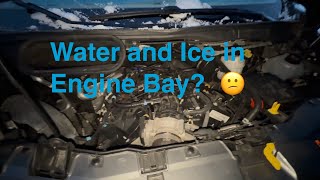
- Water Intrusion in Engine Bay 🔴 High Probability A well-documented design flaw in the cowl panel area on 2015-2018 Transits allows water to drip directly onto the airbox and powertrain components. This is confirmed by Ford TSB 19-2091 and its predecessor, TSB 17-0014.
How to confirm: Inspect the air filter for dampness or saturation with water. Look for corrosion on electrical connectors, water stains, or debris in the engine bay, particularly on the passenger side near the air intake.
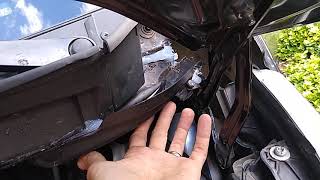
Typical fix: Perform the steps in TSB 19-2091, which includes installing an updated water deflector (CK4Z-6102408-AA), leaf screen seal (CK4Z-61021A46-A) 🎬 Watch: How to fix water intrusion in your Transit engine bay, and potentially a revised air cleaner cover. Replace the wet air filter (CK4Z-9601-A) and repair any water-damaged wiring.
Est. part cost: $50-$200 for TSB-related parts - Vacuum Leak 🔴 High Probability With age, rubber and plastic hoses become brittle and crack. The PCV vacuum hoses and intake manifold gaskets are common failure points on many Ford engines, leading to unmetered air entering the engine.
How to confirm: Listen for hissing sounds at idle. The most effective method is to use a smoke machine to introduce smoke into the intake system and watch for where it escapes. Pay close attention to the intake manifold gaskets and all vacuum hoses, especially the PCV elbow and lines.
Typical fix: Replace the cracked vacuum hose or leaking gasket. The PCV elbow behind the manifold is a frequent, inexpensive culprit.
Est. part cost: $10-$150 - Faulty Bank 1, Sensor 1 Oxygen Sensor 🟡 Medium Probability While not uniquely prone, O2 sensors are a common wear item. On the 3.5L EcoBoost, TSB 17-2124 was issued for F-150s and Explorers (platform mates) for this code, recommending sensor replacement.
How to confirm: Use a scan tool to monitor the live voltage data for the B1S1 O2 sensor. A healthy sensor's voltage fluctuates rapidly between approximately 0.1V and 0.9V. A stuck sensor will show a flat or slow-to-respond voltage, typically below 0.2V for a lean reading.
Typical fix: Replace the Bank 1, Sensor 1 (upstream) oxygen sensor. On V-engines like the 3.5L and 3.7L, Bank 1 is on the passenger side. Access can be difficult, sometimes requiring a special crow's foot O2 sensor socket.
Est. part cost: $60-$150 - Low Fuel Pressure / Fuel Delivery Issue ⚪ Low Probability
How to confirm: Connect a fuel pressure gauge to the fuel rail and check if the pressure is within the manufacturer's specifications. A weak fuel pump, clogged fuel filter, or faulty fuel pressure regulator can be the cause. In some cases, a single faulty or clogged fuel injector on Bank 1 can cause this code without affecting Bank 2.
Typical fix: Replace the failing component, such as the fuel pump, fuel filter, or specific fuel injector.
Est. part cost: $50-$400 - Exhaust Leak ⚪ Low Probability
How to confirm: Visually inspect the exhaust manifold and pipes leading to the O2 sensor for cracks or black soot marks. A leak can often be heard, especially when the engine is cold. An exhaust leak before the O2 sensor allows extra oxygen into the exhaust stream, fooling the sensor into reading lean.
Typical fix: Replace the leaking exhaust gasket or repair the cracked manifold/pipe.
Est. part cost: $20-$300
Rare But Worth Checking
- Faulty Powertrain Control Module (PCM): Extremely rare. This should only be considered after all other possible causes, including wiring and connectors, have been exhaustively checked and ruled out.
- Dirty or Faulty Mass Air Flow (MAF) Sensor: A MAF sensor can under-report airflow, causing the PCM to command less fuel and create a lean condition. It can often be cleaned with a dedicated MAF sensor cleaner before requiring replacement.
- Chafed O2 Sensor Wiring Harness: For 2015 3.7L models specifically, TSB 15-0160 notes that the O2 sensor harness can rub against the transmission, causing a short and triggering various sensor codes. Inspect wiring near the rear of the transmission.
Diagnosis Steps
- Check for Technical Service Bulletins (TSBs) related to your vehicle's VIN. Specifically look for TSB 19-2091 and TSB 17-0014.
- Thoroughly inspect the engine bay for signs of water intrusion, especially around the air cleaner box, wiring harnesses, and PCM. Check if the air filter is damp or saturated.
- Connect an OBD-II scanner and check for any other stored codes. Note the freeze frame data to see engine conditions when the code was set.
- Perform a smoke test to check for vacuum leaks in the intake manifold, vacuum lines, and PCV system. This is the most reliable way to find leaks.
- Inspect the exhaust system for any leaks between the cylinder head and the Bank 1 Sensor 1 O2 sensor. Listen for puffing sounds when the engine is cold.
- Using the scanner's live data function, monitor the short-term (STFT) and long-term (LTFT) fuel trims. High positive numbers (e.g., >10%) confirm the engine is compensating for a lean condition.
- Observe the Bank 1 Sensor 1 voltage. If it is stuck low (e.g., <0.2V) and does not fluctuate, and you have ruled out vacuum/exhaust leaks, the sensor itself is likely faulty. 🎬 Watch: A mechanic explains common causes for the P2195 code
- If a lean condition is confirmed but no leaks are found, test the fuel pressure to ensure the fuel system is delivering enough fuel.
- For the 3.5L EcoBoost, check for oil in the intercooler or intake, which can indicate turbo seal issues and potentially foul sensors.
Parts You'll Likely Need

- Upstream Oxygen Sensor (Bank 1, Sensor 1)
(OEM #8F9Z-9F472-H (Motorcraft DY-1185) for 3.5L/3.7L)— This is the sensor that generates the code. It can fail internally, getting stuck in a lean-reading state. TSB 17-2124 for the related 3.5L GTDI engine recommends replacement for this code.
Trusted brands: Motorcraft, Bosch, Denso
OEM price range: $80-$160
Aftermarket price range: $60-$120 - Water Deflector Kit (per TSB 19-2091)
(OEM #CK4Z-6102408-AA)— This is part of the official Ford fix to prevent the common water intrusion issue that causes this code on the Transit.
Trusted brands: Motorcraft
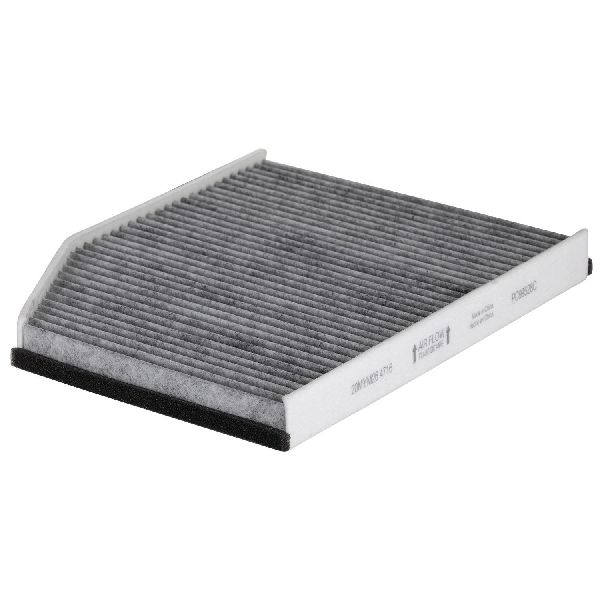
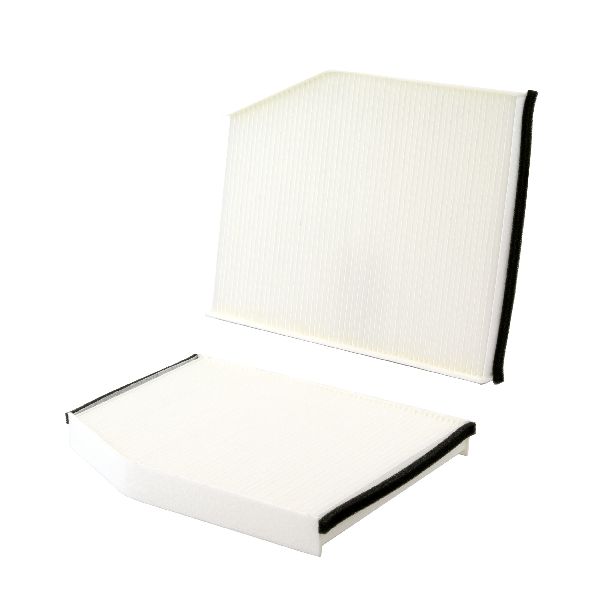
OEM price range: $30-$50 - Engine Air Filter
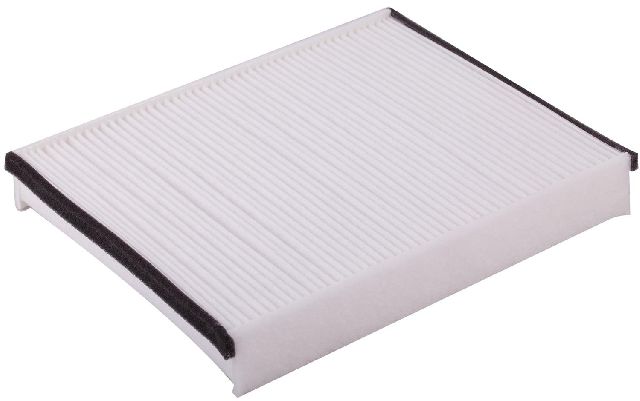
(OEM #CK4Z-9601-A)— Must be replaced if found to be saturated with water, which is a common symptom of the water intrusion issue.
Trusted brands: Motorcraft
OEM price range: $25-$40
Aftermarket price range: $15-$30 - PCV Hose / Elbow — A very common source of vacuum leaks on many Ford engines. The rubber elbow connecting to the intake manifold can crack or collapse.
Trusted brands: Motorcraft
Related Codes That Often Appear With This One
- P0171 — System Too Lean (Bank 1). This code is a general confirmation of the lean condition that P2195 is specifically reporting from the sensor.
- P0174 — System Too Lean (Bank 2). If a vacuum leak or fuel delivery problem is affecting the entire engine, both banks may report a lean condition. Seeing P2195 without P0174 often points to a problem specific to Bank 1, like an exhaust leak or a single bad injector.
- P00BD, P0131, P162F, etc. — These codes are listed alongside P2195 in Ford's TSBs related to water intrusion, indicating a common root cause affecting multiple systems.
- P2197 — 'O2 Sensor Signal Biased/Stuck Lean - Bank 2, Sensor 1'. If this code appears with P2195, it strongly suggests a problem common to both banks, such as a large vacuum leak (intake manifold gasket), MAF sensor issue, or low fuel pressure.
Technical Service Bulletins (TSBs) & Recalls
- TSB 19-2091: Supersedes earlier TSBs for 2015-2018 Transits. Addresses water entry over powertrain components causing a list of DTCs including P2195. Fix involves installing a water deflector, seals, and a new air cleaner cover if needed.
- TSB 17-0014: An earlier version of the water intrusion TSB, applicable to 2015 models built before March 30, 2015. Details sealing the cowl area and applying a mastic patch.
- TSB 17-2124: Issued for 2015-2017 Explorer and 2015-2016 F-150 with the 3.5L GTDI engine (a platform mate). Directly addresses P2195 and P2197 by recommending replacement of the upstream O2 sensors.
Platform-Specific Known Issues
- TSB 19-2091 & TSB 17-0014: These bulletins from Ford explicitly state that for 2015-2018 Transits, drivability concerns and a list of DTCs including P2195 may be due to 'undesired water entry into the engine compartment'. The fix involves installing updated water management hardware. This is the most critical vehicle-specific issue for this code.
- TSB 15-0160 (2015 3.7L only): Notes that the O2 sensor wiring harness can chafe against the transmission, causing shorts and various sensor codes. This should be inspected on affected models.
Mechanic-Grade Diagnostic Values
- Upstream O2 Sensor (Narrowband) Voltage — expected: Rapidly fluctuating between ~0.1V (lean) and ~0.9V (rich) in closed-loop operation.. Failure: Voltage is stuck low, typically < 0.2V or < 0.3V, and does not fluctuate.
- High-Pressure Fuel System (3.5L EcoBoost) — expected: 1,500 to 2,150 PSI at wide-open throttle. Low-pressure side from the tank should be around 50 PSI.. Failure: Pressure significantly below specified range under load, indicating a weak high-pressure fuel pump (HPFP) or low-side delivery issue.
- Long-Term Fuel Trim (LTFT) - Bank 1 — expected: Close to 0%, ideally within +/- 5%.. Failure: Sustained high positive value (e.g., > +10% to +25%) as the PCM tries to compensate for the perceived lean condition.
Scan Tool Commands That Help
- Ford IDS (Integrated Diagnostic System): PCM Parameter Reset — This function is required after replacing the Powertrain Control Module (PCM) to ensure the new module communicates correctly with the vehicle's security system and other modules. It involves a 10-minute security access wait time.
- Ford IDS (Integrated Diagnostic System): Module Programming — Used to install the correct calibration file onto a new PCM. The tool connects to the internet to download the latest software for the specific vehicle VIN.
Wiring & Ground Locations
- Bank 1 Sensor 1 O2 Sensor Connector — On V6 engines (3.5L, 3.7L), Bank 1 is the passenger side of the engine. The Sensor 1 connector is for the upstream sensor, located in the exhaust manifold before the catalytic converter.. This is the primary electrical connection for the sensor reporting the fault. It should be inspected for corrosion, damage, or moisture, especially given the Transit's water intrusion issues.
- PCM Connector — On the 2016 Transit Connect (similar architecture), the PCM is located in the engine wiring harness near the left front of the engine compartment.. All sensor signals are processed here. Verifying pin integrity and checking for corrosion at the main PCM connector is a critical step if wiring is suspected as the cause.
OEM Part Supersession History
CK4Z-6102409-AA→CK4Z-6102409-A— Part revision or update by the manufacturer.
Heads up: This is the driver-side water deflector, related to the TSB fix. The primary passenger-side deflector is CK4Z-6102408-AA. Ensure the correct side is ordered.
Model Year Variations Within This Range
- 2015-2019: The base engine was a 3.7L Ti-VCT V6. For the 2020 model year, this was replaced by a 3.5L PFDi V6, which uses both port and direct injection. While the P2195 code applies to both, diagnostic paths for fuel delivery could differ slightly due to the change in injection systems.
Helpful Videos

Used OEM Parts in Stock


New Aftermarket Parts Available



The information in this article is provided for general reference and educational purposes only. Vehicle specifications, procedures, and part compatibility can vary by production date, trim level, and region. Always consult your vehicle's factory service manual and verify part numbers before purchasing or performing repairs. Safety-critical components such as airbags, seat belts, and braking systems should be installed by a qualified professional.
- Ford TRANSIT:
- 🎬 Helpful Videos
- 🛍️ Shop This Part
- What's Unique About the 2015-2018 Ford TRANSIT
- Diagnostic Flowchart
- Symptoms You May Notice
- Most Likely Causes
- Rare But Worth Checking
- Diagnosis Steps
- Parts You'll Likely Need
- Related Codes That Often Appear With This One
- Technical Service Bulletins (TSBs) & Recalls
- Platform-Specific Known Issues
- Mechanic-Grade Diagnostic Values
- Scan Tool Commands That Help
- Wiring & Ground Locations
- OEM Part Supersession History
- Model Year Variations Within This Range
- 🎟️ Get 5% Off