

P2192 on 2012-2018 Ford Focus 2.0L: Causes and Fixes for Rich Condition Under Load
On a 2012-2018 Ford Focus, code P2192 is most often caused by a failing canister purge valve (CPV), a known issue covered by Ford recall 18S32 and Customer Satisfaction Program 19N06. When the valve sticks open, it causes a rich condition and can even deform the fuel tank. The replacement part is relatively inexpensive (~$25-$60) and is a DIY-friendly fix for many owners.
- For a P2192 on a 2012-2018 Focus, the canister purge valve (CPV) is the number one suspect.
- Check if your vehicle is covered under Ford's recall 18S32 before purchasing any parts.
- Symptoms like poor acceleration and trouble starting after getting gas are strong indicators of a faulty CPV.
- Ignoring this code can lead to costly catalytic converter damage over time.
- Replacing the CPV is a simple, 20-minute job for most DIYers and requires basic tools.
What's Unique About the 2012-2018 Ford Focus
The 2012-2018 Ford Focus with the 2.0L GDI engine is notoriously prone to a failing canister purge valve (CPV). This specific part failure is so common that Ford issued Safety Recall 18S32. When this valve sticks open, it constantly feeds unmetered fuel vapors from the gas tank into the engine, creating the exact rich condition that triggers a P2192 code. A major consequence of a prolonged stuck-open valve is excessive vacuum in the fuel system, which can physically deform or collapse the plastic fuel tank. While other causes are possible, the CPV is the first and most important suspect on this particular vehicle.
Symptoms You May Notice
- Check Engine Light is on
- Sluggish or hesitant acceleration, especially when trying to pass or go up a hill
- Noticeable decrease in fuel economy
- Engine bogging down under load
- Difficulty starting the engine, particularly after refueling
- Strong smell of fuel
- Black smoke from the exhaust during acceleration
- Rough or unstable idle
- Erratic or inaccurate fuel gauge reading (if fuel tank has deformed)
- Replacing the oxygen sensor without first checking the canister purge valve. Given the high failure rate of the CPV on this car and the existence of a recall, it should always be the first part investigated.
Most Likely Causes
- Faulty Canister Purge Valve (CPV) 🔴 High Probability This is a well-documented, widespread failure on this platform, leading to Ford recall 18S32. The valve can stick open, allowing a constant flow of fuel vapors into the intake manifold, creating a rich condition and excessive tank vacuum.
How to confirm: With the engine off, disconnect the vapor line from the purge valve and try to blow through it. If air passes through, the valve is stuck open. A more definitive test is to start the engine, disconnect the electrical connector from the valve, and feel the port for vacuum. If you can feel suction, it is stuck open and must be replaced.
Typical fix: Replace the canister purge valve assembly. 🎬 Watch this step-by-step guide to replacing the purge valve. Check with a Ford dealer about recall 18S32, as the repair (which may include a PCM reprogram and, if necessary, a new fuel tank) may be covered.
Est. part cost: $25-$60 - Faulty Upstream Oxygen (O2) Sensor 🟡 Medium Probability
How to confirm: Use a scan tool to monitor the live data from the upstream O2 sensor (Bank 1, Sensor 1). A failing sensor may have a slow response time or show a fixed high voltage (rich) reading (e.g., >0.8V) even when the engine condition changes.
Typical fix: Replace the upstream O2 sensor. 🎬 Follow this DIY walkthrough to replace your upstream oxygen sensor. Ensure the purge valve is confirmed to be good first, as a bad purge valve can cause the O2 sensor to read rich correctly.
Est. part cost: $50-$120 - Dirty or Faulty Mass Airflow (MAF) Sensor ⚪ Low Probability
How to confirm: Inspect the MAF sensor wires for dirt or contamination. A scan tool can show if the reported airflow is plausible for the given RPM and throttle position. Cleaning the sensor with dedicated MAF sensor cleaner is a good first step.
Typical fix: Clean the MAF sensor with a specialized cleaner. If cleaning doesn't resolve the issue, replace the sensor.
Est. part cost: $10-$20 (cleaner), $80-$150 (sensor) - Leaking Fuel Injector(s) ⚪ Low Probability
How to confirm: This is more complex to diagnose. It may involve performing a fuel pressure leak-down test or removing the spark plugs to check for signs of a rich condition (heavy black soot) on a specific cylinder. An injector balance test by a professional is the most conclusive method.
Typical fix: Replace the faulty fuel injector(s). It is often recommended to replace them as a set.
Est. part cost: $70-$150 per injector
Rare But Worth Checking
- Failing High-Pressure Fuel Pump (HPFP): As a GDI engine, the Focus has a mechanical high-pressure fuel pump. While not a common cause for this specific code, a failure can lead to improper fuel pressure regulation and a rich condition.
- Chafed Wiring Harness: Some owners have found that the engine wiring harness can rub against a sharp corner on the intake manifold, causing shorts in the circuit for the fuel rail pressure sensor. This can send erroneous data to the PCM, causing fuel control issues and may be accompanied by codes like P0192 or P00C6. A visual inspection of the harness where it wraps around the intake is recommended.
Diagnosis Steps
- Check for Recalls: Contact a Ford dealership with your VIN or use Ford's website to see if recall 18S32 ('Fuel Tank Deformation') is open for your vehicle. If so, the repair may be performed for free.
- Scan for Other Codes: Use an OBD-II scanner to check for any other stored codes. P1450 or P2196 appearing alongside P2192 are extremely strong indicators that the canister purge valve is the culprit.
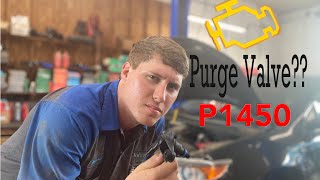
- Inspect the Canister Purge Valve (CPV): This is the most likely culprit. Locate the valve on the engine (it has two hoses and an electrical connector). Disconnect the electrical connector and start the engine. Place your finger over the port on the valve; if you feel suction, it is stuck open 🎬 See a professional mechanic diagnose and repair this common fault. and must be replaced.
- Inspect Fuel Tank: Visually inspect the underside of the plastic fuel tank for any signs of deformation or collapse. A concave or sucked-in appearance confirms the negative effects of a bad purge valve. The recall service may cover tank replacement if deformation is present.
- Check Fuel Trims: Using a scan tool, observe the Short Term Fuel Trim (STFT) and Long Term Fuel Trim (LTFT) at idle and under load. With a P2192, you will likely see strongly negative numbers (e.g., -15% or more) as the PCM tries to reduce fuel to compensate for the rich condition.
- Inspect the MAF Sensor: Remove and visually inspect the Mass Airflow sensor. If it appears dirty, clean it with dedicated MAF sensor cleaner. Do not touch the delicate wires.
- Test the Upstream O2 Sensor: Graph the voltage of the upstream O2 sensor with a scan tool. It should fluctuate rapidly between approximately 0.1V and 0.9V. If it is stuck at a high voltage (above 0.8V), it may be faulty, but confirm the purge valve is good first.
- Inspect Wiring Harness: Visually inspect the engine wiring harness where it is routed around the intake manifold for any signs of chafing or exposed wires, particularly near the fuel rail pressure sensor.
Parts You'll Likely Need
- Canister Purge Valve / Vapor Management Valve
(OEM #GV6Z-9D289-F (supersedes BV6Z-9D289-E, GV6Z-9D289-B, GV6Z-9D289-D))— This is the most common failure point on the 2012-2018 Ford Focus that directly causes a P2192 code. It was subject to manufacturer recall 18S32.
Trusted brands: Motorcraft, Bosch, Dorman
OEM price range: $40-$60
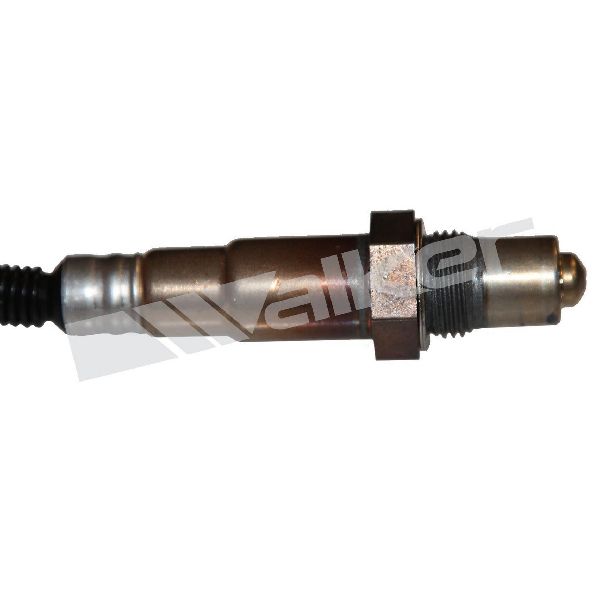
Aftermarket price range: $25-$45 - Upstream Oxygen Sensor (Bank 1, Sensor 1) — If the purge valve is functioning correctly, the next most likely cause is a faulty O2 sensor sending incorrect 'rich' signals to the computer.
Trusted brands: Motorcraft, Bosch, Denso, NTK
OEM price range: $80-$120
Aftermarket price range: $50-$90
Related Codes That Often Appear With This One
- P2196 — This code means 'O2 Sensor Signal Stuck Rich'. It often appears with P2192 because the underlying fault (like a stuck purge valve) is causing a persistent rich condition that the O2 sensor is correctly reporting.
- P1450 — This code means 'Unable to Bleed Up Fuel Tank Vacuum'. It is a direct consequence of the canister purge valve being stuck open, which creates a constant vacuum pull from the engine on the fuel tank. This is the same root cause as P2192 and strongly points to the CPV. If left unresolved, it can lead to a deformed fuel tank.
Technical Service Bulletins (TSBs) & Recalls
- Recall 18S32 - Malfunctioning Canister Purge Valve
- Customer Satisfaction Program 19N06 - Extends coverage for related issues.
Platform-Specific Known Issues
- Recall 18S32 / NHTSA 18V735: Ford recalled 2012-2018 Focus models with the 2.0L GDI engine for a malfunctioning Canister Purge Valve (CPV). A stuck-open valve could cause excessive vacuum in the fuel system, leading to engine stalling, drivability issues, and potential deformation of the fuel tank. The fix involves a PCM reprogram and, if necessary, replacement of the CPV and potentially the fuel tank itself.
Mechanic-Grade Diagnostic Values
- Long-Term Fuel Trim (LTFT) — expected: Near 0% at idle and under steady load.. Failure: Sustained negative value beyond -25% under high load conditions, indicating the PCM is trying to remove excess fuel.
- Upstream O2 Sensor (Bank 1) Voltage — expected: Rapidly fluctuating between 0.1V and 0.9V.. Failure: Stuck high, above 0.8V, even when the engine condition changes.
- Canister Purge Valve Solenoid Resistance — expected: Typically between 15 and 30 Ohms across the two pins.. Failure: A reading far outside this range indicates a damaged internal electrical circuit.
- Fuel Tank Pressure Sensor Voltage (Key-On, Engine-Off) — expected: Static value around 2.6V - 2.65V.. Failure: An immediate drop in voltage upon starting the engine can indicate a purge valve that is stuck open.
Scan Tool Commands That Help
- Ford IDS (Integrated Diagnostic System): Vapor Management Valve / Purge Valve Manual Control — This bidirectional command allows a technician to manually open and close the purge valve while monitoring fuel trims and O2 sensor data to confirm if the valve is physically sticking or responding correctly to commands.
- Ford IDS (Integrated Diagnostic System): EVAP System Test — This is an automated test that seals the EVAP system and uses the Fuel Tank Pressure sensor to check for leaks. It can confirm if the system is able to hold pressure, which helps differentiate between a stuck-open purge valve and other system leaks.
Wiring & Ground Locations
- Main Engine Bay Grounds — Under the airbox, there are two main ground points bolted directly to the painted chassis.. These grounds are critical for the PCM and various sensors. A poor connection due to paint or corrosion can cause erratic sensor readings, leading the PCM to miscalculate fuel trim. Technicians often recommend sanding the paint under these ground lugs to ensure a clean metal-to-metal contact.
- BCM (Body Control Module) — Located in the dash fuse box, behind the glove box.. The BCM handles data from various sensors before it gets to the PCM. While not a direct cause, communication errors originating from or passing through the BCM can affect fuel system calculations.
Real Owner Repair Stories
- r/MechanicAdvice on Reddit (2014 Ford Focus) — Check Engine Light with code P219A (Bank 1 Air-Fuel Ratio Imbalance), which is closely related to P2192.
❌ Tried (didn't work) Replaced upstream and downstream O2 sensors, Replaced spark plugs and ignition coils, Replaced EVAP Purge Control Valve
✅ What actually fixed it The user was still diagnosing the issue after replacing all the common parts, suspecting a fuel pump or fuel filter issue next. This story is valuable as a caution that even after replacing the most likely culprits, the problem may persist, pointing to less common causes like fuel delivery or a deeper mechanical issue.
OEM Part Supersession History
BV6Z-9D289-E→GV6Z-9D289-B, GV6Z-9D289-D, and finally GV6Z-9D289-F— Revisions were likely made to improve the durability of the valve and prevent it from sticking open, which was the primary failure mode leading to the recall.
Model Year Variations Within This Range
- 2015-2018: The Ford Focus received a significant facelift for the 2015 model year, which included exterior and interior styling changes. While the 2.0L GDI engine remained largely the same, some wiring harnesses and component locations may have minor differences from the earlier 2012-2014 models. However, the root cause of P2192, the canister purge valve, remained a common issue across the entire 2012-2018 generation.
Diagnostic Flowchart
Other Known Issues on This Vehicle
Issues unrelated to this code that are worth knowing about as an owner of this generation:
- PowerShift (DPS6) Dual-Clutch Transmission Failure 🔴 High — Extremely common across 2012-2018 Focus and 2011-2019 Fiesta models. Symptoms include shuddering, hesitation, slipping, and complete loss of drive. (Ref: Multiple TSBs and class-action lawsuits have been filed. Ford extended warranties for affected components.)
- Electric Power Assisted Steering (EPAS) Failure 🔴 High — Common issue where power steering assistance fails suddenly, often at low speeds, displaying a 'Steering Assist Fault' message. Can be intermittent and is sometimes related to low battery voltage. (Ref: Several TSBs were issued to address software and hardware issues.)
- Collapsing/Vibrating Engine Mounts 🟠 Medium — The passenger-side hydraulic engine mount is prone to leaking and collapsing, causing excessive engine vibration to be felt in the cabin, especially at idle or in reverse. (Ref: While TSBs existed for prior generations for similar issues, this is a widely recognized failure point on the Mk3 Focus.)
- Faulty Door Latches 🟠 Medium — A recall and customer satisfaction program were issued for door latches that may not close properly or could open while driving, particularly in cold weather. (Ref: Customer Satisfaction Program 19N06.)
Used vs. New Parts: Buying Guide for This Vehicle
When a used part is the smart pick: For this specific repair, using used parts is generally not recommended for the primary culprits. However, if a wiring harness or connector is damaged, a used pigtail or harness from a low-mileage donor vehicle is a viable and cost-effective option.
Donor-vehicle mileage cap: roughly under 60000 miles for the part to have meaningful remaining life.
What to inspect on the donor part:
- For wiring, check for any signs of brittleness, cracking, or previous repairs.
- Ensure connectors have no corrosion on the pins and that locking tabs are intact.
- Avoid parts from vehicles with obvious signs of front-end collision or fire damage.
OEM-only on this vehicle (don't cheap out):
- Canister Purge Valve (CPV): Given the high failure rate and specific recall, using a new OEM (Motorcraft) or a reputable OEM-equivalent aftermarket part is critical. A used part is highly likely to have the same defect or fail shortly after installation.
- PCM (Powertrain Control Module): If the PCM is diagnosed as faulty, it must be replaced with a new or professionally refurbished unit that is programmed specifically to the vehicle's VIN. A used PCM from a junkyard will not work without proper programming.
Aftermarket brands forum-validated for this vehicle:
- O2 Sensors: Bosch, Denso, NTK
- High-Pressure Fuel Pump: Bosch
Brands owners have reported issues with on this vehicle:
- Unbranded, no-name canister purge valves from online marketplaces are a significant risk due to the critical function of this part on this vehicle.
Real Owner Stories
Aggregated from forums and TSBs cited above. Mileages and costs reflect what owners reported in those sources.
2015 Ford Focus 2.0L GDI
Symptoms: Check Engine Light was on with code P2192 and other related EVAP and fuel system codes.
What fixed it: The discussion pointed to the known Canister Purge Valve (CPV) failure, which is addressed by Ford recall 18S32.
Source hint: ScannerDanner Forum
Related OBD-II Codes
Frequently Asked Questions
I have a 2015 Ford Focus with a P2192 code. Is there a recall for this specific issue?
My scanner shows codes P2192 and P1450. What does that mean for my Focus?
My fuel gauge is acting strange and the car is hard to start after I get gas. Is this related to P2192?
Is fixing the P2192 code on my Ford Focus a difficult DIY job?
Should I just replace the upstream O2 sensor to fix code P2192?
My 2017 Ford Escape has similar symptoms. Could it be the same purge valve problem?
Helpful Videos



Used OEM Parts in Stock

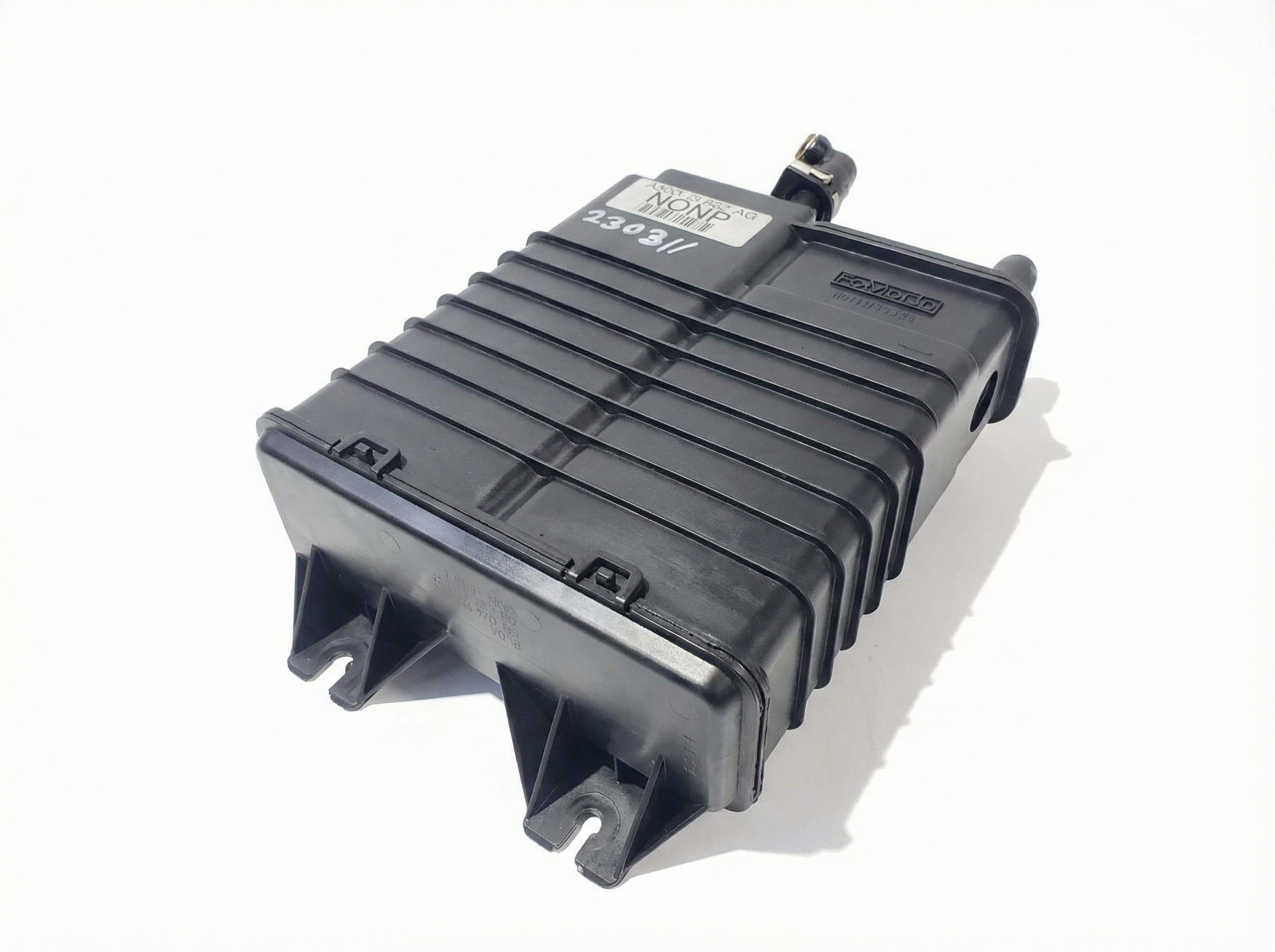
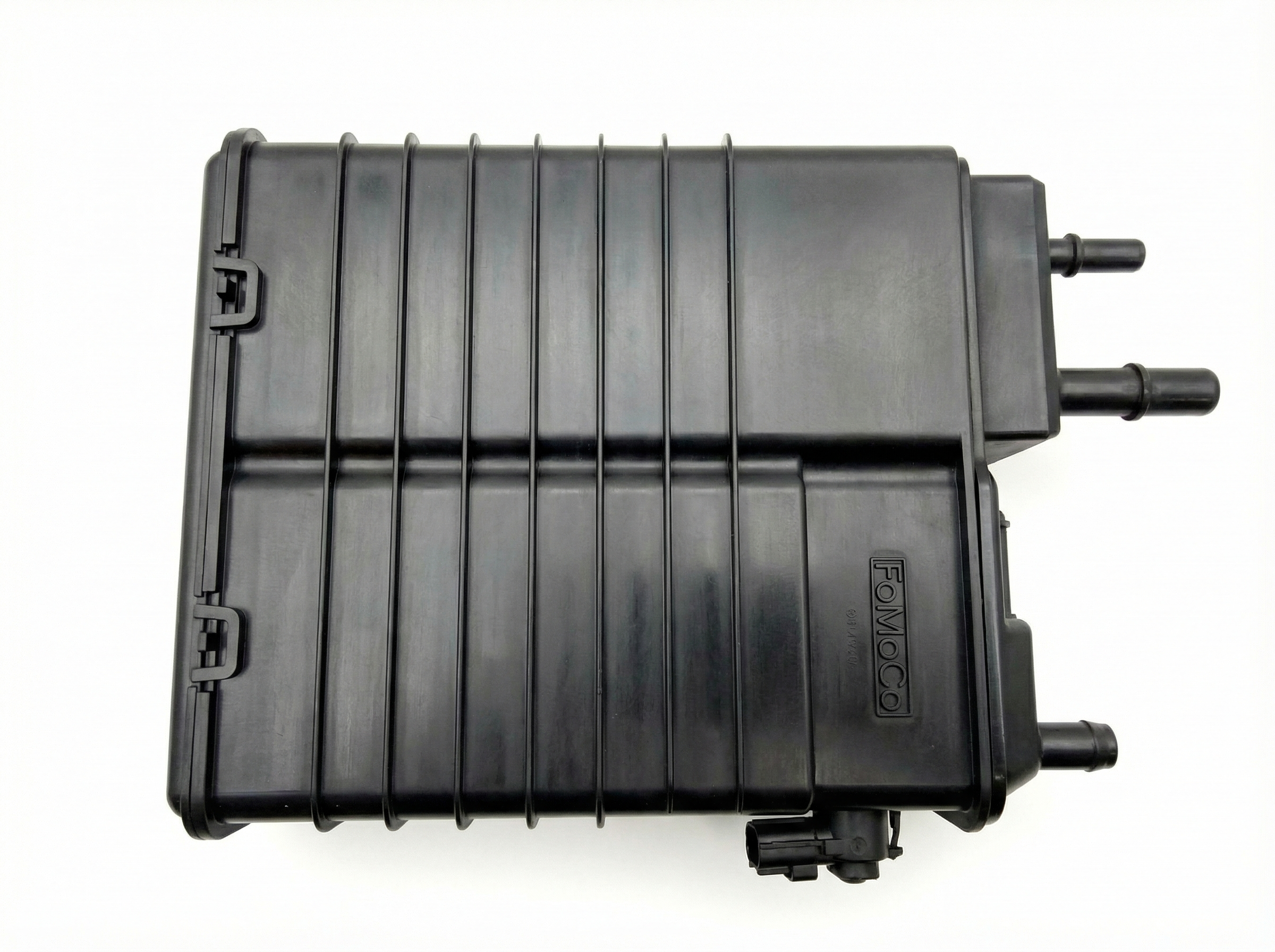
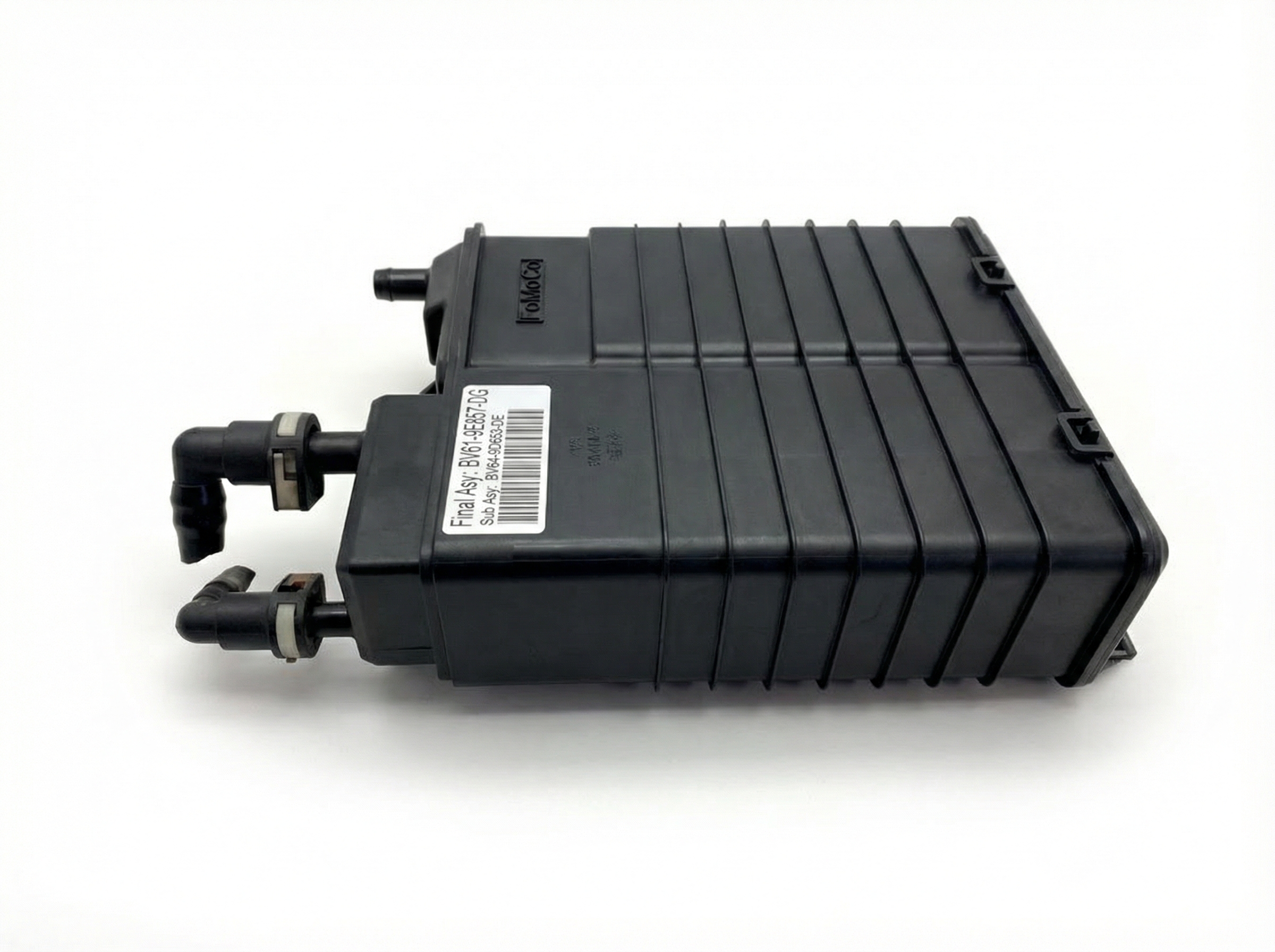
New Aftermarket Parts Available

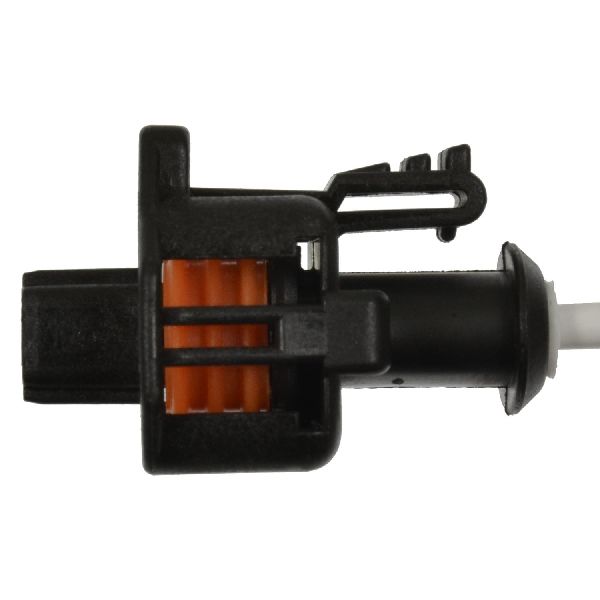


The information in this article is provided for general reference and educational purposes only. Vehicle specifications, procedures, and part compatibility can vary by production date, trim level, and region. Always consult your vehicle's factory service manual and verify part numbers before purchasing or performing repairs. Safety-critical components such as airbags, seat belts, and braking systems should be installed by a qualified professional.
- Ford Focus:
- 🎬 Helpful Videos
- 🛍️ Shop This Part
- What's Unique About the 2012-2018 Ford Focus
- Symptoms You May Notice
- Most Likely Causes
- Rare But Worth Checking
- Diagnosis Steps
- Parts You'll Likely Need
- Related Codes That Often Appear With This One
- Technical Service Bulletins (TSBs) & Recalls
- Platform-Specific Known Issues
- Mechanic-Grade Diagnostic Values
- Scan Tool Commands That Help
- Wiring & Ground Locations
- Real Owner Repair Stories
- OEM Part Supersession History
- Model Year Variations Within This Range
- Diagnostic Flowchart
- Other Known Issues on This Vehicle
- Used vs. New Parts: Buying Guide for This Vehicle
- Real Owner Stories
- 2015 Ford Focus 2.0L GDI
- Related OBD-II Codes
- Frequently Asked Questions
- 🎟️ Get 5% Off