

P2172 on 2011-2016 Hyundai Elantra 1.8L: Sudden High Airflow Causes and Fixes
This code means your engine has a massive vacuum leak. The most likely cause on the 1.8L Elantra is a failed intake manifold gasket. Expect to pay $150-$300 for a professional smoke test and gasket replacement.
- P2172 almost always means there is a large vacuum leak.
- Do not drive the vehicle, as it can stall at any time, creating a safety hazard.
- The most likely culprit on your Elantra is a failed intake manifold gasket.
- A professional smoke test is the fastest and most accurate way to find the leak, preventing you from wasting money on unneeded parts.
- Before replacing an expensive throttle body, always rule out a simple vacuum leak first.
What's Unique About the 2011-2016 Hyundai Elantra
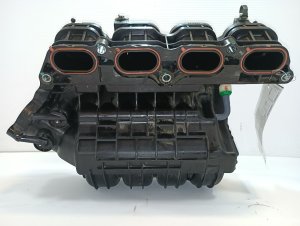
For the 1.8L Nu engine in the fifth-generation (MD/UD) Elantra, there are no widespread, documented TSBs or recalls specifically for code P2172. However, the code's trigger—a large, sudden air leak—points strongly towards mechanical failure of sealing components. Given the plastic intake manifold on this engine, the gasket that seals it to the cylinder head is a primary suspect for cracking or failing over time, creating the exact conditions that set this code. Forum discussions frequently confirm that replacing a cracked or brittle intake manifold gasket resolves the P2172 code after other diagnoses fail.
Symptoms You May Notice
- Check Engine Light is on
- Engine stalls, especially at idle or when coming to a stop
- Rough, unstable, or high idle speed
- Hesitation or stumbling during acceleration
- Significant loss of engine power (vehicle may enter 'limp mode')
- Loud hissing or whistling sound from the engine bay, especially when accelerating
- Replacing the throttle body or MAP sensor before confirming a vacuum leak. A smoke test is the most crucial first diagnostic step to avoid replacing expensive parts unnecessarily.
Most Likely Causes
- Failed Intake Manifold Gasket 🔴 High Probability The 1.8L Nu engine uses a plastic intake manifold, and the gasket sealing it to the aluminum cylinder head is subjected to constant temperature cycles. Over time, this gasket can become brittle and crack, creating a large vacuum leak sufficient to trigger P2172.
How to confirm: The most reliable method is to have a smoke test performed. A technician injects pressurized smoke into the intake system; if the gasket is leaking, smoke will be visibly escaping from the seam between the intake manifold and the cylinder head. Spraying brake cleaner or starter fluid around the gasket area with the engine running and listening for a change in idle RPM is a less precise but common DIY method.
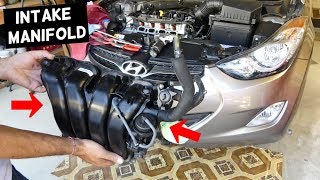
Typical fix: Replace the intake manifold gasket. The manifold must be removed to access and replace the old gasket. 🎬 Watch this step-by-step guide to removing the intake manifold.
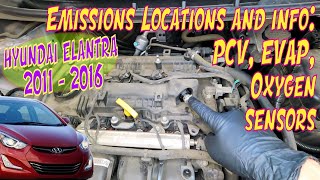
Est. part cost: $15-$40 - Cracked or Disconnected PCV Hose 🟡 Medium Probability The Positive Crankcase Ventilation (PCV) system uses rubber and plastic hoses that can become brittle and crack with age and exposure to engine heat. A large crack or a hose that has popped off its fitting acts as a major vacuum leak, which is a common cause for lean codes.
How to confirm: Visually inspect all PCV system hoses for obvious cracks, breaks, or loose connections. Listen for a distinct hissing sound near the PCV valve or its hoses with the engine running.
Typical fix: Replace the damaged PCV hose or the PCV valve itself if it is stuck open.
Est. part cost: $10-$30 - Torn Air Intake Boot 🟡 Medium Probability The flexible rubber boot connecting the air filter box to the throttle body can develop cracks, especially in the accordion-like folds. A large tear will allow a significant amount of unmetered air to enter the engine post-MAF sensor.
How to confirm: Remove the intake boot and carefully inspect it from all angles, flexing it to reveal any hidden cracks or tears. Ensure the clamps are tight and properly seated.
Typical fix: Replace the torn air intake boot.
Est. part cost: $25-$60 - Sticking or Faulty Throttle Body ⚪ Low Probability Carbon buildup can cause the throttle plate to not close properly, leading to more airflow than commanded at idle. While less common for P2172 than a vacuum leak, it can cause similar high-idle symptoms (often with code P0507).
How to confirm: With the engine off, remove the air intake boot from the throttle body. Manually move the throttle plate to check if it moves smoothly or gets stuck. A scan tool can also compare the commanded throttle position to the actual position to detect discrepancies, which might also set a P2101 code.
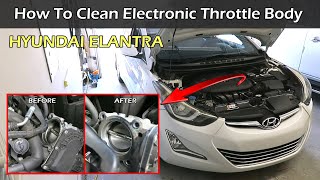
Typical fix: First, try cleaning the throttle body and plate with a dedicated throttle body cleaner sprayed onto a rag (not directly into the unit). If the issue persists or is internal to the electronics, the entire throttle body assembly must be replaced. A throttle relearn procedure is required after cleaning or replacement. 🎬 Watch this video to learn how to clean the throttle body.
Est. part cost: $250-$450
Rare But Worth Checking
- Leaking Brake Booster or Vacuum Line: A ruptured internal diaphragm in the brake booster creates a massive vacuum leak. This would typically be accompanied by a very stiff brake pedal and a hissing sound when the brake is applied. A recall for the 2017 model year (NHTSA 17V769000) addressed a similar issue with the brake booster diaphragm becoming dislodged.
- Faulty Manifold Absolute Pressure (MAP) Sensor: A faulty MAP sensor could incorrectly report high airflow to the PCM, triggering the code even without a real leak. This is less common than a physical leak and would likely be accompanied by other sensor-related codes.
Diagnosis Steps
- Read Freeze Frame Data: Use an OBD-II scanner to note the conditions (RPM, vehicle speed, engine temperature) under which the P2172 code was set. Pay close attention to Short-Term (STFT) and Long-Term (LTFT) fuel trims; values significantly above +10% (e.g., +25% or higher) strongly suggest a vacuum leak.
- Visual Inspection: Carefully inspect the engine bay. Look for any obviously disconnected vacuum hoses, especially large ones connected to the intake manifold and brake booster. Check the air intake boot for visible cracks or tears.
- Listen for Leaks: With the engine running at idle, listen carefully for any loud hissing sounds, which can help pinpoint the location of a large vacuum leak.
- Perform a Smoke Test: This is the most critical step. Connect a smoke machine to an intake vacuum port. Fill the intake system with smoke and watch for where it escapes. Check carefully around the intake manifold gasket, throttle body gasket, PCV hoses, and brake booster line. This is the definitive test for vacuum leaks. 🎬 See how to use a smoke machine to find leaks.
- Inspect Throttle Body: If no leaks are found, remove the intake hose from the throttle body. Check for heavy carbon buildup that could cause the throttle plate to stick open. Verify it moves freely.
- Test Sensor Data (if no leaks found): Use a scan tool to monitor live data from the MAP sensor and throttle position sensor (TPS). Look for any readings that are erratic or do not change logically with engine RPM and load.
Parts You'll Likely Need
- Intake Manifold Gasket
(OEM #28313-2E200)— This is the most probable failure point for a large vacuum leak on the 1.8L Nu engine, leading directly to a P2172 code. It is known to become brittle and crack.
Trusted brands: Mahle, Fel-Pro, Beck/Arnley, Hyundai (OEM)
OEM price range: $15-$25
Aftermarket price range: $10-$20 - Throttle Body Assembly
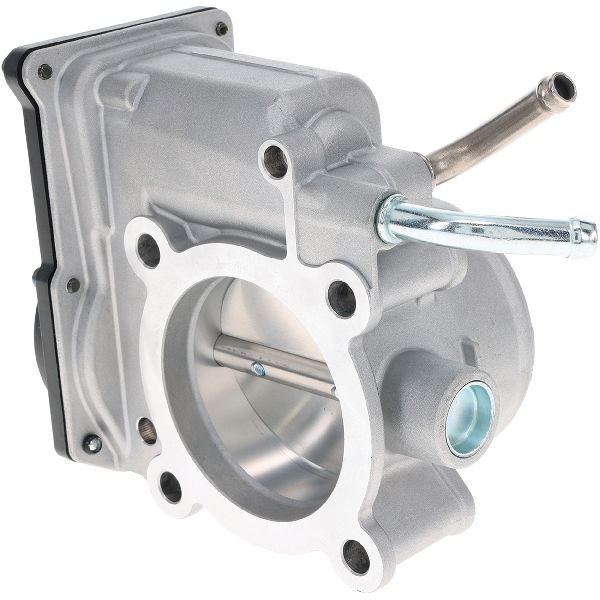
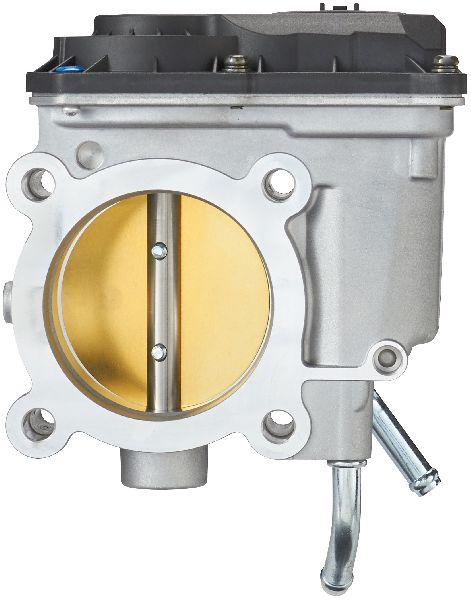
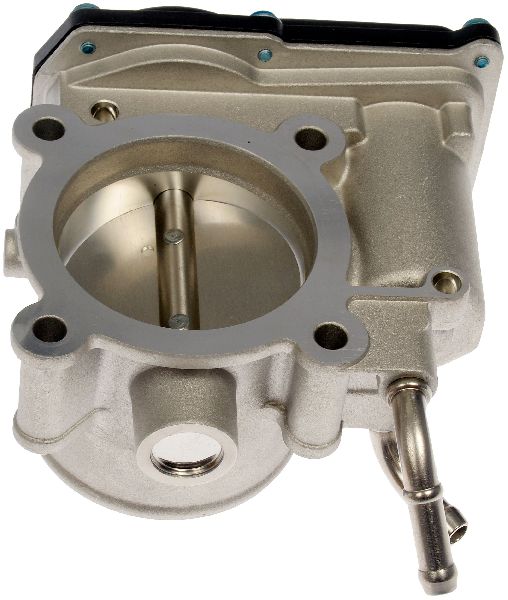
(OEM #35100-2E000)— A less common cause, but if the throttle plate is sticking or the internal sensors have failed, the entire assembly must be replaced. This should only be done after confirming there are no vacuum leaks.
Trusted brands: Hyundai (OEM), Bosch
OEM price range: $400-$500
Aftermarket price range: $150-$300
Related Codes That Often Appear With This One
- P0171 — System Too Lean (Bank 1) - A large vacuum leak allows too much unmetered air into the engine, creating a lean air-fuel mixture that this code identifies.
- P0174 — System Too Lean (Bank 2) - While the Elantra 1.8L is an inline-4 (Bank 1 only), this code may appear erroneously on some scan tools. The root cause is the same as P0171.
- P0300 — Random/Multiple Cylinder Misfire Detected - A severe vacuum leak can disrupt the air-fuel mixture so much that it causes misfires in one or more cylinders.
- P0507 — Idle Air Control System RPM Higher Than Expected - This code is often a direct result of the unmetered air from a vacuum leak or a stuck-open throttle body, which are root causes for P2172.
Technical Service Bulletins (TSBs) & Recalls
- TSB 17-ST-002: Details a warranty extension for the flexible steering coupler, a common non-engine-related issue on this platform.
- Recall 15V629000: Addresses front coil spring corrosion in certain states, a known suspension issue.
Mechanic-Grade Diagnostic Values
- Long-Term and Short-Term Fuel Trims (LTFT/STFT) — expected: Within +/- 10% of 0 at idle.. Failure: Sustained positive values greater than +25% strongly indicate the PCM is compensating for a massive vacuum leak.
- MAP Sensor Signal Voltage (Key On, Engine Off) — expected: Approx. 4.5V - 5.0V (reflecting atmospheric pressure).. Failure: Voltage stuck low (e.g., below 0.5V) suggests a sensor or circuit fault.
- MAP Sensor Signal Voltage (Engine at Idle) — expected: Approx. 1.0V - 1.8V.. Failure: Voltage does not drop from the KOEO reading, or is stuck low (below 0.5V).
- MAP/TPS Sensor 5V Reference Wire Voltage — expected: 4.8V - 5.2V at the sensor connector with key on, engine off.. Failure: 0V indicates an open wire from the PCM; voltage below 4.8V suggests a PCM issue or short.
- MAP/TPS Sensor Ground Wire Resistance — expected: Less than 10 Ω resistance to a known good chassis ground.. Failure: High resistance or an open line (OL) indicates a bad ground connection, which can cause erratic sensor readings.
Scan Tool Commands That Help
- Manual Procedure: Throttle Body Relearn / Reset — This is required after cleaning or replacing the throttle body assembly to reset its learned idle and range-of-motion values. Failure to do so can cause an unstable idle. A common procedure is to turn the ignition ON (engine off) for 15-30 seconds, then OFF for 10-15 seconds, and repeat 5 times. Alternatively, disconnecting the battery for 30 minutes can force a reset.
- Professional Scan Tool (e.g., Autel, GDS): Throttle Actuator Test — This bidirectional command allows a technician to command the throttle plate to open and close, verifying its mechanical operation and sensor response without the engine running. It helps isolate a sticking throttle plate from a sensor or wiring issue.
Wiring & Ground Locations
- Throttle Body Connector — Connected directly to the electronic throttle body, between the air intake hose and the intake manifold.. This 6-pin connector is the single point of failure for all throttle control signals. Corrosion or a loose pin here can cause various throttle-related codes. Pinout for testing: Pin 6 (5V Reference), Pin 4 (Sensor Ground), Pin 5 (TPS1 Signal), Pin 3 (TPS2 Signal).
- Engine/Transmission Ground Strap — A braided metal strap connecting the engine block or transmission case directly to the vehicle's chassis.. This is the main ground path for the engine's electrical system, including the PCM and its sensors. A corroded or loose strap can introduce electrical noise and voltage drops, leading to erratic sensor readings and phantom codes.
Real Owner Repair Stories
- YouTube channel 'vampyreslayer' (Dodge vehicle, but demonstrates a universal issue applicable to the Elantra.) — Check engine light with P2172 and P2173 high airflow/vacuum leak codes.
❌ Tried (didn't work) Initial investigation showed the throttle body had recently been replaced.
✅ What actually fixed it The aftermarket replacement throttle body was designed for multiple applications and had an extra, unused vacuum port nipple on its rear side. This port was left uncapped during installation, creating a massive, unmetered vacuum leak directly at the throttle body. The fix was to seal/cap the unused nipple, which immediately resolved the high airflow codes.
"I Checked Everything" — The Actual Cause
- In one documented case, the cause of P2172 was an uncapped vacuum nipple on a brand-new, aftermarket throttle body. A technician performing a smoke test might focus on gaskets and old hoses, potentially missing a leak on a newly installed part, assuming it to be correct. This highlights the need to inspect all ports on replacement parts, especially aftermarket ones that may fit multiple vehicle applications.
OEM Part Supersession History
35100-2E000→N/A— This part number remains the primary OEM replacement for the throttle body assembly on the 1.8L engine.
Heads up: While this is the correct part for the 1.8L Elantra, it is also used on some 2.0L engines in other Hyundai/Kia models. Always verify fitment by VIN before purchasing to avoid confusion, especially on 2014-2016 models where both engines were available.
Model Year Variations Within This Range
- 2014-2016: A mid-cycle refresh for the 2014 model year introduced an optional 2.0L GDI engine (173 hp) on higher trims like the Limited, Sport, Coupe, and GT. The 1.8L Nu MPI engine remained the standard/base engine. This is critical for diagnosis, as a technician must confirm the engine displacement before ordering parts like a throttle body or intake gaskets, which may differ between the two engines.
Diagnostic Flowchart
Other Known Issues on This Vehicle
Issues unrelated to this code that are worth knowing about as an owner of this generation:
- Engine Ticking / Piston Slap 🔴 High — Widespread issue in the 1.8L Nu engine, often noticeable on cold starts and can lead to eventual engine failure. A class-action lawsuit was filed over this problem. (Ref: Hyundai issued a Powertrain Warranty Extension (10yr/120k-140k miles) to cover short block assembly replacement for damage accompanied by piston slap noise.)
- Worn Steering Coupler 🟠 Medium — A very common problem causing a clicking or thudding noise in the steering column when turning. The rubber coupler disintegrates over time. (Ref: TSB 17-ST-002 and Warranty Extension TXX7 (10yr/100k miles) were issued to cover the replacement of the flexible coupler (Part No. 56315-2K000-FFF).)
- Peeling White Paint 🟡 Low — Affects specific models, especially those with white or pearl-white paint, where the paint bubbles and flakes off prematurely, often on the hood and roof. (Ref: Hyundai extended the paint warranty to 10 years/unlimited miles for this issue on certain vehicles, including the 2015-2016 Elantra, under campaign Z05.)
- Engine Stalling / Hesitation 🟠 Medium — Owners report intermittent stalling, rough idle, and hesitation, which can be caused by faulty sensors (like the crankshaft position sensor) or carbon buildup in the throttle body.
- Suspension Noises 🟡 Low — Clunking or knocking sounds over bumps are frequently reported, often due to worn front sway bar links or bushings. (Ref: Recall 15V629000 was issued for potential front coil spring corrosion and fracture in salt-belt states.)
Used vs. New Parts: Buying Guide for This Vehicle
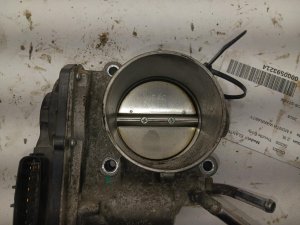
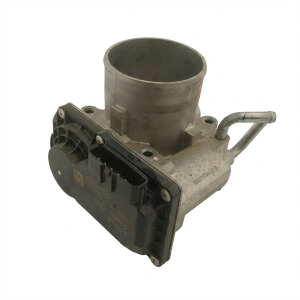
When a used part is the smart pick: For the Throttle Body Assembly (OEM P/N 35100-2E000). This part is expensive new from the dealer ($400+), and a quality used part from a reputable salvage yard can offer significant savings. The plastic Intake Manifold can also be sourced used if the original is physically cracked, but this is rare.
Donor-vehicle mileage cap: roughly under 80000 miles for the part to have meaningful remaining life.
What to inspect on the donor part:
- For a throttle body, check that the throttle plate is clean and moves smoothly without binding.
- Ensure all electrical connector pins are straight and free of corrosion.
- Verify the part number on the used component matches the original exactly.
- Ask for the donor vehicle's VIN to confirm mileage and check for accident history (avoid frontal impacts).
OEM-only on this vehicle (don't cheap out):
- No parts for this specific repair are strictly 'OEM-only', but using an OEM or OEM-supplier (like Bosch) throttle body is recommended over a no-name aftermarket part to avoid issues like the uncapped vacuum port mentioned in repair stories.
Aftermarket brands forum-validated for this vehicle:
- Intake Manifold Gasket: Fel-Pro, Mahle, Beck/Arnley
- Throttle Body Assembly: Bosch (often the OEM supplier)
Brands owners have reported issues with on this vehicle:
- Be cautious with unbranded, low-cost throttle bodies from online marketplaces, as they may have manufacturing differences (like extra vacuum ports) that can cause diagnostic headaches.
Real Owner Stories
Aggregated from forums and TSBs cited above. Mileages and costs reflect what owners reported in those sources.
2013 Hyundai Elantra 1.8L Nu
Symptoms: Engine stalling at red lights and experiencing a rough idle.
What fixed it: Diagnostic steps for a vacuum leak (classic symptoms of a leak in the intake system).
Source hint: CarKiller.com - 'Engine stalling at red lights'
2014 Hyundai Elantra 1.8L Nu
Symptoms: Piston slap noise, raising concerns about engine reliability and potential death sentence for the engine.
What fixed it: Short block assembly replacement (covered under Hyundai's 10yr/120k-140k mile powertrain warranty extension for this specific issue).
Source hint: Reddit r/Cartalk - Thread '2014 Hyundai Elantra Piston Slap is it a death sentence for my engine?'
Hyundai Elantra 1.8L Nu
Symptoms: Discovered a cracked and damaged intake manifold gasket while performing other engine work.
What fixed it: Replacement of the intake manifold gasket.
Source hint: BobIsTheOilGuy.com - Thread 'Hyundai Elantra head gasket'
Related OBD-II Codes
Frequently Asked Questions
Does TSB 17-ST-002 relate to the P2172 code on my 2011-2016 Hyundai Elantra?
Is there a warranty extension that covers the engine issues I'm seeing on my 1.8L Nu engine?
Could the P2172 code be related to the front coil spring recall on my Elantra?
I have a 2015 Elantra with peeling white paint; is this related to my engine stalling?
What is the most common part to fail on the 1.8L Nu MPI engine that causes a large vacuum leak?
Do I need to perform any special procedures after cleaning the throttle body on my Elantra?
Helpful Videos
Used OEM Parts in Stock



New Aftermarket Parts Available




The information in this article is provided for general reference and educational purposes only. Vehicle specifications, procedures, and part compatibility can vary by production date, trim level, and region. Always consult your vehicle's factory service manual and verify part numbers before purchasing or performing repairs. Safety-critical components such as airbags, seat belts, and braking systems should be installed by a qualified professional.
- Hyundai Elantra:
- 🎬 Helpful Videos
- 🛍️ Shop This Part
- What's Unique About the 2011-2016 Hyundai Elantra
- Symptoms You May Notice
- Most Likely Causes
- Rare But Worth Checking
- Diagnosis Steps
- Parts You'll Likely Need
- Related Codes That Often Appear With This One
- Technical Service Bulletins (TSBs) & Recalls
- Mechanic-Grade Diagnostic Values
- Scan Tool Commands That Help
- Wiring & Ground Locations
- Real Owner Repair Stories
- "I Checked Everything" — The Actual Cause
- OEM Part Supersession History
- Model Year Variations Within This Range
- Diagnostic Flowchart
- Other Known Issues on This Vehicle
- Used vs. New Parts: Buying Guide for This Vehicle
- Real Owner Stories
- 2013 Hyundai Elantra 1.8L Nu
- 2014 Hyundai Elantra 1.8L Nu
- Hyundai Elantra 1.8L Nu
- Related OBD-II Codes
- Frequently Asked Questions
- 🎟️ Get 5% Off