

P2135 on 2006-2010 Ford Explorer 4.0L: Throttle Body Causes and Fixes
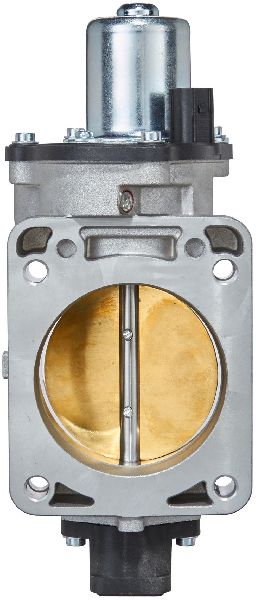
For the 2006-2010 Explorer, code P2135 almost always means the entire electronic throttle body assembly has failed and needs to be replaced. The sensors are built-in and not sold separately. Expect to pay $150-$300 for the part. This is a critical failure that makes the vehicle unsafe to drive due to sudden power loss ('limp mode').
- P2135 on a 2006-2010 Explorer is a critical code indicating a throttle control malfunction, making the vehicle unsafe to drive.
- The most likely cause is a failed sensor inside the electronic throttle body assembly.
- For this vehicle, you must replace the entire throttle body; the sensor cannot be replaced by itself.
- Before buying parts, check the throttle body's electrical connector for corrosion or damage, as this is a cheaper potential fix.
- After replacing the throttle body, perform a 'relearn' procedure, which usually involves disconnecting the battery for 10-15 minutes and following a specific idle sequence.
What's Unique About the 2006-2010 Ford Explorer

The most critical detail for this specific vehicle is that unlike earlier models, the 2006-2010 Explorer has its throttle position sensors permanently integrated into the electronic throttle body assembly. You cannot buy or replace just the sensor. This design choice means that a sensor failure requires the replacement of the entire throttle body unit, which is a more expensive part but a more certain fix. A forum user confirmed this frustration after discovering the sensor was not sold separately for their 2007 Explorer.
Symptoms You May Notice

- Vehicle enters 'limp mode' (wrench light on dash) with drastically reduced engine power.
- Hesitation, stumbling, or surging when accelerating.
- Engine stalls when coming to a stop or at idle.
- Rough or unstable idle.
- Check Engine Light is on.
- Engine RPMs may fluctuate up and down without driver input.
- Replacing the accelerator pedal assembly. While it has position sensors, code P2135 specifically points to a correlation error at the throttle body, not the pedal.
- Attempting to find and replace only the throttle position sensor. On the 2006-2010 Explorer, this part is not sold separately from the throttle body.
Most Likely Causes

- Internal Failure of the Electronic Throttle Body Assembly 🔴 High Probability The throttle position sensors (TPS) are integrated into the assembly and are a known failure point. The internal electronic components wear out over time, causing the voltage signals to become erratic. They are not serviceable separately on this model.
How to confirm: Using a scan tool, observe the live data for the two throttle position sensor voltage PIDs (TP1 and TP2). As you slowly press the gas pedal (with the engine off, key on), the voltages should move smoothly and in a correlated manner (one ascending, one descending). A jump, drop-out, or erratic reading from either sensor confirms a faulty throttle body.
Typical fix: Replace the entire electronic throttle body assembly. After replacement, a throttle 'relearn' procedure is required. A common method is to disconnect the negative battery cable for 10-15 minutes to clear the PCM's memory. Then, reconnect the battery, turn the key to 'on' for a minute, then 'off' for a minute, and then start the engine and let it idle for several minutes to relearn idle values.
Est. part cost: $150-$300 - Wiring or Connector Issue at the Throttle Body 🟡 Medium Probability The connector is exposed to engine heat and vibration, which can lead to corrosion on the pins, backed-out pins, or frayed wires over time. The harness can also chafe against other engine components.
How to confirm: Visually inspect the throttle body electrical connector for any signs of green corrosion, pushed-out pins, or damaged wires. Wiggle the connector with the engine running to see if it causes the idle to stumble or symptoms to appear. In some cases, even after replacing the throttle body and pedal, the issue persists, pointing to a wiring harness problem.
Typical fix: Clean the connector pins with a contact cleaner or replace the connector pigtail if it is damaged. Repair any broken or frayed wires with new wire and heat-shrink tubing.
Est. part cost: $15-$40 for a new pigtail connector
Rare But Worth Checking
- Faulty Powertrain Control Module (PCM): This is very rare. Before condemning the PCM, all other possibilities, especially the throttle body and its wiring, must be exhaustively ruled out. A PCM failure can sometimes be caused by shorts in other components.
Diagnosis Steps

- Connect an OBD-II scanner and confirm P2135 is the primary code. Note any other codes present, such as P2104.
- Using the scanner's live data function, monitor the voltage readings of Throttle Position Sensor 1 and Throttle Position Sensor 2.
- With the key on and engine off, slowly press and release the accelerator pedal. Watch the sensor voltages. They should change smoothly with no spikes or dropouts. One should sweep from low to high voltage, and the other from high to low.
- If a sensor's reading is erratic, jumps, or doesn't change, the throttle body assembly is almost certainly faulty.
- If the sensor data looks smooth, turn your attention to the wiring. Disconnect the throttle body connector and inspect it for corrosion, moisture, or bent/damaged pins.
- Inspect the wiring harness leading to the throttle body for any signs of chafing, melting, or breaks. Pay close attention to where the harness may rub against the engine or other components.
- If wiring and sensor data appear perfect, the issue could be a rare PCM fault, but throttle body failure is far more likely.
Parts You'll Likely Need
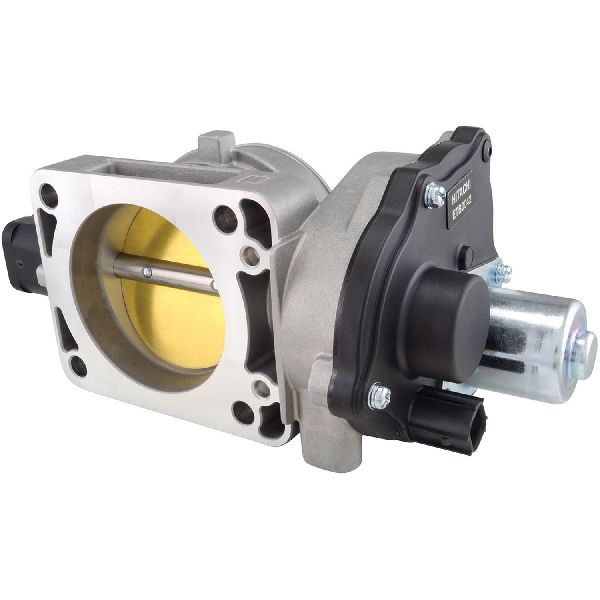
- Electronic Throttle Body Assembly
(OEM #6L2Z-9E926-A or 8L2Z-9E926-A (verify by VIN))— This is the primary fix because the faulty throttle position sensors are integrated into this assembly for the 2006-2010 model years.
Trusted brands: Motorcraft, Hitachi, Cardone, Dorman
OEM price range: $250-$350
Aftermarket price range: $150-$250
Related Codes That Often Appear With This One
- P2104 — This code indicates 'Throttle Actuator Control System - Forced Idle'. The PCM will often set this code alongside P2135 as it puts the vehicle into a fail-safe 'limp mode'.
- P0122 — Indicates 'Throttle Position Sensor 'A' Circuit Low Input', which can be triggered if one of the internal sensors fails by shorting to ground.
- P0223 — Indicates 'Throttle Position Sensor 'B' Circuit High Input', which can be triggered if the other internal sensor fails with a high voltage reading.
Technical Service Bulletins (TSBs) & Recalls
- TSB 05-14-4: While officially for 2004-2005 models, this TSB addresses trouble code P2135 and recommends replacing the electronic throttle body, showing a history of this specific failure on Ford's electronic throttle bodies of this era.
- NHTSA ODI #10748493: A report regarding this platform notes that for certain builds, P2135 is caused by a faulty throttle position sensor and requires a powertrain control module reset.
Platform-Specific Known Issues
- A key issue for the 2006-2010 Explorer is the non-serviceable nature of the Throttle Position Sensor (TPS), which is integrated into the electronic throttle body. This differs from the previous generation (2002-2005) where the sensor could be replaced independently.
- Ford issued TSB 05-14-4 for the 2004-2005 models with P2135, indicating a known issue with the throttle body even on the preceding models, highlighting a pattern of failure for this component design.
- Across other Ford platforms of the same era, such as in NHTSA ODI #10537825 and NHTSA ODI #10513400, dealers have frequently diagnosed P2135 as a "failing throttle body" where pinpoint tests showed the actuator control motor was failing.
Mechanic-Grade Diagnostic Values
- TP Sensor Voltage (Key On, Engine Off) — expected: One sensor sweeps from low (~0.5-1.0V) to high (~4.5V), while the second sensor sweeps from high (~4.5V) to low (~0.5-1.0V) as the pedal is pressed.. Failure: Any voltage reading that is stuck, jumps erratically, or has dead spots during the sweep.
- Throttle Body Bolt Torque — expected: 89 inch-pounds. Failure: N/A
Scan Tool Commands That Help
- Ford IDS (or equivalent high-end scanner): Throttle Body Relearn / Reset KAM — This function should be used after replacing the throttle body to command the PCM to forget the old learned values and start fresh with the new component. It is more robust than a simple battery disconnect.
Wiring & Ground Locations

- VIN 8th Digit 'E' — Vehicle Identification Number. Confirms the vehicle is equipped with the 4.0L SOHC engine, which uses the integrated electronic throttle body relevant to this diagnosis.
Real Owner Repair Stories
- YouTube video by 'Platinum Garage' (2006-2010 Ford Explorer 4.0L SOHC) — Throttle body failed, butterfly snapped shut, engine went into limp mode and cut out.
❌ Tried (didn't work) The owner had previously replaced the throttle body with a used unit from a high-mileage vehicle, which eventually failed again.
✅ What actually fixed it Replacing the failed electronic throttle body with a new assembly resolved the limp mode and stalling issue. - NHTSA ODI #10825626 — An owner reported that their vehicle went into safety mode in traffic due to the throttle body, citing codes P2135, P2110, and P2111.
- NHTSA ODI #11097577 — One driver noted that P2135 and P2111 kept happening on a daily basis at random times, even after they had already replaced the gas pedal and the throttle body, suggesting a deeper electrical or harness fault.
OEM Part Supersession History
6L2Z-9E926-C, 6L2Z-9E926-CA→8L2Z-9E926-A— Standard part revision and improvement by the manufacturer.
Heads up: These part numbers apply to the 4.6L V8 but are often cross-referenced in catalogs for the 4.0L V6 as well, indicating shared design or supersession. Always verify fitment with VIN.
Diagnostic Flowchart
Other Known Issues on This Vehicle
Issues unrelated to this code that are worth knowing about as an owner of this generation:
- 4.0L SOHC Timing Chain Cassette Failure 🔴 High — Very common, can occur as early as 45,000-50,000 miles, but more frequently around 100,000 miles. Characterized by a rattling or 'death rattle' sound on startup or at idle. (Ref: No recall, but a widely known engine design flaw. The engine has chains on both the front and rear, with the rear chain requiring engine removal for service, making the repair extremely expensive.)
- Cracked Plastic Thermostat Housing 🟠 Medium — Extremely common failure point. The OEM plastic housing is prone to cracking and warping from heat cycles, causing coolant leaks. (Ref: No recall, but it is a well-documented problem. Many owners opt to replace the plastic part with a more durable aftermarket aluminum housing.)
- 5R55S Automatic Transmission Failures 🔴 High — Common after 50,000 miles, especially in earlier years of the generation. Symptoms include harsh shifting, delayed engagement (especially in reverse), and shift flares between gears. (Ref: Multiple TSBs exist. Common failure points include worn servo bores in the transmission case and solenoid pack issues.)
Used vs. New Parts: Buying Guide for This Vehicle
When a used part is the smart pick: A used throttle body can be a budget-friendly temporary fix if sourced from a low-mileage, accident-damaged vehicle. However, as it is a common failure item, the risk of the used part failing is significant.
Donor-vehicle mileage cap: roughly under 80000 miles for the part to have meaningful remaining life.
What to inspect on the donor part:
- Check for a clean throttle bore with minimal carbon buildup.
- Ensure the electrical connector pins are straight and free of corrosion.
- Verify the donor vehicle's mileage if possible; lower is always better.
- Avoid parts from vehicles that show signs of engine fire or flood damage.
OEM-only on this vehicle (don't cheap out):
- Electronic Throttle Body Assembly: While aftermarket is an option, mechanics and experienced owners often recommend using a genuine Motorcraft part for the highest reliability and to avoid repeat failures.
Aftermarket brands forum-validated for this vehicle:
- Motorcraft (OEM)
- Dorman (Often includes design improvements over the original part)
Brands owners have reported issues with on this vehicle:
- Unbranded, no-name parts from online marketplaces can have poor quality control and a high failure rate.
Real Owner Stories
Aggregated from forums and TSBs cited above. Mileages and costs reflect what owners reported in those sources.
2006 Ford Explorer — 150000 miles
Symptoms: Various warning indicators flashed and the vehicle stalled several times.
What fixed it: The reported repairs (replacing the fly by wire pedal and the throttle body) did not solve the issue.
Source hint: CarComplaints.com - 2006 Ford Explorer Engine Problems
2008 Ford Explorer
Symptoms: Owner experienced P2135, P2104, and P2111 codes and continued to have issues after replacing the throttle body and gas pedal.
What fixed it: The diagnostic path suggested a damaged wiring harness as the next logical step after component replacement failed.
Source hint: Car Talk community thread '2008-ford-explorer-still-getting-codes/184856'
2007 Ford Explorer 4.0L V6
Symptoms: Vehicle triggered a P2135 code.
What fixed it: Replacement of the entire throttle body assembly because the sensor is integrated and cannot be replaced separately.
Source hint: Ford-Trucks.com thread 'p2135-throttle-position-sensor-replacement.html'
Related OBD-II Codes
Frequently Asked Questions
Can I just replace the Throttle Position Sensor (TPS) on my 2007 Explorer 4.0L V6?
Does TSB 05-14-4 apply to my 2006-2010 Ford Explorer?
I replaced the throttle body and the pedal, but P2135 and limp mode returned. What else could it be?
How do I perform the throttle 'relearn' procedure after replacing the assembly?
Are there other common engine issues I should watch for on my 4.0L SOHC Explorer?
What should I look for in the live data to confirm a P2135 failure?
Used vs. New Parts: Buying Guide for This Vehicle
When a used part is the smart pick: A used throttle body can be a budget-friendly temporary fix if sourced from a low-mileage, accident-damaged vehicle. However, as it is a common failure item, the risk of the used part failing is significant.
Donor-vehicle mileage cap: roughly under 80000 miles for the part to have meaningful remaining life.
What to inspect on the donor part:
- Check for a clean throttle bore with minimal carbon buildup.
- Ensure the electrical connector pins are straight and free of corrosion.
- Verify the donor vehicle's mileage if possible; lower is always better.
- Avoid parts from vehicles that show signs of engine fire or flood damage.
OEM-only on this vehicle (don't cheap out):
- Electronic Throttle Body Assembly: While aftermarket is an option, mechanics and experienced owners often recommend using a genuine Motorcraft part for the highest reliability and to avoid repeat failures.
Aftermarket brands forum-validated for this vehicle:
- Motorcraft (OEM)
- Dorman (Often includes design improvements over the original part)
Brands owners have reported issues with on this vehicle:
- Unbranded, no-name parts from online marketplaces can have poor quality control and a high failure rate.
Real Owner Stories
Aggregated from forums and TSBs cited above. Mileages and costs reflect what owners reported in those sources.
2006 Ford Explorer — 150000 miles
Symptoms: Various warning indicators flashed and the vehicle stalled several times.
What fixed it: The reported repairs (replacing the fly by wire pedal and the throttle body) did not solve the issue.
Source hint: CarComplaints.com - 2006 Ford Explorer Engine Problems
2008 Ford Explorer
Symptoms: Owner experienced P2135, P2104, and P2111 codes and continued to have issues after replacing the throttle body and gas pedal.
What fixed it: The diagnostic path suggested a damaged wiring harness as the next logical step after component replacement failed.
Source hint: Car Talk community thread '2008-ford-explorer-still-getting-codes/184856'
2007 Ford Explorer 4.0L V6
Symptoms: Vehicle triggered a P2135 code.
What fixed it: Replacement of the entire throttle body assembly because the sensor is integrated and cannot be replaced separately.
Source hint: Ford-Trucks.com thread 'p2135-throttle-position-sensor-replacement.html'
Related OBD-II Codes
Frequently Asked Questions
Can I just replace the Throttle Position Sensor (TPS) on my 2007 Explorer 4.0L V6?
Does TSB 05-14-4 apply to my 2006-2010 Ford Explorer?
I replaced the throttle body and the pedal, but P2135 and limp mode returned. What else could it be?
How do I perform the throttle 'relearn' procedure after replacing the assembly?
Are there other common engine issues I should watch for on my 4.0L SOHC Explorer?
What should I look for in the live data to confirm a P2135 failure?
Helpful Videos
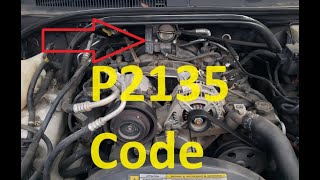
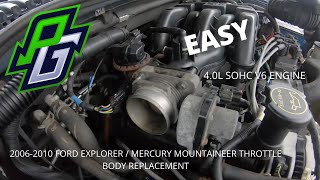


Used OEM Parts in Stock


New Aftermarket Parts Available


The information in this article is provided for general reference and educational purposes only. Vehicle specifications, procedures, and part compatibility can vary by production date, trim level, and region. Always consult your vehicle's factory service manual and verify part numbers before purchasing or performing repairs. Safety-critical components such as airbags, seat belts, and braking systems should be installed by a qualified professional.
- Ford Explorer:
- 🎬 Helpful Videos
- 🛍️ Shop This Part
- What's Unique About the 2006-2010 Ford Explorer
- Symptoms You May Notice
- Most Likely Causes
- Rare But Worth Checking
- Diagnosis Steps
- Parts You'll Likely Need
- Related Codes That Often Appear With This One
- Technical Service Bulletins (TSBs) & Recalls
- Platform-Specific Known Issues
- Mechanic-Grade Diagnostic Values
- Scan Tool Commands That Help
- Wiring & Ground Locations
- Real Owner Repair Stories
- OEM Part Supersession History
- Diagnostic Flowchart
- Other Known Issues on This Vehicle
- Used vs. New Parts: Buying Guide for This Vehicle
- Real Owner Stories
- 2006 Ford Explorer — 150000 miles
- 2008 Ford Explorer
- 2007 Ford Explorer 4.0L V6
- Related OBD-II Codes
- Frequently Asked Questions
- Used vs. New Parts: Buying Guide for This Vehicle
- Real Owner Stories
- 2006 Ford Explorer — 150000 miles
- 2008 Ford Explorer
- 2007 Ford Explorer 4.0L V6
- Related OBD-II Codes
- Frequently Asked Questions
- 🎟️ Get 5% Off