

P2112 on 2012-2018 Ford Focus 2.0L: Throttle Body Stuck Closed Guide
On a 2012-2018 Ford Focus, P2112 almost always means the electronic throttle body has failed. This is a very common issue that triggers a dangerous 'limp mode'. The only reliable fix is to replace the entire throttle body assembly, which costs around $70-$150 for the part and is a DIY-friendly repair. For 2012-2014 models, it is also critical to inspect the engine wiring harness for chafing per TSB 18-2062 before replacing parts.
- P2112 on a 2012-2018 Focus is a critical code that makes the car unsafe to drive.
- The cause is almost certainly a failed electronic throttle body, which is a known, widespread defect on this car.
- Do not waste time or money cleaning the throttle body; the failure is internal and requires replacement of the entire assembly.
- Before replacing the throttle body, perform a quick visual inspection of the engine wiring harness for any signs of rubbing or damage, as noted in TSB 18-2062.
- This is a very manageable DIY repair that can be completed in under an hour with basic tools, saving hundreds in labor costs.
What's Unique About the 2012-2018 Ford Focus
The electronic throttle body (ETB) on the third-generation Ford Focus is a notoriously high-failure part. The issue became so widespread that Ford initiated a Customer Satisfaction Program (13N03), extending the warranty on the ETB to 10 years or 150,000 miles due to internal contamination causing intermittent electrical connectivity on the motor contacts. While that program has now expired for most owners, it highlights that this is a known design or manufacturing flaw, not a random occurrence. Unlike many cars where cleaning a throttle body can resolve issues, on this Focus, the failure is almost always internal to the electronics or the motor, making replacement the only viable solution.
Symptoms You May Notice
- Sudden and severe loss of engine power
- Vehicle enters 'limp home mode'
- Check Engine Light and/or Powertrain Malfunction (Wrench) light illuminated
- Unresponsive or sluggish accelerator pedal
- Engine may stall or fail to accelerate from a stop
- Vehicle shaking violently
- Replacing the Accelerator Pedal Position (APP) Sensor. The P2112 code specifically points to a problem at the throttle body itself, not the pedal sending the command.
- Cleaning the throttle body. While a dirty throttle body can cause issues on many cars, the P2112 code on this Focus is almost always due to an internal electronic failure that cleaning cannot fix.
Most Likely Causes
- Failed Electronic Throttle Body (ETB) Assembly 🔴 High Probability This is a well-documented, widespread issue for this Focus generation, acknowledged by Ford's Customer Satisfaction Program 13N03. The failure is typically due to contamination on the internal motor contacts, causing increased electrical resistance and intermittent operation. The internal plastic gears can also wear or the motor itself can fail.
How to confirm: With the key on but engine off, have a helper press the accelerator pedal while you observe the throttle plate. If it doesn't move, moves erratically, or makes grinding noises, it has failed. Often, the presence of code P2112 alone is enough to condemn the part on this specific vehicle, after ruling out wiring issues.
Typical fix: Replace the entire electronic throttle body assembly. Cleaning is not an effective long-term repair for this internal electronic failure.
Est. part cost: $70-$150 - Chafed or Damaged Engine Wiring Harness 🟡 Medium Probability TSB 18-2062 notes that on 2012-2014 models built on or before Feb 4, 2014 (auto) or Feb 19, 2014 (manual), the engine wiring harness can rub against the intake manifold near the throttle body. This can cause wires to short out, affecting the throttle body and numerous other sensors.
How to confirm: Carefully inspect the wiring harness that connects to the throttle body. Look for any signs of rubbing, chafing, exposed copper wires, or damage, particularly where the harness passes over the engine or near ground G103. A small mirror may be necessary to see the back side of the harness.
Typical fix: Repair the damaged section of the wiring harness by soldering and insulating the wires. Add length to the repaired circuits to prevent tension. Reroute or add protective covering (like Coroplast tape or convoluted tubing) to prevent future damage, as per TSB 18-2062.
Est. part cost: $5-$25
Rare But Worth Checking
- Powertrain Control Module (PCM) Failure: This is very rare. The PCM should only be suspected after the throttle body and wiring have been confirmed to be good. A faulty PCM will usually present with multiple, unrelated error codes.
Diagnosis Steps
- Scan the vehicle for all DTCs. Note any other codes that appear alongside P2112.
- For 2012-2014 models, inspect the wiring harness leading to the throttle body for any signs of chafing, melting, or damage, paying close attention to areas mentioned in TSB 18-2062.
- Check the 6-pin connector at the throttle body for corrosion, moisture, or loose pins.
- With the key on and engine off, have an assistant press and release the accelerator pedal. Observe the throttle plate inside the throttle body (after removing the intake duct). It should open and close smoothly. If it doesn't move, moves erratically, or you hear a buzzing/clicking without movement, the throttle body has failed.
- If the wiring is good and the throttle plate does not respond correctly, replace the electronic throttle body assembly.
- After replacement, perform the throttle body relearn procedure. This can often be done by disconnecting the battery for 15 minutes, or by starting the engine and letting it idle for several minutes to reach operating temperature, then letting it idle for another minute.
Parts You'll Likely Need
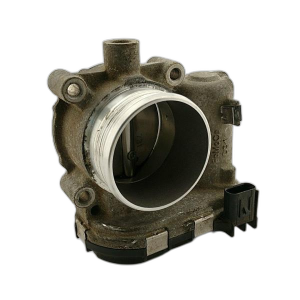
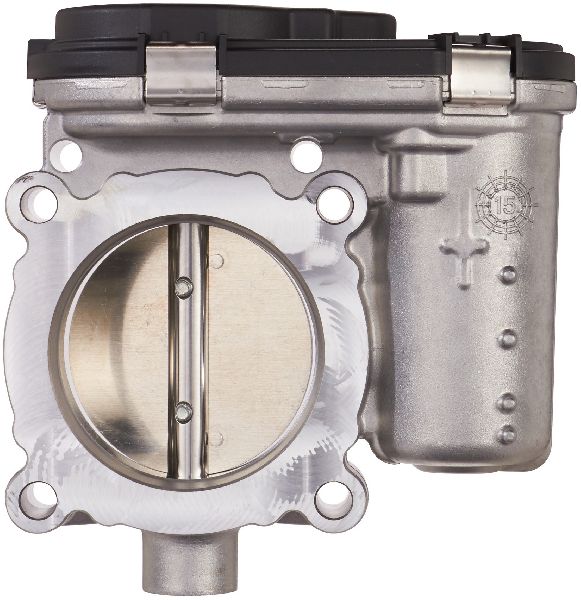
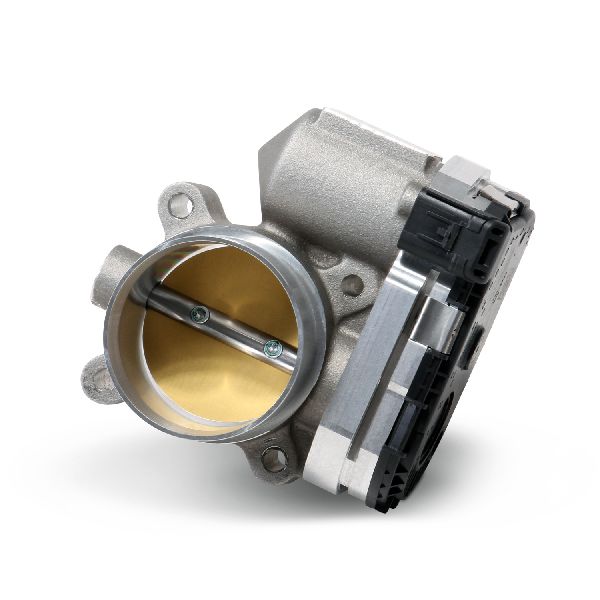
- Electronic Throttle Body Assembly
(OEM #DS7Z-9E926-D)— This is the root cause of the problem in the vast majority of cases for this specific vehicle and code, due to a known manufacturing defect. This part number supersedes older versions like DS7Z-9E926-A and 9L8Z-9E926-A.
Trusted brands: Motorcraft (OEM), Bosch, Hitachi
OEM price range: $120-$180
Aftermarket price range: $70-$150
Related Codes That Often Appear With This One
- P2111 — This code for 'Throttle Actuator Control System - Stuck Open' often appears with P2112. Both are mentioned in TSBs and indicate a general failure of the electronic throttle body assembly.
- P2135 — This code for 'Throttle/Pedal Position Sensor/Switch 'A'/'B' Voltage Correlation' can be triggered by the same internal throttle body electronic failure that causes P2112, as it points to a disagreement between the two internal position sensors.
Technical Service Bulletins (TSBs) & Recalls
- TSB 18-2062: For 2012-2014 models, notes that an illuminated MIL with DTCs including P2112 could be caused by an engine wiring harness chafing against the intake manifold.
- TSB 15-0036: Superseded by 18-2062, this was an earlier version of the bulletin addressing the same wiring harness chafing issue.
- TSB 10-21-6: For 2010-2011 models, explicitly states to replace the throttle body if DTC P2111 or P2112 is present.
Platform-Specific Known Issues
- Ford Customer Satisfaction Program 13N03: Ford acknowledged the high failure rate of the electronic throttle body by extending its warranty to 10 years or 150,000 miles. The official reason cited was "contamination on the internal motor contacts... resulting in intermittent electrical connectivity." This program has expired for most vehicles but serves as official confirmation of the problem.
- TSB 18-2062: This bulletin addresses potential wiring harness chafing that can cause P2112 and a host of other electrical codes. It is a critical check before replacing parts, especially on 2012-2014 models.
- TSB 10-21-6: While for a slightly earlier model year, this TSB also links codes P2111 and P2112 directly to a faulty throttle body, instructing technicians to replace the part.
Scan Tool Commands That Help
- Ford IDS (or equivalent professional scan tool): Throttle Actuator Control Test / Actuator Test Mode — Use this with Key On, Engine Off (KOEO) to directly command the throttle plate to open to specific angles (e.g., 10%, 25%, 50%). If the throttle plate fails to move to the commanded position or the reported position PID does not match the command, it definitively confirms a faulty throttle body or circuit, bypassing the accelerator pedal input.
- Ford IDS (or equivalent professional scan tool): KAM (Keep Alive Memory) Reset — This function should be performed after replacing the throttle body to clear learned adaptations and ensure the new part functions correctly.
Wiring & Ground Locations
- Throttle Body Connector (C134) — Connected directly to the electronic throttle body on the intake manifold.. This 6-pin connector provides all power, ground, and signal lines to the throttle body. A loose connection, corrosion, or damaged pin here will directly cause P2112 and related codes. It is the primary connection to inspect for wiring faults.
- G103 / G104 — Main chassis ground points located in the engine bay, typically under the airbox or on the frame rail near the battery.. The engine wiring harness, which includes the throttle body circuits, relies on these main grounds. A corroded or loose G103/G104 can cause a host of intermittent electrical issues, including erratic sensor readings and codes like P2112. TSB 18-2062's wiring chafe can occur near these grounds.
- Engine to Chassis Ground Strap — A braided metal strap connecting the engine block or transmission bell housing to the vehicle's chassis/frame.. A poor or broken engine-to-chassis ground can cause the electrical system to seek ground through other paths, leading to voltage drops and unpredictable behavior in sensitive electronic components like the throttle body.
Real Owner Repair Stories
- Reddit user in r/FordFocus (2012-2014 Ford Focus SE (build date prior to Feb 2014)) — No start, rough idle, unresponsive gas pedal, unable to accelerate past 20mph, and multiple error codes starting with 'Accelerator pedal position sensor voltage out of range' and progressing to many others.
❌ Tried (didn't work) Initial diagnosis pointed towards APP sensor or throttle body.
✅ What actually fixed it The user found the engine wiring harness had rubbed through against the intake manifold, as described in TSB 18-2062. The fix was to cut and solder the damaged wires back together. The user noted this was a difficult repair due to the location but prevented a costly harness replacement.
OEM Part Supersession History
9L8Z-9E926-A→DS7Z-9E926-A— Part revision and update by Ford for improved reliability.DS7Z-9E926-A→DS7Z-9E926-D— Further part revision by Ford. This is the most current OEM part number recommended for service.
Model Year Variations Within This Range
- 2012-2014: Models built on or before Feb 4, 2014 (automatic) or Feb 19, 2014 (manual) are susceptible to the engine wiring harness chafing issue described in TSB 18-2062. Later models (2015-2018) received a revised harness or routing that largely mitigated this specific problem, making a failed throttle body itself the more likely cause.
Diagnostic Flowchart
Other Known Issues on This Vehicle
Issues unrelated to this code that are worth knowing about as an owner of this generation:
- DPS6 'PowerShift' Automatic Transmission Failure 🔴 High — Extremely common across all 2012-2018 models with automatic transmission. Symptoms include shuddering, hesitation, slipping, and complete failure to engage gears. (Ref: Multiple class-action lawsuits and warranty extensions (e.g., 14M01 for TCM) were issued.)
- Electric Power Steering (EPAS) Rack Failure 🔴 High — Common failure, often due to water intrusion corroding the internal electronics of the steering rack. Results in a sudden loss of power steering assist, making the vehicle very difficult to steer. (Ref: Multiple TSBs exist. The typical repair is a costly replacement of the entire steering rack assembly.)
- Passenger-Side Hydraulic Engine Mount Collapse 🟠 Medium — Very common failure point. The fluid-filled mount collapses, causing severe vibration at idle and clunking noises. It is often misdiagnosed as an engine running issue. (Ref: No recall, but it is a widely recognized problem. Visual inspection shows the rubber part of the mount resting on the metal bracket.)
- Canister Purge Valve (CPV) Malfunction 🟠 Medium — Common enough to warrant a recall. A malfunctioning CPV can cause excessive vacuum in the fuel system, leading to engine stalling, especially after refueling. (Ref: Recall 18S32 was issued for this problem, involving a PCM reprogram and potential CPV replacement.)
Used vs. New Parts: Buying Guide for This Vehicle
When a used part is the smart pick: For this specific failure, a used part is NOT recommended. The P2112 code on this platform is overwhelmingly caused by a known design flaw in the original throttle body. A used part from a junkyard is highly likely to have the same defect and will likely fail in a short amount of time.
Donor-vehicle mileage cap: roughly under 10000 miles for the part to have meaningful remaining life.
What to inspect on the donor part:
- If forced to use a used part, only consider one from a very low-mileage vehicle (under 10k miles).
- Verify the part number on the used unit. If it is an older, superseded part number (e.g., 9L8Z-9E926-A), it should be avoided entirely.
- Inspect the connector pins for any signs of corrosion or damage.
OEM-only on this vehicle (don't cheap out):
- While not strictly 'OEM-only', using a new, quality part is critical. The OEM Motorcraft part (DS7Z-9E926-D) is the safest bet.
Aftermarket brands forum-validated for this vehicle:
- Bosch (Part #0280750535 is often the OEM part without the Ford branding and is a trusted alternative).
- Hitachi
- NTK
Brands owners have reported issues with on this vehicle:
- Unnamed, no-brand, or suspiciously cheap 'white box' parts from online marketplaces. These often have a high rate of premature failure and may not perform the relearn procedure correctly.
Real Owner Stories
Aggregated from forums and TSBs cited above. Mileages and costs reflect what owners reported in those sources.
2015 Ford Fiesta 1.6L (Platform Mate)
Symptoms: The vehicle experienced violent shaking and entered limp mode with code P2112.
What fixed it: Dealer replacement of the electronic throttle body.
Cost: $717-$717
Source hint: fiestastforum.com
2012-2014 Ford Focus 2.0L
Symptoms: Illuminated MIL (Check Engine Light) with DTC P2112; wiring harness found rubbing against the intake manifold.
What fixed it: Repaired the damaged wiring harness by soldering and insulating wires, adding length to prevent tension, and adding protective Coroplast tape.
Source hint: TSB 18-2062
2012 Ford Focus 2.0L
Symptoms: Sudden loss of power and association with throttle body failure as documented in NHTSA complaint ODI #10513400.
What fixed it: Replacement of the electronic throttle body assembly.
Source hint: focusfanatics.com
Related OBD-II Codes
Frequently Asked Questions
Is there a Ford warranty extension for the throttle body on my 2012-2018 Focus?
My 2013 Focus has P2112 and several other codes; could it be the wiring instead of the throttle body?
Can I just clean the throttle body to fix the P2112 code?
Is there a cheaper alternative to the Ford-branded throttle body?
What is the 'Wrench' light on my dashboard indicating alongside P2112?
Do I need to do anything special after replacing the throttle body myself?
Helpful Videos
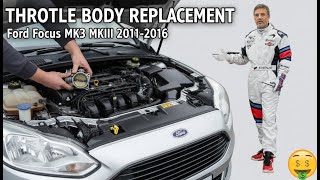
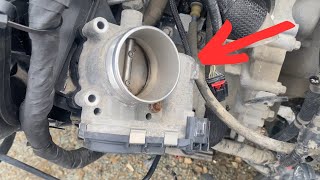
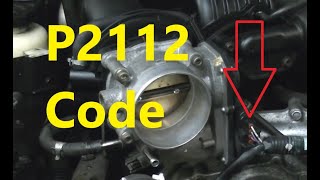
Used OEM Parts in Stock
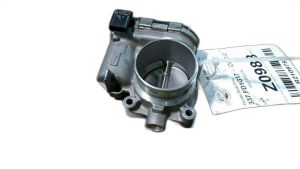
New Aftermarket Parts Available


The information in this article is provided for general reference and educational purposes only. Vehicle specifications, procedures, and part compatibility can vary by production date, trim level, and region. Always consult your vehicle's factory service manual and verify part numbers before purchasing or performing repairs. Safety-critical components such as airbags, seat belts, and braking systems should be installed by a qualified professional.
- Ford Focus:
- 🎬 Helpful Videos
- 🛍️ Shop This Part
- What's Unique About the 2012-2018 Ford Focus
- Symptoms You May Notice
- Most Likely Causes
- Rare But Worth Checking
- Diagnosis Steps
- Parts You'll Likely Need
- Related Codes That Often Appear With This One
- Technical Service Bulletins (TSBs) & Recalls
- Platform-Specific Known Issues
- Scan Tool Commands That Help
- Wiring & Ground Locations
- Real Owner Repair Stories
- OEM Part Supersession History
- Model Year Variations Within This Range
- Diagnostic Flowchart
- Other Known Issues on This Vehicle
- Used vs. New Parts: Buying Guide for This Vehicle
- Real Owner Stories
- 2015 Ford Fiesta 1.6L (Platform Mate)
- 2012-2014 Ford Focus 2.0L
- 2012 Ford Focus 2.0L
- Related OBD-II Codes
- Frequently Asked Questions
- 🎟️ Get 5% Off