

P2111 on 2011-2019 Ford Explorer 3.5L: Throttle Body Failure Causes and Fixes
On a 2011-2019 Ford Explorer with the 3.5L engine, code P2111 almost always means the electronic throttle body has failed. This is a very common issue that causes the vehicle to enter a 'limp mode' with severely reduced power. The root cause is typically internal contamination of the throttle body's electronics. Replacement of the entire throttle body assembly is the standard and recommended fix.
- P2111 on a 2011-2019 Explorer 3.5L is a critical code that makes the vehicle unsafe to drive due to entering 'limp home mode'.
- The cause is almost certainly a failed electronic throttle body due to internal electronic contamination, a widely known issue acknowledged by Ford through warranty extensions.
- Do not waste time or money on cleaning the throttle body; replacement of the entire assembly is the correct and permanent repair.
- This is a DIY-friendly repair that can be completed in under an hour with basic tools (e.g., 8mm socket).
- After replacing the part, a simple, manual throttle 'relearn' procedure is necessary to ensure proper idle and performance.
What's Unique About the 2011-2019 Ford Explorer
The 2011-2019 Ford Explorer, along with many other Ford models using the 3.5L and 3.7L engines, is well-documented for electronic throttle body (ETB) failures. The issue became so prevalent that Ford issued Customer Satisfaction Program 13N03, extending the warranty on the ETB. The specific cause is contamination on the internal motor contacts of the throttle body, which results in intermittent electrical connectivity. When the PCM detects this fault, it triggers the fail-safe mode. While cleaning a dirty throttle body can solve this code on some vehicles, for this specific Explorer generation, the failure is an internal electronic fault, making replacement the only reliable fix.
Generation note: The 2011-2019 year range covers the entire fifth generation of the Ford Explorer, which uses a unibody platform shared with the Ford Flex and Lincoln MKT. The throttle body issue is common across all years of this generation with the naturally aspirated 3.5L engine.
Symptoms You May Notice
- Sudden loss of engine power (entering 'limp mode' or 'limp home mode')
- Wrench icon or Check Engine Light on the dashboard
- Vehicle unable to accelerate past a low speed
- Unresponsive or delayed accelerator pedal
- Rough or unstable idle
- Engine may stall, especially at low speeds or when stopping
- Dirty Throttle Body Plate
- Accelerator Pedal Position (APP) Sensor
Most Likely Causes
- Defective Electronic Throttle Body (ETB) 🔴 High Probability A well-documented design flaw where internal motor contacts become contaminated, leading to intermittent electrical connections and failure. This prompted Ford to issue Customer Satisfaction Program 13N03, which extended the warranty to 10 years or 150,000 miles.
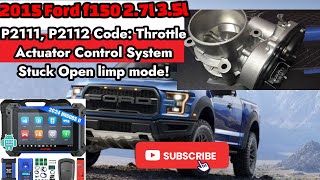
How to confirm: Scan for codes P2111 or P2112. Given the high failure rate on this specific platform, if these codes are present with limp mode symptoms, the throttle body is the confirmed cause. The issue is often intermittent; restarting the car may temporarily clear the fault. 🎬 Watch: Fixing P2111 and P2112 codes and power loss.
Typical fix: Replace the entire electronic throttle body assembly. Cleaning is not an effective long-term solution for this specific internal electronic failure mode.
Est. part cost: $70-$250
Rare But Worth Checking
- Wiring or Connector Issue: While less common than outright throttle body failure, it's worth inspecting the wiring harness and connector at the throttle body for any visible damage, corrosion, or loose pins before replacing the part. A poor connection can mimic a failed component.
- Powertrain Control Module (PCM) Fault: A PCM failure is extremely rare but can theoretically cause this code. This should only be considered as a last resort after a new throttle body and confirmed good wiring fail to resolve the issue.
Diagnosis Steps
- Confirm the presence of code P2111 (and possibly P2112) using an OBD-II scanner.
- Visually inspect the electrical connector and wiring harness going to the throttle body for any signs of damage, corrosion, or loose connections. Ensure the red locking pin on the connector is secure.
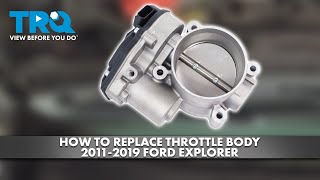
- Given the extremely high probability of throttle body failure on this vehicle, the next step is to replace the electronic throttle body assembly. The repair involves removing the air intake duct and four 8mm bolts. 🎬 See this replacement walkthrough for the 2011-2019 Explorer.
- After replacement, perform a throttle body relearn procedure. While several methods exist, a common one is: Turn the key to the 'ON' position (engine off), slowly press the accelerator pedal to the floor over 10 seconds, slowly release it over 10 seconds, then turn the key off. Another method involves letting the engine idle for 10-15 minutes to warm up and self-calibrate. 🎬 Watch: How to perform the throttle body calibration procedure.
- Clear all DTCs with the scanner and start the vehicle to confirm the fix. The check engine light may even go off on its own after the relearn procedure.
Parts You'll Likely Need
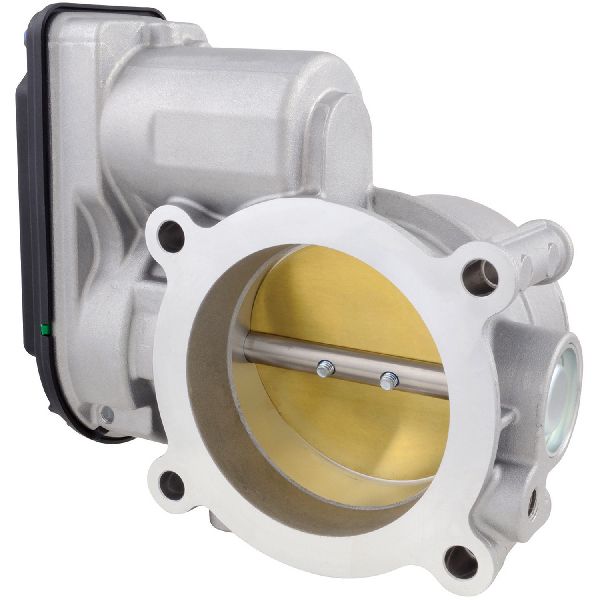
- Electronic Throttle Body Assembly
(OEM #AA5Z-9E926-B)— This is the primary failure point for code P2111 on this vehicle due to a known internal electronic fault. This part number supersedes the earlier, failure-prone AA5Z-9E926-A.
Trusted brands: Motorcraft, Bosch, Hitachi, DriveBolt, Standard Motor Products
OEM price range: $150-$250
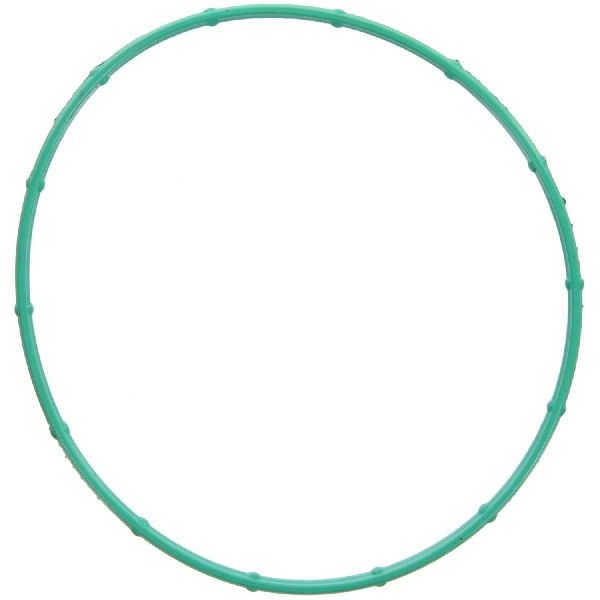
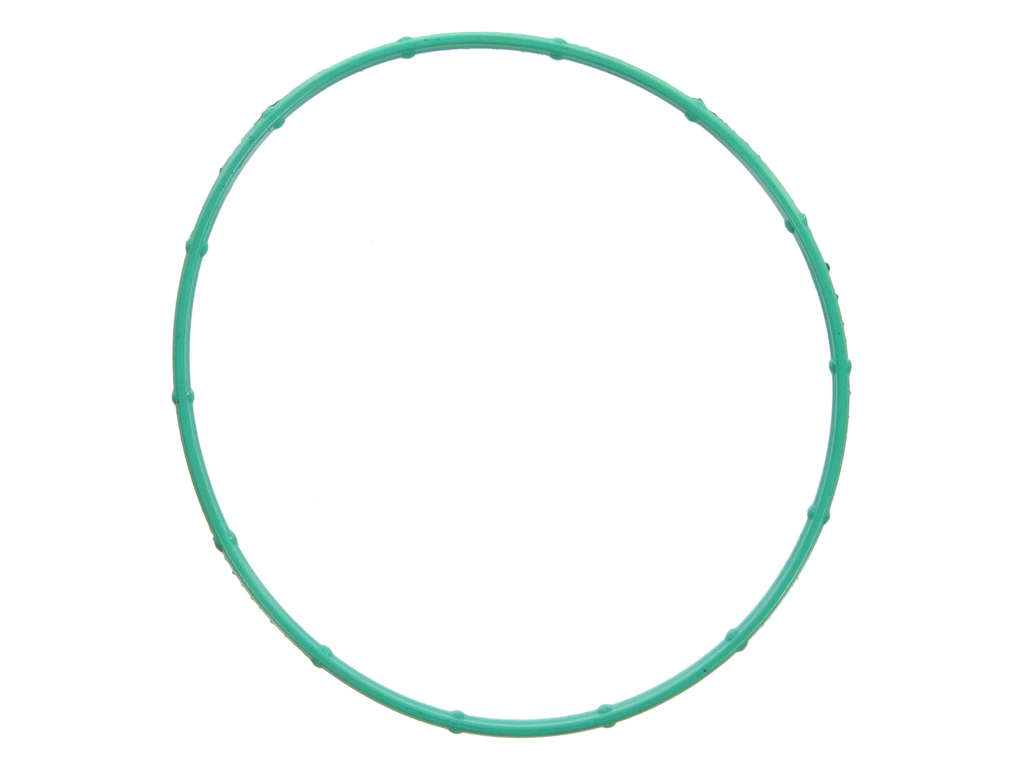
Aftermarket price range: $70-$150 - Throttle Body Gasket — It is best practice to replace the gasket whenever the throttle body is removed to ensure a proper seal. The original gasket is often a reusable O-ring style, but replacement is cheap insurance against a vacuum leak. Some new throttle bodies may include a new gasket.
Trusted brands: Fel-Pro, Mahle, Motorcraft
OEM price range: $10-$20
Aftermarket price range: $5-$15
Related Codes That Often Appear With This One
- P2112 — This code means 'Throttle Actuator Control System - Stuck Closed' and is the companion code to P2111. Both are triggered by the same internal electronic throttle body fault and often appear together.
- P2119 — This code relates to 'Throttle Actuator Control Throttle Body Range/Performance' and can also be triggered by the same ETB failure, as noted in Ford's TSB 16-0139.
Technical Service Bulletins (TSBs) & Recalls
- TSB 10-21-6: Addresses DTCs P2111 and P2112 on various 2010-2011 Ford models, including those with the 3.5L engine, recommending throttle body replacement for symptoms including limp mode and fluctuating idle.
- TSB 16-0139: Supersedes earlier bulletins and covers 2015-2016 models, including the Explorer with the 3.5L engine, for an illuminated wrench lamp, intermittent power loss, and DTCs P2111, P2112, and/or P2119.
- Bulletin #TSB 16-0139: Specifically notes that vehicles built on or before 31-May-2016 may exhibit an intermittent loss of power and/or an illuminated powertrain malfunction (wrench) lamp with DTCs P2111, P2112 and/or P2119 stored in PCM memory.
Platform-Specific Known Issues
- Ford issued Customer Satisfaction Program 13N03, which extended the warranty coverage for the electronic throttle body on these vehicles to 10 years or 150,000 miles due to the high failure rate. The official reason cited was "contamination on the internal motor contacts of the Throttle Body, resulting in intermittent electrical connectivity." While this program has expired for most owners, it officially acknowledges the widespread problem.
- A related program, 16B32, and TSB 16-0139 also addressed throttle body issues on some 2016 models, indicating the problem persisted through the generation.
Mechanic-Grade Diagnostic Values
- Live Data - Desired vs. Actual Throttle Position — expected: The 'Actual' throttle plate position PID should track the 'Desired' position PID very closely. The difference should be less than 3-5 degrees at all times.. Failure: If the difference between desired and actual position exceeds 5 degrees, the PCM will flag a fault and may set P2111 or P2112. This indicates the plate is not responding to the motor's command.
- Throttle Body Connector (C175B) Pin Voltage/Continuity — expected: With the key on, engine off, a technician would check for ~5V reference voltage at the TP sensor pin, a good ground (near 0V) at the signal return pin, and two opposing sweep voltages from the TP1 and TP2 signal pins when the plate is manually (and carefully) moved. The two motor control pins (TACM+ and TACM-) would show voltage only when the PCM is commanding movement.. Failure: Missing reference voltage, an open ground, or erratic/non-existent signal from one or both TP sensor pins points to a wiring or PCM issue. If all wiring is good but the throttle does not respond to a scan tool command, the internal motor or electronics have failed.
Hidden / Shadow Codes Worth Checking
- P2119: Throttle Actuator Control Throttle Body Range/Performance. While not a 'hidden' code, it is a less common but directly related code that can be set along with P2111/P2112, as documented by Ford. Its presence further confirms a fault with the electronic throttle body assembly. (see via Standard OBD-II scanner. It is mentioned specifically in TSB 16-0139.)
Scan Tool Commands That Help
- Ford IDS, Forscan, or other professional scan tool: Reset KAM (Keep Alive Memory) — This function should be performed after replacing the throttle body. It clears the PCM's learned adaptations for the old, failing throttle body, forcing it to learn fresh values for the new part. This can resolve high idle or erratic behavior after the repair.
- Ford IDS, Forscan, or other professional scan tool: Actuator Test Mode / Output State Control — For advanced diagnosis before replacement. This command allows the technician to directly command the throttle plate to open and close while observing live data. If the plate does not move as commanded but wiring is confirmed good, it proves the throttle body itself is faulty.
- Ford IDS: PCM Reprogram — For certain 2015-2016 vehicles as specified in TSB 16-0139 and related program 16B32. In some cases, the original fault was addressed with a software update rather than a part replacement.
Wiring & Ground Locations
- C175B — The 6-pin electrical connector on the Electronic Throttle Body itself.. This is the single point of connection for all power and sensor signals to the throttle body. Testing for power, ground, and signal at these pins is the definitive way to distinguish a failed throttle body from a wiring or PCM issue. The key pins are for the Throttle Actuator Control Motor (TACM+, TACM-) and the dual Throttle Position Sensors (TP1, TP2, VREF, SIGRTN).
- PCM Ground — Typically located on the firewall or inner fender in the engine bay, often designated as G101 or G103 in service manuals. There may be multiple grounds for the PCM.. A poor PCM ground can cause a wide range of bizarre electronic issues, including erratic sensor readings and actuator control problems. While not a common cause for P2111 specifically, it's a critical check if a new throttle body and confirmed good harness fail to fix the problem.
Real Owner Repair Stories
- CarComplaints.com, Owner: Juan T. (2013 Ford Taurus 3.5L (mechanically similar)) — Check engine light, P2111 code.
✅ What actually fixed it Replaced the throttle body assembly. Critically, the owner then performed a specific manual relearn procedure: 'You have to reset by putting the car on “ON” position; take 10 seconds to press the accelerator all the way down, hold, then release slowly taking another 10 seconds.' This cleared the fault. - Reddit r/Ford user discussion (Various 2007-2013 Ford models) — Vehicle enters 'limp home mode' (low RPM limit), wrench light illuminated.
❌ Tried (didn't work) Some users were concerned about being charged for diagnosis.
✅ What actually fixed it Bringing the vehicle to a Ford dealership. The dealer confirmed the VIN was covered under Customer Satisfaction Program 13N03 and performed the repair (in some cases a software update, in others a replacement) at no charge under the extended warranty. - NHTSA ODI #11210366 — An owner reported the vehicle went into limp mode and an independent mechanic retrieved code P2111 (Throttle Actuator Control System Stuck Open).
- NHTSA ODI #11467804 — An owner described a dangerous situation where the issue recurred after driving 50-60 miles, eventually setting a P2111 code indicating an issue with the throttle actuator system.
- NHTSA ODI #10896460 — After a dealer was unable to duplicate the problem, an owner pulled code P2111 and was told it was a malfunctioning throttle body.
- NHTSA ODI #10903679 — An owner reported the engine stalled 4 times in one day and ran rough; a code reader showed P2111, which research indicated was the throttle body.
OEM Part Supersession History
AA5Z-9E926-A→AA5Z-9E926-B— The original part was prone to premature failure due to internal electronic contamination. The revised part is intended to be more durable.
Heads up: The new part (B) is a direct replacement for the old part (A). There are no known incompatibility issues; using the superseded part is highly recommended.
Model Year Variations Within This Range
- 2011-2015: These model years were the primary focus of Customer Satisfaction Program 13N03, which extended the warranty for ETB replacement due to a high rate of hardware failure. The fix is almost always replacing the throttle body.
- 2015-2016 (built on or before 31-May-2016): These models were covered by TSB 16-0139 and program 16B32. Depending on the specific vehicle and build date, the prescribed fix could be either a PCM software reprogram or a complete throttle body replacement. This suggests Ford attempted a software solution for some variants before or in addition to hardware changes.
Diagnostic Flowchart
Used vs. New Parts: Buying Guide for This Vehicle
When a used part is the smart pick: For this specific repair, a used part from a salvage yard is NEVER a smart choice. The failure is a well-documented design flaw related to internal wear and contamination. A used part has a very high probability of either being already faulty or failing in the exact same manner shortly after installation.
What to inspect on the donor part:
- Not applicable due to the strong recommendation against used parts.
OEM-only on this vehicle (don't cheap out):
- While not strictly 'OEM-only', using a new Motorcraft part (specifically the updated AA5Z-9E926-B) is the most guaranteed path to a successful, long-lasting repair.
Aftermarket brands forum-validated for this vehicle:
- Standard Motor Products (SMP) is a reputable OEM-equivalent supplier.
- Dorman offers an 'OE FIX' version (Part No. 977-102) that claims to have improved internal seals ('Sensor Shield technology') specifically to prevent the original failure mode of moisture and oil intrusion.
Brands owners have reported issues with on this vehicle:
- Unnamed, low-cost brands found on marketplace sites should be avoided, as their internal electronics and calibration may not meet OEM standards, leading to immediate or premature failure.
Real Owner Stories
Aggregated from forums and TSBs cited above. Mileages and costs reflect what owners reported in those sources.
2013 Ford Explorer Limited 3.5L
Symptoms: Randomly going into limp mode while driving, with OBD-II code P2111 (throttle stuck open).
What fixed it: The owner was advised by others in the forum that replacing the throttle body is the definitive solution.
Source hint: Reddit r/FordExplorer - 2013 throttle body p2111
Ford Explorer
Symptoms: Vehicle shutting off mid-drive, with code P2111.
What fixed it: A commenter confirmed the fix on their own 2013 model: "Our 2013 had a faulty throttle body and I just replaced that and it fixed it. Super easy to do."
Source hint: Reddit r/FordExplorer - Got a code P2111. Took it to a shop as it has co
2013 Ford Taurus (3.5L)
Symptoms: Owner reported code P2111.
What fixed it: Replaced throttle body using a flat head and 8mm socket. Performed a manual reset: 'put the car on “ON” position; take 10 seconds to press the accelerator all the way down, hold, then release slowly taking another 10 seconds.'
Source hint: CarComplaints.com - 2013 Ford Taurus
Ford Explorer
Symptoms: Throttle body failure leading to limp mode.
What fixed it: The owner had the throttle body repaired under Ford's Customer Satisfaction Program 13N03.
Source hint: Reddit r/Ford - 'Does anyone here have experience with Consumer Satisfaction Program 13N03?'
Related OBD-II Codes
Frequently Asked Questions
My 2013 Explorer went into 'limp mode'. Is this throttle body issue covered by a recall or extended warranty?
My mechanic suggested just cleaning the throttle body for code P2111. Is this a good fix?
After I replace the throttle body myself, does it need to be programmed by a dealer?
What is the throttle body relearn procedure for a 2011-2019 Explorer?
What are the typical symptoms of this P2111 throttle body failure?
Are there any official Ford documents (TSBs) about this problem?
I have a Ford Edge with the same 3.5L engine. Is it also affected by this issue?
Helpful Videos
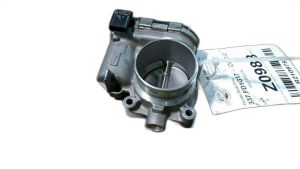
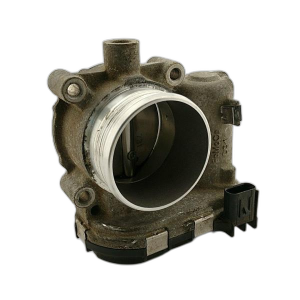
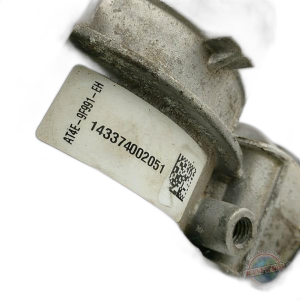
Used OEM Parts in Stock

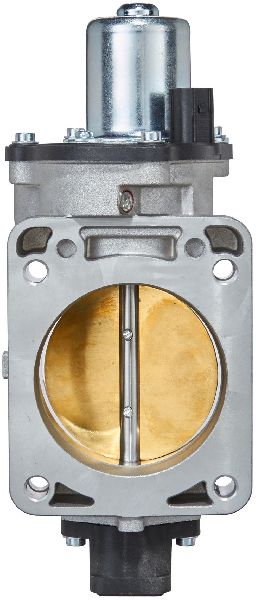
New Aftermarket Parts Available


The information in this article is provided for general reference and educational purposes only. Vehicle specifications, procedures, and part compatibility can vary by production date, trim level, and region. Always consult your vehicle's factory service manual and verify part numbers before purchasing or performing repairs. Safety-critical components such as airbags, seat belts, and braking systems should be installed by a qualified professional.
- Ford Explorer:
- 🎬 Helpful Videos
- 🛍️ Shop This Part
- What's Unique About the 2011-2019 Ford Explorer
- Symptoms You May Notice
- Most Likely Causes
- Rare But Worth Checking
- Diagnosis Steps
- Parts You'll Likely Need
- Related Codes That Often Appear With This One
- Technical Service Bulletins (TSBs) & Recalls
- Platform-Specific Known Issues
- Mechanic-Grade Diagnostic Values
- Hidden / Shadow Codes Worth Checking
- Scan Tool Commands That Help
- Wiring & Ground Locations
- Real Owner Repair Stories
- OEM Part Supersession History
- Model Year Variations Within This Range
- Diagnostic Flowchart
- Used vs. New Parts: Buying Guide for This Vehicle
- Real Owner Stories
- 2013 Ford Explorer Limited 3.5L
- Ford Explorer
- 2013 Ford Taurus (3.5L)
- Ford Explorer
- Related OBD-II Codes
- Frequently Asked Questions
- 🎟️ Get 5% Off