

P2111 on 2005-2012 Ford Escape: Throttle Actuator Stuck Open Causes and Fixes
On a 2005-2012 Ford Escape, code P2111 almost always means the electronic throttle body has failed. This causes the vehicle to enter a low-power 'limp mode.' The fix is to replace the entire throttle body assembly, which costs around $100-$200 for the part and is a common DIY repair. A relearn procedure is required after replacement.
- P2111 on a 2005-2012 Escape is a critical code that makes the vehicle unsafe to drive.
- The cause is almost always a failed electronic throttle body, a very common issue for this vehicle.
- Do not waste time or money on other potential fixes; replacing the throttle body assembly is the standard and correct repair.
- The repair is straightforward for a DIYer with basic tools and typically takes less than an hour.
- After replacing the part, you must perform a throttle 'relearn' procedure to ensure the car idles and drives correctly.
What's Unique About the 2005-2012 Ford Escape

Electronic throttle body (ETB) failure is a notoriously common problem across many Ford vehicles from this era, and the 2005-2012 Escape is no exception. The failure is typically due to contamination of the internal electronic contacts within the throttle body motor. The issue became so widespread that it prompted an NHTSA investigation (Preliminary Evaluation PE13003) and a Ford Customer Satisfaction Program (13N03) that extended the warranty on the part to 10 years or 150,000 miles. While cleaning a dirty throttle body can solve issues on some cars, for the Escape, a P2111 code almost always points to an internal electronic or mechanical failure of the throttle body unit itself, making replacement the only reliable solution.
Generation note: The 2005-2012 range covers two generations of the Ford Escape: the first generation (2005-2007) and the second generation (2008-2012). While both generations use an electronic throttle body and suffer from similar failures, the part numbers and specific engine applications (2.3L, 2.5L, 3.0L V6) will differ. The problem is well-documented across both generations and their platform-mates, the Mercury Mariner and Mazda Tribute. The issue was particularly prevalent in the 2009-2013 model years, which were the subject of an NHTSA investigation.
Symptoms You May Notice
- Sudden loss of power and inability to accelerate (entering 'limp mode')
- Wrench light illuminated on the dashboard
- Check Engine Light illuminated
- Unresponsive or 'dead' accelerator pedal
- Rough, fluctuating, or stalling idle
- Engine surging
- Vehicle will not accelerate past a very low speed (e.g., 5-10 mph)
- Transmission jumping into gear causing a lurching action and loud pop noise (reported in NHTSA ODI #10992378)
- Replacing the Accelerator Pedal Position (APP) sensor. While the APP sensor is part of the 'drive-by-wire' system, a P2111 code specifically points to a problem at the throttle body actuator, not the pedal sensor. A failing pedal sensor would typically set its own specific codes (e.g., P2135, P2138).
Most Likely Causes

- Faulty Electronic Throttle Body (ETB) Assembly 🔴 High Probability This is a well-documented, widespread failure point on Ford Escapes of this era. The internal electronic motor contacts or the throttle position sensor's conductive strips can become contaminated or worn, leading to the throttle plate getting stuck or reporting an incorrect position. NHTSA ODI Investigation #PE13003 notes that approximately 50 percent of ETB replacement claims are associated with codes P2111 and P2112.
How to confirm: After confirming no wiring issues, this is the default diagnosis. If cleaning the throttle bore does not resolve the limp mode and P2111 code, the ETB has failed internally and must be replaced.
Typical fix: Replace the entire electronic throttle body assembly. A 'relearn' procedure is required after installation to calibrate the new part.
Est. part cost: $100 - $250 - Dirty or Obstructed Throttle Body 🟡 Medium Probability Carbon and oil vapor from the PCV system can build up in the throttle bore, physically restricting the movement of the throttle plate. NHTSA ODI #10546842 specifically describes this as a "binding throttle body - stuck open" condition.
How to confirm: Remove the air intake hose and visually inspect the throttle plate and bore for heavy carbon buildup. Check if the plate moves smoothly by hand (with the engine off).
Typical fix: Clean the throttle plate and bore thoroughly with a dedicated throttle body cleaner and a soft cloth or brush. However, if the vehicle is already in limp mode with a P2111 code, this is very unlikely to be the sole cause and replacement is typically necessary.
Est. part cost: $5 - $15 - Wiring or Connector Issue ⚪ Low Probability
How to confirm: Visually inspect the wiring harness and connector at the throttle body for any signs of damage, corrosion, or loose pins. NHTSA ODI #10546842 mentions "TACM open or shorted" as a potential diagnostic finding alongside the P2111 code. A user on 2CarPros.com noted that the wiring loom to the throttle body is very tight and can cause wires to chafe or break over time.
Typical fix: Repair the damaged section of wire or replace the connector pigtail.
Est. part cost: $15 - $50
Rare But Worth Checking
- Powertrain Control Module (PCM) Failure: This is very rare. Before condemning the PCM, all other possibilities, especially the throttle body itself and its wiring, must be exhaustively ruled out. A PCM issue could also trigger other unrelated codes, like the U0401 code seen alongside P2111 in some cases.
Diagnosis Steps
- Scan the PCM for all stored trouble codes. Confirm P2111 is present, and note any other related codes like P2112 or U0401.
- Turn the ignition off. Disconnect the air intake hose from the throttle body.
- Visually inspect the throttle bore and plate for heavy carbon buildup or any foreign objects that could cause it to stick.
- Carefully try to move the throttle plate with your finger. It should move against spring pressure and return smoothly. If it feels gritty, sticky, or jammed, it needs attention.
- If dirty, clean the throttle body thoroughly using a sensor-safe cleaner and a soft rag. Do not spray cleaner directly into the electronics. Note that this is unlikely to fix a limp-mode condition.
- Inspect the electrical connector and wiring harness going to the throttle body. Look for chafed or broken wires, corrosion on the pins, or a loose connection. Pay close attention to the harness routing, as tight bends can cause stress on the wires.
- If cleaning and a wiring inspection do not solve the problem, the electronic throttle body assembly has almost certainly failed and must be replaced.
- After replacement, perform the throttle body relearn procedure to calibrate the new part to the PCM.
Parts You'll Likely Need

- Electronic Throttle Body Assembly
(OEM #DS7Z-9E926-D (replaces 9L8Z-9E926-A, DS7Z-9E926-A, fits many 2.5L/3.0L applications); 5M6Z-9E926-CA (replaces 5M6Z-9E926-A, fits 2.3L Hybrid).)— This is the component that fails in the vast majority of P2111 cases on this vehicle due to internal electronic or mechanical faults.
Trusted brands: Motorcraft, Hitachi, Bosch, Standard Motor Products (SMP), Dorman
OEM price range: $180-$300
Aftermarket price range: $100-$200
Related Codes That Often Appear With This One
- P2112 — This code means 'Throttle Actuator Control System - Stuck Closed.' It's the opposite of P2111 but points to the same failing component: the electronic throttle body. NHTSA ODI Investigation #DP12006 notes that both P2111 and P2112 are frequently diagnosed together in failed throttle body cases.
- P2104 — This code, 'Throttle Actuator Control System - Forced Idle,' is a type of failsafe mode triggered by the PCM when it detects a critical fault in the throttle system, such as P2111.
- P2110 — This code, 'Throttle Actuator Control System - Forced Limited RPM,' is another failsafe mode that restricts engine speed due to a throttle control fault.
- U0401 — Stands for 'Invalid Data Received From ECM/PCM.' This code can appear with P2111, indicating a communication breakdown between modules, often as a secondary result of the primary throttle body fault.
Technical Service Bulletins (TSBs) & Recalls
- TSB 10-21-6: Addresses DTC P2111/P2112 on various 2010-2011 Ford/Lincoln models. The official remedy is to replace the throttle body assembly, confirming the manufacturer's stance that this is not a repairable part.
- TSB 13-6-3: This TSB applies to 2013 Fusions and MKZs regarding a fuel tank capacity issue and is NOT related to the P2111 throttle body problem.
Platform-Specific Known Issues
- NHTSA launched a preliminary investigation (PE13003) into the 2009-2013 Ford Escape, Fusion, and Mercury Mariner/Milan for electronic throttle body failures causing stalling and surging.
- Ford issued Customer Satisfaction Program 13N03, which extended the warranty on the throttle body for certain 2009-2013 vehicles to 10 years or 150,000 miles. This program has since expired, but its existence confirms the high failure rate. Owners were mailed letters in January 2014.
- The failure mode is so common that many owners report experiencing the sudden limp mode in dangerous situations, such as accelerating into traffic.
- NHTSA ODI Investigation #DP12006 was opened to evaluate throttle body failures specifically in the 2005-2012 model range following reports of P2111 and P2112 codes.
Mechanic-Grade Diagnostic Values
- Throttle Actuator Control (TAC) Motor Resistance — expected: 2 to 25 Ohms. Failure: A reading outside of the specified range indicates a faulty motor, requiring throttle body replacement.
Scan Tool Commands That Help
- Ford IDS (or equivalent professional scanner): PCM Reset / Clear KAM (Keep Alive Memory) — This should be performed after installing a new throttle body to clear the old adaptive learning from the PCM before starting the new relearn procedure.
- Ford IDS (or equivalent professional scanner): Throttle Body/Pedal PID Monitoring — During diagnosis, a technician can use IDS to monitor the live voltage and angle percentages of both the accelerator pedal sensors and the throttle position sensors to confirm if the throttle plate is failing to follow the commanded position.
- Manual Procedure (No Scan Tool): Throttle Body Relearn/Calibration — After replacing the throttle body, if a scan tool is not available. With the key in the 'ON' position (engine off), slowly press the accelerator pedal all the way to the floor and then slowly release it. Repeat this a few times, then turn the key off. This helps the PCM learn the new sensor's range of motion.
Wiring & Ground Locations
- G301 — Under the driver's seat (for 2009 models).. A poor ground connection at this location could potentially affect the Smart Junction Box or other modules involved in the throttle control system, leading to intermittent electronic faults.
- Engine Compartment Grounds — Under the battery plate and near the right headlight assembly (for early generation models like the 2004).. The main engine and body grounds are critical for all electronic systems. Corrosion or looseness at these points can cause a wide range of faults, including erratic behavior from the throttle control system.
Real Owner Repair Stories
- briansmobile1 on YouTube (2005-2012 Ford Escape (specific year not stated, but within this range)) — Intermittent 'dead pedal' where the accelerator would become unresponsive, initially diagnosed as a transmission slip or fish bite. Later, it presented as a complete loss of throttle response with code P2111.
❌ Tried (didn't work) The issue was misdiagnosed twice. The first time, O2 sensors were replaced. The second time, a bad battery was found and replaced, which masked the underlying issue.
✅ What actually fixed it Replacing the entire electronic throttle body assembly finally resolved the P2111 code and the dead pedal symptom. - 2CarPros.com user 'MORGAN8173' (2011 Ford Escape, 327,000 miles) — P2111 code, limp mode.
❌ Tried (didn't work) Replacing the throttle body assembly., Replacing the MAP sensor connector., Replacing the purge valve.
✅ What actually fixed it The user suspected the final cause was a broken wire in the throttle body harness. They noted the factory wiring loom was 'so freaking tight that all the wires have always been kind of folded over,' and they believe unfolding them created the break. The final fix was to repair the damaged wiring going to the throttle body. - NHTSA ODI #10550264 — An owner reported that turning the car off would reset the throttle body for about 5 miles before the vehicle returned to limp mode with code P2111.
OEM Part Supersession History
9L8Z-9E926-A→DS7Z-9E926-A, then DS7Z-9E926-D— Part revision and consolidation. The newest part number, DS7Z-9E926-D, is the current OEM replacement for many 2.5L and 3.0L Ford Escapes and other Ford models from this era.
Heads up: When ordering, it is critical to use the latest part number (DS7Z-9E926-D) as it represents the most updated version of the component.
Model Year Variations Within This Range
- 2009-2012: These model years were the primary focus of NHTSA investigation PE13003 and Ford's Customer Satisfaction Program 13N03 due to the high frequency of throttle body failures. While the part fails on earlier models, the issue was most prominent and officially acknowledged for this later range of the second generation.
- 2010-2011: Ford issued TSB 10-21-6 specifically for these model years (among others), instructing dealers to replace the throttle body assembly if DTC P2111 or P2112 was present, confirming the part is not considered repairable or cleanable by the manufacturer.
Diagnostic Flowchart
Used vs. New Parts: Buying Guide for This Vehicle
When a used part is the smart pick: A used part is generally NOT recommended for this repair because the original OEM part has a very high failure rate due to an internal design flaw. If a used part must be considered for budget reasons, it should only be a genuine Motorcraft part sourced from a very low-mileage, documented donor vehicle.
Donor-vehicle mileage cap: roughly under 50000 miles for the part to have meaningful remaining life.
What to inspect on the donor part:
- Verify the part is a genuine 'Motorcraft' or 'FoMoCo' branded part.
- Check the donor vehicle's VIN to confirm it wasn't part of a high-mileage fleet.
- Inspect the electrical connector pins for any corrosion or damage.
- Ask for the donor vehicle's mileage; avoid parts from vehicles with over 50,000 miles.
OEM-only on this vehicle (don't cheap out):
- While not strictly 'OEM-only', using a new Motorcraft throttle body (the OEM supplier) is the most reliable fix due to the known issues with the original design.
Aftermarket brands forum-validated for this vehicle:
- Dorman OE FIX: This brand is known for re-engineering parts to correct original factory flaws. Their throttle body for this application may include an improved 'Sensor Shield' to prevent the contamination that causes the failure.
- Hitachi: Often an OEM supplier for many brands, Hitachi parts are considered a high-quality alternative to the dealer part.
- Standard Motor Products (SMP): A well-regarded brand in the aftermarket.
Brands owners have reported issues with on this vehicle:
- Generic/unbranded parts or lower-tier store brands (like Duralast, as cited by one user) may have questionable quality control and are a gamble for such a critical component. One owner reported receiving an incorrect part in a correctly labeled box from a major auto parts store.
Real Owner Stories
Aggregated from forums and TSBs cited above. Mileages and costs reflect what owners reported in those sources.
2009 Ford ESCAPE — 60000 miles
Symptoms: While in heavy traffic, the engine seemed to quit, the wrench light came on, and the car stopped in the middle of an interstate. It restarted after 5 minutes but stalled again 10 minutes later in an intersection.
What fixed it: The report implies the throttle body was the issue and mentions it was on factory backorder, but does not state what specific repair was made.
Source hint: VinDecoderz.com / NHTSA
2010 Escape
Symptoms: The vehicle entered limp mode suddenly while accelerating into traffic.
What fixed it: The owner was seeking repair from a dealership under the Ford Customer Satisfaction Program 13N03 for the known throttle body issue.
Source hint: Ford-Trucks.com: A thread titled '2009-12: Extended Throttle Body warranty may be useless'
2011 Escape
Symptoms: Owner reported a P2111 code after experiencing issues.
What fixed it: The owner noted that wiring issues can be the underlying cause, even after replacing the throttle body. They found the factory wiring loom was 'so freaking tight that all the wires have always been kind of folded over,' potentially causing a break.
Source hint: 2CarPros.com: A user with a 2011 Escape and code P2111
Ford Escape
Symptoms: Owner was chasing an intermittent issue. A scanner eventually revealed confirmed, pending, and permanent P2111 codes, along with a U0401 code.
What fixed it: The diagnostic codes pointed definitively to a failing throttle body as the root cause of the problem.
Source hint: Reddit (r/fordescape): A thread titled 'Help to catch a ghost - ABS/throttle body?'
2012 Ford Escape
Symptoms: An owner reported a P2111 code and noted the transmission would jump into gear causing a lurching action and loud pop noise while moving down the street (NHTSA ODI #10992378).
What fixed it: The report identifies the throttle body as the source of the P2111 fault.
Source hint: NHTSA ODI #10992378
Related OBD-II Codes
Frequently Asked Questions
Was there a recall for the throttle body on my 2009-2012 Ford Escape?
I have a 2010 Escape with code P2111. Is there a TSB for this?
Can I just clean the throttle body to fix the P2111 code and get out of limp mode?
Is this P2111 throttle body failure a common problem on these Escapes?
My Mercury Mariner has the same symptoms. Does this information apply?
Besides replacing the throttle body, is there anything else I should check for P2111?
Used OEM Parts in Stock
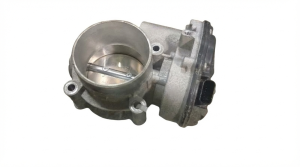
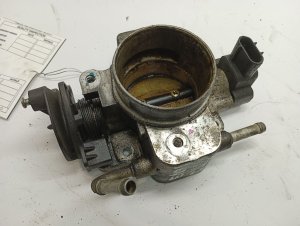
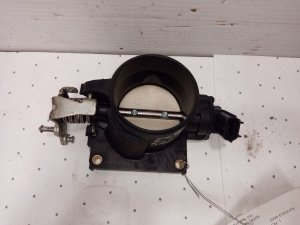

New Aftermarket Parts Available


The information in this article is provided for general reference and educational purposes only. Vehicle specifications, procedures, and part compatibility can vary by production date, trim level, and region. Always consult your vehicle's factory service manual and verify part numbers before purchasing or performing repairs. Safety-critical components such as airbags, seat belts, and braking systems should be installed by a qualified professional.
- Ford Escape:
- 🛍️ Shop This Part
- What's Unique About the 2005-2012 Ford Escape
- Symptoms You May Notice
- Most Likely Causes
- Rare But Worth Checking
- Diagnosis Steps
- Parts You'll Likely Need
- Related Codes That Often Appear With This One
- Technical Service Bulletins (TSBs) & Recalls
- Platform-Specific Known Issues
- Mechanic-Grade Diagnostic Values
- Scan Tool Commands That Help
- Wiring & Ground Locations
- Real Owner Repair Stories
- OEM Part Supersession History
- Model Year Variations Within This Range
- Diagnostic Flowchart
- Used vs. New Parts: Buying Guide for This Vehicle
- Real Owner Stories
- 2009 Ford ESCAPE — 60000 miles
- 2010 Escape
- 2011 Escape
- Ford Escape
- 2012 Ford Escape
- Related OBD-II Codes
- Frequently Asked Questions
- 🎟️ Get 5% Off