

P2097 on 2011-2018 Ram 1500: Causes and Fixes for Rich Fuel Trim
P2097 on a 2011-2018 Ram 1500 usually means there's an exhaust leak before the downstream O2 sensor or the sensor itself has failed. A thorough inspection for exhaust leaks, especially from broken manifold bolts on Hemi engines, is the most critical first step before replacing any parts. In some cases, a PCM software update from a dealer is the required fix.
- P2097 on your Ram 1500 means the computer thinks the engine is running rich on Bank 1, based on readings from the O2 sensor after the catalytic converter.
- The most common cause on the 5.7L Hemi is NOT a bad sensor, but a pre-sensor exhaust leak from broken exhaust manifold bolts.
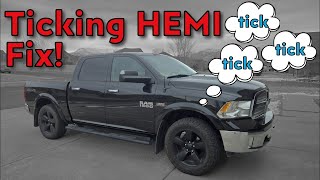
- Always check for the 'Hemi tick' and inspect for exhaust leaks before spending money on parts.
- For some model years (especially 2013-2015), a dealer software update (TSB) may be the only fix required.
- Do not replace the expensive catalytic converter unless all other possibilities (leaks, sensors, wiring, software) have been definitively ruled out.
What's Unique About the 2011-2018 Ram 1500

On the fourth-generation Ram 1500, particularly those with the 5.7L Hemi, P2097 is frequently linked to exhaust leaks from broken exhaust manifold bolts. This is a well-documented issue, often identified by an audible 'Hemi tick' that is loudest on a cold start and may quiet down as the engine warms. The constant expansion and contraction of the cast iron manifolds and steel bolts cause the rear-most bolts to shear off. Additionally, several Technical Service Bulletins (TSBs) from Ram link this code with others, like P0607 (ECU Internal Performance), suggesting that in some cases, the fix may require a PCM software update (reflash) rather than a physical part replacement. This makes it crucial to check for TSBs related to your specific vehicle's VIN.
Diagnostic Flowchart
 🎬 Watch: How to replace O2 sensors on a Hemi." loading="lazy" style="max-width:100%;height:auto;border-radius:6px;display:block;box-shadow:0 2px 8px rgba(0,0,0,0.1);" />
Tap your situation to follow the diagnostic path that matches what you're seeing on this vehicle.
Symptoms You May Notice
- Check Engine Light is on
- Slightly reduced fuel economy
- Possible fuel smell or rotten egg smell from the exhaust
- Audible ticking noise from the engine bay (especially when cold) if caused by an exhaust manifold leak
- In rare cases, rough idling or hesitation 🎬 Watch: A deep dive into P2097 causes and fixes.
- Replacing the oxygen sensor without first checking for exhaust leaks. An exhaust leak will cause the new sensor to report the same incorrect data, and the code will return. This is a very common mistake on this platform.
- Replacing the catalytic converter when the actual issue is a faulty sensor, an exhaust leak, or a software problem.
Most Likely Causes

- Exhaust Leak (Broken Manifold Bolts) 🔴 High Probability Ram 1500s with the 5.7L Hemi engine are notorious for the rear exhaust manifold bolts breaking due to thermal stress cycles. This creates a leak at the manifold gasket, allowing oxygen to be pulled into the exhaust stream, which fools the downstream O2 sensor into reporting a false rich condition.
How to confirm: Perform a visual inspection for soot trails near the exhaust manifold, particularly at the rear-most cylinder on Bank 1 (driver's side). A cold start will often produce an audible ticking sound that diminishes as the engine warms up and the metal expands. Look for the heads of the bolts being sheared off. The most definitive test is an exhaust smoke test.
Typical fix: Replace the broken manifold bolts and the manifold gasket. This often requires drilling out the broken bolt remnant, which can be difficult. 🎬 See this start-to-finish manifold bolt repair walkthrough. Many owners opt to replace the manifold itself if it has warped from the heat. Torque for the manifold bolts is 18 ft-lbs.
Est. part cost: $20-$150 - Faulty Downstream Oxygen (O2) Sensor 🟡 Medium Probability
How to confirm: Use a scan tool to monitor the live data for the Bank 1 Sensor 2 (B1S2) voltage. A healthy downstream sensor should show a relatively stable voltage (typically between 0.5V and 0.8V) once the engine is warm. If the voltage is stuck high (e.g., above 0.8V) or not responding, it is likely faulty. Also inspect the wiring for melting or damage, as it is close to the hot exhaust.
Typical fix: Replace the Bank 1, Sensor 2 oxygen sensor. It's recommended to use NTK or Denso sensors, as some owners report issues with Bosch sensors on these trucks.
Est. part cost: $40-$120 - Upstream Rich Condition ⚪ Low Probability
How to confirm: The downstream sensor may be accurately reporting a rich condition caused by an upstream problem. Check for other codes, especially misfire codes (P0300-P0308) or fuel system codes. Investigate for leaking fuel injectors, a faulty fuel pressure regulator, or a malfunctioning Manifold Absolute Pressure (MAP) sensor. Examining spark plugs on Bank 1 for heavy black carbon fouling can also indicate a true rich condition.
Typical fix: Address the root cause, which could be replacing a leaking fuel injector, fuel pressure regulator, or other faulty sensor.
Est. part cost: $50-$400
Rare But Worth Checking
- Powertrain Control Module (PCM) Issue: As cited in Ram TSBs #18-103-16 REV. B and #18-077-14, this code can be set spuriously. The fix is not a part replacement but a software reflash performed by a dealer using wiTECH software to update the PCM's calibration. This often addresses overly sensitive fault parameters.
- Failing Catalytic Converter: A clogged or inefficient catalytic converter can sometimes cause erratic readings from the downstream O2 sensor, leading to a P2097 code. This is less common than leaks or a bad sensor and should be considered after other causes are ruled out.
- Oil Leak Contaminating O2 Sensor: In some cases, a leaking valve cover gasket can drip oil directly onto the O2 sensor or its wiring. This can damage the sensor or connector, causing it to send false signals to the PCM, leading to fuel trim codes like P2097.
Diagnosis Steps
- Scan for all DTCs. Note any other codes, especially P0607, P2099, or misfire codes, as they provide critical clues.
- Check for TSBs. Enter your vehicle's VIN into the NHTSA database or call a dealership to see if TSBs like #18-103-16 REV. B apply, as a software update may be the first and only step needed.
- Thoroughly inspect the exhaust system for leaks, from the cylinder head to the post-catalyst O2 sensor. On 5.7L Hemi engines, pay extremely close attention to the rear-most exhaust manifold bolts on the driver's side. Listen for a 'ticking' noise on a cold start. A smoke test is the most reliable method to find leaks.
- If no leaks are found, use a scan tool to observe live data for the Bank 1 Sensor 2 (downstream) O2 sensor. The voltage should be relatively stable between 0.5V and 0.8V when warm. If it's stuck high (above 0.8V) or fluctuating rapidly like an upstream sensor, the sensor is suspect.
- Inspect the O2 sensor wiring and connector for any damage, corrosion, or melting from contact with the exhaust. Check for oil contamination from a leaky valve cover gasket.
- If the sensor and exhaust system seem fine, investigate potential upstream causes for a true rich condition, such as leaking fuel injectors or a faulty fuel pressure regulator.
- Only after ruling out all other possibilities should you consider the catalytic converter as the culprit.
Parts You'll Likely Need
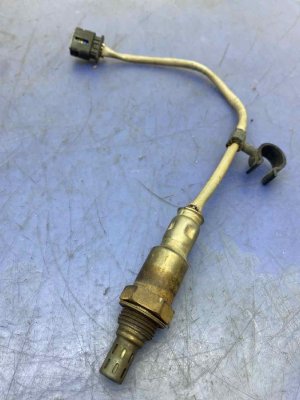
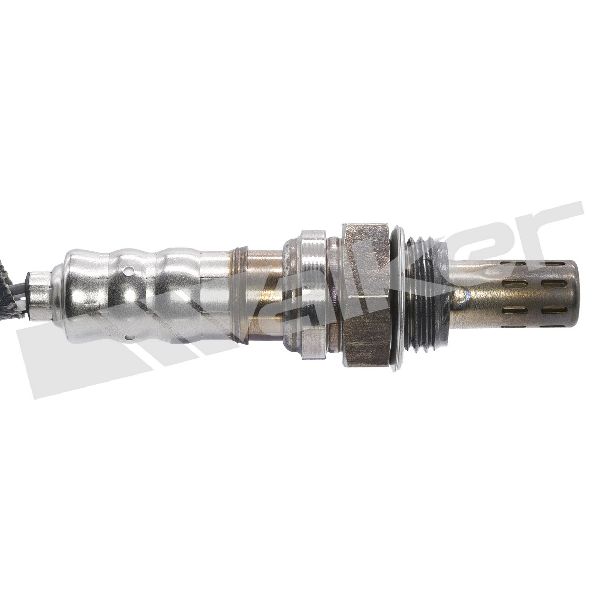
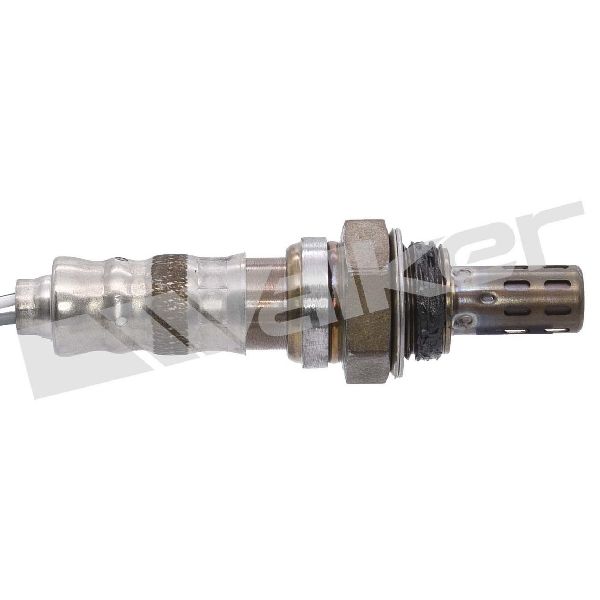
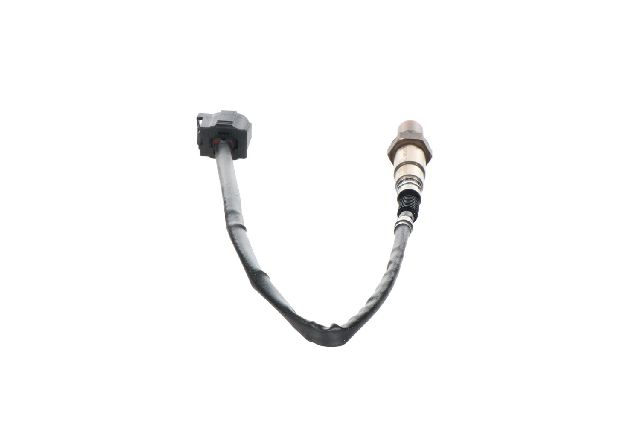
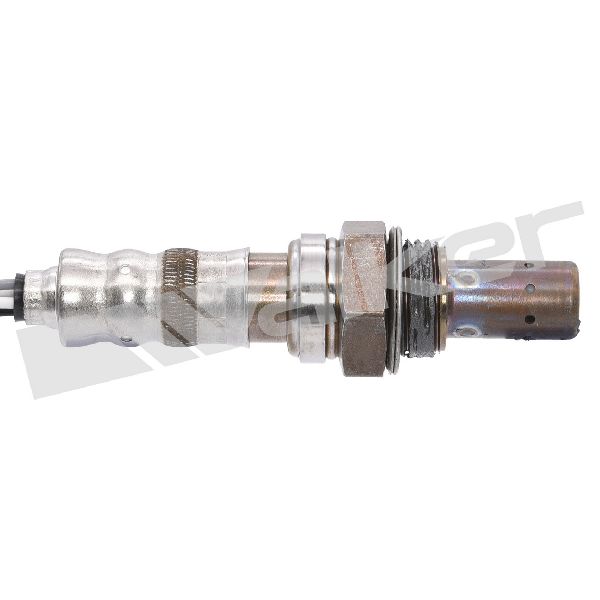
- Downstream Oxygen Sensor (Bank 1, Sensor 2)
(OEM #Mopar 5149171AB (superseded by 5149171AC) or 68090640AB depending on specific year/configuration)— This sensor is responsible for triggering the code. It may fail due to age or contamination. It is located on the driver's side, after the catalytic converter.
Trusted brands: Mopar, NTK, Denso
OEM price range: $80-$150
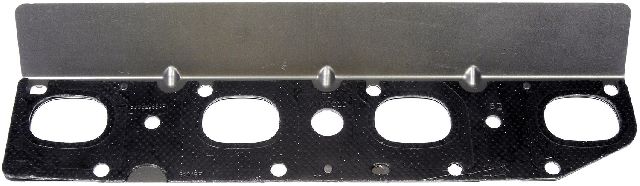
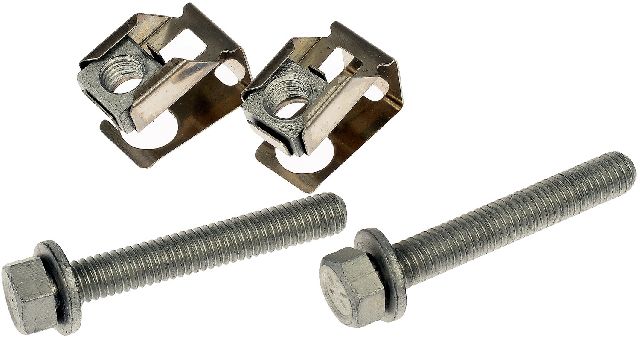
Aftermarket price range: $40-$120 - Exhaust Manifold Gasket Kit
(OEM #Fel-Pro MS 97204 (popular high-quality aftermarket kit))— Required when fixing the common issue of broken exhaust manifold bolts on Hemi engines, which cause leaks that trigger this code. The kit includes the gasket and often new bolts/studs.
Trusted brands: Fel-Pro, Mahle, Mopar
OEM price range: $40-$80
Aftermarket price range: $20-$50
Related Codes That Often Appear With This One
- P0607 — As noted in Ram TSB #18-103-16, this code for ECU Internal Performance can appear with P2097, strongly suggesting a PCM software update is the required fix.
- P2099 — This is the same 'rich' code but for Bank 2. If both P2097 and P2099 appear, it points to a systemic issue affecting both banks, like fuel pressure or a MAF sensor problem, not just a single sensor or leak on one side.
- P0300 — A multiple cylinder misfire can lead to unburnt fuel entering the exhaust, which can trigger a rich condition code like P2097. Conversely, issues causing P2097 can sometimes lead to misfires.
Technical Service Bulletins (TSBs) & Recalls

- 18-103-16 REV. B: Specifies that for 2013-2015 models, a PCM reflash can resolve P2097, often set with other codes like P0607 and U0140.
- 18-077-14: Predecessor to the above TSB, also indicating a software update for PCM-related DTCs including P2097 on 2013 models.
Platform-Specific Known Issues
- Broken exhaust manifold bolts are a very common failure on the 5.7L Hemi engine, leading to exhaust leaks that directly cause the P2097 code. Owners often refer to the resulting sound as the 'Hemi tick'.
- TSBs #18-103-16 REV. B and #18-077-14 confirm that Chrysler/Ram is aware of this code appearing, sometimes in conjunction with PCM-related codes, indicating a potential software fix via a dealer reflash.
Mechanic-Grade Diagnostic Values
- Downstream O2 Sensor (B1S2) Voltage — expected: Relatively steady voltage between 0.5V and 0.8V at warm idle.. Failure: Voltage is stuck high (above 0.8V), stuck low (below 0.5V), or fluctuating rapidly like an upstream sensor.
- Upstream O2 Sensor (B1S1) Voltage — expected: Constantly fluctuating between approximately 0.1V (lean) and 0.9V (rich) on a warm engine.. Failure: Slow or no fluctuation, or voltage stuck at a specific level.
- Fuel Pressure (5.7L Hemi) — expected: 58 psi +/- 5 psi at idle.. Failure: Pressure below 53 psi may indicate a weak fuel pump. Pressure significantly above 63 psi could indicate a regulator issue.
- O2 Sensor Heater Circuit Resistance — expected: Typically between 5-7 Ω, but manufacturer specs should be confirmed.. Failure: An open circuit (infinite resistance) or a short (zero resistance) indicates a failed heater element within the sensor.
Scan Tool Commands That Help
- wiTECH (Chrysler/Ram Dealer Tool): PCM Reflash/Calibration Update — This is the required fix when TSBs #18-103-16 REV. B or #18-077-14 apply, especially if P2097 is present with P0607. It corrects overly sensitive diagnostic parameters in the PCM.
- Professional OBD-II Scanner: View Live Data (O2 Sensor Voltage, Fuel Trims) — Essential for diagnosis. Used to observe the behavior of the downstream O2 sensor (B1S2) to determine if it's reading a legitimate rich condition or if the sensor itself is faulty.
- Professional OBD-II Scanner: Clear Fuel Trim Adaptations — After a repair (like fixing an exhaust or vacuum leak), this function should be used to reset the long-term fuel trim values to zero, allowing the PCM to relearn fuel strategy with the new, correct inputs.
Wiring & Ground Locations
- Bank 1 Sensor 2 O2 Sensor Fuses — In the main underhood fuse box (Power Distribution Center).. The O2 sensor heater circuits are protected by fuses. A blown fuse will prevent the sensor from reaching operating temperature, causing incorrect readings. For 2013-2018 models, relevant fuses to check include F21, F22, F57, F64, F72, F77, and F78, as they are related to engine management and O2 sensor functions.
- G105 — On the engine block, typically near the front of the driver's side cylinder head.. This is a primary engine ground point. A loose or corroded G105 ground can cause erratic sensor readings, including from the oxygen sensors, as it provides the ground reference for the PCM and various engine sensors. A poor ground can lead to floating voltage levels and incorrect data.
- O2 Sensor Connector (B1S2) — On the driver's side, near the transmission crossmember, connecting the downstream O2 sensor to the main harness.. This connector is a common point of failure due to its proximity to exhaust heat and road debris. Inspect for melted plastic, corrosion on the pins, or damaged wires. A bad connection here will directly cause faulty sensor readings.
Real Owner Repair Stories
- RamForum.com user (2014 Ram 1500 5.7L Hemi) — P2097 code, dealer could not find the issue.
❌ Tried (didn't work) Dealer diagnosis found no issues., Initial visual inspections missed the problem.
✅ What actually fixed it The user found a small, split rubber hose connected to the PCV valve. Replacing this leaking hose resolved the code, indicating an unmetered air (vacuum) leak was the root cause, which the PCM was overcompensating for by adding fuel, leading to the rich code downstream. - RamForumZ.com user (2014 Ram 1500 5.7L Hemi) — P2097 code appeared after installing aftermarket headers.
❌ Tried (didn't work) Clearing the code (it returned).
✅ What actually fixed it The user had not properly torqued the header bolts, causing a small exhaust leak near the cylinder head. After re-torquing all bolts to the correct specification, the leak was sealed and the code was resolved.
"I Checked Everything" — The Actual Cause
- In one documented case, a 2014 Ram 1500 passed visual and smoke tests for exhaust leaks, but the P2097 code persisted. The actual cause was discovered to be a small split in a rubber hose connected to the PCV valve. This vacuum leak introduced unmetered air, causing the PCM to enrich the fuel mixture to compensate, which in turn triggered the downstream rich code. The fix was simply replacing the faulty PCV hose.
OEM Part Supersession History
5149171AB→5149171AC— Standard part revision for improved performance, reliability, or manufacturing process.
Heads up: The new part number (5149171AC) is a direct replacement for the old one and should be used. Using old stock (AB) is not recommended.68090640AA (Downstream Left/Bank 1 Sensor 2 for some years)→68090640AB— Standard part revision.
Heads up: Part numbers are year and configuration-specific. Always verify the correct part number for your vehicle's specific VIN before ordering. For example, a 2014 5.7L uses 68090640AA for the downstream left sensor.
Model Year Variations Within This Range
- 2013-2018: The 8-speed ZF automatic transmission became widely available starting in 2013 and standard on most models by 2014. This changed the physical shape and routing of the exhaust Y-pipe and crossmember, which can affect access to the downstream O2 sensors compared to earlier models with the 5- or 6-speed transmissions.
- 2014+: The 3.0L EcoDiesel engine was introduced in 2014. While this guide focuses on the gas engines where P2097 is most common, be aware that the definition and causes can differ significantly on diesel models, relating more to the Diesel Oxidation Catalyst (DOC) and aftertreatment system.
- 2013-2015: TSB #18-103-16 REV. B specifically calls out 2013-2015 models for a potential PCM reflash to fix spurious P2097 codes. This suggests the PCM logic was most sensitive during these model years.
Helpful Videos


Used OEM Parts in Stock
New Aftermarket Parts Available

The information in this article is provided for general reference and educational purposes only. Vehicle specifications, procedures, and part compatibility can vary by production date, trim level, and region. Always consult your vehicle's factory service manual and verify part numbers before purchasing or performing repairs. Safety-critical components such as airbags, seat belts, and braking systems should be installed by a qualified professional.
- Ram 1500:
- 🎬 Helpful Videos
- 🛍️ Shop This Part
- What's Unique About the 2011-2018 Ram 1500
- Diagnostic Flowchart
- Symptoms You May Notice
- Most Likely Causes
- Rare But Worth Checking
- Diagnosis Steps
- Parts You'll Likely Need
- Related Codes That Often Appear With This One
- Technical Service Bulletins (TSBs) & Recalls
- Platform-Specific Known Issues
- Mechanic-Grade Diagnostic Values
- Scan Tool Commands That Help
- Wiring & Ground Locations
- Real Owner Repair Stories
- "I Checked Everything" — The Actual Cause
- OEM Part Supersession History
- Model Year Variations Within This Range
- 🎟️ Get 5% Off