

P2097 on 2018-2023 Kia Stinger 2.0T: Causes and Fixes for Rich Fuel Trim
This code means your engine is running rich after the catalytic converter. The most common cause on the Kia Stinger 2.0T is a faulty downstream (rear) oxygen sensor. An exhaust leak before the sensor is the next most likely culprit. Before replacing parts, check for exhaust leaks and confirm the sensor's operation with a scan tool.
- P2097 on your Stinger 2.0T means the downstream O2 sensor is detecting a rich fuel mixture.
- The most probable cause is a faulty downstream O2 sensor itself.
- Before buying parts, always check for exhaust leaks between the engine and the sensor.
- If other codes like P0172 or P0088 are present, the problem is more likely a leaking fuel injector or a bad high-pressure fuel pump.
- Do not replace the expensive catalytic converter unless all other potential causes have been exhausted.
What's Unique About the 2018-2023 Kia Stinger
While there is limited specific data for the Stinger 2.0T, this engine (G4KL) is part of the broader Hyundai/Kia 'Theta II' family. On related 2.0T engines, this code is most often traced back to a failing downstream oxygen sensor. It is important to note that while earlier Theta II engines (2.0L/2.4L) were subject to massive recalls for catastrophic engine failure due to manufacturing debris, the G4KL in the Stinger is a later, revised version and is not included in those recalls. A true rich condition caused by a leaking injector or a failing high-pressure fuel pump (HPFP) is possible but less common for this specific code.
Symptoms You May Notice
- Check Engine Light is on
- Reduced fuel economy
- Rough or erratic idle
- Engine hesitation or stumbling during acceleration
- A noticeable smell of fuel from the exhaust
- Black smoke from the tailpipe in extreme cases
- Replacing the catalytic converter first. The converter is expensive and is usually not the root cause of a P2097 code. The code reports a problem *seen* by the sensor, not necessarily a bad converter.
- Replacing the upstream O2 sensor when the downstream sensor is the actual problem. This code specifically relates to the 'post-catalyst' reading, which is the job of the downstream (Sensor 2) sensor.
Most Likely Causes
- Faulty Downstream Oxygen (O2) Sensor 🔴 High Probability O2 sensors are wear-and-tear items that degrade over time from heat and contaminants. This is the primary sensor responsible for triggering the P2097 code, as it directly measures the post-catalyst mixture.
How to confirm: Use a scan tool to monitor the voltage of the downstream (Sensor 2) O2 sensor. A healthy sensor on a warm engine should show a relatively steady voltage, typically between 0.5V and 0.8V. If it's stuck high (near 0.9V) or fluctuating wildly like the upstream sensor, it is likely faulty.
Typical fix: Replace the downstream (post-catalyst) oxygen sensor for Bank 1.
Est. part cost: $80-$160 - Exhaust Leak 🟡 Medium Probability Leaks can develop at gaskets (e.g., manifold or downpipe) or pipe welds due to corrosion or vibration. A leak before the downstream sensor can allow outside air to be pulled in, confusing the sensor and causing an incorrect reading or subsequent fuel trim adjustments that lead to the code.
How to confirm: Visually inspect the exhaust system from the engine to the catalytic converter for black soot marks, cracks, or holes. A smoke test is the most effective way to find small leaks. You can also listen for hissing or ticking sounds that change with engine RPM.
Typical fix: Repair the leak. This may involve replacing a gasket, tightening clamps, or welding a cracked pipe.
Est. part cost: $10-$150 - Leaking Fuel Injector(s) ⚪ Low Probability
How to confirm: This creates a true rich condition. If this code is paired with P0172 (System Too Rich), a leaking injector is more likely. A fuel injector balance test can confirm this, but it's a more involved diagnostic step.
Typical fix: Replace the faulty fuel injector(s).
Est. part cost: $100-$250 per injector - Faulty Upstream Oxygen (O2) Sensor ⚪ Low Probability
How to confirm: A faulty upstream (pre-catalyst) sensor can send incorrect 'lean' data, causing the ECM to enrich the fuel mixture excessively. This genuinely rich mixture is then detected by the downstream sensor, triggering P2097. Check live data for the upstream sensor; it should fluctuate rapidly between approximately 0.1V and 0.9V on a healthy engine.
Typical fix: Replace the upstream (pre-catalyst) oxygen sensor.
Est. part cost: $100-$200
Rare But Worth Checking
- Failing High-Pressure Fuel Pump (HPFP): On related Hyundai/Kia 2.0T engines, a failing HPFP can cause excessively high fuel pressure, leading to a rich condition. This should be suspected if code P2097 appears alongside P0088 (Fuel Rail/System Pressure - Too High).
- Failing Catalytic Converter: While a bad catalytic converter can cause this code, it's more often the victim of a long-term rich condition rather than the cause. Do not replace the converter unless all other possibilities have been exhausted.
- Wiring Harness Damage: A recall was issued for some 2018 Kia Stinger models where the engine wiring harness could chafe against a burr on the fender body panel, potentially causing a short circuit. While this could cause various issues, damage to the O2 sensor circuit could trigger this code.
Diagnosis Steps
- Scan for other DTCs. If codes like P0172, P0088, or P0136 are present, address them first as they provide critical clues to the root cause.
- Perform a thorough visual inspection of the exhaust system from the engine manifold to the downstream O2 sensor. Look for any signs of leaks, such as black soot, cracks, or damaged gaskets. Listen for audible hissing or ticking noises.
- Use a scan tool to observe live data from both the upstream (Sensor 1) and downstream (Sensor 2) oxygen sensors with the engine fully warmed up and in closed loop.
- The upstream sensor's voltage should fluctuate rapidly (e.g., 5-10 times in 10 seconds). The downstream sensor's voltage should be relatively stable and high (e.g., 0.6-0.8V). If the downstream sensor is stuck at a very high voltage (e.g., >0.9V) or mirrors the upstream sensor's fluctuations, it points to a faulty sensor or an inefficient catalytic converter.
- If sensors appear to be reading correctly, suspect a true rich condition. Investigate the fuel system.
- Check fuel pressure. If it is excessively high, investigate the high-pressure fuel pump (HPFP) and its control circuit, especially if P0088 is present.
- Check for leaking fuel injectors. This may require a professional fuel system service or injector balance test.
Parts You'll Likely Need
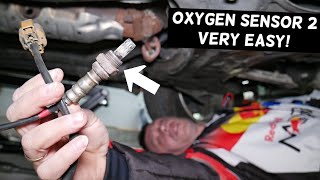
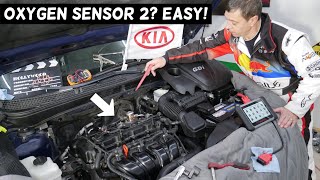
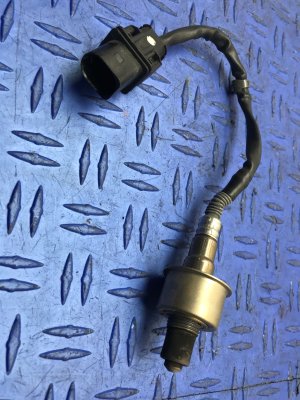
- Downstream Oxygen Sensor (Bank 1, Sensor 2)
(OEM #39210-2CTB5)— This is the sensor that measures post-catalyst efficiency and triggers the code. It is the most common failure point for this specific fault.
Trusted brands: Bosch, NGK / NTK, Denso, Genuine Kia/Hyundai
OEM price range: $110-$170
Aftermarket price range: $80-$130
Related Codes That Often Appear With This One
- P0172 — Indicates 'System Too Rich (Bank 1)' as detected by the *upstream* sensor. Seeing both codes together points strongly to a genuine rich condition (like a leaking injector or HPFP issue) rather than just a downstream sensor fault.
- P0088 — Indicates 'Fuel Rail/System Pressure - Too High'. This combination strongly suggests a problem with the high-pressure fuel pump (HPFP) or its regulator.
- P0136 — Indicates 'O2 Sensor Circuit Malfunction (Bank 1, Sensor 2)'. If this appears with P2097, it points very strongly to the downstream O2 sensor itself or its wiring/connector as the root cause.
Platform-Specific Known Issues
- Parts Availability for Platform Mate: A Genesis G70 2.0T owner on Reddit reported a 3-month wait for a replacement oxygen sensor from a dealer, highlighting potential parts supply issues. The community recommended cross-shopping for the equivalent Kia Stinger part, confirming they are identical.
Mechanic-Grade Diagnostic Values
- Downstream O2 Sensor (B1S2) Heater Resistance — expected: 3.3 - 4.1 Ω at 21°C (69.8°F). Failure: A reading outside this range indicates a faulty heater circuit within the sensor.
- Upstream O2 Sensor (B1S1) Heater Resistance — expected: 2.5 - 4.0 Ω at 20°C (68°F). Failure: A reading outside this range indicates a faulty heater circuit. This is useful for comparison and overall system health.
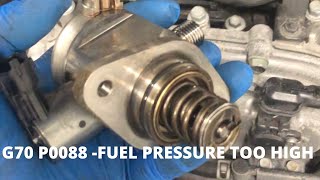
- High-Pressure Fuel Pump (HPFP) Failure Confirmation — expected: Normal operating pressure is significantly lower. A healthy low-pressure side should be around 60 PSI.. Failure: On a related Genesis G70 2.0T with code P0088, a failed HPFP caused scan tool readings of ~8,000 PSI and a corresponding sensor voltage of ~4.5V immediately upon starting, leading to a stall. This indicates a pump that is stuck and over-pressurizing the rail.
Scan Tool Commands That Help
- Kia GDS (or equivalent professional scanner): Resetting adaptive values — This function, found under 'Vehicle S/W Management' or 'Special Function', should be performed after replacing a component like an O2 sensor, fuel injector, or HPFP. It clears the long-term fuel trim learning from the ECM, allowing it to adapt to the new, correctly functioning part more quickly.
Real Owner Repair Stories
- YouTube channel 'hyundaitech59' (Genesis G70 (platform mate to Stinger)) — Check engine light on, engine shaking, black smoke from tailpipe, starts and then stalls within 15 seconds.
❌ Tried (didn't work) Initial diagnosis focused on verifying the fuel pressure sensor was reporting correctly before condemning the pump.
✅ What actually fixed it The issue was code P0088 (Fuel Rail Pressure Too High), which is often seen with P2097. The tech confirmed with a scope that the sensor was reading correctly (~4.5V) and the pump was generating extreme pressure (~8,000 PSI) on startup. Replacing the High-Pressure Fuel Pump (HPFP) resolved the issue. - Reddit user in r/kiastinger (2018 Kia Stinger 2.0T) — Check Engine Light came on with code P2097.
✅ What actually fixed it The user was asking for advice, and the community consensus was that the definitive fix is replacing the downstream (post-catalyst) O2 sensor.
OEM Part Supersession History
35320-2CTB0, 35320-2CTB1→A revised part installed under recall SC281.— The original High-Pressure Fuel Pump (HPFP) had a fuel control valve plunger that could misalign, causing uneven wear and potentially getting stuck open. This leads to over-pressurization of the fuel system and can trigger P0088 and a rich condition (P2097).
Model Year Variations Within This Range
- 2018-2021 vs 2022-2023: The 2.0T Theta II engine was only used in the 2018-2021 Stinger. For the 2022 model year refresh, the base engine was changed to a 300-hp 2.5L turbo-4. Therefore, all information in this article pertaining to the 2.0T engine, its specific O2 sensors (PN 39210-2CTB5), and its HPFP recall (SC281) applies only to the pre-facelift 2018-2021 models.
Diagnostic Flowchart
Other Known Issues on This Vehicle
Issues unrelated to this code that are worth knowing about as an owner of this generation:
- Hatch / Trunk Rattle 🟡 Low — Very common across all model years. Owners report rattling over bumps originating from the rear hatch area. Often fixed with simple adjustments or DIY solutions.
- Electronic Wastegate Actuator Rattle/Failure 🟠 Medium — A known issue on the 2.0T engine where the electronic wastegate actuator rod develops play, causing a rattle or incorrect boost, potentially leading to performance loss or other fault codes like P2562.
- Paint Defects (Sunset Yellow) 🟠 Medium — Specifically affects the 'Sunset Yellow' color on early models (approx. 2018). The paint was prone to chipping and poor adhesion. (Ref: Voluntary Service Campaign / Recall)
- Intake Valve Carbon Buildup 🟠 Medium — Common to all Gasoline Direct Injection (GDI) engines, including the Theta II. Occurs over tens of thousands of miles as oil vapors bake onto the intake valves, potentially causing misfires or reduced performance.
- Premature Brake Wear / Vibration 🟡 Low — Some owners of early models reported steering wheel vibration under braking, suggesting warped rotors.
Used vs. New Parts: Buying Guide for This Vehicle
When a used part is the smart pick: For this specific code, using used parts is generally not recommended due to the nature of the common failures. The only potential exception would be a section of exhaust pipe from a low-mileage, rust-free donor car if a leak is found in a weld or flex pipe.
Donor-vehicle mileage cap: roughly under 40000 miles for the part to have meaningful remaining life.
What to inspect on the donor part:
- For exhaust components, check for thin, flaking rust, cracks near welds, and integrity of flex sections.
- Verify the donor vehicle was not in a front-end collision that could have damaged the exhaust manifold or downpipe.
OEM-only on this vehicle (don't cheap out):
- High-Pressure Fuel Pump (HPFP): This part was subject to a recall for premature failure. Buying a used one is extremely risky. Always purchase a new, genuine OEM part to ensure you get the latest revised version.
- Catalytic Converter: If the converter does end up needing replacement, aftermarket units for modern GDI turbo engines have a poor reputation for longevity and can fail to meet emissions standards, causing recurring codes. Stick with OEM.
Aftermarket brands forum-validated for this vehicle:
- Oxygen Sensors: NTK (which is an OE manufacturer), Denso, and Bosch are widely accepted as reliable aftermarket alternatives to Genuine Kia/Hyundai parts.
Brands owners have reported issues with on this vehicle:
- Avoid unbranded, 'white-box' oxygen sensors or fuel pumps from online marketplaces. These often have high failure rates, incorrect calibration, and can cause more diagnostic headaches than they solve.
Real Owner Stories
Aggregated from forums and TSBs cited above. Mileages and costs reflect what owners reported in those sources.
2019 Genesis G70 2.0T
Symptoms: Owner faced a 3-month wait for a replacement oxygen sensor from the dealer.
What fixed it: Cross-shopping for the equivalent Kia Stinger oxygen sensor, as the parts are identical and were more readily available.
Source hint: Reddit r/GenesisG70: A user with a 2019 G70 2.0T reported a long wait for an O2 sensor
2018-2023 Kia Stinger 2.0T
Symptoms: High fuel trims monitored via scan tool on a modified vehicle.
What fixed it: Monitoring fuel trim parameters to diagnose potential rich/lean conditions.
Source hint: Kia Stinger Forum (stingerforum.org) thread in 'Maintenance, Warranty Issues & Troubleshooting'
Related OBD-II Codes
Frequently Asked Questions
I own a 2019 Genesis G70 2.0T and my dealer says the O2 sensor is on backorder. Can I use a Kia Stinger 2.0T part instead?
My Stinger has a P2097 and a P0088 code. Which should I fix first?
Could the metallic rattling sound from my engine bay be related to the P2097 code?
Is there a recall for the Sunset Yellow paint on my 2018 Stinger?
How often should I clean the intake valves on my Theta II 2.0T to prevent performance issues?
Helpful Videos

![How to Fix P2097 Engine Code in 4 Minutes [2 DIY Methods / Only $9.84]](https://img.youtube.com/vi/rCwtzRmhMwY/mqdefault.jpg)
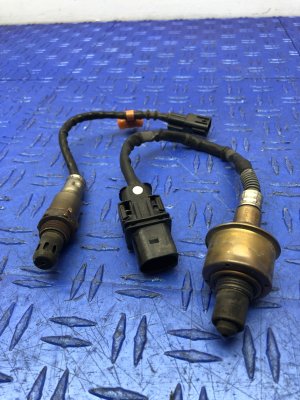
Used OEM Parts in Stock
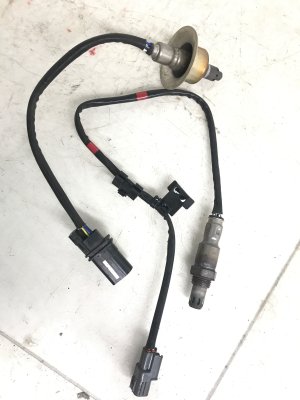
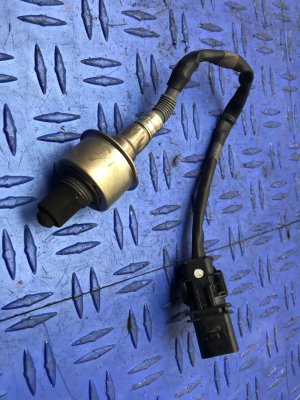
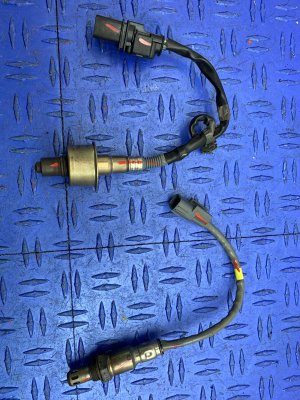
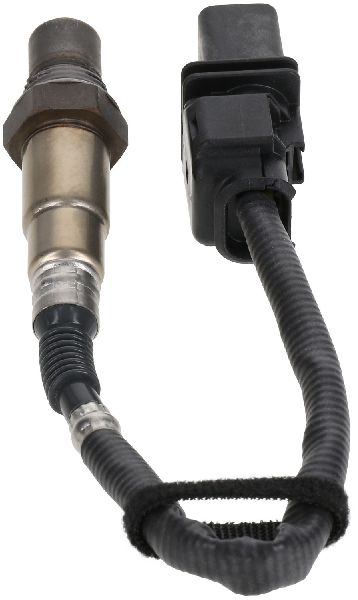
New Aftermarket Parts Available

The information in this article is provided for general reference and educational purposes only. Vehicle specifications, procedures, and part compatibility can vary by production date, trim level, and region. Always consult your vehicle's factory service manual and verify part numbers before purchasing or performing repairs. Safety-critical components such as airbags, seat belts, and braking systems should be installed by a qualified professional.
- Kia Stinger:
- 🎬 Helpful Videos
- 🛍️ Shop This Part
- What's Unique About the 2018-2023 Kia Stinger
- Symptoms You May Notice
- Most Likely Causes
- Rare But Worth Checking
- Diagnosis Steps
- Parts You'll Likely Need
- Related Codes That Often Appear With This One
- Platform-Specific Known Issues
- Mechanic-Grade Diagnostic Values
- Scan Tool Commands That Help
- Real Owner Repair Stories
- OEM Part Supersession History
- Model Year Variations Within This Range
- Diagnostic Flowchart
- Other Known Issues on This Vehicle
- Used vs. New Parts: Buying Guide for This Vehicle
- Real Owner Stories
- 2019 Genesis G70 2.0T
- 2018-2023 Kia Stinger 2.0T
- Related OBD-II Codes
- Frequently Asked Questions
- 🎟️ Get 5% Off