

P2097 on 2015-2019 Hyundai Sonata 2.4L: Causes and Fixes for Rich Fuel Trim
On a 2015-2019 Sonata with the 2.4L engine, code P2097 is most often caused by a failing downstream oxygen (O2) sensor. Replacing this sensor is the most common fix. Before replacing the sensor, a thorough inspection for exhaust leaks between the engine and the sensor is crucial. Expect to pay around $50-$120 for an aftermarket sensor and $180-$260 for an OEM part.
- P2097 means the downstream O2 sensor is detecting a rich exhaust mixture after the catalytic converter.
- The most likely cause on your Sonata is a faulty downstream O2 sensor (Part # 39210-2GBA0).
- Before replacing any parts, always inspect for exhaust leaks between the engine and the sensor, especially the flex pipe.
- Do not replace the expensive catalytic converter unless you have definitively ruled out the O2 sensor and exhaust leaks, or if you also have a P0420 code.
What's Unique About the 2015-2019 Hyundai Sonata
While P2097 is a generic code, Hyundai has addressed similar fuel trim issues on other engines of this era with software updates. For example, TSB #23-01-010H was released for the 2.0L Turbo engine in the same Sonata models to correct O2 sensor aging calculations. Although no specific TSB for the 2.4L engine and P2097 was found during an extensive search, it suggests that diagnosis should not rule out the possibility of an ECM software issue as a last resort. However, physical components like the O2 sensor and exhaust leaks remain the most common causes reported by owners.
Symptoms You May Notice
- Check Engine Light is on
- Decreased fuel economy
- Rough or erratic idle
- Engine hesitation or stumbling during acceleration
- Noticeable fuel smell or black smoke from the exhaust
- Replacing the catalytic converter before thoroughly testing the downstream O2 sensor and checking for exhaust leaks. The converter is the most expensive part and often replaced unnecessarily. 🎬 Watch: Two DIY methods to fix the P2097 code
- Replacing the upstream (Bank 1 Sensor 1) O2 sensor instead of the downstream (Bank 1 Sensor 2) sensor. P2097 is specifically a post-catalyst code, pointing to the downstream sensor.
Most Likely Causes
- Faulty Downstream Oxygen (O2) Sensor 🔴 High Probability O2 sensors are wear-and-tear items that degrade over time from heat and contamination. As the sensor responsible for triggering this specific code, its failure is a direct and common cause. Many owner experiences confirm that replacing the downstream sensor resolves the code.
How to confirm: Use an OBD-II scanner to monitor the live data for the 'Bank 1 Sensor 2' voltage. After the engine is fully warmed up, a healthy downstream sensor should show a relatively steady voltage. If the voltage is stuck high (typically >0.8V) or is not responding to changes in engine conditions, the sensor is likely faulty. Also inspect the sensor's wiring for any melting, chafing, or corrosion.
Typical fix: Replace the downstream (post-catalyst) oxygen sensor. It is often recommended to use an OEM or high-quality NTK/Denso sensor, as some owners report issues with cheaper aftermarket brands not resolving the code.
Est. part cost: $50-$120 - Exhaust System Leak 🟡 Medium Probability Leaks can develop at gaskets or from corrosion, particularly on the flexible exhaust pipe (flex pipe) located before the catalytic converter. An exhaust leak before the downstream O2 sensor can draw in outside air, confusing the sensor's readings and causing it to falsely report a rich condition.
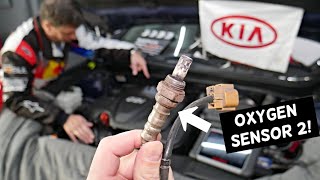
How to confirm: Visually inspect the exhaust system from the engine to the catalytic converter for any signs of black soot, cracks, or rust holes, especially around gaskets and the flex pipe. A smoke test is the most effective way to pinpoint a leak. 🎬 See this step-by-step guide for testing your O2 sensor You can also sometimes hear a ticking or puffing noise that changes with engine RPM.
Typical fix: Repair the leak. This may involve replacing a gasket (e.g., exhaust manifold gasket), tightening bolts, or welding/replacing a section of the exhaust pipe, such as the flex pipe.
Est. part cost: $10-$250 - Failing or Clogged Catalytic Converter ⚪ Low Probability If the catalytic converter is inefficient, it cannot properly process the exhaust gases. This can lead to the downstream O2 sensor detecting an incorrect mixture, triggering the code. This is less common than a sensor failure and is often misdiagnosed.
How to confirm: A significant temperature difference between the inlet and outlet of the converter (checked with an infrared thermometer) can indicate a problem. A properly functioning converter should be significantly hotter at the outlet. Also, look for other codes like P0420 (Catalyst System Efficiency Below Threshold), which more directly points to converter failure.
Typical fix: Replace the catalytic converter. This is an expensive repair and should only be done after definitively ruling out O2 sensors and exhaust leaks.
Est. part cost: $400-$1200
Rare But Worth Checking
- Leaking Fuel Injectors or High Fuel Pressure: An issue causing the engine to genuinely run rich (like a leaking injector or faulty fuel pressure regulator) can trigger this code. However, this would typically also set other codes like P0172 (System Too Rich Bank 1) or misfire codes (e.g., P0300-P0304). If P2097 appears alone, this is less likely.
- Engine Control Module (ECM) Software Issue: While no specific TSB exists for the 2.4L, Hyundai has issued software updates for similar issues on other engines. If all hardware checks out, checking with a dealer for any available ECM updates is a valid final step.
- Oil or Coolant Leaks Contaminating the Sensor: A leaking valve cover gasket or other engine oil leak can drip onto the exhaust and contaminate the O2 sensor or its wiring. Similarly, a coolant leak could foul the sensor. This contamination can cause the sensor to send incorrect readings.
Diagnosis Steps
- Read all fault codes with an OBD-II scanner. Note any other codes present besides P2097. If P0172 is present, diagnose that first.
- Visually inspect the exhaust system from the engine manifold to the downstream O2 sensor. Look for cracks, rust, and black soot indicating a leak, paying close attention to the flex pipe and manifold gaskets.
- Inspect the wiring and connector for the downstream O2 sensor for any damage, melting, corrosion, or signs of oil contamination from engine leaks.
- Use the live data function on a scan tool to observe the voltage of 'Bank 1 Sensor 2' (the downstream sensor) once the engine is at operating temperature. A healthy sensor monitoring a good catalyst should show a relatively steady voltage. A reading stuck high (e.g., above 0.8V) suggests a sensor or wiring issue.
- If an exhaust leak is suspected, perform a smoke test to confirm its location.
- If the O2 sensor and exhaust system are confirmed to be good, investigate potential causes of a true rich condition, such as fuel pressure testing and checking for leaking fuel injectors (especially if other codes are present).
- As a final step, if all else fails, consider a failing catalytic converter (especially if P0420 is also present) or check with a Hyundai dealer for any available ECM software updates.
Parts You'll Likely Need
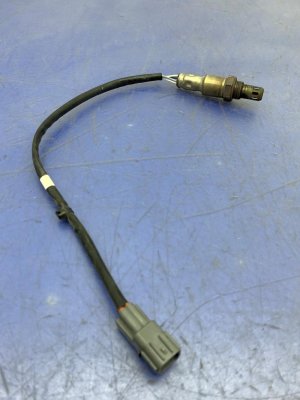
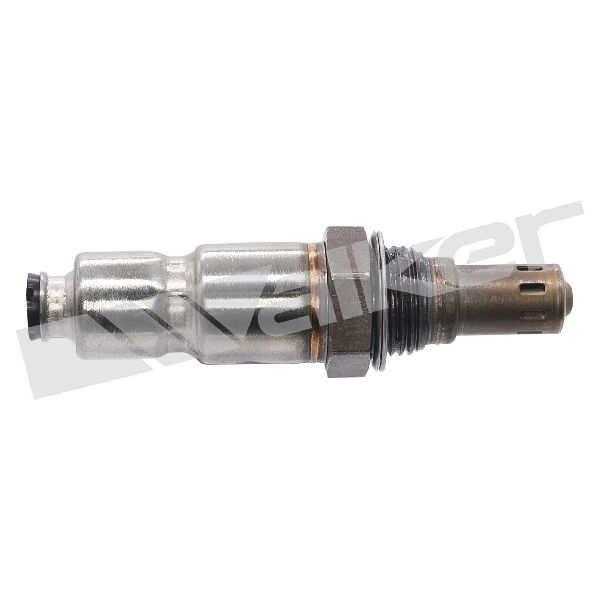
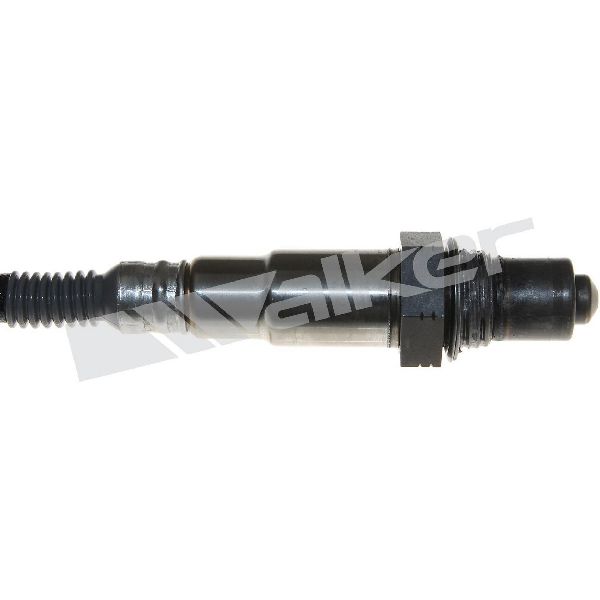
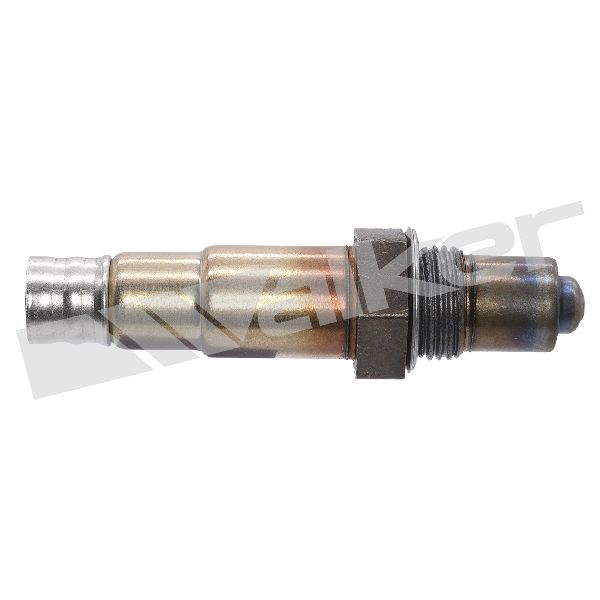
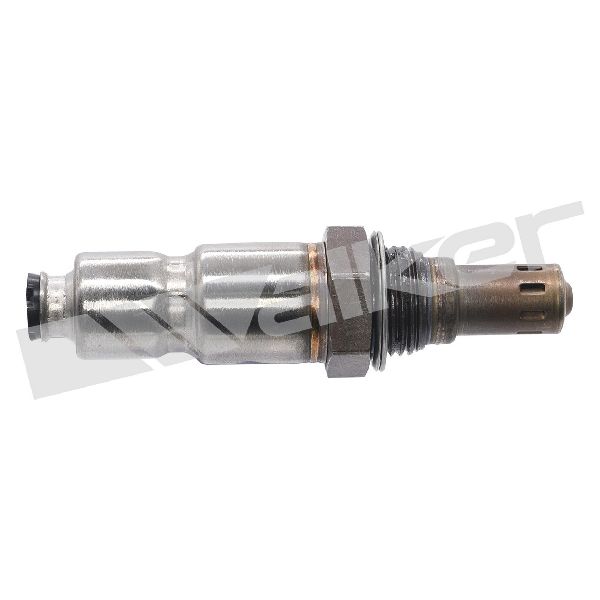
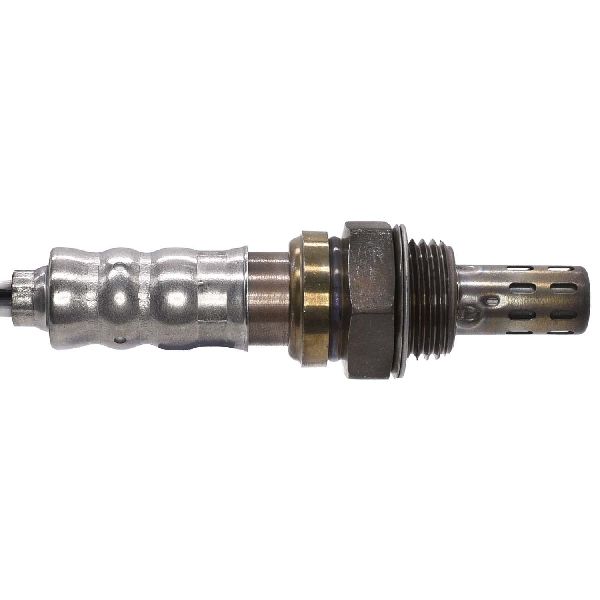
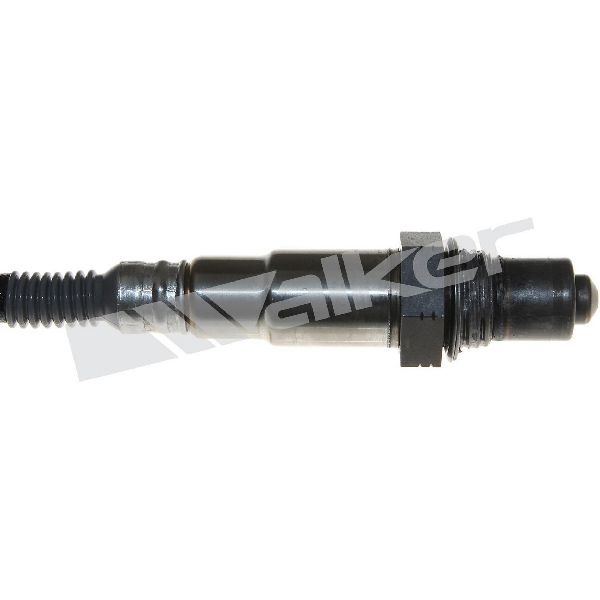
- Downstream Oxygen Sensor (Bank 1, Sensor 2)
(OEM #39210-2GBA0 (may be superseded by 39210-2GBA5))— This is the sensor that measures the post-catalyst exhaust and triggers the P2097 code. It is a common wear item and the most probable cause of the fault.
Trusted brands: Hyundai (OEM), Bosch, NGK/NTK, Denso
OEM price range: $180-$260
Aftermarket price range: $50-$120
Related Codes That Often Appear With This One
- P0172 — P0172 indicates 'System Too Rich Bank 1' based on the upstream O2 sensor. If both appear, it strongly suggests an actual rich running condition (e.g., leaking injector, faulty MAF sensor) is the root cause, not just a downstream sensor issue. The diagnostic approach should start with the P0172 causes.
- P0420 — P0420 indicates 'Catalyst System Efficiency Below Threshold'. If seen with P2097, it points more strongly toward a failing catalytic converter as the primary cause.
- P2096 — This is the opposite code, 'Post Catalyst Fuel Trim System Too Lean'. Seeing this instead of P2097 would point towards issues like vacuum leaks or unmetered air entering the exhaust. It is unlikely to appear with P2097.
Platform-Specific Known Issues
- Flex Pipe Leaks: The flexible joint in the exhaust pipe, located before the catalytic converter, is a common point of failure due to stress and corrosion. A leak here can introduce air and cause incorrect O2 sensor readings, leading to a P2097 code.
Mechanic-Grade Diagnostic Values
- Downstream O2 Sensor (B1S2) Voltage — expected: Relatively steady, above 0.6V at idle after warm-up.. Failure: Voltage is stuck high (e.g., >0.8V), stuck low, or fluctuating wildly like the upstream sensor.
- Upstream O2 Sensor (B1S1) Voltage — expected: Signal should switch rapidly from rich (>0.45V) to lean (<0.45V) at least 3 times in 10 seconds at idle.. Failure: Slow or no switching, or voltage is biased to one side.
- Post-Catalyst Fuel Trim Adaptation Value — expected: A value greater than -500 msec.. Failure: The ECM sets DTC P2097 if the adaptation value is less than -500 msec for a defined period (e.g., 60-90 seconds). This value may be viewable in advanced scan tool data.
- Low-Pressure Fuel System Pressure (KOEO or Idle) — expected: Approximately 55 PSI (3.8 bar).. Failure: Significantly lower pressure could indicate a weak in-tank fuel pump, while excessively high pressure could point to a regulator issue, potentially causing a rich condition.
Scan Tool Commands That Help
- Hyundai GDS or equivalent professional scanner: Fuel Injector Balance Test — Use this active test to check if one or more injectors are flowing at a higher rate than others, which would cause a true rich condition. This should be performed after ruling out O2 sensor and exhaust leak issues.
- Hyundai GDS or equivalent professional scanner: Fuel Pump On/Off Command — This command allows a technician to run the in-tank fuel pump to verify its operation and to perform a fuel pressure and leak-down test on the low-pressure side of the system without the engine running.
Wiring & Ground Locations
- Ge01 — Left front of the engine compartment.. This is a primary engine bay ground point. A poor connection here can cause floating grounds and erratic voltage readings for various sensors, including the O2 sensors.
- Gf01 — Under the center console.. This is an interior ground point. The O2 sensor harness runs through the cabin floor to the ECM, and a bad ground along this path could affect the sensor signal.
- ECM Connector C100-A / C100-B — Located at the Engine Control Module (ECM).. The O2 sensor signal, heater, and ground wires terminate here. A technician can back-probe the pins for the downstream O2 sensor at this connector to verify signal integrity directly from the ECM, ruling out wiring issues between the sensor and the module. For a 2016 Sonata, relevant pins include Pin 71 (Ground) and Pin 91 (O2 Sensor Signal Downstream).
Real Owner Repair Stories
- Reddit user Unfair_Caramel9393 (2019 Hyundai Elantra GT (similar engine logic)) — Check Engine Light with P2097, hesitation on acceleration.
❌ Tried (didn't work) Initial diagnosis was inconclusive between O2 sensor and catalytic converter.
✅ What actually fixed it The issue was resolved by replacing the downstream oxygen sensor. The catalytic converter was not the cause.
OEM Part Supersession History
39210-2GBA0→39210-2GBA5 (unconfirmed, verify with dealer)— Standard part revision or supplier change.
Heads up: Part number 39210-2GBA0 is confirmed for 2015-2018 Sonata models. The supersession to 39210-2GBA5 was mentioned in Pass 2 but not confirmed in Pass 3 searches. Always verify the correct part number with the vehicle's VIN at a dealership to avoid compatibility issues.
Model Year Variations Within This Range
- 2015-2019: The 2018-2019 models received a cosmetic and infotainment refresh. However, there were no significant mechanical changes to the 2.4L GDI engine or its associated emissions/exhaust components that would alter the diagnosis or common causes of a P2097 code compared to the 2015-2017 models.
Diagnostic Flowchart
Real Owner Stories
Aggregated from forums and TSBs cited above. Mileages and costs reflect what owners reported in those sources.
2015 Hyundai Sonata 2.4 G4KJ
Symptoms: Check Engine Light with code P2097.
What fixed it: Owner states they 'Cut the catalytic converter'.
Source hint: Reddit r/Hyundai thread titled 'Code P2097'
2019 Hyundai Elantra GT
Symptoms: Check Engine Light with code P2097. Mechanic suspected O2 sensor or catalytic converter.
What fixed it: Replaced the downstream O2 sensor.
Source hint: reddit.com/r/Hyundai/comments/wskp1s/code_p2097/
Hyundai Sonata
Symptoms: P2097 and similar fuel trim codes.
What fixed it: Checked for exhaust leaks, then replaced the downstream O2 sensor after no leaks were found.
Source hint: hyundai-forums.com threads discussing P2097
Related OBD-II Codes
Frequently Asked Questions
Is the P2097 code on my 2015-2019 Sonata 2.4L usually caused by a bad catalytic converter?
What specific exhaust component is prone to leaking and causing P2097 on this 2.4L GDI engine?
Which brand of oxygen sensor should I buy for my Sonata to fix this code?
Are there any ECM software updates from Hyundai that fix the P2097 code?
What are the common symptoms of a P2097 code on the Sonata 2.4L?
Does this code affect other Hyundai or Kia models with the 2.4L engine?
Helpful Videos
![What is P2097 Engine Code [Quick Guide]](https://img.youtube.com/vi/ObTVKCUs8Og/mqdefault.jpg)
![How to Fix P2097 Engine Code in 4 Minutes [2 DIY Methods / Only $9.84]](https://img.youtube.com/vi/rCwtzRmhMwY/mqdefault.jpg)
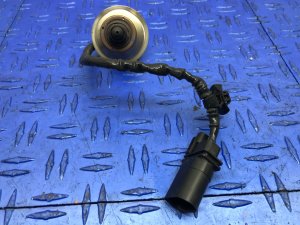
Used OEM Parts in Stock
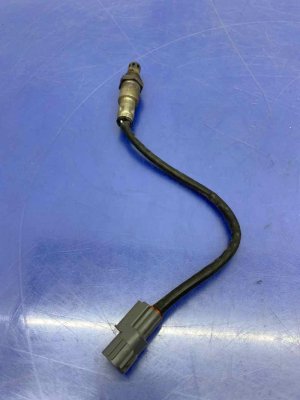
New Aftermarket Parts Available

The information in this article is provided for general reference and educational purposes only. Vehicle specifications, procedures, and part compatibility can vary by production date, trim level, and region. Always consult your vehicle's factory service manual and verify part numbers before purchasing or performing repairs. Safety-critical components such as airbags, seat belts, and braking systems should be installed by a qualified professional.
- Hyundai Sonata:
- 🎬 Helpful Videos
- 🛍️ Shop This Part
- What's Unique About the 2015-2019 Hyundai Sonata
- Symptoms You May Notice
- Most Likely Causes
- Rare But Worth Checking
- Diagnosis Steps
- Parts You'll Likely Need
- Related Codes That Often Appear With This One
- Platform-Specific Known Issues
- Mechanic-Grade Diagnostic Values
- Scan Tool Commands That Help
- Wiring & Ground Locations
- Real Owner Repair Stories
- OEM Part Supersession History
- Model Year Variations Within This Range
- Diagnostic Flowchart
- Real Owner Stories
- 2015 Hyundai Sonata 2.4 G4KJ
- 2019 Hyundai Elantra GT
- Hyundai Sonata
- Related OBD-II Codes
- Frequently Asked Questions
- 🎟️ Get 5% Off